
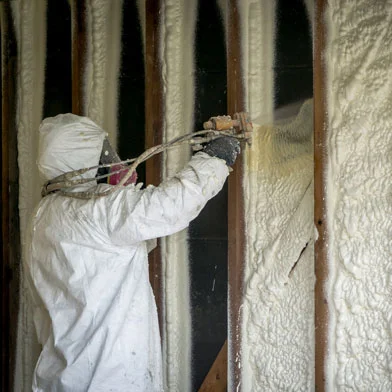
When applied correctly and given enough time to “cure”, there are not any dangers of spray insulation – but if the applicators aren’t wearing personal protective equipment or the foam isn’t applied correctly, dangerous reactions can occur.
Exposure and injuries to spray foam insulation can result from a number of things, including:
Vapors and aerosols
When applied, the foam releases certain vapors that are dangerous to respiratory systems.
If applied and vented for 24 hours or more, the vapors and aerosols will evaporate, but if an individual comes in contact with the room without protective equipment, they can suffer from a number of health issues, including difficulty breathing.
Dust
Cutting or trimming the foam as it hardens can release chemicals in the air.
Also, dust particles from the spraying can pose a risk for up to 24 hours which is why a proper 24, or 48 hours as an extra safety measure, ventilation process is required after applying spray insulation.
Fire
If a fire were to occur in the home, the fumes and smoke would pose a risk to anyone in the general vicinity, including responding firefighters.
Full-supplied air respirators are recommended when fighting polyurethane fires.
Heat Generation Processes
Drilling, welding, soldering, grinding, sawing, or sanding can result in airborne chemicals.
