Active Litigation
Paragard IUD Lawsuit Facts
TorHoerman Law is actively accepting claims for the Paragard IUD Lawsuit.


The Paragard IUD has long been considered a reliable and convenient contraception method for women.
Designed to prevent pregnancy for up to 10 years, the Paragard IUD is a T-shaped device that a healthcare provider inserts into the uterus.
While the Paragard insertion procedure is generally safe and effective, there have been cases of Paragard IUDs failing or causing injuries during the removal process.
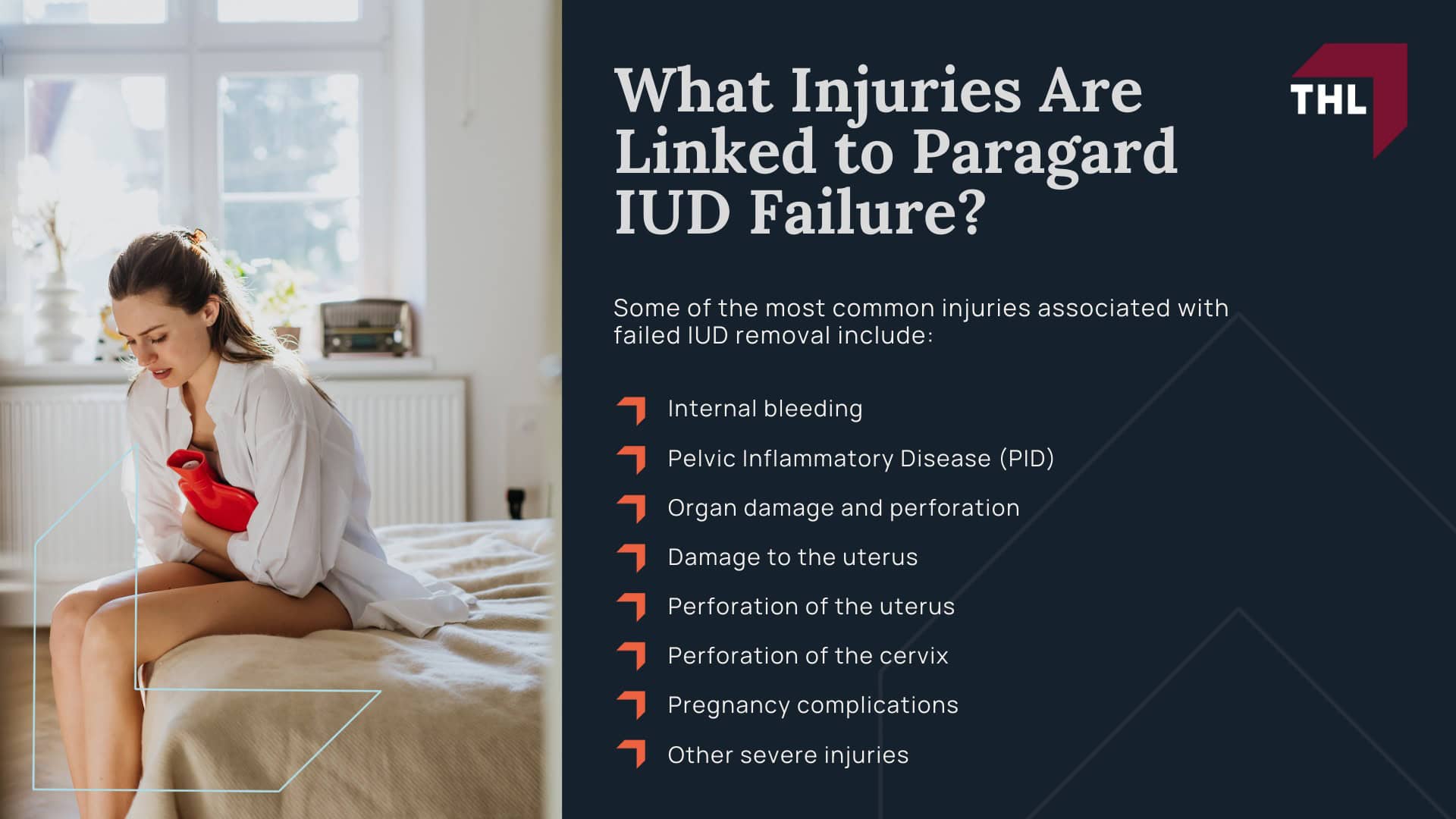
Some of the most common injuries associated with failed IUD removal include:
Internal bleeding is one of the most serious injuries associated with Paragard IUD failure.
This injury occurs when the device damages blood vessels or other internal structures during insertion, removal, or migration.
Internal bleeding can lead to severe pain, anemia, and, in extreme cases, life-threatening complications.
It often requires immediate medical intervention, including surgical procedures to stop the bleeding and repair damaged tissue.
Pelvic inflammatory disease (PID) is another troubling complication potentially linked to Paragard IUDs.
PID is an infection that can develop when bacteria enter the uterus through a failed IUD removal or insertion process or as a result of a damaged device.
Symptoms of PID may include pelvic pain, fever, unusual vaginal discharge, and pain during sexual intercourse.
PID can lead to infertility, chronic pelvic pain, and other long-term health issues if left untreated.
In some cases, Paragard IUDs may cause damage to nearby organs.
The copper IUD arms or the copper wire may puncture the uterine wall and injure organs such as the bladder or intestines.
Organ damage can result in severe pain, infection, and the need for surgery to repair the injured organs.
This type of injury can have long-lasting effects on a patient’s overall health and quality of life.
The Paragard copper IUD is designed to stay within the uterine cavity, but it can potentially migrate or become embedded in the uterine wall, leading to injuries.
Damage to the uterine lining or the cavity can result in chronic pelvic pain, heavy menstrual bleeding, and complications with future pregnancies.
In severe cases, a hysterectomy, the surgical removal of the uterus, may be necessary to address the damage and alleviate symptoms.
Uterine lining perforation occurs when the Paragard IUD punctures through the uterine wall.
This injury can lead to severe pain, internal bleeding, and potential scarring in the uterus.
The damage to the uterine lining can also cause complications during future pregnancies, including a higher risk of miscarriage or preterm birth.
In rare instances, the Paragard IUD may perforate the cervix, the lower part of the uterus.
Cervical perforation can cause extreme discomfort, bleeding, and complications in the surrounding tissues.
It may require surgery and treatment to prevent further damage and infection.
While the Paragard IUD is designed to prevent pregnancy, there have been cases where pregnancies have occurred while the device was still in place.
These pregnancies may have complications, such as ectopic pregnancies and miscarriages.
The presence of the IUD during pregnancy may also increase the risk of infections and premature birth.
Ectopic pregnancy is a potentially life-threatening condition where the fertilized egg implants outside the uterus, often in the fallopian tube.
Paragard IUDs have been associated with an increased risk of ectopic pregnancy if a patient becomes pregnant while the device is still in place.
Ectopic pregnancies require immediate medical attention and can result in the removal of the affected fallopian tube.
The injuries and complications caused by Paragard IUD failures, such as pelvic inflammatory disease and uterine damage, can lead to infertility.
Infertility is a profoundly distressing consequence for many individuals who had the IUD in place and were hoping to start or expand their families in the future.
Infection is a potential risk associated with Paragard IUDs.
Infections can lead to various health problems, including PID, sepsis, and chronic pelvic pain.
Prompt diagnosis and treatment are essential to prevent serious complications.
Patients who experience Paragard IUD failure often report severe pain as a primary symptom.
This pain can be attributed to internal bleeding, organ damage, or the presence of the device in a location it shouldn’t be.
Severe and persistent pain can significantly impact a person’s daily life and quality of life.
While not directly related to the reproductive system, there have been reports of an association between Paragard IUD use and pseudotumor cerebri (PTC).
PTC is characterized by increased pressure within the skull, leading to symptoms like severe headaches, vision problems, and ear ringing.
It can result in permanent vision loss if not treated promptly.
In extremely rare cases, the complications resulting from Paragard IUD failure might be fatal.
Fatal injuries may occur due to severe infections, internal bleeding, or organ damage that goes untreated or worsens over time.
These tragic outcomes highlight the importance of vigilant monitoring and prompt medical intervention when any issues arise with the IUD.
In cases where a patient becomes pregnant while the Paragard IUD is still in place, there is a risk of fatal injuries to the fetus.
Ectopic pregnancies, miscarriages, or complications during childbirth can result in the loss of the pregnancy.
This loss is emotionally devastating for the patient and can have severe physical and psychological effects.
Doctors and surgeons use various procedures to remove broken IUDs, depending on the severity of the fragmentation and perforation.
In most cases, gynecologists use various visual techniques to remove the broken pieces of an intrauterine contraceptive device manually.
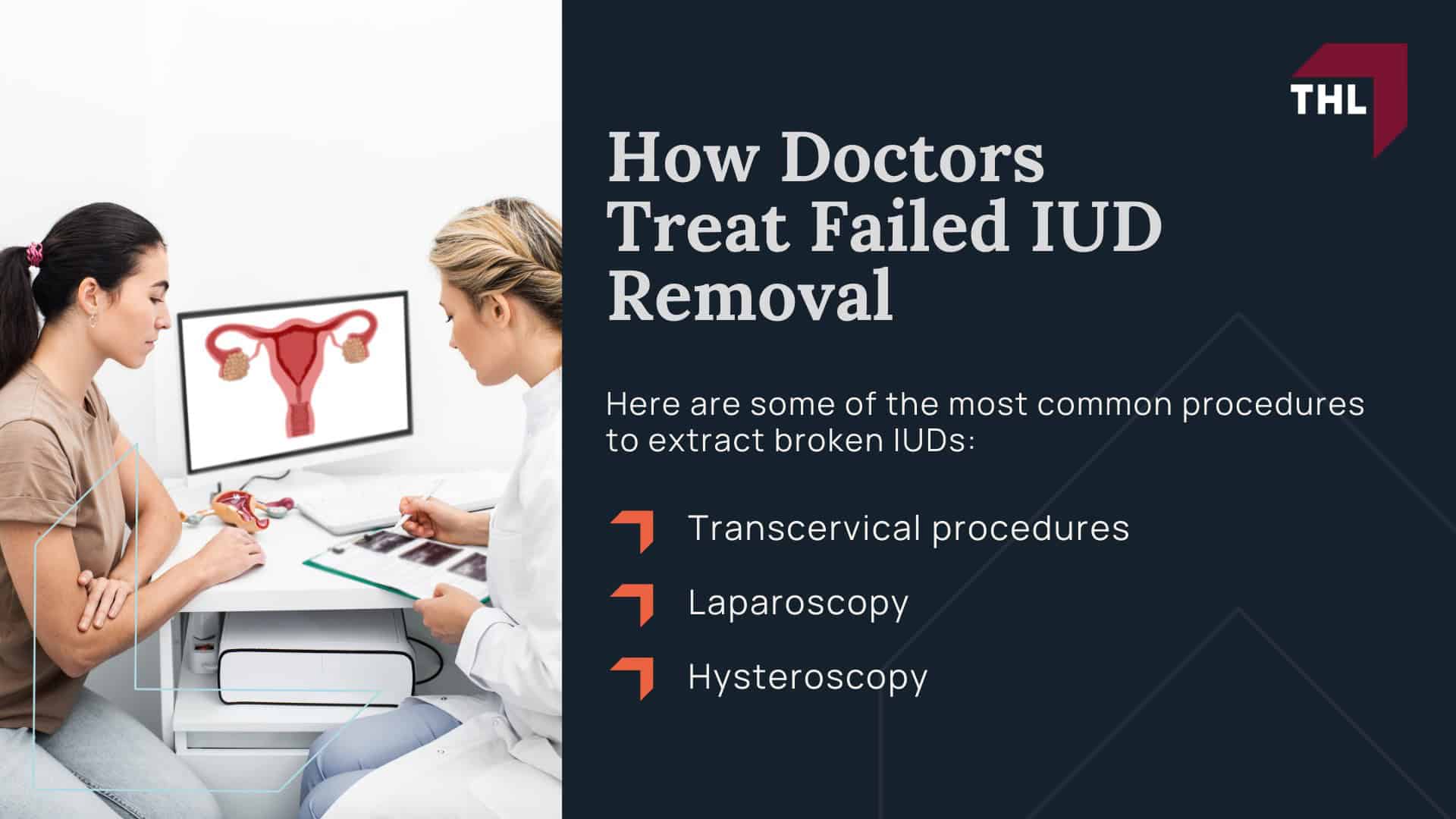
Here are some of the most common procedures to extract broken IUDs:
Transcervical procedures are minimally invasive medical techniques performed through the cervix, the narrow passageway at the lower end of the uterus that connects to the vagina.
Gynecologists often perform these procedures to diagnose or treat cervical issues.
Some of the most commonly performed transcervical procedures are dilation and curettage (D&C), endometrial biopsy, polypectomy, and hysteroscopy.
Your healthcare provider may recommend a transcervical procedure if the broken IUD caused a partial perforation in the myometrium or if the embedding is not severe.
This procedure is often the first method gynecologists use.
Laparoscopy or keyhole surgery, another form of minimally invasive surgery, is a surgical technique that involves making small incisions in the abdominal wall to access and operate on the abdominal and pelvic organs.
The surgeon inserts a laparoscope, a thin tube with a camera and light source, through one incision, and surgical instruments through others.
This procedure is primarily helpful for diagnosis, allowing the surgeon to visualize the abdominal and pelvic organs to identify and assess conditions such as endometriosis, pelvic inflammatory disease, and ovarian cysts.
If the IUD is severely embedded in the cervical region or there is complete perforation, a laparoscopy paired with hysteroscopy may be necessary.
Hysteroscopy is an endoscopic procedure used to examine and treat the inside of the uterus.
It involves the insertion of a hysteroscope, a thin, flexible tube with a light and camera, through the cervix into the uterus.
This procedure investigates various gynecological issues, such as abnormal uterine bleeding, recurrent miscarriages, or unexplained pelvic pain.
This endoscopic procedure is highly preferred if the broken IUD is heavily fragmented and laparoscopy isn’t enough to distinguish the embedded fragments.
The doctor uses precise imaging to remove IUD pieces manually.
Paragard Lawsuits are being filed against Teva Pharmaceuticals and Cooper Surgical for injuries linked to the Paragard IUD.
If your Paragard IUD broke and you were subsequently injured, you may be eligible to file a Paragard Lawsuit.

Contact TorHoerman Law for a free consultation.
You can also use the chatbot on this page to find out if you qualify for the Paragard Lawsuit instantly.
Experienced lawyers can help victims throughout the Paragard Lawsuit process, completing steps necessary to file such as gathering evidence and assessing damages.
Evidence is important in any lawsuit, but it especially important for a Paragard IUD Lawsuit.
This part of the legal process is something you can begin on your own, but an experienced Paragard Lawyer can help you gather and retain crucial evidence.

Potential evidence for a Paragard Lawsuit may include:
Damages refer to the total amount of losses, economic and non-economic, incurred as a result of Paragard removal injuries.
An experienced lawyer can help you assess and calculate damages relevant to your Paragard case.

Potential damages in a Paragard Lawsuit may include:
With over a century in combined litigation experience and more than $4 billion awarded to clients in our litigations, our results and expertise speak for themselves.
TorHoerman Law focuses on helping those injured through no fault of their own.
We are dedicated to our practice of holding pharmaceutical companies and medical device manufacturers accountable for their greed-driven actions that put consumers at risk.

If you or a loved one suffered injuries related to Paragard removal or defects, you may be eligible to file a Paragard Lawsuit.
Contact TorHoerman Law for a free consultation.
Use the chatbot on this page to find out if you qualify for the Paragard Lawsuit instantly.
We offer free, zero-obligation case evaluations for all potential clients.
Reach out to us with any questions you may have about the Paragard Lawsuit, injuries linked to Paragard removal, and more.
We’re here to help you.


