Taxotere is a chemo drug used to treat breast cancer, lung cancer, prostate cancer, and neck cancer by disrupting the division of cancer cells, but its ocular risks have driven a distinct wave of Taxotere eye damage lawsuits.
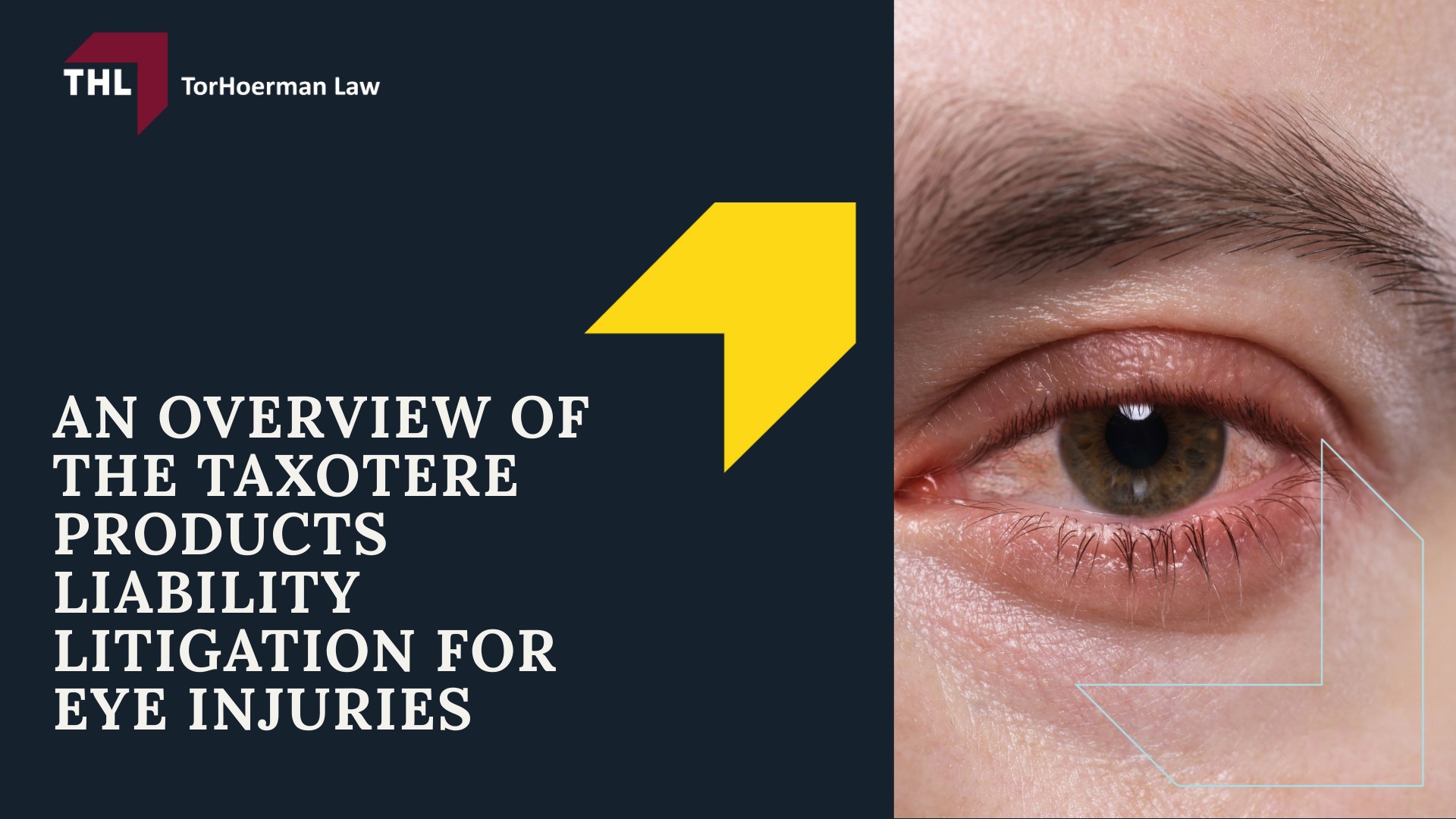
In the Taxotere eye injury litigation pending in the Louisana federal court, plaintiffs argue that a negligent drug manufacturer exposed breast cancer patients and others to serious, often permanent ocular harm.
While Taxotere hair loss lawsuits in the same court center on patients who suffered permanent hair loss, our legal focus prioritizes eye-injury claims because the complications can threaten vision and daily function.
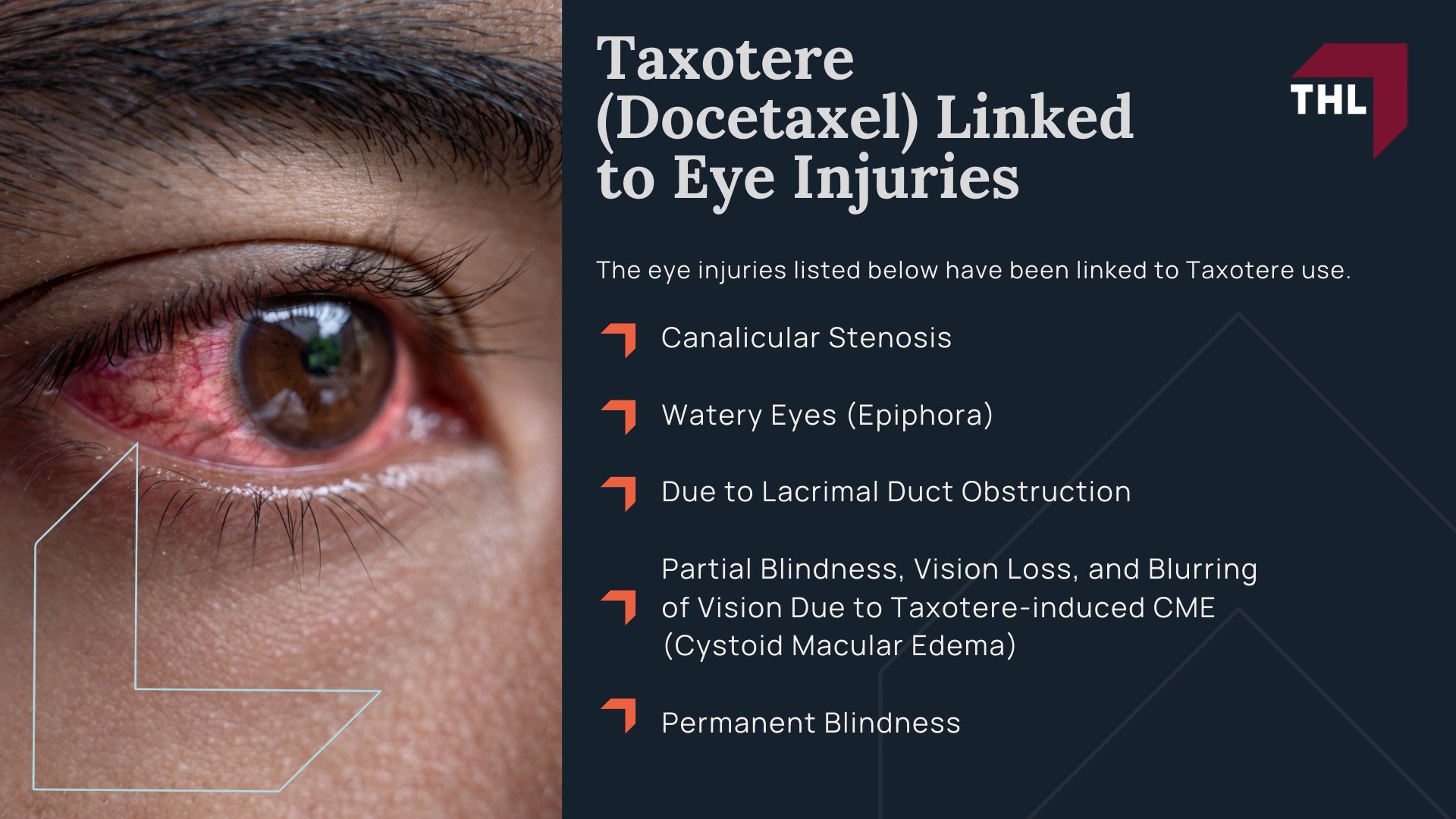
The eye cases frequently involve excessive tearing and excessive eye watering progressing to scarring of the tear-drainage system and, in some instances, patients who suffered vision loss.

These outcomes carry significant medical costs, repeat procedures, and emotional distress, particularly among metastatic breast cancer and breast cancer cohorts who received prolonged therapy.
Liability theories emphasize that Sanofi’s drug was marketed aggressively to treat breast cancer and other indications while downplaying preventable ocular harm.
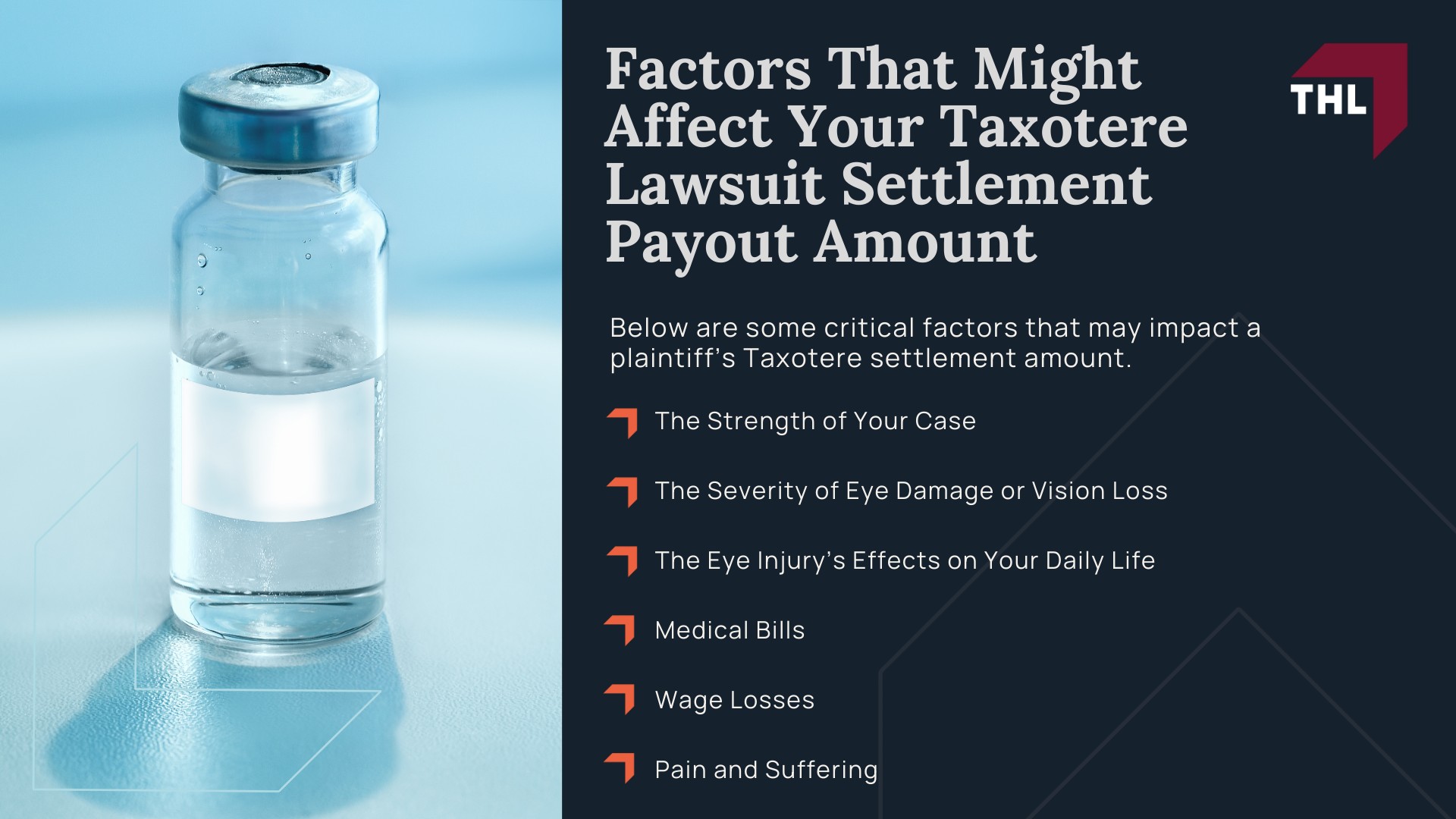
With that context, the average settlement discussion must reflect not only injury severity but also how clearly the medical records tie Taxotere to each claimant’s ocular damage.
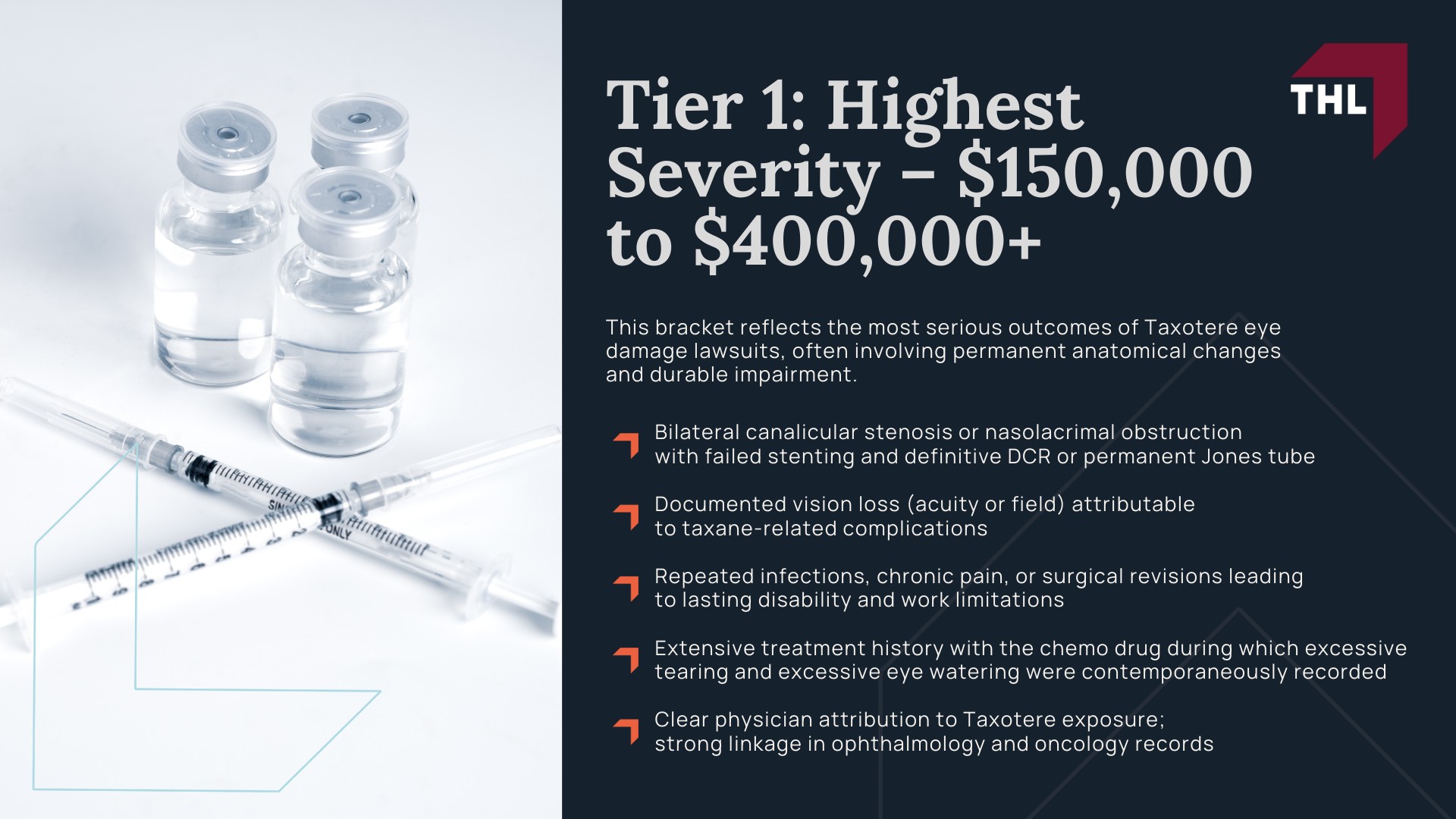
Tier 1: Highest Severity – $150,000 to $400,000+
This bracket reflects the most serious outcomes of Taxotere eye damage lawsuits, often involving permanent anatomical changes and durable impairment.
Claimants typically document bilateral disease, multiple surgeries, and measurable functional loss, especially where treatment courses for metastatic breast cancer, lung cancer, prostate cancer, or neck cancer were prolonged.
Evidence tends to include strong causation proof within the Taxotere eye injury litigation record and substantial non-economic harms, including sustained emotional distress.
- Bilateral canalicular stenosis or nasolacrimal obstruction with failed stenting and definitive DCR or permanent Jones tube
- Documented vision loss (acuity or field) attributable to taxane-related complications
- Repeated infections, chronic pain, or surgical revisions leading to lasting disability and work limitations
- Extensive treatment history with the chemo drug during which excessive tearing and excessive eye watering were contemporaneously recorded
- Clear physician attribution to Taxotere exposure; strong linkage in ophthalmology and oncology records
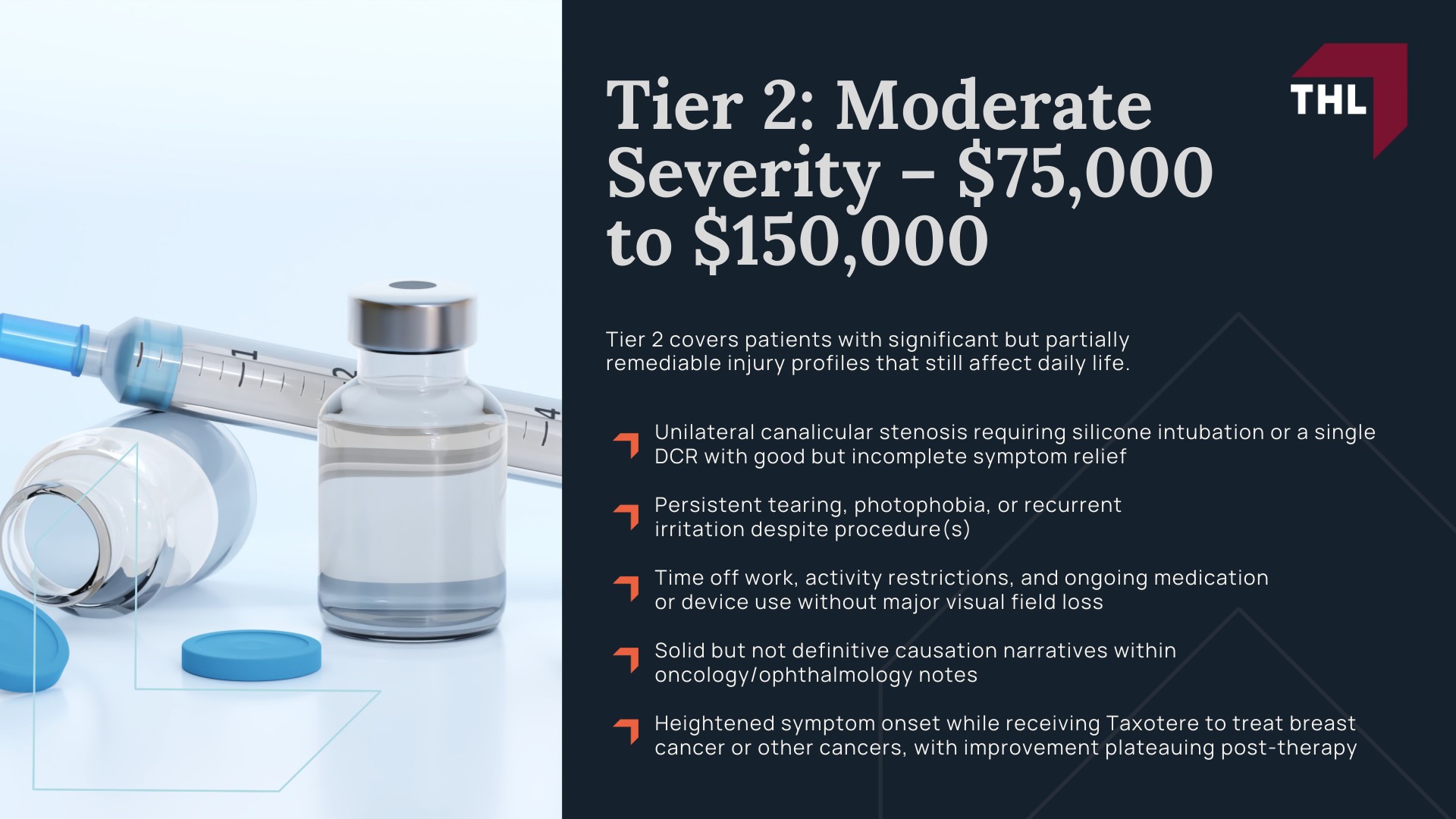
Tier 2: Moderate Severity – $75,000 to $150,000
Tier 2 covers patients with significant but partially remediable injury profiles that still affect daily life.
These cases often show unilateral or less advanced bilateral disease, limited surgical intervention, and persisting symptoms that interfere with work, driving, or outdoor activity.
Medical documentation is consistent, though the degree of permanent loss is less than Tier 1.
- Unilateral canalicular stenosis requiring silicone intubation or a single DCR with good but incomplete symptom relief
- Persistent tearing, photophobia, or recurrent irritation despite procedure(s)
- Time off work, activity restrictions, and ongoing medication or device use without major visual field loss
- Solid but not definitive causation narratives within oncology/ophthalmology notes
- Heightened symptom onset while receiving Taxotere to treat breast cancer or other cancers, with improvement plateauing post-therapy
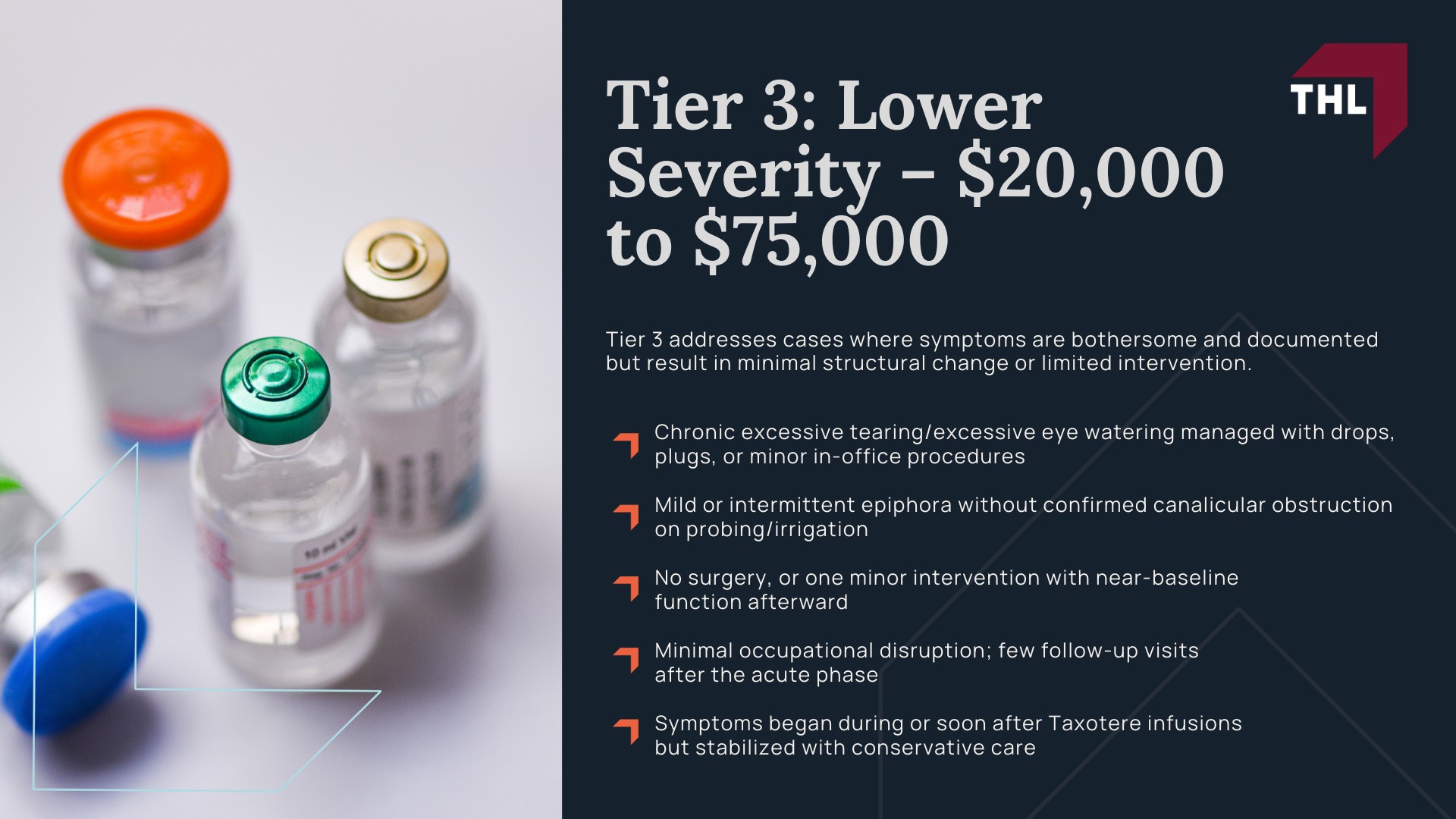
Tier 3: Lower Severity – $20,000 to $75,000
Tier 3 addresses cases where symptoms are bothersome and documented but result in minimal structural change or limited intervention.
These claims may involve conservative treatment, short-term work impacts, and residual vision problems without lasting deficit.
Proof of Taxotere-specific causation exists, but competing factors or milder clinical findings reduce valuation.
- Chronic excessive tearing/excessive eye watering managed with drops, plugs, or minor in-office procedures
- Mild or intermittent epiphora without confirmed canalicular obstruction on probing/irrigation
- No surgery, or one minor intervention with near-baseline function afterward
- Minimal occupational disruption; few follow-up visits after the acute phase
- Symptoms began during or soon after Taxotere infusions but stabilized with conservative care
Note: These tiers are practical planning ranges used by Taxotere lawyer teams when evaluating Taxotere eye damage lawsuits; individual results vary based on medical proof, treatment intensity, permanence, claimant age and occupation, and the evidentiary record developed in the Louisana federal court docket.