Negligent security is a type of premises liability claim that may apply when a person is harmed by a criminal act on someone else’s property and the danger was foreseeable, yet the owner failed to take practical steps to reduce the risk.
In Georgia, the legal foundation for these cases comes from O.C.G.A. § 51-3-1, which states that when an owner or occupier invites people onto a property for lawful purposes, the owner can be liable for injuries caused by a failure to use ordinary care in keeping the premises and approaches safe.
In other words, a business owner or other responsible party may be considered legally liable when an incident occurred because the property was not kept reasonably safe in light of known risks.
Negligent security claims often focus on whether the property owner’s failure to provide reasonable protection (such as controlled access, lighting, surveillance, or on-site staffing) allowed an attacker to exploit a predictable vulnerability.
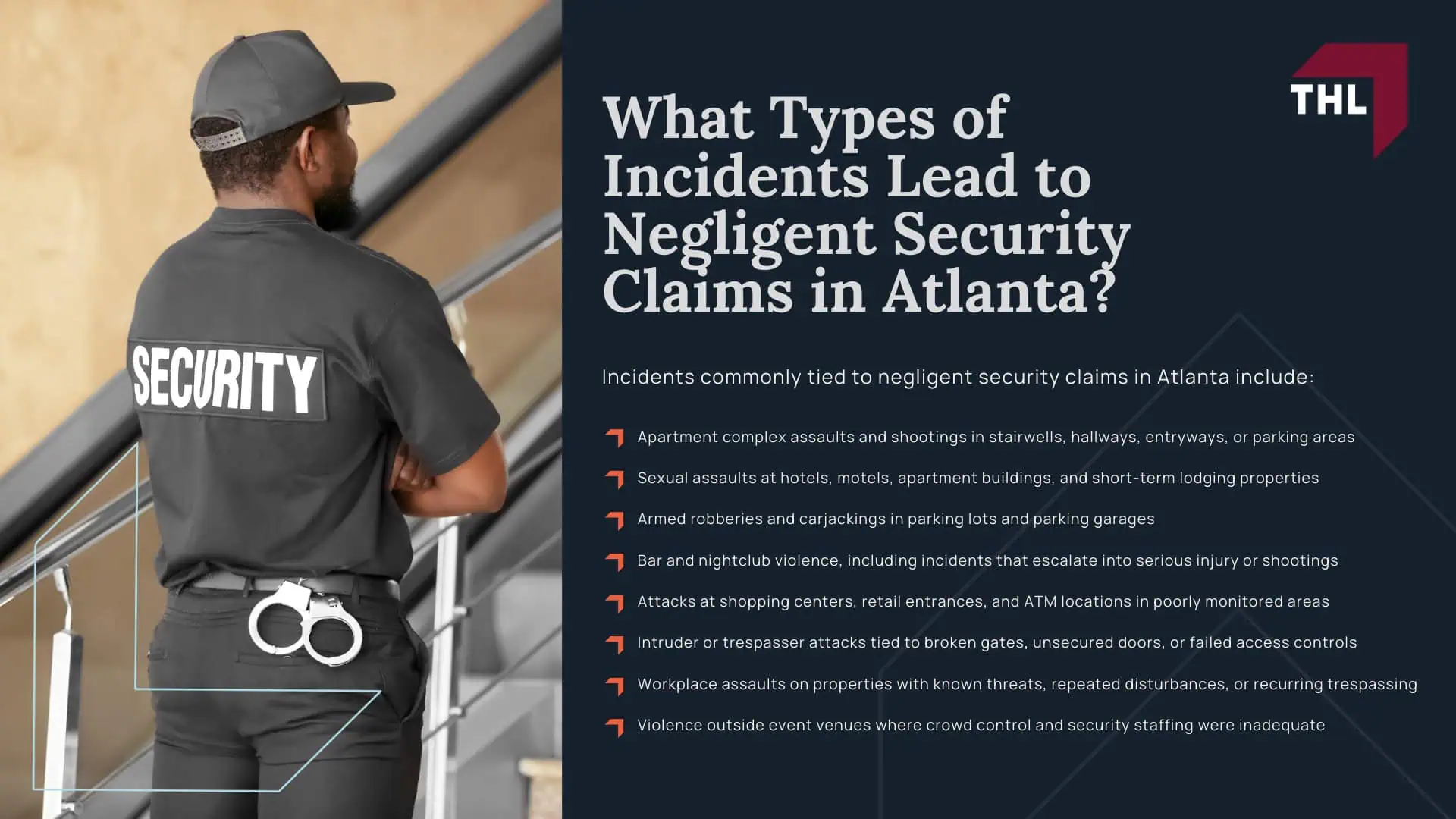
These cases frequently arise when violence happens in places that should be a safe environment, including apartment complexes, hotels, parking areas, retail businesses, bars, and other public-facing properties.
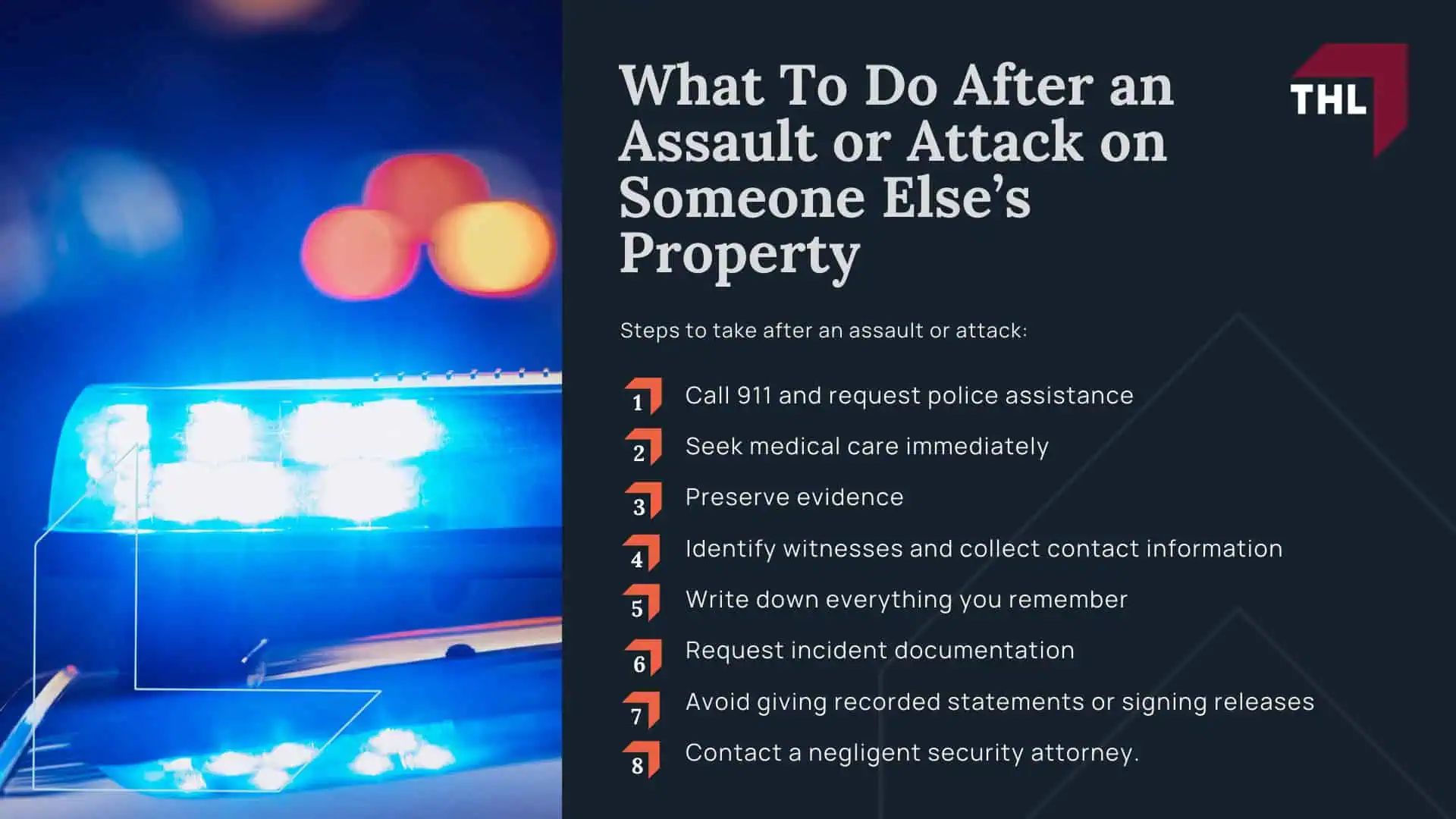
When the warning signs exist and the property does not respond with adequate security, the consequences can include serious injuries, long-term emotional harm, or wrongful death.
In practice, Georgia negligent security cases often involve security decisions that could have reduced risk, such as working surveillance cameras, controlled access, and trained staff.
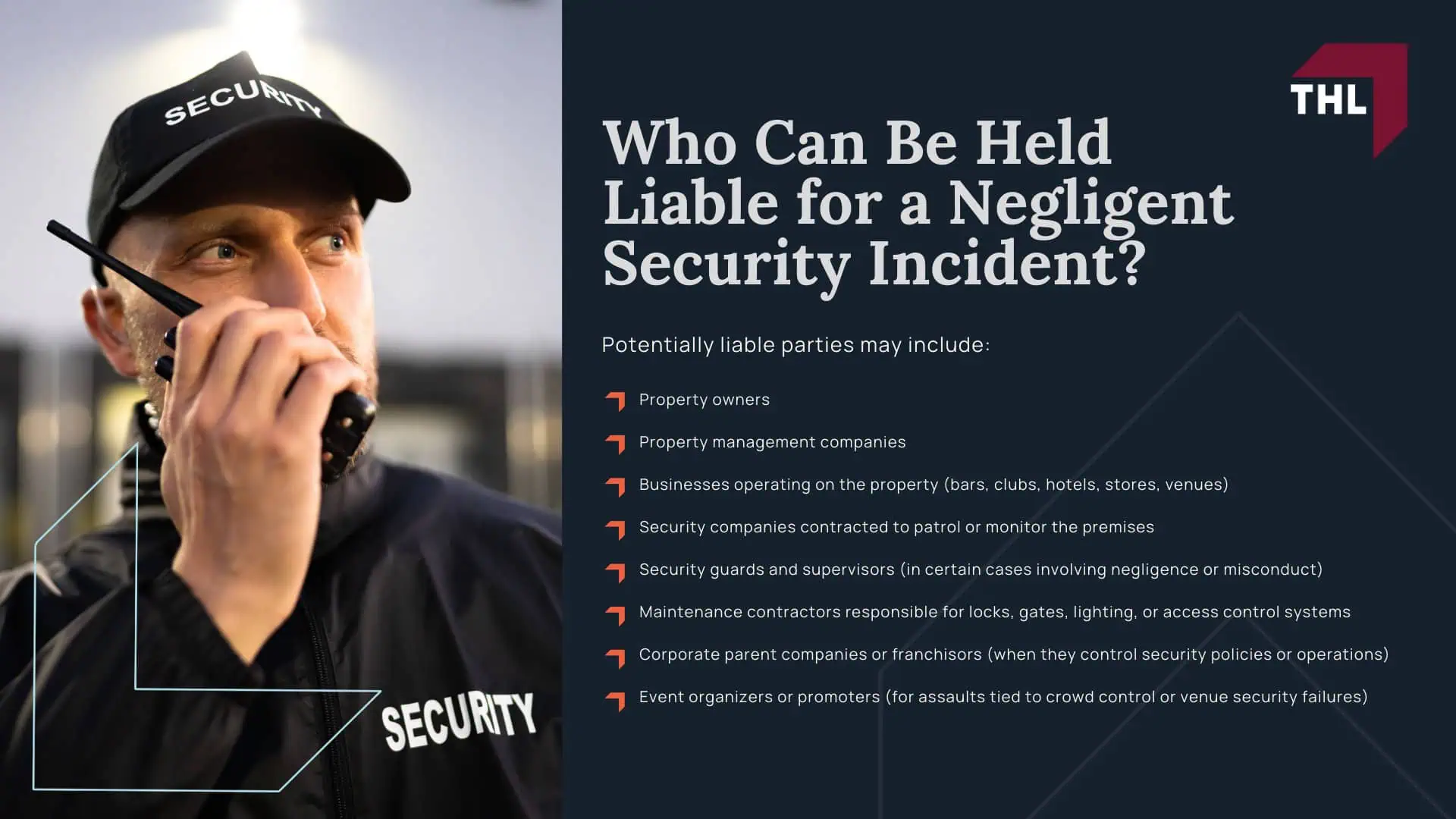
Depending on the property type and the history of crime, security guards or other trained security personnel may be part of what reasonable care looks like, especially in locations with repeat disturbances or prior violent incidents.
What matters is whether the owner took steps that were reasonable under the circumstances and whether the harm happened due to negligent security, not whether the property could have prevented every possible crime.
Georgia courts also analyze foreseeability in a fact-specific way, and the Georgia Supreme Court has addressed how duty and foreseeability apply in negligent security cases involving third-party criminal conduct, including incidents on Atlanta-area properties.

Negligent security claims are often evaluated through a simple framework that explains when a property may be responsible for foreseeable criminal harm:
- The injured person was lawfully on the property, meaning the owner or occupier owed a duty of ordinary care under Georgia law.
- The risk of violence was foreseeable, based on prior incidents, repeated police calls, complaints, or other warning signs that should have prompted action.
- Reasonable safety steps were available, such as working cameras, access control, adequate lighting, staffing policies, or security patrols that could have reduced the risk.
- The property failed to act, meaning it did not provide reasonable security measures consistent with the level of known danger, or allowed safeguards to remain broken or ineffective.
- The harm is connected to that failure, showing the injury occurred because security gaps made the attack more likely or more severe.
Ultimately, negligent security claims are about whether the property was kept reasonably safe based on what the owner knew or should have known.
If the evidence shows the danger was predictable and the property failed to respond with adequate safeguards. whether through physical security upgrades, staffing, or policies, the owner may face liability for the harm that followed.
Time limits matter.
Most negligent security claims fall under Georgia’s two-year personal injury statute of limitations, meaning victims generally have two years from the date of the injury to file a lawsuit.
If private security companies are involved, Atlanta ordinances regulate private security business permits within the city, and those requirements may become relevant when evaluating security staffing and oversight in a specific case.
“Foreseeability” in Atlanta Negligent Security Cases
Foreseeability is one of the most important issues in Atlanta negligent security cases because it helps determine whether a property had a duty to take steps to protect visitors from violence.
The core question is whether the risk of criminal harm was predictable based on what the owner knew or should have known before the incident happened.
Foreseeability can be shown through prior assaults, robberies, shootings, or repeated disturbances on the property, as well as police calls, tenant complaints, or documented security problems that made the danger obvious.
When those warning signs exist, property owners may be expected to take practical steps to prevent foreseeable crimes, such as improving lighting, repairing access points, adding surveillance coverage, or increasing security staffing.
In many cases, the dispute is not whether a crime occurred, but whether the attack followed a recognizable risk pattern that the property ignored.

Defendants often argue the incident was random and unavoidable, but the evidence may show that similar criminal activity had occurred before or that conditions on the property created an easy opportunity for violence.
This is why negligent security cases often focus on documentation (incident logs, police records, surveillance footage, and maintenance records) to show the risk was predictable and the property failed to respond.
When negligent property owners ignore repeated warning signs and do not address known security gaps, Georgia law may allow victims and families to pursue damages tied to preventable harm.