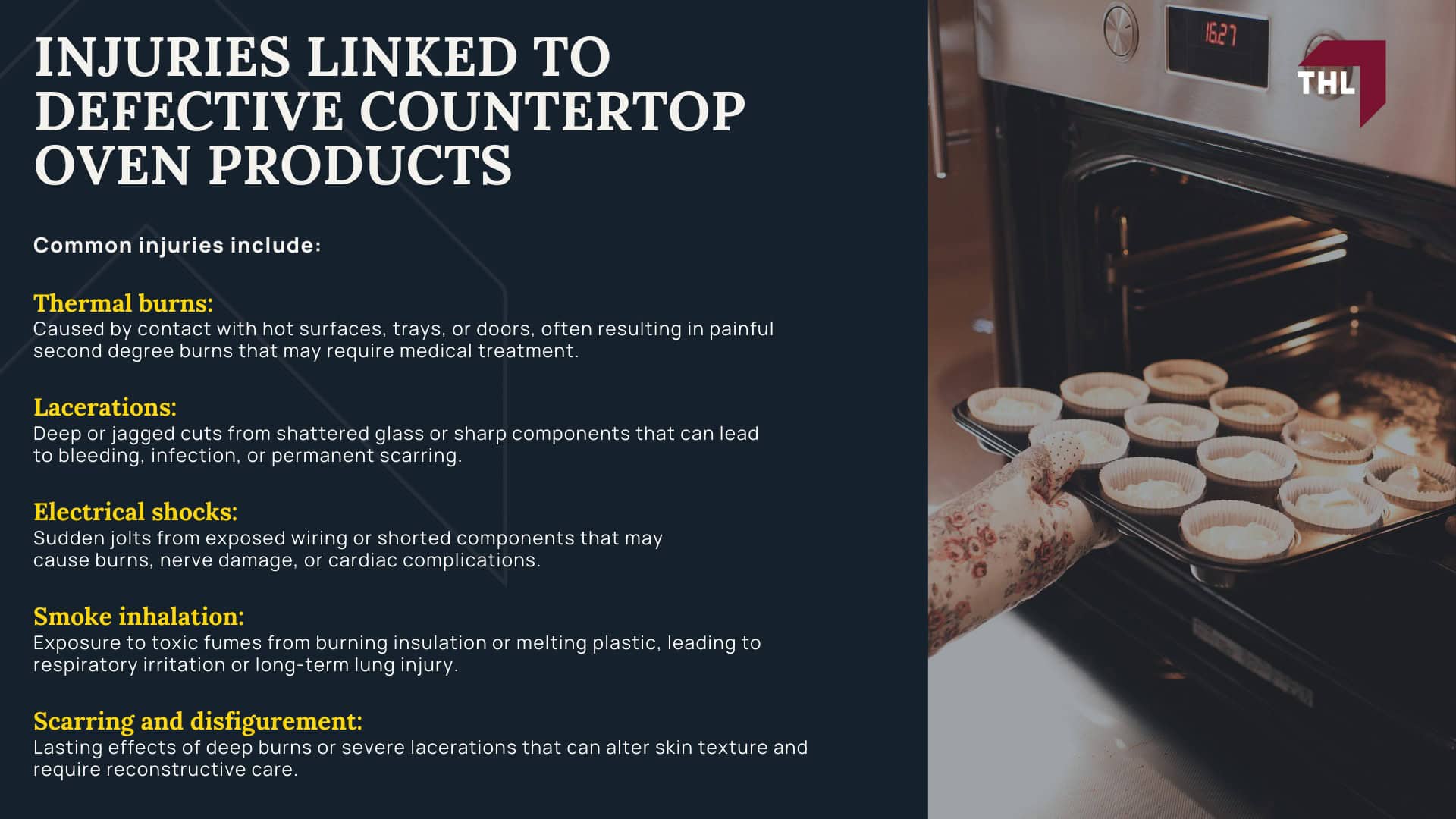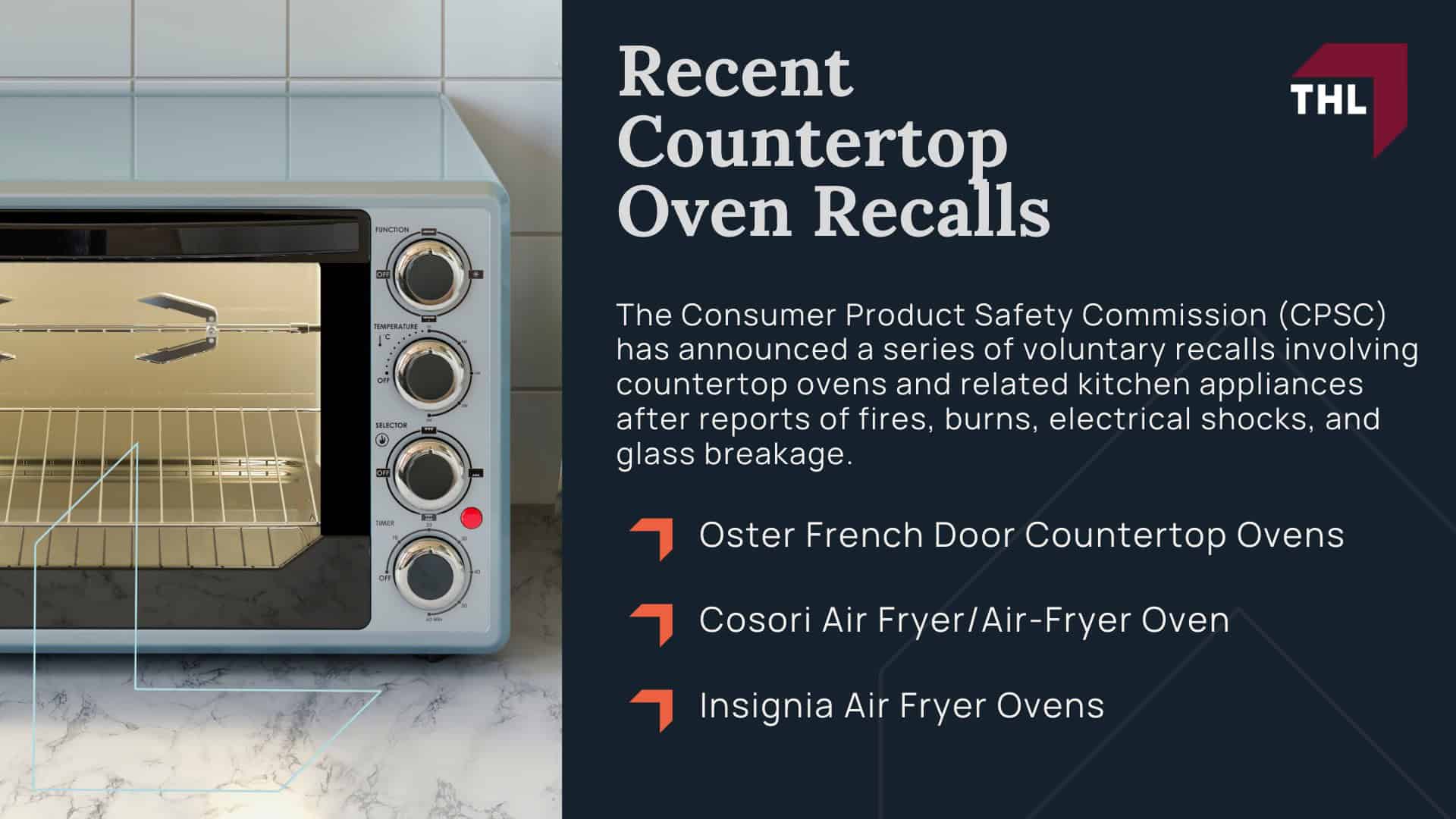
Recalled ovens have been linked to a range of serious household injuries, most commonly involving burns and fires.
Many of these appliances reach extreme internal temperatures, and even minor design flaws can create dangerous conditions.
Defective door mechanisms have trapped users’ hands or forearms against hot metal surfaces, resulting in burn injuries that require medical attention.
Other models have overheated during use, melting components or igniting nearby materials.
Glass doors have shattered without warning, releasing hot shards capable of causing severe burns and lacerations.
Electrical malfunctions can lead to smoke, sparks, or small fires that spread quickly in enclosed kitchen spaces.
Even stable models may pose tipping or rack-ejection risks when structural components fail under heat stress.
Each of these hazards represents a potential basis for a product liability claim if the defect can be traced to poor design, manufacturing errors, or lack of adequate safety testing.
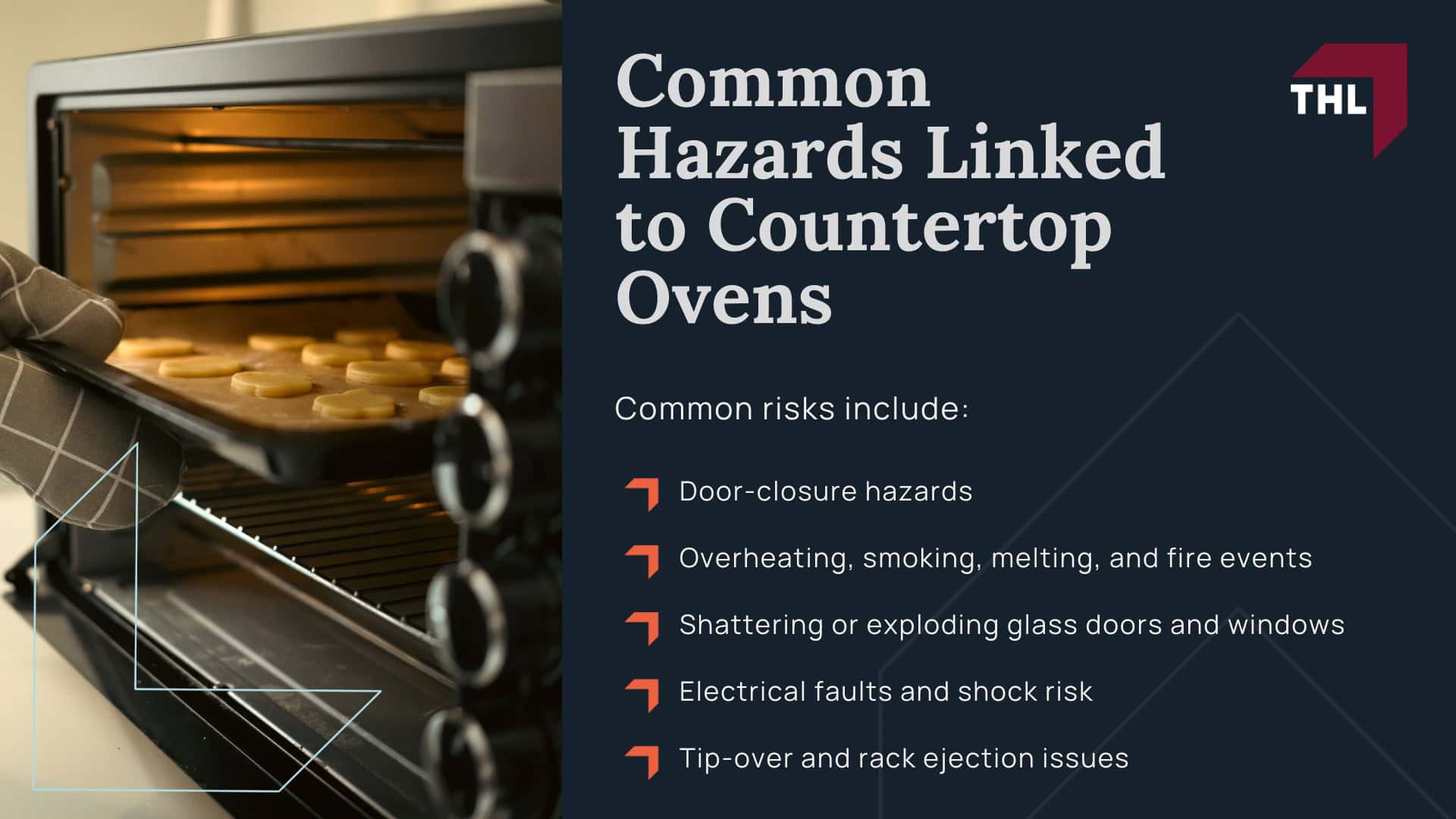
Common risks include:
- Door-closure hazards
- Overheating, smoking, melting, and fire events
- Shattering or exploding glass doors and windows
- Electrical faults and shock risk
- Tip-over and rack ejection issues
Door-Closure Hazards
Some Oster countertop ovens and similar models have been recalled after reports that their oven doors could unexpectedly close and snap shut during use.
The Oster French Door Countertop Oven, which features two doors that open simultaneously, was recalled by the Consumer Product Safety Commission after nearly one hundred reports of sudden door movement and several confirmed burn injuries.
Users described reaching into the hot oven when the doors abruptly closed on their hands or forearms, causing contact with metal racks or pans heated to over 400 degrees.
This hazard is specific to designs where spring-loaded or tensioned doors fail to remain open at a safe angle.
Any countertop oven using dual or assisted doors without a secure locking mechanism may present the same risk of serious burns.
Overheating, Smoking, Melting, and Fire Events
A number of affected products sold through major retailers have been recalled for overheating issues that led to fires or melting components.
In many cases, faulty wiring or inadequate temperature control caused internal parts to ignite or emit smoke during normal use.
Popular air fryer and countertop oven brands have faced widespread recalls after customers reported units smoking, sparking, or producing a burning odor.
When these defects occur, surrounding materials such as cabinets, countertops, and nearby appliances can also be damaged.
Melted handles and warped housing materials have been documented in several major recalls, sometimes leading to contact burns or property loss.
These fire-related defects highlight the broader safety risks of high-heat appliances sold without adequate testing or thermal safeguards.
Shattering or Exploding Glass Doors and Windows
Several countertop ovens have experienced failures where the oven’s doors shattered or exploded during or shortly after use.
These incidents often involve French doors or glass-front designs that cannot withstand repeated heat expansion and pressure changes.
When tempered glass fails, it can send shards across kitchen surfaces, burning or cutting anyone nearby.
Other models have been recalled after reports of glass panels cracking spontaneously while preheating or cooling down.
This defect turns a common household appliance into a dangerous product, capable of inflicting both burn and laceration injuries.
The risk underscores the importance of proper materials testing and reinforced glass standards in all high-heat consumer ovens.
Electrical Faults and Shock Risks
Some countertop ovens have been recalled due to electrical malfunctions that pose a serious risk of electric shock or fire.
Faulty wiring, loose connections, or damaged insulation can expose live current when users plug in or touch metal components.
In certain recalls, overheating circuits have caused the appliance to short out, emitting sparks or small flames.
These electrical faults often develop after repeated heating cycles weaken internal wiring or protective coatings.
When design flaws or manufacturing errors make electrical systems unsafe, the result can be a sudden, high-voltage shock or a kitchen fire originating from the appliance itself.
Tip-Over and Rack Ejection Issues
Some countertop ovens have unstable bases or lightweight construction that make them prone to tipping when doors are opened or heavy cookware is placed inside.
In certain designs, racks can slide forward or eject suddenly, increasing the risk of contact with hot surfaces or spilled food.
These issues are especially common in compact models marketed for small kitchens or dorm rooms, where space constraints encourage placement on uneven counters.
Poor weight distribution and inadequate rack stops can turn routine use into a significant burn hazard.