Negligent security is a type of premises liability claim that can apply when individuals suffer harm because a property failed to protect them from foreseeable criminal acts.
In plain terms, negligent security occurs when a violent crime happens on a property and the incident was linked to a property owner’s failure to take reasonable precautions to address known or predictable security threats.
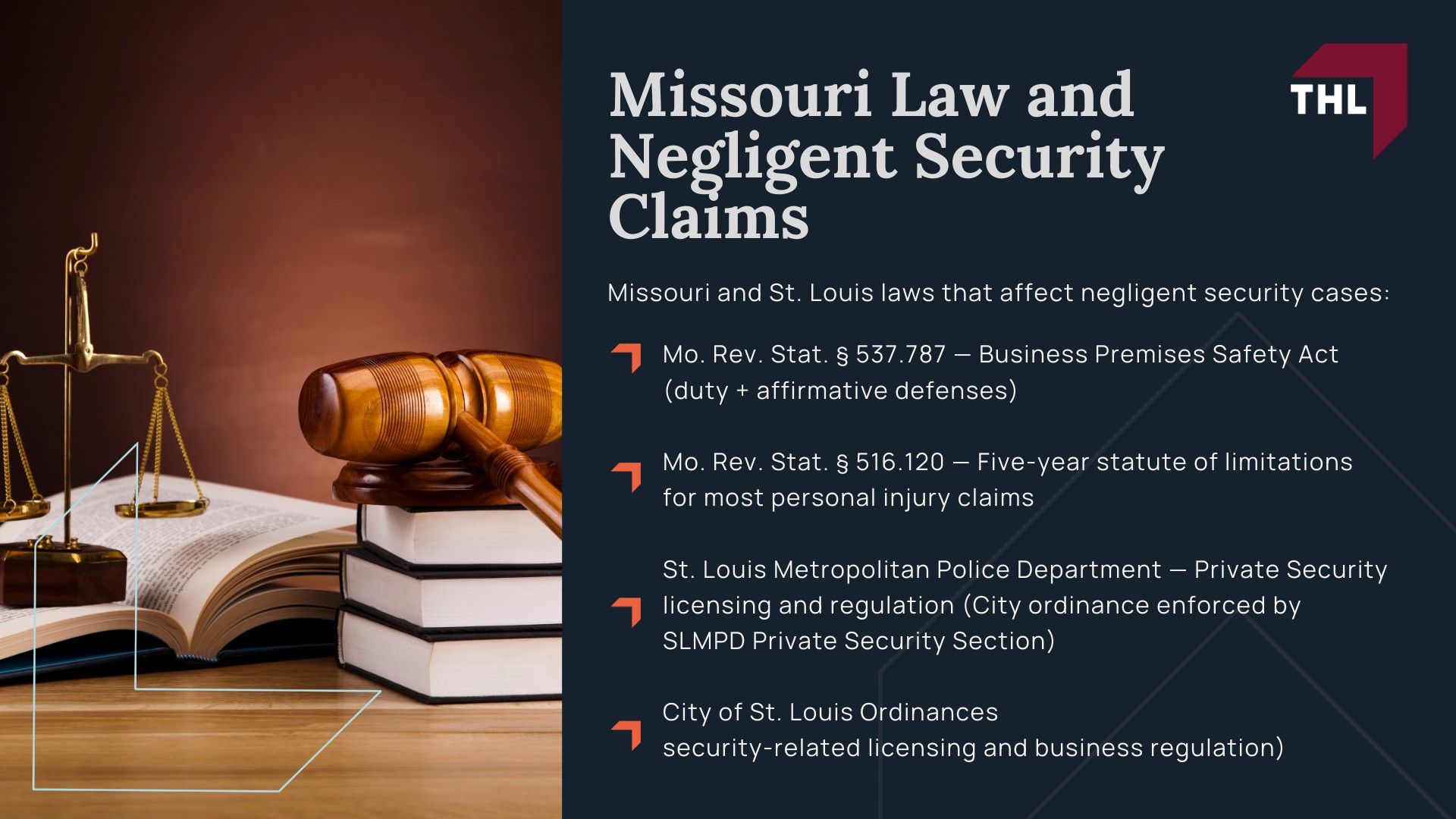
Missouri law sets an important baseline for these cases through the Business Premises Safety Act, codified at Mo. Rev. Stat. § 537.787.
Under that statute, businesses generally have no automatic duty of care to protect visitors from criminal acts by third parties unless the business had reason to know criminal acts were being committed or were reasonably likely to be committed in a particular area of the premises, and the business had sufficient time and the ability to prevent the harm.
That legal framework means many negligent security cases in Missouri focus on foreseeability and preventability.
If there were previous crimes on the property or a history of threats, complaints, or police calls that signaled a rising risk, the property may have had a responsibility to respond with reasonable safety steps.
Those steps can include basic measures like lighting and access control, as well as security infrastructure like security cameras, working surveillance systems, and trained security personnel.
If a property ignores warning signs and a visitor is attacked, the claim often centers on whether the business failed to provide adequate security measures that could have reduced or prevented the danger.
In Missouri, a negligent security claim usually comes down to whether the harm was preventable and whether the business had a legal obligation to act.
Section 537.787 also includes defenses that businesses often raise, including a defense that the business implemented “reasonable security measures,” and defenses involving trespassing, criminal conduct by the claimant, or incidents occurring when the business was closed.
What Negligent Security Looks Like in Real Life
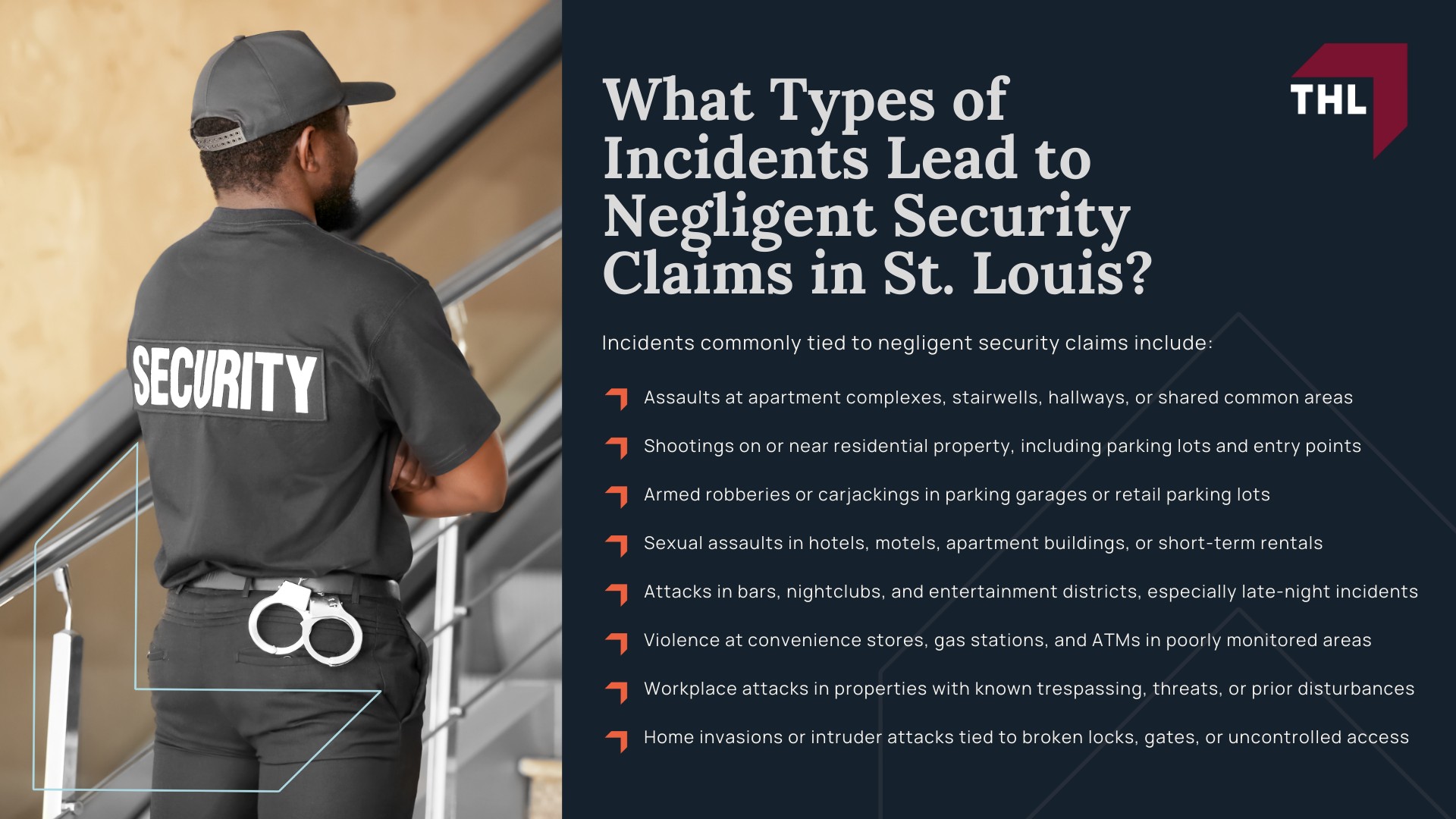
Negligent security claims often involve incidents such as shootings, assaults, sexual violence, robberies, and other violent attacks, especially in settings where prior crime or known risks made the danger predictable.
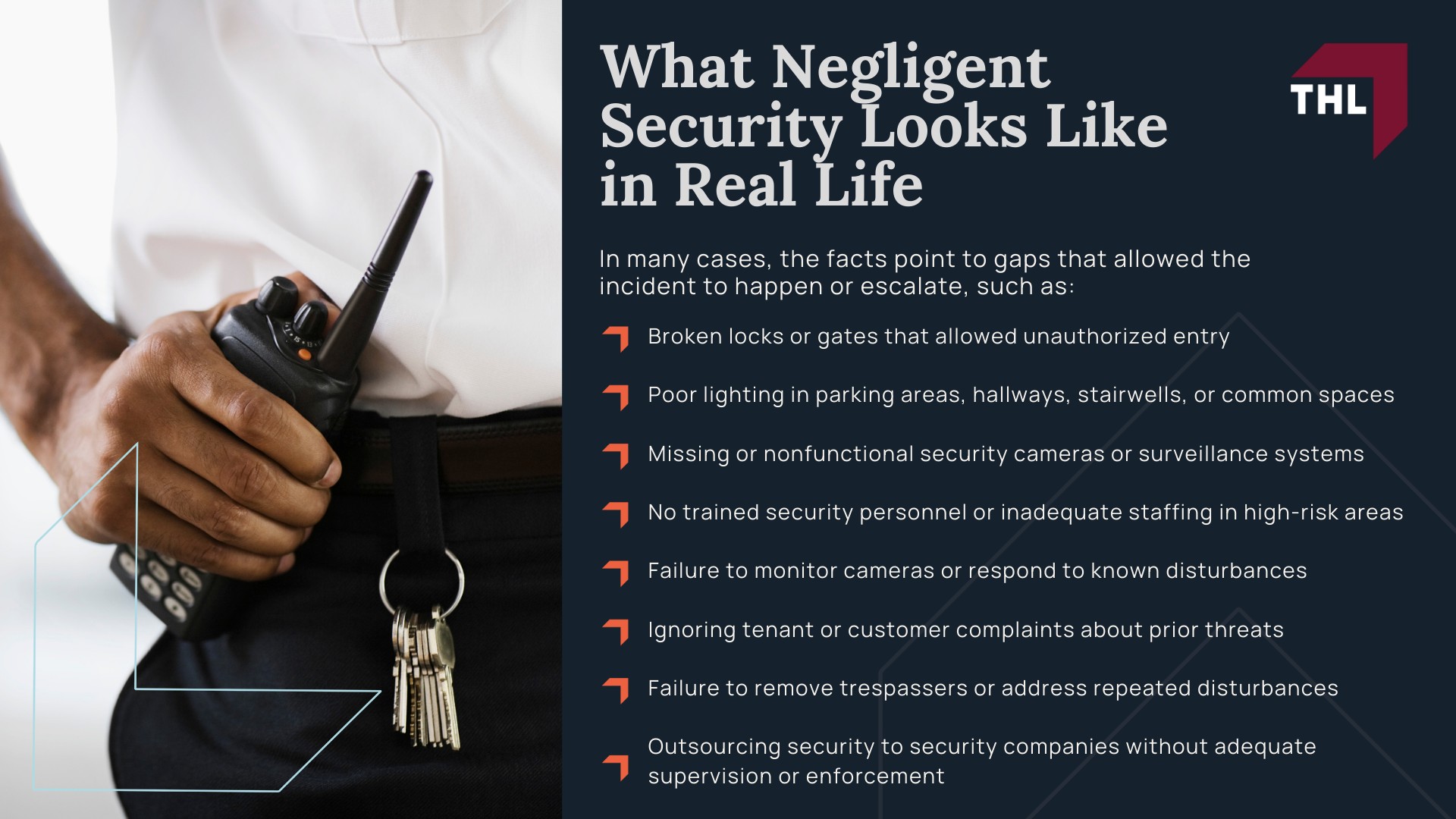
In many cases, the facts point to gaps that allowed the incident to happen or escalate, such as:
- Broken locks or gates that allowed unauthorized entry
- Poor lighting in parking areas, hallways, stairwells, or common spaces
- Missing or nonfunctional security cameras or surveillance systems
- No trained security personnel or inadequate staffing in high-risk areas
- Failure to monitor cameras or respond to known disturbances
- Ignoring tenant or customer complaints about prior threats
- Failure to remove trespassers or address repeated disturbances
- Outsourcing security to security companies without adequate supervision or enforcement
When those failures are tied to a known risk, and the crime fits the pattern of foreseeable harm, Missouri law may allow victims and families to seek compensation for medical care, lost income, emotional and psychological harm, and other damages connected to the attack.
The “Foreseeability” Issue in a Missouri Negligent Security Case
In a Missouri negligent security case, the concept of foreseeability often determines whether a property owner owed a duty to act before a violent crime occurred.
Under Missouri’s Business Premises Safety Act, businesses are not automatically responsible for criminal conduct by third parties, so a claim typically depends on whether the risk of violence was reasonably predictable based on what the property knew or should have known.
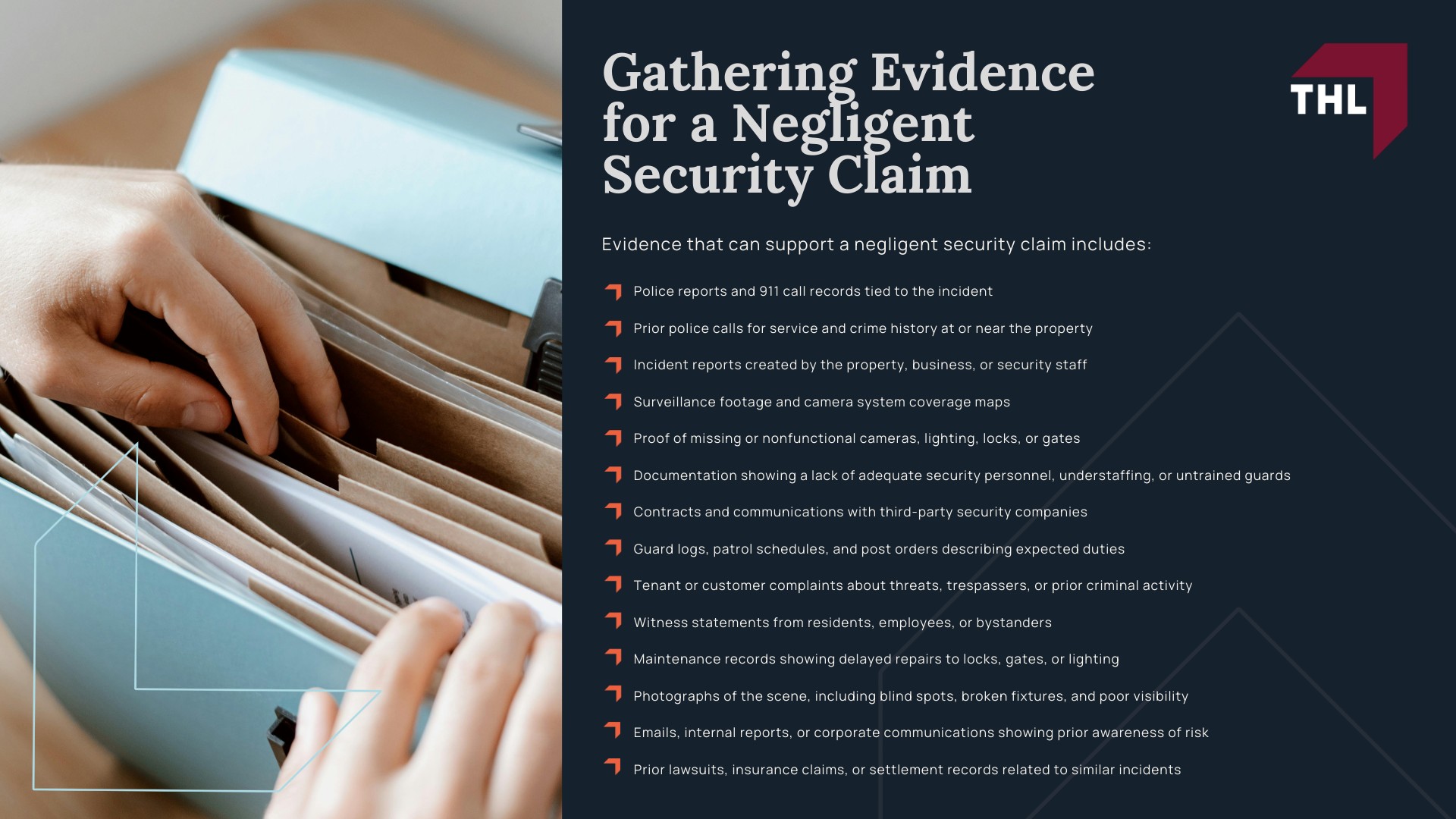
Foreseeability can be established through prior incidents on the property, repeated disturbances, police calls for service, or other warning signs that made an attack more than a random possibility.
It can also come from the nature of the property itself, such as locations that attract late-night crowds, operate in high-crime corridors, or have a known history of assaults or robberies.
When those warning signs exist, the law may expect the property to take reasonable steps to reduce the risk rather than leaving visitors exposed.
That is where inadequate security measures become central to the case, including broken locks, poor lighting, lack of security presence, or nonfunctional surveillance equipment.
In many personal injury cases involving negligent security, the evidence focuses on whether the property’s security failures made it easier for the crime to happen or gave the attacker more opportunity to carry it out.
Property owners and insurers often argue the crime was unforeseeable and unavoidable, but the investigation may show the danger had been building for months or years with clear opportunities to intervene.
When a crime follows a recognizable pattern and basic security steps were ignored, the case becomes less about blaming the property for the criminal act and more about proving preventable harm caused by a failure to respond to known risks.