Active LitigationMDL 3125
AngioDynamics Port Catheter Lawsuit Facts
TorHoerman Law is actively accepting claims for the AngioDynamics Port Catheter Lawsuit.

Active Litigation·MDL 3125
TorHoerman Law is actively accepting claims for the AngioDynamics Port Catheter Lawsuit.
The AngioDynamics port catheter lawsuit claims that defective implantable ports have caused patients to suffer dangerous fractures, blood clots, and infections due to the breakdown of the catheter’s material inside the body.
These failures can lead to life-threatening complications such as embolism, sepsis, or the need for surgical removal of the device.
TorHoerman Law is actively reviewing claims from individuals who experienced injuries or required revision surgery after receiving an AngioDynamics port catheter.
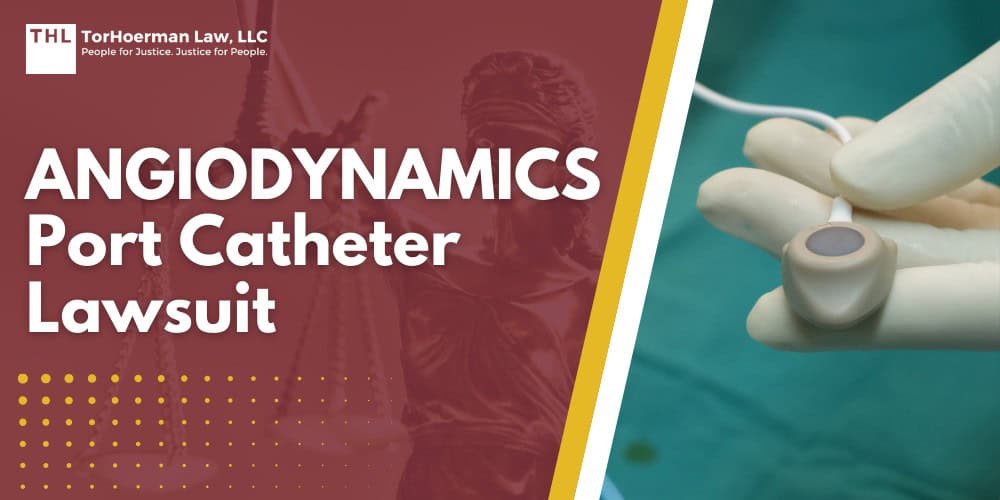
The AngioDynamics port catheter lawsuit claims that port catheters manufactured by AngioDynamics and Navilyst Medical are prone to structural failure when the catheter material degrades inside the body.
These port catheter systems, designed to provide long-term venous access for treatments like chemotherapy, have been linked to fractures, migrations, and blockages that place affected patients at serious risk.
Many individuals have reported injuries requiring emergency surgery or other urgent medical intervention to remove or replace the damaged device.
When the catheter breaks apart or sheds fragments into the bloodstream, it can cause embolisms, infections, and other significant medical issues that endanger a patient’s life.
Medical professionals have raised concerns that the design and composition of these devices make them more susceptible to wear and fracture over time.
Lawsuits filed nationwide allege that the companies failed to warn healthcare providers and patients about these risks.
The growing number of cases has led to mass tort litigation now consolidated in the Southern District of California under federal multidistrict proceedings.
TorHoerman Law is investigating claims from individuals who experienced complications or surgeries linked to defective AngioDynamics port catheters.
If you or a loved one experienced severe complications such as blood clots, infections, or catheter fractures requiring surgery due to a defective AngioDynamics port catheter, you may be eligible to file an AngioDynamics Port Catheter Lawsuit and seek compensation.
Contact TorHoerman Law for a free consultation.
Use the chatbot on this page to find out if you qualify for the AngioDynamics Port Catheter Lawsuit instantly.
A new product liability lawsuit filed against AngioDynamics and Navilyst Medical alleges that a SmartPort implanted to deliver chemotherapy fractured and had to be surgically removed.
The complaint was filed October 8, 2026 in the Southern District of California by the widow of a South Carolina man, on her own behalf and as representative of his estate.
According to the suit, the port was implanted in March 2020, found fractured in October 2023 and removed the following month.
The plaintiff alleges that problems with the concentration and distribution of barium sulfate in the catheter’s polymer, along with the mixing process, weakened the tubing, and that safer alternative designs were available.
She also claims the defendants knew or should have known about SmartPort fracture reports and other complications but kept selling the device, and that her husband and his doctors would not have used it had the risks been disclosed.
The suit brings claims for negligence, design defect, manufacturing defect, failure to warn, breach of warranty, fraudulent concealment, a survival action and a violation of South Carolina’s Unfair Trade Practices Act, and seeks general and punitive damages.
Several AngioDynamics port catheter cases are pending before U.S. District Judge Jinsook Ohta in the same district, centralized for coordinated discovery and pretrial proceedings, and a small group of representative cases is expected to be chosen for early bellwether trials.
An Oklahoma woman has filed a wrongful death lawsuit against AngioDynamics, alleging a defectively designed SmartPort port catheter caused the infection and sepsis that killed her husband.
She filed the complaint on behalf of herself and her husband’s estate in the Southern District of California on October 1, naming AngioDynamics Inc. and Navilyst Medical Inc. as defendants.
According to the complaint, her husband received the SmartPort in August 2024 to facilitate chemotherapy, and just weeks later, in early October, he was hospitalized with a serious infection and diagnosed with sepsis.
Doctors determined the implanted port was the source and removed it on October 15, 2024, but the lawsuit alleges the infection had already progressed too far, and he died four days later.
She alleges the defendants knew or should have known the SmartPort had a substantially higher failure rate than comparable products, failed to warn consumers, and concealed the severity and likelihood of complications.
Her claims include fraudulent concealment, negligence, failure to warn, design and manufacturing defects, breach of warranty, wrongful death and survival, and she seeks compensatory and punitive damages.
The case will be consolidated with hundreds of similar AngioDynamics port catheter lawsuits before Judge Jinsook Ohta in the Southern District of California, who is expected to eventually order attorneys to identify representative claims for early bellwether trials.
A separate MDL in Arizona covers the Bard PowerPort cases, where the second bellwether trial ended in a $40 million verdict.
The AngioDynamics port catheter MDL added 11 cases between September and October, increasing from 428 to 439.
The continued growth comes as the litigation moves through an extended bellwether schedule, with the first trials currently expected to begin in 2028.
New claims continue to allege serious complications involving AngioDynamics port devices, including infections, catheter fractures, blood clots, and device removal.
If you or a loved one experienced severe complications due to a defective AngioDynamics port catheter, you may be eligible to file a lawsuit and seek compensation.
Contact TorHoerman Law for a free consultation.
Use the chat feature on this page to find out if you qualify for the AngioDynamics Port Catheter lawsuit instantly.
Recent AngioDynamics port catheter lawsuits allege that patients developed serious infections after receiving SmartPort or Xcela devices, with some requiring hospitalization, treatment for sepsis, and surgical removal of the port.
The complaints connect those injuries to alleged defects in the catheter material and inadequate warnings about infection risks.
Plaintiffs contend that excessive barium sulfate in the catheter material causes degradation, leaving surfaces vulnerable to pitting and cracking.
They allege that those changes contribute to infections, blood clots, and catheter fractures.
The Judicial Panel on Multidistrict Litigation identified these shared allegations when centralizing the AngioDynamics lawsuits, along with common questions about device design, testing, manufacturing, and safety warnings.
The centralization order did not establish that the devices were defective or caused the reported injuries.
Whether an alleged defect caused a particular patient’s complications remains a case-specific question.
Discovery will help attorneys examine the connection between the alleged defects and individual injuries as they prepare potential bellwether cases, which serve as early test cases.
Under the court’s July 23, 2026, deposition protocol, preliminary discovery includes testimony from patients, relevant treating physicians, and certain current or former company employees.
That testimony can help attorneys examine patients’ treatment histories and information company witnesses possess about the devices.
The order also requires attorneys to share documents provided or shown to treating healthcare providers with opposing counsel at least 48 hours before their depositions.
The AngioDynamics port catheter MDL added 21 cases between August and September, increasing from 407 to 428.
The continued growth comes as the litigation moves through an extended bellwether schedule, with the first trials now expected in 2028.
The additional cases show the docket is still expanding despite the longer timeline before the first bellwether trials.
A Kentucky woman has filed a claim against AngioDynamics, Navilyst Medical, and PFM Medical alleging her Xcela port catheter caused a severe infection that required surgical removal.
The case joins the AngioDynamics MDL centralized in the U.S. District Court for the Southern District of California.
The plaintiff received her Xcela port in May 2020 for ongoing venous access.
In October 2021, she was hospitalized with a fever, and doctors traced the infection to the port catheter, removing it days later.
Her complaint alleges the manufacturers knew the Xcela carried a higher failure rate than comparable devices and concealed that risk rather than warning patients or issuing a recall.
She brings claims for negligence, failure to warn, design defect, breach of warranty, and fraudulent concealment.
Judge Ohta has already directed the parties in the MDL to propose a leadership structure for the plaintiffs’ attorneys and is expected to set up a bellwether trial process, selecting a small number of representative cases to test how juries respond to the core allegations before the broader docket moves toward resolution.
A Pennsylvania man has filed suit against AngioDynamics, alleging his SmartPort catheter’s design promoted bacterial growth, leading to a severe infection and sepsis within weeks of implantation.
The case adds to a growing series of SmartPort infection suits filed against the company in recent weeks, each alleging the device’s barium sulfate coating degrades over time, creating microscopic cracks where bacteria can accumulate.
The suit joins hundreds of AngioDynamics port catheter cases pending in the Southern District of California, where bellwether trials are expected to help gauge how juries respond to the underlying design defect allegations.
The Angiodynamics port catheter MDL added 6 cases between July and August, increasing from 401 to 407.
The steady growth follows additional lawsuits filed over the summer alleging SmartPort and Vortex port catheters caused serious complications, including bloodstream infections, sepsis, blood clots, and device failures requiring surgical removal.
The new filings continue to expand the MDL as patients allege AngioDynamics failed to adequately warn physicians and consumers about the risks associated with its implantable port systems.
A new lawsuit has been filed against AngioDynamics Inc. and Navilyst Medical in the U.S. District Court for the Southern District of California, joining others consolidated in the MDL.
The plaintiff filed the complaint on July 10, alleging his SmartPort catheter, implanted in July 2025 for chemotherapy access, caused a serious bloodstream infection.
The plaintiff developed fever and arm swelling in January 2026, and blood cultures confirmed sepsis along with a thrombus near his jugular and subclavian veins.
He claims AngioDynamics knew for years about infection and thrombosis risks tied to the device but concealed adverse event reports rather than warning patients.
The case joins hundreds of AngioDynamics port catheter lawsuits pending before Judge Jinsook Ohta in the Southern District of California.
A new lawsuit filed in the AngioDynamics port catheter MDL alleges that a defectively designed SmartPort device caused a Minnesota woman to develop a Staphylococcus epidermidis infection that required surgical removal of the implanted port.
According to the complaint, the SmartPort was implanted in September 2022 for chemotherapy, but signs of infection developed within weeks.
After multiple hospitalizations and antibiotic treatment, doctors removed the device in November 2022.
The plaintiff alleges the catheter’s design increased the risk of bacterial growth and infection, leading to serious complications.
The lawsuit adds to the growing number of claims in the federal MDL alleging that AngioDynamics’ implantable port catheters are prone to infection, fractures, thrombosis, and other failures because of alleged design defects involving the catheter material.
It also raises claims that the manufacturers failed to adequately warn physicians and patients about those risks, as the litigation continues through coordinated pretrial proceedings in the Southern District of California.
A South Carolina woman filed a lawsuit on June 24th alleging that an AngioDynamics Vortex port catheter caused recurrent pulmonary embolisms and a serious infection that required the device to be surgically removed.
The complaint claims the catheter’s design made it more susceptible to blood clot formation and bacterial buildup, and alleges the manufacturers failed to adequately warn of those risks.
The case adds to the growing AngioDynamics port catheter MDL in the Southern District of California, where plaintiffs similarly claim the company’s implantable ports were defectively designed and linked to infections, blood clots, fractures, and other serious complications.
The AngioDynamics port catheter MDL added 10 cases between June and July, bringing the total from 391 to 401.
The increase follows a series of newly filed lawsuits alleging AngioDynamics implantable ports caused infections, catheter fractures, thrombosis, and other complications requiring additional medical treatment or device removal.
The new filings continue to expand the litigation as plaintiffs pursue claims involving alleged design defects and inadequate safety warnings.
A newly filed lawsuit alleges that an AngioDynamics SmartPort catheter caused a woman to suffer multiple bloodstream infections after the device was implanted.
According to the complaint, the plaintiff experienced recurring infections that required repeated medical treatment and hospital care before doctors ultimately removed the port.
The lawsuit contends that defects in the device increased the risk of bacterial contamination and serious infection-related complications.
The case adds to a growing number of claims filed by patients who allege AngioDynamics port catheters failed after implantation and caused severe injuries.
Plaintiffs in the litigation continue to raise concerns about infections, catheter fractures, migration, and other complications that can require additional surgeries and prolonged medical treatment.
As new cases continue to enter the proceedings, attorneys are gathering evidence related to the safety and long-term performance of the devices.
A Florida woman has filed a new lawsuit against AngioDynamics and Navilyst Medical, alleging that an Xcela port catheter implanted in 2022 failed within months, causing an occlusive thrombus, a blood clot that blocked blood flow in a vein.
The complaint, filed on June 1 in the Southern District of California, alleges that the manufacturers knew the devices were linked to thrombosis, infections, and other complications related to catheter deterioration but continued to market them as safe.
The plaintiff alleges that the clot exposed her to the risk of a potentially fatal pulmonary embolism if it had traveled to her heart or lungs.
The lawsuit alleges negligence, design defect, failure to warn, breach of warranty, and fraudulent concealment, seeking compensation for medical expenses and other damages.
The case joins nearly 400 AngioDynamics port catheter lawsuits, consolidated before Judge Jinsook Ohta in the Southern District of California.
As discovery continues, the court is preparing a group of bellwether cases to test key evidence and arguments before juries, with the results expected to influence future settlement discussions and litigation strategy.
A Nevada woman has joined the AngioDynamics port catheter MDL, alleging that an Xcela Power Injectable port catheter caused thrombosis in her right internal jugular vein and required surgical removal of the device.
The lawsuit, filed on May 21 in the Southern District of California, claims that Victoria Whiteford developed neck swelling and clotting about a year after receiving the catheter for long-term intravenous access, and imaging later confirmed thrombosis.
According to the complaint, the Xcela catheter was manufactured using polyurethane containing barium sulfate, a material plaintiffs allege can degrade over time, creating pits, fissures, and cracks that increase the risk of thrombosis, infection, and other complications.
Whiteford alleges that the manufacturers were aware of reports linking the devices to thrombosis, fractures, migration, and other failures, yet continued to market them without adequate warnings for physicians or patients.
The AngioDynamics port catheter MDL added 16 cases between May and June, increasing from 375 to 391.
The increase comes as the court recently extended the bellwether schedule, pushing the first trial dates into 2028 and giving both sides additional time to complete expert discovery and prepare representative cases.
The revised timeline signals that the litigation is entering a more evidence-intensive phase as attorneys continue developing claims involving catheter fractures, migration, and other device failures.
The federal judge overseeing the AngioDynamics port catheter MDL has extended the deadline for selecting bellwether discovery cases, giving both sides until August 4, 2026 to each choose nine lawsuits for an initial pool of 18 representative claims.
The litigation involves allegations that AngioDynamics port catheter systems, including the SmartPort, Vortex Port and Xcela devices, were defectively designed and prone to fractures, infections, migration and blood clot complications.
Plaintiffs claim the use of barium sulfate weakened the polyurethane catheter material over time, increasing the risk of cracks and device failure.
Under the updated schedule, the parties must also finalize Plaintiff and Defendant Fact Sheets by July 14, 2026.
Preliminary fact discovery for the initial bellwether pool is expected to continue into early 2027, with the field eventually narrowed down to 10 cases for more detailed discovery.
Judge Jinsook Ohta’s current timeline indicates the first AngioDynamics bellwether trials are unlikely to begin until at least mid-2028.
The proceedings are being closely watched as a separate Bard PowerPort bellwether trial is already underway in Arizona federal court.
That case could provide an early indication of how juries may respond to evidence involving allegedly defective port catheter systems and claims that manufacturers failed to adequately warn about the risks of fractures, infections and other serious complications.
A federal bellwether trial involving Bard’s PowerPort catheter is focusing on whether the company failed to adopt safer technologies that could have reduced infection risks, with Bard defending its design and testing decisions.
At trial, a former Bard research director testified that the company evaluated multiple antimicrobial coatings and other technologies but determined they were not safe or effective enough for patient use.
He stated that no clinically proven coating has been shown to reliably reduce infection rates in port catheters and that some alternatives introduced new risks, such as weakening the device or disrupting fluid flow.
Plaintiffs argue the company overlooked viable options that could have prevented infections, pointing to internal development efforts and regulatory submissions that were ultimately abandoned.
The case centers on whether Bard should have pursued additional testing or approval of antimicrobial designs that plaintiffs claim were feasible.
The Bard PowerPort lawsuit is similar to the AngioDynamics port catheter lawsuit, but are separate and distinct legal proceedings.
Both of these cases focus on the alleged defects in port catheter devices which make them prone to fracture and migration, leading to serious health risks like infection and thrombosis.
The AngioDynamics port catheter MDL added 18 cases between April and May, increasing from 357 to 375 cases pending.
The AngioDynamics port lawsuit is consolidated in federal court, combining cases from across the country from people who have suffered from catheter migration, fracture, infection, and other serious injuries.
A newly filed lawsuit in the AngioDynamics MDL adds to the allegations of how catheter design defects may directly lead to infection and blood clot complications shortly after implantation.
According to the complaint, the plaintiff developed both a neck infection and thrombosis within weeks of receiving a Vortex port, requiring surgical removal of the device and leaving her with lasting physical injuries.
The case claims the device’s construction, specifically its polyurethane catheter combined with barium sulfate, can degrade over time.
This creates microfractures that weaken the structure and allow bacteria to enter the bloodstream.
The lawsuit also alleges that AngioDynamics was aware of a pattern of similar failures, including infections, clotting, and catheter fractures, but continued to market the device as safe while underreporting adverse events and failing to warn physicians or patients
This type of claim is significant for the broader litigation.
Rather than focusing only on isolated device failures, the complaint ties specific injuries (thrombosis and infection) to identifiable material and design choices.
As more cases raise similar allegations, courts and juries will be asked to evaluate whether these complications stem from inherent product defects rather than surgical technique or patient-specific factors.
The AngioDynamics port catheter MDL added 13 cases between March and April, increasing from 344 to 357.
Filing activity remains steady as new catheter fracture and migration claims enter the docket.
The court continues to oversee coordinated discovery, with no new JPML transfer activity reported during the month.
A new Port-a-Cath Lawsuit was filed on March 26, 2026, in the U.S. District Court for the Central District of California.
An Indiana resident alleges that her ICU Medical Inc. Port-A-Cath II Power P.A.C. failed during chemotherapy for metastatic anal cancer, resulting in a serious bloodstream infection.
ICU Medical Inc. is the successor to Smiths Medical ASD Inc.
Port-a-cath devices are implanted ports that allow repeated intravenous access for medications and fluids, commonly used during cancer treatment.
Reports of failures, fractures, migration, and infections have raised concerns over design defects in several models, including those manufactured by ICU Medical, AngioDynamics, and C.R. Bard.
Hiatt claims she received her Port-A-Cath II Power P.A.C. in December 2023.
By early April 2024, she experienced redness, swelling, and tenderness around the device.
A CT scan confirmed soft tissue inflammation near the port. Infectious disease experts were consulted, Hiatt was hospitalized, and the port was removed.
She received intravenous antibiotics and later required another port catheter to continue chemotherapy.
A new lawsuit filed in federal court alleges that an AngioDynamics SmartPort catheter caused a patient to suffer serious complications, including infection, sepsis, and a pulmonary embolism.
The complaint, filed on March 17, 2026, in the U.S. District Court for the Southern District of California, claims the implanted port device was defectively designed and unreasonably dangerous.
According to the filing, the plaintiff received the SmartPort to administer medical treatment but later developed severe health issues that required additional medical care.
The lawsuit alleges that the device contributed to the development of a bloodstream infection that progressed to sepsis, as well as a pulmonary embolism, a potentially life-threatening condition involving a blood clot in the lungs.
A newly filed lawsuit alleges that a chemotherapy injection port manufactured by AngioDynamics caused a fatal infection after implantation, adding to a growing number of lawsuits involving implantable vascular access devices.
The complaint was filed March 6 in the U.S. District Court for the Southern District of California and names AngioDynamics Inc. and Navilyst Medical as defendants.
The complaint alleges that the plaintiff underwent implantation of the SmartPort chemotherapy injection port in January 2024.
SmartPort is part of a line of implantable port catheter systems designed to provide long-term access to a patient’s bloodstream for repeated delivery of medications such as chemotherapy.
The devices are commonly referred to as totally implantable vascular access devices, which consist of a small port placed under the skin that connects to a catheter delivering medication directly into a vein.
According to the lawsuit, she developed an infection shortly after the SmartPort implantation. The complaint alleges the infection caused bacteremia, shock, severe weakness, and cardiac arrest.
The lawsuit claims AngioDynamics failed to adequately warn physicians and patients about potential safety risks associated with the SmartPort catheter design.
Plaintiffs allege the company used barium sulfate as an additive in the polyurethane catheter material to make the device visible during medical imaging scans.
The complaint states that the additive may weaken the catheter material over time.
Plaintiffs allege that degradation may cause catheter fractures, device migration, or openings that allow bacteria to enter the bloodstream.
Lawyers on both sides of the AngioDynamics port catheter MDL have agreed on a framework to select 18 cases for early bellwether discovery and potential trial.
In a joint filing submitted on March 2, the parties confirmed that each side will nominate nine lawsuits from the nearly 350 claims pending before U.S. District Judge Jinsook Ohta in the Southern District of California.
The selections are due by June 5, 2026, after which the cases will proceed to case-specific discovery.
The agreed structure specifies that four of the nine cases selected by each side must involve only infection claims.
Two cases must involve thrombosis injuries, two must involve catheter fracture claims, and one case may involve any injury except wrongful death.
The bellwether pool will enable the court and attorneys to assess how juries respond to the main allegations that AngioDynamics port catheters fracture, migrate, cause infections, or otherwise fail after implantation.
The initial trials will help both parties evaluate testimony and evidence likely to be repeated throughout the litigation.
While the outcomes will not decide the remaining lawsuits, they often influence settlement talks or future trial strategies for the wider group of claims.
The AngioDynamics litigation added 27 cases between February and March, increasing from 317 to 344.
The rise reflects continued filings alleging that certain port catheter devices fractured, migrated, or caused infections and other serious complications after implantation.
The court continues to oversee coordinated discovery and pretrial proceedings within the federal multidistrict litigation.
The AngioDynamics cases focus on claims that the devices were defectively designed and that adequate warnings were not provided regarding fracture and embolization risks.
Courts overseeing AngioDynamics port catheter cases are closely examining serial imaging, meaning multiple CT scans and X-rays taken over time, to determine when a catheter fracture actually occurred.
In several cases, plaintiffs present imaging obtained shortly after implantation that shows the catheter intact and properly positioned.
Later scans, sometimes months or years after the procedure, document separation of the catheter, migration of fragments, or embolization (when a broken piece travels through the bloodstream).
Defense attorneys argue that any fracture likely occurred during surgical placement, not due to a product defect during normal use.
If that is true, liability could shift away from the manufacturer.
Courts are now analyzing whether the chronological sequence of imaging creates a genuine factual dispute.
When early scans show an undamaged device and later scans reveal a break, lawyers may be able to argue that the fracture occurred over time rather than during implantation.
Objective imaging records, timestamped and independently generated, can be extremely strong and convincing pieces of evidence.
A new lawsuit against AngioDynamics adds to growing allegations that its Vortex port catheter can cause serious blood clot complications.
An Arizona woman claims she developed extensive upper-body swelling years after implantation, which doctors later traced to a thrombus forming around the catheter.
The clot required surgical removal of the device and additional medical treatment.
According to the complaint, the port catheter was implanted during chemotherapy to allow repeated vein access.
Several years later, imaging revealed that the catheter was surrounded by a blood clot, a known risk associated with long-term vascular devices.
The lawsuit alleges the device’s design increased thrombosis risk and that AngioDynamics failed to adequately warn physicians and patients once reports of clotting, fractures, infections, and embolic events began to surface.
The case also alleges that the company continued to market the Vortex port as safe and effective despite internal knowledge of these complications.
Allegations include negligence, design defect, failure to warn, breach of warranty, and fraudulent concealment, with the plaintiff seeking both compensatory and punitive damages.
This lawsuit will be folded into the coordinated federal port catheter litigation overseen by Judge Jinsook Ohta in the Southern District of California.
The court has ordered 18 representative cases to be prepared for bellwether trials, which will test how juries respond to evidence regarding clot formation, device design, and the manufacturer’s knowledge.
While bellwether verdicts will not control other cases, they are expected to materially influence settlement negotiations and the future course of AngioDynamics port catheter litigation.
In the first Port-a-Cath bellwether case, the court prevented Bard’s retained oncologist, Dr. Benjamin Musher, from providing a causation opinion on how Plaintiff Robert Cook contracted his infection.
The judge found that while Dr. Musher treats cancer patients who experience infections, he lacks the specialized training and experience needed to identify the source of a port-related infection.
As a result, he cannot testify that Cook’s infection was likely caused by factors other than the Bard device.
The ruling directly challenges Bard’s attempt to shift responsibility away from its Port-a-Cath and onto patients, families, or medical staff.
The court rejected the argument that general experience managing infections is sufficient to determine their cause, emphasizing that treating an infection is not the same as pinpointing its origin.
With Bard’s chosen causation expert sidelined, plaintiffs move into the bellwether phase with a significant evidentiary lead.
The AngioDynamics port catheter MDL added 22 cases between January and February, increasing from 295 to 317.
Filing activity continues at a steady pace.
No major JPML actions or significant docket developments were reported during the month.
If you or a loved one experienced severe complications such as blood clots, infections, or catheter fractures requiring surgery due to a defective AngioDynamics port catheter, you may be eligible to file an AngioDynamics Port Catheter Lawsuit and seek compensation.
Contact TorHoerman Law for a free consultation.
Use the chatbot on this page to find out if you qualify for the AngioDynamics Port Catheter Lawsuit instantly.
AngioDynamics lawsuits increasingly hinge on when a port catheter fractured, with courts closely reviewing CT scans, X-rays, and operative reports to establish timing.
Plaintiffs are relying on serial imaging taken at different points in time to establish a fracture timeline.
Early imaging or operative records show the port catheter intact immediately after implantation, while later CT scans or X-rays reveal separation of the catheter, movement of a broken segment, or embolization into the heart or lungs.
By showing that the catheter was intact at placement and failed later during normal use, plaintiffs argue the fracture cannot be attributed to surgical technique and instead points to a device-related failure.
Operative and retrieval records are also central.
Surgeons’ operative notes are used to describe where the fractured catheter segment was found, whether the fragment had become endothelialized (meaning tissue had grown around it), and whether retrieval required complex or prolonged procedures.
These details help show that the catheter fragment had been in the body long enough for biological changes to occur, supporting an argument that the fracture happened well after implantation, sometimes months or years later, rather than during the initial surgical placement.
This case-specific evidence allows plaintiffs to tie the fracture to device performance during normal use rather than implantation error.
Why This Matters
Timing determines liability in the AngioDynamics lawsuit.
Courts scrutinize imaging-based timelines to decide whether claims survive summary judgment by defeating implantation-error defenses and establishing causation tied to the device itself.
Where imaging and operative records align, plaintiffs are more likely to proceed to trial; where records are incomplete, cases face early dismissal.
A new wrongful death lawsuit alleges that a defective AngioDynamics Vortex port catheter caused a severe infection that led to sepsis and death.
The claim is set to join nearly 300 similar port catheter lawsuits pending in federal court.
The lawsuit states that the implanted port catheter caused a bloodstream infection that progressed to severe sepsis and multi-organ failure.
The device had been implanted to provide long-term vascular access during cancer treatment.
Despite removal of the port and antibiotic treatment, the patient later died from complications linked to the infection.
The complaint alleges the catheter was defectively designed and prone to microfractures.
These fractures allegedly allowed bacteria to enter the bloodstream.
The lawsuit claims the risk was increased by materials used in the catheter, including barium sulfate, which plaintiffs say weakens structural integrity over time.
Plaintiffs argue AngioDynamics knew for years that these materials could increase infection and fracture risks.
They allege the company failed to redesign the device or warn physicians and patients.
The lawsuit asserts negligence, failure to warn, design defect, and fraudulent concealment, and seeks compensatory and punitive damages.
The case will be coordinated with other AngioDynamics port catheter lawsuits in federal court.
A group of cases is being prepared for bellwether trials, which could shape future settlement discussions across the litigation.
A Georgia man has filed a new lawsuit against AngioDynamics and Navilyst Medical, alleging his Vortex port catheter failed, caused an infection, and necessitated surgical removal.
Matthew Massingill filed the complaint on December 22 in the Southern District of California, where nearly 300 similar port catheter cases are now consolidated before Judge Jinsook Ohta.
Massingill alleges AngioDynamics knew for years that its port catheters were prone to microfractures, infections, and other issues, but failed to warn doctors or patients and did not carry out enough post-market surveillance.
According to the complaint, he received a Vortex port in August 2013, developed an infection within months, and had the device surgically removed in January 2014 after physicians identified it as the cause.
The case will proceed as part of the AngioDynamics port catheter MDL, where Judge Ohta has ordered the selection of 18 representative cases for bellwether consideration.
Eight of those cases will move forward to early trials, which could influence settlement talks. If no agreement is reached, the other lawsuits may be sent back to their original courts for individual trials.
The AngioDynamics port catheter MDL added 26 cases between December and January, bringing the total to 295.
Filing activity shows a modest uptick compared to prior months.
No major JPML actions or significant docket developments were reported during the period.
A federal appeals court has ruled in favor of AngioDynamics, confirming that key patents held by C.R. Bard related to implantable catheter ports are invalid and cannot be enforced against AngioDynamics’ competing products.
The court agreed with a lower court that Bard’s patent claims were not new inventions because similar port designs already existed before Bard filed its patents, including Bard’s own earlier devices.
As a result, the court overturned a previous jury verdict that had temporarily favored Bard.
At issue were claims that Bard’s ports could be identified on X-rays using specific markers to indicate they were safe for high-pressure injections.
The court ruled that visibility on X-ray alone does not make a device patentable, since earlier catheter ports already had shapes and features that doctors could clearly see using medical imaging.
The court also rejected Bard’s argument that letters or symbols visible on X-rays created a valid invention, explaining that such markings only communicate information to doctors and do not change how the device functions.
Because evidence showed that earlier catheter ports, including those sold by AngioDynamics, were already capable of handling high-pressure injections, the court concluded Bard’s patents were anticipated by existing technology.
The decision brings a long-running patent case to a close and clears AngioDynamics of infringement liability related to Bard’s PowerPort patents.
New product liability lawsuits claim that certain port catheters manufactured by AngioDynamics are prone to design and manufacturing defects that can lead to dangerous and potentially fatal infections, including septic shock.
Plaintiffs assert that the devices (implanted to provide long-term intravenous access) develop conditions such as bacterial colonization, internal leakage, and structural failure that allow pathogens to enter the bloodstream, triggering systemic infection and severe complications.
The complaints allege that AngioDynamics failed to adequately test the port catheter systems or warn healthcare providers and patients about known infection risks, and that the company’s risk disclosures were misleading or insufficient.
In several cases, plaintiffs say they suffered life-threatening septic shock, prolonged hospital stays, and additional surgical interventions as a result of complications tied to the catheters.
AngioDynamics port catheter lawsuits seek compensation for medical expenses, long-term disability, and pain and suffering.
These cases focus on traditional product liability theories such as design defect, failure to warn, and negligence.
The Judicial Panel on Multidistrict Litigation (JPML) has consolidated these claims for coordinated pretrial proceedings to streamline discovery and identify common factual and scientific questions about device safety and infection mechanisms.
The Depo-Provera MDL now includes more than 2,100 pending cases, with additional Depo-Provera claims under active investigation.
Plaintiffs in the Depo-Provera lawsuit allege that long-term exposure to medroxyprogesterone acetate caused intracranial meningioma, a brain tumor that often requires surgery and ongoing neurological care.
The Depo-Provera litigation centers on allegations that Pfizer failed to warn patients and prescribing clinicians about the meningioma risk associated with prolonged Depo-Provera use.
Discovery continues to focus on what Pfizer knew about tumor risks and when the company should have disclosed that information.
Judge Casey Rodgers, who oversees the Depo-Provera MDL, scheduled monthly status conferences throughout 2026 to manage discovery, expert challenges, and early trial preparation.
The court set twelve conferences beginning January 23, 2026, and continuing through December 18, 2026.
The court also directed both sides to select five Depo-Provera pilot cases for early bellwether trials.
The bellwether process will evaluate the scientific evidence and assess how juries respond to the Depo-Provera meningioma allegations.
Before any pilot trial moves forward, plaintiffs must establish general causation, meaning proof that Depo-Provera can cause meningioma.
Motions challenging Depo-Provera general causation experts are due March 22, 2026.
The Angiodynamics port catheter MDL added 7 cases between November and December, bringing the total to 259.
Growth remains gradual.
No major docket activity or updates have been recorded in recent weeks.
A new lawsuit filed in the U.S. District Court for the Southern District of California alleges that design defects in the AngioDynamics Xcela chemo port caused life-threatening infections and disrupted a woman’s breast cancer treatment.
The plaintiff, Daun Reed of Missouri, was implanted with an Xcela Plus Port catheter in December 2018 to support her chemotherapy.
In April 2025, Reed was hospitalized with severe symptoms that quickly escalated to sepsis and Group B strep bacteremia. Within two days, doctors identified her Xcela port as the source of the infection and removed the device.
Testing confirmed strep bacteria on the catheter tip.
According to the complaint, the Xcela port not only endangered Reed’s life but also forced her to stop chemotherapy altogether.
Unwilling to undergo another port implant, Reed had to switch to immunotherapy, altering her breast cancer treatment plan entirely.
The lawsuit claims that AngioDynamics, along with Navilyst Medical Inc. and PFM Medical Inc., knowingly marketed an unreasonably dangerous device.
Similar to prior lawsuits over SmartPort and Vortex devices, Reed’s case highlights recurring allegations that barium sulfate used in the port’s material compromises its structural integrity, causing microfractures, infections, and blood exposure risks over time.
Reed is seeking compensatory and punitive damages under claims including:
This case joins a growing number of product liability suits filed against AngioDynamics and other port catheter manufacturers, as plaintiffs across the country continue to report serious complications.
A newly filed lawsuit accuses AngioDynamics and its subsidiary Navilyst Medical of knowingly placing patients at risk by failing to address serious design and manufacturing flaws in its SmartPort catheter system.
The complaint was brought by the widow of the victim, who died after suffering severe thrombosis complications allegedly caused by the defective device.
The victim received a SmartPort CT Single Titanium Port System in February 2023 to facilitate chemotherapy for lung cancer.
Just five months later, he was hospitalized with acute thrombosis, where doctors identified two blood clots linked directly to the implanted port.
Despite efforts to treat the condition, Ballew’s health rapidly declined, and he passed away on October 3, 2025.
According to the lawsuit, the SmartPort’s flawed design and material composition were directly responsible for his injuries.
Specifically, the complaint points to the use of barium sulfate in the catheter material, which plaintiffs allege weakens the structural integrity of the device.
This makes the ports brittle over time, leading to microfractures, blood clots, device migration, and potentially fatal complications.
The lawsuit further alleges that AngioDynamics and Navilyst had received hundreds of adverse event reports from other patients experiencing similar complications.
However, the companies failed to issue warnings, update safety labels, or conduct a recall, allowing the defective product to remain on the market.
The complaint outlines multiple legal claims, including:
The plaintiff is seeking both compensatory and punitive damages, arguing that the device “contained manufacturing defects when it left the Defendants’ possession,” and that these defects created “an unreasonably dangerous risk of injury.”
Case filings in the AngioDynamics port catheter lawsuit increased slightly between October and November, rising from 248 to 252.
This MDL focuses on alleged defects in implantable port devices used for long-term medication delivery.
Plaintiffs claim the catheters can fracture or degrade inside the body, leading to serious health risks.
The ongoing case growth suggests continued scrutiny of device safety and manufacturer responsibility.
If you or a loved one experienced severe complications such as blood clots, infections, or catheter fractures requiring surgery due to a defective AngioDynamics port catheter, you may be eligible to file an AngioDynamics Port Catheter Lawsuit and seek compensation.
Contact TorHoerman Law for a free consultation.
Use the chatbot on this page to find out if you qualify for the AngioDynamics Port Catheter Lawsuit instantly.
A coordinated case management plan has been approved for the growing number of lawsuits involving AngioDynamics port catheter injuries.
Plaintiffs allege that the company’s implanted port systems, used to deliver chemotherapy and other intravenous treatments, were defectively designed and caused severe injuries, including catheter fractures, infections, device migration, and thrombosis.
There are currently at least 128 lawsuits pending in federal court over AngioDynamics’ SmartPort, Vortex Port, Xcela Port, and similar products.
All federal claims have been consolidated under U.S. District Judge Jinsook Ohta in the Southern District of California.
To move the litigation forward, Judge Ohta has outlined a bellwether selection process.
These early test trials will evaluate how juries respond to the most common injury types alleged in the litigation: infections, device fractures, and thrombosis.
Key dates in the selection timeline include:
These cases will go through additional discovery, expert depositions, and potentially trial preparation.
While the outcomes will not be binding on other plaintiffs, the bellwether results may shape future settlement negotiations or guide broader litigation strategy.
This MDL mirrors the structure of the Bard PowerPort litigation, which involves nearly 2,000 similar claims over catheter design failures.
As in that case, AngioDynamics plaintiffs argue that port failures were not isolated events but stemmed from systemic design flaws.
If no global settlement is reached after the bellwether trials, Judge Ohta may remand individual cases to their original jurisdictions for trial.
However, this multi-year process will help determine the value and viability of these claims going forward.
The federal litigation over AngioDynamics port catheters is expanding as plaintiffs and defendants prepare to select the first bellwether cases in the Southern District of California before Judge Jinsook Ohta.
More than 130 lawsuits allege that devices such as the SmartPort, Vortex Port, and Xcela Port were defectively designed, causing fractures, infections, migration, and blood clots that often require surgery.
One plaintiff from Kentucky says her SmartPort failed within months of implantation, leaving her permanently injured.
Her suit accuses the manufacturer of ignoring years of fracture reports and failing to warn doctors of known risks.
The court’s plan calls for narrowing 18 candidate cases to eight bellwether trials by December 2026, focusing on the most common injuries.
These early trials will help shape settlement negotiations and test key evidence that could impact hundreds of similar claims nationwide.
Lawyers representing both sides in the AngioDynamics port catheter MDL have outlined a plan to select 18 bellwether cases by June 2026.
These early test trials will focus on three key injuries: port catheter infections, device fractures, and thrombosis, which are among the most common and serious complications reported by plaintiffs.
Currently, at least 128 lawsuits have been filed against AngioDynamics over alleged defects in port catheter implants like the SmartPort, Vortex Port, and Xcela Port, devices often used during chemotherapy or other long-term IV treatments.
Plaintiffs claim the implants are prone to fracture, migrate, cause infection, or lead to dangerous blood clots, often requiring corrective surgery.
All federal lawsuits have been consolidated under Judge Jinsook Ohta in the Southern District of California for coordinated pretrial proceedings.
This centralization mirrors the structure of a separate MDL against Bard PowerPort, which faces similar allegations.
By December 2026, the initial pool of 18 bellwether cases will be narrowed down to eight, with trials not expected to begin until early 2028.
The outcomes of these early trials will not be binding but are likely to influence future settlement discussions and trial strategies.
As the litigation grows, these bellwether cases will serve as a crucial test of how juries respond to the evidence and expert testimony surrounding port catheter safety.
The AngioDynamics port catheter lawsuit saw a rise in claims between September and October, increasing from 218 to 248 total cases.
The litigation centers around allegations that the company’s implantable port catheter devices were defectively designed, leading to catheter fractures, migration, and severe internal injuries.
This steady climb in case volume reflects continued awareness and legal action among individuals who have experienced complications.
More than 200 lawsuits have been filed in federal court alleging that AngioDynamics’ implantable port catheters were defectively designed and caused serious injuries,
The injuries include catheter fracture, migration, infection, and vascular damage.
The lawsuits are centralized before U.S. District Judge Jinsook Ohta in the Southern District of California as part of a federal multidistrict litigation (MDL), aimed at coordinating discovery and streamlining proceedings.
On September 16, Judge Ohta issued a directive requiring both parties to submit a joint proposal by September 24, 2025, outlining how a small group of bellwether cases should be selected for early trial preparation.
These bellwether trials are not binding but will serve as test cases to help assess jury responses to common evidence and may play a key role in shaping future settlement discussions.
At the heart of the litigation are claims that barium sulfate used in the catheter material degrades over time, weakening the devices and making them prone to fracture, migration, and life-threatening complications.
This litigation is similar to the Bard PowerPort Lawsuit, as both these devices are claimed to be defective based on the presence of barium sulfate in the catheter material.
A wrongful death lawsuit has been filed in California federal court against AngioDynamics Inc., alleging that its SmartPort vascular access device caused the death of a Florida man due to severe complications including sepsis.
According to the complaint, the decedent, John Verkis, received the SmartPort in May 2021 to facilitate medication delivery.
By October 2022, Verkis reported severe chest pain, was hospitalized, and diagnosed with sepsis. He died the following month.
The suit claims the SmartPort catheter, made of silicone or polyethylene mixed with barium sulfate, degrades over time.
This degradation allegedly causes microfractures, material instability, and increased susceptibility to infection, catheter migration, and vessel perforation.
The SmartPort was introduced under FDA 510(k) clearance for a different device, the Triumph VTX Port with LiveValve Catheter, originally developed by Horizon Medical Products.
The plaintiff argues that despite significant design differences, AngioDynamics claimed the two devices were substantially equivalent, making the SmartPort misbranded under federal law.
Additionally, the suit alleges that AngioDynamics received a large volume of adverse event reports, including device fractures and vascular perforations, yet failed to properly disclose the severity or frequency of complications to consumers or healthcare providers.
The lawsuit brings claims for:
The case is Carter v. Angiodynamic Inc. et al., No. 3:25-cv-2248, pending in the U.S. District Court for the Southern District of Florida.
AngioDynamics has not yet commented publicly on the case.
The number of pending AngioDynamics lawsuits increased in September, rising to 218 cases compared to 208 cases in August.
These lawsuits involve claims that certain AngioDynamics medical devices caused serious injuries due to alleged defects in their design and manufacture.
As more individuals come forward, the litigation continues to progress with pretrial proceedings focused on evidence gathering and case coordination.
Lawsuits are growing against AngioDynamics over its implantable port catheter systems, with plaintiffs alleging that defective designs and materials have caused dangerous infections, blood clots, and other severe injuries.
AngioDynamics ports, including models like the SmartPort and Xcela Plus, are intended to provide long-term vascular access for patients undergoing treatments such as chemotherapy.
However, claims indicate the polyurethane and barium sulfate blend used in these devices can degrade over time, causing cracks and surface roughness that trap bacteria and promote biofilm formation, leading to catheter-related bloodstream infections and potentially life-threatening complications.
As of August 2025, at least 208 lawsuits have been centralized in the Southern District of California as part of MDL No. 3125. U.S. District Judge Jinsook Ohta is overseeing the litigation, which is currently in early pretrial stages.
A plaintiff leadership committee has been appointed, and a bellwether trial schedule is expected to follow.
Plaintiffs allege that AngioDynamics failed to use safer alternative materials—such as SMA-coated catheters known to resist bacterial colonization—and did not adequately warn patients or healthcare providers of the infection risks.
No recalls have been issued to date for the port devices named in the litigation.
The AngioDynamics port catheter MDL added 28 cases between July and August, increasing the total to 208.
This marks the highest monthly rise in the litigation to date.
Plaintiffs continue to allege catheter fractures and migration, prompting increased scrutiny of device design and long-term safety.
A growing number of product liability lawsuits involving AngioDynamics’ SmartPort implantable port catheter have been consolidated in a federal multidistrict litigation (MDL) in the Southern District of California.
The lawsuits allege that defects in the device have led to serious complications, including pulmonary embolism, catheter fracture, and bloodstream infections.
As of mid-2025, approximately 180 cases have been transferred to MDL No. 3125, overseen by U.S. District Judge Jinsook Ohta.
Plaintiffs claim that the SmartPort (used to deliver medications such as chemotherapy) was defectively manufactured using barium sulfate-infused polyurethane, which allegedly weakens over time and causes microfractures.
These fractures can result in device migration, embolization, or infection.
On March 4, 2025, AngioDynamics and its subsidiary Navilyst Medical filed a motion seeking dismissal of 58 lawsuits, arguing a lack of sufficient product identification.
Plaintiffs’ attorneys have pushed back, asserting that the devices were widely used and marketed under the same design specifications.
Many complaints cite pulmonary embolism and catheter migration as key injuries, with some cases requiring emergency surgical intervention to retrieve fractured components.
Others allege chronic infection or sepsis linked to port degradation.
AngioDynamics has not issued a recall, but litigation continues to highlight safety concerns with long-term use of the SmartPort device.
No bellwether trials have yet been scheduled.
Pretrial proceedings in the MDL are expected to focus on general causation and product design defects.
AngioDynamics port catheters, including SmartPort devices, use barium sulfate to provide visibility under fluoroscopy and other imaging techniques.
Plaintiffs allege that in these devices, barium sulfate is inadequately bonded to the silicone or polyurethane matrix, leading to a gradual leaching of particles into surrounding tissues and fluids.
This leaching process results in surface pitting, where microvoids appear in the device material.
These irregular surfaces not only weaken the catheter wall, making it prone to cracking or breaking, but also allow bacterial adhesion, increasing the likelihood of bloodstream infections.
Over time, repeated mechanical strain (especially during use for chemotherapy or high-pressure injections) can cause catheter fragmentation, with pieces entering the bloodstream or migrating to the heart or lungs.
MDL No. 3125 includes claims that AngioDynamics knew of safer alternatives and did not disclose the long-term risks posed by uncoated barium sulfate and the resulting structural degradation of their port devices.
A new lawsuit has been filed against AngioDynamics, Inc. and Navilyst Medical, Inc. after a Florida woman’s implanted SmartPort catheter fractured and migrated into her heart, allegedly resulting in emergency surgery and serious injury.
The complaint, filed by the woman’s son on behalf of her estate, was brought in the U.S. District Court for the Southern District of California.
According to the lawsuit, the plaintiff received an AngioDynamics SmartPort device on June 10, 2021.
Less than a month later, the port fractured, and multiple pieces were found in her right ventricle.
Emergency procedures were conducted on July 7 and 8 to retrieve the fragments and remove the remaining device.
The plaintiff alleges the SmartPort was defectively designed due to its use of barium sulfate, a compound that may degrade and contribute to structural failure.
The lawsuit claims the manufacturers were aware (or should have been aware) of the device’s potential to fracture, but failed to provide adequate warnings to healthcare providers or patients.
This case joins over 160 similar lawsuits currently centralized in multidistrict litigation (MDL No. 3125) before Judge Jinsook Ohta in the Southern District of California.
The MDL consolidates claims that AngioDynamics’ port catheter devices, including the SmartPort, are prone to fracture and migration, resulting in internal injuries, infections, and in some cases, emergency surgical intervention.
Coordinated pretrial proceedings are ongoing. Bellwether trials may be scheduled to help evaluate liability and damages issues that could affect the broader litigation.
The AngioDynamics port catheter MDL added 18 new cases between June and July, increasing the total from 162 to 180.
This marks the largest month-over-month growth in the litigation.
Plaintiffs continue to allege that defects in the design of AngioDynamics’ implantable ports have led to fracturing, migration, and serious internal injuries.
Pretrial proceedings remain in early stages, with initial discovery and scheduling orders expected to shape the next phase of the litigation.
A new peer-reviewed study, partly funded by AngioDynamics and other central venous access device (CVAD) manufacturers, is raising eyebrows as lawsuits mount against the company over its port catheter systems.
The study, published in the American Journal of Infection Control, prioritized future clinical trials to address infection risks tied to implantable port devices—such as those at the center of ongoing litigation against AngioDynamics
The research, conducted by a coalition of global medical experts, highlighted critical areas for investigation, including catheter securement methods, disinfection protocols, and vascular access team practices.
This comes as AngioDynamics and its subsidiary, Navilyst Medical, face over 150 lawsuits nationwide.
Plaintiffs claim that the companies’ implantable port catheters—used to deliver chemotherapy and other intravenous treatments—are defectively designed and prone to fracturing.
Reports describe broken catheter pieces migrating through the body, sometimes into the heart, requiring emergency surgery and leaving lasting harm or disfigurement.
Allegations in these lawsuits include design defect, failure to warn, negligence, and breach of warranty.
Central to the litigation is the use of barium sulfate in the catheter materials, which plaintiffs argue degrades over time and weakens the device’s structural integrity.
No new cases were added to the AngioDynamics MDL in the past month.
The total remains at 162 cases, a pause in new filings during this period.
A new AngioDynamics SmartPort lawsuit filed on May 7 in the U.S. District Court for the Northern District of California alleges the implant fractured inside the plaintiff’s body, resulting in emergency surgery.
The plaintiff in the suit claims her AngioDynamics SmartPort catheter shattered and migrated to her heart, requiring surgical intervention to retrieve the fractured pieces.
The plaintiff was implanted with the SmartPort in April 2011, but during removal in August 2017, physicians discovered the catheter had broken apart and lodged debris in her right atrium.
The lawsuit alleges the SmartPort’s polymer-based catheter, which contains barium sulfate, was defectively designed, compromising its structural integrity over time.
The plaintiff claims she was unaware until 2023 that the catheter’s failure may have stemmed from defective materials and manufacturing flaws, including fissures and cracks caused by the polymer’s chemical composition.
AngioDynamics now faces more than 150 SmartPort and port catheter lawsuits nationwide, each alleging that the use of barium sulfate in the device’s construction contributes to product degradation, catheter fractures, infection, and delayed treatment.
The plaintiff asserts that AngioDynamics and co-defendant Navilyst Medical marketed the SmartPort as safe despite knowledge of potential device failure risks.
The lawsuit includes claims of negligence, failure to warn, defective design, breach of warranty, and fraudulent concealment under Illinois law.
Patients who suffered similar injuries may be eligible to file an AngioDynamics SmartPort lawsuit and should consult a port catheter lawyer to discuss their legal options.
The AngioDynamics Port Catheter Lawsuit involves claims that the implanted device, used for long-term venous access, has caused serious complications such as infections, fractures, and blood clots.
Plaintiffs allege that AngioDynamics and Navilyst Medical failed to warn patients and healthcare providers about these risks.
11 cases have been added to the AngioDynamics MDL in the past month.
This growth has been consistent throughout this year, with 62 cases added to the litigation since January 1st.
These complications can result in significant medical issues requiring surgical intervention and long-term care.
Use the chatbot on this page to find out if you qualify for the AngioDynamics Port Catheter Lawsuit instantly.
The AngioDynamics Port Catheter Lawsuit saw a slight change in filings between March and April 2025.
In March, there were 120 total new cases filed, with 24 new claims introduced into the multidistrict litigation.
By April, the number of filings increased to 141, reflecting a rise of 21 new cases.
This modest increase is a steady continuation of the litigation process, with individuals who have experienced harm from AngioDynamics and Navilyst Medical port catheters continuing to seek legal recourse.
Use the chatbot on this page to find out if you qualify for the AngioDynamics Port Catheter Lawsuit instantly.
A Florida woman has filed a lawsuit against AngioDynamics, claiming its SmartPort port catheter caused an E. coli infection that led to hospitalization and surgical removal of the device.
Jessica Malagon, who received a SmartPort in June 2020 for chemotherapy, developed an infection in April 2021 and was later diagnosed with an infected port in March 2023.
She underwent surgery to remove it in December 2023.
The lawsuit alleges the device’s defective design, particularly its use of barium sulfate, made it prone to microfractures and infections.
This case joins a growing number of AngioDynamics Port Catheter Lawsuits centralized in multidistrict litigation (MDL) in California under U.S. District Judge Jinsook Ohta.
As of March 2025, the AngioDynamics litigation has seen significant developments, particularly with the Judicial Panel on Multidistrict Litigation (JPML) overseeing the consolidation process.
The JPML has moved forward with creating a centralized multidistrict litigation (MDL), aiming to streamline and expedite the handling of the growing number of cases related to defective medical devices, such as AngioDynamics’ vascular access ports.
In February 2025, the number of cases was relatively lower, with only six new lawsuits added to the MDL.
However, by March 2025, there has been an increase, with 24 new cases joining the litigation.
This surge indicates a growing recognition of the potential risks associated with the devices and highlights the ongoing efforts to ensure victims receive fair compensation.
The AngioDynamics litigation involves legal action against the company over allegations related to its medical devices, including issues with product safety and effectiveness.
Plaintiffs claim that the devices, such as the AngioDynamics’ vascular access ports, were defectively designed, leading to severe complications and adverse health effects.
AngioDynamics is moving to dismiss 58 of the 125 port catheter lawsuits consolidated in multidistrict litigation (MDL) before U.S. District Judge Jinsook Ohta in California.
The company argues these cases were filed beyond state-specific statutes of limitations, with some plaintiffs waiting up to 22 years to sue.
The lawsuits claim AngioDynamics’ chemo port catheters, including the SmartPort and Vortex, were defectively designed, leading to infections, fractures, and migration.
Plaintiffs argue the company concealed these risks, delaying their ability to file.
Despite this motion, the litigation is expected to grow, and Judge Ohta is likely to establish bellwether trials to help guide potential settlements.
If no resolution is reached, cases may proceed to individual trials.
AngioDynamics port catheters, commonly used for long-term venous access in chemotherapy and medical treatments, can pose a serious risk of central line infections.
These infections occur when bacteria enter the bloodstream through the catheter, potentially leading to life-threatening complications.
Patients with central line infections may require:
A new lawsuit has been filed against AngioDynamics and Navilyst Medical on behalf of a deceased Virginia woman, alleging her Vortex port catheter led to a severe infection that required surgical removal.
The lawsuit claims manufacturers failed to warn the public about the high failure rates of AngioDynamics port catheters, leading to dangerous complications.
Filed on February 6, the lawsuit joins a growing number of cases centralized in multidistrict litigation (MDL) in the Southern District of California.
Plaintiffs argue that the Vortex port was defectively designed, making it prone to degradation, migration, and infections.
As more cases are consolidated, Judge Jinsook Ohta is expected to establish bellwether trials, which will serve as test cases to evaluate how juries respond to key evidence.
While these early trials will not be binding, they could influence potential settlements or lead to individual trials if no resolution is reached.
If you or a loved one experienced severe complications such as blood clots, infections, or catheter fractures requiring surgery due to a defective AngioDynamics port catheter, you may be eligible to file an AngioDynamics Port Catheter Lawsuit and seek compensation.
Contact TorHoerman Law for a free consultation.
Use the chatbot on this page to find out if you qualify for the AngioDynamics Port Catheter Lawsuit instantly.
A new case management order has authorized plaintiffs to directly file lawsuits against AngioDynamics in the U.S. District Court for the Southern District of California, where federal cases involving defective port catheters are consolidated in multidistrict litigation (MDL).
This direct filing process is expected to streamline litigation by avoiding delays caused by case transfers from other courts.
Plaintiffs allege the port catheters were defectively designed, leading to fractures, infections, and device migration inside patients’ bodies.
With over 90 lawsuits already filed, legal experts anticipate significant growth in claims throughout 2025.
As litigation progresses, Judge Jinsook Ohta, is expected to establish bellwether trials, which will serve as early test cases to gauge how juries respond to key evidence.
While bellwether trial outcomes will not be binding, they help facilitate global settlements or lead to individual cases being sent back for trial in their original districts.
If you or a loved one experienced severe complications such as blood clots, infections, or catheter fractures requiring surgery due to a defective AngioDynamics port catheter, you may be eligible to file an AngioDynamics Port Catheter Lawsuit and seek compensation.
Contact TorHoerman Law for a free consultation.
Use the chatbot on this page to find out if you qualify for the AngioDynamics Port Catheter Lawsuit instantly.
The AngioDynamics Port Catheter lawsuit involves claims that the device, used for long-term venous access, has caused complications such as infections, device fractures, and blood clots. Plaintiffs allege that AngioDynamics failed to adequately warn users of these risks.
In December, 72 cases were pending in the AngioDynamics Port MDL.
The number of cases pending has increased to 90 in January 2025, with 18 new claims added.
This growth reflects increasing awareness of the health issues linked to the AngioDynamics Port Catheter.
Complications associated with the device can lead to severe medical challenges, requiring interventions and affecting patients’ quality of life.
If you or a loved one experienced severe complications such as blood clots, infections, or catheter fractures requiring surgery due to a defective AngioDynamics port catheter, you may be eligible to file an AngioDynamics Port Catheter Lawsuit and seek compensation.
Contact TorHoerman Law for a free consultation.
Use the chatbot on this page to find out if you qualify for the AngioDynamics Port Catheter Lawsuit instantly.
Plaintiffs’ attorneys involved in AngioDynamics Port Catheter Lawsuits have proposed a leadership structure for the multidistrict litigation (MDL), including 12 attorneys to serve in key roles such as Co-Lead Counsel, Plaintiffs’ Liaison Counsel, and members of executive and steering committees.
The lawsuits allege that AngioDynamics’ implantable port catheters, used for chemotherapy and other treatments, are defectively designed,and prone to microfractures, migration, and infections, causing severe injuries.
Over 60 cases have been centralized in the Southern District of California under Judge Jinsook Ohta for coordinated pretrial proceedings.
If you or a loved one experienced severe complications such as blood clots, infections, or catheter fractures requiring surgery due to a defective AngioDynamics port catheter, you may be eligible to file an AngioDynamics Port Catheter Lawsuit and seek compensation.
Contact TorHoerman Law for a free consultation.
Use the chatbot on this page to find out if you qualify for the AngioDynamics Port Catheter Lawsuit instantly.
A Minnesota woman has filed a lawsuit against AngioDynamics Inc. and Navilyst Medical Inc., claiming that the AngioDynamics SmartPort catheter caused a severe infection requiring surgical removal.
Her lawsuit, filed on December 6, 2024, in the U.S. District Court for the District of Minnesota, is part of a growing number of cases alleging defects in the design and safety of the implantable port catheter.
Case Details:
The plaintiff seeks compensatory damages for her injuries and related expenses.
This lawsuit is expected to be consolidated into the AngioDynamics SmartPort multidistrict litigation (MDL) established in October 2024 in the Southern District of California under Judge Jinsook Ohta.
If you or a loved one experienced severe complications such as blood clots, infections, or catheter fractures requiring surgery due to a defective AngioDynamics port catheter, you may be eligible to file an AngioDynamics Port Catheter Lawsuit and seek compensation.
Contact TorHoerman Law for a free consultation.
Use the chatbot on this page to find out if you qualify for the AngioDynamics Port Catheter Lawsuit instantly.
AngioDynamics Inc. and its subsidiary, Navilyst Medical Inc., are facing a lawsuit in Georgia federal court over allegations that their Vortex Port device is defective, posing significant risks to patients.
The plaintiff claims the device caused a severe infection requiring hospitalization and removal after being implanted during his chemotherapy for lymphoma.
The lawsuit alleges the Vortex Port’s polyurethane catheter, combined with barium sulfate, leads to surface irregularities that foster biofilm formation, infection, and sepsis.
The plaintiff also claims the device is prone to fracturing, with fragments migrating to vital organs, increasing risks of severe complications, including hemorrhage and death.
Despite receiving numerous adverse event reports, the companies allegedly failed to address the defects or warn physicians and patients, instead marketing the device as safe.
Additionally, the suit highlights that the Vortex Port’s design complicates safe removal, further endangering patients in cases of failure or injury.
The plaintiff is seeking damages for medical expenses, general damages, and legal costs.
The case, Jordan v. AngioDynamics Inc. et al., underscores ongoing concerns about medical device safety and accountability.
If you or a loved one experienced severe complications such as blood clots, infections, or catheter fractures requiring surgery due to a defective AngioDynamics port catheter, you may be eligible to file an AngioDynamics Port Catheter Lawsuit and seek compensation.
Contact TorHoerman Law for a free consultation.
Use the chatbot on this page to find out if you qualify for the AngioDynamics Port Catheter Lawsuit instantly.
The AngioDynamics Port Catheter lawsuit involves claims that the medical device, used for long-term venous access, has caused complications such as infections, device fractures, and blood clots.
Plaintiffs allege that AngioDynamics failed to adequately warn users of these risks.
In November, 62 cases were filed, increasing to 72 in December, with 10 new claims added.
This rise reflects growing awareness of the potential dangers associated with the device.
Complications from the AngioDynamics Port Catheter can lead to severe health issues, requiring medical intervention and impacting the well-being of affected patients.
If you or a loved one experienced severe complications such as blood clots, infections, or catheter fractures requiring surgery due to a defective AngioDynamics port catheter, you may be eligible to file an AngioDynamics Port Catheter Lawsuit and seek compensation.
Contact TorHoerman Law for a free consultation.
Use the chatbot on this page to find out if you qualify for the AngioDynamics Port Catheter Lawsuit instantly.
The AngioDynamics Port Catheter Lawsuit is ongoing, with a multidistrict litigation (MDL) recently established to handle claims related to this medical device.
The AngioDynamics Port Catheter Lawsuit involves claims that the port catheter device, used for long-term venous access, has caused severe complications, including infections, fractures, and blockages.
Plaintiffs argue that AngioDynamics failed to adequately warn users about these risks, leading to serious health outcomes for patients relying on the device.
In October, 50 cases were filed in the AngioDynamics Port Catheter Lawsuit, increasing to 62 in November, an addition of 12 cases.
This rise in filings reflects growing awareness among affected patients and healthcare providers about the potential complications associated with the device.
AngioDynamics port catheters are linked to health risks that can lead to life-threatening infections and device fractures.
These complications pose severe health challenges, particularly for patients needing reliable, long-term venous access.
If you or a loved one experienced severe complications such as blood clots, infections, or catheter fractures requiring surgery due to a defective AngioDynamics port catheter, you may be eligible to file an AngioDynamics Port Catheter Lawsuit and seek compensation.
Contact TorHoerman Law for a free consultation.
Use the chatbot on this page to find out if you qualify for the AngioDynamics Port Catheter Lawsuit instantly.
The U.S. Judicial Panel on Multidistrict Litigation (JPML) recently centralized all AngioDynamics Port Catheter Lawsuits into an MDL (multidistrict litigation) in the U.S. District Court for the Southern District of California, presided over by Judge Jinsook Ohta.
This MDL consolidation addresses over 50 lawsuits across the country, with additional cases anticipated.
Plaintiffs claim that AngioDynamics’ port catheters, used for long-term medical treatments, were defectively designed, causing serious health risks such as fractures, blood clots, and infections.
These lawsuits allege that the port catheter’s structure is prone to fractures and degradation, which may lead to device failure within the body.
Plaintiffs assert that the breakdown of the catheter surface allows fibrinous blood products to accumulate, increasing the likelihood of fractures and severe infections.
Centralization aims to streamline pretrial proceedings, avoid repetitive discovery, and allow for consistent judicial rulings.
Judge Ohta is expected to appoint lead attorneys for the plaintiffs, who will guide discovery and bellwether trials.
These initial trials will involve select cases to gauge jury responses to key evidence, setting the stage for possible future settlements.
If an AngioDynamics port catheter caused you or someone close to you to develop serious health problems like blood clots, deep vein thrombosis (DVT), or other serious issues, you may be eligible to file a lawsuit.
Contact TorHoerman Law for a free consultation to learn about your rights and potential compensation.
You can also use the chatbot on this page to find out if you qualify for the AngioDynamics Port Catheter Lawsuit instantly.
The AngioDynamics Port Catheter Lawsuit involves allegations that defective port catheter systems manufactured by AngioDynamics and its subsidiary, Navilyst Medical, have caused serious harm to patients who relied on them for long-term intravenous treatment.
These implantable devices (commonly used for chemotherapy, nutrition, and medication delivery) are reported to fail when the catheter material breaks down inside the body.
As the device weakens, patients may experience fractures, migration, or occlusion, leading to life-threatening conditions such as blood clots, severe infections, embolisms, or sepsis.
Many injuries linked to these failures have required emergency surgery, hospitalization, and extended medical care, resulting in significant medical bills and long-term complications.
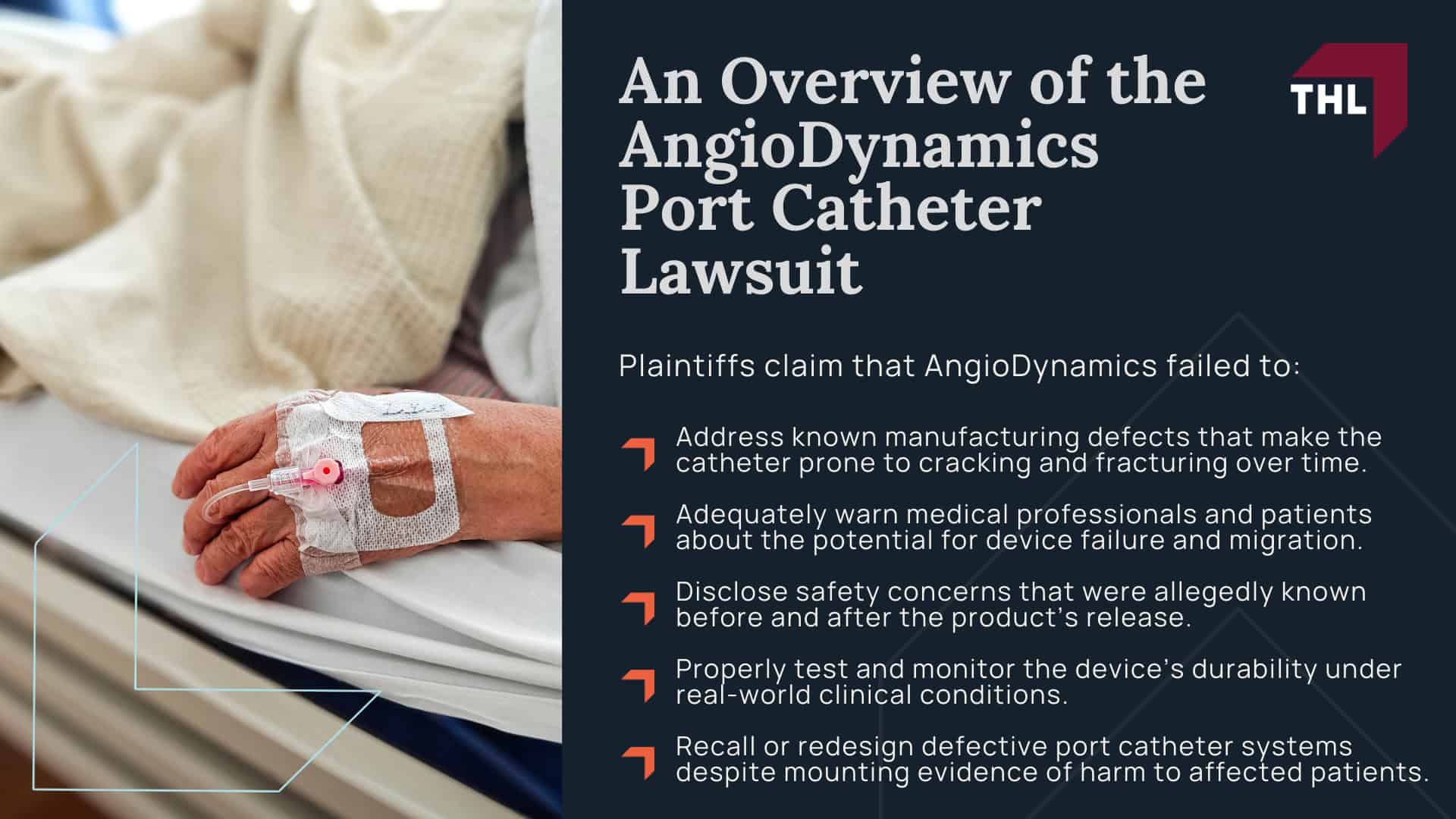
Plaintiffs claim that AngioDynamics failed to:
The lawsuits further allege that AngioDynamics and Navilyst Medical placed profits ahead of patient safety by continuing to market devices with known design vulnerabilities.
As a result, patients who received these implants have suffered injuries, undergone revision surgeries, and faced long-term health consequences.
Those harmed may be eligible to pursue financial compensation for medical expenses, lost wages, and pain and suffering.
If you or a loved one experienced complications such as fractures, blood clots, or infections after receiving an AngioDynamics port catheter, contact TorHoerman Law today for a free consultation.
Use the chatbot on this page to find out instantly if you qualify for the AngioDynamics Port Catheter Lawsuit.
The AngioDynamics Port Catheter MDL combines multiple lawsuits filed by patients who suffered serious injuries from defective port catheter systems.
These cases were centralized by the Judicial Panel on Multidistrict Litigation (JPML) as MDL No. 3125 in the U.S. District Court for the Southern District of California, where one federal judge oversees shared discovery and pretrial proceedings.
Plaintiffs allege that the catheter material degrades because of excess barium sulfate, causing the devices to crack, fracture, or migrate inside the body.
These failures have led to blood clots, embolisms, infections, and other life-threatening complications for vulnerable patients who depend on these ports for chemotherapy or long-term medical care.
The MDL structure helps coordinate evidence (including reports from the User Facility Device Experience (MAUDE) database and expert testimony) while maintaining each plaintiff’s right to an individual claim for compensation.
By consolidating cases, the court aims to promote efficiency, prevent inconsistent rulings, and hold manufacturers accountable for producing unsafe medical devices.
TorHoerman Law continues to review claims for patients harmed by defective AngioDynamics port catheters and is closely monitoring developments in the ongoing litigation.
AngioDynamics, Inc. produces several port catheter devices that have been reported as potentially defective and dangerous due to structural issues leading to severe health complications.
These devices, primarily designed for long-term treatments, have been linked to fractures, migration, and infection, placing patients at risk of serious injury.

Specific AngioDynamics devices that may be defective include:
AngioDynamics port catheter devices are designed to provide long-term vascular access for treatments like chemotherapy but have been linked to serious complications due to defects in the design.
These defects can cause the catheter to fracture, migrate, or develop blockages, leading to significant health issues.
Patients have experienced life-threatening injuries, often requiring surgery to remove or replace the device.
Lawsuits argue that these design flaws make the product unsafe for patients.
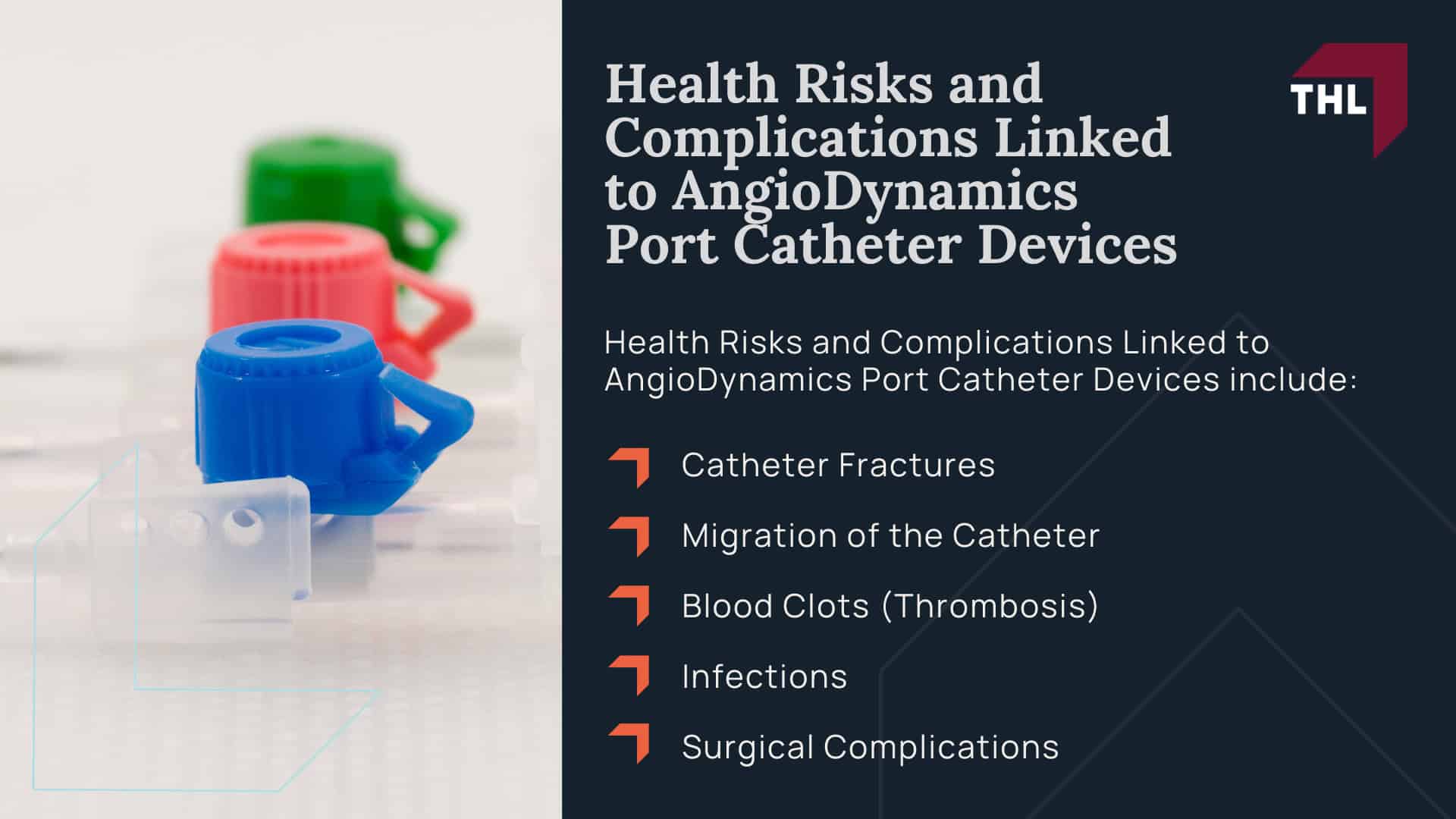
Health Risks and Complications Linked to AngioDynamics Port Catheter Devices include:
Device fractures and migration are risks with AngioDynamics implantable ports due to structural weaknesses in the device.
Over time, the implantable port may crack or break, causing small fragments to enter the bloodstream.
These fragments can migrate to critical areas such as the heart or lungs, leading to dangerous embolisms or internal damage.
The migration of an intact catheter can also cause improper medication delivery, potentially harming surrounding tissues.
This issue often requires emergency surgical removal.
These complications significantly increase patient risk during treatment and recovery.
Defective port catheters have been linked to an increased risk of blood clots (thrombosis), as the device’s presence in the bloodstream can disrupt normal blood flow.
The catheter can irritate the vein walls, triggering the formation of clots around or near the device.
If a blood clot dislodges, it can travel to vital organs like the lungs or brain, causing embolisms, strokes, or heart attacks.
These clots can block blood flow, leading to severe complications that require immediate medical attention.
Thrombosis can also result in the need for additional surgeries or long-term anticoagulant therapy.
The risks associated with these blood clots are particularly concerning for patients already dealing with complex medical treatments.
Port catheter infections are a serious risk, often resulting from bacteria entering the bloodstream through the catheter’s insertion site.
This can occur if the catheter is not properly sealed or if it becomes compromised during treatment.
Once bacteria are introduced, patients can develop localized infections or more severe conditions like sepsis, which is life-threatening if not treated promptly.
Infections can lead to extended hospital stays, additional treatments, and even the removal of the catheter.
The risk is particularly high for immunocompromised patients, further complicating their treatment.
Surgical interventions are often required to address complications from defective AngioDynamics port catheters, such as device fractures or migration.
These surgeries carry significant risks, including infection, bleeding, and damage to surrounding organs or tissues.
Patients may require emergency removal of catheter fragments, which can be complex and dangerous depending on where the device has migrated within the body.
Recovery from these surgeries can be prolonged and painful, with patients facing the possibility of repeated procedures if the complications persist.
Long-term health impacts, such as scarring, additional infections, or reduced mobility, are common following these surgical interventions.
Patients who suffer complications from defective AngioDynamics port catheters may experience long-term health issues that compound their original medical conditions.
The need for a port often indicates complex treatments like chemotherapy, meaning that any complications can severely disrupt their care.
Long-term consequences include ongoing pain, recurring infections, or the development of chronic conditions such as deep vein thrombosis.
Repeated surgeries to address device failures may result in permanent scarring and reduced mobility, affecting the patient’s quality of life.
These complications can also lead to psychological distress, particularly for those already facing serious illnesses.
Long-term health consequences may include:
Implantable ports, also known as port catheters, are small medical devices implanted under the skin, typically in the chest, to provide direct access to a patient’s veins.
These devices are used for patients who require frequent intravenous (IV) treatments, such as chemotherapy, blood transfusions, or long-term medication.
Ports are connected to a catheter that runs through a large vein, allowing healthcare professionals to administer treatments or draw blood without repeated needle sticks.
This reduces discomfort and the risk of vein damage for patients undergoing extended therapies.
The device is generally placed during a minor surgical procedure and remains under the skin, making it more discreet and less prone to infection than external catheters.
Ports are often crucial for patients with complex medical conditions that necessitate ongoing IV access.
While ports can greatly improve a patient’s quality of life during treatment, defective devices can lead to serious complications.
In these cases, patients face additional health risks that can interrupt their treatment plans.
Properly functioning ports are essential for ensuring uninterrupted care in individuals with life-threatening illnesses.
Common health conditions requiring port catheters include:
Litigation involving the Bard PowerPort device has developed along a trajectory similar to the AngioDynamics port catheter lawsuit.
Bard PowerPort lawsuits allege that certain implantable port catheter systems were defectively designed or manufactured and that patients were not adequately warned about the risk of device failure and serious medical complications.
The Bard PowerPort device is an implantable port-a-cath system used to deliver chemotherapy, intravenous medications, blood transfusions, and contrast agents for imaging studies.
Like other port systems, it is surgically implanted beneath the skin and connected to a catheter that feeds into a central vein.
Patients often rely on these devices for long-term treatment.
When a port catheter fractures, migrates, or degrades inside the body, the consequences can be immediate and severe.
The Bard PowerPort litigation allegs that some devices were prone to catheter fracture, embolization, migration, infection, thrombosis, and perforation of blood vessels or organs.
In certain cases, fractured catheter fragments have reportedly traveled through the bloodstream and lodged in the heart or lungs, requiring emergency intervention.
Plaintiffs contend that these failures reflect issues in the design or materials used in the device and that the manufacturer did not adequately warn patients and physicians about the full scope of these risks.
Because of the growing number of claims, federal cases involving the Bard PowerPort device have been consolidated into the Bard PowerPort MDL for coordinated pretrial proceedings.
The Bard PowerPort multidistrict litigation does not determine liability.
It centralizes discovery, motion practice, and bellwether trials in one federal court to manage common factual questions more efficiently.
This structure mirrors other large-scale port-a-cath lawsuits involving potentially defective medical devices.
The Bard PowerPort MDL names Bard Access Systems Inc., a subsidiary involved in manufacturing and distributing the device, along with its parent company, Becton Dickinson and Company.
Plaintiffs allege that these entities were responsible for the design, testing, marketing, and risk disclosures associated with the Bard PowerPort catheters.
As in other port catheter cases, claims often include allegations of design defect, failure to warn, negligence, and breach of warranty.
For patients evaluating the AngioDynamics port catheter lawsuit, the Bard PowerPort litigation provides context.
Courts have already recognized that large numbers of port-a-cath lawsuits may present shared questions about device integrity, long-term durability, and whether manufacturers sufficiently disclosed known risks.
While each case turns on its specific medical history and device model, the Bard proceedings illustrate how courts handle claims involving allegedly defective implanted ports and serious medical complications.
Port catheter injuries, such as device fractures, infections, and blood clots, can have severe and long-lasting impacts on patients, disrupting necessary treatments and leading to further health complications.
These injuries often require surgical intervention and prolonged recovery, adding emotional and financial stress to those already managing serious medical conditions.
Medical device companies have a responsibility to ensure their products are safe and to provide clear warnings about potential risks, but when they fail to do so, patients can suffer the consequences.
If you or a loved one experienced severe complications such as blood clots, infections, or catheter fractures requiring surgery due to a defective AngioDynamics port catheter, you may be eligible to file an AngioDynamics Port Catheter Lawsuit and seek compensation.
Contact TorHoerman Law for a free consultation.
Use the chatbot on this page to find out if you qualify for the AngioDynamics Port Catheter Lawsuit instantly.
Lawyers will help patients who’ve been injured by implantable port devices throughout the legal process, gathering evidence for their claim and assessing damages to seek adequate compensation.
Gathering strong evidence is crucial to pursuing a successful Port Catheter Lawsuit.
Patients and their legal teams must provide thorough documentation of the injuries, medical treatments, and impact on their health caused by the defective catheter.
Evidence in AngioDynamics Port Catheter Lawsuits include:
Damages in a port catheter lawsuit refer to the compensation a patient can seek for the physical, emotional, and financial impact caused by the defective device.
A lawyer helps calculate these damages by assessing both the immediate and long-term consequences of the injuries, including medical costs and loss of quality of life.
Possible damages that may be considered in a Port Catheter Lawsuit may include:
Injuries caused by defective port catheters can have a devastating impact on patients’ lives, affecting their health, emotional well-being, and financial stability.
As a result, lawsuits are being filed to hold AngioDynamics accountable for the harm caused by their faulty devices.
These cases are part of a larger multidistrict litigation (MDL), providing an organized and efficient framework to handle the numerous claims.
TorHoerman Law has extensive experience handling cases related to defective medical devices, holding manufacturers accountable for the harm caused by faulty products, their failure to warn consumers, and the severe complications that arise from product defects.
We have secured more than $4 billion in settlements and verdicts since 2009, and we’re prepared to help you seek justice.

If you or a loved one have suffered injuries such as blood clots, infections, or fractures due to a defective AngioDynamics port catheter, you may be eligible to seek compensation through an AngioDynamics Port Catheter Lawsuit.
Contact us for a free consultation.
Use the chatbot on this page to find out if you qualify to file an AngioDynamics Port Lawsuit instantly.
The AngioDynamics port catheter lawsuit is a type of medical port lawsuit involving an implanted port catheter used to deliver chemotherapy, intravenous medications, blood products, or contrast dye.
These systems, often described as an implant port system implanted beneath the skin, include an injection port connected to a flexible catheter that feeds into a central vein.
When functioning properly, the device allows repeated vascular access without repeated needle sticks.
Lawsuits allege that certain devices may be prone to failure, including catheter fracture, device migration, thrombosis, infection, or vascular perforation.
Device migration can occur when a catheter segment shifts from its intended position and travels through the bloodstream, potentially reaching the heart or lungs and requiring urgent medical intervention.
A medical device manufacturer has a legal duty to design reasonably safe products and provide accurate risk information to physicians.
Plaintiffs in these cases claim that the manufacturer failed to disclose known risks or address design concerns before the product reached patients.
As these cases move forward, the discovery process allows both sides to obtain internal company documents, testing records, regulatory communications, and expert analysis.
This stage is often critical in determining what the manufacturer knew about potential risks and when that information became available.
Each claim is evaluated based on the specific device model, medical history, and documented complications.
The AngioDynamics port catheter device is designed for long-term intravenous treatments, such as chemotherapy, providing easy access to the patient’s vascular system.
However, many patients have reported severe complications, including catheter fractures and catheter migration.
These issues pose serious health risks, such as blood clots and infections, which can lead to further catheter failure and the need for surgical removal.
The lawsuits claim that these implantable port catheter devices are defective, causing life-threatening injuries like cardiac arrhythmia and pulmonary embolism due to a fractured catheter.
Defective AngioDynamics port catheter devices have led to significant health issues for patients.
These implantable port devices can fracture or migrate, leading to severe complications like embolisms or blockages in the blood vessels.
This poses serious health complications, especially for those with weakened immune systems or preexisting health conditions.
Major risks include:
No, there is no AngioDynamics Port class action lawsuit; instead, these cases are part of multidistrict litigation (MDL).
MDL is a legal process that consolidates similar lawsuits from different courts into one district for pretrial proceedings.
Unlike class actions, where plaintiffs share a single lawsuit, MDL allows each plaintiff to maintain their individual case.
This helps streamline the process by addressing common factual issues while still enabling separate claims for damages and compensation.
This means that individuals who file claims in the MDL may be eligible to receive unique settlements based on the specific facts of their case, including the type of port catheter implanted, the nature of the alleged device failure, the severity of medical complications, the treatment required to address those complications, and the long-term impact on their health.
In an MDL, the court may select several representative cases, known as bellwether trials, to help both sides evaluate how juries respond to the evidence.
These early trials can influence settlement discussions, but they do not automatically resolve every claim. Each plaintiff must still prove injury, causation, and damages.
As a result, compensation is not shared equally among all claimants, as it might be in a class action.
Instead, outcomes are tied to individual medical records, documented complications, and the strength of the legal and factual evidence presented in each case.

Tor Hoerman has represented injured individuals for more than 30 years, with experience spanning individual personal injury cases and nationwide mass tort litigation. His work includes car accidents, catastrophic injuries, product liability claims, and other serious injury cases. Tor has served in court-appointed leadership roles in national litigation and tried cases involving major corporate defendants.
TorHoerman Law’s legal content is researched and written by our editorial team and attorneys for legal accuracy, clarity, and relevance. We rely on statutes, court records, government publications, medical research, and other authoritative sources when applicable. This page provides general legal information and does not constitute legal advice.
TorHoerman Law reviews its legal content for factual accuracy, current information, and relevant legal context before publication and as material developments occur. This article is provided for general informational purposes and does not constitute legal advice. For guidance about a specific case, contact TorHoerman Law.
You can learn more about this topic by visiting any of our AngioDynamics Port Catheter Lawsuit pages listed below:
A serious injury can change your life.

TorHoerman Law represents people whose lives have been disrupted by serious injuries, unsafe products, and negligence. Our attorneys handle individual personal injury cases as well as national mass tort lawsuits involving major corporations.
Founded in 2009, our legal team brings more than 100 years of combined experience handling serious injury and complex civil litigation.
Do you believe you’re entitled to compensation?
Use our Instant Case Evaluator to find out in as little as 60 seconds!

In this case, we obtained a verdict of $495 Million for our client’s child who was diagnosed with Necrotizing Enterocolitis after consuming baby formula manufactured by Abbott Laboratories.

In this case, we were able to successfully recover $20 Million for our client after they suffered a Toxic Tort Injury due to chemical exposure.

In this case, we were able to successfully recover $103.8 Million for our client after they suffered a COX-2 Inhibitors Injury.

In this case, we were able to successfully recover $4 Million for our client after they suffered a Traumatic Brain Injury while at daycare.

In this case, we were able to successfully recover $2.8 Million for our client after they suffered an injury due to a Defective Heart Device.
A serious injury can change your life.