The first steps after a truck accident depend on the severity of the crash and your physical condition.
Collisions involving semi-trucks and other large commercial vehicles can cause severe, incapacitating injuries that leave victims unable to photograph the scene, speak with witnesses, collect trucking information, or take other steps commonly recommended after an accident.
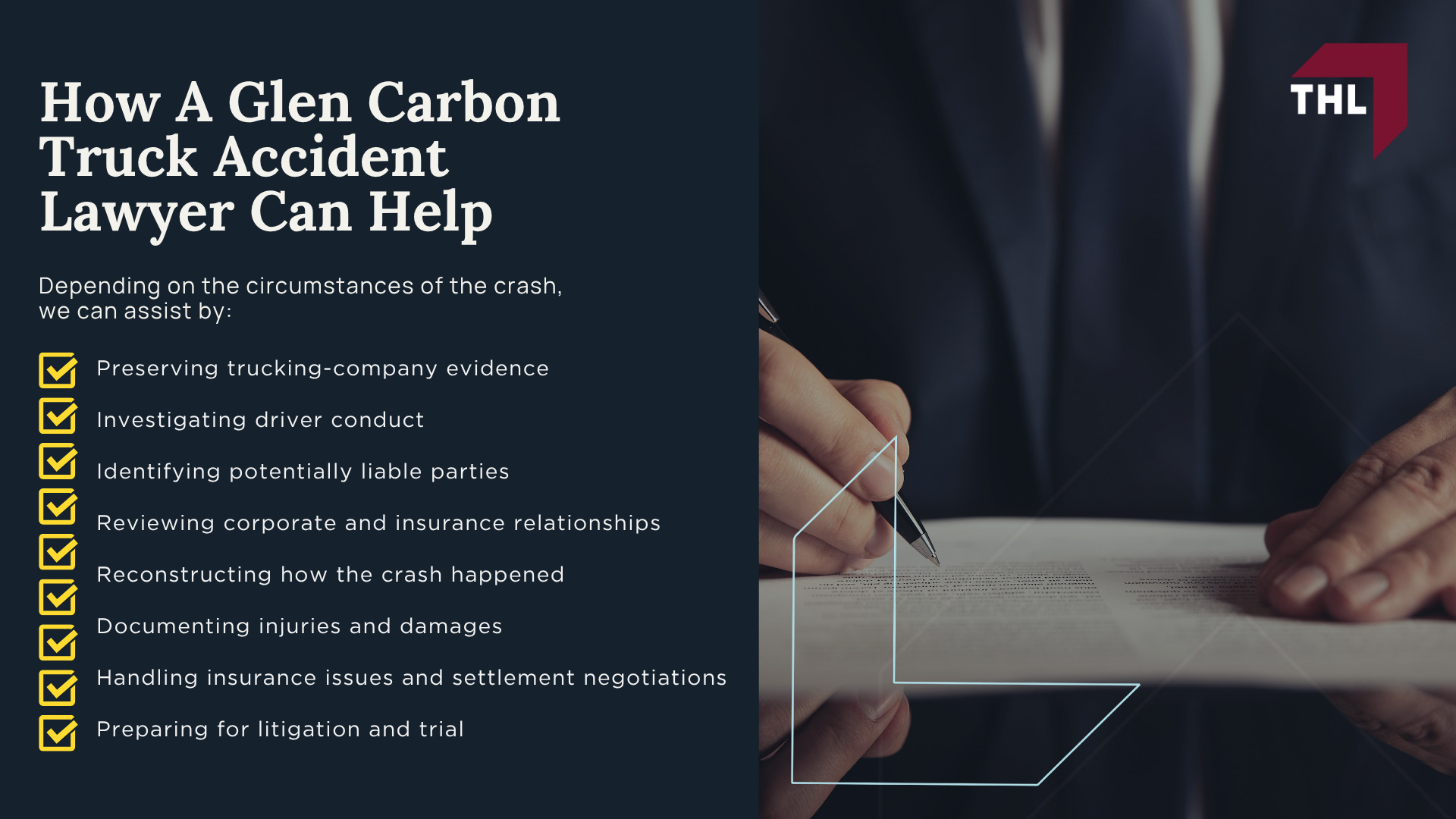
Your health comes first, and you should prioritize safety and appropriate medical care rather than risk further injury trying to preserve evidence yourself. When you cannot complete these steps, our attorneys can investigate on your behalf by obtaining police reports, locating witnesses, documenting the vehicles and roadway, and sending preservation requests for evidence controlled by the trucking company.
Early investigation can play a major role in securing driver logs, electronic vehicle data, dispatch communications, inspection records, maintenance documents, and other information that may later become relevant to liability.
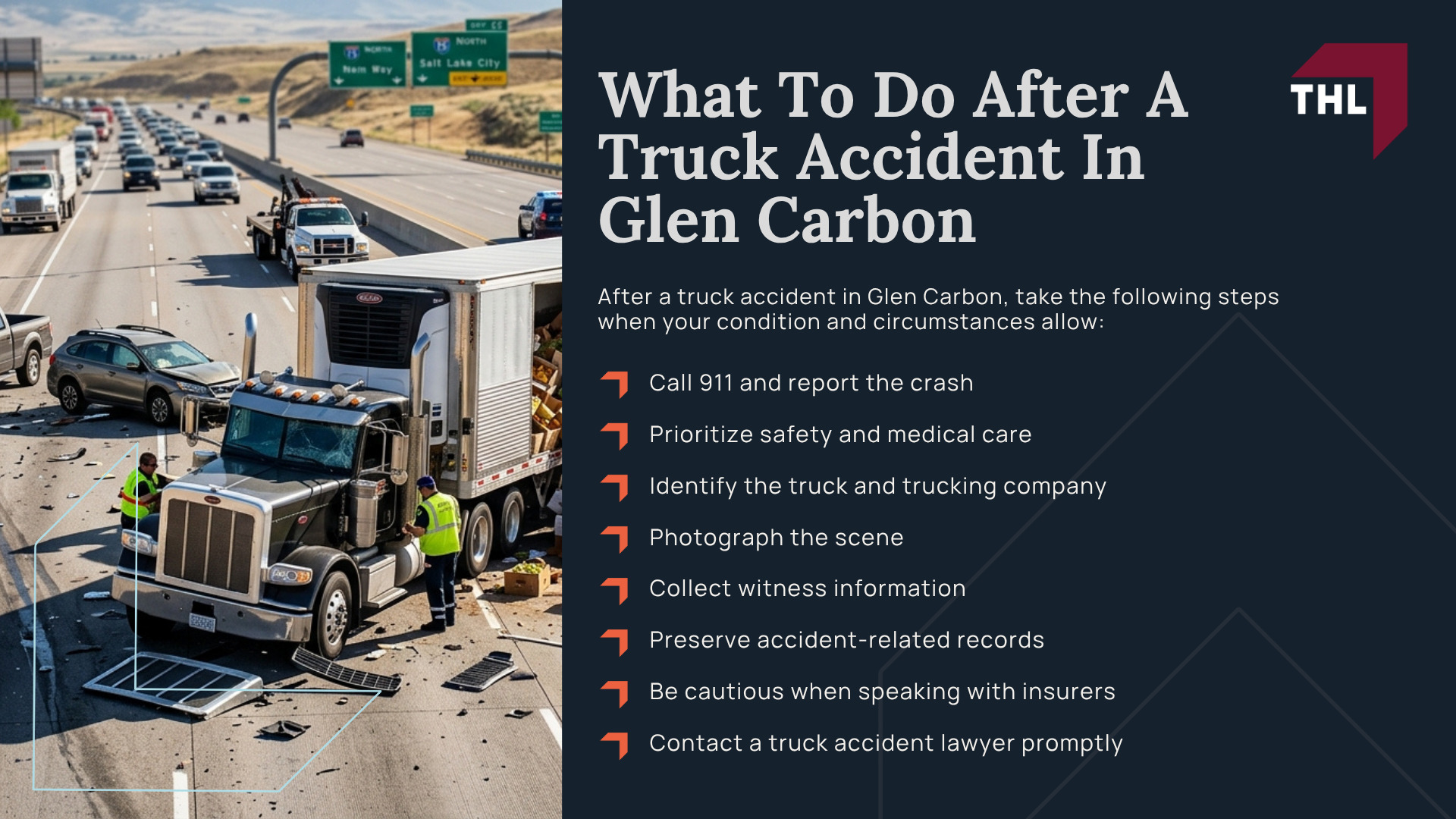
After a truck accident in Glen Carbon, take the following steps when your condition and circumstances allow:
- Call 911 and report the crash: Police, fire departments, and emergency medical personnel can address immediate hazards, document the collision, and provide necessary medical assistance.
- Prioritize safety and medical care: Move away from traffic, leaking fuel, damaged cargo, or other hazards when you can do so safely, and seek appropriate evaluation for your injuries.
- Identify the truck and trucking company: Obtain the driver’s name, employer, insurance information, license plate number, truck number, trailer information, and identifying company markings when possible.
- Photograph the scene: Document vehicle damage, roadway conditions, skid marks, debris, cargo, traffic controls, visible injuries, and the positions of the vehicles before conditions change.
- Collect witness information: Obtain names and contact information from people who saw the collision or events immediately before or after it.
- Preserve accident-related records: Keep medical records, bills, discharge documents, towing and repair records, insurance correspondence, employment records, and documentation of income lost because of the crash.
- Be cautious when speaking with insurers: A trucking company’s insurer may request a recorded statement or other information while liability and the extent of your injuries are still being investigated. Your own insurer may have separate notice and cooperation requirements under your policy.
- Contact a truck accident lawyer promptly: An attorney can begin preserving trucking-company records, electronic data, surveillance footage, and other time-sensitive evidence while investigating the parties that may be responsible for the collision.
If your injuries prevented you from gathering information at the scene, that does not prevent an investigation from moving forward.
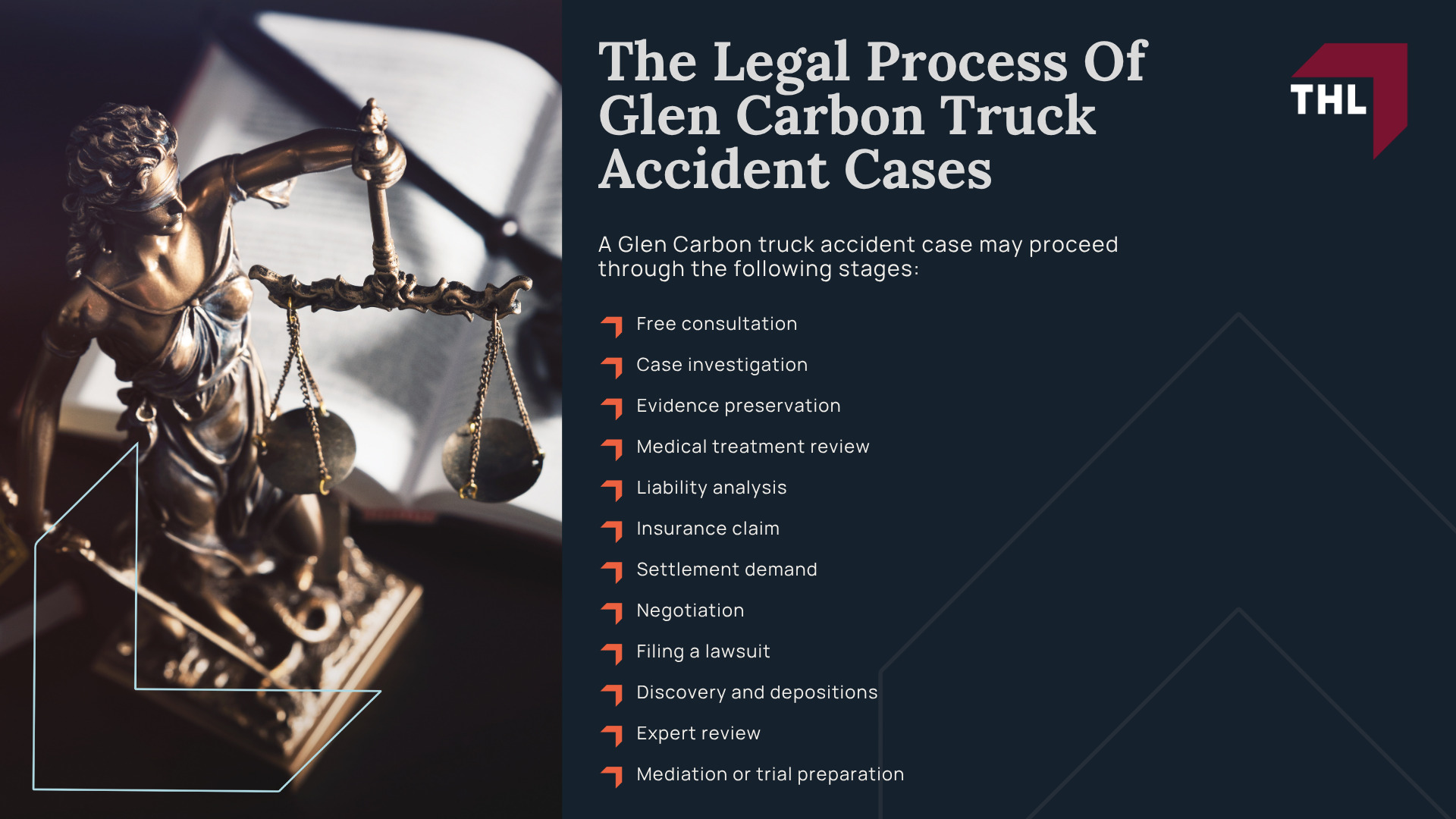
We can obtain evidence through law enforcement records, witnesses, trucking-company documents, electronic systems, insurers, and formal discovery when litigation becomes necessary.
Common Types of Truck Accidents
Truck accidents can occur in several ways depending on vehicle size, speed, cargo, roadway conditions, and driver conduct.
Some crashes begin with a mechanical problem or loading failure, while others result from distracted driving, fatigued driving, drunk driving, or other unsafe decisions behind the wheel.
Because commercial trucks are larger and heavier than passenger vehicles, these collisions can produce substantial forces and serious injuries.
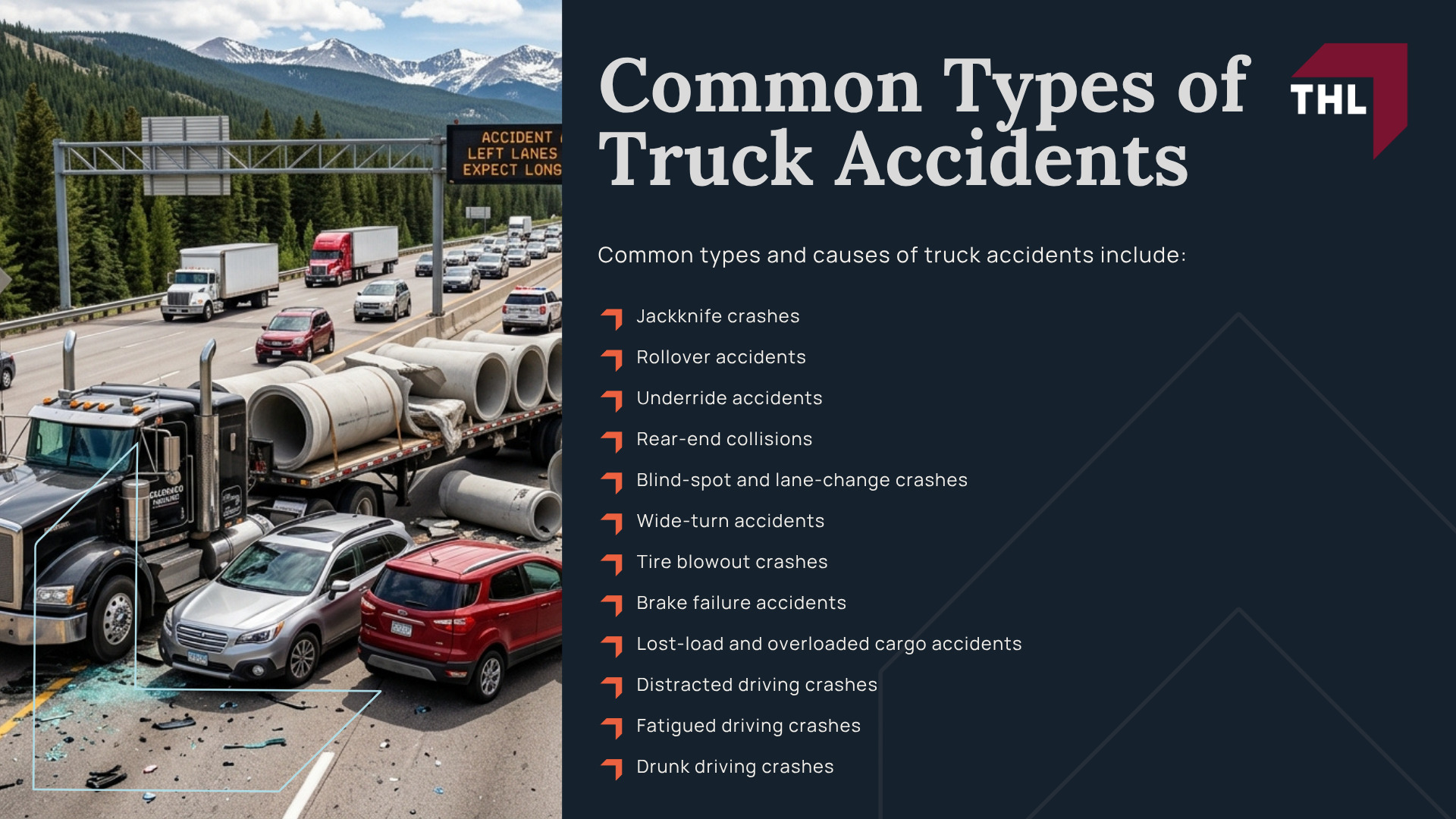
Common types and causes of truck accidents include:
- Jackknife crashes: A jackknife crash occurs when the trailer swings outward toward the cab, often causing the truck to block multiple lanes or strike surrounding vehicles.
- Rollover accidents: Trucks can overturn during sharp turns, sudden steering maneuvers, high-speed travel, or when cargo shifts and changes the vehicle’s center of gravity.
- Underride accidents: A smaller vehicle may become trapped beneath the side or rear of a commercial truck, creating a substantial risk of catastrophic or fatal injuries.
- Rear-end collisions: Large trucks require more distance to slow or stop, particularly when traveling at higher speeds or carrying heavy loads.
- Blind-spot and lane-change crashes: Commercial trucks have large areas around the vehicle that may be difficult for the driver to see, making unsafe lane changes particularly dangerous.
- Wide-turn accidents: Tractor-trailers require additional space to complete turns and may strike vehicles, bicyclists, or pedestrians positioned alongside the truck.
- Tire blowout crashes: A tire failure can cause a truck driver to lose control, scatter tire debris into traffic, or trigger a multi-vehicle collision. Tire condition, maintenance practices, loading, and inflation may become important parts of the investigation.
- Brake failure accidents: Worn, defective, or poorly maintained brakes can prevent a commercial truck from stopping safely and may raise questions about inspection and maintenance practices.
- Lost-load and overloaded cargo accidents: Overloaded cargo or improperly secured freight can shift during transit, affect steering and braking, cause a rollover, or fall into the roadway.
- Distracted driving crashes: Phone use, navigation systems, dispatch communications, eating, or other distractions can take a truck driver’s attention away from traffic conditions.
- Fatigued driving crashes: Long work periods and insufficient rest can impair reaction time, judgment, and alertness, particularly in cases involving possible hours-of-service violations.
- Drunk driving crashes: Alcohol or drug impairment can affect coordination, perception, reaction time, and decision-making and may lead to separate regulatory and employment-record investigations.
Our attorneys can review the circumstances of the crash, trucking records, vehicle data, maintenance history, cargo documentation, and driver conduct to determine what caused the collision and which parties may be legally responsible.
Common Truck Accident Injuries
A truck crash can cause catastrophic injuries because commercial vehicles may weigh many times more than passenger cars and generate substantial force during a collision.
Large trucks also sit higher off the roadway, which can increase the risk of underride, crush injuries, and severe trauma to occupants of smaller vehicles.
Serious injuries may also raise questions about whether the truck, driver, or motor carrier complied with applicable safety standards before the crash.
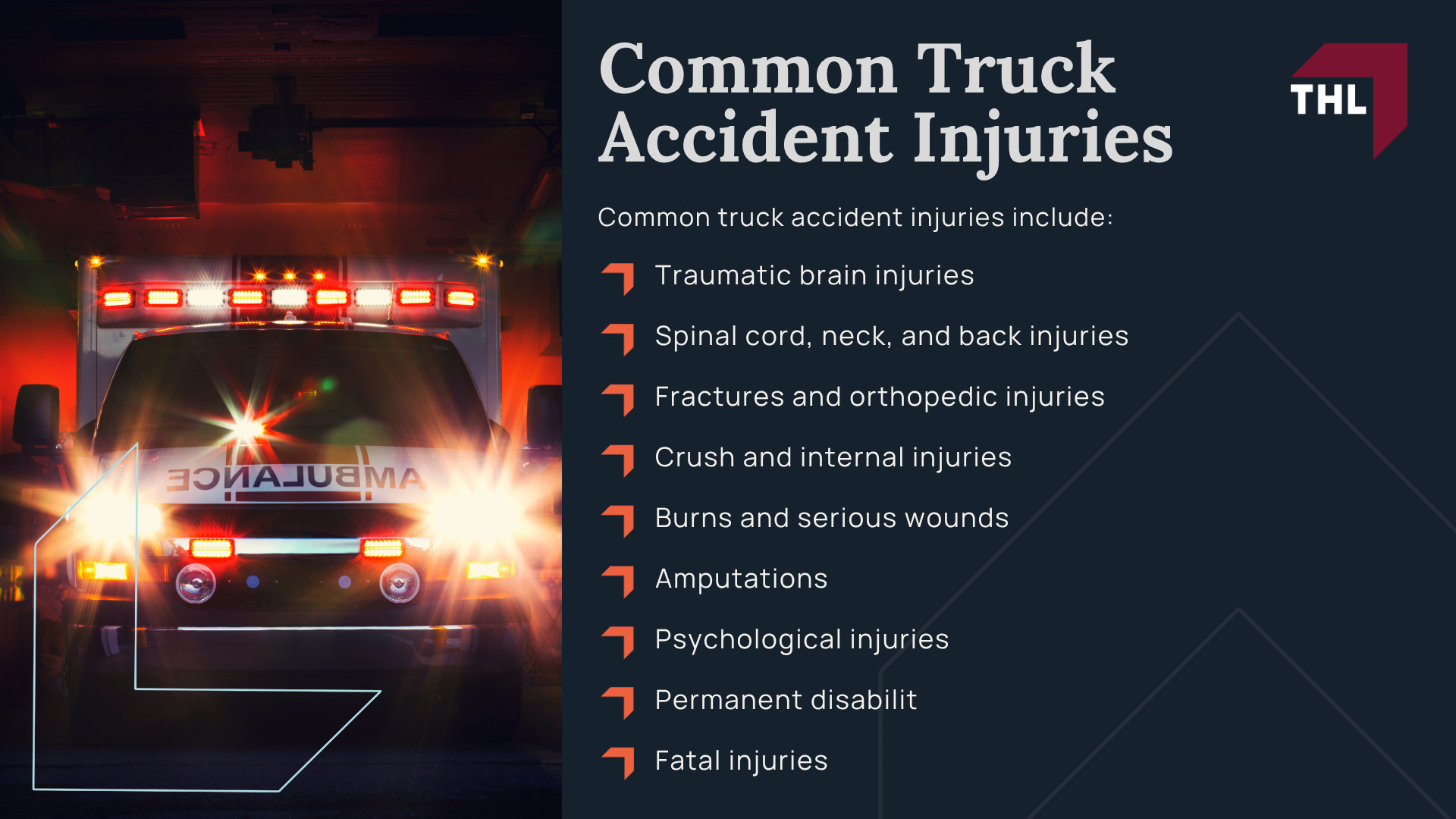
Common truck accident injuries include:
- Traumatic brain injuries: Concussions, brain contusions, diffuse axonal injuries, and other forms of head trauma.
- Spinal cord, neck, and back injuries: Herniated discs, vertebral fractures, nerve damage, spinal cord trauma, and paralysis.
- Fractures and orthopedic injuries: Broken bones and severe injuries to the shoulders, hips, knees, arms, and legs.
- Crush and internal injuries: Crush trauma, internal bleeding, and damage to organs caused by the force of a truck crash.
- Burns and serious wounds: Burns, severe lacerations, facial injuries, scarring, and disfigurement.
- Amputations: Traumatic loss of a limb or injuries requiring surgical amputation.
- Psychological injuries: PTSD, anxiety, depression, sleep disturbances, and other trauma-related conditions.
- Permanent disability: Lasting physical, neurological, or cognitive impairments that affect mobility, employment, or independent living.
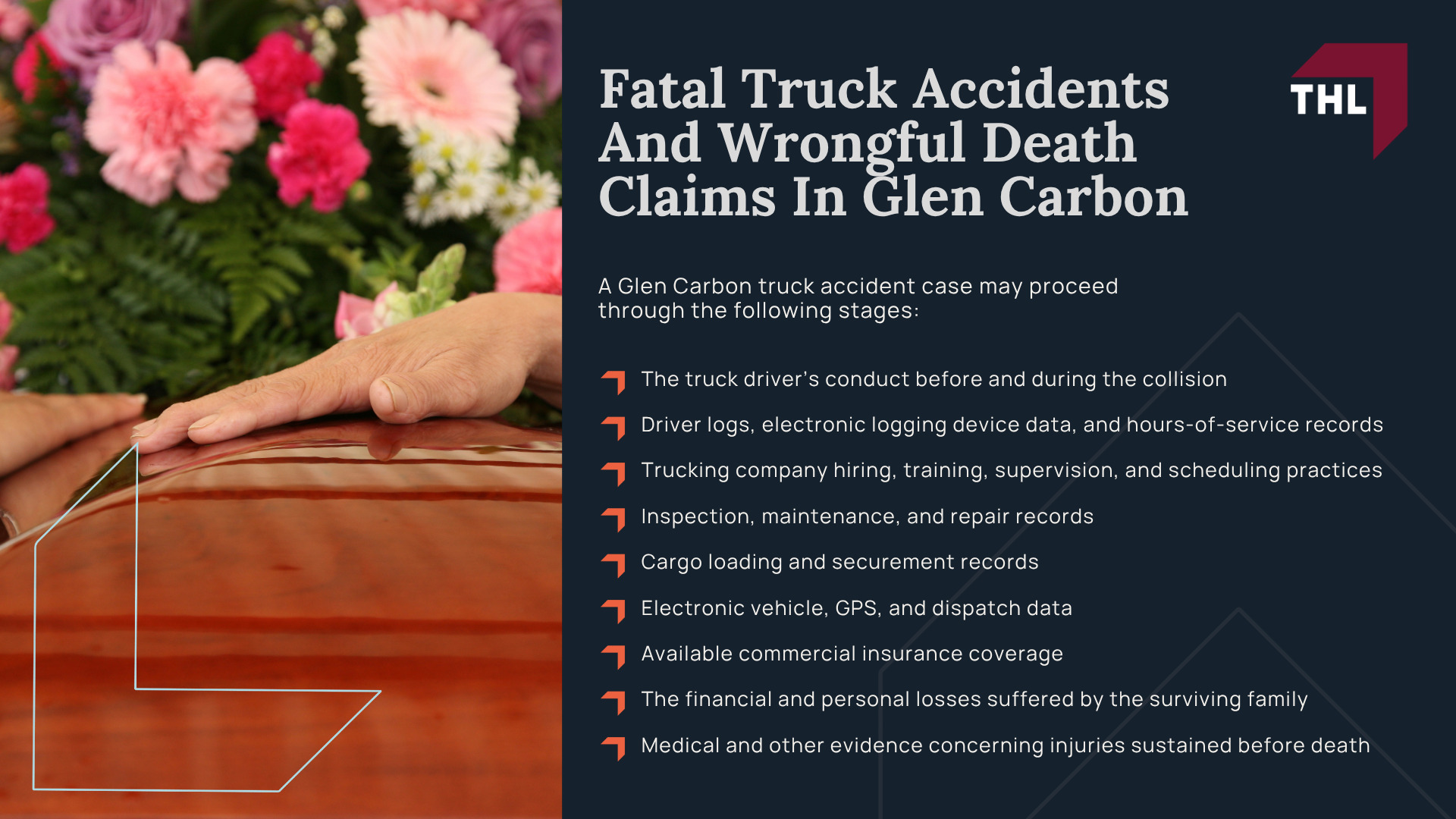
- Fatal injuries: Injuries resulting in death at the scene or after emergency medical treatment.
Medical records, diagnostic imaging, specialist evaluations, rehabilitation records, work restrictions, and prognosis evidence can document the extent of the injuries and their long-term effects.
In cases involving permanent disability or future medical needs, this documentation may also be used to establish anticipated treatment costs, reduced earning capacity, and other damages.