If you or a loved one suffered injuries, property damage, or other financial losses due to another party’s actions, you may be entitled to compensation for those losses.
Contact the experienced Chicago personal injury lawyers from TorHoerman Law for a free, no-obligation Chicago personal injury lawsuit case consultation today.
If you or a loved one suffered a personal injury or financial loss due to a car accident in Chicago, IL – you may be entitled to compensation for those damages.
Contact an experienced Chicago auto accident lawyer from TorHoerman Law today to see how our firm can serve you!
If you or a loved one have suffered injuries, property damage, or other financial losses due to a truck accident in Chicago, IL – you may qualify to take legal action to gain compensation for those injuries and losses.
Contact TorHoerman Law today for a free, no-obligation consultation with our Chicago truck accident lawyers!
If you or a loved one suffered an injury in a motorcycle accident in Chicago or the greater Chicagoland area – you may be eligible to file a Chicago motorcycle accident lawsuit.
Contact an experienced Chicago motorcycle accident lawyer at TorHoerman Law today to find out how we can help.
If you have been involved in a bicycle accident in Chicago at no fault of your own and you suffered injuries as a result, you may qualify to file a Chicago bike accident lawsuit.
Contact a Chicago bike accident lawyer from TorHoerman Law to discuss your legal options today!
Chicago is one of the nation’s largest construction centers.
Thousands of men and women work on sites across the city and metropolitan area on tasks ranging from skilled trades to administrative operations.
Unfortunately, construction site accidents are fairly common.
Contact TorHoerman Law to discuss your legal options with an experienced Chicago construction accident lawyer, free of charge and no obligation required.
Nursing homes and nursing facilities should provide a safe, supportive environment for senior citizens, with qualified staff, nurses, and aids administering quality care.
Unfortunately, nursing home abuse and neglect can occur, leaving residents at risk and vulnerable.
Contact an experienced Chicago nursing home abuse lawyer from TorHoerman Law today for a free consultation to discuss your legal options.
If you are a resident of Chicago, or the greater Chicagoland area, and you have a loved one who suffered a fatal injury due to another party’s negligence or malpractice – you may qualify to file a wrongful death lawsuit on your loved one’s behalf.
Contact a Chicago wrongful death lawyer from TorHoerman Law to discuss your legal options today!
If you have suffered a slip and fall injury in Chicago you may be eligible for compensation through legal action.
Contact a Chicago slip and fall lawyer at TorHoerman Law today!
TorHoerman Law offers free, no-obligation case consultations for all potential clients.
When a child is injured at a daycare center, parents are left wondering who can be held liable, who to contact for legal help, and how a lawsuit may pan out for them.
If your child has suffered an injury at a daycare facility, you may be eligible to file a daycare injury lawsuit.
Contact a Chicago daycare injury lawyer from TorHoerman Law today for a free consultation to discuss your case and potential legal action!
If you or a loved one suffered injuries, property damage, or other financial losses due to another party’s actions, you may be entitled to compensation for those losses.
Contact the experienced Edwardsville personal injury lawyers from TorHoerman Law for a free, no-obligation Edwardsville personal injury lawsuit case consultation today.
If you or a loved one suffered a personal injury or financial loss due to a car accident in Edwardsville, IL – you may be entitled to compensation for those damages.
Contact an experienced Edwardsville car accident lawyer from TorHoerman Law today to see how our firm can serve you!
If you or a loved one have suffered injuries, property damage, or other financial losses due to a truck accident in Edwardsville, IL – you may qualify to take legal action to gain compensation for those injuries and losses.
Contact TorHoerman Law today for a free, no-obligation consultation with our Edwardsville truck accident lawyers!
If you or a loved one suffered an injury in a motorcycle accident in Edwardsville – you may be eligible to file an Edwardsville motorcycle accident lawsuit.
Contact an experienced Edwardsville motorcycle accident lawyer at TorHoerman Law today to find out how we can help.
If you have been involved in a bicycle accident in Edwardsville at no fault of your own and you suffered injuries as a result, you may qualify to file an Edwardsville bike accident lawsuit.
Contact an Edwardsville bicycle accident lawyer from TorHoerman Law to discuss your legal options today!
Nursing homes and nursing facilities should provide a safe, supportive environment for senior citizens, with qualified staff, nurses, and aids administering quality care.
Unfortunately, nursing home abuse and neglect can occur, leaving residents at risk and vulnerable.
Contact an experienced Edwardsville nursing home abuse attorney from TorHoerman Law today for a free consultation to discuss your legal options.
If you are a resident of Edwardsville and you have a loved one who suffered a fatal injury due to another party’s negligence or malpractice – you may qualify to file a wrongful death lawsuit on your loved one’s behalf.
Contact an Edwardsville wrongful death lawyer from TorHoerman Law to discuss your legal options today!
If you have suffered a slip and fall injury in Edwardsville you may be eligible for compensation through legal action.
Contact an Edwardsville slip and fall lawyer at TorHoerman Law today!
TorHoerman Law offers free, no-obligation case consultations for all potential clients.
When a child is injured at a daycare center, parents are left wondering who can be held liable, who to contact for legal help, and how a lawsuit may pan out for them.
If your child has suffered an injury at a daycare facility, you may be eligible to file a daycare injury lawsuit.
Contact an Edwardsville daycare injury lawyer from TorHoerman Law today for a free consultation to discuss your case and potential legal action!
If you or a loved one suffered injuries on someone else’s property in Edwardsville IL, you may be entitled to financial compensation.
If property owners fail to keep their premises safe, and their negligence leads to injuries, property damages or other losses as a result of an accident or incident, a premises liability lawsuit may be possible.
Contact an Edwardsville premises liability lawyer from TorHoerman Law today for a free, no-obligation case consultation.
If you or a loved one suffered injuries, property damage, or other financial losses due to another party’s actions, you may be entitled to compensation for those losses.
Contact the experienced St. Louis personal injury lawyers from TorHoerman Law for a free, no-obligation St. Louis personal injury lawsuit case consultation today.
If you or a loved one suffered a personal injury or financial loss due to a car accident in St. Louis, IL – you may be entitled to compensation for those damages.
Contact an experienced St. Louis car accident lawyer from TorHoerman Law today to see how our firm can serve you!
If you or a loved one have suffered injuries, property damage, or other financial losses due to a truck accident in St. Louis, IL – you may qualify to take legal action to gain compensation for those injuries and losses.
Contact TorHoerman Law today for a free, no-obligation consultation with our St. Louis truck accident lawyers!
If you or a loved one suffered an injury in a motorcycle accident in St. Louis or the greater St. Louis area – you may be eligible to file a St. Louis motorcycle accident lawsuit.
Contact an experienced St. Louis motorcycle accident lawyer at TorHoerman Law today to find out how we can help.
If you have been involved in a bicycle accident in St. Louis at no fault of your own and you suffered injuries as a result, you may qualify to file a St. Louis bike accident lawsuit.
Contact a St. Louis bicycle accident lawyer from TorHoerman Law to discuss your legal options today!
St. Louis is one of the nation’s largest construction centers.
Thousands of men and women work on sites across the city and metropolitan area on tasks ranging from skilled trades to administrative operations.
Unfortunately, construction site accidents are fairly common.
Contact TorHoerman Law to discuss your legal options with an experienced St. Louis construction accident lawyer, free of charge and no obligation required.
Nursing homes and nursing facilities should provide a safe, supportive environment for senior citizens, with qualified staff, nurses, and aids administering quality care.
Unfortunately, nursing home abuse and neglect can occur, leaving residents at risk and vulnerable.
Contact an experienced St. Louis nursing home abuse attorney from TorHoerman Law today for a free consultation to discuss your legal options.
If you are a resident of St. Louis, or the greater St. Louis area, and you have a loved one who suffered a fatal injury due to another party’s negligence or malpractice – you may qualify to file a wrongful death lawsuit on your loved one’s behalf.
Contact a St. Louis wrongful death lawyer from TorHoerman Law to discuss your legal options today!
If you have suffered a slip and fall injury in St. Louis you may be eligible for compensation through legal action.
Contact a St. Louis slip and fall lawyer at TorHoerman Law today!
TorHoerman Law offers free, no-obligation case consultations for all potential clients.
When a child is injured at a daycare center, parents are left wondering who can be held liable, who to contact for legal help, and how a lawsuit may pan out for them.
If your child has suffered an injury at a daycare facility, you may be eligible to file a daycare injury lawsuit.
Contact a St. Louis daycare injury lawyer from TorHoerman Law today for a free consultation to discuss your case and potential legal action!
Depo-Provera, a contraceptive injection, has been linked to an increased risk of developing brain tumors (including glioblastoma and meningioma).
Women who have used Depo-Provera and subsequently been diagnosed with brain tumors are filing lawsuits against Pfizer (the manufacturer), alleging that the company failed to adequately warn about the risks associated with the drug.
Despite the claims, Pfizer maintains that Depo-Provera is safe and effective, citing FDA approval and arguing that the scientific evidence does not support a causal link between the drug and brain tumors.
You may be eligible to file a Depo Provera Lawsuit if you used Depo-Provera and were diagnosed with a brain tumor.
Suboxone, a medication often used to treat opioid use disorder (OUD), has become a vital tool which offers a safer and more controlled approach to managing opioid addiction.
Despite its widespread use, Suboxone has been linked to severe tooth decay and dental injuries.
Suboxone Tooth Decay Lawsuits claim that the companies failed to warn about the risks of tooth decay and other dental injuries associated with Suboxone sublingual films.
Tepezza, approved by the FDA in 2020, is used to treat Thyroid Eye Disease (TED), but some patients have reported hearing issues after its use.
The Tepezza lawsuit claims that Horizon Therapeutics failed to warn patients about the potential risks and side effects of the drug, leading to hearing loss and other problems, such as tinnitus.
You may be eligible to file a Tepezza Lawsuit if you or a loved one took Tepezza and subsequently suffered permanent hearing loss or tinnitus.
Elmiron, a drug prescribed for interstitial cystitis, has been linked to serious eye damage and vision problems in scientific studies.
Thousands of Elmiron Lawsuits have been filed against Janssen Pharmaceuticals, the manufacturer, alleging that the company failed to warn patients about the potential risks.
You may be eligible to file an Elmiron Lawsuit if you or a loved one took Elmiron and subsequently suffered vision loss, blindness, or any other eye injury linked to the prescription drug.
The chemotherapy drug Taxotere, commonly used for breast cancer treatment, has been linked to severe eye injuries, permanent vision loss, and permanent hair loss.
Taxotere Lawsuits are being filed by breast cancer patients and others who have taken the chemotherapy drug and subsequently developed vision problems.
If you or a loved one used Taxotere and subsequently developed vision damage or other related medical problems, you may be eligible to file a Taxotere Lawsuit and seek financial compensation.
Parents and guardians are filing lawsuits against major video game companies (including Epic Games, Activision Blizzard, and Microsoft), alleging that they intentionally designed their games to be addictive — leading to severe mental and physical health issues in minors.
The lawsuits claim that these companies used psychological tactics and manipulative game designs to keep players engaged for extended periods — causing problems such as anxiety, depression, and social withdrawal.
You may be eligible to file a Video Game Addiction Lawsuit if your child has been diagnosed with gaming addiction or has experienced negative effects from excessive gaming.
Thousands of Uber sexual assault claims have been filed by passengers who suffered violence during rides arranged through the platform.
The ongoing Uber sexual assault litigation spans both federal law and California state court, with a consolidated Uber MDL (multi-district litigation) currently pending in the Northern District of California.
Uber sexual assault survivors across the country are coming forward to hold the company accountable for negligence in hiring, screening, and supervising drivers.
If you or a loved one were sexually assaulted, sexually battered, or faced any other form of sexual misconduct from an Uber driver, you may be eligible to file an Uber Sexual Assault Lawsuit.
Although pressure cookers were designed to be safe and easy to use, a number of these devices have been found to have a defect that can lead to excessive buildup of internal pressure.
The excessive pressure may result in an explosion that puts users at risk of serious injuries such as burns, lacerations, an even electrocution.
If your pressure cooker exploded and caused substantial burn injuries or other serious injuries, you may be eligible to file a Pressure Cooker Lawsuit and secure financial compensation for your injuries and damages.
Several studies have found a correlation between heavy social media use and mental health challenges, especially among younger users.
Social media harm lawsuits claim that social media companies are responsible for onsetting or heightening mental health problems, eating disorders, mood disorders, and other negative experiences of teens and children
You may be eligible to file a Social Media Mental Health Lawsuit if you are the parents of a teen, or teens, who attribute their use of social media platforms to their mental health problems.
The Paragard IUD, a non-hormonal birth control device, has been linked to serious complications, including device breakage during removal.
Numerous lawsuits have been filed against Teva Pharmaceuticals, the manufacturer of Paragard, alleging that the company failed to warn about the potential risks.
If you or a loved one used a Paragard IUD and subsequently suffered complications and/or injuries, you may qualify for a Paragard Lawsuit.
Patients with the PowerPort devices may possibly be at a higher risk of serious complications or injury due to a catheter failure, according to lawsuits filed against the manufacturers of the Bard PowerPort Device.
If you or a loved one have been injured by a Bard PowerPort Device, you may be eligible to file a Bard PowerPort Lawsuit and seek financial compensation.
Vaginal Mesh Lawsuits are being filed against manufacturers of transvaginal mesh products for injuries, pain and suffering, and financial costs related to complications and injuries of these medical devices.
Over 100,000 Transvaginal Mesh Lawsuits have been filed on behalf of women injured by vaginal mesh and pelvic mesh products.
If you or a loved one have suffered serious complications or injuries from vaginal mesh, you may be eligible to file a Vaginal Mesh Lawsuit.
Above ground pool accidents have led to lawsuits against manufacturers due to defective restraining belts that pose serious safety risks to children.
These belts, designed to provide structural stability, can inadvertently act as footholds, allowing children to climb into the pool unsupervised, increasing the risk of drownings and injuries.
Parents and guardians are filing lawsuits against pool manufacturers, alleging that the defective design has caused severe injuries and deaths.
If your child was injured or drowned in an above ground pool accident involving a defective restraining belt, you may be eligible to file a lawsuit.
Recent scientific studies have found that the use of chemical hair straightening products, hair relaxers, and other hair products present an increased risk of uterine cancer, endometrial cancer, breast cancer, and other health problems.
Legal action is being taken against manufacturers and producers of these hair products for their failure to properly warn consumers of potential health risks.
You may be eligible to file a Hair Straightener Cancer Lawsuit if you or a loved one used chemical hair straighteners, hair relaxers, or other similar hair products, and subsequently were diagnosed with:
NEC Lawsuit claims allege that certain formulas given to infants in NICU settings increase the risk of necrotizing enterocolitis (NEC) – a severe intestinal condition in premature infants.
Parents and guardians are filing NEC Lawsuits against baby formula manufacturers, alleging that the formulas contain harmful ingredients leading to NEC.
Despite the claims, Abbott and Mead Johnson deny the allegations, arguing that their products are thoroughly researched and dismissing the scientific evidence linking their formulas to NEC, while the FDA issued a warning to Abbott regarding safety concerns of a formula product.
You may be eligible to file a Toxic Baby Formula NEC Lawsuit if your child received baby bovine-based (cow’s milk) baby formula in the maternity ward or NICU of a hospital and was subsequently diagnosed with Necrotizing Enterocolitis (NEC).
Paraquat, a widely-used herbicide, has been linked to Parkinson’s disease, leading to numerous Paraquat Parkinson’s Disease Lawsuits against its manufacturers for failing to warn about the risks of chronic exposure.
Due to its toxicity, the EPA has restricted the use of Paraquat and it is currently banned in over 30 countries.
You may be eligible to file a Paraquat Lawsuit if you or a loved one were exposed to Paraquat and subsequently diagnosed with Parkinson’s Disease or other related health conditions.
Mesothelioma is an aggressive form of cancer primarily caused by exposure to asbestos.
Asbestos trust funds were established in the 1970s to compensate workers harmed by asbestos-containing products.
These funds are designed to pay out claims to those who developed mesothelioma or other asbestos-related diseases due to exposure.
Those exposed to asbestos and diagnosed with mesothelioma may be eligible to file a Mesothelioma Lawsuit.
AFFF (Aqueous Film Forming Foam) is a firefighting foam that has been linked to various health issues, including cancer, due to its PFAS (per- and polyfluoroalkyl substances) content.
Numerous AFFF Lawsuits have been filed against AFFF manufacturers, alleging that they knew about the health risks but failed to warn the public.
AFFF Firefighting Foam lawsuits aim to hold manufacturers accountable for putting peoples’ health at risk.
You may be eligible to file an AFFF Lawsuit if you or a loved one was exposed to firefighting foam and subsequently developed cancer.
PFAS contamination lawsuits are being filed against manufacturers and suppliers of PFAS chemicals, alleging that these substances have contaminated water sources and products, leading to severe health issues.
Plaintiffs claim that prolonged exposure to PFAS through contaminated drinking water and products has caused cancers, thyroid disease, and other health problems.
The lawsuits target companies like 3M, DuPont, and Chemours, accusing them of knowingly contaminating the environment with PFAS and failing to warn about the risks.
If you or a loved one has been exposed to PFAS-contaminated water or products and has developed health issues, you may be eligible to file a PFAS lawsuit.
The Roundup Lawsuit claims that Monsanto’s popular weed killer, Roundup, causes cancer.
Numerous studies have linked the main ingredient, glyphosate, to Non-Hodgkin’s Lymphoma, Leukemia, and other Lymphatic cancers.
Despite this, Monsanto continues to deny these claims.
Victims of Roundup exposure who developed cancer are filing Roundup Lawsuits against Monsanto, seeking compensation for medical expenses, pain, and suffering.
Our firm is about people. That is our motto and that will always be our reality.
We do our best to get to know our clients, understand their situations, and get them the compensation they deserve.
At TorHoerman Law, we believe that if we continue to focus on the people that we represent, and continue to be true to the people that we are – justice will always be served.
Without our team, we would’nt be able to provide our clients with anything close to the level of service they receive when they work with us.
The TorHoerman Law Team commits to the sincere belief that those injured by the misconduct of others, especially large corporate profit mongers, deserve justice for their injuries.
Our team is what has made TorHoerman Law a very special place since 2009.
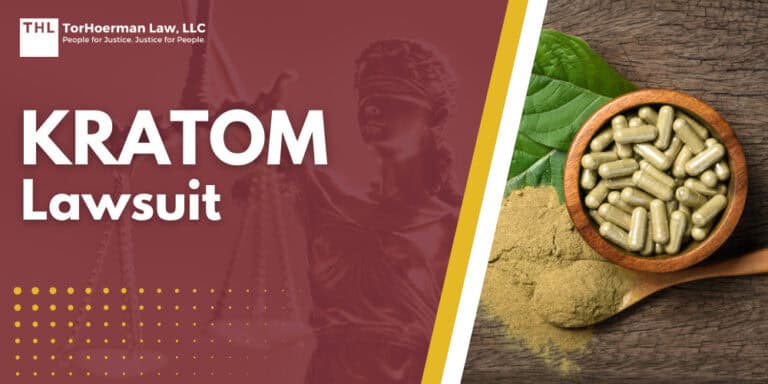
Kratom lawsuit claims center on serious health risks and fatal overdoses linked to kratom products that have been sold across the United States in powders, capsules, extracts, and drink formulations.
Reports of organ damage, dependence, seizures, and life-threatening medical emergencies have raised significant public health concerns about the safety of certain kratom products and the warnings provided to consumers.
TorHoerman Law is reviewing claims involving injuries and wrongful death allegedly linked to kratom usage.
Kratom is a plant-derived substance sold in powders, capsules, extracts, drink mixes, and other products that often appear in smoke shops, gas stations, convenience stores, and online marketplaces, sometimes alongside other herbal supplements.
Federal regulators say there are no lawful, FDA-approved uses for kratom, and they have repeatedly warned that products marketed for pain relief, mood support, or opioid withdrawal symptoms may qualify as unapproved kratom drug products rather than lawful supplements or foods.
Many people use kratom because it is promoted as a natural option for energy, discomfort, mood issues, or substance-related support, and some sellers distribute kratom with misleading claims about its ability to help with pain, addiction, or other medical conditions.
The US Food and Drug Administration (FDA) has taken action against companies that distribute kratom with disease-treatment claims and has said sellers must warn consumers about serious risks instead of presenting these products as safe, simple wellness aids.
That scrutiny has grown because serious health problems have been associated with kratom use, including liver toxicity, cardiovascular toxicity, seizures, gastrointestinal distress, respiratory depression, addiction, withdrawal symptoms, and death.
Federal safety materials also state that rare deaths have been associated with kratom use, and some products have been linked to serious adverse events and fatal overdoses.
As reports of organ damage, overdose, and wrongful death continue to surface, kratom injury lawyers are investigating whether kratom manufacturers and other parties may be legally responsible for selling dangerous products without adequate warnings or with misleading claims about their safety and intended use.
If you or a loved one suffered organ damage, overdose, or a wrongful death allegedly linked to kratom use, you may have grounds to pursue legal action against the companies that made, marketed, or sold the product.
Contact TorHoerman Law today for a free consultation.
Use the chat feature on this page for a free case evaluation and to get in touch with our kratom injury lawyers.
Kratom is a tropical plant native to Southeast Asia that comes from the tree Mitragyna speciosa, whose leaves have been used historically in parts of Thailand, Indonesia, and Malaysia for their stimulant and pain-relieving effects.
The plant’s kratom leaves contain several psychoactive compounds, most notably mitragynine and 7-hydroxymitragynine, which can interact with the body’s opioid receptors and produce opioid-like effects at higher doses.
In the United States, these products are widely available and have become a growing part of the kratom industry, appearing in powders, capsules, drink shots, and concentrated kratom extracts sold online and in retail stores.
Many consumers are introduced to these products after they are marketed as a natural alternative for energy, pain relief, mood support, or assistance with opioid addiction and other substance-related conditions.
Because kratom’s psychoactive compounds act on the same biological systems involved in opioid signaling, researchers and regulators continue to study how these substances affect the brain and body.
Despite its growing popularity, federal health authorities state that kratom has no approved medical uses and that its safety and long-term health effects remain under investigation.
Common forms of kratom products include:
Historically, kratom leaves were used in local labor and folk-medicine settings, but the American commercial market has transformed that traditional use into a national retail category with far less consistency in dose, composition, and labeling.
Federal regulators and researchers now focus not only on the plant itself, but also on how psychoactive compounds are concentrated, how products are promoted to consumers, and whether sellers blur the line between a raw botanical and a drug-like product.
Kratom products are widely available across the United States through smoke shops, convenience stores, gas stations, specialty supplement retailers, and online marketplaces, often sold alongside other herbal supplements.
The modern kratom market includes powders, capsules, beverages, and concentrated extracts, and many consumers encounter these products after seeing claims about potential health benefits related to energy, mood, discomfort, or support while taking kratom.
Despite the scale of the market, kratom remains largely outside traditional pharmaceutical oversight, and there are no federal product safety regulations that specifically approve kratom as a drug or establish standardized dosing requirements.
Federal agencies have stated that some companies distribute kratom with claims that position it as a treatment for pain, opioid dependence, or other medical conditions, even though those uses have not been approved.
In response, regulators have issued warnings to certain kratom manufacturers and kratom sellers for marketing products with unverified medical claims or without adequate safety disclosures.
Common places where kratom products are sold include:
Kratom products are sold in several forms, ranging from traditional plant material to highly concentrated derivatives with different potency levels and chemical profiles.
The most common form is kratom powder, which is made by drying and grinding kratom leaves from the Mitragyna speciosa tree and is typically consumed in capsules, mixed into drinks, or brewed as tea.
As the market expanded in the United States, manufacturers began producing kratom extracts, which concentrate the plant’s active alkaloids and may contain significantly higher levels of mitragynine or related compounds than raw leaf products.
These extracts are often sold in small bottles known as “shots,” liquid tinctures, or other concentrated forms designed to deliver stronger effects in smaller amounts.
In recent years, some companies have also introduced products built around 7-hydroxymitragynine, commonly called 7-OH, a powerful alkaloid found naturally in kratom in very small amounts but sometimes concentrated or added to commercial formulations.
Health agencies have warned that certain 7-OH products, including tablets, gummies, drink mixes, and shots, may present greater safety risks because they contain concentrated levels of a compound that acts strongly on opioid receptors.
As a result, regulators and researchers increasingly distinguish between traditional kratom leaf products and newer concentrated extracts or 7-OH formulations when evaluating safety concerns, overdose reports, and potential regulatory action.
One of the central concerns surrounding kratom is that many products are sold in a largely unregulated market that operates outside the oversight applied to prescription drugs or conventional medications.
Federal regulators have stated that kratom is not lawfully marketed in the United States as a drug or as part of dietary supplements because there is not enough evidence to demonstrate that the ingredient is safe for consumer use.
Some kratom manufacturers have been found to mislabel their products and certain products have even been found to contain heavy metals and other contaminants.
Despite that regulatory gap, kratom manufacturers and distributors continue to sell powders, capsules, extracts, and beverages nationwide, often with little consistency in labeling, dosage instructions, or ingredient disclosure.
Researchers and public health agencies also note that some individuals report using kratom to manage opioid use disorder or withdrawal symptoms, even though federal authorities say there are no approved medical uses for the substance.
At the same time, health agencies have documented reports of dependency, drug abuse patterns, and adverse events such as kratom overdose, prompting ongoing scrutiny by regulators and law enforcement.
The Drug Enforcement Administration (DEA) currently classifies kratom as a “Drug and Chemical of Concern,” reflecting continuing debate over whether additional federal controls may be necessary.
Risks associated with the lack of regulation in the kratom market include:
Reports from federal agencies and published safety reviews show that kratom has been linked to severe health risks involving multiple organ systems, not just isolated side effects.
The FDA has identified adverse effects associated with kratom use that include liver toxicity, cardiovascular toxicity, seizures, gastrointestinal distress, respiratory depression, addiction, withdrawal symptoms, and death.
Public-health and research sources also note that some people use kratom in an attempt to manage pain, substance dependence, or mental health problems, even though no kratom product is approved for those purposes in the United States.
The clinical picture can become more complicated when kratom is taken with other drugs, because federal data on overdose deaths has found that kratom was often detected alongside multiple other substances.
Reported complications extend beyond dependency concerns and can include physical dependence, high blood pressure, neurological symptoms, and medically serious toxic reactions that require emergency treatment.
Some cases described in agency reports and toxicology findings involve even fatal overdoses, which is why litigation and medical review in these matters often focus on product type, dose, co-exposures, and the timing of symptoms before injury or death.
Liver injury is one of the most frequently cited serious complications associated with kratom in federal safety warnings and published medical literature, with the FDA specifically identifying liver toxicity as a known adverse event linked to kratom use.
Published reviews and case reports describe kratom-associated hepatotoxicity as a form of drug-induced liver injury that can appear after regular use over days or weeks, sometimes with jaundice, dark urine, abdominal pain, itching, fatigue, nausea, and sharply elevated liver enzymes.
Researchers have also noted that kratom liver injury may present with cholestatic or mixed patterns of injury, and in rare cases the reported damage has been severe enough to raise concern for acute liver failure or the need for transplant-level care.
Common symptoms reported in kratom-related liver injury cases include:
Kidney complications are reported less often than liver injury in the kratom literature, but published case reports and recent reviews still describe renal effects as part of the broader pattern of organ toxicity linked to kratom exposure.
A 2025 review of human case reports identified reported kidney effects among the organ systems involved in acute adverse events, while also noting that many severe cases included confounding substances or incomplete toxicology data.
The medical literature also includes individual cases of acute kidney injury and renal insufficiency after kratom use, sometimes alongside dehydration, rhabdomyolysis, cholestatic liver injury, or multiorgan dysfunction rather than isolated kidney damage alone.
Public-facing guidance likewise states that rare but serious effects reported in people who use kratom include cardiovascular, gastrointestinal, respiratory, and psychiatric complications, which is consistent with the way renal problems often appear as part of a wider toxic presentation.
Some reported renal presentations have involved elevated creatinine, reduced kidney function, flank pain, electrolyte abnormalities, and acute kidney injury severe enough to require hospital-level care.
Because the current evidence base is still driven largely by case reports rather than large controlled studies, clinicians generally evaluate renal complications in the full context of dose, product type, co-exposures, dehydration, muscle breakdown, and other signs of systemic toxicity.
Reported renal findings in kratom-related cases have included:
Kratom has been associated in safety reports and published reviews with cardiovascular and neurological complications, including tachycardia, hypertension, QTc prolongation, ventricular arrhythmia, seizures, and altered mental status.
The FDA continues to warn consumers about serious adverse events linked to kratom, specifically including seizures, while a 2021 review of cardiotoxicity literature found repeated reports of increased heart rate, elevated blood pressure, conduction abnormalities, and abnormal heart rhythms in some users.
Recent reviews of human case reports also describe brain-related findings such as seizure activity, lethargy, confusion, loss of consciousness, and cerebral edema in some severe cases, although the quality of the evidence varies and many reports involve incomplete toxicology or co-exposure to other substances.
A 2025 Frontiers review of seizure reports identified 20 individuals described in case reports or case series after kratom use, but the authors concluded the evidence was not strong enough to prove kratom alone causes seizures because medical records were inconsistent and dose-response data were often missing.
Cardiovascular and neurological symptoms can appear together in a broader toxic presentation, especially when concentrated products, high doses, or additional substances are involved.
Clinicians evaluating these events generally look at product type, timing of exposure, blood pressure and rhythm findings, toxicology, and the presence of other drugs or medical conditions that could contribute to the episode.
Reported heart and neurological complications in kratom-related cases have included:
Respiratory depression, namely kratom-induced acute respiratory distress syndrome (ARDS), is one of the most medically serious complications described in kratom-related safety warnings, because slowed or impaired breathing can develop in severe intoxication and progress to a life-threatening emergency.
The FDA states that serious adverse events linked to kratom include respiratory depression and that deaths have been associated with kratom use in some cases confirmed by medical examiner or toxicology findings.
Overdose reports involving kratom often present with a broader toxic picture rather than one isolated symptom, and emergency findings may include unresponsiveness, profound sedation, vomiting, rapid heart rate, seizures, or depressed breathing.
CDC data on kratom-positive overdose deaths found that kratom was most often detected with multiple other substances, which means many fatal cases involve polysubstance exposure rather than kratom alone.
NIDA likewise notes that serious effects reported with kratom include respiratory problems and that only a small number of deaths have been linked to kratom products compared with other drugs, with nearly all of those deaths involving other drugs or contaminants.
Clinicians therefore evaluate suspected kratom overdose in the full context of product type, dose, co-exposures, toxicology, and the timing of symptoms before collapse or emergency treatment.
Reported overdose and emergency features in kratom-related cases have included:
You may qualify to file a kratom lawsuit if you developed a serious medical condition after using a kratom product and there is evidence tying that product to the harm.
Federal regulators continue to warn that kratom has been linked to serious adverse events, including liver toxicity, seizures, substance use disorder, and in rare cases death.
Kratom litigation centers on severe injuries rather than temporary side effects.
People with organ damage, overdose-related complications, hospitalization, long-term impairment, or the death of a family member are usually the most likely to have viable claims.
If you were harmed by kratom, the strength of the case often depends on whether the product can be identified and whether the medical record supports a connection between use and injury.
That may include medical records, toxicology findings, hospital records, product packaging, purchase receipts, or witness statements showing what was taken and when symptoms began.
Product identification matters because some claims involve plain powder, while others involve concentrated extracts or stronger liquid products.
Families may also qualify to bring wrongful death claims when a loved one died after alleged kratom exposure.
In those cases, the person who files is usually determined by state law and may be a spouse, child, parent, or estate representative.
Some existing cases have already been brought against manufacturers, suppliers, distributors, and vendors over alleged failure to protect consumers from unsafe kratom products or inadequate warnings.
Evidence often determines whether a kratom case can move through the legal process, because serious injury alone is usually not enough without records showing what product was used and what happened afterward.
These cases can involve legal challenges over causation, especially when the product was a concentrated extract, toxicology is incomplete, or other substances were also present.
Medical records, toxicology findings, purchase history, and product labeling can help show both the extent of the injury and the timeline between exposure and symptoms.
Lawyers use that evidence to identify the product, evaluate warning and marketing issues, work with medical experts, and build a case that can withstand scrutiny from manufacturers and insurers.
Important evidence in kratom-related cases may include:
Damages are the losses a lawsuit seeks to recover after a person suffers injury or death because of a dangerous product.
In kratom cases, damages usually begin with the financial cost of the harm, including medical treatment, hospital care, rehabilitation, and other medical expenses tied to the injury.
They can also include the broader effect the injury has had on the person’s life, such as lost income, physical pain, reduced functioning, or the long-term impact of organ damage or other serious complications.
Experienced attorneys assess damages by reviewing medical records, billing records, employment history, expert opinions, and the day-to-day consequences of the injury so they can present a full picture of what the harm has cost.
That work helps lawyers calculate compensation in a way that reflects both the immediate losses and the future burdens created by a serious kratom-related injury or wrongful death.
Damages in kratom lawsuits may include:
Kratom wrongful death lawsuit claims usually allege that a manufacturer, distributor, or seller failed to warn consumers about serious safety risks tied to the product.
Current kratom litigation also includes allegations that some companies misled consumers by presenting kratom as safe, natural, or appropriate for therapeutic use despite reported risks of overdose, organ injury, addiction, and death.
Several lawsuits have been filed against kratom manufacturers and distributors based on those core allegations, including claims that the companies sold dangerous products without adequate warnings or clear safety instructions.
These cases often focus on whether the product’s labeling, marketing, or formulation exposed consumers to dangers they were not properly told about before use.
One of the most notable outcomes came in Washington state, where a jury awarded $2.5 million to the family of Patrick Coyne after finding liability in a kratom wrongful death case involving inadequate warnings and an unreasonably dangerous product.
Reporting on that verdict described it as the first civil trial verdict in the United States brought on behalf of a person killed by kratom.
Another major case came out of Florida, where a judge awarded more than $11 million to the family of Krystal Talavera after her death from acute intoxication caused by mitragynine, one of kratom’s main active compounds.
The judgment followed allegations against the distributor, Kratom Distro, and public reporting on the case said the autopsy listed acute mitragynine intoxication as the cause of death.
These claims are commonly framed as wrongful death actions based on negligence, failure to warn, deceptive marketing, or related product liability theories.
At the center of many lawsuits is the allegation that the companies involved did not provide adequate warnings about the product’s dangers before it reached consumers.
Wrongful death claims can arise after a fatal overdose, respiratory collapse, or another acute medical emergency that is alleged to have been caused by kratom exposure.
The facts in these cases often turn on toxicology findings, product identification, medical examiner conclusions, and the specific warnings, if any, that accompanied the product.
TorHoerman Law is investigating claims involving serious injuries and deaths allegedly linked to kratom products sold without adequate warnings or with misleading safety representations.
These cases can involve liver damage, overdose, respiratory complications, wrongful death, and other severe medical outcomes that deserve close factual and medical review.
Our law firm approaches these matters with a proven track record in complex product liability litigation and a careful, evidence-driven approach to cases involving dangerous consumer products.
If you or your family believe a kratom product caused catastrophic injury or the loss of a loved one, contact TorHoerman Law for a free case review.
The legal landscape surrounding kratom has evolved rapidly, with numerous lawsuits filed against manufacturers and distributors.
A kratom lawsuit may name any company that helped make, market, distribute, or sell the product that allegedly caused the injury.
The exact defendants usually depend on the product’s path through the market, including who manufactured it, who branded it, who shipped it, and where it was purchased.
The FDA states it regularly takes action against companies selling unapproved kratom drug products, making false or misleading claims, and unlawfully marketing kratom dietary supplements and foods.
In some cases, a lawsuit may also focus on companies tied to stronger derivative products or enhanced formulations sold as kratom.
The FDA issued warning letters in 2025 to multiple companies marketing products containing 7-hydroxymitragynine, including tablets, gummies, drink mixes, and shots, and said some of those products were sometimes disguised or marketed as kratom.
Companies that may be named in a kratom lawsuit include:
Yes, kratom has been linked to several types of organ damage in reported medical cases and safety reviews.
The most commonly documented complication involves liver injury, including drug-induced liver damage that can cause jaundice, abdominal pain, fatigue, and abnormal liver enzyme levels.
Some reports also describe kidney complications, cardiovascular effects, and neurological symptoms occurring after kratom exposure.
These outcomes may be influenced by factors such as high doses, long-term use, concentrated extracts, or the presence of other substances.
Because kratom products vary widely in potency and composition, the risk and severity of organ damage can differ from one product or user to another.
Kratom use has been linked to a range of medical complications affecting multiple organ systems.
Health authorities have reported that some users experience serious adverse reactions after consuming kratom products, particularly with higher doses, concentrated extracts, or long-term use.
The severity of these reactions can vary depending on the product’s strength, the amount taken, and whether other substances were used at the same time. Reported cases include both short-term toxic reactions and longer-term health complications.
Health risks reported by kratom users include:
No, kratom is not approved by the U.S. Food and Drug Administration (FDA) for any medical use.
The FDA states that there are currently no FDA-approved drug products containing kratom or its primary compounds, including mitragynine or 7-hydroxymitragynine.
Some companies market kratom products with claims that they can alleviate pain, treat opioid withdrawal, or provide other health benefits.
Federal regulators say these claims have not been proven through the clinical testing required for drug approval.
The FDA issued warning letters to four companies for selling unapproved kratom products and essential oils to treat opioid use disorders.
Because kratom has not gone through the FDA’s safety and effectiveness review process, its medical uses, dosing standards, and long-term health effects remain uncertain.
7-OH is short for 7-hydroxymitragynine, a compound related to kratom that acts on opioid receptors and can produce strong opioid-like effects.
The FDA has described 7-OH as a concentrated byproduct of the kratom plant and says it is increasingly recognized as having abuse potential because of the way it binds to those receptors.
Although 7-hydroxymitragynine exists naturally in kratom in very small amounts, many commercial 7-OH products are concentrated formulations that are materially different from traditional kratom leaf powder or tea.
Federal regulators have drawn that distinction directly, stating that their recent enforcement push is aimed at 7-OH products rather than natural kratom leaf products.
These products are often sold in consumer-friendly forms such as tablets, gummies, drink mixes, and shots, which can make them look more like ordinary convenience items than potent psychoactive products.
The FDA and state health agencies have warned that 7-OH products have not been approved as safe or effective and are being sold in an unlawful, poorly regulated market.
Common places where 7-OH products are sold include:
The FDA has said some 7-OH products are marketed in ways that disguise them as kratom, even though they may contain concentrated levels of a much more potent compound.
Public health agencies have raised concerns because the products are widely available, easy to buy, and tied to reports of serious illness, dependence, and overdose.
For a consumer trying to understand the difference, the key point is that 7-OH is not just another name for ordinary kratom powder.
It refers to a specific alkaloid, often sold in concentrated commercial forms, that regulators now treat as a distinct and growing safety concern.
Kratom is not illegal under federal law in the United States at this time.
The Drug Enforcement Agency, more commonly called the DEA, states that kratom is not currently controlled under the Controlled Substances Act.
That does not mean kratom is fully lawful in every form or every setting.
The FDA says kratom is not lawfully marketed in the United States as a drug product, a dietary supplement, or a food additive in conventional food, and it also states there are no FDA-approved kratom products for medical use.
The DEA also classifies kratom as a Drug and Chemical of Concern, which means federal authorities view it as a substance with abuse or safety risks even though it has not been scheduled under the Controlled Substances Act.
State law can be different from federal law, and some states or local jurisdictions restrict, ban, or regulate kratom more aggressively than others.
Because of that, the legal answer can change depending on where the product is sold, possessed, or used.
The legal picture is also becoming more complicated because regulators are drawing sharper distinctions between traditional kratom products and newer concentrated products, including some 7-OH formulations.
Yes, several states and local jurisdictions in the United States have banned kratom.
Kratom is illegal in:
These states have classified kratom as a controlled substance under state law.
In many of these states, kratom’s active compounds, mitragynine and 7-hydroxymitragynine, have been scheduled under state controlled substance laws even though the substance is not scheduled federally under the Controlled Substances Act.
In addition to statewide bans, some cities and counties in other states have enacted their own local prohibitions or restrictions on the sale or possession of kratom.
Kratom withdrawal can cause both physical and psychological symptoms, especially in people who use it regularly or at higher doses.
Prolonged, regular use may lead to withdrawal symptoms when use is stopped.
Reported withdrawal symptoms include irritability, anxiety, restlessness, insomnia, muscle aches, tremors, nausea, and mood changes.
The main health risk is that withdrawal can be distressing enough to interfere with sleep, daily functioning, and mental stability, and it may push some people back toward heavy kratom use or other substances.
Some people use kratom in an attempt to manage opioid withdrawal or cravings, which can complicate matters if dependence on kratom develops instead.
Symptoms are often described as milder than classic opioid withdrawal, but the severity can vary based on dose, duration of use, product strength, and whether other substances are involved.
Because commercial kratom products vary widely in composition and potency, withdrawal severity may be difficult to predict.
If you are experiencing withdrawal symptoms such as severe agitation, dehydration, chest symptoms, suicidal thoughts, or signs of polysubstance withdrawal, you should seek medical care promptly.
Kratom withdrawal can become harder to manage when it overlaps with other substance use or underlying mental health conditions.
Some people report using kratom to manage withdrawal or other substance-use symptoms, and the Substance Abuse and Mental Health Services Administration (SAMHSA) has published national survey material showing kratom use in the United States and also offers treatment and recovery resources for substance use disorders.
At the same time, the FDA states there are no FDA-approved kratom drug products legally on the U.S. market and continues to warn consumers about serious adverse events linked to kratom.
The American Kratom Association is an advocacy organization that supports legal access to kratom and has published consumer guidelines about labeling and product selection, but those materials do not replace medical advice, toxicology evidence, or federal safety determinations.
If a person suffered organ damage, overdose, or another serious complication after using kratom for withdrawal or substance-use support, that history does not automatically prevent a product liability claim.
The key questions are still what product was used, how it was marketed, what warnings were given, and what the medical record shows about the injury.
Owner & Attorney - TorHoerman Law
Here, at TorHoerman Law, we’re committed to helping victims get the justice they deserve.
Since 2009, we have successfully collected over $4 Billion in verdicts and settlements on behalf of injured individuals.
Would you like our help?
At TorHoerman Law, we believe that if we continue to focus on the people that we represent, and continue to be true to the people that we are – justice will always be served.
Do you believe you’re entitled to compensation?
Use our Instant Case Evaluator to find out in as little as 60 seconds!
In this case, we obtained a verdict of $495 Million for our client’s child who was diagnosed with Necrotizing Enterocolitis after consuming baby formula manufactured by Abbott Laboratories.
In this case, we were able to successfully recover $20 Million for our client after they suffered a Toxic Tort Injury due to chemical exposure.
In this case, we were able to successfully recover $103.8 Million for our client after they suffered a COX-2 Inhibitors Injury.
In this case, we were able to successfully recover $4 Million for our client after they suffered a Traumatic Brain Injury while at daycare.
In this case, we were able to successfully recover $2.8 Million for our client after they suffered an injury due to a Defective Heart Device.
Here, at TorHoerman Law, we’re committed to helping victims get the justice they deserve.
Since 2009, we have successfully collected over $4 Billion in verdicts and settlements on behalf of injured individuals.
Would you like our help?
They helped my elderly uncle receive compensation for the loss of his wife who was administered a dangerous drug. He consulted with this firm because of my personal recommendation and was very pleased with the compassion, attention to detail and response he received. Definitely recommend this firm for their 5 star service.
When I wanted to join the Xarelto class action lawsuit, I chose TorrHoerman Law from a search of a dozen or so law firm websites. I was impressed with the clarity of the information they presented. I gave them a call, and was again impressed, this time with the quality of our interactions.
TorHoerman Law is an awesome firm to represent anyone that has been involved in a case that someone has stated that it's too difficult to win. The entire firm makes you feel like you’re part of the family, Tor, Eric, Jake, Kristie, Chad, Tyler, Kathy and Steven are the best at what they do.
TorHorman Law is awesome
I can’t say enough how grateful I was to have TorHoerman Law help with my case. Jacob Plattenberger is very knowledgeable and an amazing lawyer. Jillian Pileczka was so patient and kind, helping me with questions that would come up. Even making sure my special needs were taken care of for meetings.
TorHoerman Law fights for justice with their hardworking and dedicated staff. Not only do they help their clients achieve positive outcomes, but they are also generous and important pillars of the community with their outreach and local support. Thank you THL!
Hands down one of the greatest group of people I had the pleasure of dealing with!
A very kind and professional staff.
Very positive experience. Would recommend them to anyone.
A very respectful firm.