Active Litigation
Paraquat Lawsuit Facts
TorHoerman Law is actively accepting claims for the Paraquat Lawsuit.


The Paraquat multidistrict litigation (MDL) is a federal court proceeding that consolidates thousands of paraquat Parkinson’s lawsuits into one venue for coordinated pretrial management.
It was created to streamline litigation involving the herbicide paraquat, where plaintiffs across the country raise similar claims about Parkinson’s disease and long-term toxic exposure.
Instead of requiring every federal court to separately handle the same scientific evidence and expert testimony, the MDL centralizes discovery and key rulings under one judge while keeping each claim legally independent.
This structure is especially common in mass tort litigation involving pharmaceuticals and toxic chemicals because the legal and medical questions overlap heavily from case to case.
Paraquat victims involved in the MDL still maintain individual claims for damages, meaning outcomes depend on exposure history, diagnosis evidence, and the severity of injury.
Much of the litigation has focused on how prolonged paraquat exposure is documented and whether scientific evidence supports an association with Parkinson’s disease.
As the MDL developed, bellwether trials were scheduled to test evidence and valuation, including the first paraquat bellwether trial settings that were repeatedly adjusted as the litigation progressed.
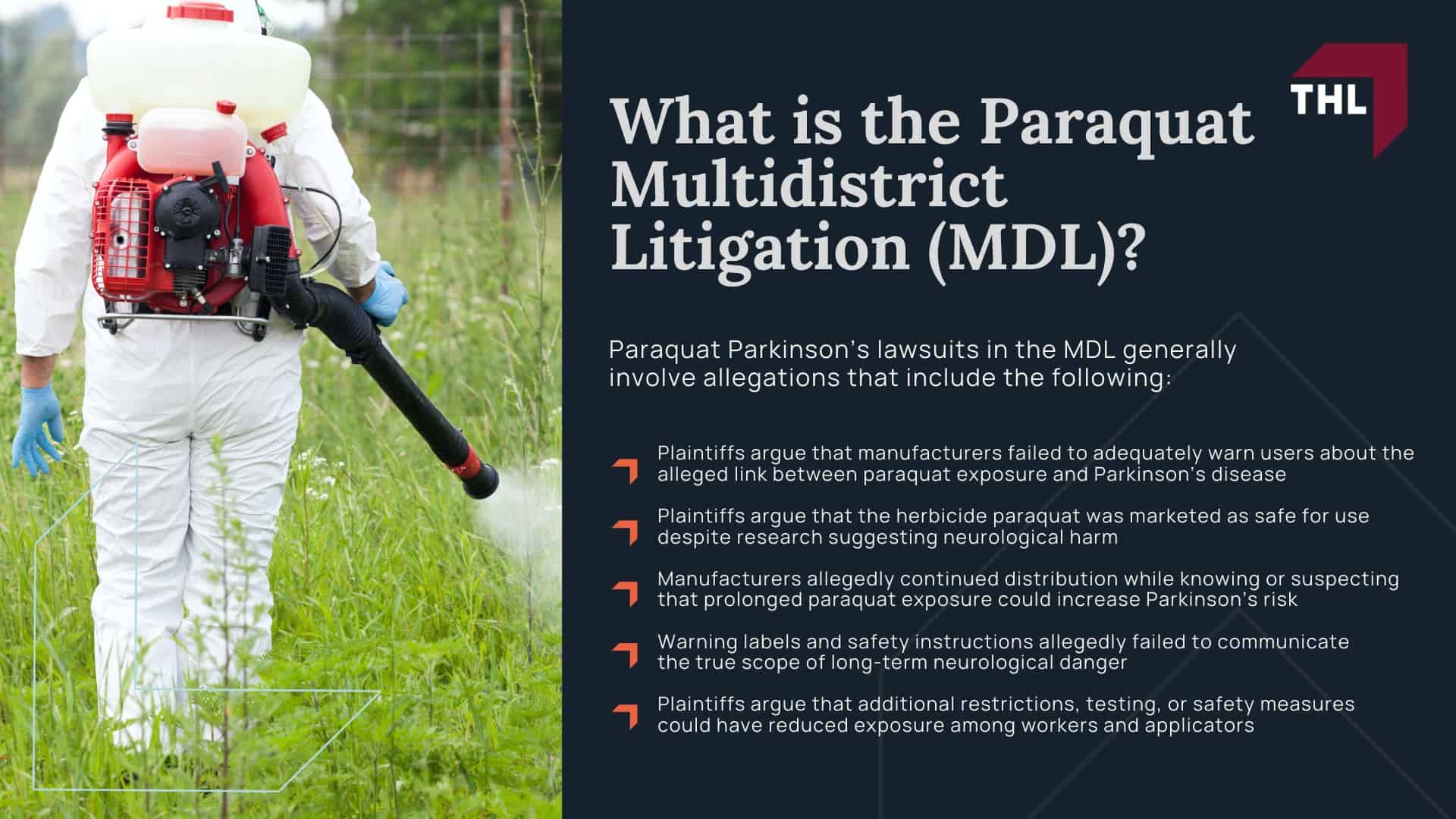
Paraquat Parkinson’s lawsuits in the MDL generally involve allegations that include the following:
The MDL also exists alongside major state court litigation, including proceedings in Philadelphia court, where paraquat trial scheduling has become a major pressure point for settlement negotiations.
State court bellwether trials can influence expectations in the federal docket because they provide public jury feedback on causation and damages theories.
The broader litigation remains active, with case management orders, expert disputes, and settlement discussions continuing.
For paraquat victims, the MDL process is significant because it shapes how evidence is evaluated and how compensation frameworks may eventually be structured across thousands of pending claims.
There is not a paraquat class action lawsuit.
The Paraquat litigation is primarily a mass tort coordinated through multidistrict litigation (MDL), which groups similar federal cases for pretrial efficiency while keeping each claim legally separate.
In an MDL, every plaintiff still has an individual lawsuit and must prove their own exposure history, Parkinson’s diagnosis, causation evidence, and damages.
A class action works differently because it combines many people into one representative case and typically resolves claims through a uniform settlement formula, most often for economic loss rather than individualized medical injuries.

Paraquat Parkinson’s lawsuits are not structured that way because injury severity, medical treatment needs, work history, and exposure circumstances can vary dramatically from one person to the next.
The MDL process allows one judge to manage shared issues, such as expert testimony and discovery disputes, without forcing all plaintiffs into a single one-size-fits-all claim.
If settlements occur, they are typically implemented through a tiered or point-based framework that still relies on individualized records rather than an equal split across all claimants.
This distinction matters because joining the MDL does not automatically guarantee compensation, and each case stands or falls on its own evidence.
Multidistrict litigation is used in Paraquat cases because thousands of plaintiffs across the country are raising similar allegations about paraquat and parkinson’s disease and the health risks tied to long-term exposure.
Consolidating these claims allows one federal judge to manage shared evidence and disputed scientific issues without forcing hundreds of courts to repeat the same work.
This structure can make the legal process more consistent and efficient while still treating each claim as an individual lawsuit with its own damages and proof requirements.
It also helps the court and parties manage the growing volume of pending paraquat cases while claims against chemical companies move through coordinated discovery and pretrial rulings.
Multidistrict litigation is commonly chosen for Paraquat legal action because it can:
Paraquat lawsuits are being filed because scientific research has increasingly suggested that long-term paraquat exposure may be associated with an increased risk of Parkinson’s disease, particularly among individuals who regularly handled the chemical in agricultural settings.
Many lawsuit claims cite epidemiological findings, including results from an agricultural health study framework, to support allegations that repeated exposure can contribute to neurological damage over time.
These cases also reflect broader concern about the potential health risks posed by paraquat, a chemical widely recognized for its acute toxicity, including the danger of accidental ingestion, which can be fatal even in small amounts.
Paraquat dichloride is one of the most widely used herbicides in the United States, first introduced in the 1960s, and it remains common in farming because it becomes inactive upon touching soil, making it useful for no-till and reduced-tillage crop systems.
At the same time, paraquat is subject to strict use restrictions, including limitations on aerial applications and residential buffer zones, reflecting the recognized risks tied to exposure.
Plaintiffs argue that manufacturers such as Syngenta and Chevron failed to warn users about alleged long-term neurological risks, even as scientific literature raised questions about the connection between paraquat and Parkinson’s disease.
In many cases, the central challenge is whether a person can prove paraquat exposure through work history, product records, and other documentation showing how toxic chemical exposure occurred over months or years.
The litigation has expanded nationwide, and as of 2026, JPML reporting indicates that more than 6,400 paraquat claims are pending in the federal MDL, a consolidation process that groups similar cases for coordinated proceedings but still treats each claim individually.
Major litigation developments have also increased public attention and fueled additional filings.
In April 2025, plaintiffs and defendants reported reaching an agreement to settle many of the paraquat cases pending in federal court, and the judge overseeing the MDL has repeatedly paused or extended case-specific deadlines to allow settlement negotiations to continue.
The MDL court extended a stay on case-specific deadlines through January 5, 2026, and later continued pausing certain discovery obligations as settlement terms were developed.
The first bellwether trial in the paraquat MDL was originally scheduled earlier but was delayed into early 2026, with additional trial settings expected to follow, including dates referenced for April 2026.
In parallel state litigation, Syngenta and Chevron reached a confidential settlement on January 29, 2026, resolving the first Philadelphia paraquat Parkinson’s disease case just before it was set to begin trial, an event widely viewed as a sign that defendants are attempting to avoid the risks of public jury trials.
Outside the courtroom, regulatory developments have also become part of the broader context.
The Environmental Protection Agency (EPA) has announced it will reassess the safety of paraquat, requiring manufacturers to demonstrate that current uses remain safe under real-world conditions, which may influence future settlement posture and litigation strategy.
Paraquat lawsuits remain active across the country, and many plaintiffs continue waiting for their claims to be resolved through bellwether trials, settlement negotiations, or individual case outcomes.
Because Parkinson’s disease often develops years after exposure, the statute of limitations for filing a paraquat lawsuit typically ranges from one to six years after diagnosis, depending on the state, making early case review important for people considering legal action.
There is no single “average” number that applies to every paraquat injury claim because paraquat lawsuit settlement amounts are expected to vary widely based on the facts of each case.
In general, settlement estimates range from tens of thousands of dollars to $1,000,000 or more, depending on the severity of Parkinson’s disease symptoms and the quality of supporting documentation.
Factors influencing paraquat settlement amounts include the severity of the plaintiff’s injuries, the duration of exposure, and the strength of the evidence linking paraquat to the illness.
Victims with more serious or advanced injuries may qualify for higher paraquat payouts in settlement negotiations, particularly when medical records and occupational evidence clearly support prolonged exposure.
The expected paraquat lawsuit settlement amounts will fluctuate as the litigation progresses and more cases are resolved, which is why published projections often shift over time.
For people filing paraquat lawsuits, the most realistic approach is to view settlement projections as tiered ranges rather than fixed payouts.
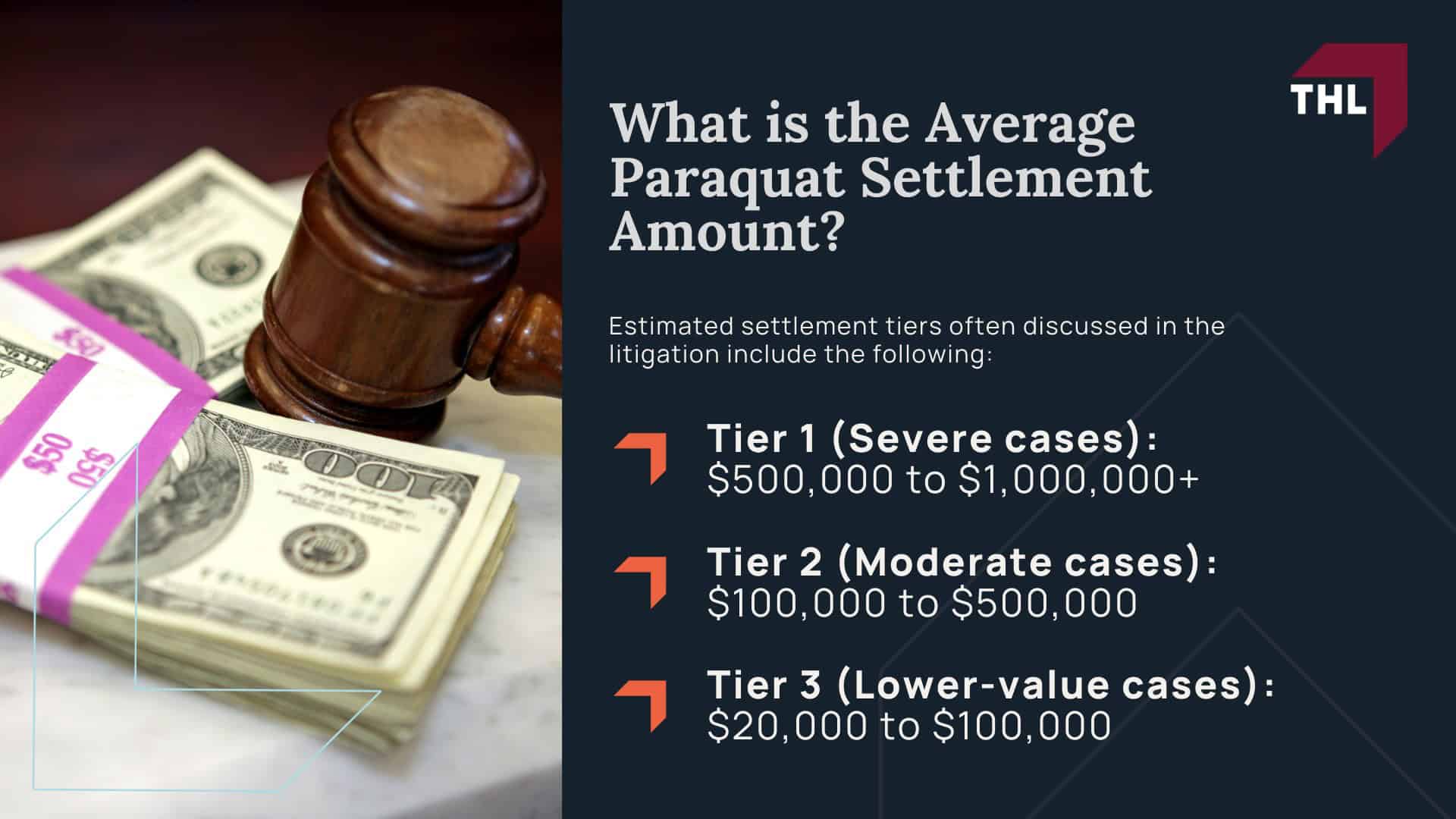
Estimated settlement tiers often discussed in the litigation include the following:
Eligibility in the Paraquat Products Liability Litigation generally comes down to two core issues: whether you meet the paraquat lawsuit qualifications for a documented exposure history and a Parkinson’s disease diagnosis supported by medical records.
Because these cases involve alleged pesticide exposure that may have occurred years before symptoms became obvious, the strength of your exposure proof often determines whether a claim can move forward.
To file a paraquat lawsuit, you will need to prove that you were exposed to paraquat, which usually means gathering evidence before consulting with an attorney so your timeline is clear and consistent.
Proving paraquat exposure will depend on how you may have been exposed but may include affidavits, testimony, and physical records that show when, where, and how contact occurred.
Agricultural workers and landscapers may have business receipts or employment records that help establish job duties tied to mixing, spraying, or working around treated areas.
To support exposure proof, some people also gather medical and personal records, including a doctor’s check-up that documents symptoms and may include blood and urine tests for paraquat where clinically appropriate. 
If you believe you’ve been harmed by paraquat exposure, seek medical treatment and consider speaking to a lawyer with experience in toxic exposure claims to evaluate your legal options.
A paraquat attorney can help you gather evidence of paraquat exposure, organize records, and assist in filing your claim against the companies alleged to be responsible for your illness.
Timing matters because the statute of limitations varies by state and generally ranges from one to six years after a patient’s Parkinson’s diagnosis or death, which can affect both eligibility and any potential paraquat settlement.
Evidence often determines whether a Paraquat claim can move forward and how it may be valued, because the litigation turns on proving exposure, diagnosis, and damages with concrete documentation.
Parkinson’s disease can develop years after the exposure window, so records that anchor dates, job duties, and product use are especially important.
A Paraquat lawyer can help identify gaps early and build a clean narrative that connects exposure history to medical findings in a way that is defensible in court.
Strong documentation also matters because these lawsuits raise serious questions about human health and long-term neurological risk, and defendants typically challenge both causation and exposure details.
The more complete the record, the easier it becomes to assess eligibility, damages, and the strength of the claim.
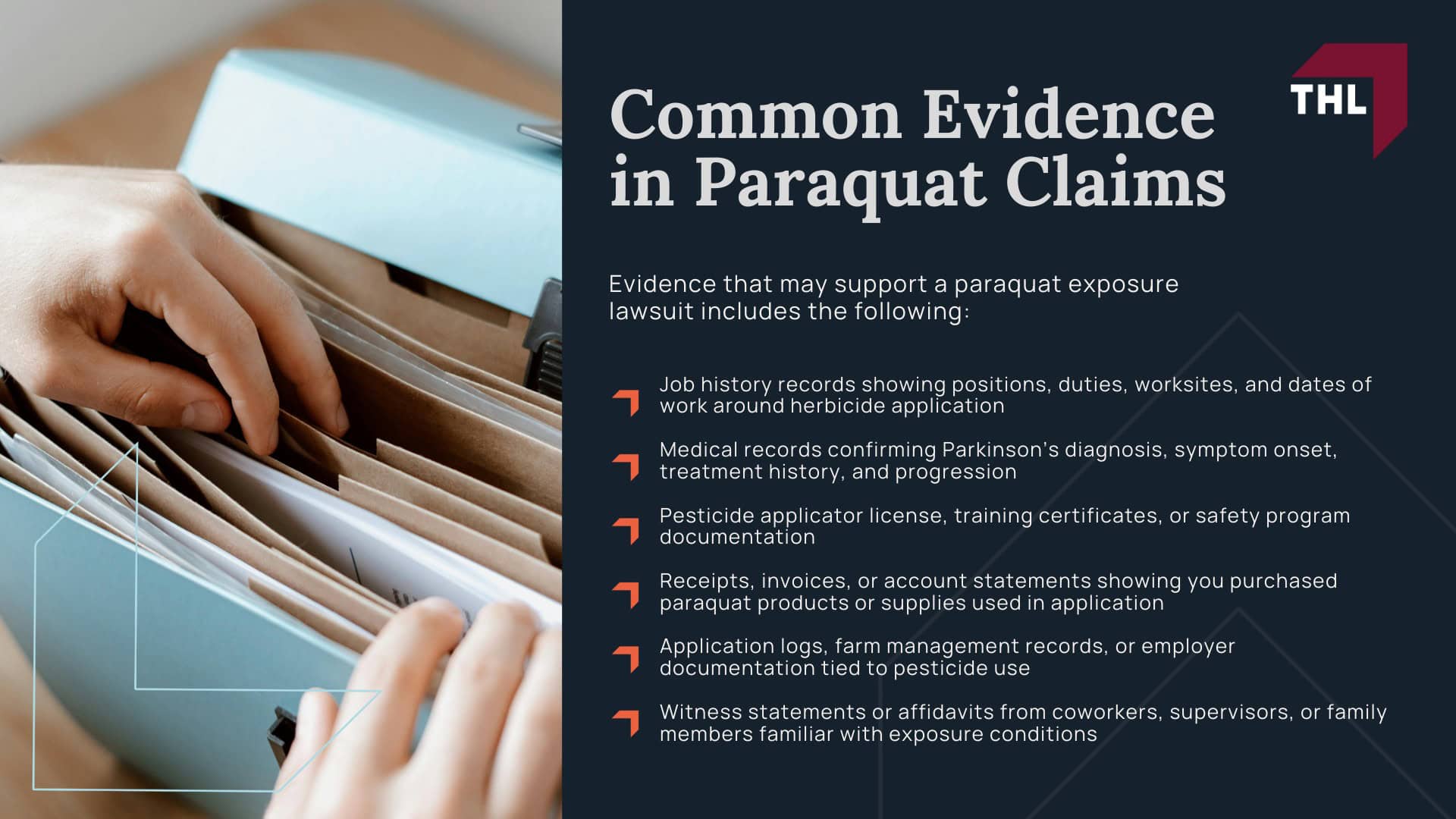
Evidence that may support a paraquat exposure lawsuit includes the following:
Damages are the losses a plaintiff claims resulted from an injury, and in Paraquat cases they are tied to how Parkinson’s disease and related complications have affected health, income, and daily functioning.
Plaintiffs in paraquat lawsuits seek compensation for medical expenses, lost wages, and other damages related to their Parkinson’s diagnosis, with amounts often increasing as symptoms progress and care needs expand.
A paraquat lawsuit attorney can assess damages by reviewing medical records, treatment plans, employment history, and documentation of out-of-pocket costs, then organizing that proof into a clear claim for compensation.
That analysis also accounts for future needs, including long-term care, reduced earning capacity, and complications associated with paraquat poisoning and neurological decline.
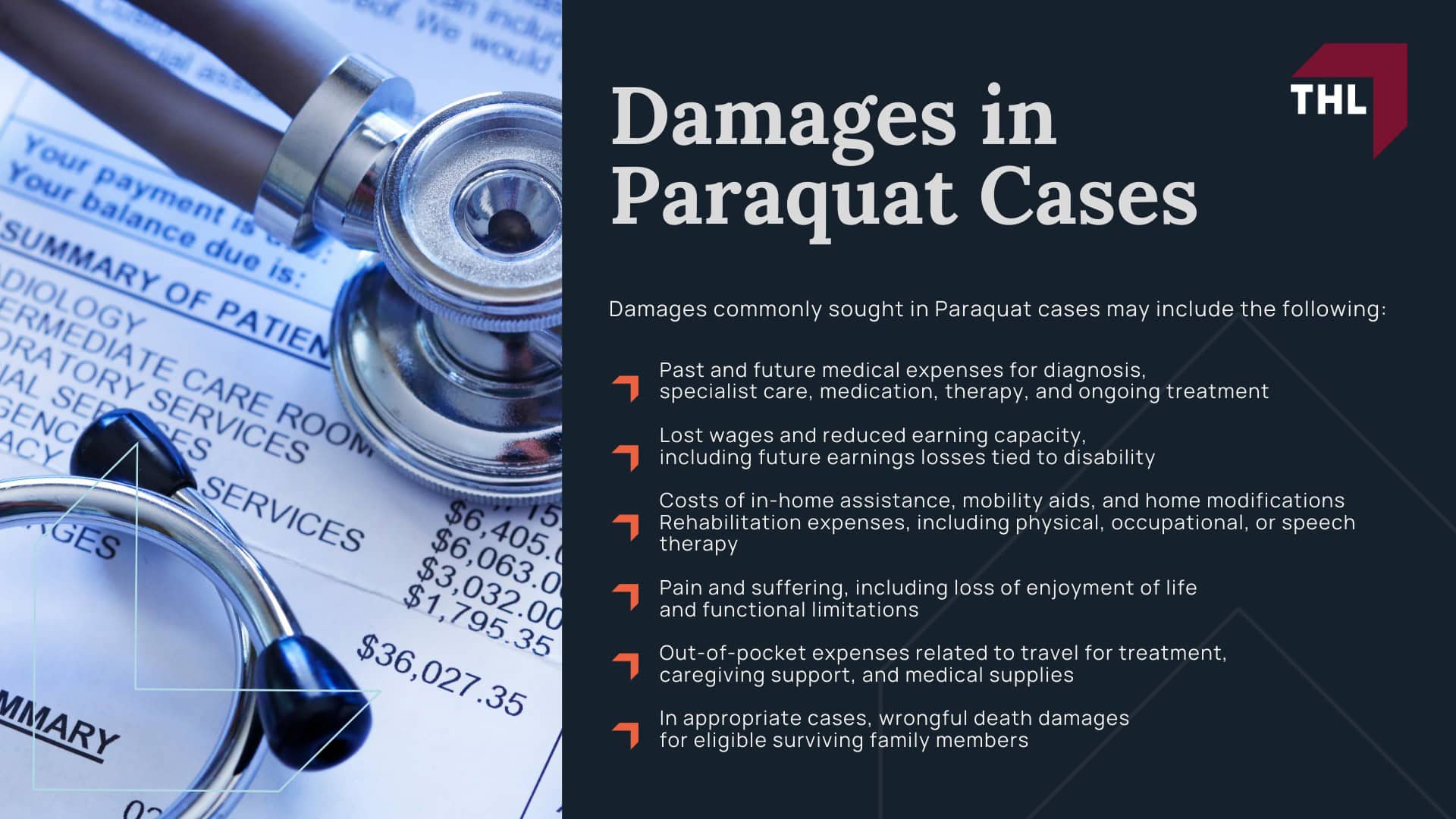
Damages commonly sought in Paraquat cases may include the following:
Paraquat litigation involves complex scientific issues, detailed exposure proof, and high-stakes medical evidence tied to Parkinson’s disease diagnoses.
Many victims are left facing long-term treatment needs, financial instability, and life changes that are difficult to measure on paper but impossible to ignore in real life.
Building a strong claim requires more than a diagnosis, it requires records, timeline clarity, and a legal strategy built around the standards used in toxic exposure litigation.
TorHoerman Law has experience handling Paraquat cases and understands what it takes to evaluate exposure evidence, document damages, and pursue compensation through the federal litigation process.

If you believe Paraquat exposure may have contributed to your Parkinson’s diagnosis, the next step is a case review to determine whether you may qualify and what evidence may support your claim.
Contact TorHoerman Law today to speak with an experienced Paraquat attorney and request a free consultation.


