Chicago
Case Types We Handle
Personal Injuries
Car Accidents
Truck Accidents
Motorcycle Accidents
Bicycle Accidents
Construction Accidents
Nursing Home Abuse
Wrongful Death
Slip and Fall Accidents
Daycare Injury & Abuse
Edwardsville
Case Types We Handle
Personal Injuries
Car Accidents
Truck Accidents
Motorcycle Accidents
Bicycle Accidents
Nursing Home Abuse
Wrongful Death
Slip and Fall Accidents
Daycare Injury & Abuse
Premises Liability
St. Louis
Case Types We Handle
Personal Injuries
Car Accidents
Truck Accidents
Motorcycle Accidents
Bicycle Accidents
Construction Accidents
Nursing Home Abuse
Wrongful Death
Slip and Fall Accidents
Daycare Injury & Abuse
Dangerous Drugs
Defective Products
Chemical Exposure

Risperdal Lawsuit [2026 Update] | Breast Cancer Risk

4.9
Google
•
677 reviews

Risperdal and Breast Cancer: Personal Injury Lawsuits Filed

The Risperdal lawsuit involves allegations that Johnson & Johnson and Janssen failed to adequately warn patients and physicians about the potential breast cancer risks associated with Risperdal and generic risperidone.

Recent lawsuits filed in 2025 and 2026 focus on research involving chronic prolactin elevation, a known effect of risperidone that has been studied in connection with breast tissue growth and prolactin-sensitive cancers.

TorHoerman Law is reviewing claims involving individuals diagnosed with breast cancer after long-term Risperdal or risperidone exposure.

Risperdal Lawsuit; What Is the Risperdal Breast Cancer Lawsuit; How the New Breast Cancer Litigation Differs From Older Risperdal Lawsuits; How the New Breast Cancer Litigation Differs From Older Risperdal Lawsuits; What Is Risperdal; How Risperdal May Increase Prolactin Levels; Scientific Research on Risperdal and Breast Cancer; Risperdal Side Effects Linked to Elevated Prolactin; Who May Qualify for a Risperdal Breast Cancer Lawsuit; Evidence in Risperdal Lawsuit Claims; Potential Compensation in Risperdal Cases; TorHoerman Law_ Contact a Risperdal Breast Cancer Lawyer Today

Risperdal Lawsuit: Antipsychotic Drug May Be Linked to Increased Risk of Breast Cancer

Risperdal is an atypical antipsychotic medication prescribed to treat schizophrenia, bipolar disorder, and irritability associated with autism spectrum disorder.

The drug works by altering dopamine and serotonin activity in the brain, helping stabilize mood, reduce hallucinations, and control certain behavioral symptoms.

Johnson & Johnson and its subsidiary Janssen Pharmaceuticals developed and marketed Risperdal for both adult and pediatric use, leading to widespread long-term exposure among patients across multiple age groups.

Previous lawsuits involving the drug largely centered on young male Risperdal users who allegedly developed gynecomastia and abnormal breast growth after taking the medication during adolescence.

Those cases focused on evidence that Risperdal can significantly increase prolactin production, a hormonal effect known as hyperprolactinemia.

Newly filed lawsuits now allege that elevated prolactin levels associated with long-term risperidone exposure may also have contributed to breast cancer diagnoses in women and men.

Scientific research involving prolactin-increasing antipsychotic medications has reported higher rates of breast cancer in some patient populations, although researchers continue to debate the extent of any direct causal relationship.

The emerging litigation against the drug maker focuses on whether adequate warnings were provided regarding the potential long-term endocrine and breast-related risks associated with Risperdal and generic risperidone.

If you or a loved one developed breast cancer after taking Risperdal or generic risperidone, TorHoerman Law is reviewing claims involving long-term exposure to prolactin-elevating antipsychotic medications.

Contact us for a free consultation.

Use the chat feature on this page for a free case evaluation and to get in touch with our Risperdal attorneys today.

What Is the Risperdal Breast Cancer Lawsuit?

The Risperdal breast cancer lawsuit involves allegations that Johnson & Johnson and Janssen Pharmaceuticals failed to adequately warn patients and physicians about the potential long-term hormonal risks associated with Risperdal and generic risperidone.

Risperdal was widely prescribed as an effective treatment for schizophrenia, bipolar disorder, tardive dyskinesia, and certain behavioral symptoms associated with autism spectrum disorder.

Many Risperdal lawsuits previously focused on young male patients who allegedly developed gynecomastia and male breast growth after taking the medication during adolescence.

New lawsuits now center on allegations that elevated prolactin levels associated with long-term risperidone exposure may have contributed to breast cancer diagnoses in women and men.

Plaintiffs allege the manufacturers knew Risperdal could significantly increase prolactin production while continuing to market the drug for widespread psychiatric use.

The litigation follows years of past lawsuits, regulatory scrutiny, and criminal and civil investigations involving the marketing and safety profile of Risperdal.

Some claims also involve allegations that manufacturers minimized or failed to fully disclose research that linked Risperdal to hormone-related complications involving breast tissue.

What Is the Risperdal Breast Cancer Lawsuit

Victims in Risperdal lawsuits may seek compensation for:

  • Medical expenses related to breast cancer treatment
  • Surgical costs and reconstructive procedures
  • Chemotherapy, radiation, and ongoing oncology care
  • Therapy costs and mental health treatment
  • Lost wages and diminished earning capacity
  • Physical pain and emotional suffering
  • Punitive damages related to alleged manufacturer negligence

Successful settlements and verdicts in prior Risperdal litigation have compensated some plaintiffs for medical costs, emotional distress, and long-term physical complications associated with the drug.

The emerging breast cancer litigation remains in earlier stages than the previous gynecomastia cases, and courts are still evaluating many of the scientific and legal issues involved.

If you or a family member developed breast cancer after being prescribed Risperdal or generic risperidone, reviewing your medical and prescription history with an attorney may help determine whether you qualify to file a claim.

How the New Breast Cancer Litigation Differs From Older Risperdal Lawsuits

Most Risperdal lawsuits in the past focused on allegations that the medication caused abnormal breast development and gynecomastia in boys and young men who used the drug during adolescence.

Those claims centered on evidence that Risperdal usage could significantly elevate prolactin levels, leading to hormonal changes and excessive breast tissue growth.

Thousands of plaintiffs alleged that Johnson & Johnson and Janssen failed to adequately warn physicians and families about the risk of breast development associated with long-term use of the drug.

Some lawsuits also involved allegations that the companies aggressively promoted Risperdal for pediatric and off-label use despite growing safety concerns surrounding hormonal side effects. What Is the Risperdal Breast Cancer Lawsuit; How the New Breast Cancer Litigation Differs From Older Risperdal Lawsuits; How the New Breast Cancer Litigation Differs From Older Risperdal Lawsuits

The newer breast cancer litigation expands beyond gynecomastia claims and instead focuses on whether chronic prolactin elevation may have contributed to breast cancer diagnoses in women and men.

Previous litigation involving gynecomastia resulted in substantial verdicts and settlements after drug manufacturer Johnson & Johnson settled many claims tied to Risperdal-related endocrine complications.

What Is Risperdal?

Risperdal, known generically as risperidone, is a second-generation atypical antipsychotic medication approved for the treatment of schizophrenia, bipolar disorder, and irritability associated with autism spectrum disorder.

The drug primarily works by blocking dopamine D2 receptors and serotonin 5-HT2A receptors in the brain, helping regulate neurotransmitter activity associated with psychosis, mood instability, aggression, and behavioral disturbances.

What Is the Risperdal Breast Cancer Lawsuit; How the New Breast Cancer Litigation Differs From Older Risperdal Lawsuits; How the New Breast Cancer Litigation Differs From Older Risperdal Lawsuits; What Is Risperdal

Risperdal received FDA approval in 1993 and became widely prescribed in both adult and pediatric psychiatric treatment because of its effectiveness in reducing hallucinations, delusions, agitation, and manic symptoms.

How Risperdal May Increase Prolactin Levels

Unlike some other antipsychotic medications, risperidone is strongly associated with elevated prolactin production due to its effects on dopamine signaling within the pituitary gland.

Prolactin is a hormone involved in lactation and breast tissue development, and prolonged hyperprolactinemia has been linked to endocrine complications including gynecomastia, menstrual disruption, galactorrhea, and possible breast tissue abnormalities.

Dopamine normally suppresses prolactin release within the brain, but Risperdal (risperidone) can interfere with that regulatory process by blocking dopamine receptors involved in pituitary hormone control.

As prolactin levels rise, the hormone can affect breast tissue development in both women and men, particularly during long-term exposure.

Medical literature has shown that prolactin stimulates breast growth and plays a role in cellular activity within mammary tissue, leading researchers to examine whether chronic hyperprolactinemia may contribute to certain hormone-sensitive breast cancers.

What Is the Risperdal Breast Cancer Lawsuit; How the New Breast Cancer Litigation Differs From Older Risperdal Lawsuits; How the New Breast Cancer Litigation Differs From Older Risperdal Lawsuits; What Is Risperdal; How Risperdal May Increase Prolactin Levels

Risperdal has consistently been identified as one of the antipsychotic medications most strongly associated with sustained prolactin elevation, sometimes producing significantly higher prolactin levels than other drugs in the same class.

Some researchers have focused on whether prolonged endocrine disruption associated with risperidone exposure may create conditions that support abnormal breast tissue changes over time.

Current lawsuits allege that these prolactin-related effects were not adequately communicated to patients and prescribing physicians despite years of documented endocrine complications associated with the medication.

Scientific Research on Risperdal and Breast Cancer

Scientific research involving Risperdal (risperidone) and breast cancer has evolved over several decades through endocrinology, oncology, and psychiatric safety studies examining the effects of chronic prolactin elevation.

Early Risperdal gynecomastia research largely focused on abnormal breast tissue development in boys and young men, but researchers later began examining whether sustained hyperprolactinemia could also influence breast cancer risk.

Much of the scientific discussion centers on a hormone called prolactin, which regulates lactation and breast tissue activity and can become chronically elevated in some patients taking prolactin-increasing antipsychotic medications.

Researchers have studied whether prolonged Risperdal use may affect hormone-sensitive breast tissue due to the drug’s dopamine-blocking effects within the pituitary gland.

In recent years, the FDA expanded warning language for several antipsychotic medications to include additional discussion involving hyperprolactinemia and inconsistent findings related to breast cancer risk.

What Is the Risperdal Breast Cancer Lawsuit; How the New Breast Cancer Litigation Differs From Older Risperdal Lawsuits; How the New Breast Cancer Litigation Differs From Older Risperdal Lawsuits; What Is Risperdal; How Risperdal May Increase Prolactin Levels; Scientific Research on Risperdal and Breast Cancer

Major studies and regulatory findings involving Risperdal and breast cancer include:

  • A Swedish registry study involving more than 132,000 women reported increased breast cancer rates among patients exposed to prolactin-increasing antipsychotic medications for prolonged periods, particularly after five or more years of exposure.
  • A Finnish observational study involving women with schizophrenia found higher breast cancer rates associated with long-term exposure to prolactin-elevating antipsychotic medications compared to prolactin-sparing alternatives.
  • A foundational study published in 2022 found that women taking any antipsychotic drug had a 35% higher chance of developing breast cancer compared to those not taking these drugs, with Risperdal classified as having the highest potential to elevate prolactin levels.
  • A 2025 toxicology review reported that antipsychotic medications associated with the greatest prolactin elevation also showed the highest reported breast cancer risk increases in pooled observational data.
  • Laboratory and animal studies involving risperidone identified mammary gland tumors and prolactin-related cellular activity changes in rodents exposed to the medication during carcinogenicity testing.
  • FDA prescribing information for Risperdal states that approximately one-third of human breast cancers are prolactin dependent in vitro and notes that epidemiologic studies examining hyperprolactinemia and breast cancer have produced inconsistent results.
  • Additional studies have examined how chronic prolactin elevation may affect tumor growth signaling pathways, breast tissue proliferation, and endocrine regulation in patients taking dopamine-blocking antipsychotic medications.

Despite the growing body of research, no single study has conclusively established that Risperdal directly causes breast cancer in every patient who develops the disease after taking the medication.

Many of the available studies are observational and must account for confounding variables including obesity, smoking history, reproductive factors, psychiatric illness, concurrent medications, and disparities in healthcare access.

Researchers continue to debate how strongly prolactin elevation alone influences breast cancer development and whether certain patient populations may face greater risk than others during long-term exposure.

Current litigation involving Risperdal reflects this ongoing scientific debate, with plaintiffs and manufacturers expected to rely heavily on competing medical experts, epidemiologic evidence, and endocrine research as these cases proceed.

Risperdal Side Effects Linked to Elevated Prolactin

Risperdal has been consistently associated with hyperprolactinemia, a condition involving abnormally high prolactin levels caused by dopamine receptor blockade within the pituitary gland.

Elevated prolactin can disrupt normal endocrine function and affect breast tissue, reproductive hormones, and sexual health in both women and men.

Some side effects associated with chronic prolactin elevation became central to earlier Risperdal litigation, particularly claims involving gynecomastia and abnormal breast development in adolescent males.

What Is the Risperdal Breast Cancer Lawsuit; How the New Breast Cancer Litigation Differs From Older Risperdal Lawsuits; How the New Breast Cancer Litigation Differs From Older Risperdal Lawsuits; What Is Risperdal; How Risperdal May Increase Prolactin Levels; Scientific Research on Risperdal and Breast Cancer; Risperdal Side Effects Linked to Elevated Prolactin

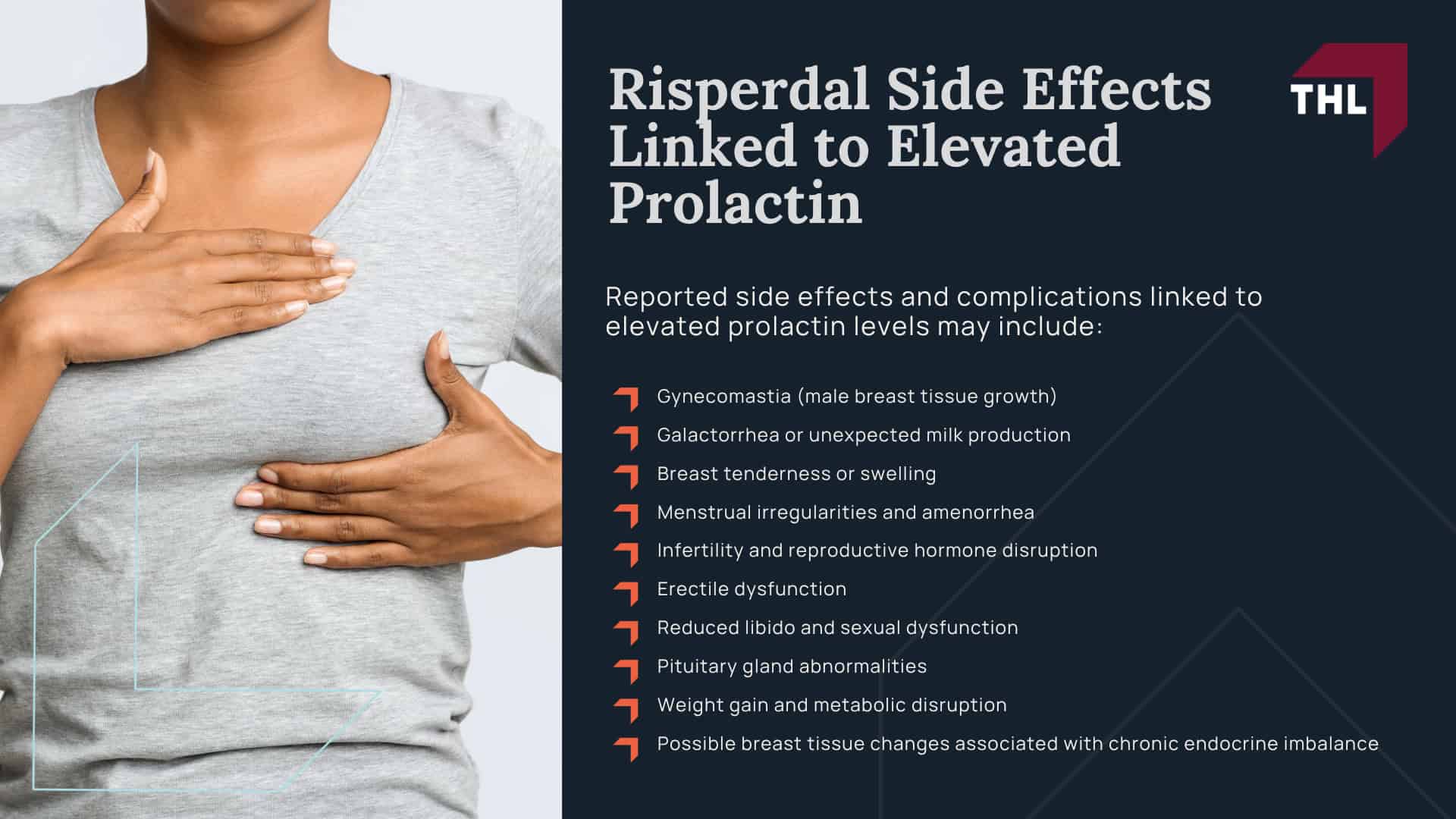
Reported side effects and complications linked to elevated prolactin levels may include:

  • Gynecomastia (male breast tissue growth)
  • Galactorrhea or unexpected milk production
  • Breast tenderness or swelling
  • Menstrual irregularities and amenorrhea
  • Infertility and reproductive hormone disruption
  • Erectile dysfunction
  • Reduced libido and sexual dysfunction
  • Pituitary gland abnormalities
  • Weight gain and metabolic disruption
  • Possible breast tissue changes associated with chronic endocrine imbalance

Who May Qualify for a Risperdal Breast Cancer Lawsuit?

Individuals may qualify for a Risperdal breast cancer lawsuit if they were diagnosed with breast cancer after taking Risperdal or generic risperidone for an extended period of time.

Many claims involve patients who used the medication to treat schizophrenia, bipolar disorder, autism-related irritability, or other psychiatric conditions requiring long-term antipsychotic treatment.

Current lawsuits generally focus on prolonged exposure because risperidone is known to cause sustained prolactin elevation during chronic use.

Potential claimants may include both women and men, although most large epidemiologic studies involving breast cancer risk and prolactin-increasing antipsychotics have focused on female patients.

Medical records documenting prescription history, treatment duration, pathology findings, oncology care, and endocrine complications may play an important role in evaluating a potential claim.

What Is the Risperdal Breast Cancer Lawsuit; How the New Breast Cancer Litigation Differs From Older Risperdal Lawsuits; How the New Breast Cancer Litigation Differs From Older Risperdal Lawsuits; What Is Risperdal; How Risperdal May Increase Prolactin Levels; Scientific Research on Risperdal and Breast Cancer; Risperdal Side Effects Linked to Elevated Prolactin; Who May Qualify for a Risperdal Breast Cancer Lawsuit

Some lawsuits also involve individuals who previously experienced prolactin-related side effects such as gynecomastia, galactorrhea, menstrual disruption, or abnormal breast tissue changes before receiving a breast cancer diagnosis.

Because the litigation is relatively new, eligibility may depend on several case-specific factors including duration of exposure, timing of diagnosis, family history, concurrent medications, and the type of breast cancer involved.

Evidence in Risperdal Lawsuit Claims

Risperdal breast cancer lawsuits depend heavily on medical timelines documenting when risperidone was prescribed, how long the drug was used, and when breast cancer or endocrine complications developed.

Pharmacy records, psychiatric treatment histories, and oncology records may help establish years of continuous exposure to prolactin-elevating antipsychotic medication.

Some claims also involve documented prolactin-related complications including gynecomastia, galactorrhea, menstrual disruption, or abnormal breast tissue changes appearing during treatment.

Older prescription histories, pathology findings, imaging studies, and endocrine evaluations may become particularly important in cases involving long-term Risperdal exposure.

Expert analysis may also be used to evaluate prolactin exposure, competing risk factors, latency periods, and the progression of the underlying disease.

What Is the Risperdal Breast Cancer Lawsuit; How the New Breast Cancer Litigation Differs From Older Risperdal Lawsuits; How the New Breast Cancer Litigation Differs From Older Risperdal Lawsuits; What Is Risperdal; How Risperdal May Increase Prolactin Levels; Scientific Research on Risperdal and Breast Cancer; Risperdal Side Effects Linked to Elevated Prolactin; Who May Qualify for a Risperdal Breast Cancer Lawsuit; Evidence in Risperdal Lawsuit Claims

Evidence in Risperdal lawsuit claims may include:

  • Pharmacy and prescription records
  • Psychiatric treatment records
  • Oncology and cancer treatment records
  • Mammograms, MRIs, and imaging studies
  • Pathology and biopsy reports
  • Surgical and hospital records
  • Prolactin testing and endocrine evaluations
  • Records involving gynecomastia or breast tissue abnormalities
  • Physician notes discussing side effects during treatment
  • Chemotherapy and radiation records
  • Employment and wage loss documentation
  • Expert medical opinions

Potential Compensation in Risperdal Cases

Damages in Risperdal lawsuits generally refer to the financial, physical, and emotional losses associated with breast cancer treatment and related complications allegedly connected to long-term risperidone exposure.

Compensation analysis may involve reviewing medical costs, lost income, future treatment needs, surgical procedures, and the long-term impact of cancer treatment on daily life and overall health.

Evaluating damages in pharmaceutical litigation often requires detailed review of medical records, employment history, oncology care, and projected future expenses tied to the diagnosis.

Some cases may also involve claims for emotional suffering, disfigurement, loss of quality of life, or punitive damages tied to allegations involving inadequate safety warnings or negligent marketing practices.

What Is the Risperdal Breast Cancer Lawsuit; How the New Breast Cancer Litigation Differs From Older Risperdal Lawsuits; How the New Breast Cancer Litigation Differs From Older Risperdal Lawsuits; What Is Risperdal; How Risperdal May Increase Prolactin Levels; Scientific Research on Risperdal and Breast Cancer; Risperdal Side Effects Linked to Elevated Prolactin; Who May Qualify for a Risperdal Breast Cancer Lawsuit; Evidence in Risperdal Lawsuit Claims; Potential Compensation in Risperdal Cases

Potential compensation in Risperdal cases may include:

  • Past and future medical expenses
  • Chemotherapy and radiation treatment costs
  • Surgical and reconstructive procedure costs
  • Prescription medication expenses
  • Lost wages and diminished earning capacity
  • Pain and suffering
  • Emotional distress and mental anguish
  • Permanent physical impairment or disfigurement
  • Costs associated with ongoing oncology care
  • Loss of quality of life
  • Wrongful death damages in fatal cases

TorHoerman Law: Contact a Risperdal Breast Cancer Lawyer Today

Current Risperdal lawsuits allege that long-term risperidone exposure and chronic prolactin elevation may have contributed to serious hormone-related complications in certain patients.

The scientific and medical issues involved in these claims are complex, often requiring extensive review of prescription histories, oncology records, endocrine findings, and expert analysis involving prolactin-related breast tissue changes.

TorHoerman Law continues to monitor developments involving Risperdal, generic risperidone, and emerging breast cancer litigation tied to prolactin-elevating antipsychotic medications.

Individuals diagnosed with breast cancer after prolonged Risperdal use may benefit from preserving medical records, pharmacy histories, pathology findings, and documentation involving prior endocrine complications or abnormal breast tissue changes.

What Is the Risperdal Breast Cancer Lawsuit; How the New Breast Cancer Litigation Differs From Older Risperdal Lawsuits; How the New Breast Cancer Litigation Differs From Older Risperdal Lawsuits; What Is Risperdal; How Risperdal May Increase Prolactin Levels; Scientific Research on Risperdal and Breast Cancer; Risperdal Side Effects Linked to Elevated Prolactin; Who May Qualify for a Risperdal Breast Cancer Lawsuit; Evidence in Risperdal Lawsuit Claims; Potential Compensation in Risperdal Cases; TorHoerman Law_ Contact a Risperdal Breast Cancer Lawyer Today

If you or a loved one developed breast cancer after taking Risperdal or generic risperidone, contact TorHoerman Law to discuss your legal options and determine whether you may qualify to pursue a claim.

Reach out today for a free consultation, or use the chat feature on this page to get in touch with our Risperdal attorneys.

Frequently Asked Questions

Published by:
Share
Picture of Tor Hoerman
Tor Hoerman

Tor Hoerman has represented injured individuals for more than 30 years, with experience spanning individual personal injury cases and nationwide mass tort litigation. His work includes car accidents, catastrophic injuries, product liability claims, and other serious injury cases. Tor has served in court-appointed leadership roles in national litigation and tried cases involving major corporate defendants.

TorHoerman Law’s legal content is researched and written by our editorial team and attorneys for legal accuracy, clarity, and relevance. We rely on statutes, court records, government publications, medical research, and other authoritative sources when applicable. This page provides general legal information and does not constitute legal advice.

TorHoerman Law reviews its legal content for factual accuracy, current information, and relevant legal context before publication and as material developments occur. This article is provided for general informational purposes and does not constitute legal advice. For guidance about a specific case, contact TorHoerman Law.

Have you or a loved one been injured?

A serious injury can change your life.

Speak with an experienced personal injury lawyer about your rights, your case, and the legal options available to you.
Google
•
677 reviews
4.9
★★★★★
Recovered damages
$4 Billion+

Table of Contents

Guides & Resources
About TorHoerman Law

TorHoerman Law represents people whose lives have been disrupted by serious injuries, unsafe products, and negligence. Our attorneys handle individual personal injury cases as well as national mass tort lawsuits involving major corporations.

Founded in 2009, our legal team brings more than 100 years of combined experience handling serious injury and complex civil litigation.

Do you believe you’re entitled to compensation?

Use our Instant Case Evaluator to find out in as little as 60 seconds!

$495 Million
Baby Formula NEC Lawsuit

In this case, we obtained a verdict of $495 Million for our client’s child who was diagnosed with Necrotizing Enterocolitis after consuming baby formula manufactured by Abbott Laboratories.

$20 Million
Toxic Tort Injury

In this case, we were able to successfully recover $20 Million for our client after they suffered a Toxic Tort Injury due to chemical exposure.

$103.8 Million
COX-2 Inhibitors Injury

In this case, we were able to successfully recover $103.8 Million for our client after they suffered a COX-2 Inhibitors Injury.

$4 Million
Traumatic Brain Injury

In this case, we were able to successfully recover $4 Million for our client after they suffered a Traumatic Brain Injury while at daycare.

$2.8 Million
Defective Heart Device

In this case, we were able to successfully recover $2.8 Million for our client after they suffered an injury due to a Defective Heart Device.