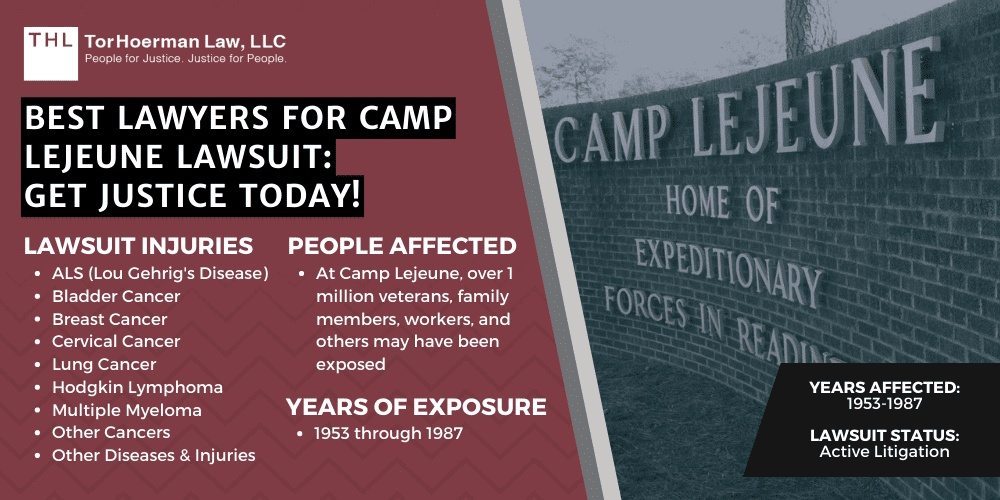
In 1982, toxic chemicals that can potentially cause cancer were found in drinking water at Marine Corps Base Camp Lejeune on the coast of North Carolina.
Which Water Treatment Plants Supplied Contaminated Water To Camp Lejeune?
According to the Agency for Toxic Substances and Disease Registry (ATSDR), specific volatile organic compounds (VOCs) and other toxic chemicals were found in two (2) of the eight (8) water treatment plants that supplied the Marine Corps Base.
VOCs and other toxic chemicals were found in the following two (2) water treatment plants that supplied Camp Lejeune:
- Tarawa Terrace Treatment Plant
- Hadnot Point Treatment Plant
The chemicals found in the drinking water at Camp Lejeune can result in a number of health issues in people of all ages.
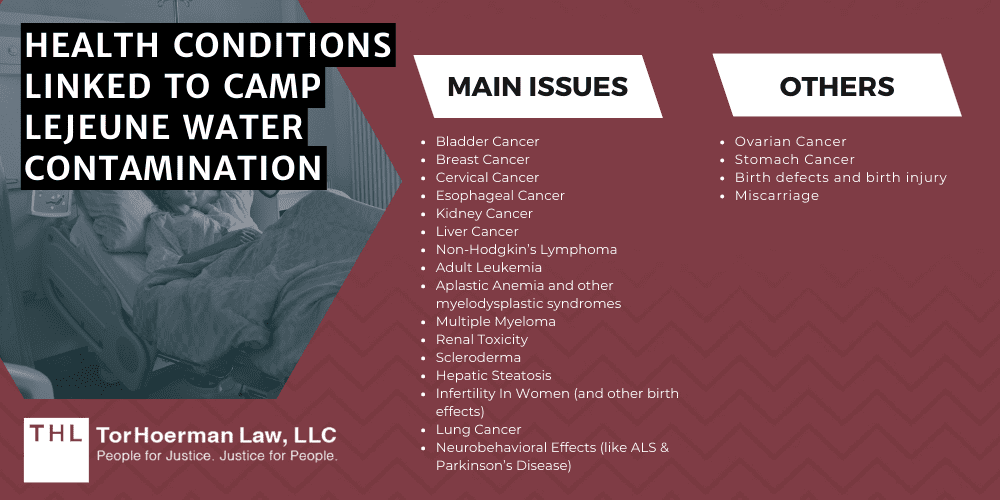
The main health issues and symptoms linked to Camp Lejeune water contamination include:
- Bladder Cancer
- Breast Cancer
- Cervical Cancer
- Esophageal Cancer
- Kidney Cancer
- Liver Cancer
- Non-Hodgkin’s Lymphoma
- Adult Leukemia
- Aplastic Anemia and other myelodysplastic syndromes
- Multiple Myeloma
- Renal Toxicity
- Scleroderma
- Hepatic Steatosis
- Infertility In Women (and other birth effects)
- Lung Cancer
- Neurobehavioral Effects (like ALS & Parkinson’s Disease)
Other associated conditions include:
- Ovarian Cancer
- Stomach Cancer
- Birth defects and birth injury
- Miscarriage
The ATSDR is also conducting a more general healthy study of the several cancers and chronic conditions linked to Camp Lejeune because people were exposed to chemicals known to cause those ailments.
The U.S. Department of Veterans Affairs announced a list of presumptive conditions related to water contamination at Camp Lejeune.
The Veterans Administration allows members of the armed services to seek benefits for the conditions outlined on the aforementioned link.
Please Note:
- Disability benefits secured through Veterans Affairs are available to only former military personnel, and not family members.