Active Litigation
Tylenol Autism ADHD Lawsuit Facts
TorHoerman Law is actively accepting claims for the Tylenol Autism ADHD Lawsuit.

Active Litigation
TorHoerman Law is actively accepting claims for the Tylenol Autism ADHD Lawsuit.
Question: Does Tylenol Cause Autism?
New studies have found that Tylenol use during pregnancy is linked to an increased risk of Autism Spectrum Disorder (ASD).
On this page, we’ll explore the research linking Tylenol use during pregnancy to an increased risk of Autism (ASD) and ADHD, an overview of Tylenol Autism lawsuits, and discuss the process of assessing damages in a Tylenol lawsuit and more.
The use of acetaminophen, commonly known by its brand name Tylenol, during pregnancy has been a subject of concern and debate.
Recent studies have suggested a potential link between Tylenol use during pregnancy and an increased risk of Autism Spectrum Disorder (ASD) in children.
This article explores the findings of these studies and provides an overview of the ongoing Tylenol Autism Lawsuit.
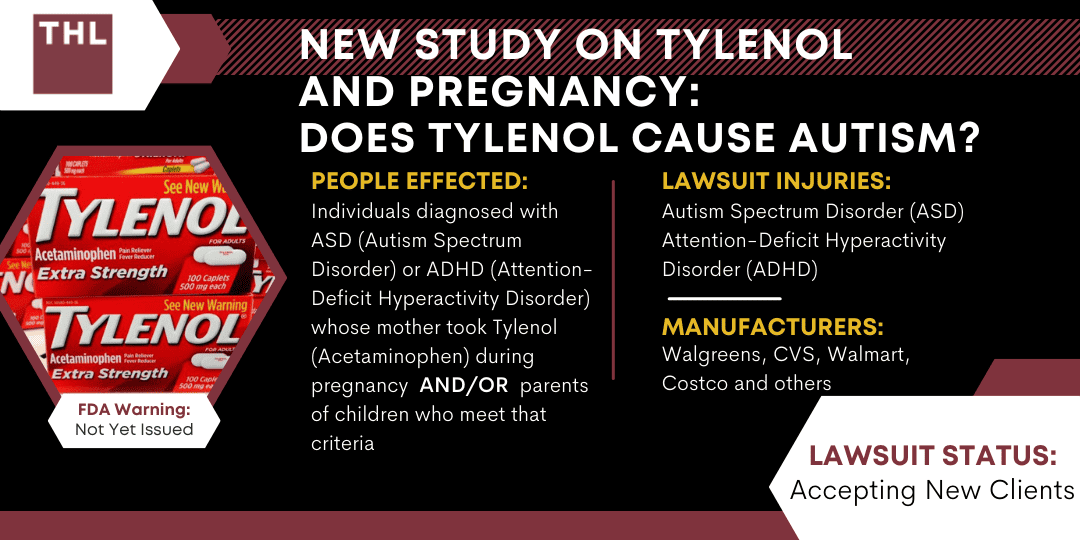
If you or a loved one used Tylenol or Acetaminophen products during pregnancy, and your child was subsequently diagnosed with Autism Spectrum Disorder (ASD), you may be eligible to file a Tylenol Autism Lawsuit.
Contact TorHoerman Law today to learn more about your legal options, or use the chatbot on this page to see if you qualify for a Tylenol Autism Lawsuit instantly.
Our law firm is committed to helping those harmed at no fault of their own secure financial compensation for what they’ve experienced.
We aren’t afraid to take on major drug manufacturers and pharmaceutical companies for their potential negligence that puts consumers in harm’s way.
Contact us to learn more about the Tylenol Autism Lawsuits and how to get involved if you qualify to file.
Acetaminophen is an active component in over a hundred medicines and OTC drugs that help treat pain and mild fever.
However, health professionals have long suspected a relationship between acetaminophen exposure during pregnancy and autism spectrum disorder (ASD).
New data from twenty-six epidemiological studies and dozens of animal studies suggest this may be the case.
Maternal-fetal medicine experts could no longer dismiss the human scientific evidence linking acetaminophen usage during pregnancy to ASD and attention deficit hyperactivity disorder, prompting the release of a consensus statement in 2021.
Here are some of the notable studies conducted by research that link Tylenol use and autism:
One notable study published in JAMA Pediatrics in 2016, conducted by researchers from the University of Bristol, analyzed data from the Avon Longitudinal Study of Parents and Children.
The study involved over 2,600 mother-child pairs and found that children exposed to acetaminophen in the womb had a higher risk of developing ASD and pregnancy complications by age seven.
The study suggested that the child’s risk increased with the frequency of Tylenol use during pregnancy.
The International Journal of Epidemiology published a study in 2016 that examined 2644 mother-child pairings.
Researchers analyzed data of children aged one and five to see if prenatal exposure to Tylenol increased their risk for autistic spectrum disorder or attention deficit hyperactivity disorder.
Autism risk was shown to be significantly higher when acetaminophen was used by pregnant women.
This was the first research to examine the relationship between Tylenol usage and autism in relation to the amount of acetaminophen consumed by pregnant women.
A 2019 study by the Johns Hopkins University Boston Birth Cohort published in JAMA Psychiatry identified “dose-response” associations between prenatal acetaminophen exposure and an elevated risk of autism spectrum disorder and ADHD in cord biomarkers (blood samples taken from the umbilical cord).
In other words, higher acetaminophen levels in cord blood samples correlate with a higher prevalence of autism or ADHD diagnosis.
This further proved that using acetaminophen during pregnancy may be risky.
The study spanned twenty years, where researchers analyzed umbilical cord blood samples from 996 newborns and assessed biomarkers for acetaminophen levels.
Researchers found that newborns whose umbilical cord blood contained the most acetaminophen were three times more likely to develop autism spectrum disorder or ADHD than infants whose cord blood had the least.
Furthermore, the study demonstrated a consistent connection between acetaminophen levels within blood samples and autism spectrum disorder and childhood ADHD, even after controlling for potential confounding factors such as preterm birth, smoking, substance abuse, maternal stressors, and maternal body mass index.
The dose-response data suggests that Tylenol may alter fetal development.
This provides substantial support for a causal relationship with adverse neurodevelopmental outcomes.
The only real issue with this study is that it relied only on self-reporting by mothers, which isn’t foolproof.
Ethical considerations prevent researchers from going beyond observational studies of pregnant women.
Deliberately exposing pregnant people to a public health risk is unethical.
The limitations of this research include the possibility of recall bias and the absence of objective methods to determine when in-utero exposure to acetaminophen pain medicines occurred.
This means there was no systematic way to monitor how much Tylenol a pregnant woman consumed.
Research on the effects of generic acetaminophen on developing fetuses and infants was published in the European Journal of Epidemiology, and it evaluated data from 73,881 children from six previous studies.
Data from the studies showed that the prevalence of ASD and ADHD diagnoses in children exposed to Tylenol or acetaminophen products during pregnancy was significantly higher than in children who were not.
While the precise mechanisms underlying the potential link between Tylenol use during pregnancy and autism development are not fully understood, several hypotheses have been proposed.
One hypothesis suggests that Tylenol’s active ingredient, acetaminophen, may interfere with child development and functioning of the fetal brain.
Acetaminophen is known to reduce pain and fever by inhibiting the production of prostaglandins, which are involved in various physiological processes, including neurodevelopment.
It is speculated that the disruption of prostaglandin pathways during critical periods of fetal brain development may contribute to the increased risk of autism.
Another possible reason involves acetaminophen’s impact on oxidative stress and inflammation.
Acetaminophen affects the balance of antioxidants and reactive oxygen species in the body.
Excessive oxidative stress and inflammation during prenatal development have been associated with neurodevelopmental disorders, including autism.
It is possible that acetaminophen use during pregnancy could disrupt the delicate balance of oxidative stress and inflammation, potentially influencing the risk of autism in susceptible individuals.
However, it is essential to note that these hypotheses are speculative, and more research is needed to validate and elucidate these mechanisms.
The complex nature of autism development involves a combination of genetic, environmental, and epigenetic factors, making it challenging to pinpoint a single causal factor.
Aside from this, only limited medical alternatives exist.
The potential link between Tylenol use during pregnancy and an increased risk of autism has sparked legal action.
Several lawsuits have been filed against the manufacturers of generic acetaminophen by parents who believe their children’s autism was caused by prenatal exposure to the drug.
These Tylenol lawsuits allege that drug manufacturers failed to adequately warn pregnant people about the potential pregnancy risks associated with Tylenol.
The Tylenol plaintiffs argue that if they had been aware of the possible link, they would have made different choices regarding pain relief during pregnancy.
The legal process surrounding these acetaminophen lawsuits involves several stages, including filing complaints, discovery, pretrial proceedings, and potential trials.
In acetaminophen autism lawsuits, damages typically aim to compensate the plaintiff for the harm or losses they have suffered as a result of the defendant’s actions.
In the context of a Tylenol lawsuit, if a plaintiff successfully demonstrates a causal connection between Tylenol use during pregnancy and the development of autism in their child, they may seek compensation for the following types of damages:
The plaintiff may seek reimbursement for the costs associated with diagnosing, treating, and managing the child’s autism.
This could include expenses for evaluations, therapy, medication, and specialized services.
The psychological impact on the parents and the child can be significant.
Damages may be sought for the emotional distress, pain and suffering, and loss of enjoyment of life experienced by the child and their family due to the child’s autism diagnosis.
Autism often requires specialized educational support and services.
The plaintiff may seek compensation for the costs of obtaining appropriate educational resources, including special education programs, therapy services, and adaptive equipment.
If the child requires additional caregiving or assistance due to autism, the plaintiff may seek compensation for the expenses associated with hiring caregivers or modifying the home environment to accommodate the child’s needs.
Permanent disability refers to a condition that substantially impairs an individual’s ability to perform essential life functions and activities.
If the child’s autism is determined to be a permanent disability that significantly restricts their daily functioning and independence, compensation for permanent disability may be sought.
This could include financial compensation to account for the ongoing care, support, and services needed to manage the disability.
Determining the amount of compensation for loss of enjoyment of life and permanent disability in a Tylenol autism lawsuit involves a thorough evaluation of the child’s specific circumstances.
Lawyers from TorHoerman Law have extensive experience reviewing Tylenol autism lawsuits and estimating fair compensation.
TorHoerman Law has secured more than $4 billion in negotiated settlements and verdicts for personal injury lawsuits throughout its practice.
Our track record has earned us a reputation as some of the best personal injury lawyers in the country.
We are focused solely on competent legal representation, relationship building, and full financial recovery for your serious injuries.
Our law firm offers free, no-obligation case consultations for all potential clients.
If you or a loved one used Tylenol or Acetaminophen products during pregnancy, and your child was subsequently diagnosed with Autism Spectrum Disorder (ASD) or Attention Deficit Hyperactivity Disorder (ADHD), you may be eligible to file a Tylenol Autism ADHD Lawsuit.
Contact TorHoerman Law today to learn more about your legal options, or use the chatbot on this page to see if you qualify for a Tylenol Autism ADHD Lawsuit instantly.
TorHoerman Law: Your Tylenol Autism Lawyers
New studies have found that Tylenol use during pregnancy is linked to an increased risk of Autism Spectrum Disorder (ASD).
They have also found that Tylenol (acetaminophen) use during pregnancy is correlated with an increased risk of developing Attention Deficit Hyperactivity Disorder (ADHD).
Previous research and previous studies have widely reported that Tylenol is safe for pregnant women to use, and many health professionals still may suggest it.
Though acetaminophen relieves pain and fever, new research and warnings from doctors and scientists indicate that there may be a:
Recent scientific evidence has found that prenatal exposure to acetaminophen may increase the risk of Autism Spectrum Disorders, Attention Deficit Hyperactivity Disorder (ADHD), and other developmental disorders.
Settlement amounts for Tylenol Autism Lawsuits are still to be determined.
The Tylenol Litigation is still in its early stages, and our lawyers are reviewing Tylenol Autism Lawsuits daily to help people get on the right track.
Our lawyers estimate that Tylenol Autism Lawsuit settlements could be between $50,000 and $500,000+ depending on the facts of an individual case and the direction of the Tylenol Litigation.
These estimates are only projections based on prior results in dangerous drug lawsuits. These estimated settlement amounts are not guarantees.
The lawsuits consolidated in multidistrict litigation named drug manufacturers of generic acetaminophen as defendants.
These companies include:
Settlements for mothers who took Tylenol and whose children were subsequently diagnosed with Autism Spectrum Disorder (ASD), Attention Deficit Hyperactivity Disorder (ADHD), or other developmental disorders will depend on a number of factors.
Factors that can impact Tylenol Autism Lawsuit settlement amounts include quality of evidence, severity of diagnoses, damages claimed, and more.
Assessing Damages means collecting information and calculating any and all losses associated with your case, economic and non-economic.
In a Tylenol Autism Lawsuit, damages may include:
Contact us for a free consultation or use the chatbot on this page to receive an instant answer as to whether or not you may qualify for a Tylenol Autism Lawsuit or Acetaminophen Autism Lawsuit.
Chatbot conversations remain confidential, and provide a quick and easy way to get in touch with a lawyer if you have a case.

Tor Hoerman has represented injured individuals for more than 30 years, with experience spanning individual personal injury cases and nationwide mass tort litigation. His work includes car accidents, catastrophic injuries, product liability claims, and other serious injury cases. Tor has served in court-appointed leadership roles in national litigation and tried cases involving major corporate defendants.
TorHoerman Law’s legal content is researched and written by our editorial team and attorneys for legal accuracy, clarity, and relevance. We rely on statutes, court records, government publications, medical research, and other authoritative sources when applicable. This page provides general legal information and does not constitute legal advice.
TorHoerman Law reviews its legal content for factual accuracy, current information, and relevant legal context before publication and as material developments occur. This article is provided for general informational purposes and does not constitute legal advice. For guidance about a specific case, contact TorHoerman Law.
You can learn more about this topic by visiting any of our Tylenol Autism ADHD Lawsuit pages listed below:
A serious injury can change your life.

TorHoerman Law represents people whose lives have been disrupted by serious injuries, unsafe products, and negligence. Our attorneys handle individual personal injury cases as well as national mass tort lawsuits involving major corporations.
Founded in 2009, our legal team brings more than 100 years of combined experience handling serious injury and complex civil litigation.
Do you believe you’re entitled to compensation?
Use our Instant Case Evaluator to find out in as little as 60 seconds!

In this case, we obtained a verdict of $495 Million for our client’s child who was diagnosed with Necrotizing Enterocolitis after consuming baby formula manufactured by Abbott Laboratories.

In this case, we were able to successfully recover $20 Million for our client after they suffered a Toxic Tort Injury due to chemical exposure.

In this case, we were able to successfully recover $103.8 Million for our client after they suffered a COX-2 Inhibitors Injury.

In this case, we were able to successfully recover $4 Million for our client after they suffered a Traumatic Brain Injury while at daycare.

In this case, we were able to successfully recover $2.8 Million for our client after they suffered an injury due to a Defective Heart Device.
A serious injury can change your life.