A slip and fall claim often depends on what is documented in the minutes, hours, and days after the incident.
Property owners may repair the hazard, clean the area, or rely on incomplete reports, which can make it harder to prove what caused the fall.
Insurance companies also begin evaluating claims quickly, and early statements or missing evidence can affect how liability is assessed.
Taking the right steps early can help preserve evidence, document injuries, and avoid problems that weaken a claim.

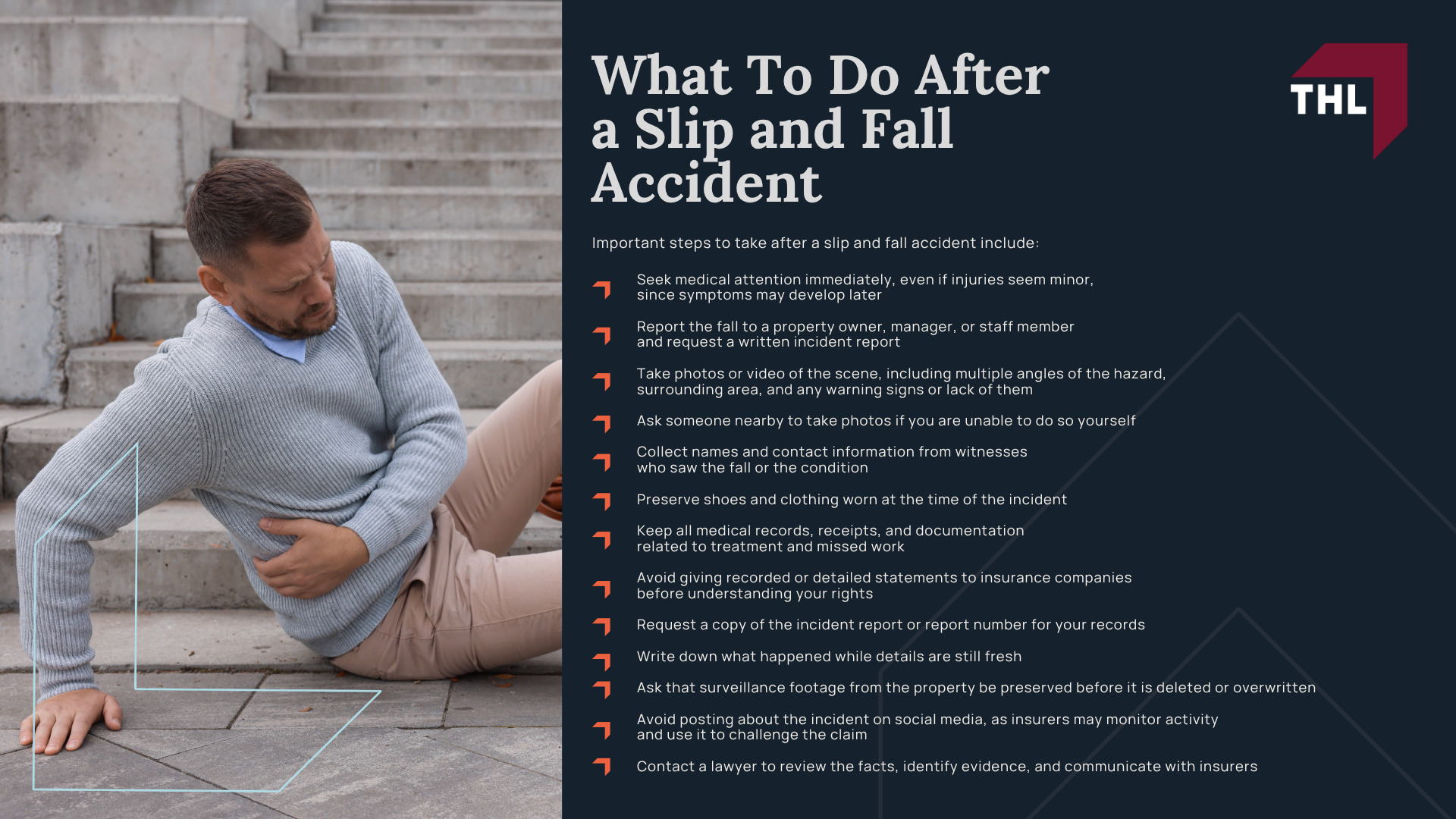
Important steps to take after a slip and fall accident include:
- Seek medical attention immediately, even if injuries seem minor, since symptoms may develop later
- Report the fall to a property owner, manager, or staff member and request a written incident report
- Take photos or video of the scene, including multiple angles of the hazard, surrounding area, and any warning signs or lack of them
- Ask someone nearby to take photos if you are unable to do so yourself
- Collect names and contact information from witnesses who saw the fall or the condition
- Preserve shoes and clothing worn at the time of the incident
- Keep all medical records, receipts, and documentation related to treatment and missed work
- Avoid giving recorded or detailed statements to insurance companies before understanding your rights
- Request a copy of the incident report or report number for your records
- Write down what happened while details are still fresh
- Ask that surveillance footage from the property be preserved before it is deleted or overwritten
- Avoid posting about the incident on social media, as insurers may monitor activity and use it to challenge the claim
- Contact a lawyer to review the facts, identify evidence, and communicate with insurers
These steps can help preserve the condition of the evidence, document how the fall occurred, and protect the claim before conditions change or records are lost.
Gathering Evidence for Your Slip and Fall Claim
Evidence is critical in slip and fall claims.
To prove a case, you usually need records showing what the hazard was, how long it existed, who controlled the area, and what injuries resulted.
Without strong documentation, the defense may argue the condition was never there, that it was obvious, or that the plaintiff caused the fall.
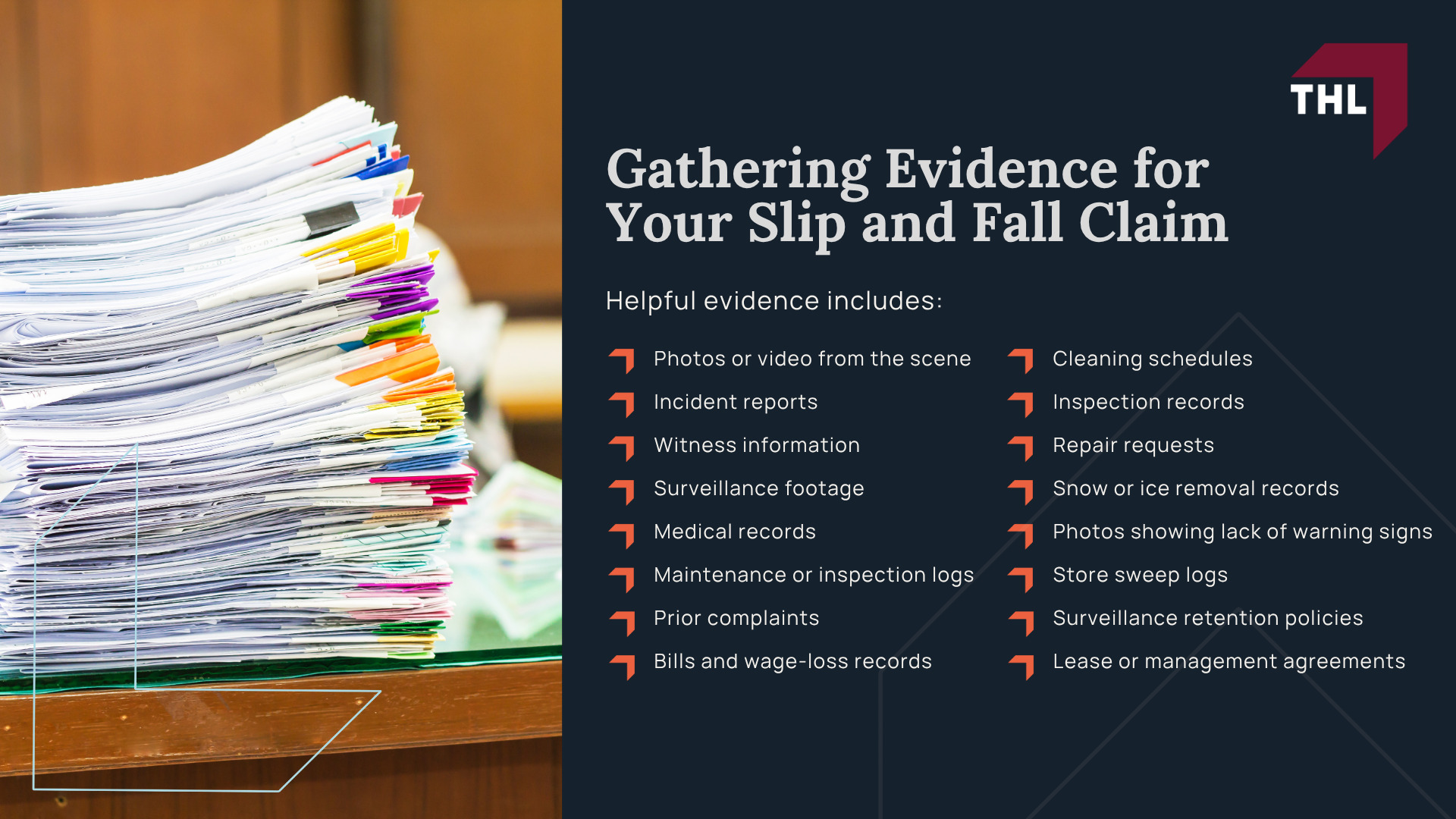
Helpful evidence may include:
- Photos or video from the scene
- Incident reports
- Witness information
- Surveillance footage
- Medical records
- Maintenance or inspection logs
- Prior complaints
- Bills and wage-loss records
- Cleaning schedules
- Inspection records
- Repair requests
- Snow or ice removal records
- Photos showing lack of warning signs
- Store sweep logs
- Surveillance retention policies
- Lease or management agreements
Strong documentation can make it harder for the defense to argue that the hazard did not exist, that the owner lacked notice, or that the injury was unrelated to the fall.
Proving Negligence in a Slip and Fall Case
To win a slip and fall lawsuit, you generally must prove duty, breach, causation, and damages.
That means showing the defendant had a duty to maintain the property safely, that the defendant failed to use reasonable care, that the unsafe condition caused the fall, and that the plaintiff suffered actual losses.
Under Illinois’s Premises Liability Act, lawful entrants are generally owed reasonable care under the circumstances.
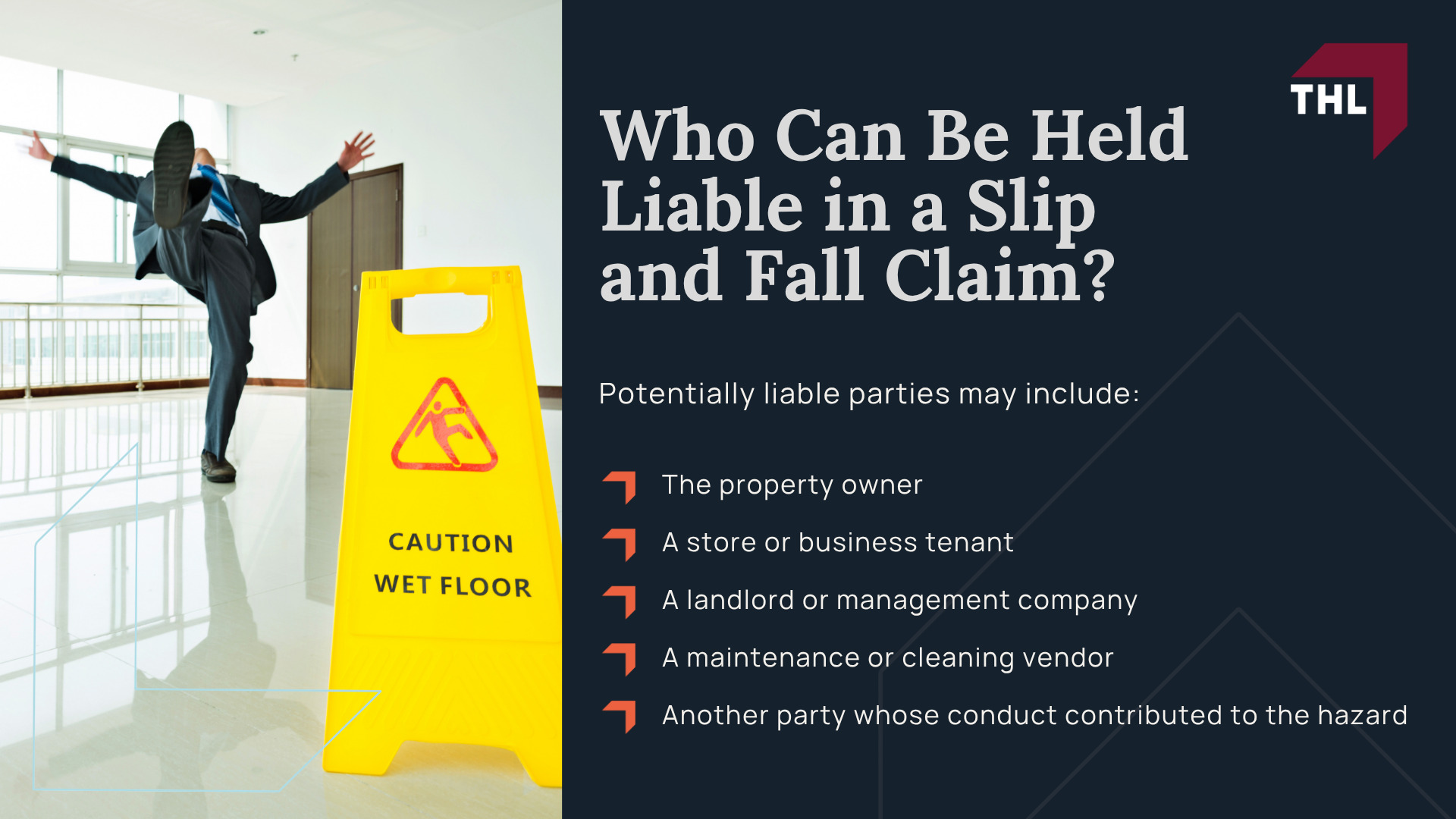
Defendants often argue that the hazard was open and obvious, that the condition appeared too quickly to be discovered, that the injured person was not watching where they were going, or that another party controlled the area.
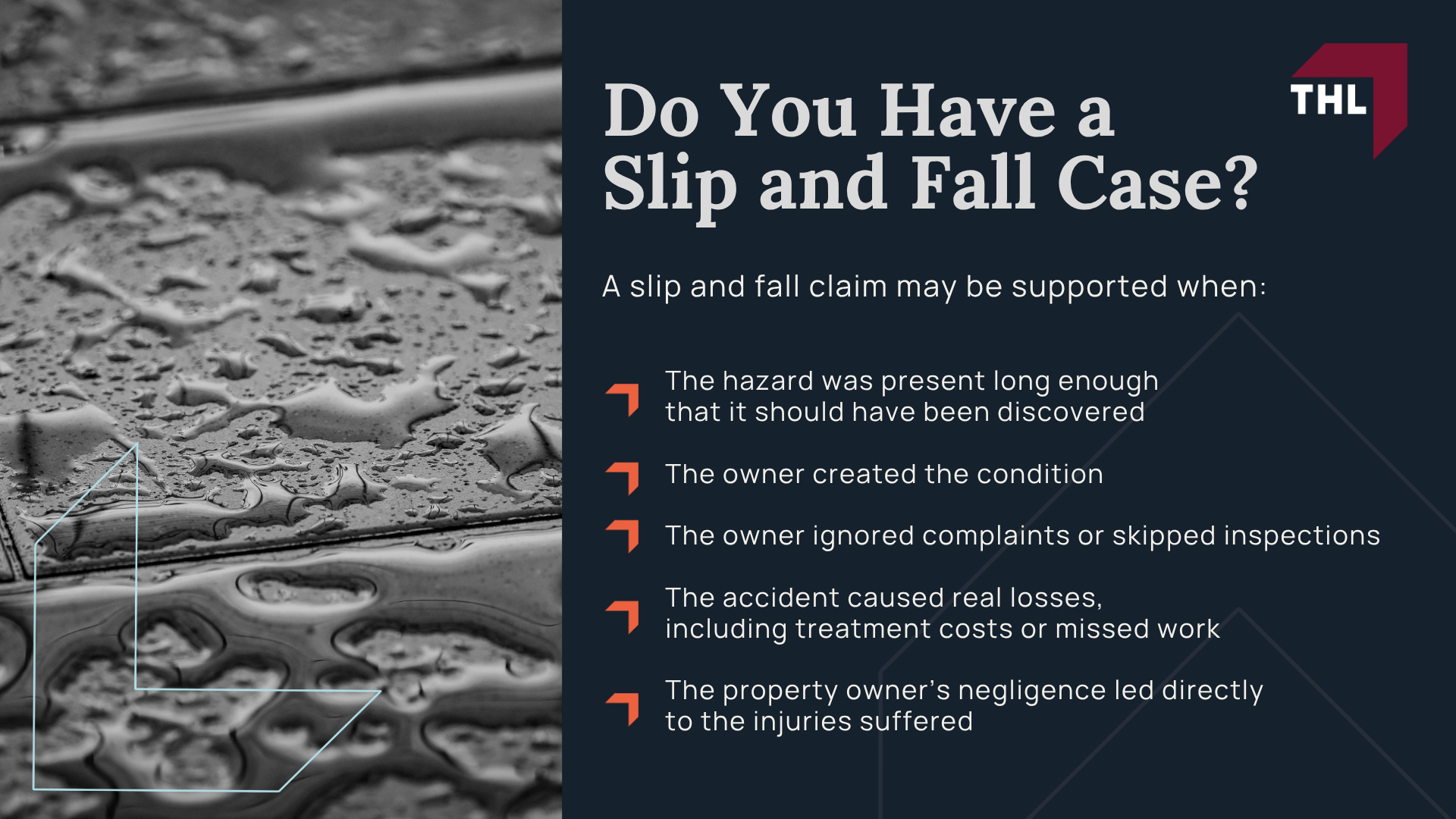
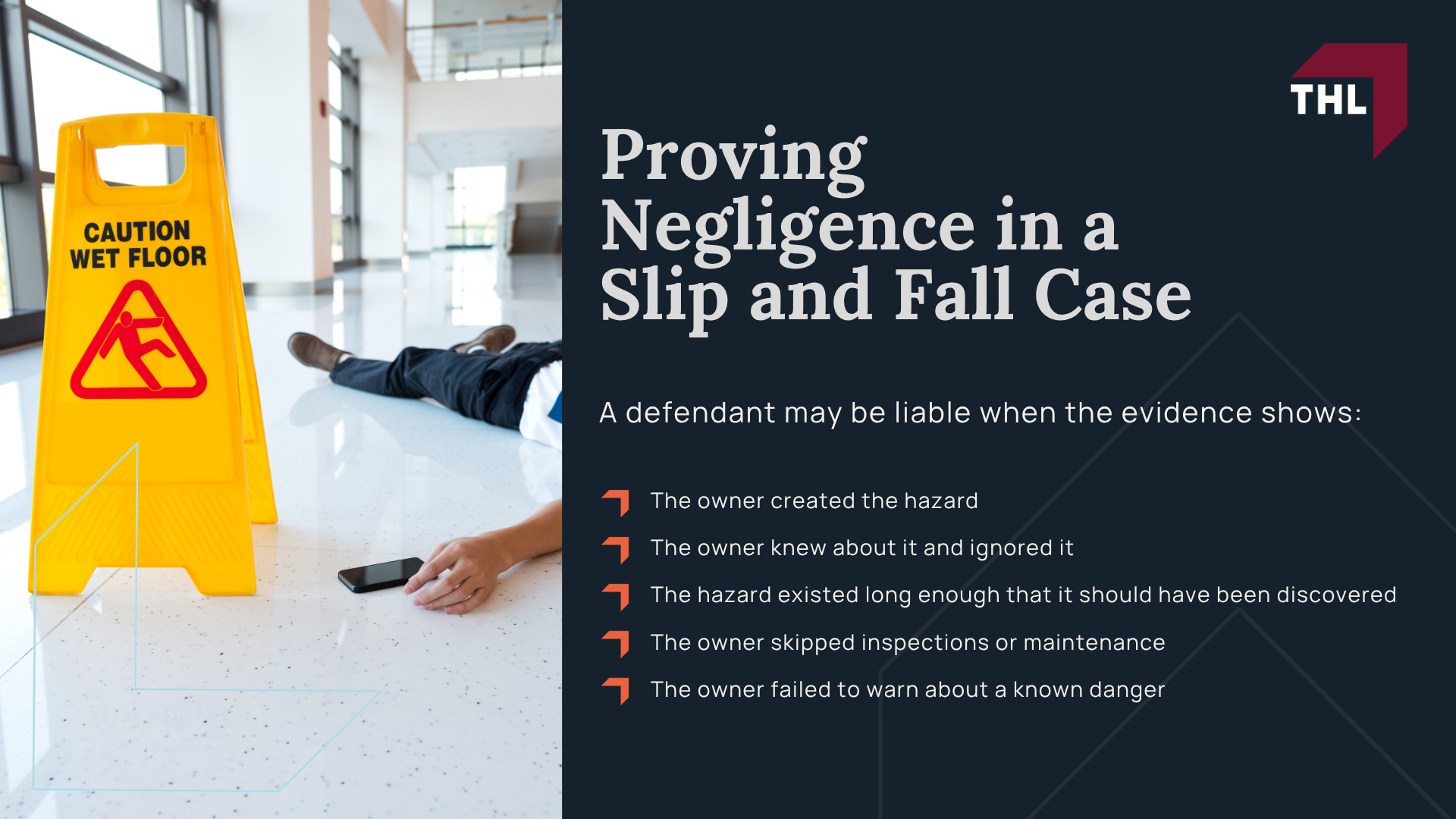
A defendant may be liable when the evidence shows:
- The owner created the hazard
- The owner knew about it and ignored it
- The hazard existed long enough that it should have been discovered
- The owner skipped inspections or maintenance
- The owner failed to warn about a known danger
These cases often turn on notice, inspection practices, property control, causation, and credibility.
Damages in Edwardsville Slip and Fall Lawsuits
A slip and fall lawsuit is meant to help the injured person recover compensation for the losses caused by the fall.
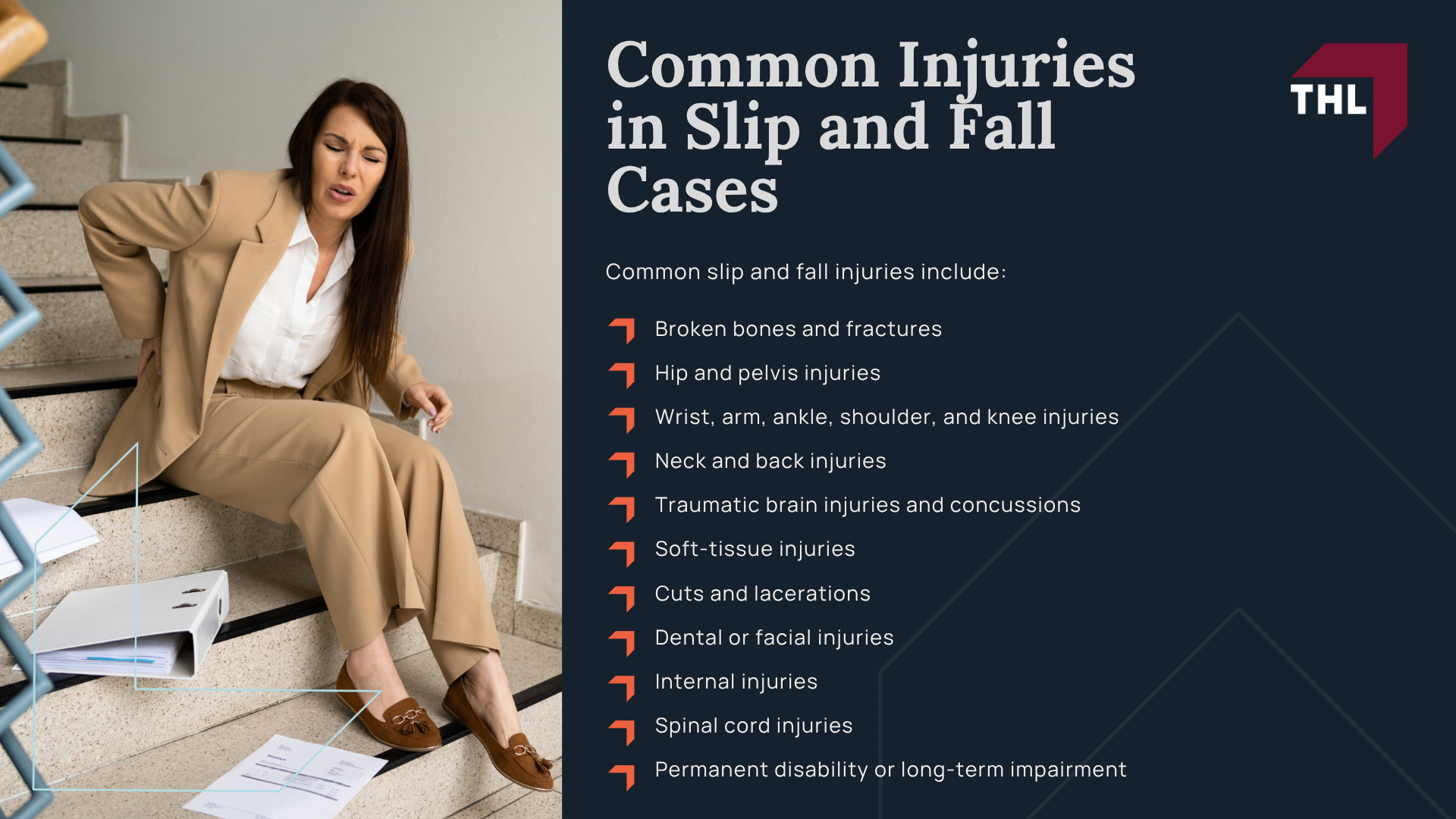
Depending on the facts, damages may include past medical bills, future medical care, physical therapy, lost income, reduced earning capacity, pain and suffering, emotional distress, and the effect of the injuries on daily life.
In the most serious cases, a fall may lead to permanent disability or even a wrongful death claim.
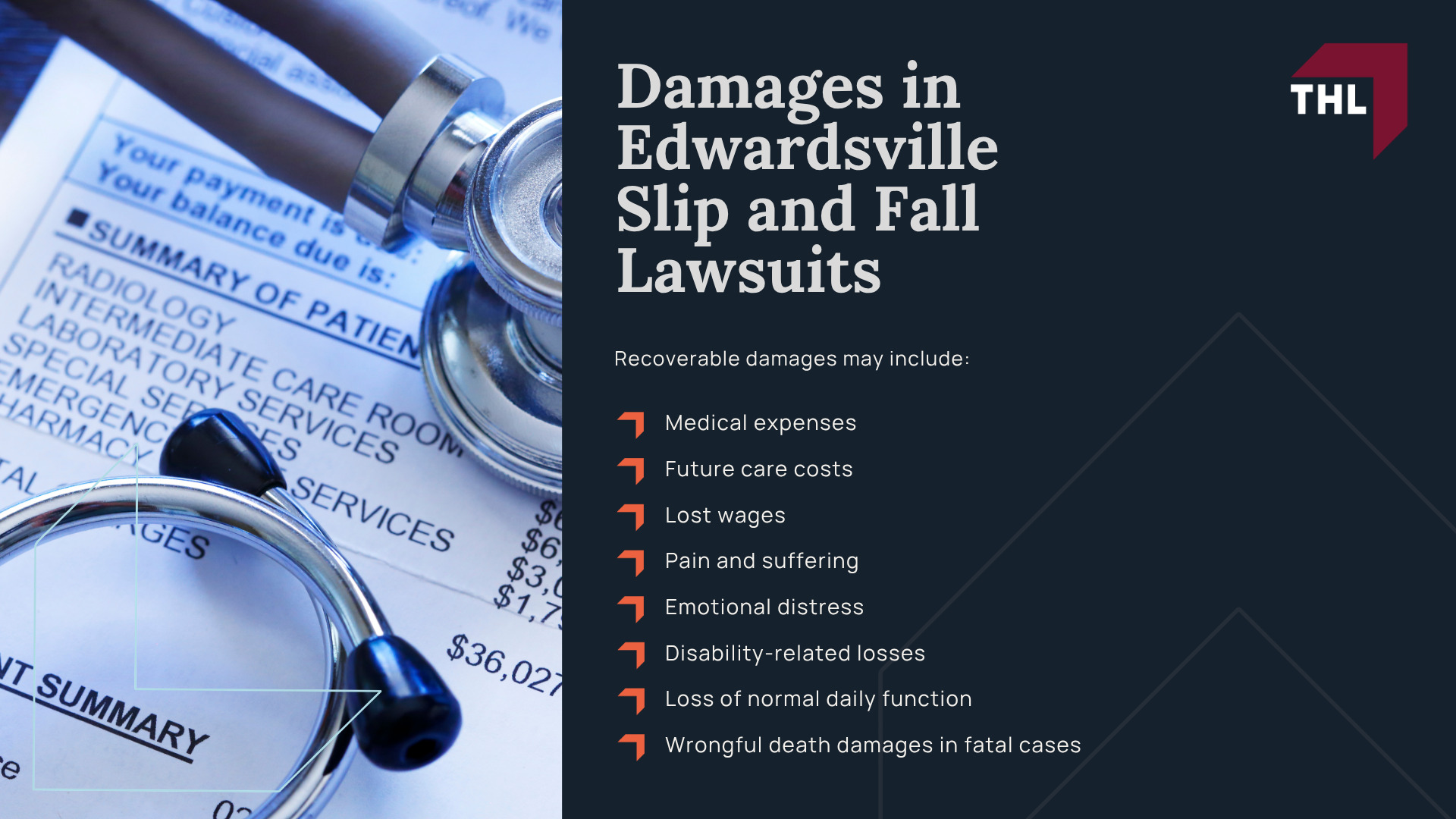
Recoverable damages may include:
- Medical expenses
- Future care costs
- Lost wages
- Pain and suffering
- Emotional distress
- Disability-related losses
- Loss of normal daily function
- Wrongful death damages in fatal cases
An experienced attorney can evaluate what damages are supported by medical records, bills, wage records, work restrictions, and long-term treatment evidence.
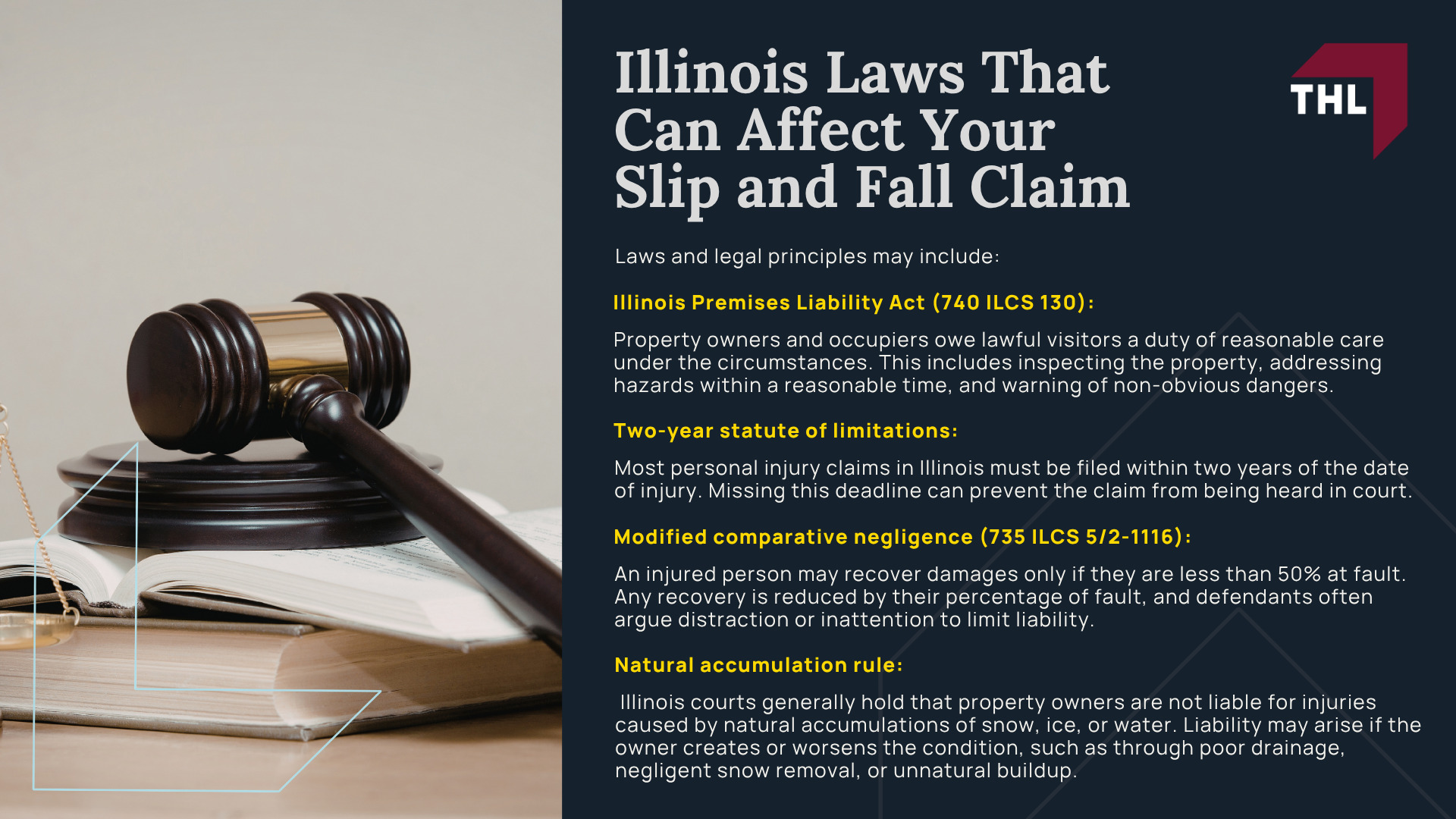
Illinois Laws That Can Affect Your Slip and Fall Claim
Illinois law can determine whether a slip and fall claim is viable, how liability is evaluated, and what damages may be recovered.
These cases are governed by statutes and court decisions that define a property owner’s duty, available defenses, and filing deadlines.
Laws and legal principles may include:
- Illinois Premises Liability Act (740 ILCS 130): Property owners and occupiers owe lawful visitors a duty of reasonable care under the circumstances. This includes inspecting the property, addressing hazards within a reasonable time, and warning of non-obvious dangers.
- Two-year statute of limitations: Most personal injury claims in Illinois must be filed within two years of the date of injury. Missing this deadline can prevent the claim from being heard in court.
- Modified comparative negligence (735 ILCS 5/2-1116): An injured person may recover damages only if they are less than 50% at fault. Any recovery is reduced by their percentage of fault, and defendants often argue distraction or inattention to limit liability.
- Natural accumulation rule: Illinois courts generally hold that property owners are not liable for injuries caused by natural accumulations of snow, ice, or water. Liability may arise if the owner creates or worsens the condition, such as through poor drainage, negligent snow removal, or unnatural buildup.
These rules affect how a case is investigated, how liability is argued, and whether a claim can proceed.
A slip and fall claim often depends on applying these laws to the specific facts, including how the hazard formed, how long it existed, and what actions the property owner took in response.