Infant sleep product lawsuits are product liability cases which allege that certain nursery items, including loungers, weighted sleep sacks, inclined sleepers, and other similar products, put babies in unsafe conditions instead of a safe sleep environment.
The American Academy of Pediatrics recommends flat, firm sleep surfaces with no soft bedding, and that guidance sits at the center of many of these cases because plaintiffs often argue the products conflicted with basic infant health standards.
Inclined sleeper litigation drew national attention through the Fisher Price Rock n Play and related recalls, and a 2026 Pediatrics study found 158 sudden unexpected infant death cases in inclined sleepers from 2009 to 2023.
That category is now illegal to sell under the Safe Sleep for Babies Act, which President Biden signed in May 2022 and which also bans crib bumpers as hazardous products.
Recent lawsuits have also focused on suffocation risks tied to inclined sleepers and the dangers posed by weighted sleep sacks, which CPSC, NIH, CDC, and AAP have all warned against for infant sleep.
Lounger cases follow a similar pattern, because many reports describe asphyxiation, suffocation, or loss of oxygen after a baby was left to sleep in a product marketed for awake use.
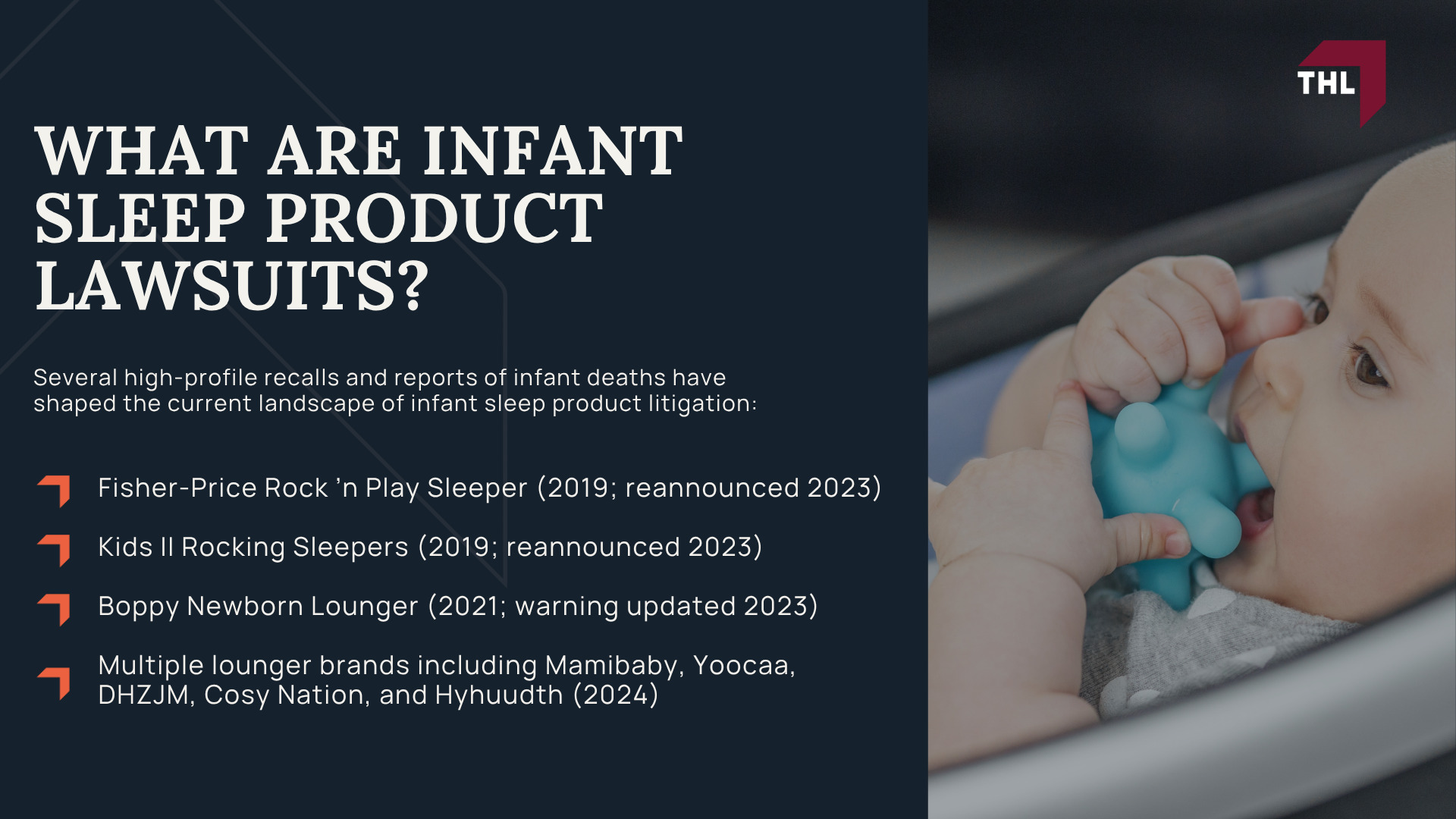
Several high-profile recalls and reports of infant deaths have shaped the current landscape of infant sleep product litigation:
- Fisher-Price Rock ’n Play Sleeper (2019; reannounced 2023): CPSC first recalled the product after more than 30 deaths, then later said about 100 deaths had been reported in Rock ’n Play sleepers.
- Kids II Rocking Sleepers (2019; reannounced 2023): CPSC said 15 infant fatalities had been reported in the recalled sleepers, including deaths reported after the recall.
- Boppy Newborn Lounger (2021; warning updated 2023): CPSC recalled more than 3 million loungers after eight deaths, then reported two infant deaths shortly after the recall, bringing the total to at least 10.
- Multiple lounger brands including Mamibaby, Yoocaa, DHZJM, Cosy Nation, and Hyhuudth (2024): CPSC warned consumers to stop using these loungers after five infant deaths and said the products posed suffocation, fall, and entrapment hazards.
These lawsuits generally allege that manufacturers kept selling unsafe products after serious incidents occurred or failed to warn parents clearly enough that babies could suffocate if their noses or mouths became blocked.
CPSC has also received fatality reports tied to loungers from multiple manufacturers, which points to a broader hazard across brands rather than one isolated design.
In the Boppy warning alone, one of the two infants reportedly rolled under a nearby adult pillow, and the other was found in a lounger placed on an adult bed with soft bedding, showing how most incidents developed in predictable ways once a baby was allowed to sleep in the product.
That is why these cases focus so heavily on product design, marketing, warnings, and whether companies should have stopped selling these products sooner.
Types of Infant Sleep Products Involved in Recalls and Lawsuits
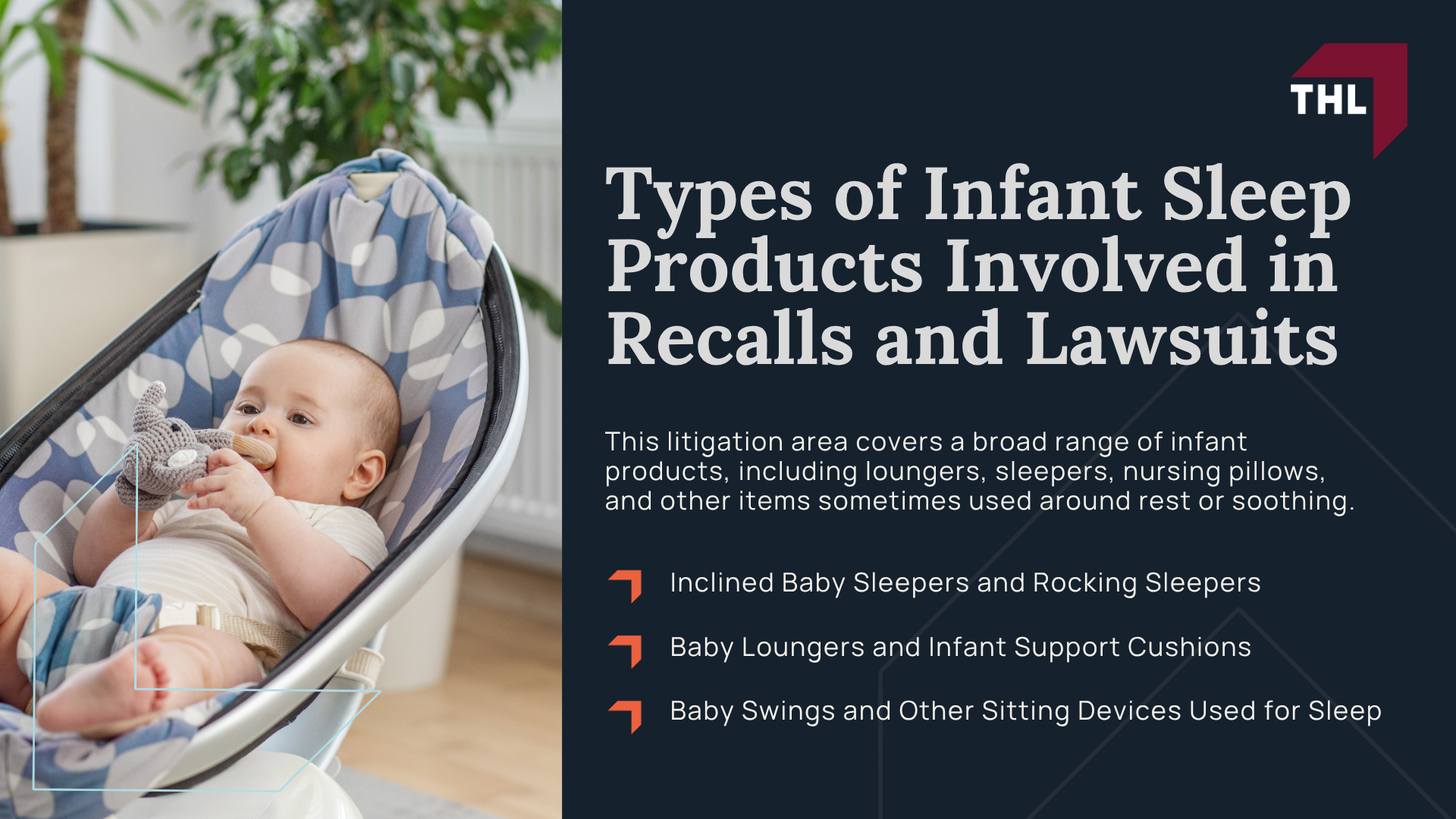
This litigation area covers a broad range of infant products, including loungers, sleepers, nursing pillows, and other items sometimes used around rest or soothing.
Some of these products are not sold as safe sleep products, but many parents still let a baby remain there after the child falls asleep.
That can create a dangerous situation, especially when the product has soft sides, padding, blankets, or an inclined surface instead of the flat setup associated with a bassinet or crib.
When an infant falls asleep in the wrong setting, the risk of asphyxiation and death can rise quickly.
Inclined Baby Sleepers and Rocking Sleepers
Inclined baby sleepers and rocking sleepers became the clearest example of how a large infant product category could generate widespread recalls, litigation, and regulatory action.
Lawsuits involving the Fisher Price Rock n Play and Kids II inclined sleepers helped drive massive recalls after more than 73 infant fatalities were reported across those products, and later CPSC updates pushed the publicly reported totals even higher.
CPSC reannounced both recalls in 2023 after additional incidents occurred, including at least eight post-recall deaths tied to Rock ’n Play sleepers and four post-recall deaths tied to Kids II rocking sleepers.
Federal law now prohibits the sale of inclined sleepers for infants under the Safe Sleep for Babies Act, which took effect in November 2022 and was later codified by CPSC rulemaking.
As of 2025, CPSC largely pushed inclined sleepers out of the U.S. market, replacing that category with stricter infant sleep product rules centered on flat sleep surfaces.
Core hazards linked to inclined sleepers:
- Airway obstruction in an inclined position
- Rollover from back to stomach or side
- Positional asphyxia after a baby falls asleep
- Suffocation after slumping forward
- Continued use after recall notices
Baby Loungers and Infant Support Cushions
Baby loungers and infant support cushions sit in a difficult category because many of these products are marketed as places for babies to rest while awake, not as sleep products, yet many parents still let infants remain there after they fall asleep.
CPSC warnings and recall notices show the same pattern across brands: many incident reports linked to infant loungers cite suffocation, asphyxiation, or loss of oxygen, and the agency has warned that babies can suffocate if an inclined position restricts the airway or if the nose or mouth becomes blocked.
Some loungers also fell outside the earlier federal rule aimed at infant sleep products because they were not marketed for sleep, which drew criticism that regulation moved too slowly while deaths continued to mount.
In late 2024, CPSC unanimously approved a separate mandatory standard for infant support cushions, and as of May 5, 2025, new baby loungers and similar cushions must meet federal requirements on firmness, side height, and other design features intended to reduce suffocation, entrapment, and fall hazards.
CPSC is still actively policing this category, which reflects a broader concern that the danger was never limited to one brand or one product design.
Several recalls, safety warnings, and regulatory actions have shaped how infant loungers and support cushions are evaluated today:
- Boppy Company Newborn Lounger: Recalled in 2021 after reports of infant deaths from suffocation, with CPSC later warning that additional deaths were reported after the recall.
- Mamibaby, Yoocaa, DHZJM, Cosy Nation, and Hyhuudth loungers: CPSC warned consumers in 2024 to stop using these products after five infant deaths and cited suffocation, fall, and entrapment hazards.
- Common hazard pattern: Many lounger incidents involved suffocation, asphyxiation, or reduced oxygen when an infant’s airway became restricted or the nose or mouth was blocked.
- Regulatory gap: Many loungers were marketed for awake use, which left them outside earlier infant sleep product rules even though babies could still fall asleep in them.
Baby Swings and Other Sitting Devices Used for Sleep
Baby swings and other sitting devices raise a related set of safety concerns because they are often used to soothe infants, even though they are not meant to serve as a safe sleep space.
The American Academy of Pediatrics has warned against routine infant sleep in sitting devices, and a Pediatrics study identified 348 sleep-related infant deaths in sitting devices over a 10-year period, noting that the concern extends beyond car seats to bouncers, swings, and strollers.
Fisher-Price’s Snuga Swing became the most prominent recent example when CPSC announced a recall of more than 2 million swings after five infant deaths, warning that the product should never be used for sleep and that added bedding increased the suffocation risk.
CPSC has also issued a growing number of warnings involving other infant swings marketed for sleep or sold with incline angles greater than 10 degrees, which regulators say creates an unsafe sleeping environment and violates federal safety law.
Notable examples include the IxDregan Infant Swings and the Queerick, Biusikan, and Kmaier infant swings.
These cases show how a product intended for soothing or short-term use can become dangerous once a baby is allowed to remain there asleep.
Several recurring dangers appear across swing-related recalls, warnings, and death investigations:
- Infants are left to sleep in a seated or semi-reclined position rather than on a flat surface
- A baby’s head can slump forward and restrict the airway
- Soft inserts, blankets, or added bedding can increase the suffocation risk
- Unrestrained infants can shift into a dangerous position during sleep
- Some swings marketed for sleep exceed the 10-degree limit allowed under federal safety standards