
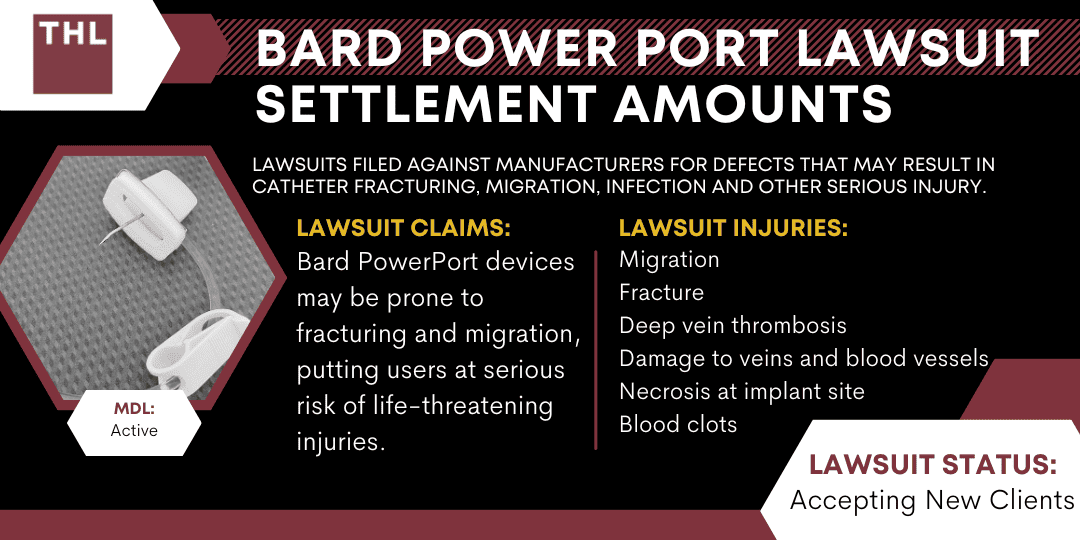
The Bard PowerPort Lawsuit is still in progress, and no global settlement has been announced.
Plaintiffs continue to pursue compensation for medical expenses, pain and suffering, and long-term health complications linked to device failure.
While outcomes will ultimately depend on the evidence presented in court, jury responses to early bellwether trials, and the negotiation process, attorneys project potential settlement values based on the severity of injuries and the circumstances of each case.
Settlement amounts in the Bard PowerPort multidistrict litigation are expected to vary widely, ranging anywhere from $30,000 to over $300,000.

Factors influencing individual recovery include the type of injury sustained, whether the device fractured or migrated, the need for revision surgeries, and the long-term medical outlook.
Tier 1: Severe Injuries, Life-Threatening Complications, or Death ($200,000 – $300,000+)
Cases in this highest tier typically involve catastrophic outcomes.
Plaintiffs in this category may have experienced:
- Fatal complications linked to a Bard PowerPort implant, resulting in wrongful death claims filed by surviving family members.
- Severe blood clots or pulmonary embolism leading to permanent disability.
- Serious infections such as sepsis that required extended ICU care, organ support, or resulted in organ damage.
- Cardiac or vascular perforations causing massive internal bleeding or requiring emergency open-heart surgery.
- Long-term or permanent loss of quality of life, such as the inability to work or perform basic daily activities.
These claims represent the most serious medical complications, and settlements at this level reflect both the economic and profound non-economic damages suffered.
Tier 2: Major Complications with Lasting Health Impact ($75,000 – $200,000)
The mid-range tier includes cases where patients endured serious but non-fatal injuries that required extensive treatment and may continue to cause long-term health challenges.
Typical injuries here include:
- Catheter fractures that migrated into the patient’s bloodstream, requiring surgical removal or invasive procedures.
- Major vascular injuries or blood vessel tears that led to hospitalization and corrective surgery.
- Recurring infections related to the device that required multiple rounds of IV antibiotics or inpatient care.
- Development of deep vein thrombosis (DVT) or other clotting conditions that require lifelong anticoagulation therapy.
- Chronic chest pain, arrhythmias, or compromised blood flow caused by damage to central veins.
Settlements in this tier reflect the significant costs of medical treatment, lost income, and reduced quality of life without reaching the catastrophic scale of Tier 1 injuries.
Tier 3: Moderate Injuries and Short-Term Complications ($30,000 – $75,000)
The lowest settlement tier is expected for plaintiffs who suffered complications that, while serious, were more limited in scope and resolved with appropriate treatment.
These injuries often include:
- Localized infections at the port site that responded to antibiotics.
- Catheter fractures detected early and removed before major migration occurred.
- Minor vascular damage or scarring that did not lead to long-term disability.
- Short-term chest pain or discomfort following catheter malfunction.
- Removal and replacement of the device without significant ongoing health consequences.
These cases may still involve meaningful financial compensation, but the values are lower because the injuries, while real, did not cause extensive long-term harm.


