Active Litigation
Paragard IUD Lawsuit Facts
TorHoerman Law is actively accepting claims for the Paragard IUD Lawsuit.

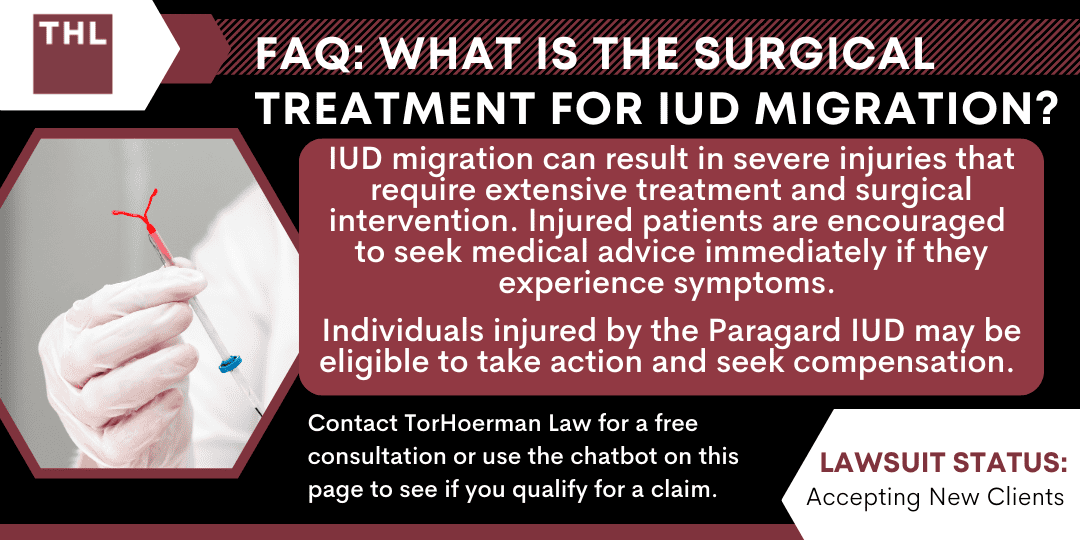
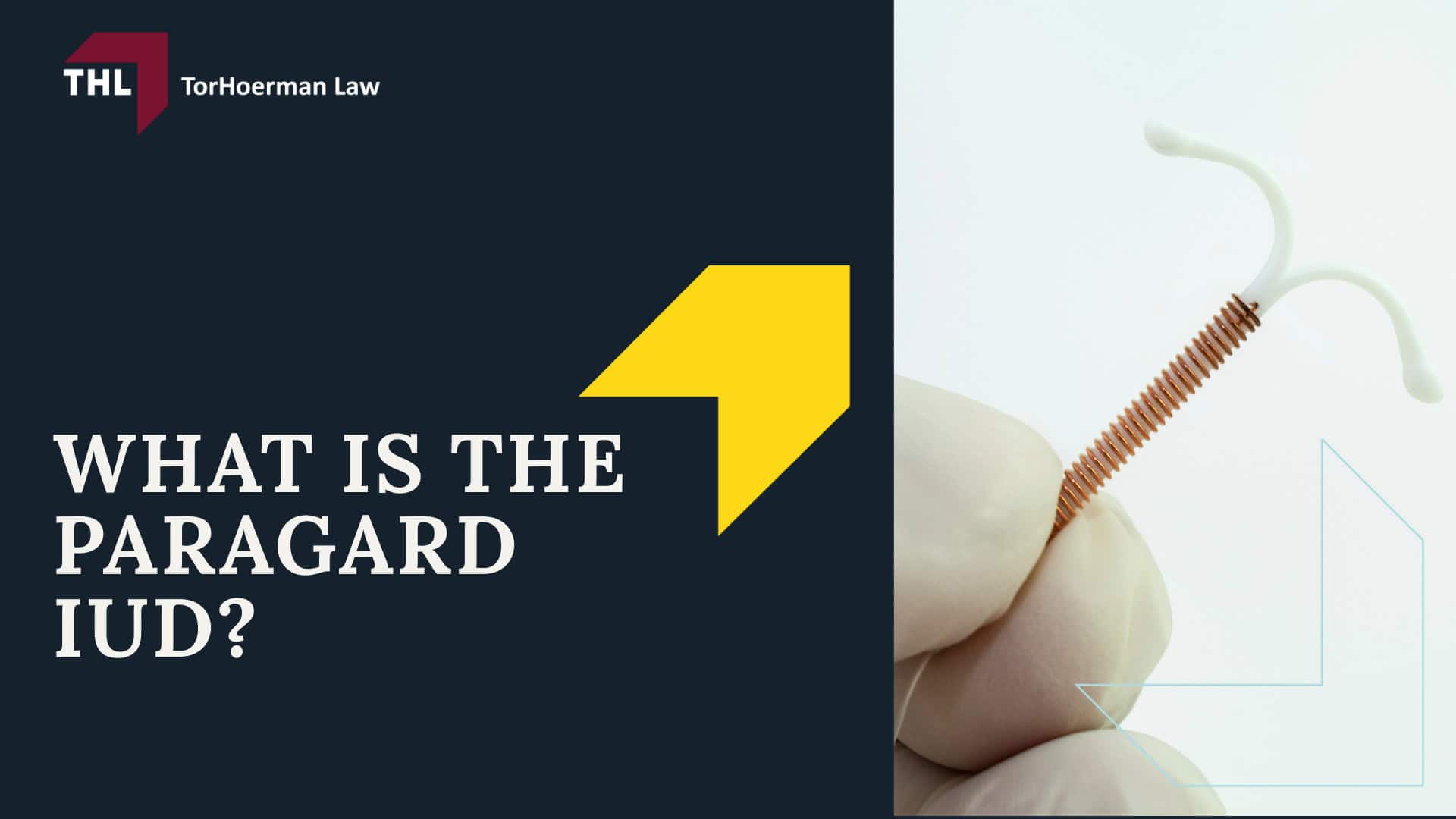
The Paragard intrauterine device (IUD) is a contraceptive device designed to provide long-term birth control without hormones.
The Paragard IUD is comprised of a T-shaped frame wrapped in copper wire, which releases copper ions to prevent pregnancy.
Since the primary contraceptive function of this emergency contraception lies in its copper wire, it doesn’t need to release hormones into the body, making it a popular choice for women who don’t want to or are unable to use hormonal birth control methods.
While the Paragard IUD has been an effective form of nonhormonal birth control for many, there have been recent concerns and lawsuits filed by women who have experienced injuries and complications related to this device.
These concerns center around the potential for the IUD to migrate from its intended position, leading to various health issues.
As mentioned, fracturing IUDs are also predominant among the reported issues.
This complication poses even greater health risks, such as uterine perforation, and may require immediate medical attention.
If you or a loved one have been injured by a Paragard IUD, you may be eligible to file a Paragard Lawsuit.
Contact TorHoerman Law for a free consultation.
Use the chatbot on this page to find out if you qualify instantly and to get in touch with our Paragard Lawyers today.
IUD migration is not a normal occurrence and can lead to various issues, such as perforation or embedding of the device into surrounding tissues.
These issues can cause severe pain, infection, scarring, and damage to nearby organs.
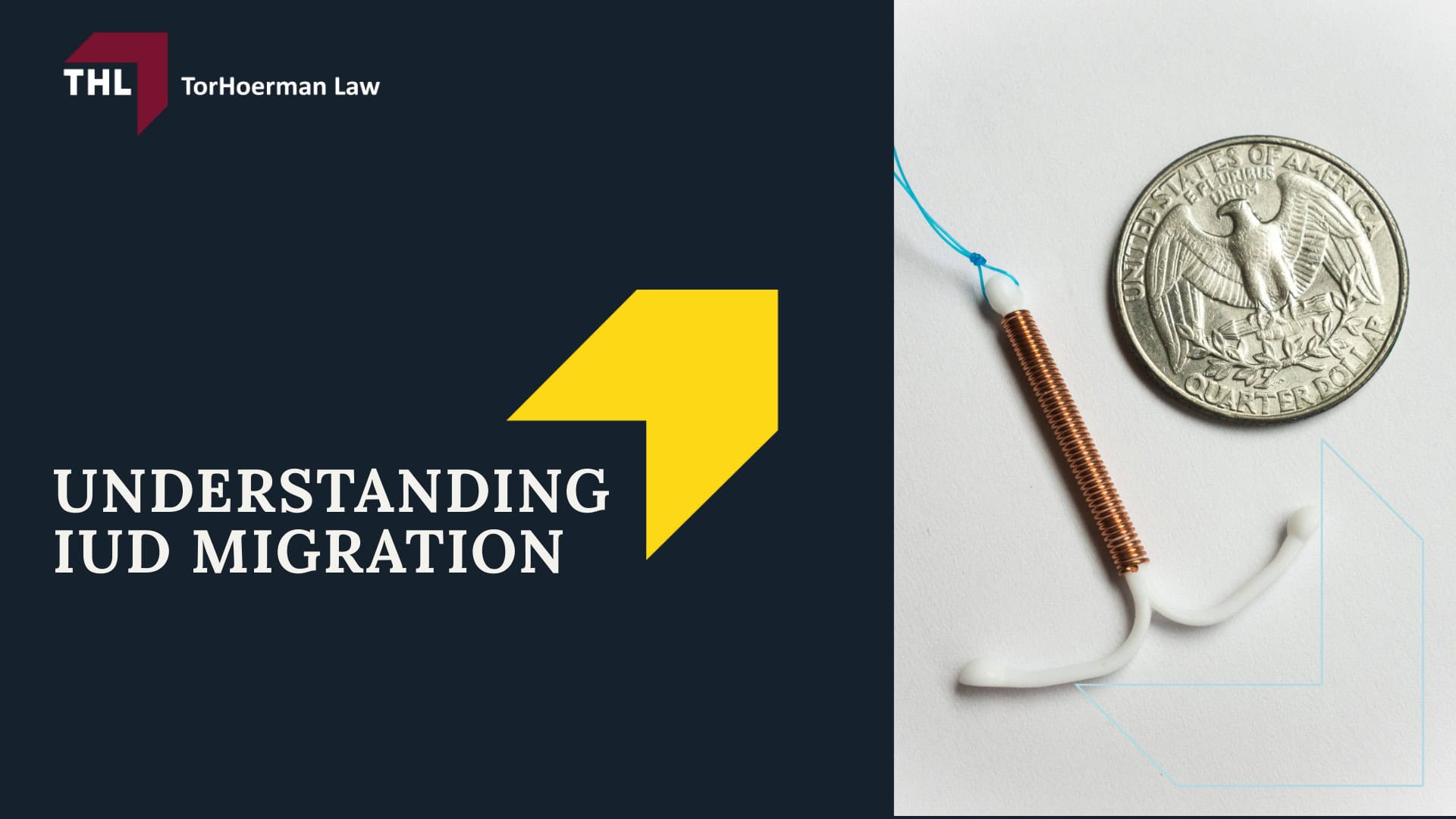
IUD migration occurs when the device moves from its original uterine placement.
This movement can be a significant problem, as the IUD’s effectiveness relies on staying in the right place.
Migration can take different forms, including partial or complete expulsion or displacement within the uterus.
Various symptoms, such as abdominal pain, severe cramping, abnormal discharge, and unusual bleeding, may indicate that an IUD has migrated.

Although rare, asymptomatic IUD migration could also occur.
This symptomless movement might be more dangerous since the user may not realize there is a problem until it’s too late.
If you suspect that your IUD may have migrated, call your doctor as soon as possible.
When an IUD migrates, it can lead to a range of complications, particularly when it comes to the Paragard IUD.

Some of the issues associated with Paragard IUD migration include:
Several factors could cause an intrauterine contraceptive device to move out of place.

Here are some of the most common reasons:
Before we discuss the surgical treatments for IUD migration, it’s crucial to be aware of the signs and symptoms that might suggest an IUD has migrated or broken.
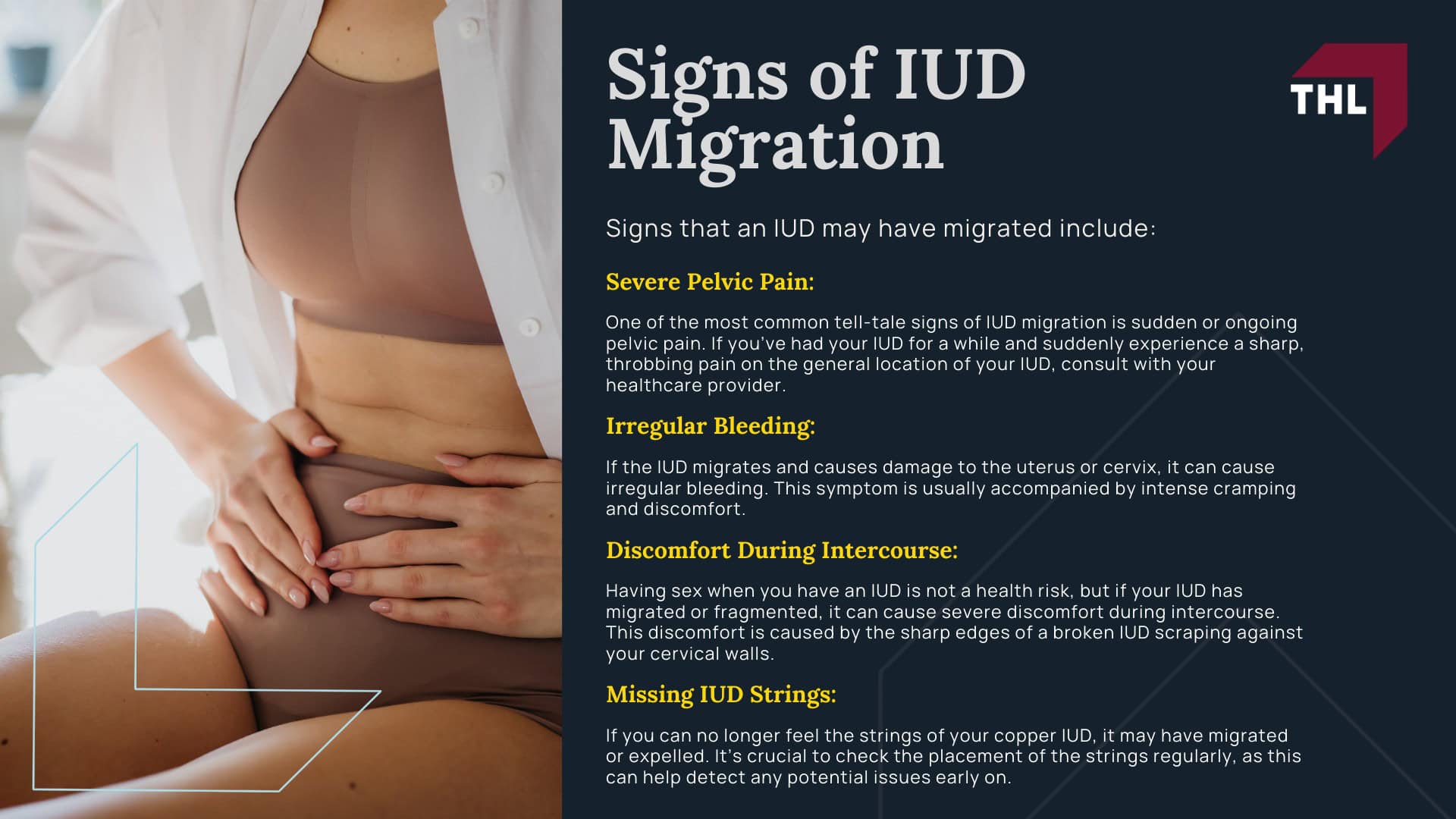
Signs that an IUD may have migrated include:
If you notice any of these signs, call your doctor promptly to evaluate the IUD’s position and address potential complications.
If the IUD has moved, they may be able to correct the device’s position or remove it if necessary.
If you think your IUD has moved out of place, a correction is imperative.
In most cases, the provider will only perform non-invasive removal methods like a colonoscopy or laparoscopy.
Unfortunately, if the IUD has fractured or embedded in the cervical walls, the peritoneal cavity, the uterine cavity, or other organs, invasive surgery may be needed.
Below, we’ll explore some methods of surgical removal of a migrated IUD:
Laparoscopy, or keyhole surgery, is a minimally invasive surgical procedure that involves making small incisions in the abdomen to insert a thin, lighted tube with a camera (laparoscope).
This method allows surgeons to examine the pelvic area and remove the IUD if necessary, as documented by Mosley F.R. et al.
Laparoscopy is often the preferred method for addressing IUD migration, as it offers a slightly shorter recovery time, reduced scarring, and less postoperative pain compared to open surgery.
The recovery time is a few days to two weeks.
In some cases of severe IUD migration or when other surgical methods are not feasible, an exploratory laparotomy may be required.
This procedure involves making a larger incision in the abdominal wall to access the pelvic area.
A laparotomy allows surgeons to explore the extent of IUD migration and safely remove the device.
While this procedure is more invasive than laparoscopy, it may be necessary for complex cases.
Laparoscopic removal could take up to six weeks for a full recovery post-operation.
Colonoscopy is a procedure that allows healthcare providers to examine the colon and rectum using a thin, flexible tube with a camera at its end.
This procedure is essential when there are concerns about the IUD’s migration into the gastrointestinal tract.
If the IUD has perforated the uterine wall and moved into the colon, a colonoscopy can help locate and remove the device.
The procedure is typically done under anesthesia and has a relatively quick recovery time — in most cases, you’ll be back to normal by the next day.
This procedure poses bleeding and perforation risks, so choosing the right doctor is critical.
Cystoscopy is a procedure used to examine the inside of the bladder and urethra using a thin tube with a camera.
This procedure is essential when there are concerns about IUD migration into the urinary tract.
Like most imaging procedures, it’s somewhat similar to a pelvic ultrasound.
If the IUD has perforated the uterine wall and entered the bladder, a cystoscopy can help locate and remove the device.
Like colonoscopy, this procedure is usually performed under anesthesia and has a short recovery time.
As mentioned earlier, the Paragard IUD has been the subject of numerous lawsuits, particularly those connected to IUD migration and fractures.
As a result of thousands of Paragard Lawsuits being filed against the manufacturer, Teva Pharmaceuticals, the Judicial Panel on Multidistrict Litigation (JPML) consolidated all Paragard Lawsuits into one single US District Court.

The Paragard MDL was established to streamline the legal process for injured patients.
The MDL will hold its first bellwether trial in October 2024.
Bellwether trials are critical for MDL proceedings, as they typically sets the standard for outcomes in the other lawsuits consolidated in the MDL.
The Paragard IUD has been linked to numerous injuries and complications.

If you suspect that you have experienced IUD migration or any related complications from using the Paragard IUD, you may be eligible to participate in the ongoing Paragard lawsuits.
Contact TorHoerman Law’s Paragard Attorneys for a free consultation.
Use the chatbot on this page to find out if you qualify for the Paragard Lawsuit instantly.
An experienced Paragard Lawyer can help women through the legal process, completing vital steps such as including gathering evidence and assessing damages.
Collecting evidence is essential when pursuing a Paragard lawsuit.

Potential evidence in a Paragard Lawsuit may include:
Damages refer to the total amount of losses, economic and non-economic, incurred as a result of Paragard injuries and complications.
An experienced lawyer can help victims understand and calculate damages in their case.

Potential damages in a Paragard Lawsuit may include:
IUD migration is a grave concern that can lead to various complications and necessitate surgical interventions.
The lawsuit against the companies responsible for the faultiness of the Paragard IUD is still ongoing, and our lawyers are accepting cases from injured women in all 50 states.

If you or a loved one suffered an injury due to a Paragard IUD break or migration, you may be eligible to file a Paragard lawsuit.
Contact us today for a free consultation.
You can also use the chatbot on this page to find out if you qualify to file a Paragard lawsuit instantly.


