Chicago
Case Types We Handle
Personal Injuries
Car Accidents
Truck Accidents
Motorcycle Accidents
Bicycle Accidents
Construction Accidents
Nursing Home Abuse
Wrongful Death
Slip and Fall Accidents
Daycare Injury & Abuse
Edwardsville
Case Types We Handle
Personal Injuries
Car Accidents
Truck Accidents
Motorcycle Accidents
Bicycle Accidents
Nursing Home Abuse
Wrongful Death
Slip and Fall Accidents
Daycare Injury & Abuse
Premises Liability
St. Louis
Case Types We Handle
Personal Injuries
Car Accidents
Truck Accidents
Motorcycle Accidents
Bicycle Accidents
Construction Accidents
Nursing Home Abuse
Wrongful Death
Slip and Fall Accidents
Daycare Injury & Abuse
Dangerous Drugs
Defective Products
Chemical Exposure

Social Media Suicide Lawsuit [2025 Update]

Social Media Suicide Lawsuit Overview

Social media suicide lawsuit claims center on allegations that major social media platforms exposed vulnerable users, particularly children and teens, to content, algorithms, and design features that increased the risk of suicide.

Claims involving suicide and other severe mental health effects of excessive social media use are consolidated in federal court as part of the nationwide Social Media Adolescent Addiction/Personal Injury Products Liability Litigation (MDL No. 3047).

TorHoerman Law is actively accepting claims from families who believe social media use contributed to a loved one’s suicide.

Social Media Suicide Lawsuit; Social Media Lawsuits; Social Media Mental Health Lawsuit; Social Media Harm Lawsuit; Facebook Mental Health Lawsuit; Social Media Lawsuit Overview; Link Between Social Media And Suicidal Behavior; Studies On Social Media Use And Suicidal Behavior; How Social Media Affects Mental Health; Reported Mental Illnesses Caused By Social Media; Legal Framework Of The Social Media Lawsuits; Social Media Companies Involved in Lawsuits; Social Media Suicide Lawsuit; Social Media Lawsuits; Social Media Mental Health Lawsuit; Social Media Harm Lawsuit; Facebook Mental Health Lawsuit; Social Media Lawsuit Overview; Link Between Social Media And Suicidal Behavior; Studies On Social Media Use And Suicidal Behavior; How Social Media Affects Mental Health; Reported Mental Illnesses Caused By Social Media; Legal Framework Of The Social Media Lawsuits; Social Media Companies Involved in Lawsuits; Social Media Suicide Lawsuit; Social Media Lawsuits; Social Media Mental Health Lawsuit; Social Media Harm Lawsuit; Facebook Mental Health Lawsuit; Social Media Lawsuit Overview; Link Between Social Media And Suicidal Behavior; Studies On Social Media Use And Suicidal Behavior; How Social Media Affects Mental Health; Reported Mental Illnesses Caused By Social Media; Legal Framework Of The Social Media Lawsuits; Social Media Companies Involved in Lawsuits; Do You Qualify For A Social Media Suicide Lawsuit; Role Of Legal Advocacy

Mental Health Issues, Eating Disorders, and Social Media: A Major Issue for Teens and Young People

The loss of a loved one to suicide is devastating, and families are often left searching for answers in the aftermath of an unimaginable tragedy.

In recent years, growing scrutiny has focused on the role major social media companies may play in worsening mental health risks for vulnerable users, particularly children and teens.

Families bringing social media addiction lawsuits allege that prolonged exposure to harmful platform design, algorithms, and content contributed to serious mental health issues that escalated into crisis.

These lawsuits claim that social media platforms failed to meaningfully address known dangers, including exposure to content that can promote harmful content, reinforce isolation, or normalize self-harm.

Plaintiffs argue that this failure to protect young users allowed preventable mental health harm and psychological harm to deepen over time.

In the most severe cases, families have filed wrongful death lawsuits, asserting that social media’s impact on a loved one’s emotional well-being played a role in their death.

As these cases move forward, the litigation seeks accountability, transparency, and recognition of the profound harm families have suffered.

You may be eligible to file a Social Media Harm Lawsuit if you or a loved one have suffered from suicidal ideation, suicidal behavior, or other mental health disorders due to prolonged use of social media.

Parents or loved ones of individuals who have tragically taken their own lives, potentially as a result of social media use, may have the grounds to pursue legal action.

Talk to our experienced social media harm attorneys for a free and in-depth consultation.

You can also use our chatbot for a free and confidential case evaluation.

Table of Contents

Social Media Lawsuit Overview

Social Media Mental Health Lawsuits aim to address the growing concerns surrounding the mental health impacts of social media sites on young users.

Social Media Lawsuits have been prompted by increasing evidence linking excessive social media use to a range of mental disorders, including depression, anxiety, eating disorders, and in severe cases, suicide among teens and young adults.

Central to the claims of the Social Media Litigation is that social media companies have failed to adequately protect their users, particularly minors, from the harmful effects of their platforms.

The Judicial Panel on Multidistrict Litigation (JPML) has consolidated these cases into the Social Media Adolescent Addiction/Personal Injury Products Liability Litigation (MDL No. 3047) in the US District Court for the Northern District of California.

Multidistrict Litigation (MDL) is a legal procedure that consolidates individual lawsuits with common factual questions to one court, streamlining pretrial processes like discovery and motions to increase efficiency and consistency.

In the context of the Social Media Addiction Litigation, MDL allows numerous cases against social media companies—alleging harm from their platforms—to be managed collectively, ensuring a uniform approach to evidence and legal arguments across similar cases.

Class action lawsuits, like we’ve seen filed against social media companies for data privacy and other issues, group plaintiffs into a single lawsuit, meaning that any settlement reached is distributed evenly across all individuals involved.

In MDL, while cases are coordinated collectively, they maintain their individual status and may have unique outcomes, including separate trials or settlements.

Settlements within an MDL are distributed based on the specifics of each case, reflecting the degree of harm to ensure equitable compensation among plaintiffs.

Link Between Social Media and Suicidal Behavior

The World Health Organization (WHO) reports that suicide is the fourth leading cause of death among youth and young adults (15 to 29 years old).

The WHO also estimated that suicide claims over 703,000 lives every year around the globe.

According to the Centers for Disease Control and Prevention (CDC), suicide and suicide attempts are often agitated by various social factors.

Recent studies and reports have drawn attention to the potential link between extensive social media use and an increased risk of suicidal thoughts and behaviors in youth and young adults.

This connection is primarily attributed to the ways in which social media platforms may contribute to feelings of inadequacy, exposure to cyberbullying, and the amplification of depressive symptoms.

The frequent anonymity and massive scale of social media can facilitate negative interactions and content that may disproportionately affect vulnerable demographics, particularly adolescents.

Studies on Social Media Use and Suicidal Behavior

Scientific studies have extensively explored the links between suicide rates and social media usage, revealing a concerning correlation between prolonged use of these platforms and increased risk of suicidal thoughts and behaviors.

Researchers have focused on understanding how social media’s environment, characterized by comparison, cyberbullying, and exposure to harmful content, contributes to mental health decline and suicidal ideation among users.

Scientific investigations underscore the urgent need for strategies to mitigate these risks and highlight the importance of awareness, early intervention, and the development of safer online spaces.

Several studies published over the past decade detail the impacts of social media on suicidal behavior:

  • Child and Adolescent Psychiatry and Mental Health (2023): Social media use of adolescents who died by suicide: lessons from a psychological autopsy study
  • Current Opinion in Psychiatry (2019): Social media, internet use and suicide attempts in adolescents
  • Journal of New Media & Society (2019): Effects of exposure to self-harm on social media: Evidence from a two-wave panel study among young adults
  • Indian Journal of Psychiatry (2018): The role of online social networking on deliberate self-harm and suicidality in adolescents: A systematized review of literature
  • Suicide Life Threat Behav (2012): Social Media and Suicide: A Public Health Perspective (2012)

How Social Media Affects Mental Health

Social media’s influence on mental health has become a significant concern, especially as the use of social networking platforms continues to rise among all age groups.

Social media sites, while offering opportunities for connection and information sharing, have also been linked to a variety of poor mental health outcomes, including anxiety, depression, and decreased self-esteem.

The correlation between extensive social media use and an increase in youth suicide rates is particularly alarming.

Healthy social media use is now more important than ever, with experts recommending limits on usage time, encouraging real-life interactions, and fostering digital literacy to mitigate the adverse effects.

Social networking platforms are being called upon to implement more robust measures to protect users from harmful content and interactions that can exacerbate mental health issues.

The impact of social media on mental health underscores the delicate balance between benefiting from digital connectivity and protecting oneself from its potential downsides.

On social media sites, young individuals might encounter various risk factors that could predispose them to mental health issues, such as:

  • Cyberbullying
  • Social comparison
  • Social media addiction

Cyberbullying

According to the Cyberbullying Research Center, rates of cyberbullying continue to rise in the country.

Both traditional and digital forms of bullying inflict significant harm, yet social media enables bullies to pursue their victims incessantly and even anonymously, extending harassment beyond traditional confines.

According to the Pew Research Center, almost half (46%) of American teenagers have experienced bullying online.

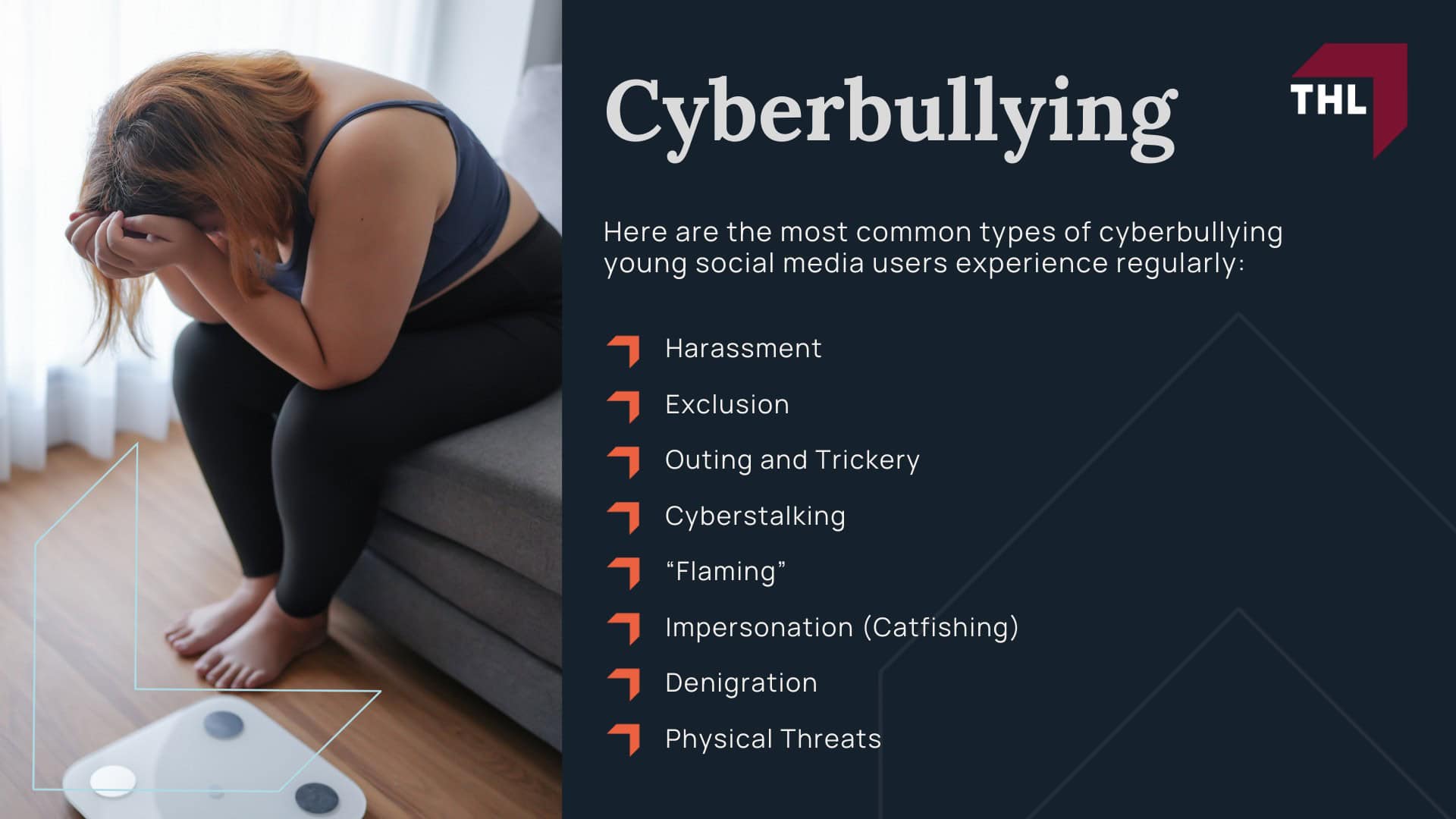
Here are the most common types of cyberbullying young social media users experience regularly:

  • Harassment: Repeated sending of malicious, threatening, or offensive messages to the victim.
  • Exclusion: Intentionally excluding someone from an online group or activity as a form of social isolation.
  • Outing and Trickery: Sharing someone’s personal or sensitive information without their consent, or tricking them into revealing such information and then broadcasting it online.
  • Cyberstalking: Constant online monitoring and sending of threatening messages that instill fear and anxiety.
  • “Flaming”: Engaging in heated exchanges of derogatory messages publicly on social media platforms.
  • Impersonation (Catfishing): Creating a fake profile or hacking into someone’s account to post embarrassing content or to tarnish their reputation.
  • Denigration: Spreading false and damaging rumors about someone to damage their reputation or relationships.
  • Physical Threats: Sending messages that threaten physical harm, creating a climate of fear and intimidation for the victim.

Cyberbullying can have profound and lasting effects on individuals, leading to emotional distress, lowered self-esteem, and in severe cases, depression and anxiety.

The pervasive nature of digital harassment amplifies these impacts, making it difficult for victims to find respite and affecting their overall well-being and mental health.

Social Comparison

Social comparison is the process of evaluating oneself against others, often in terms of appearance, success, and lifestyle, which is amplified by the extensive use of social media.

This phenomenon leads individuals to gauge their worth and achievements by comparing themselves to the highly curated and often unrealistic portrayals seen on platforms like Instagram and TikTok.

Social comparison, unrealistic beauty expectations, and frequent exposure to triggering content also may contribute to suicidal ideation and suicidal behavior.

The pressure to conform to these standards can drive vulnerable individuals towards disordered eating behaviors as they strive to emulate the unattainable.

The cycle of comparison and perceived inadequacy frequently culminates in depression, as users grapple with feelings of low self-esteem and dissatisfaction with their own lives.

The pervasive nature of these comparisons means that escaping these influences is challenging, embedding a culture of comparison and dissatisfaction.

Social comparison on social media platforms is a significant factor in the rising rates of eating disorders, depression, and other related mental health issues.

Multiple scientific studies over the years have focused on social comparison, social media-related beauty standards, and their effects on mental health:

Social Media Addiction

Social media addiction, encompassing not just the pursuit of validation but also the general use of platforms like Facebook, Instagram, and TikTok, stands as a significant risk factor for mental health issues.

Social media addiction is characterized by an overwhelming urge to constantly check and interact with social media platforms, often at the expense of real-world relationships and activities.

This addiction is characterized by spending prolonged periods on social media apps, which can severely impact sleep patterns, reduce physical activity, and encroach upon time that could be spent on beneficial real-life interactions.

Even without actively seeking likes or comments, the mere act of scrolling through these platforms for hours can lead to a decrease in overall well-being.

The habit of constantly checking social media before bedtime can disrupt sleep quality, leading to fatigue and heightened stress levels, further compounding the risk of developing mental health problems.

Exposure to an endless stream of content can overwhelm users, contributing to feelings of anxiety and depression.

Compulsive engagement with social media, regardless of whether it involves posting content or passive browsing, creates a cycle of dependency that isolates individuals from supportive, real-world social networks.

Reported Mental Illnesses Caused by Social Media

From a public health perspective, the increasing evidence associating social media usage with mental health problems is alarming.

Reports have shown that excessive social media use can cause or agitate mental health problems, such as: 

  • Depression: This mental health issue is the most prominent among young social media users. Depression manifests in sadness, lack of motivation, and irritability.
  • Anxiety: Generalized anxiety disorder (GAD) is another widespread mental health problem that affects young adults. The constant need to check for updates on social media can be linked to GAD as it heightens one’s sense of fear and nervousness.
  • Eating Disorders: Body representation on social media can be misleading and set unrealistic body standards. Frequent exposure to images online has been linked to conditions like anorexia nervosa and bulimia nervosa.
  • Body Dysmorphia: Concerning eating disorders, body dysmorphia is a mental health condition where individuals obsess over perceived flaws in their physical appearance. Social media provides an outlet for comparison and can worsen this condition.
  • Self-harm Tendencies: Ultimately, depression or other mental illnesses may lead to self-harming behaviors and, in the worst cases, suicide attempts.

Legal Framework of the Social Media Lawsuits

The legal framework behind the social media lawsuits is built on allegations that social media giants designed and operated platforms in ways that foreseeably harmed users, particularly children and adolescents, during a worsening youth mental health crisis.

These cases focus on whether companies exercised reasonable care in designing products used daily by minors, or whether engagement-driven features were deployed in ways that exposed users to known risks.

Plaintiffs argue that platforms operating across multiple social media platforms shared common design practices (such as algorithmic amplification, endless scrolling, and notification loops) that were intended to hook young users and maximize time spent online, despite mounting evidence of harm to children’s mental health.

The social media addiction MDL consolidates thousands of individual and institutional cases in federal court to address shared factual and legal questions.

This structure allows courts to evaluate common evidence (such as platform design, data practices, and corporate knowledge) while preserving each plaintiff’s right to pursue individualized claims.

Plaintiffs include families, young adults, and school districts alleging that social media-related harms forced them to address escalating mental health needs among students, including counseling, crisis intervention, and behavioral support services.

A critical component of the legal theory involves internal documents and internal research disclosed through whistleblowers, investigations, and discovery.

These materials are cited to support allegations that companies were aware of the mental health consequences associated with prolonged platform use, including anxiety, depression, eating disorders, self-harm, and other severe mental health issues.

Plaintiffs argue that despite this knowledge, companies continued to deploy features that intensified exposure and engagement without adequate safeguards or warnings.

The lawsuits rely on established principles of negligence, defective design, and failure to warn, adapted to the realities of modern digital products.

Social media addiction lawyers contend that when companies design systems that shape behavior at scale, especially among minors, they assume responsibilities similar to other consumer-facing product manufacturers.

Courts are now tasked with determining how these traditional legal doctrines apply to platforms whose influence over attention, behavior, and emotional well-being is unprecedented in scope.

Social Media Companies Involved in Lawsuits

Parent companies of renowned social media platforms are at the center of these lawsuits.

Social media platforms and companies named in the litigation include:

  • Meta (Parent company of Facebook and Instagram)
  • Snap (Parent company of Snapchat)
  • ByteDance (Parent company of TikTok)
  • Alphabet (Parent company of YouTube)

While these companies are under intense scrutiny for their role in lawsuits, decision-makers plan to restructure their policies and algorithms to promote a safer platform for users.

Meta shared that they’re developing over 30 tools that could help users dealing with suicidal ideation.

The company also plans to invest in tools and resources to help eliminate harmful content from its platforms.

Despite some advances in user protection, lawsuits still proceed against these companies.

Notable Social Media Suicide and Mental Health Lawsuits

Many stories of young people losing their lives from cyberbullying, online harassment, social media addiction, and lack of proper support from social media platforms are surfacing.

As a result, parents and legal experts are calling for stricter regulations and policies in the digital landscape.

In one particular case, an 11-year-old girl committed suicide after suffering from depression and isolation caused by social media addiction.

The girl’s parents filed a lawsuit against Meta and Snap for their negligent and harmful algorithm design and features, leading to her suicide.

Years before the incident, Selena was hospitalized for emergency psychiatric care for her worsening depression.

Do You Qualify for a Social Media Suicide Lawsuit?

Young people today are more likely to attempt suicide due to intense cyberbullying and other threats they could encounter online.

If you’re considering legal action against social media companies following the tragic loss of your child or a loved one, seeking guidance from an attorney is a critical step.

Your attorney might recommend joining the multidistrict litigation filed against prominent social media companies.

MDLs often have a better chance of succeeding in defective product cases, which applies to most social media lawsuits.

An experienced attorney can evaluate the validity of your case, so it’s always best to speak with them first.

However, if you’re looking for a general guideline or checklist to see if you have a case against social media companies, here are some essential points to consider:

  • Your child/loved one has a history of social media addiction, spending hours daily on various social media platforms.
  • Your child/loved one has suffered from cyberbullying or online harassment.
  • Your child/loved one’s mental health declined after being exposed to harmful content, including self-harm and suicide-related posts.
  • Your child/loved one has been diagnosed with a mental health disorder, such as depression or anxiety.
  • Your child/loved one has committed suicide due to these factors.

Remember, this list is just a general guideline.

It’s always best to consult with an attorney for a more accurate evaluation of your case.

Navigating the aftermath of such profound loss, especially when it may be linked to factors like social media influence, requires an immense amount of strength and courage.

Understanding the intricate ways in which online environments can impact our loved ones deepens our empathy towards those facing this unique form of grief.

As you consider the steps forward, know that seeking professional guidance is not just about pursuing justice but also about honoring the experiences of those we’ve lost and ensuring their stories lead to meaningful change.

Role of Legal Advocacy

Hiring experienced lawyers to represent your case is crucial in fighting against social media companies.

Here are the roles your attorney will play:

  • Trusted Legal Advice: Experienced social media harm lawyers could advise you on the best legal route. Your lawyer will also handle all the legal work so you can focus on what matters most.
  • Evidence Gathering: Compiling evidence is crucial in proving the connection between social media use and suicide. Lawyers may gather evidence like screenshots, expert testimony from mental health professionals, and so on, to verify your claim.
  • Expert Testimony: In cases involving mental health disorders or suicide, expert testimony from medical professionals is crucial in establishing a direct link between social media use and the victim’s death.
  • Competitive Litigation Strategy: A skilled lawyer will have a strategic plan to ensure the best possible outcome for your case. Depending on the circumstances, this strategy may include negotiating settlements or taking the case to trial.

TorHoerman Law: Talk to Our Social Media Lawsuit Attorneys

In the wake of losing a child to severe depression and suicidal thoughts, pursuing legal action may offer a path toward seeking justice.

Social Media Lawsuits aim to hold companies liable for what you’ve been through, and compensate for the losses related to their products.

You may be eligible to file a Social Media Harm Lawsuit if you or a loved one have suffered from suicidal ideation, suicidal behavior, or other mental health disorders due to prolonged use of social media.

Parents or loved ones of individuals who have tragically taken their own lives, potentially as a result of social media use, may have the grounds to pursue legal action.

Talk to our experienced social media harm attorneys for a free and in-depth consultation.

You can also use our chatbot for a free and confidential case evaluation.

Frequently Asked Questions

Published By:
Picture of Tor Hoerman

Tor Hoerman

Owner & Attorney - TorHoerman Law

Do You
Have A Case?

Here, at TorHoerman Law, we’re committed to helping victims get the justice they deserve.

Since 2009, we have successfully collected over $4 Billion in verdicts and settlements on behalf of injured individuals.

Would you like our help?

About TorHoerman Law

At TorHoerman Law, we believe that if we continue to focus on the people that we represent, and continue to be true to the people that we are – justice will always be served.

Do you believe you’re entitled to compensation?

Use our Instant Case Evaluator to find out in as little as 60 seconds!

$495 Million
Baby Formula NEC Lawsuit

In this case, we obtained a verdict of $495 Million for our client’s child who was diagnosed with Necrotizing Enterocolitis after consuming baby formula manufactured by Abbott Laboratories.

$20 Million
Toxic Tort Injury

In this case, we were able to successfully recover $20 Million for our client after they suffered a Toxic Tort Injury due to chemical exposure.

$103.8 Million
COX-2 Inhibitors Injury

In this case, we were able to successfully recover $103.8 Million for our client after they suffered a COX-2 Inhibitors Injury.

$4 Million
Traumatic Brain Injury

In this case, we were able to successfully recover $4 Million for our client after they suffered a Traumatic Brain Injury while at daycare.

$2.8 Million
Defective Heart Device

In this case, we were able to successfully recover $2.8 Million for our client after they suffered an injury due to a Defective Heart Device.

Guides & Resources
Do You
Have A Case?

Here, at TorHoerman Law, we’re committed to helping victims get the justice they deserve.

Since 2009, we have successfully collected over $4 Billion in verdicts and settlements on behalf of injured individuals.

Would you like our help?

Additional Social Media Mental Health Lawsuit resources on our website:
All
FAQs
Injuries & Conditions
Legal Help
News
Other Resources
Settlements & Compensation
You can learn more about the Social Media Mental Health Lawsuit by visiting any of our pages listed below:
Do I Qualify for the Social Media Addiction Lawsuit?
Facebook Mental Health Lawsuit
FAQ: Who Are the Defendants in the Social Media Lawsuit?
Instagram Mental Health Lawsuit
Potential Damages in Social Media Lawsuits
Snapchat Lawsuit
Social Media Addiction Lawsuits
Social Media Anorexia Lawsuit
Social Media Body Dysmorphia Lawsuit
Social Media Bulimia Lawsuit
Social Media Depression Lawsuit
Social Media Eating Disorders Lawsuit
Social Media Exploitation Lawsuit
Social Media Harm Lawsuit Injuries
Social Media Harm Lawsuit Settlement Amounts
Social Media Mental Health Lawsuit
Social Media Self Harm Lawsuit
Social Media's Effects on Mental Health
TikTok Mental Health Lawsuit

Share

Other Social Media Mental Health Lawsuit Resources

All
FAQs
Injuries & Conditions
Legal Help
News
Other Resources
Settlements & Compensation

What Our Clients Have To Say