Social media has fundamentally reshaped how young people perceive their bodies, food, and self-worth.
Platforms built around images, short-form video, and engagement metrics increasingly expose users to appearance-driven content that can intensify body dissatisfaction, unhealthy comparisons, and harm youth mental health.
For adolescents and young adults, whose identities and coping mechanisms are still developing, this environment has been closely associated with the rise of eating disorders and disordered eating behaviors.
Research and clinical observations consistently link prolonged social media use to body image distortion, restrictive eating, binge-purge cycles, and compulsive weight control behaviors.
Algorithms on platforms like Instagram and TikTok are designed to surface content that drives engagement, which often means repeatedly showing users highly curated images, extreme fitness routines, and diet-focused messaging.
Over time, this exposure can normalize harmful eating behaviors and reinforce unrealistic standards that are difficult or impossible to achieve.
Internal disclosures and investigative reporting have further intensified concern.
Documents revealed through whistleblowers and regulatory inquiries indicate that some social media companies were aware their platforms could worsen body image issues and eating-disorder risk among teens, yet continued to amplify similar content.
Rather than intervening meaningfully, critics argue that these platforms allowed algorithmic systems to promote material tied to diet culture, weight loss, and appearance-based validation, even when it appeared to harm vulnerable users.
The consequences are not limited to emotional distress.
Eating disorders such as anorexia nervosa, bulimia nervosa, and binge eating disorder carry serious physical risks, including malnutrition, organ damage, hormonal disruption, and, in severe cases, life-threatening complications.
Mental health effects often coexist, including anxiety, depression, obsessive behaviors, and social withdrawal.
Families frequently report that these conditions developed or worsened alongside heavy social media use during adolescence.
As awareness of these risks has grown, mental health professionals, researchers, and lawmakers have called for stronger safeguards and transparency from social media companies.
If you or a loved one have suffered from eating disorders, social media addiction, or other related mental health issues, you may be eligible to file a lawsuit.
Contact our law firm for a free consultation.
You can also use the chatbot on this page to find out if you qualify to file a Social Media Eating Disorders Lawsuit instantly.
How Is Social Media Use Linked To Developing Eating Disorders?
The correlation between excessive social media use and developing eating disorders is an interesting topic among mental health researchers and professionals.
A growing body of evidence suggests a clear link between the two.
In a 2016 study about this issue, researchers gathered 1,765 adults ranging from 19 to 32 years old.
The study aimed to understand if the frequency (how many times a social media platform was visited) and volume (how much time was spent) of daily social media use were associated with a higher risk of developing eating disorders.
The results showed that individuals with higher frequency and volume of social media use had a higher risk of developing eating disorders.
Interestingly, the result is highest (41.6%) among 27 and 32-year-old participants.
Next to this group are the 19 to 21-year-old participants, with 31.6%.
In another study, researchers tried to shed light on the frequency of eating disorders among young adult females.
The study shows a connection between media exposure and body image issues among female young adults.
Experts pinpoint unrealistic beauty standards, such as the “ideal” body shape and size, as the primary culprits.
Social media platforms popularized the “thin-centric” beauty ideal, and this standard has been linked to several mental health issues, including eating disorders.
Understanding Eating Disorders
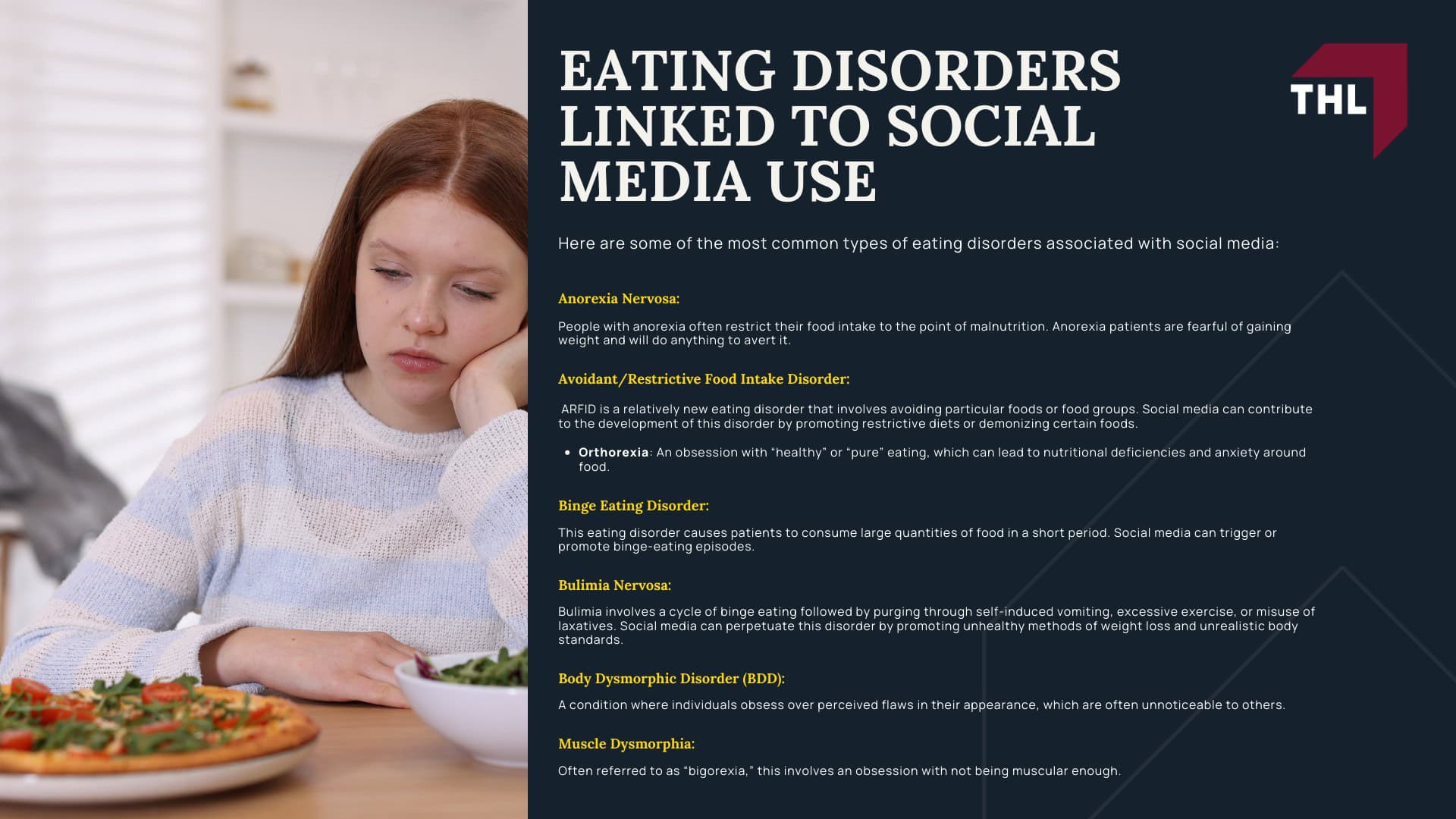
Eating disorders are complex mental illnesses that involve extreme behaviors towards food and body image.
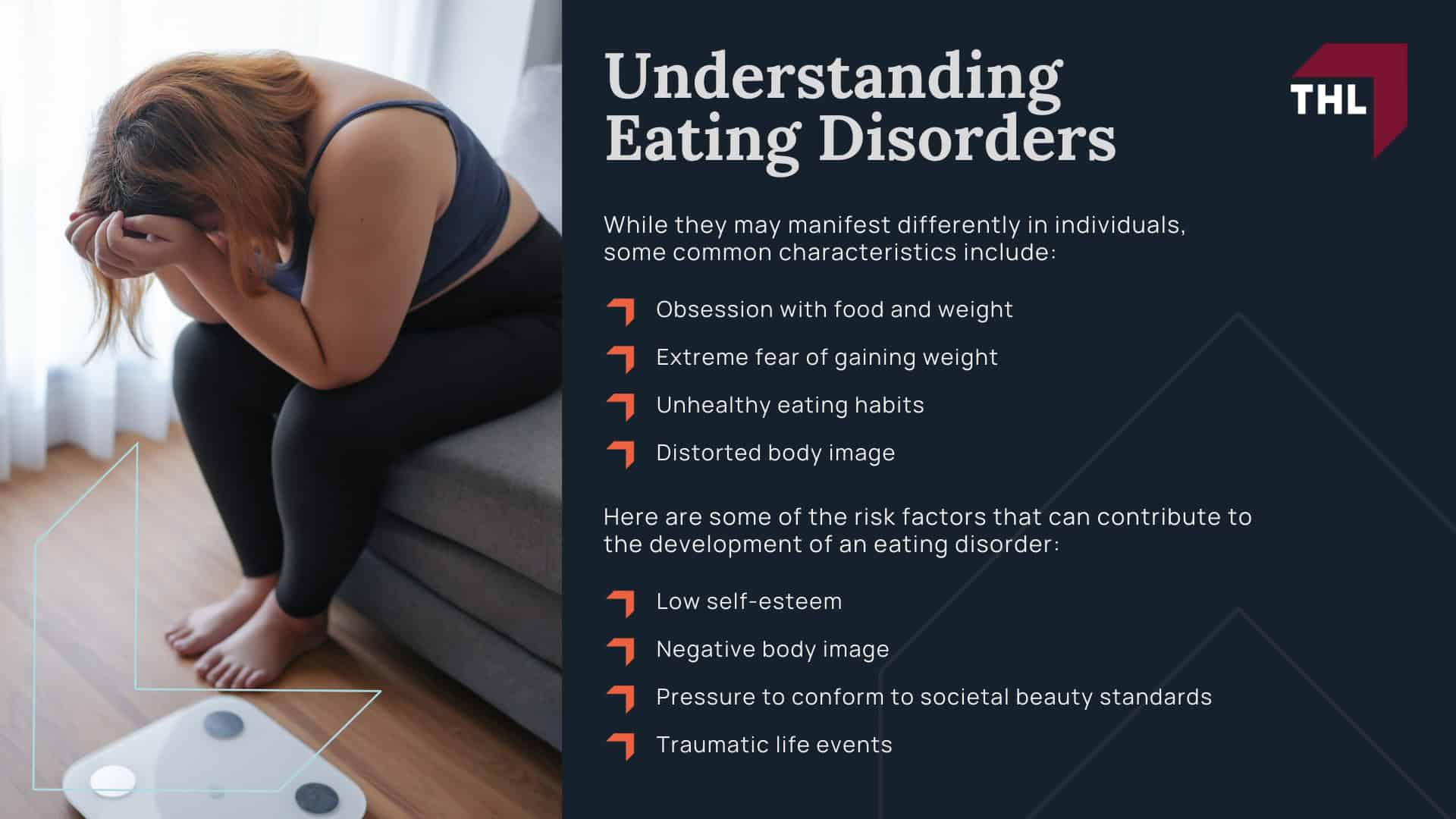
While they may manifest differently in individuals, some common characteristics include:
- Obsession with food and weight
- Extreme fear of gaining weight
- Unhealthy eating habits (restricting food intake, binge eating, purging)
- Distorted body image
Some people may have a genetic predisposition to develop an eating disorder, while others may be influenced by external factors such as social media.
Here are some of the risk factors that can contribute to the development of an eating disorder:
- Low self-esteem
- Negative body image
- Pressure to conform to societal beauty standards
- Traumatic life events
It’s essential to understand that eating disorders are not a choice but rather a serious mental health condition that requires treatment and support.
If you or someone you know is struggling with an eating disorder, it’s crucial to seek help from a mental health professional.