PFAS exposure has been linked to an increased risk for Leukemia. The National Cancer Institute has published information stating so, and other studies have confirmed that exposure to PFAS may increase the risk for developing cancer.
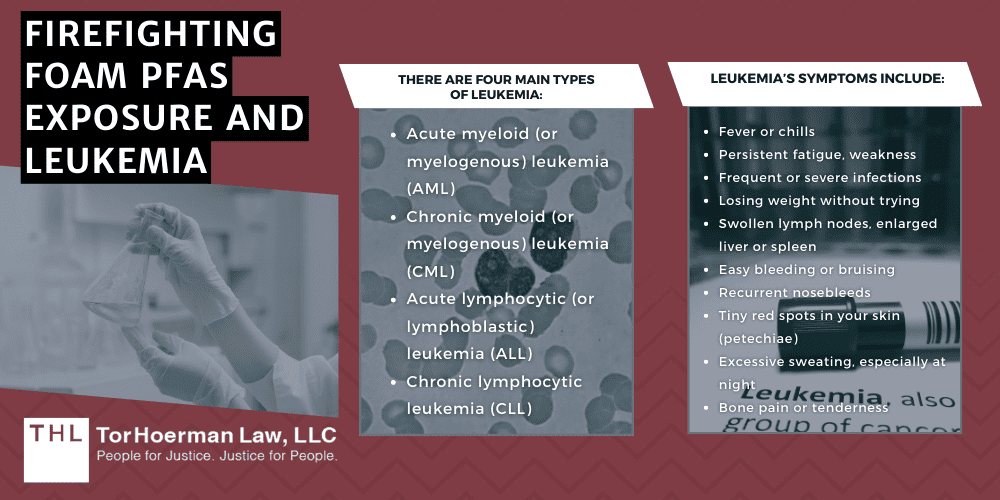
Leukemia is cancer of the body’s blood-forming tissues, impacting the bone marrow and lymphatic system. There are four main types of leukemia:
- Acute myeloid (or myelogenous) leukemia (AML)
- Chronic myeloid (or myelogenous) leukemia (CML)
- Acute lymphocytic (or lymphoblastic) leukemia (ALL)
- Chronic lymphocytic leukemia (CLL)
Leukemia’s symptoms include:
- Fever or chills
- Persistent fatigue, weakness
- Frequent or severe infections
- Losing weight without trying
- Swollen lymph nodes, enlarged liver or spleen
- Easy bleeding or bruising
- Recurrent nosebleeds
- Tiny red spots in your skin (petechiae)
- Excessive sweating, especially at night
- Bone pain or tenderness
More Research On PFAS Chemicals And Cancer Risk
Studies have shown that certain PFAS chemicals, such as PFOA and PFOS, can increase the risk of certain cancers.
- A study published in the Journal of the American Medical Association found a statistically significant association between PFOA exposure and an increased risk of kidney cancer, testicular cancer, and ulcerative colitis.
- Another study published in the International Journal of Cancer found a positive association between PFOS exposure and breast cancer.
- The International Agency for Research on Cancer (IARC) has classified PFOA as a possible carcinogen, and PFOS as possibly carcinogenic to humans.
- The U.S. Environmental Protection Agency (EPA) has issued a health advisory for PFOA and PFOS, stating that long-term exposure to these chemicals above certain levels could be harmful to human health.
The evidence linking PFAS exposure to cancer is concerning, and further research is needed to fully understand the potential health effects of these chemicals.