Endometrial cancer is a type of uterine cancer that begins in the endometrial lining of the uterus.
It is one of the most common gynecological cancers affecting women, with most cases occurring in women over 50.
The endometrium is dynamic tissue that thickens and sheds during the menstrual cycle.
If abnormal cells within the endometrium start to grow uncontrollably, they can form a tumor, which can be malignant (cancerous).

There are several subtypes of endometrial cancer, with the most common being endometrioid adenocarcinoma.
The exact cause of endometrial cancer is not fully understood, but several risk factors have been identified, including hormonal imbalances and genetic factors.
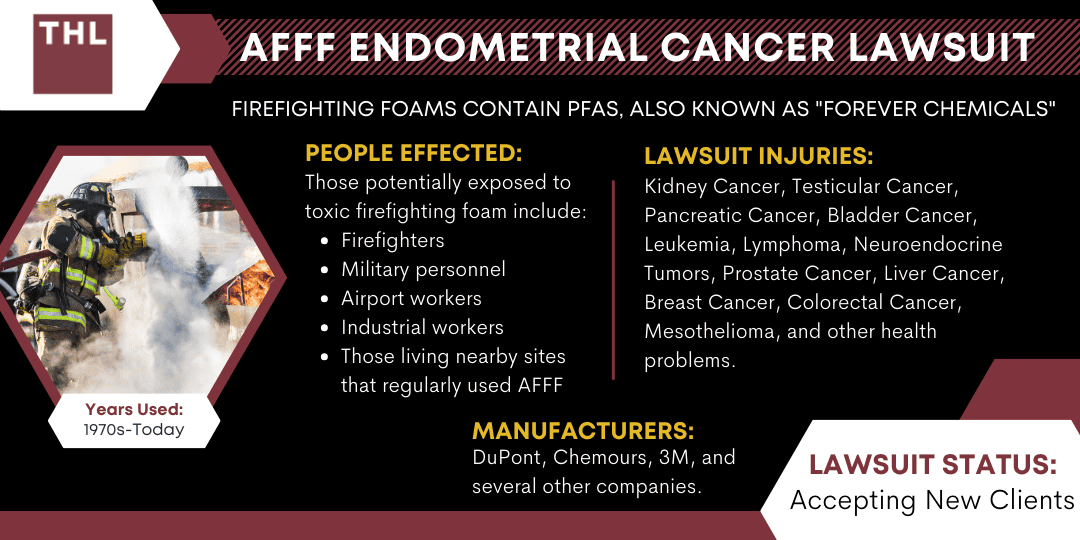
Another possible cause of endometrial cancer is exposure to PFAS chemicals.
Exposure to PFAS and Endometrial Cancer
Several scientific studies have indicated an increased risk for endometrial cancer subsequent to exposure to PFAS.
Research on the links between forever chemicals and endometrial cancer include:
- Journal of Exposure Science & Environmental Epidemiology: Exploratory profiles of phenols, parabens, and per- and poly-fluoroalkyl substances among NHANES study participants in association with previous cancer diagnoses
- Oncotarget Journal: Perfluorooctanoic acid induces human Ishikawa endometrial cancer cell migration and invasion through activation of ERK/mTOR signaling
- Journal of Environmental Health: Per- and polyfluoroalkyl substances (PFAS) exposure in melanoma patients: a retrospective study on prognosis and histological features
- National Cancer Institute: A nested case-control study of circulating per- and polyfluoroalkyl substances (PFAS) and ovarian and endometrial cancers in the Prostate, Lung, Colorectal and Ovarian Cancer Screening Trial
Detecting Endometrial Cancer
Detecting endometrial cancer in its early stages is critical for successful treatment.
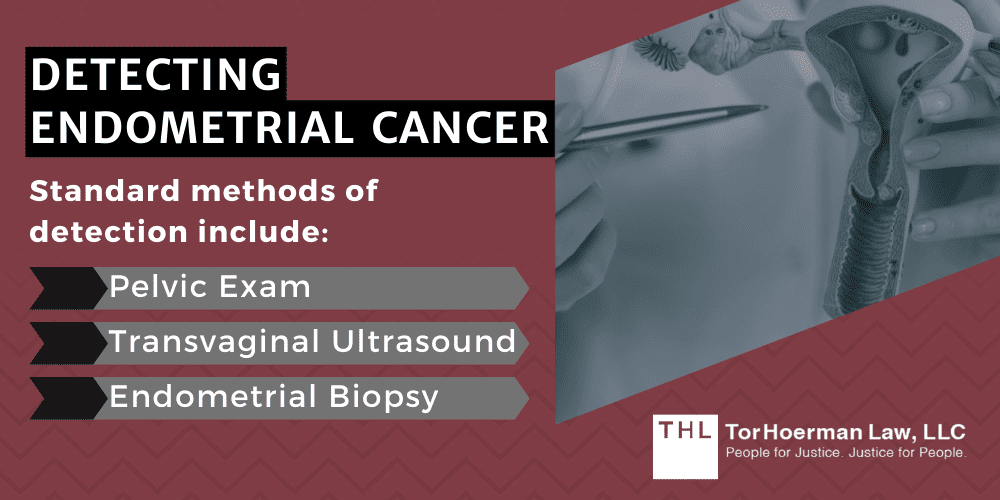
Standard methods of detection include:
- Pelvic Exam: A physical examination by a healthcare provider can detect abnormalities or unusual growths in the pelvic area.
- Transvaginal Ultrasound: This imaging technique uses sound waves to create images of the uterus, helping to identify abnormalities.
- Endometrial Biopsy: A small sample of the endometrial tissue is taken and examined under a microscope for cancer cells.
Treating Endometrial Cancer
Treatment for endometrial cancer depends on the stage at which it’s diagnosed and the patient’s overall health.
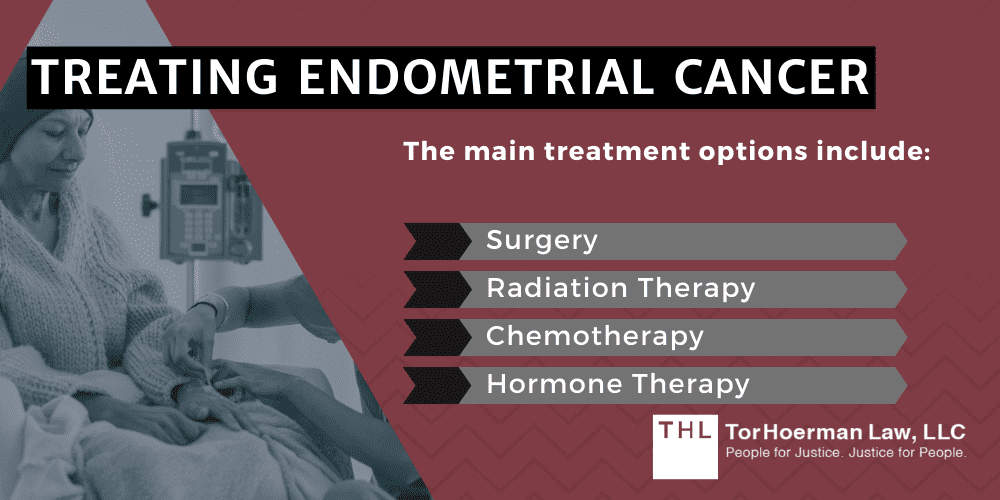
The main treatment options include:
- Surgery: The primary treatment for early-stage endometrial cancer is a hysterectomy (removal of the uterus). In some cases, lymph node removal may also be recommended.
- Radiation Therapy: This treatment uses high-energy rays to target and destroy cancer cells. It may be used before or after surgery or as the primary treatment in some instances.
- Chemotherapy: Chemotherapy involves using drugs to kill cancer cells or prevent their growth. It is typically used in advanced or recurrent cases.
- Hormone Therapy: For specific subtypes of endometrial cancer, hormone therapy may be used to block the effects of estrogen on cancer cells.
The prognosis for endometrial cancer varies depending on factors such as the stage at diagnosis, the cancer subtype, and the patient’s overall health.
Early detection and appropriate treatment can significantly improve outcomes.