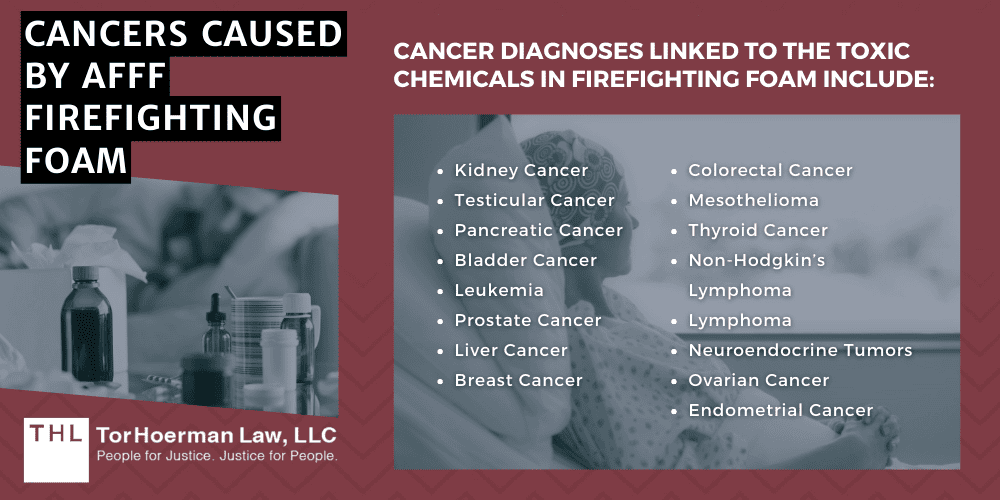
Mounting evidence suggests that prolonged exposure to PFAS chemicals in AFFF firefighting foam may significantly increase the risk of developing kidney cancer.
These synthetic substances, used in military, industrial, and airport firefighting operations for decades, are now the focus of widespread litigation due to their persistence in the environment and accumulation in the human body.
Among the most alarming findings are elevated rates of kidney and testicular cancer among individuals regularly exposed to AFFF, particularly firefighters, military personnel, and chemical plant workers.
According to the National Cancer Institute, both kidney cancer incidence and mortality have been observed at higher rates in populations with direct PFAS exposure—whether through contaminated drinking water or occupational contact.
One major study, Serum Concentrations of Per- and Polyfluoroalkyl Substances and Risk of Renal Cell Carcinoma, published in 2020, found a strong association between PFOA (a common PFAS compound) and kidney cancer risk.
Researchers analyzed blood samples from individuals diagnosed with renal cell carcinoma and discovered that the link to PFOA persisted even in participants with normal kidney function.
Notably, the relationship remained significant in individuals diagnosed eight or more years after initial blood collection, indicating a long-term risk window and a durable biological connection.
These findings support claims being brought in the AFFF firefighting foam litigation, where plaintiffs allege that exposure to PFAS caused serious health consequences, including life-threatening cancers.
Scientific Evidence on PFAS Chemicals and Cancer Risk
The scientific consensus on the dangers of toxic PFAS chemicals has grown steadily, with numerous studies linking these substances to serious health outcomes.
PFAS compounds like PFOA and PFOS (used extensively in AFFF firefighting foam) are persistent in the environment and known to bioaccumulate, heightening the risk of long-term exposure.
Laboratory and epidemiological evidence demonstrate that these substances can cause DNA damage, disrupt endocrine function, and promote tumor growth in critical organs.
Findings show elevated rates of kidney or testicular cancer, liver and thyroid cancer, and immune system abnormalities among those exposed to PFAS.
As the ongoing AFFF litigation progresses, the accumulating scientific data strengthens the legal foundation for claims tied to these chemicals.
Research includes:
- A study published in the Journal of the American Medical Association found a statistically significant association between PFOA exposure and an increased risk of kidney cancer, testicular cancer, and ulcerative colitis.
- Another study published in the International Journal of Cancer found a positive association between PFOS exposure and breast cancer.
- The International Agency for Research on Cancer (IARC) has classified PFOA as a possible carcinogen, and PFOS as possibly carcinogenic to humans.
- The U.S. Environmental Protection Agency (EPA) has issued a health advisory for PFOA and PFOS, stating that long-term exposure to these chemicals above certain levels could be harmful to human health.
- A JAMA Network review concluded there are “probable links” between PFOA exposure and increased risk of kidney cancer, testicular cancer, and ulcerative colitis
- A pooled analysis by ScienceDirect in 2022 combined NCI and C8 data and found elevated serum PFOA levels correlated with a higher incidence of renal cell carcinoma (kidney cancer), years before clinical diagnosis
- NCI’s DCEG portfolio on PFAS showed strong associations between human serum PFAS levels and risks for kidney cancer, testicular cancer, breast cancer, prostate cancer, thyroid disease, and more
- A Swedish cohort study in 2022 linked community exposure to PFAS-contaminated water to significantly higher rates of kidney cancer
- Lab-based molecular toxicology found that PFAS compounds disrupt endocrine function, damage DNA, and promote tumor growth in liver, thyroid, kidney, and testicular tissues
This compelling scientific record reinforces the severity of health risks tied to firefighting foam and subsequently developed cancers and strengthens the claims in current AFFF firefighting foam litigation, particularly for kidney and testicular cancer, liver and thyroid cancer, and other serious conditions.