Chicago
Case Types We Handle
Personal Injuries
Car Accidents
Truck Accidents
Motorcycle Accidents
Bicycle Accidents
Construction Accidents
Nursing Home Abuse
Wrongful Death
Slip and Fall Accidents
Daycare Injury & Abuse
Edwardsville
Case Types We Handle
Personal Injuries
Car Accidents
Truck Accidents
Motorcycle Accidents
Bicycle Accidents
Nursing Home Abuse
Wrongful Death
Slip and Fall Accidents
Daycare Injury & Abuse
Premises Liability
St. Louis
Case Types We Handle
Personal Injuries
Car Accidents
Truck Accidents
Motorcycle Accidents
Bicycle Accidents
Construction Accidents
Nursing Home Abuse
Wrongful Death
Slip and Fall Accidents
Daycare Injury & Abuse
Dangerous Drugs
Defective Products
Chemical Exposure

Gabapentin Lawsuit | Dementia, Cognitive Decline, & Memory Loss [2026 Update]

4.9
Google
•
677 reviews

Do You Qualify for the Gabapentin Lawsuit?

The Gabapentin lawsuit involves allegations that manufacturers failed to warn patients and healthcare providers about a potential connection between long-term gabapentin use and an increased risk of dementia, mild cognitive impairment, and memory loss.

This page explains the scientific research behind the litigation, the allegations raised in current lawsuits, who may qualify to file a claim, and the current status of the cases.

This content is intended for individuals who took gabapentin, family members of patients diagnosed with cognitive decline, and anyone seeking reliable information about the emerging litigation.

Understanding what researchers have found, what the lawsuits allege, and what evidence may support a claim can help patients make informed decisions about their legal options.

TorHoerman Law is actively investigating the gabapentin lawsuit and we are reviewing claims from those who believe they may qualify.

Gabapentin Lawsuit; Gabapentin Dementia Lawsuit Overview; Scientific Studies Linking Gabapentin to Dementia and Cognitive Decline; Gabapentin Use Beyond FDA-Approved Indications; Neurocognitive Injuries Alleged in Gabapentin Lawsuits; Mild Cognitive Impairment (MCI); Gabapentin Dementia Lawsuit Overview; Scientific Studies Linking Gabapentin to Dementia and Cognitive Decline; Gabapentin Use Beyond FDA-Approved Indications; Neurocognitive Injuries Alleged in Gabapentin Lawsuits; Mild Cognitive Impairment (MCI); Who May Qualify for a Gabapentin Lawsuit; Evidence Used in a Gabapentin Dementia Lawsuit; Potential Compensation in Gabapentin Lawsuits; TorHoerman Law_ Investigating the Gabapentin Lawsuit

Gabapentin and Cognitive Impairment: Legal Investigation

Gabapentin is one of the most widely prescribed medications in the United States and has long been used as a chronic pain medicine for conditions involving neuropathic pain, epilepsy, and numerous off-label use indications.

Although the drug has been prescribed for decades, recent research has raised questions about whether some adult patients prescribed gabapentin may face a higher dementia risk after prolonged exposure.

A large observational study published in Regional Anesthesia & Pain Medicine found that patients who received repeated gabapentin prescriptions were diagnosed with dementia and mild cognitive impairment at higher rates than comparable patients who did not receive the medication.

The findings have prompted lawsuits alleging that manufacturers knew or should have known about potential cognitive risks but failed to adequately warn patients and healthcare providers.

Researchers continue to study whether gabapentin directly contributes to dementia, and the available evidence does not establish a causal relationship.

Nevertheless, the study has become the foundation for lawsuits involving patients diagnosed with early-onset dementia, memory loss, and other neurocognitive conditions after long-term gabapentin use.

As additional scientific evidence and court filings emerge, the litigation will likely continue to evolve alongside ongoing medical research.

If you or a loved one have been prescribed gabapentin and later developed dementia, mild cognitive impairment, or significant memory loss, you may have legal options, and an experienced attorney can evaluate whether you qualify to pursue a claim.

Contact us today for a free consultation.

Use the chat feature on this page to find out if you qualify for the gabapentin lawsuit.

Gabapentin Lawsuit Updates Timeline

September 21st, 2026: Gabapentin Dementia Risks May Result in Lawsuits Against Drug Maker

Researchers with Case Western University published a new study warning that gabapentin, one of the most widely prescribed painkillers in the country, may increase the risk of cognitive decline, particularly in younger patients.

The study, published in the journal Regional Anesthesia & Pain Medicine, analyzed health records from more than 26,000 adults with chronic lower back pain between 2004 and 2024, comparing those prescribed gabapentin against similar patients who weren’t.

Patients who received six or more gabapentin prescriptions faced a 29% higher risk of dementia and an 85% higher risk of mild cognitive impairment.

The association grew sharper among younger adults. Those aged 18 to 64 faced roughly 2.1 times the dementia risk and 2.5 times the risk of mild cognitive impairment, and the strongest numbers showed up in the 35 to 49 age group, who faced about 2.4 times the dementia risk and 3.5 times the risk of cognitive impairment.

Researchers also found the risk climbed with more frequent prescriptions, with patients receiving 12 or more facing a 40% higher dementia risk compared to those receiving three to eleven.

Gabapentin has been sold under brand names including Neurontin, Gralise, and Horizant since its original 1993 approval for seizures and chronic pain.

It’s since become widely used off-label for conditions like fibromyalgia, sciatica, anxiety, and alcohol use disorder, with CDC data showing prescriptions have risen more than 200% over the past 15 years.

While the study doesn’t establish that gabapentin directly causes dementia, the findings raise questions about whether manufacturers adequately tested for and warned about cognitive risks tied to long-term use, potentially opening the door to future product liability claims.

Gabapentin Dementia Lawsuit Overview

Gabapentin lawsuits allege that manufacturers failed to adequately warn patients and healthcare providers about a potential connection between long-term gabapentin use and neurocognitive disorders.

Current lawsuits follow publication of a large observational study that reported higher rates of dementia and mild cognitive impairment among certain patients who received repeated gabapentin prescriptions.

Plaintiffs allege they were prescribed the medication following an initial pain diagnosis and later experienced memory loss, impaired cognitive function, or early-onset dementia.

Although researchers have not established that gabapentin directly causes Alzheimer’s disease or other forms of dementia, recent findings have prompted additional investigation into whether prolonged exposure may contribute to potential cognitive decline in some individuals.

Current lawsuits contend that manufacturers knew or should have known about these potential risks but did not provide adequate warnings.

As additional scientific evidence is evaluated, courts will determine whether the available research supports the claims raised in the litigation.

Gabapentin Dementia Lawsuit Overview

Current Gabapentin lawsuits generally allege that manufacturers:

  • Failed to warn patients and healthcare providers about a potential increased risk of dementia and mild cognitive impairment.
  • Did not adequately investigate reports and research examining long-term cognitive effects associated with gabapentin.
  • Continued marketing gabapentin without updating prescribing information to address potential neurocognitive risks.
  • Omitted information that may have influenced prescribing decisions and patient monitoring.
  • Failed to recommend monitoring for memory loss, cognitive changes, or other neurological symptoms during long-term treatment.
  • Continued marketing gabapentin without adequately evaluating and disclosing potential long-term neurocognitive risks.
  • Failed to provide sufficient safety information regarding long-term neurological outcomes.

The current litigation is based primarily on allegations supported by observational research rather than proof of a direct causal relationship between gabapentin and dementia.

Researchers have emphasized that additional studies are needed to determine whether the reported associations reflect the effects of the medication, underlying medical conditions, or other contributing factors.

Even so, the published findings have become the foundation for lawsuits alleging that manufacturers failed to adequately disclose potential cognitive risks associated with long-term gabapentin use.

Individuals diagnosed with dementia, mild cognitive impairment, or other cognitive disorders after prolonged gabapentin use should consider speaking with an attorney to determine whether they may qualify to pursue a claim.

Scientific Studies Linking Gabapentin to Dementia and Cognitive Decline

The scientific evidence supporting current concerns about gabapentin and cognitive decline is centered on a large retrospective study published in the journal Regional Anesthesia & Pain Medicine in 2025.

Researchers analyzed electronic health records from the TriNetX federated health research network, comparing adults with chronic back pain who were prescribed gabapentin to similar patients who did not receive the medication.

The new study evaluated more than 26,000 propensity score-matched patients and examined whether repeated gabapentin prescriptions were associated with later diagnoses of dementia or mild cognitive impairment (MCI).

Although the findings do not establish that gabapentin directly causes dementia, the results support additional research and close monitoring of adult patients prescribed the medication while scientists continue investigating potential cognitive decline.Gabapentin Dementia Lawsuit Overview; Scientific Studies Linking Gabapentin to Dementia and Cognitive Decline
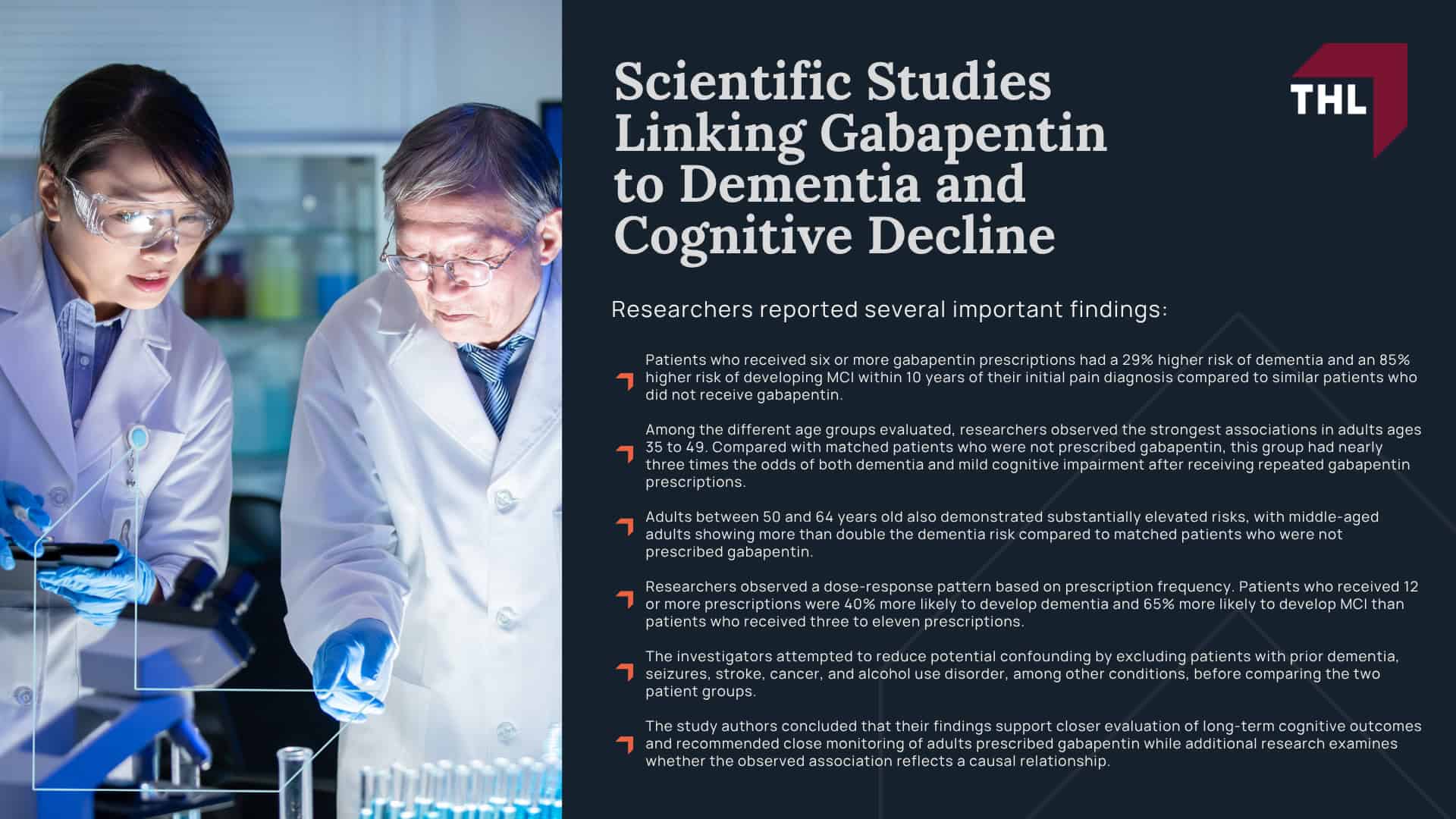
Researchers reported several important findings:

  • Patients who received six or more gabapentin prescriptions had a 29% higher risk of dementia and an 85% higher risk of developing MCI within 10 years of their initial pain diagnosis compared to similar patients who did not receive gabapentin.
  • Among the different age groups evaluated, researchers observed the strongest associations in adults ages 35 to 49. Compared with matched patients who were not prescribed gabapentin, this group had nearly three times the odds of both dementia and mild cognitive impairment after receiving repeated gabapentin prescriptions.
  • Adults between 50 and 64 years old also demonstrated substantially elevated risks, with middle-aged adults showing more than double the dementia risk compared to matched patients who were not prescribed gabapentin.
  • Researchers observed a dose-response pattern based on prescription frequency. Patients who received 12 or more prescriptions were 40% more likely to develop dementia and 65% more likely to develop MCI than patients who received three to eleven prescriptions.
  • The investigators attempted to reduce potential confounding by excluding patients with prior dementia, seizures, stroke, cancer, and alcohol use disorder, among other conditions, before comparing the two patient groups.
  • The study authors concluded that their findings support closer evaluation of long-term cognitive outcomes and recommended close monitoring of adults prescribed gabapentin while additional research examines whether the observed association reflects a causal relationship.

Gabapentin Use Beyond FDA-Approved Indications

Although gabapentin is approved by the U.S. Food and Drug Administration to treat partial-onset seizures and postherpetic neuralgia, physicians have prescribed it for a much broader range of conditions for decades.

Prescribing a medication for an unapproved purpose, known as off-label use, is legal when a healthcare provider believes it is medically appropriate for an individual patient.

Gabapentin became increasingly popular as a non-opioid treatment option because it can reduce nerve excitability and may help relieve certain chronic pain conditions and neurological symptoms.

Over time, off-label prescribing far exceeded the drug’s FDA-approved uses, making gabapentin one of the most frequently prescribed medications in the United States.

Many of the patients involved in the current dementia research were prescribed gabapentin for chronic pain conditions rather than its original approved indications.

Gabapentin Dementia Lawsuit Overview; Scientific Studies Linking Gabapentin to Dementia and Cognitive Decline; Gabapentin Use Beyond FDA-Approved Indications

Common off-label uses for gabapentin include:

  • Chronic low back pain
  • Peripheral neuropathy and other neuropathic pain conditions
  • Fibromyalgia
  • Anxiety disorders
  • Migraine prevention
  • Restless legs syndrome (immediate-release gabapentin)
  • Insomnia and other sleep disorders
  • Alcohol withdrawal syndrome
  • Menopausal hot flashes
  • Chronic pruritus (persistent itching)

Neurocognitive Injuries Alleged in Gabapentin Lawsuits

Gabapentin affects the central nervous system by binding to voltage-gated calcium channels, reducing the release of certain excitatory neurotransmitters involved in pain signaling and seizure activity.

The U.S. Food and Drug Administration approved the drug in 1993 as an adjunctive treatment for epilepsy and expanded its approved uses in 2002 to include postherpetic neuralgia.

Gabapentin Dementia Lawsuit Overview; Scientific Studies Linking Gabapentin to Dementia and Cognitive Decline; Gabapentin Use Beyond FDA-Approved Indications; Neurocognitive Injuries Alleged in Gabapentin Lawsuits

Although gabapentin’s effects on brain signaling are well established, researchers have not reached a consensus that the medication directly causes dementia or other neurodegenerative conditions.

Recent observational research has instead reported an association between repeated gabapentin use and higher rates of mild cognitive impairment and dementia in certain patient populations, prompting additional scientific investigation into the drug’s long-term neurological effects.

The following conditions are among the primary neurocognitive injuries identified in current research and allegations involving prolonged gabapentin use.

Mild Cognitive Impairment (MCI)

Mild cognitive impairment (MCI) is a medical condition characterized by measurable changes in memory, thinking, language, or judgment that are greater than expected with normal aging but are not severe enough to substantially interfere with independent living.

People with MCI generally maintain their ability to perform routine activities, although they may notice increasing difficulty with complex tasks or mental processing.

There is no single test that can diagnose mild cognitive impairment.

Instead, doctors make a clinical diagnosis by considering a patient’s medical history, reported symptoms, neurological examination, cognitive testing, laboratory studies, and, when appropriate, brain imaging while ruling out other possible causes of cognitive decline.

Because MCI can result from a variety of medical, neurological, or psychological factors, a diagnosis does not necessarily mean a person will develop dementia.

Gabapentin Dementia Lawsuit Overview; Scientific Studies Linking Gabapentin to Dementia and Cognitive Decline; Gabapentin Use Beyond FDA-Approved Indications; Neurocognitive Injuries Alleged in Gabapentin Lawsuits; Mild Cognitive Impairment (MCI)

People with mild cognitive impairment may experience:

  • Frequent forgetfulness or difficulty recalling recent conversations and events
  • Trouble finding the right words during conversations
  • Reduced attention, concentration, or mental focus
  • Difficulty planning, organizing, or making decisions
  • Misplacing belongings more often than usual
  • Slower thinking or information processing
  • Greater difficulty completing complex or unfamiliar tasks
  • Increased reliance on calendars, reminders, or family members to manage daily responsibilities

Although many people with MCI continue to live independently, some experience worsening symptoms over time and eventually develop dementia, while others remain stable or even improve if an underlying cause is identified and treated.

Because MCI can be influenced by medications, sleep problems, depression, metabolic issues, neurological disease, and other health factors, clinicians often look closely at a patient’s medication history when cognitive symptoms appear.

In the gabapentin research, MCI matters because it may represent an earlier stage of cognitive change before a dementia diagnosis.

For patients who used gabapentin for months or years, records showing when memory problems began, when MCI was first evaluated, and whether symptoms progressed may be important to understanding the timeline of the alleged injury.

Dementia and Progressive Cognitive Decline

Dementia is a clinical syndrome characterized by progressive impairment of memory, reasoning, language, judgment, and other cognitive abilities severe enough to interfere with independent living and daily function.

Alzheimer’s disease is the most common cause of dementia, although vascular dementia, Lewy body dementia, frontotemporal dementia, and several other neurological disorders can produce similar symptoms.

Unlike normal age-related forgetfulness, dementia affects multiple areas of cognitive function and typically worsens over time as the underlying disease progresses.

There is currently no cure for most forms of dementia, although medications and supportive therapies may help manage symptoms or slow progression in some patients.

Because dementia has many potential causes and risk factors, physicians rely on medical history, cognitive testing, neurological examinations, laboratory studies, and brain imaging to determine the most likely diagnosis.

Gabapentin Dementia Lawsuit Overview; Scientific Studies Linking Gabapentin to Dementia and Cognitive Decline; Gabapentin Use Beyond FDA-Approved Indications; Neurocognitive Injuries Alleged in Gabapentin Lawsuits; Mild Cognitive Impairment (MCI); Gabapentin Dementia Lawsuit Overview; Scientific Studies Linking Gabapentin to Dementia and Cognitive Decline; Gabapentin Use Beyond FDA-Approved Indications; Neurocognitive Injuries Alleged in Gabapentin Lawsuits; Mild Cognitive Impairment (MCI)

People living with dementia may experience:

  • Progressive memory loss that disrupts daily activities
  • Difficulty with planning, reasoning, and problem-solving
  • Confusion about time, places, or familiar environments
  • Trouble communicating or finding the correct words
  • Poor judgment and impaired decision-making
  • Difficulty managing finances, medications, or household responsibilities
  • Changes in mood, personality, or behavior
  • Loss of independence requiring assistance with everyday tasks
  • Increasing reliance on family members, caregivers, or long-term care services

Dementia is the primary injury alleged in current Gabapentin lawsuits because it can permanently affect memory, reasoning, judgment, language, and nearly every aspect of daily function.

While researchers continue investigating whether long-term gabapentin use contributes to an increased dementia risk, the available evidence has prompted closer examination of patients who experienced cognitive decline after years of treatment.

Physicians evaluating dementia must also consider numerous other potential causes, including age, genetics, cardiovascular disease, and other neurological conditions, before determining the most likely explanation for a patient’s symptoms.

As additional research becomes available, scientists hope to better understand whether certain patients face a heightened risk of dementia following prolonged gabapentin exposure and which factors may influence that risk.

Who May Qualify for a Gabapentin Lawsuit?

Eligibility for a Gabapentin lawsuit depends on several medical and factual considerations, and every claim should be evaluated individually.

Attorneys typically review a person’s prescription history, medical records, cognitive diagnosis, and other potential dementia risk factors before determining whether a case may qualify.

Current intake criteria generally focus on individuals who received six or more prescriptions for gabapentin before developing early-onset dementia or mild cognitive impairment.

Gabapentin Dementia Lawsuit Overview; Scientific Studies Linking Gabapentin to Dementia and Cognitive Decline; Gabapentin Use Beyond FDA-Approved Indications; Neurocognitive Injuries Alleged in Gabapentin Lawsuits; Mild Cognitive Impairment (MCI); Gabapentin Dementia Lawsuit Overview; Scientific Studies Linking Gabapentin to Dementia and Cognitive Decline; Gabapentin Use Beyond FDA-Approved Indications; Neurocognitive Injuries Alleged in Gabapentin Lawsuits; Mild Cognitive Impairment (MCI); Who May Qualify for a Gabapentin Lawsuit

Many of the claims under investigation involve chronic pain patients who were prescribed gabapentin for off-label conditions rather than its FDA-approved indications.

A lawyer may also review whether other medical conditions or genetic factors could have contributed to the diagnosis.

Because the litigation remains in its early stages, eligibility criteria may continue to evolve as additional research and court proceedings develop.

Experiencing memory-related gabapentin side effects alone does not necessarily establish a legal claim, but those symptoms may be relevant when considered alongside a later diagnosis of mild cognitive impairment or dementia.

An attorney can review the available evidence and determine whether your medical history is consistent with the allegations raised in current Gabapentin lawsuits.

Evidence Used in a Gabapentin Dementia Lawsuit

Medical evidence is one of the most important components of any Gabapentin lawsuit because it helps establish a patient’s prescription history, diagnosis, and progression of cognitive symptoms.

Attorneys typically review medical records to determine when cognitive changes first appeared, how the condition developed over time, and whether other health conditions may have contributed to the diagnosis.

Evidence may also help distinguish the alleged effects of gabapentin from other possible causes of dementia, including underlying medical conditions or other medications known to affect cognitive function.

The strength of a claim often depends on whether the available documentation supports a clear timeline linking prolonged gabapentin use with the onset of cognitive impairment.

Gabapentin Dementia Lawsuit Overview; Scientific Studies Linking Gabapentin to Dementia and Cognitive Decline; Gabapentin Use Beyond FDA-Approved Indications; Neurocognitive Injuries Alleged in Gabapentin Lawsuits; Mild Cognitive Impairment (MCI); Gabapentin Dementia Lawsuit Overview; Scientific Studies Linking Gabapentin to Dementia and Cognitive Decline; Gabapentin Use Beyond FDA-Approved Indications; Neurocognitive Injuries Alleged in Gabapentin Lawsuits; Mild Cognitive Impairment (MCI); Who May Qualify for a Gabapentin Lawsuit; Evidence Used in a Gabapentin Dementia Lawsuit

Evidence commonly reviewed in a Gabapentin dementia lawsuit includes:

  • Medical records documenting cognitive symptoms, evaluations, and diagnoses
  • Pharmacy records showing gabapentin prescription history and refill frequency
  • Electronic health records from treating physicians and specialists
  • Cognitive assessments and neuropsychological testing results
  • Brain imaging studies, when available
  • Medication lists identifying gabapentin and other medications taken before the diagnosis
  • Neurology consultation notes and treatment records
  • Documentation of medical expenses related to dementia or mild cognitive impairment
  • Employment records demonstrating lost wages or reduced earning capacity
  • Statements from family members or caregivers describing changes in memory, behavior, and daily functioning

Potential Compensation in Gabapentin Lawsuits

Damages are the financial and personal losses a plaintiff claims resulted from an alleged injury.

In a Gabapentin lawsuit, attorneys evaluate medical records, treatment history, expert opinions, employment information, and other evidence to determine how the alleged cognitive injury has affected a person’s health, finances, and quality of life.

The value of a claim depends on the specific facts of each case, including the severity of the diagnosis, the extent of ongoing care, and the long-term impact on the individual’s independence and earning capacity.

Lawyers use this evidence to calculate damages and advocate for fair compensation through settlement negotiations or, if necessary, at trial.

Gabapentin Dementia Lawsuit Overview; Scientific Studies Linking Gabapentin to Dementia and Cognitive Decline; Gabapentin Use Beyond FDA-Approved Indications; Neurocognitive Injuries Alleged in Gabapentin Lawsuits; Mild Cognitive Impairment (MCI); Gabapentin Dementia Lawsuit Overview; Scientific Studies Linking Gabapentin to Dementia and Cognitive Decline; Gabapentin Use Beyond FDA-Approved Indications; Neurocognitive Injuries Alleged in Gabapentin Lawsuits; Mild Cognitive Impairment (MCI); Who May Qualify for a Gabapentin Lawsuit; Evidence Used in a Gabapentin Dementia Lawsuit; Potential Compensation in Gabapentin Lawsuits

Potential damages in a Gabapentin lawsuit may include:

  • Past and future medical expenses
  • Costs of neurological care and cognitive rehabilitation
  • Prescription medication expenses
  • Long-term care and assisted living costs
  • Lost wages and reduced earning capacity
  • Pain and suffering
  • Emotional distress
  • Loss of enjoyment of life
  • Costs of in-home caregiving or caregiver assistance
  • Other out-of-pocket expenses related to the alleged injury

TorHoerman Law: Investigating the Gabapentin Lawsuit

Recent scientific research has raised important questions about whether long-term gabapentin use may be associated with dementia, mild cognitive impairment, and other forms of cognitive decline in certain patients.

Although researchers continue to investigate the relationship and have not established that gabapentin directly causes dementia, current lawsuits allege that manufacturers failed to adequately warn about potential long-term cognitive risks.

Individuals diagnosed with cognitive impairment after prolonged gabapentin use may have legal options, and understanding those options begins with a careful review of the available medical evidence.

TorHoerman Law is actively investigating claims involving dementia, memory loss, and other neurocognitive injuries allegedly associated with long-term gabapentin use.

Gabapentin Dementia Lawsuit Overview; Scientific Studies Linking Gabapentin to Dementia and Cognitive Decline; Gabapentin Use Beyond FDA-Approved Indications; Neurocognitive Injuries Alleged in Gabapentin Lawsuits; Mild Cognitive Impairment (MCI); Gabapentin Dementia Lawsuit Overview; Scientific Studies Linking Gabapentin to Dementia and Cognitive Decline; Gabapentin Use Beyond FDA-Approved Indications; Neurocognitive Injuries Alleged in Gabapentin Lawsuits; Mild Cognitive Impairment (MCI); Who May Qualify for a Gabapentin Lawsuit; Evidence Used in a Gabapentin Dementia Lawsuit; Potential Compensation in Gabapentin Lawsuits; TorHoerman Law_ Investigating the Gabapentin Lawsuit

If you or a loved one developed cognitive impairment after taking gabapentin, our attorneys can review your medical history, prescription records, and potential eligibility during a free consultation.

We represent clients on a contingency fee basis, meaning you pay no attorney fees unless we recover compensation on your behalf.

Contact TorHoerman Law today to discuss your potential Gabapentin lawsuit with an experienced product liability attorney.

Frequently Asked Questions

Published by:
Picture of Tor Hoerman
Tor Hoerman

Tor Hoerman has represented injured individuals for more than 30 years, with experience spanning individual personal injury cases and nationwide mass tort litigation. His work includes car accidents, catastrophic injuries, product liability claims, and other serious injury cases. Tor has served in court-appointed leadership roles in national litigation and tried cases involving major corporate defendants.

TorHoerman Law’s legal content is researched and written by our editorial team and attorneys for legal accuracy, clarity, and relevance. We rely on statutes, court records, government publications, medical research, and other authoritative sources when applicable. This page provides general legal information and does not constitute legal advice.

TorHoerman Law reviews its legal content for factual accuracy, current information, and relevant legal context before publication and as material developments occur. This article is provided for general informational purposes and does not constitute legal advice. For guidance about a specific case, contact TorHoerman Law.

Have you or a loved one been injured?

A serious injury can change your life.

Speak with an experienced personal injury lawyer about your rights, your case, and the legal options available to you.
Google
•
677 reviews
4.9
★★★★★
Recovered damages
$4 Billion+

Table of Contents

Guides & Resources
About TorHoerman Law

TorHoerman Law represents people whose lives have been disrupted by serious injuries, unsafe products, and negligence. Our attorneys handle individual personal injury cases as well as national mass tort lawsuits involving major corporations.

Founded in 2009, our legal team brings more than 100 years of combined experience handling serious injury and complex civil litigation.

Do you believe you’re entitled to compensation?

Use our Instant Case Evaluator to find out in as little as 60 seconds!

$495 Million
Baby Formula NEC Lawsuit

In this case, we obtained a verdict of $495 Million for our client’s child who was diagnosed with Necrotizing Enterocolitis after consuming baby formula manufactured by Abbott Laboratories.

$20 Million
Toxic Tort Injury

In this case, we were able to successfully recover $20 Million for our client after they suffered a Toxic Tort Injury due to chemical exposure.

$103.8 Million
COX-2 Inhibitors Injury

In this case, we were able to successfully recover $103.8 Million for our client after they suffered a COX-2 Inhibitors Injury.

$4 Million
Traumatic Brain Injury

In this case, we were able to successfully recover $4 Million for our client after they suffered a Traumatic Brain Injury while at daycare.

$2.8 Million
Defective Heart Device

In this case, we were able to successfully recover $2.8 Million for our client after they suffered an injury due to a Defective Heart Device.