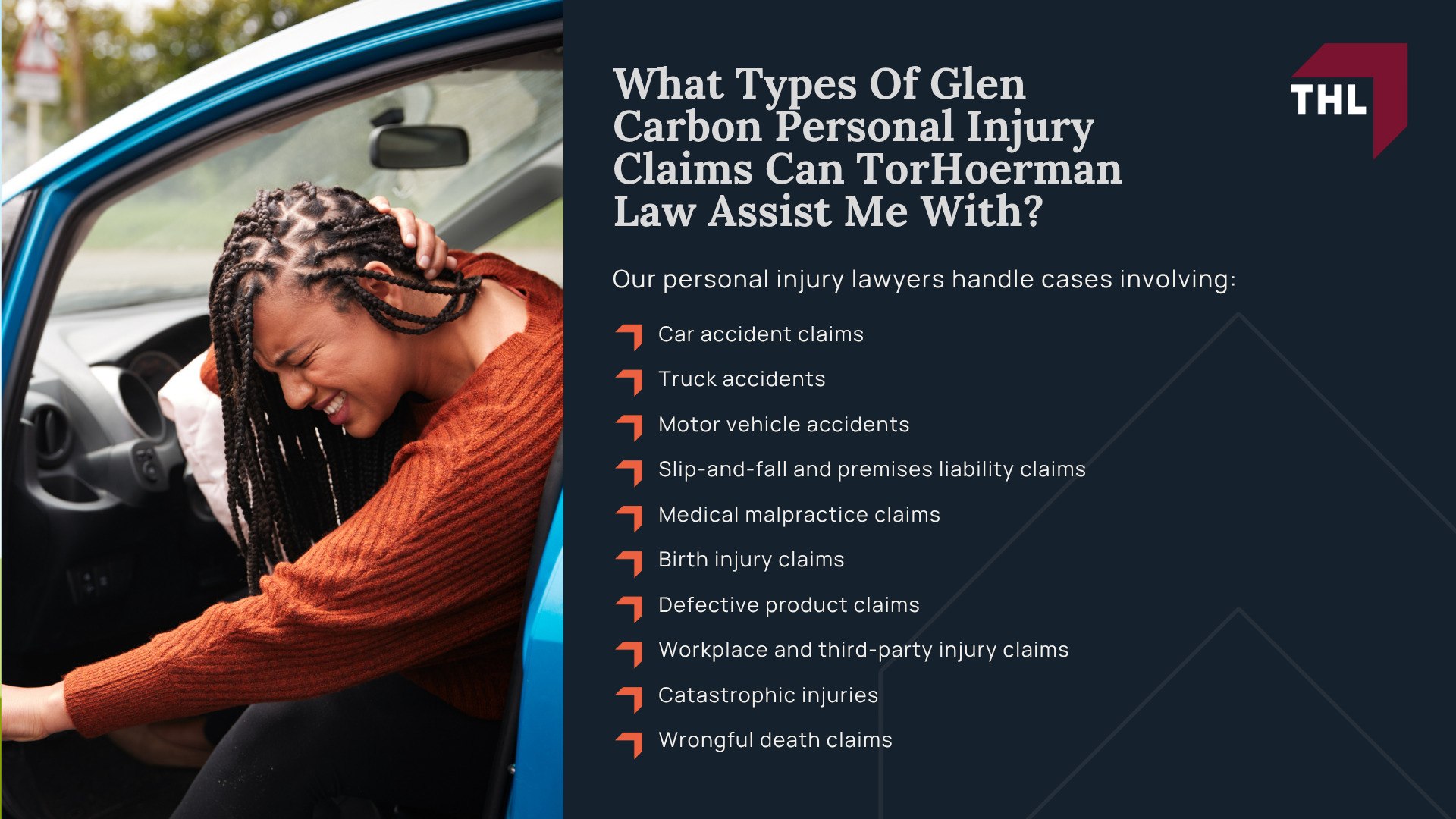
You may have a personal injury claim if another person, business, property owner, employer, medical provider, or manufacturer caused an injury through negligent or wrongful conduct.
A valid claim generally requires evidence that the responsible party owed you a legal duty, breached that duty, and caused an injury or financial loss.
Medical records, accident reports, photographs, witness statements, employment records, and other evidence can help establish what happened and document the resulting damages.
Compensation may be available for medical expenses, lost income, reduced earning capacity, pain and suffering, disability, and other losses supported by the facts of the case.
Liability may involve more than one party, particularly in cases involving commercial vehicles, dangerous property conditions, defective products, workplace incidents, or medical negligence.

Illinois comparative fault rules may also affect recovery when the injured person is alleged to share responsibility for the incident.
A personal injury lawyer can review the available evidence, identify potentially liable parties, and determine whether the facts support a claim under Illinois law.
Filing deadlines also apply, so the circumstances of the injury should be evaluated before the applicable statute of limitations expires.
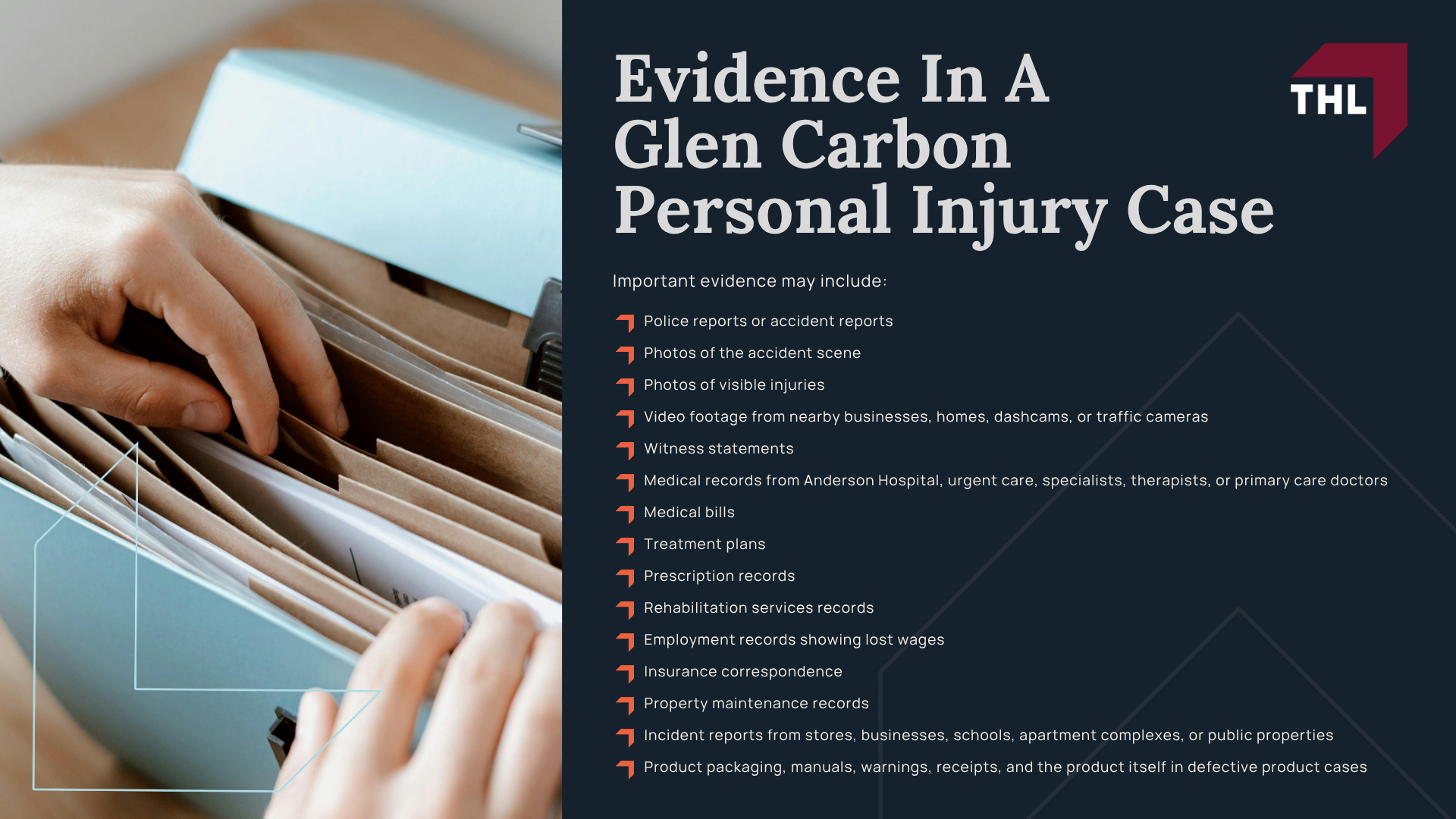
Evidence In A Glen Carbon Personal Injury Case
Evidence is one of the most important parts of any personal injury case.
Strong evidence can prove how the injury happened, who was responsible, how badly you were hurt, and what compensation may be available.
Important evidence may include:
- Police reports or accident reports
- Photos of the accident scene
- Photos of visible injuries
- Video footage from nearby businesses, homes, dashcams, or traffic cameras
- Witness statements
- Medical records from Anderson Hospital, urgent care, specialists, therapists, or primary care doctors
- Medical bills
- Treatment plans
- Prescription records
- Rehabilitation services records
- Employment records showing lost wages
- Insurance correspondence
- Property maintenance records
- Incident reports from stores, businesses, schools, apartment complexes, or public properties
- Product packaging, manuals, warnings, receipts, and the product itself in defective product cases
If your accident happened near a public location in Glen Carbon, local details may matter.
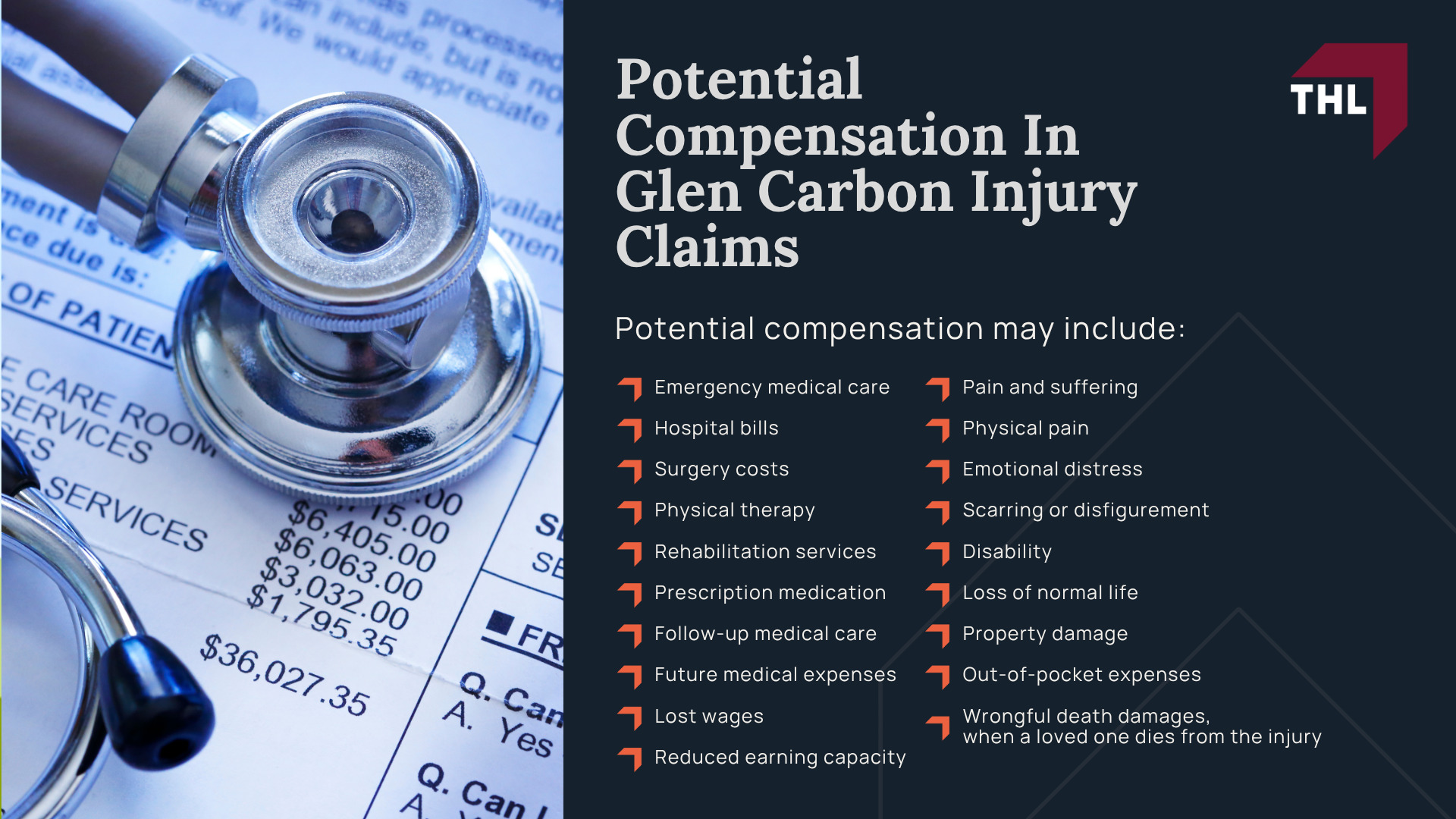
Potential Compensation In Glen Carbon Injury Claims
A personal injury claim may allow injured people to seek compensation for financial losses and personal harm caused by someone else’s negligence.
The value of a legal claim depends on the severity of the injury, available evidence, medical care, insurance coverage, long-term prognosis, and how the injury affects the person’s daily life.
Potential compensation may include:
- Emergency medical care
- Hospital bills
- Surgery costs
- Physical therapy
- Rehabilitation services
- Prescription medication
- Follow-up medical care
- Future medical expenses
- Lost wages
- Reduced earning capacity
- Pain and suffering
- Physical pain
- Emotional distress
- Scarring or disfigurement
- Disability
- Loss of normal life
- Property damage
- Out-of-pocket expenses
- Wrongful death damages, when a loved one dies from the injury
Catastrophic injuries often require a deeper damages analysis because the injured person may need multiple years of treatment, assistive devices, home modifications, rehabilitation, or long-term care.
A Glen Carbon personal injury lawyer can work with medical providers and experts to estimate both current and future losses.
How Long Do I Have To File A Personal Injury Claim In Illinois?
Illinois generally gives an injured person two years to file a personal injury lawsuit after the cause of action accrues.
Under 735 ILCS 5/13-202, an action seeking damages for an injury to a person must generally be commenced within two years.
Missing the applicable filing deadline can prevent an injured person from recovering damages through the civil court system.
The two-year limitations period commonly applies to personal injury lawsuits arising from:
- Car accidents
- Truck accidents
- Motorcycle accidents
- Slip-and-fall accidents
- Premises liability claims
- Other negligence-based accidents
- Personal injuries caused by defective products, subject to separate product-liability rules
Different statutes and exceptions can change the amount of time available to file.
Product liability cases, for example, are also subject to statutes of repose that can limit claims based on how long a product has been in the stream of commerce.
Medical malpractice cases are governed by a separate limitations statute.
Under 735 ILCS 5/13-212, an action against a covered physician, dentist, registered nurse, or hospital generally must be filed within two years after the claimant knew or reasonably should have known of the injury, subject to a four-year statute of repose for many adult claims.
Separate rules apply when the injured patient was a minor or had another qualifying legal disability.
Other claims can carry substantially different deadlines.
Most civil injury actions against an Illinois local public entity or its employees must be commenced within one year, subject to statutory exceptions.
Wrongful death actions generally have their own filing period measured from the date of death, while workers’ compensation claims proceed under a separate statutory system with different deadlines.
A personal injury attorney can determine which limitations period applies based on the type of claim, the defendant, when the injury occurred or was discovered, and other facts that may affect the filing deadline.
Illinois Requirements For Proving Negligence
Negligence is the legal basis for many Illinois personal injury claims, including cases involving motor vehicle crashes, unsafe property conditions, and other preventable accidents.
To recover damages under a negligence theory, the plaintiff generally must establish a duty owed by the defendant, a breach of that duty, causation, and legally compensable damages.
A negligence claim generally requires evidence establishing four elements:
- Duty: The defendant owed the injured person a legal duty of care.
- Breach: The defendant acted or failed to act in a manner that violated that duty.
- Causation: The defendant’s conduct was a proximate cause of the plaintiff’s injury.
- Damages: The plaintiff suffered compensable losses resulting from the injury, which may include medical expenses, lost income, pain and suffering, disability, or other damages.
Illinois also uses a modified comparative-fault system.
Under 735 ILCS 5/2-1116, a plaintiff cannot recover damages when the plaintiff’s contributory fault is found to be more than 50% of the proximate cause of the injury.
A plaintiff who is 50% or less at fault may still recover damages, but the award is reduced according to the percentage of fault attributed to the plaintiff.
Disputes over comparative fault are common in contested personal injury cases.
After a motor vehicle crash, an insurance company may argue that the injured driver was speeding, distracted, following too closely, or otherwise contributed to the collision.
In a premises liability case, the defendant may dispute whether the property owner had a duty to address the condition or argue that the injured person failed to use reasonable care.
A personal injury lawyer can use accident reports, photographs, surveillance footage, witness testimony, medical records, vehicle data, expert analysis, and other evidence to address disputed allegations of fault and establish how the defendant’s conduct caused the claimed injuries.