Diacetyl is a volatile chemical substance also known as 2,3-butanedione.
It is found in many foods and has been used by food manufacturers to create buttery or creamy flavor notes in products such as popcorn and other flavored foods.
Diacetyl became widely known after investigations involving microwave popcorn factory workers, where inhaled flavoring vapors were linked to severe small-airway disease.
That history is important, but coffee facilities present a more complicated exposure picture.
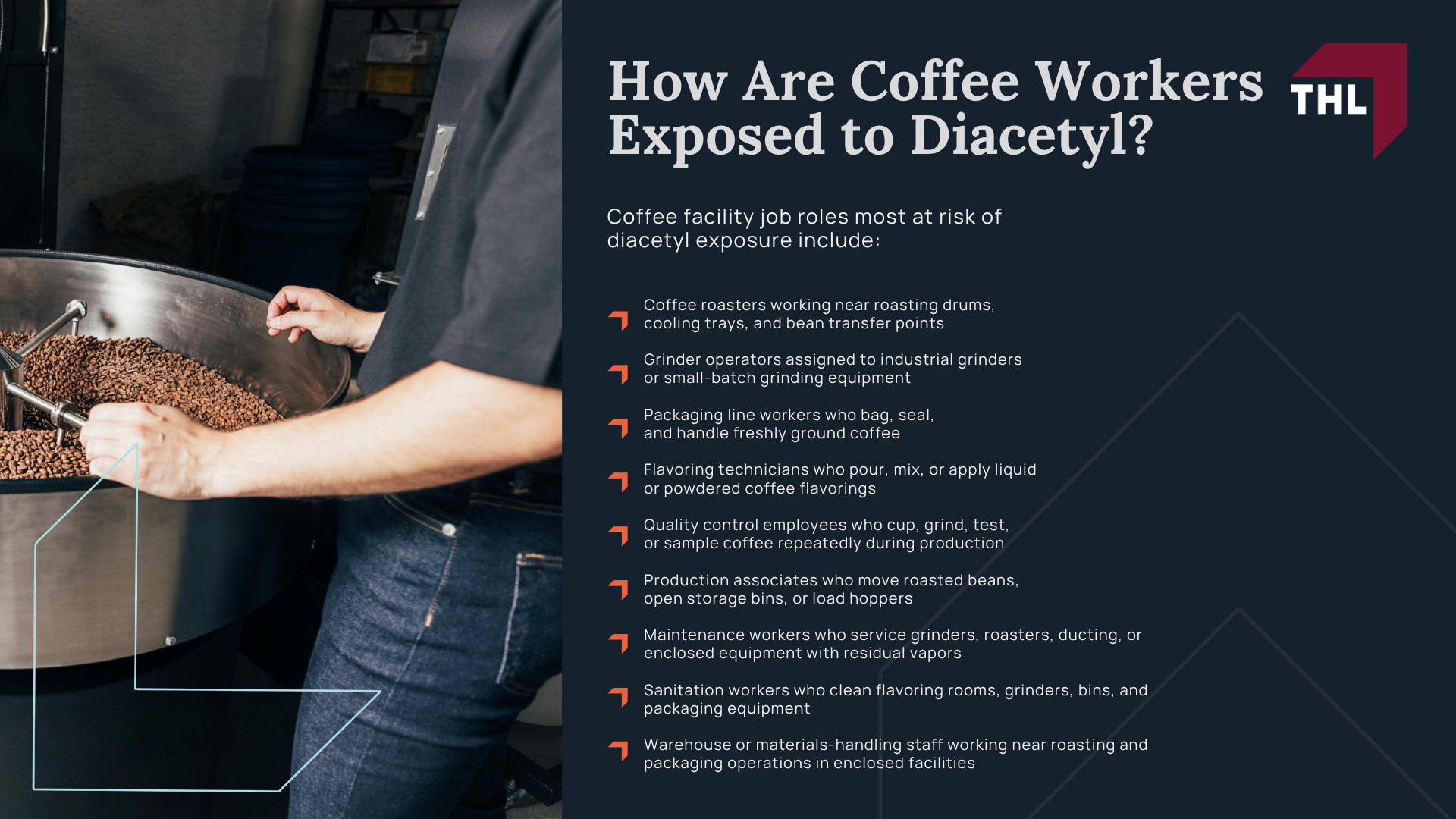
In coffee production, diacetyl may appear in two different ways: it can be added through flavorings used in flavored coffee products, and it can also be generated naturally during the roasting and grinding of coffee beans.
The Centers for Disease Control and Prevention (CDC), the National Coffee Association, and the University of Washington all note that roasting coffee beans can produce diacetyl and the related compound 2,3-pentanedione as a natural byproduct of the coffee roasting process.
That means the concern in coffee facilities is not limited to butter-flavored coffee or specialty flavoring rooms.

NIOSH has warned that air sampling in coffee plants should focus on roasting, grinding, opening storage bins, pouring and adding flavorings, and packaging because those tasks can create meaningful airborne concentrations in production areas and packaging areas.
In other words, workers may face exposure even in facilities that do not resemble classic flavoring manufacturing plants.
The legal and medical concern is inhalation.
Diacetyl may be acceptable to eat in food, but breathing repeated concentrations of flavoring emissions or roasting emissions is a different issue, especially in enclosed workspaces with poor ventilation or heavy production demands.
CDC states that workers exposed to diacetyl and similar chemicals are at risk of severe respiratory impairment, and studies in coffee facilities have linked those exposures to tasks involving roasting, grinding, packaging, and flavoring.
How Diacetyl Can Be Created During Roasting and Grinding Coffee Beans
Diacetyl is a natural byproduct of coffee roasting formed via the Maillard reaction, a chemical reaction between the beans’ sugars and amino acids.
Diacetyl is often most concentrated in fresh, dark-roasted ground coffee.
Darker and especially flavored coffees tend to have higher levels of diacetyl.
The concentration and exact volatile organic compounds (VOCs) released during coffee roasting depend on the roasting temperature, duration, coffee bean variety, and grinding process.
NIOSH-backed research states that both compounds are natural byproducts of roasting and are emitted during roasting, grinding, and packaging whole bean and ground coffee, which means exposure can occur even in facilities that do not add flavorings.
Grinding is especially important because breaking roasted beans apart can release trapped gases and create larger short-term emissions near equipment, and studies have found relatively high air concentrations during grinding, packaging, and flavoring tasks.
For coffee roasters and nearby production staff, that can mean low concentrations in some parts of a facility but large concentrations near grinders, open containers of roasted beans, and enclosed process points, with lower but still meaningful migration into other areas if ventilation and separation are weak.
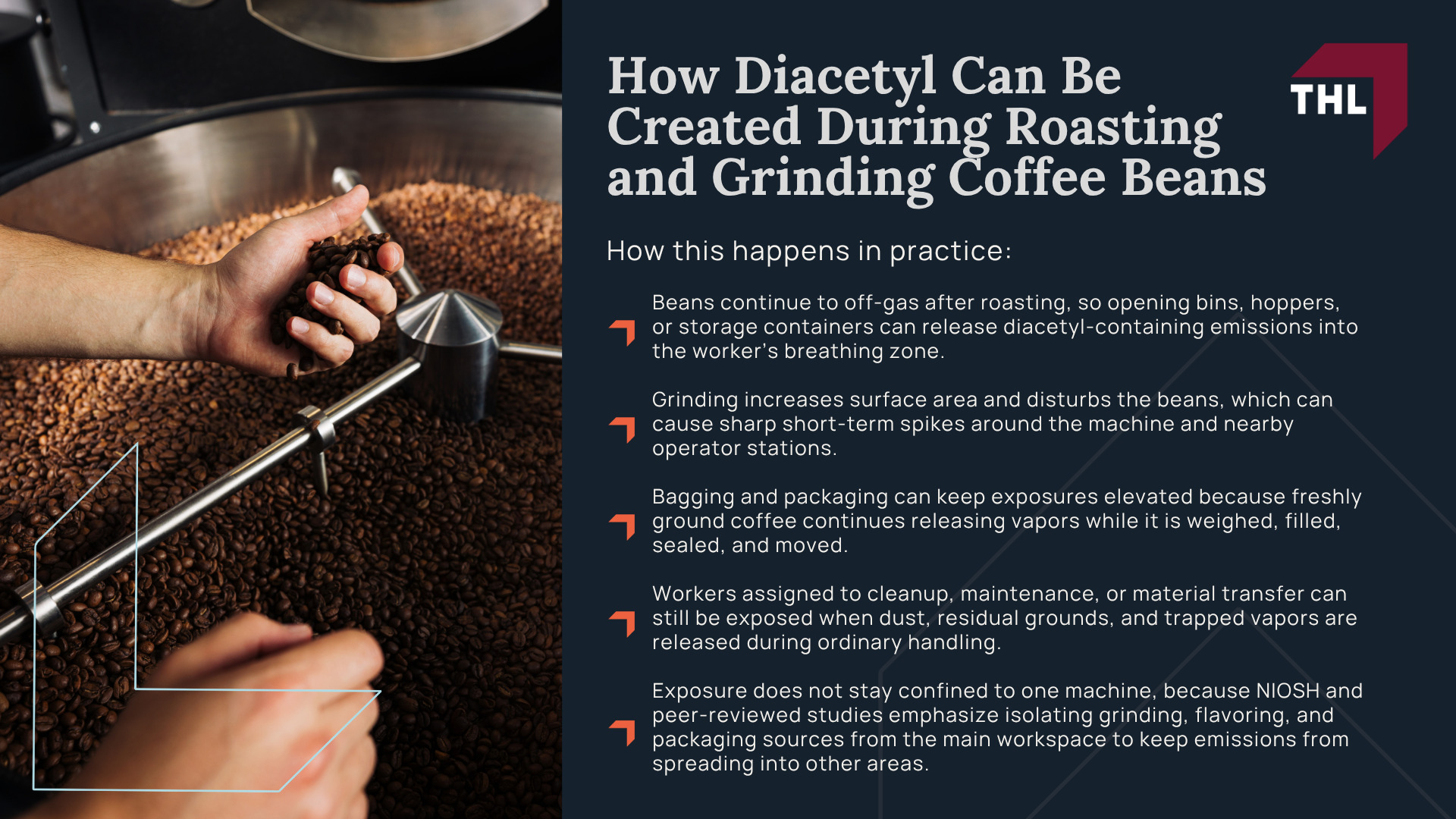
How this happens in practice:
- Beans continue to off-gas after roasting, so opening bins, hoppers, or storage containers can release diacetyl-containing emissions into the worker’s breathing zone.
- Grinding increases surface area and disturbs the beans, which can cause sharp short-term spikes around the machine and nearby operator stations.
- Bagging and packaging can keep exposures elevated because freshly ground coffee continues releasing vapors while it is weighed, filled, sealed, and moved.
- Workers assigned to cleanup, maintenance, or material transfer can still be exposed when dust, residual grounds, and trapped vapors are released during ordinary handling.
- Exposure does not stay confined to one machine, because NIOSH and peer-reviewed studies emphasize isolating grinding, flavoring, and packaging sources from the main workspace to keep emissions from spreading into other areas.
How Added Coffee Flavorings Can Increase Diacetyl Exposure Risks
Added coffee flavorings can increase diacetyl exposure risks because flavoring formulations often contain diacetyl and the related compound 2,3-pentanedione, both of which may be released into the air when workers pour, mix, or apply those ingredients to roasted beans.
NIOSH has specifically identified “pouring and adding flavorings” as a task that should be sampled in coffee facilities because it can create meaningful short-term exposure and help reveal where controls are needed.
In coffee roasting and flavoring plants, these exposures often rise in flavoring rooms and adjacent workstations where liquids or coatings are handled in open processes rather than sealed systems.
A 2025 NIOSH health hazard evaluation found that one of the three main diacetyl sources in a coffee roasting and packaging facility was flavoring chemicals added to roasted coffee beans in the flavoring area, alongside grinding emissions from unflavored coffee.
That matters because flavoring can add a second diacetyl source on top of the natural emissions already produced by roasting and grinding, which may increase the total airborne burden workers inhale during a shift.
For workers assigned to flavoring, packaging, or nearby production tasks, the risk is not limited to direct handling alone, since emissions can move through the facility if ventilation, isolation, and capture controls are weak.