Active Litigation
Polaris Off-Road Vehicle Injury Lawsuit Facts
TorHoerman Law is actively accepting claims for the Polaris Off-Road Vehicle Injury Lawsuit.


A Polaris off-road vehicle injury lawsuit may be filed when a defective Polaris ATV or UTV causes a fire, crash, or other incident that results in physical injury or property damage.
The Consumer Product Safety Commission (CPSC) has announced multiple Polaris recalls involving electrical shorts, fuel leaks, excessive heat, battery components, and other defects posing fire risks.
Depending on the evidence, an injured person may allege that Polaris failed to design the vehicle safely, identify a known hazard, issue adequate warnings, or act promptly after learning about dangerous incidents.
Product liability laws generally allow consumers to seek compensation when a defective product creates an unreasonable risk of harm and causes a preventable injury.
Potential claims may involve a design defect, manufacturing defect, failure to warn, negligence, breach of warranty, or wrongful death.
The specific legal theory depends on the recalled model, the component that failed, the circumstances of the incident, and the laws of the state where the injury occurred.
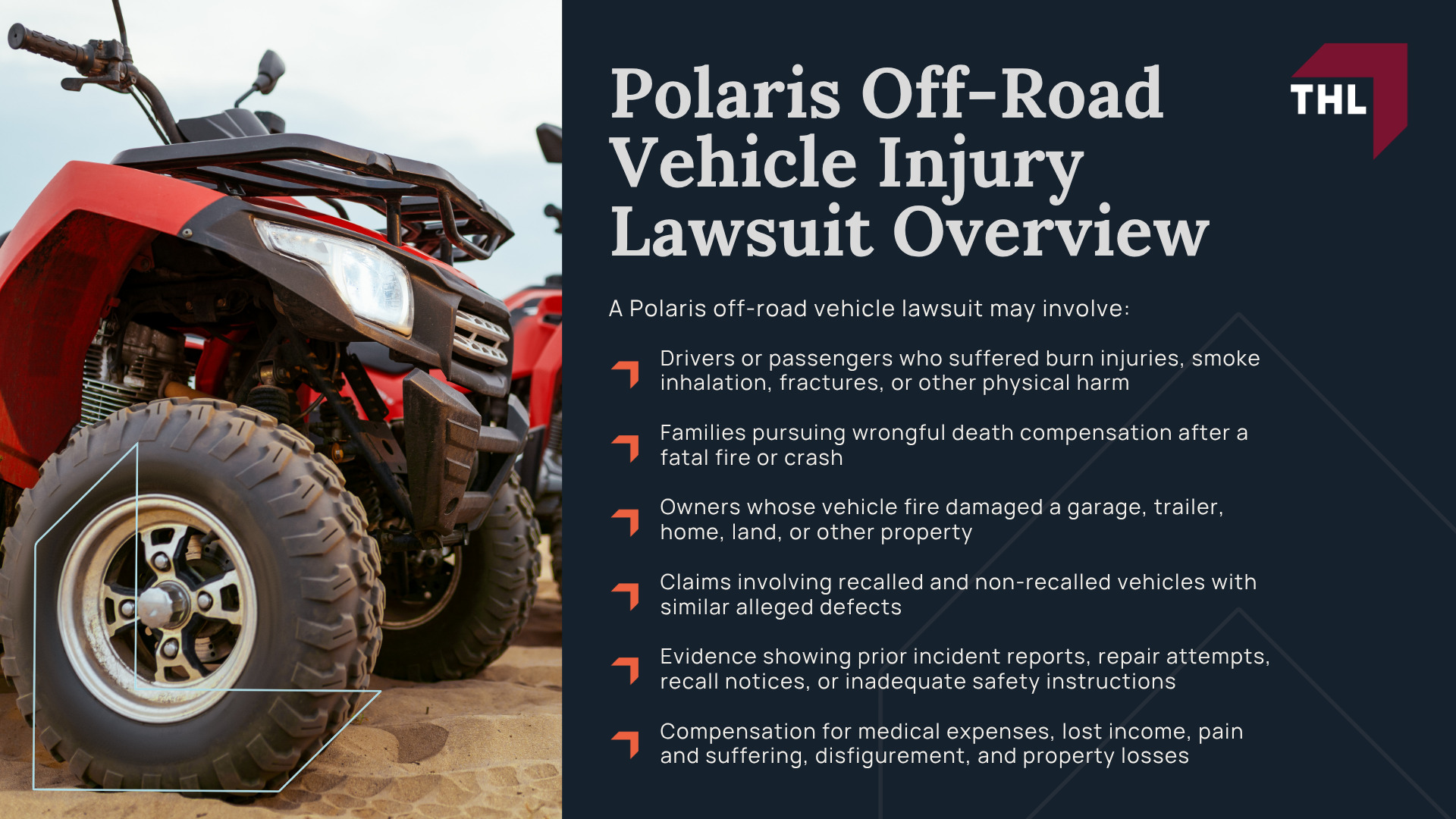
A Polaris off-road vehicle lawsuit may involve:
A recall alone does not automatically establish that Polaris is legally responsible for every fire or injury involving an affected vehicle.
Plaintiffs generally must connect the alleged defect to the incident and document the resulting injuries or financial losses.
A large corporation may dispute whether the vehicle was defective, argue that maintenance or modifications caused the failure, or challenge the value of the claimed damages.
Preserving the vehicle, damaged parts, photographs, medical records, and service history can help an attorney evaluate whether the available evidence supports a product liability claim.
Polaris Industries has issued multiple recalls involving Ranger, RZR, Sportsman, and other ATV models because electrical, fuel-system, braking, restraint, and drivetrain problems could cause fires or injuries.
Recall details published by the Consumer Product Safety Commission (CPSC) identify the affected model years, reported incidents, recommended remedies, and locations where owners can find the vehicle identification number.
On many Ranger vehicles, the VIN is printed on the left rear frame on the driver’s side under the cargo box.
Other recalls involve hazards near the battery, charging system, brakes, fuel tank, clutch, or engine compartment.
Owners should review the exact model and VIN because a recall may cover only certain vehicles even when the manufacturer sold many similar models during the same period.
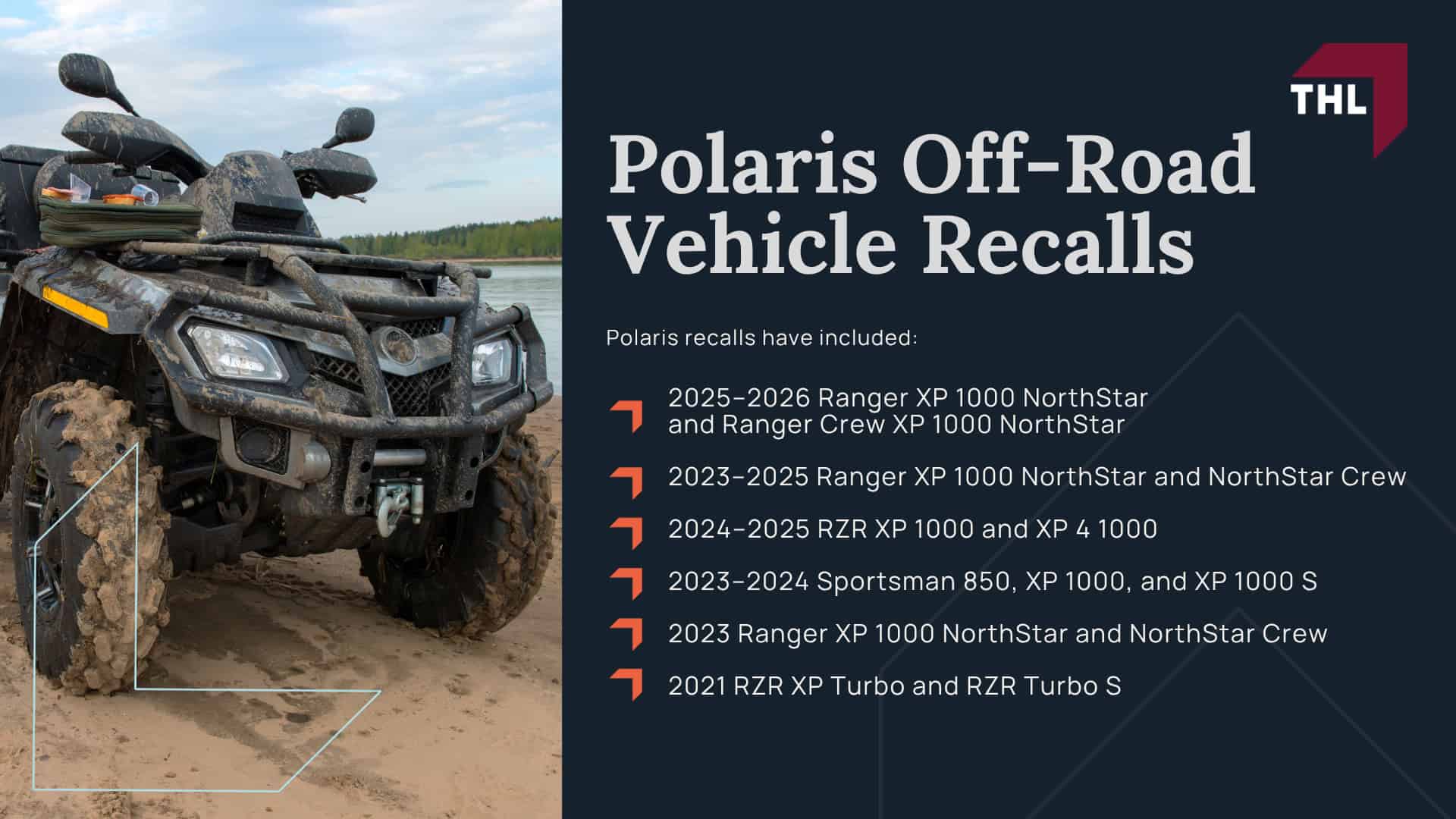
Polaris recalls have included:
A recalled vehicle should not be used contrary to CPSC or company instructions, and owners should contact an authorized Polaris dealer about the recommended inspection or repair.
Participating in a recall does not necessarily resolve a personal injury or property damage claim arising from a fire, crash, or component failure.
Anyone injured should preserve the vehicle and failed parts, photograph the damage, retain purchase and repair records, and speak with a product liability lawyer before allowing the vehicle to be altered or discarded.
Owners can check whether a vehicle has been recalled by locating the vehicle identification number and entering it into the recall search tool on the Polaris Industries Inc. website.
The VIN location varies by model, but Ranger owners may find it on the left rear frame beneath the cargo box.
Consumers can also search the Consumer Product Safety Commission recall database by entering the model name, model year, or manufacturer.
Recall notices explain the defect, affected vehicles, reported incidents, and the repair or replacement offered to owners.
Owners who experience a fire, electrical problem, fuel leak, brake failure, or another safety issue can report defects to Polaris and the CPSC.
Reporting a problem in a timely manner creates a record of the incident and may help regulators identify hazards affecting other vehicles.
Polaris off-road vehicles can expose occupants to fire, crash, ejection, and rollover hazards when a fuel, electrical, braking, restraint, or structural component fails.
A Polaris fire may begin near the battery, wiring, fuel system, charging components, or engine compartment and can spread quickly once flames reach plastic panels, fuel, clothing, or nearby property.
Drivers and passengers may suffer injuries during the initial accident, while attempting to escape, or after the vehicle overturns and traps an occupant.
ATV accidents and rollover cases can also cause blunt-force trauma even when no fire occurs.
Serious injuries may require surgery, hospitalization, ongoing rehabilitation, and physical therapy.
Psychological trauma can continue after the physical injuries heal, particularly when an occupant witnessed an explosion, became trapped, or feared that another person would not escape.
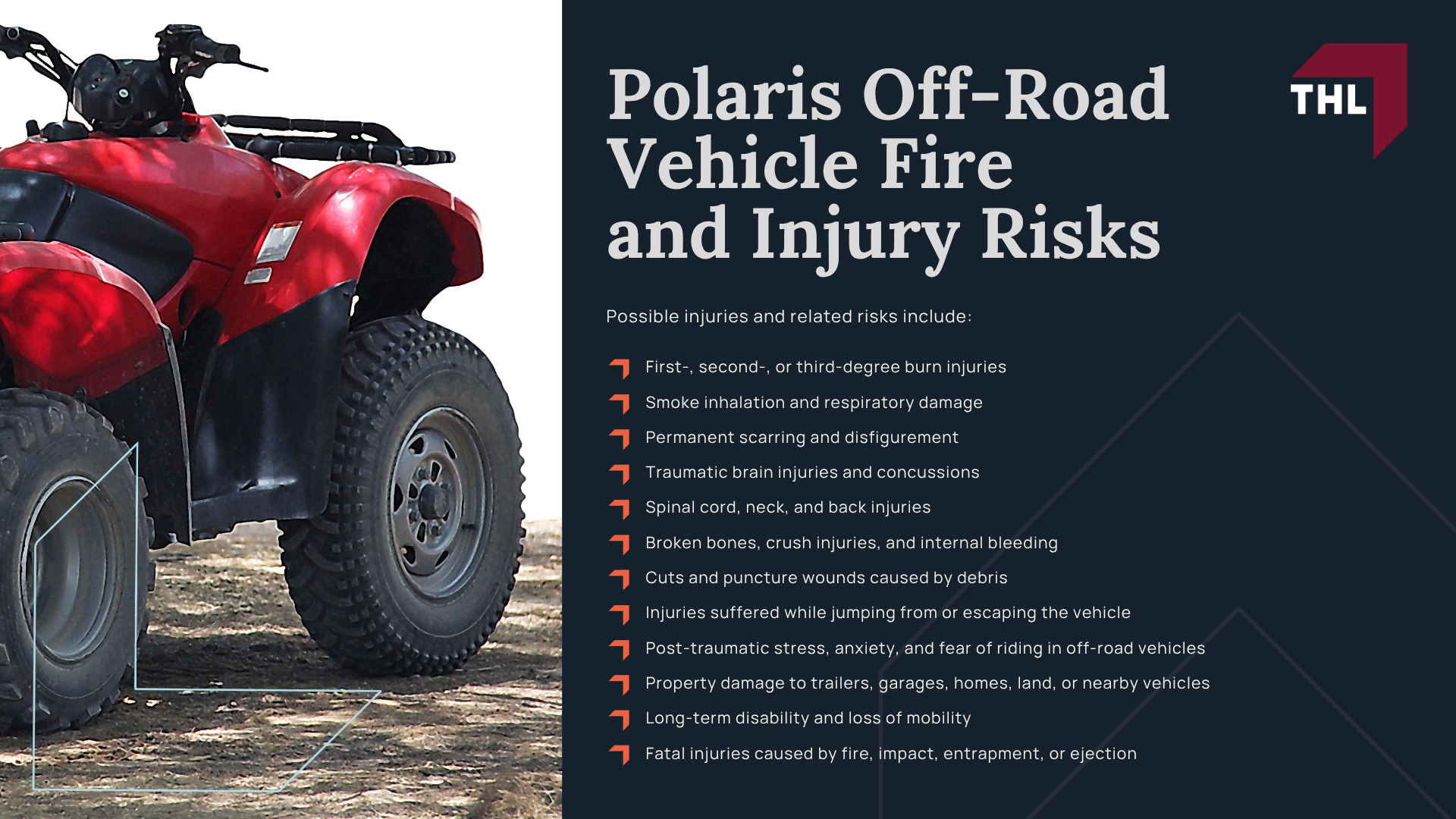
Possible injuries and related risks include:
Burns and orthopedic injuries may require skin grafts, reconstructive procedures, assistive devices, or years of follow-up care.
Lost income and reduced earning capacity may become significant when injuries prevent a person from returning to work or performing the same job duties.
The severity of an injury claim depends on how the accident occurred, which component failed, the treatment required, and whether the condition caused permanent limitations.
Preserving the vehicle, photographs, medical records, fire reports, and repair history can help establish how the incident occurred and document its long-term consequences.
Drivers, passengers, vehicle owners, and bystanders may be able to file a Polaris off-road vehicle lawsuit when a defective component, fire, rollover, or crash causes injury or property damage.
Polaris faces multiple lawsuits linked to rollover accidents, fires, and alleged product defects involving certain Ranger, RZR, and other off-road vehicles.
A personal injury claim may be available when evidence shows that a design defect, manufacturing problem, inadequate warning, or negligent repair contributed to the incident.
Negligent driving can also lead to liability claims against other drivers when their actions caused or contributed to the accident and resulting damages.
Surviving family members can file wrongful death lawsuits for fatalities in Polaris incidents, subject to the laws governing who may bring the claim in each state.
Filing deadlines for personal injury lawsuits vary across states, typically ranging from one to four years, although statutes of repose and other rules may shorten or alter the available time.
Legal counsel is recommended for complex product liability cases against manufacturers because preserving the vehicle, identifying the responsible parties, and proving causation often require technical investigation and expert analysis.
Evidence can determine whether a Polaris injury lawsuit establishes that a vehicle defect caused the fire, crash, rollover, or other harmful incident.
Product liability claims often require technical proof connecting the failed component to the injuries and financial losses sustained.
Polaris and its insurers may argue that driver error, poor maintenance, aftermarket modifications, or misuse caused the accident.
Preserving the vehicle and related records before repairs, disposal, or alteration can give engineers and other experts an opportunity to inspect the alleged defect.
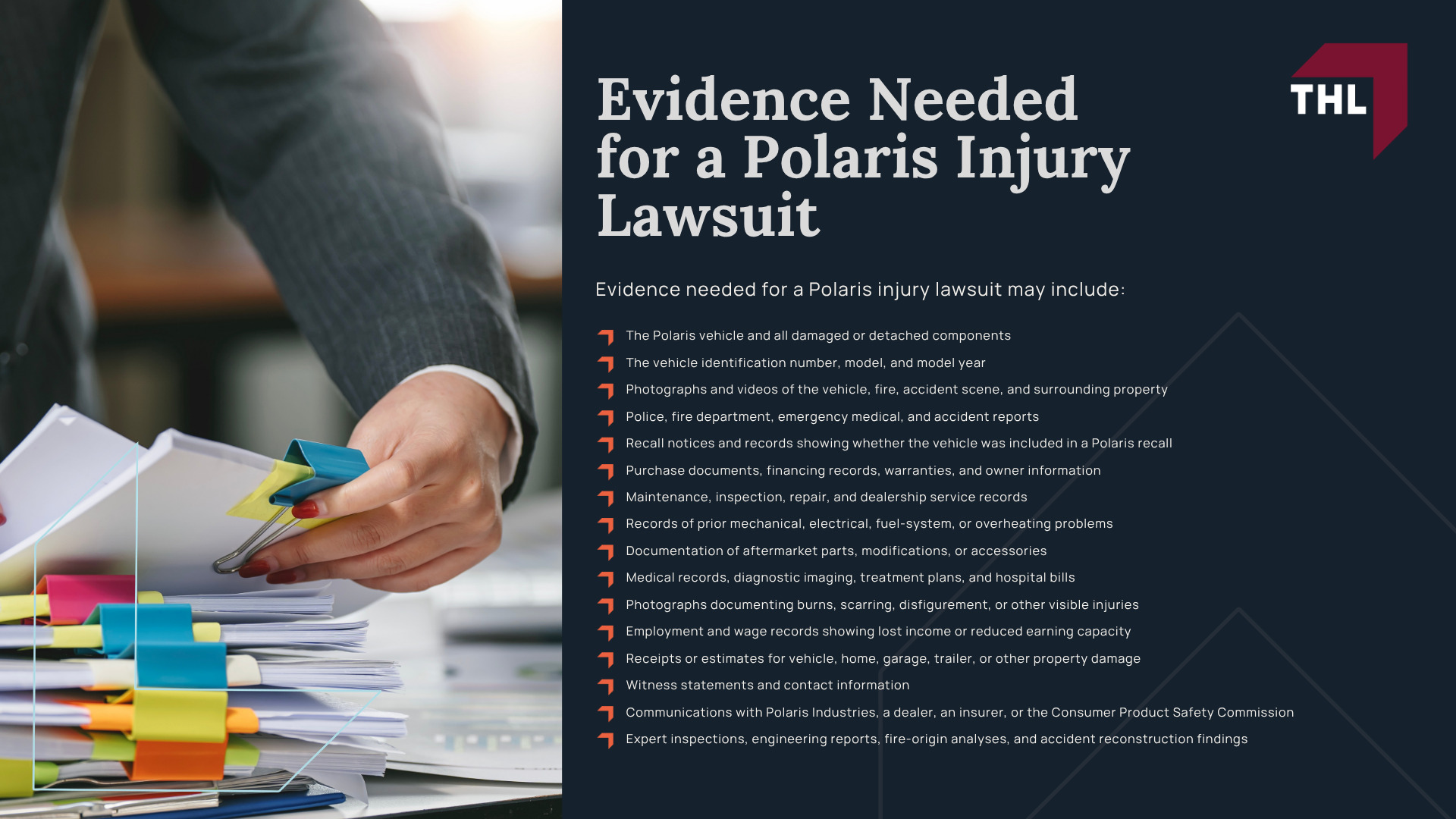
Evidence needed for a Polaris injury lawsuit may include:
Damages refer to the financial and personal losses caused by a defective off-road vehicle, fire, rollover, or related accident.
Lawyers assess Polaris UTV or Polaris ATV lawsuit claims by reviewing medical records, employment information, expert reports, property damage, and the long-term effects of the injuries.
An experienced attorney may work with a legal team that includes medical, economic, vocational, and engineering experts to calculate past losses and estimate future medical care or reduced earning capacity.
The amount of maximum compensation available depends on the severity of the injuries, the strength of the evidence, applicable state law, available insurance or assets, and whether punitive damages may be supported.
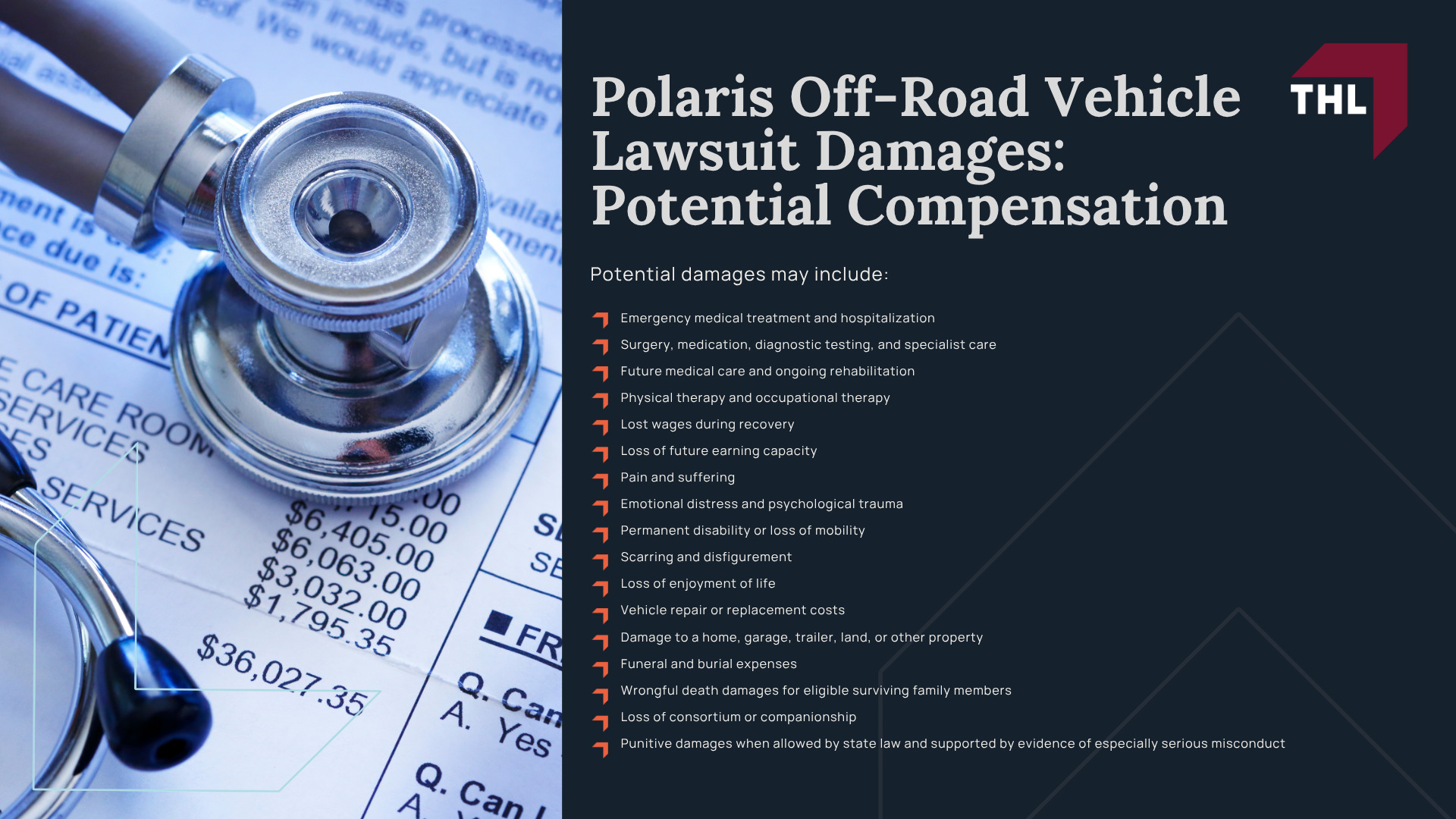
Potential damages may include:
A Polaris off-road vehicle fire, rollover, or component failure can leave injured drivers and passengers facing medical treatment, lost income, permanent scarring, and long-term uncertainty.
TorHoerman Law can investigate whether a recalled vehicle, design defect, manufacturing problem, or inadequate warning contributed to the incident and resulting injuries.
Our legal team can preserve critical evidence, review recall and repair records, consult qualified experts, and pursue compensation from Polaris Industries and any other responsible parties.
Polaris injury cases are handled on a contingency fee basis, which means you do not pay legal fees unless compensation is recovered.
Contact TorHoerman Law for a free consultation about a Polaris off-road vehicle injury lawsuit.
Use the chat feature on this page to find out if you qualify instantly.


