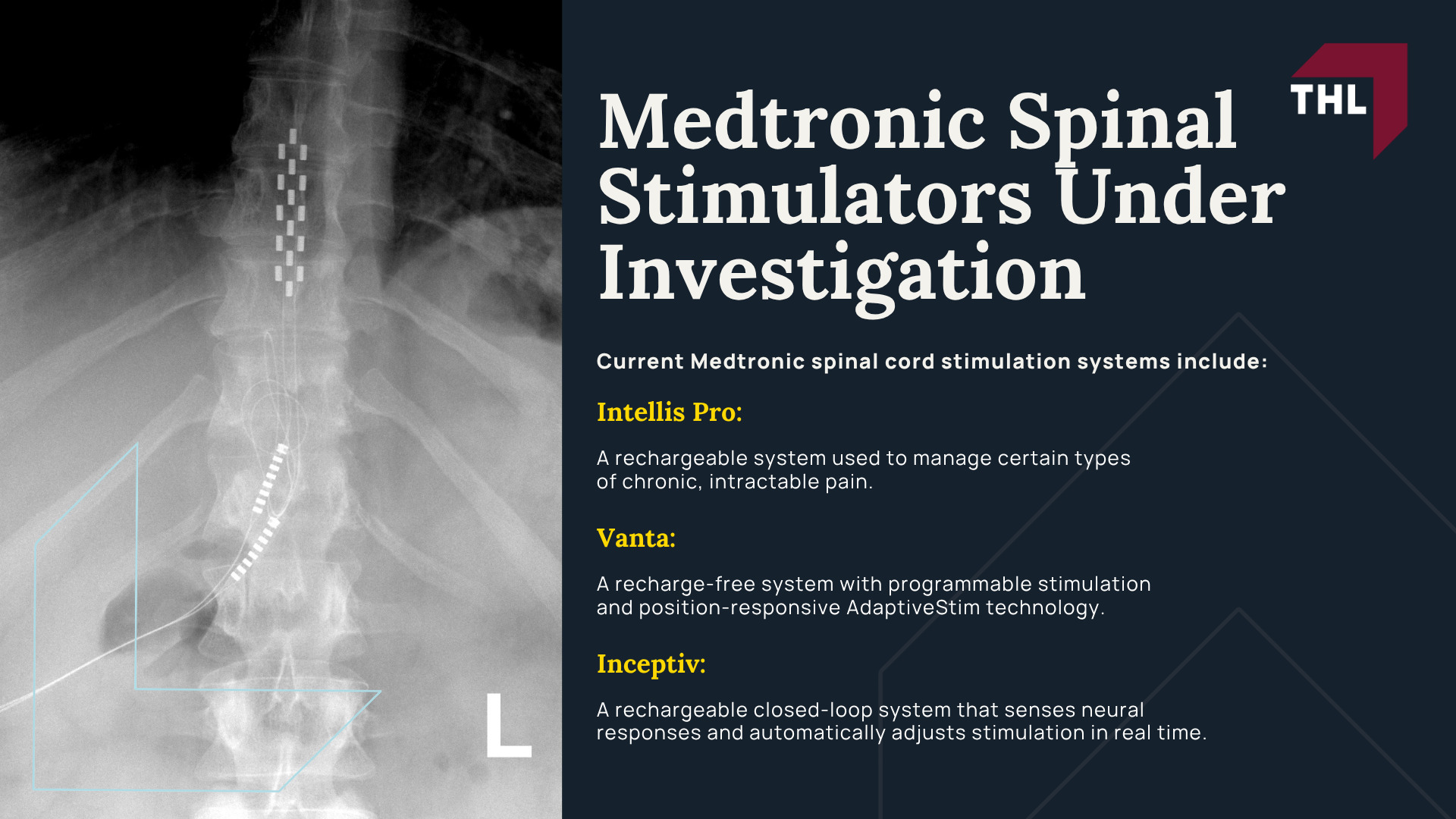
Medtronic spinal cord stimulator lawsuits allege that certain Intellis, Vanta, Restore, and related spinal cord stimulator systems malfunctioned or caused serious injuries after implantation.
A patient may receive a spinal cord stimulator implanted after medications, physical therapy, surgery, and other treatments fail to provide adequate relief.
The device sends electrical stimulation near the spinal cord to modify or block pain signals, but some patients report unsatisfactory pain relief, abnormal stimulation, or worsening symptoms after receiving the permanent implant.
Recent complaints allege that Medtronic introduced substantial changes to later device generations through supplements to the original regulatory approval without sufficient new clinical testing.
Plaintiffs claim that changes involving leads, batteries, charging functions, software, programming, and stimulation waveforms contributed to device failure or other spinal cord stimulator complications.
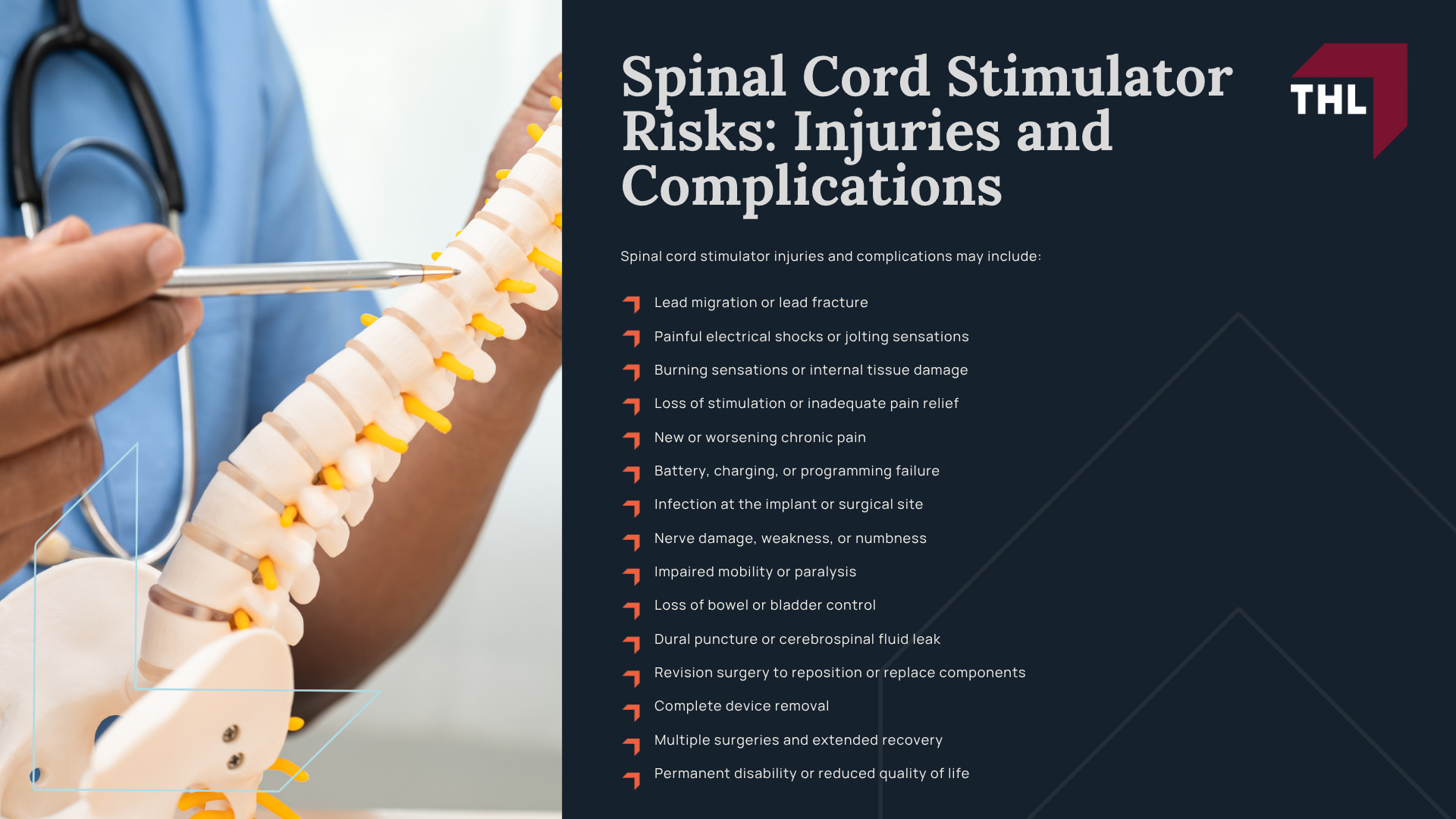
Patients pursuing a defective medical device lawsuit may allege that a Medtronic system caused burning sensations, painful electrical shocks, lead migration, loss of stimulation, or new nerve pain.
More serious claims may involve neurological injury, weakness, mobility limitations, or loss of bowel or bladder control.
When reprogramming does not correct the problem, patients may require revision procedures, replacement of device components, complete device removal, or multiple surgeries.
Each claim depends on the exact Medtronic system implanted, the alleged defect, the patient’s medical history, and evidence connecting the device to the resulting injuries.
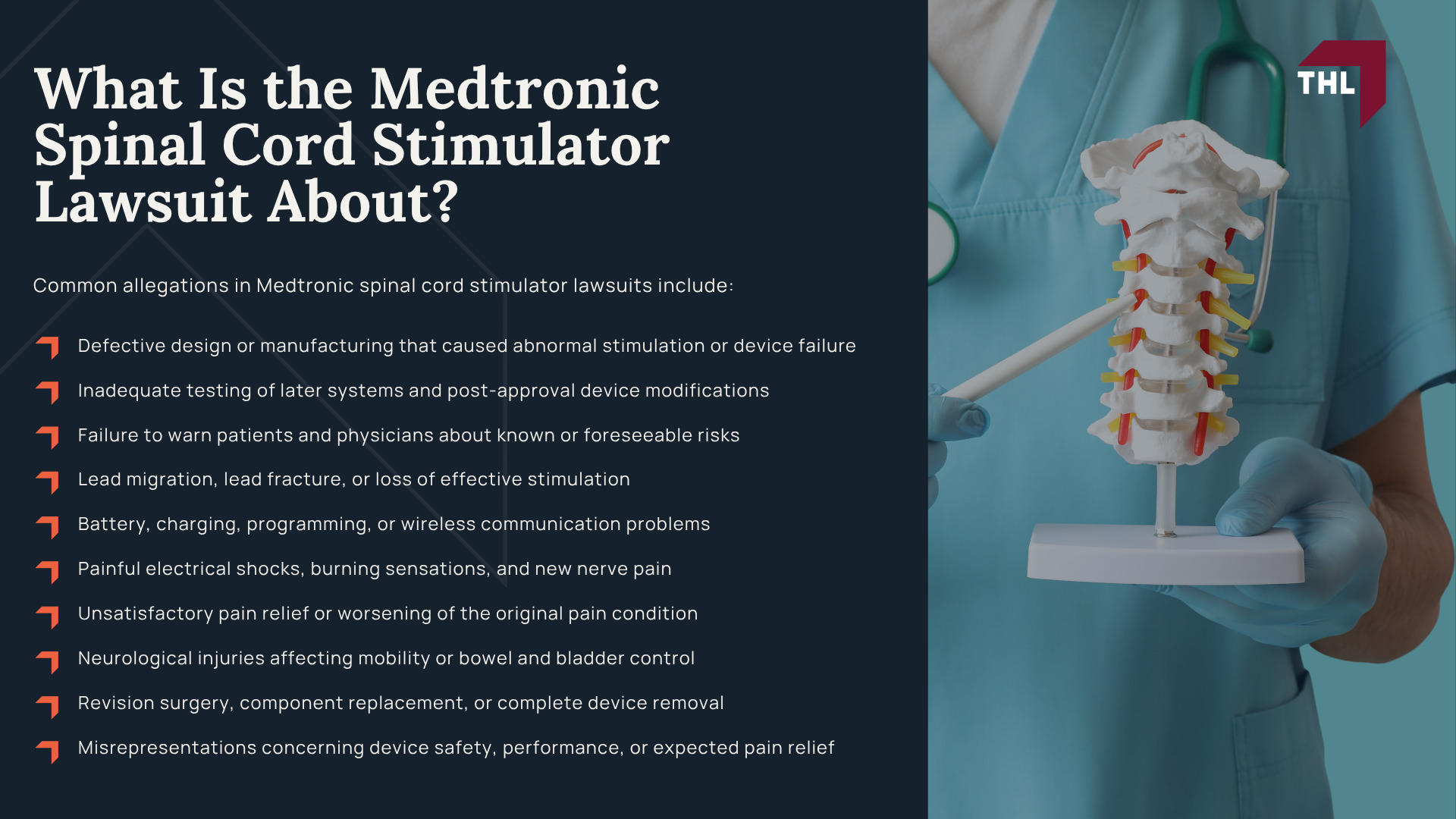
Common allegations in Medtronic spinal cord stimulator lawsuits include:
- Defective design or manufacturing that caused abnormal stimulation or device failure
- Inadequate testing of later systems and post-approval device modifications
- Failure to warn patients and physicians about known or foreseeable risks
- Lead migration, lead fracture, or loss of effective stimulation
- Battery, charging, programming, or wireless communication problems
- Painful electrical shocks, burning sensations, and new nerve pain
- Unsatisfactory pain relief or worsening of the original pain condition
- Neurological injuries affecting mobility or bowel and bladder control
- Revision surgery, component replacement, or complete device removal
- Misrepresentations concerning device safety, performance, or expected pain relief
Medtronic Spinal Cord Stimulator Lawsuit Status
Medtronic lawsuits are proceeding separately and are not included in Boston Scientific MDL 3181.
Six Medtronic actions were reported to the JPML during the original spinal cord stimulator litigation, but the Panel declined to create one industrywide MDL involving competing medical device companies because their products, regulatory histories, records, and alleged defects involve different factual questions.
No nationwide Medtronic spinal cord stimulator MDL has been established as of writing.
Patients who suffered complications may still file individual claims based on the Medtronic device implanted, the alleged defect, the medical treatment required, and the applicable filing deadline.