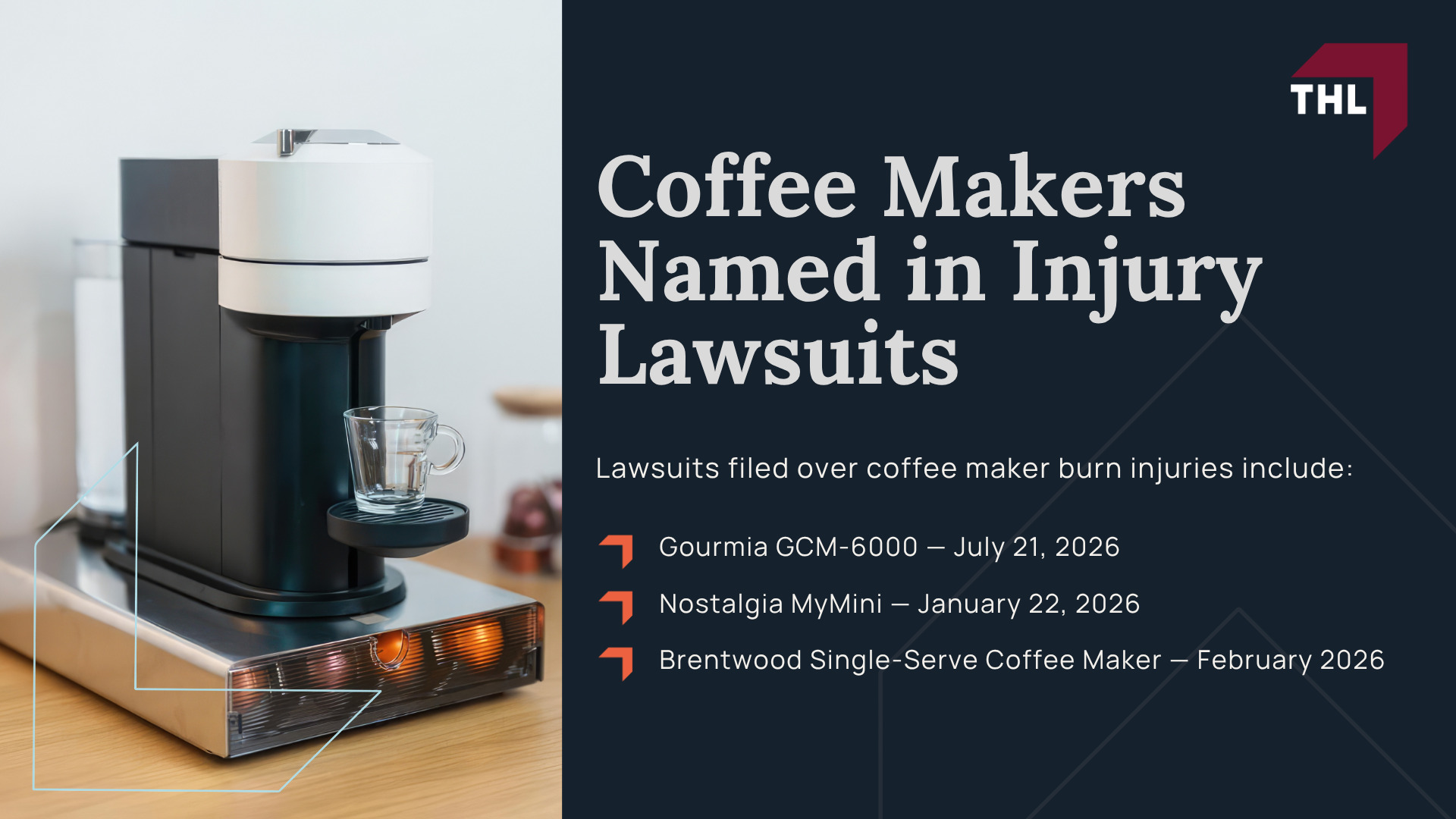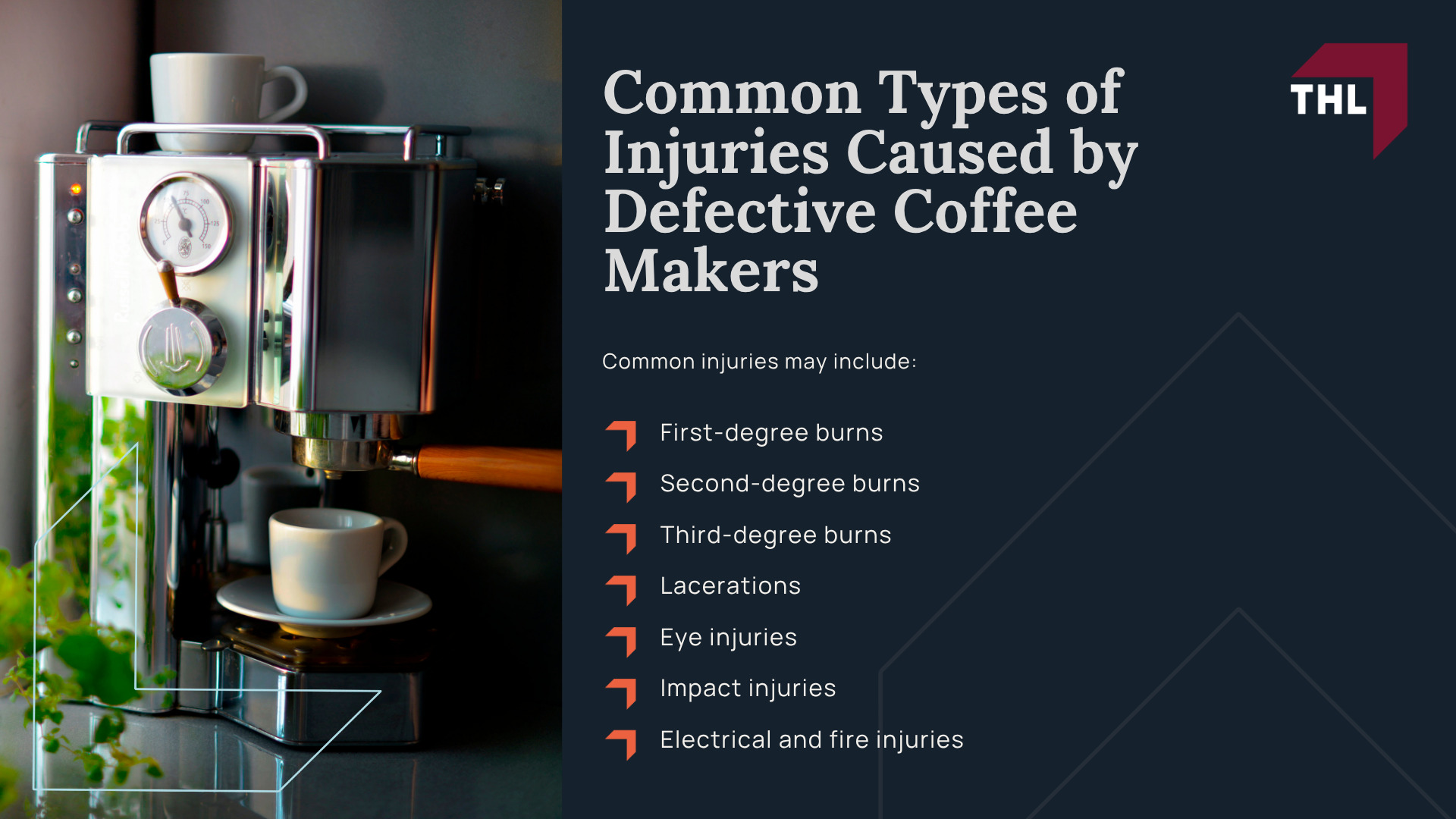
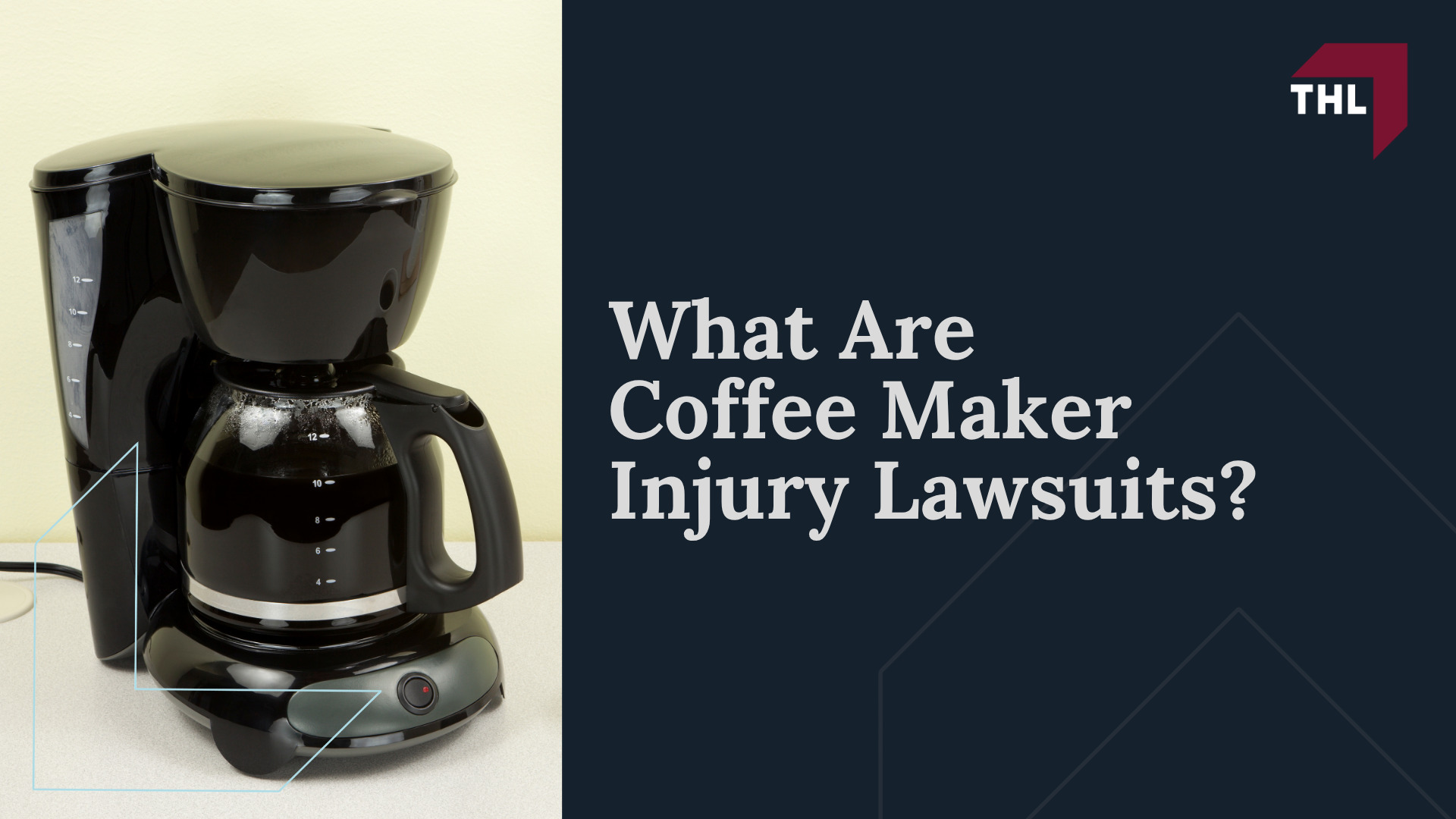
Coffee maker injury lawsuits are product liability claims filed after a defective machine causes burns, cuts, impact injuries, fires, or other harm.
Although coffee makers are common consumer products, they can become dangerous when pressure builds inside the brewing system, glass carafes break, electrical components overheat, or internal failures begin causing hot liquid or steam to escape toward the user.
Claims may involve design defects, manufacturing defects, or a manufacturer’s failure to provide adequate warnings and instructions for safe operation.
Injured consumers may pursue claims against manufacturers, importers, distributors, retailers, or other companies responsible for placing the product into the stream of commerce.
A coffee maker does not need to be recalled before an injured person can file a lawsuit, but recall records and prior incident reports may provide important evidence of a known hazard.
Each case depends on how the machine failed, whether it was being used in a reasonably foreseeable manner, and whether the defect directly caused the injuries.
When a Coffee Maker May Be Considered Defective
A coffee maker may be considered defective when its design, construction, or warnings make it unsafe during normal or reasonably foreseeable use.
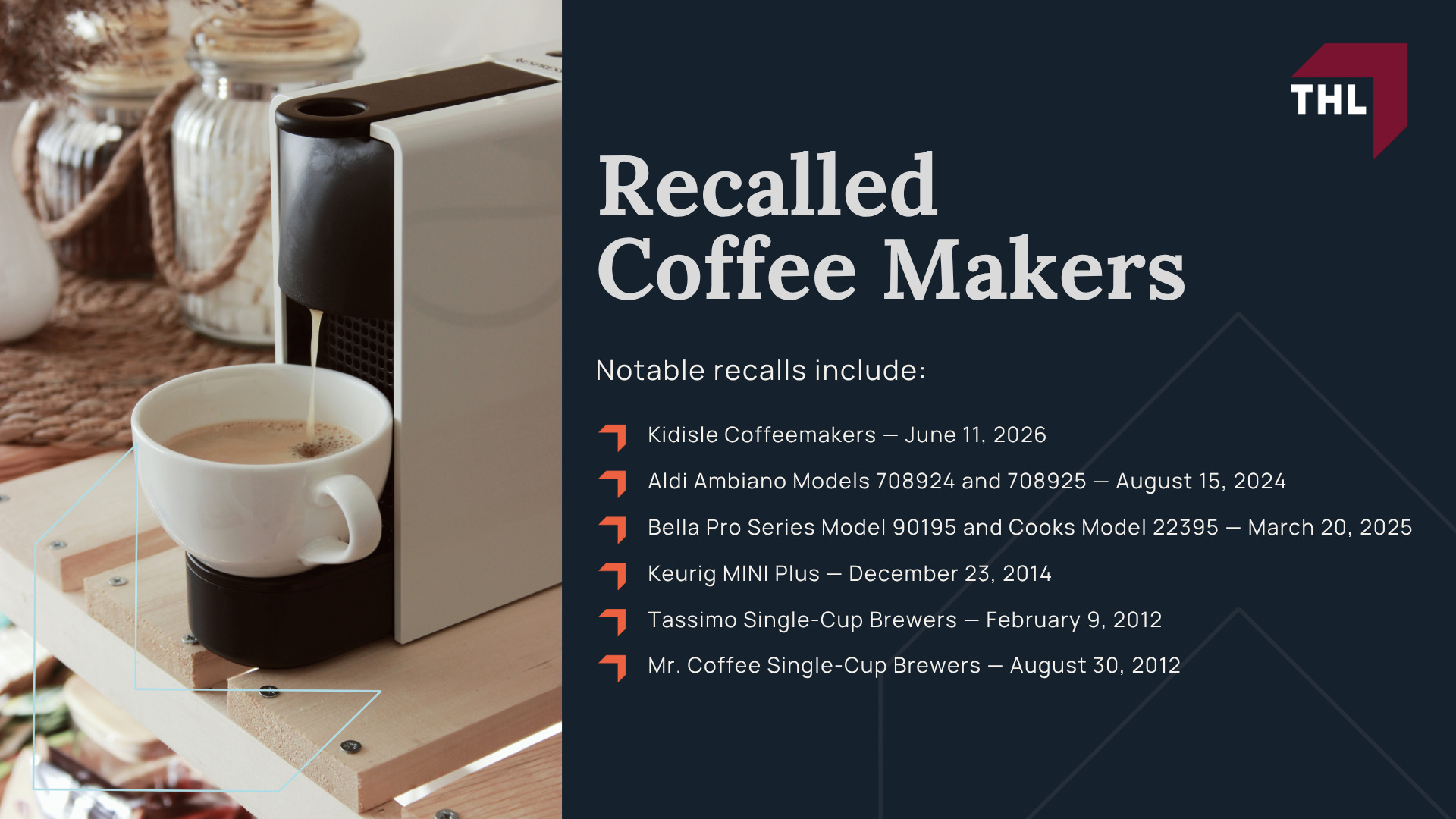
Defective coffee makers have led to the recall of thousands of machines because of burn risks associated with coffeemakers releasing hot liquid, steam, or pressurized components.
Product liability actions may be based on negligence or strict liability, depending on the applicable state law and the facts of the case.
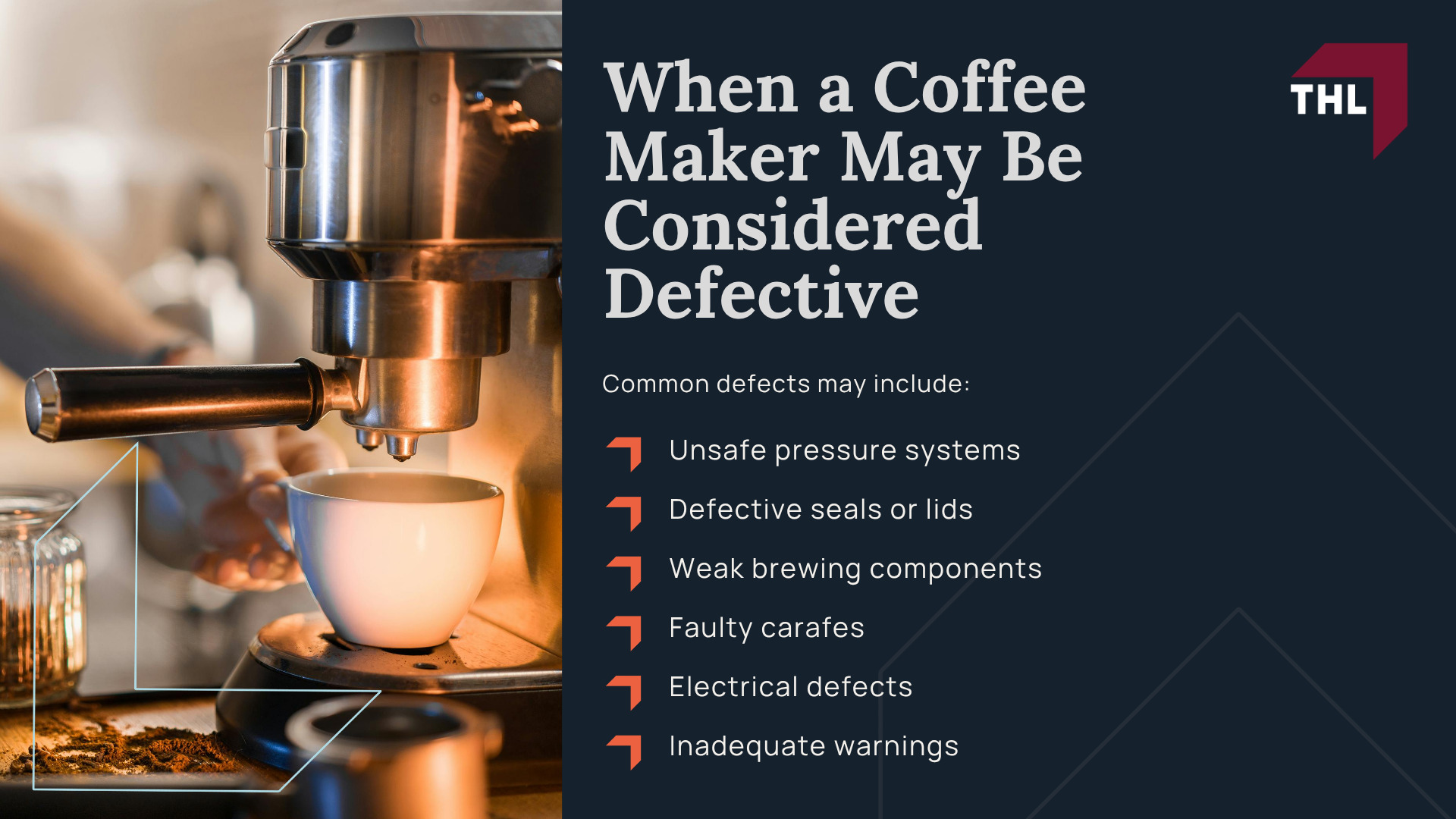
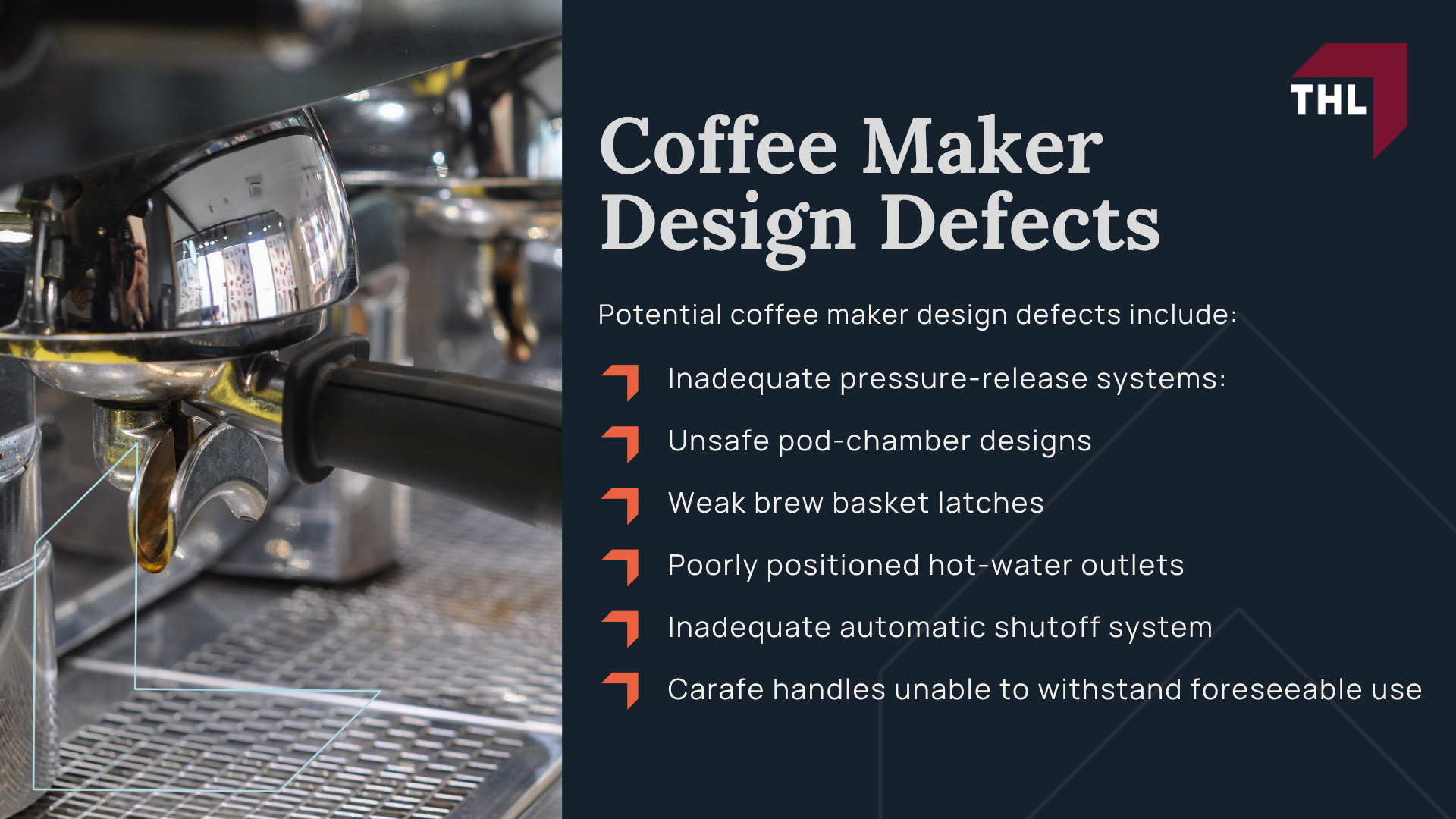
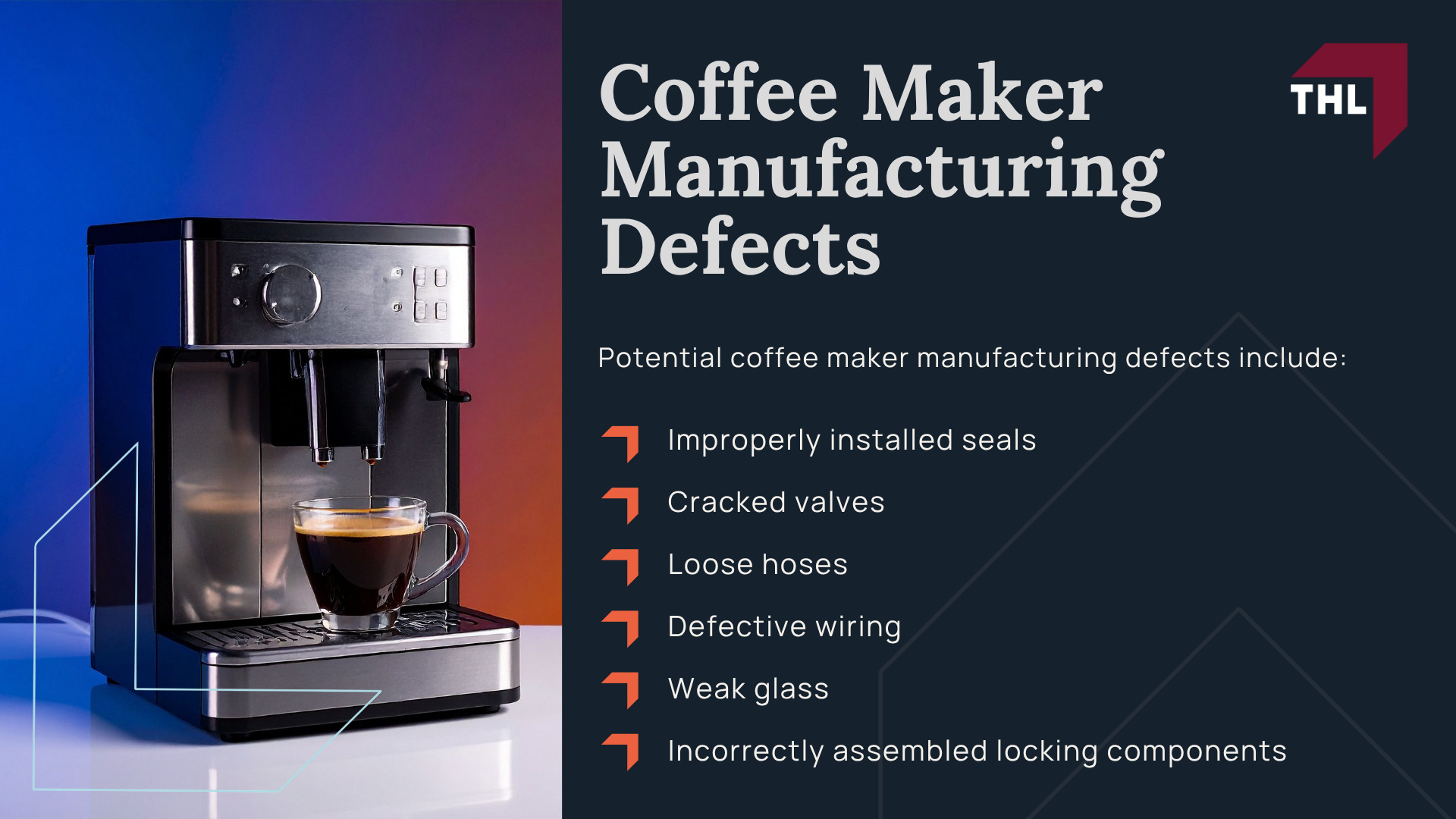
Common defects may include:
- Unsafe pressure systems: Clogged water lines, defective valves, or inadequate pressure-release features can allow hot liquid and steam to build up inside the machine.
- Defective seals or lids: Failed seals, caps, or locking mechanisms may allow boiling water or steam to escape toward the user.
- Weak brewing components: Pod holders, brew baskets, or handles may detach or eject during operation.
- Faulty carafes: Glass carafes may shatter, or their handles may separate while filled with hot coffee.
- Electrical defects: Faulty wiring, thermostats, or heating elements may cause overheating, electrical burns, or fires.
- Inadequate warnings: Instructions may fail to explain known risks involving clogging, pressure buildup, compatible pods, or safe cleaning procedures.
Coffee Maker Malfunctions Versus Ordinary Coffee Spills
A coffee maker injury claim generally involves a machine that failed to contain or direct hot water, steam, or coffee as intended.
An ordinary spill may occur when someone drops a cup, tips a carafe, or mishandles cupped or ground coffee without any defect in the appliance.
By contrast, a product-related injury may result when the machine sprays hot liquid, ejects a brewing component, breaks a carafe, or releases pressure during normal use.
Manufacturers are not automatically responsible for every injury involving hot coffee.
A successful product liability claim must connect the injury to a defect in the coffee maker rather than to the ordinary risks of handling a hot beverage.
Coffee Maker Claims Are Usually Product-Specific
Coffee maker injury claims usually focus on a particular brand, model, defect, and incident rather than every machine sold by an industry.
Different products may fail because of separate problems involving pressure buildup, defective seals, broken carafes, faulty wiring or power cord, or inadequate warnings.
A recall involving one model does not establish that every coffee maker produced by the same company is defective.
The manufacturer, importer, distributor, and retailer may also differ from one product to another.
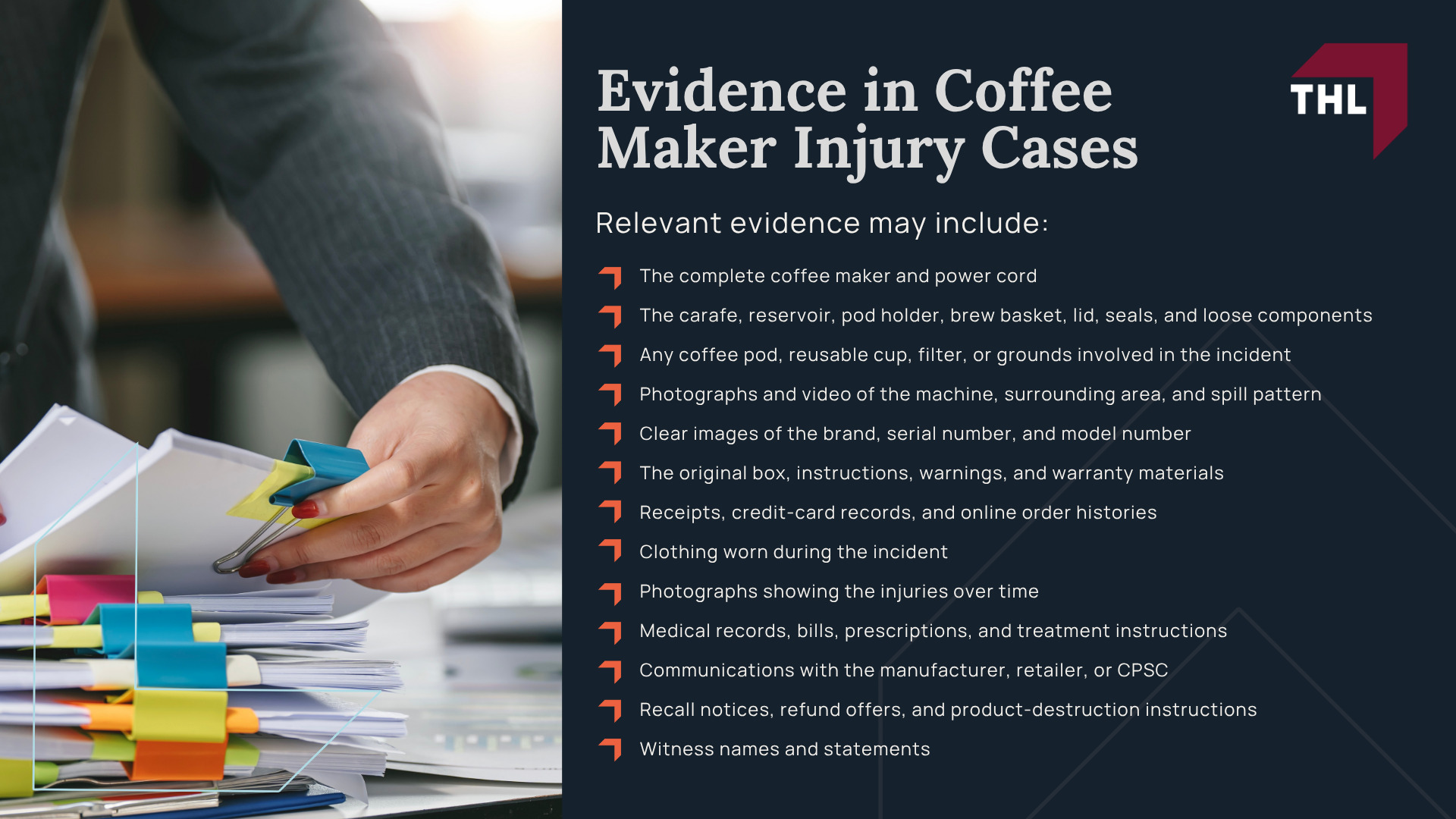
Attorneys must examine the machine’s design, manufacturing history, prior complaints, recall status, and the circumstances surrounding the injury.
These product-specific facts determine which companies may be liable and which legal claims may apply.