Active Litigation
LINX Reflux Device Lawsuit Facts
TorHoerman Law is investigating claims for the LINX Reflux Device Lawsuit.

LINX reflux device lawsuits allege that manufacturing defects allowed components of the implanted system to separate, shift, or lose the closed ring shape required for normal function.
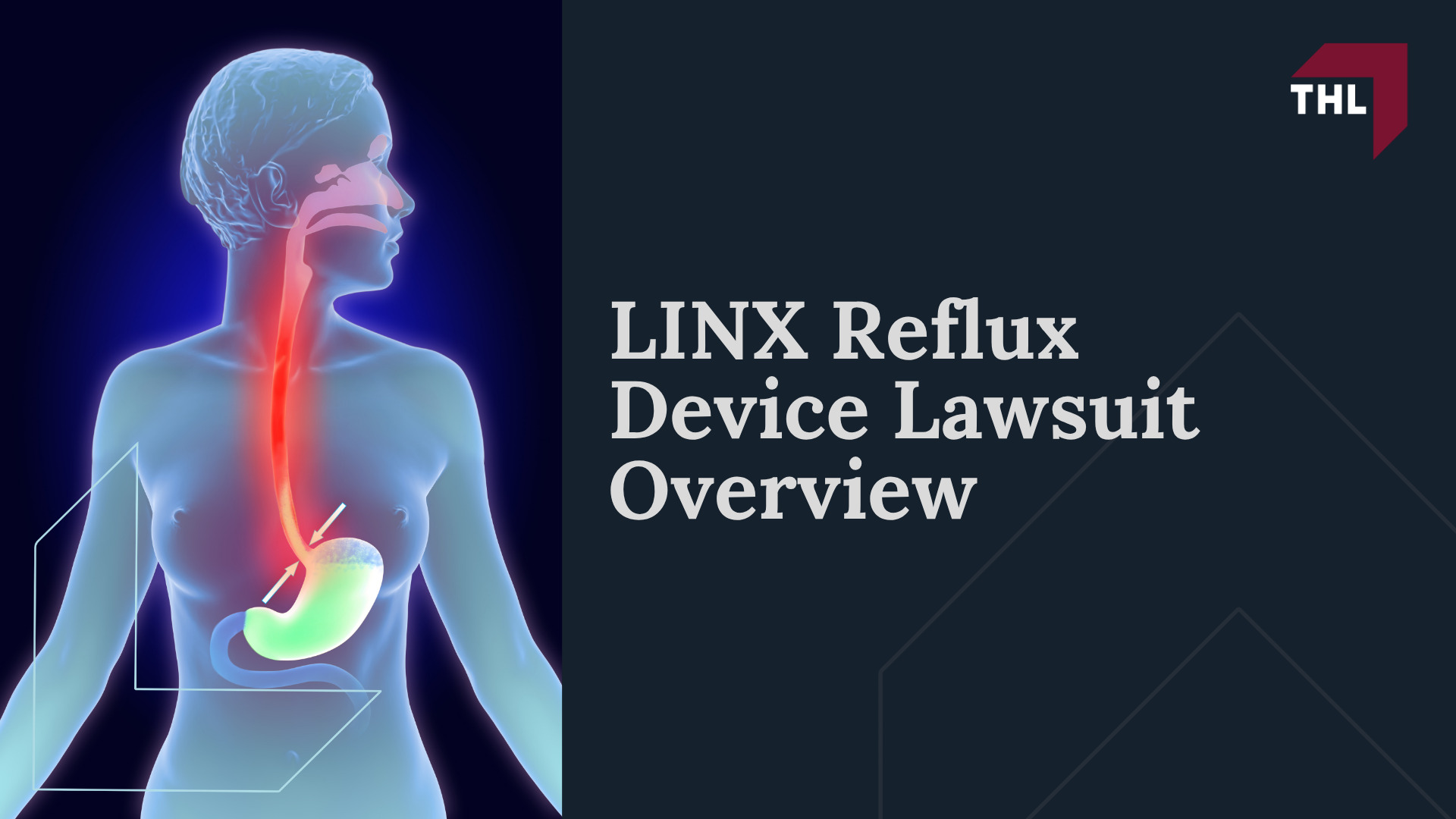
The medical device is designed to treat gastroesophageal reflux disease (GERD) by placing a flexible band of titanium beads around the lower esophageal sphincter.
Magnetic force keeps the ring closed between swallows, which is intended to prevent stomach contents and acid reflux from moving back into the esophagus.
A mechanical failure can leave an open LINX device that no longer provides the pressure needed to control reflux.
Patients reported renewed heartburn, throat regurgitation, difficulty swallowing, chest discomfort, and severe pain after a LINX device implanted during laparoscopic surgery allegedly failed.
Some experienced symptoms that were different from, or more severe than, the problems present before surgery.
Recurrent acid exposure may irritate the esophagus, while broken or displaced components can create separate safety risks at the implant site.
Medical evaluations may reveal an open ring, shifted titanium beads, scar tissue, inflammation, or damage requiring removal of the device.
Device erosions present another serious complication.
Erosion occurs when part of the implant wears into or through esophageal tissue, which may cause pain, swallowing problems, bleeding, infection, or the need for additional surgery.
Lawsuits also describe patients who suffered injuries after the device migrated or separated and no longer remained properly positioned around the lower esophageal sphincter.
Current product liability cases examine whether recalled or nonconforming LINX devices departed from approved manufacturing specifications and whether inadequate quality controls allowed defective products to reach patients.
The existence of these claims does not establish that every LINX implant is defective or unsafe.
Each case depends on the implanted model and lot, imaging findings, operative records, explant evidence, and the medical connection between the alleged failure and the patient’s injuries.
The LINX Reflux Management System is intended to reduce acid reflux by reinforcing the lower esophageal sphincter, but some patients have suffered complications after implantation.
At least 526 adverse events related to LINX devices had originally been identified in an earlier count of FDA MAUDE data.
A later analysis covering January 2011 through October 2021 identified 499 reports describing 918 patient-related adverse events and 101 device failures.
Dysphagia, painful swallowing, recurrent GERD, erosion, unexpected opening, bead separation, and migration were among the problems recorded in that analysis.
A device that opens, shifts, or erodes may no longer control reflux and can expose nearby tissue to increased acid reflux or direct internal injury.
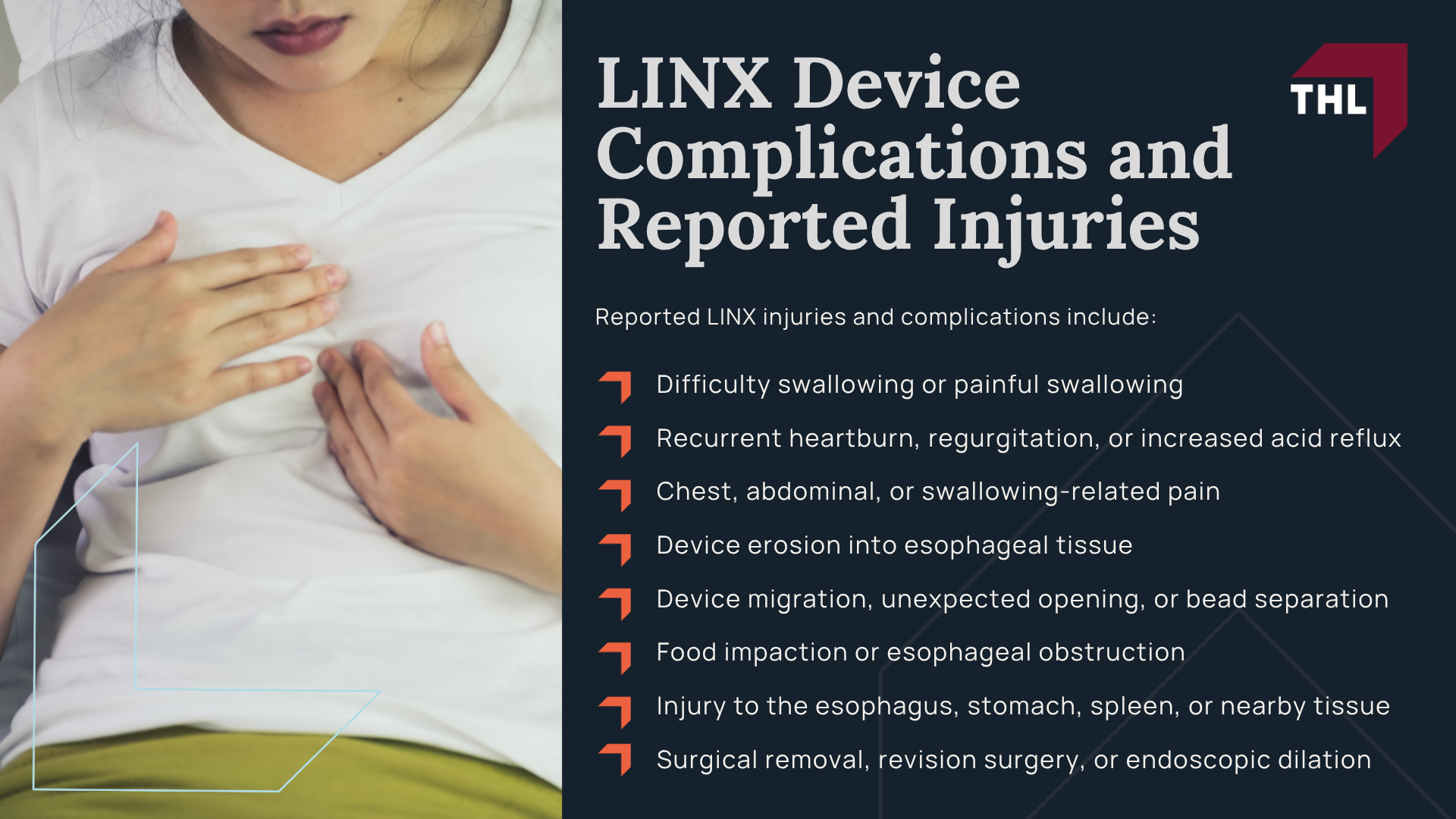
Reported LINX injuries and complications include:
Device erosion occurs when part of the implant wears into or through esophageal tissue, a process that may cause pain, chronic inflammation, or more difficult removal.
Patients who suffered complications have required diagnostic imaging, endoscopic dilation, removal surgery, or another anti-reflux procedure, depending on the nature and severity of the problem.
MAUDE reports document suspected events, not verified causation or incidence rates, because reports may be incomplete, duplicated, or submitted without data showing how many patients received the device.
Patients diagnosed with gastroesophageal reflux disease may initially experience symptom relief after the LINX procedure, followed by the return or worsening of reflux-related symptoms.
A failed device may no longer maintain its intended position or closed ring structure around the lower esophageal sphincter.
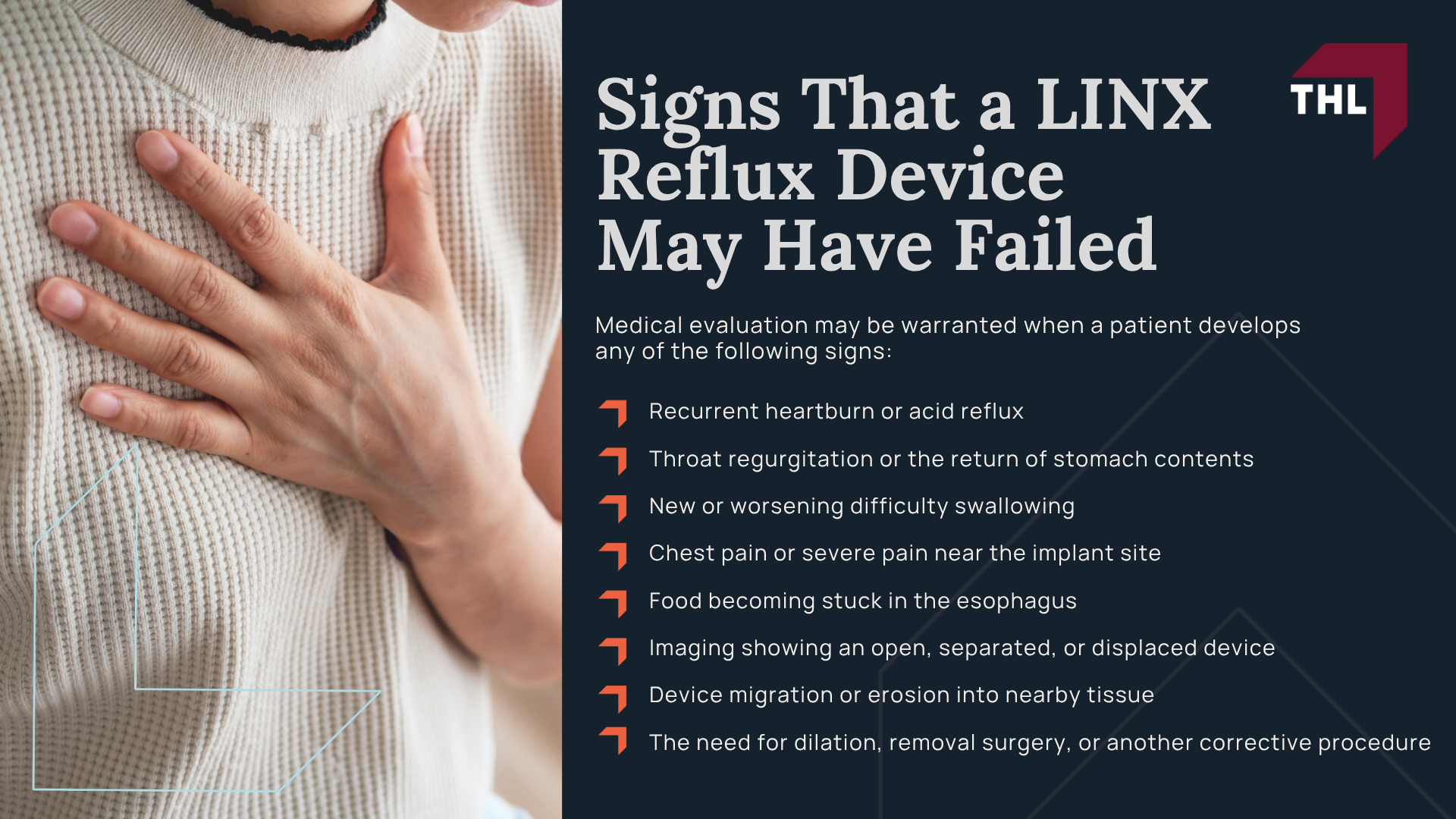
Medical evaluation may be warranted when a patient develops any of the following signs:
Some patients required surgical removal after the LINX device caused persistent dysphagia, recurrent reflux, erosion, migration, or mechanical separation.
Removal procedures may become necessary when dilation and other conservative measures fail to relieve symptoms.
Surgeons may also revise the original operation, repair damaged tissue, or perform another anti-reflux procedure to treat patients whose symptoms return after device failure.
Explant surgery can be more difficult when scar tissue or chronic inflammation has formed around the implant.
Patients may face additional anesthesia, hospital care, recovery time, and postoperative monitoring.
Lawsuits allege that some removal and revision procedures followed failures involving separated beads, broken wire links, or an open device.
Medical records documenting the reason for removal, operative findings, and the condition of the explanted device may become central evidence in a product liability claim.
FDA approved the LINX Reflux Management System on March 22, 2012, for certain patients with gastroesophageal reflux disease documented through abnormal pH testing and persistent symptoms despite medical therapy.
Torax Medical, the original device manufacturer, later initiated a recall involving specific LINX models and production lots.
The regulatory history includes the following events:
The international withdrawal should not be described as a global recall; LINX remains listed for use and sale in the United States.
Johnson & Johnson continues to maintain a current U.S. product page for the system, and FDA’s premarket approval record remains active with subsequent labeling supplements.
The 2018 recall and pending lawsuits do not establish that every LINX device is defective or unsafe, but they provide relevant evidence when an affected implant separates, opens, migrates, or requires surgical removal.
The LINX Reflux Management System is a medical device used to treat certain patients with gastroesophageal reflux disease confirmed through abnormal pH testing.
It consists of titanium beads with magnetic cores connected by individual titanium wires to form a flexible ring around the lower esophageal sphincter.
The magnetic force helps keep the sphincter closed between swallows, while the beads separate temporarily to allow food to pass into the stomach and then return to their closed position to help prevent reflux.
The laparoscopic procedure is intended for patients seeking an alternative to continuous acid suppression therapy, including proton pump inhibitors or similar medications.
The current version of the implant is conditionally compatible with magnetic resonance imaging systems up to 1.5 Tesla, and exposure under stronger or unapproved scanning conditions may cause serious injury or interfere with the device’s magnetic strength and function.
Patients should confirm the model listed on their implant card before an MRI because earlier LINX devices may have a lower 0.7-Tesla limit, and removal may be necessary when a stronger scan cannot be replaced with another diagnostic method.
Surgeons implant the LINX device through a minimally invasive laparoscopic procedure performed under general anesthesia.
Small abdominal incisions allow the surgeon to access the junction between the esophagus and stomach without making a large open incision.
The surgeon measures the esophagus, selects the appropriate device size, and positions the magnetic bead ring around the lower esophageal sphincter.
A hiatal hernia may also be repaired during the procedure when the stomach has moved through the diaphragm.
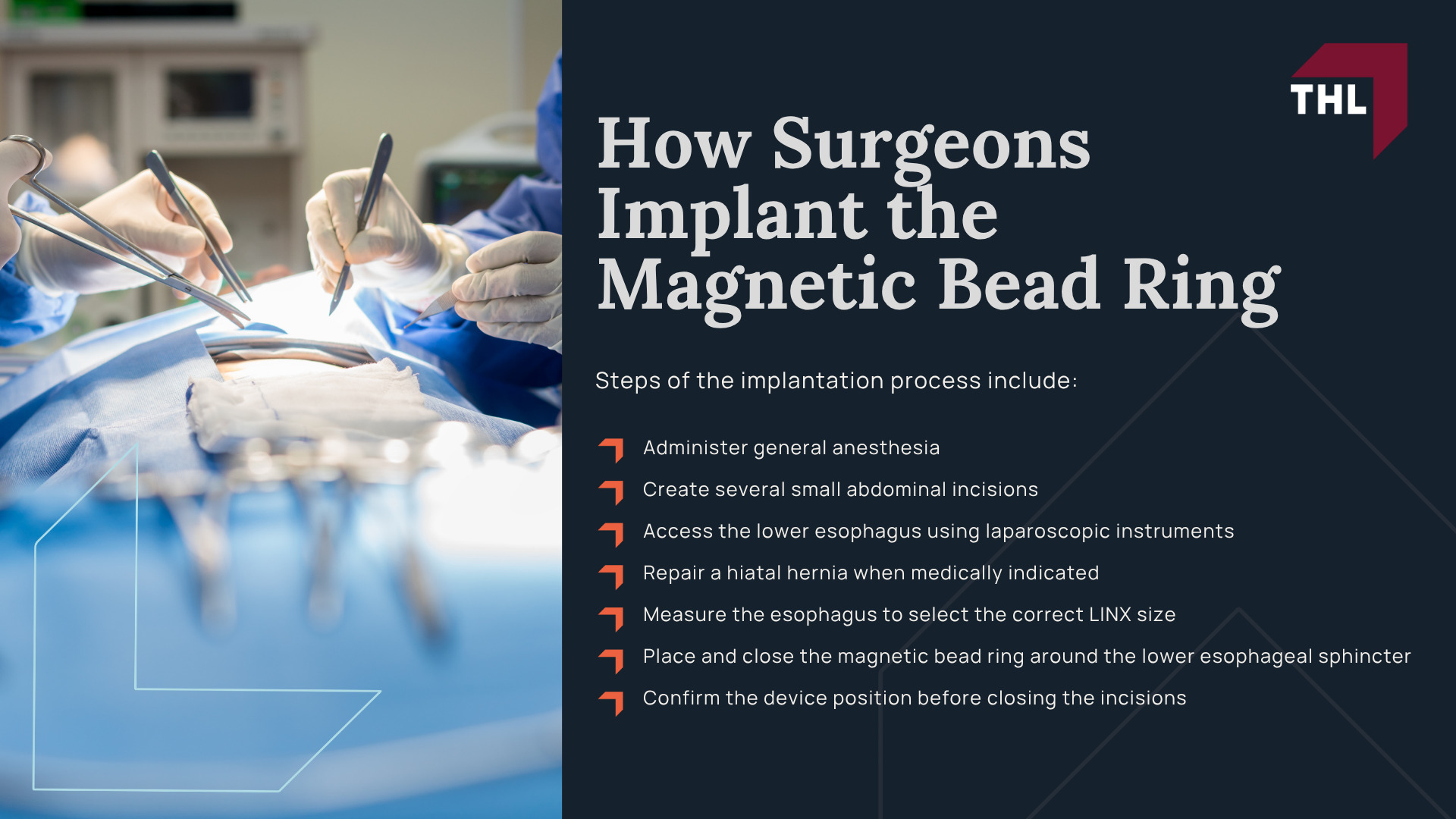
Steps of the implantation process include:
Torax Medical developed the LINX Reflux Management System and served as the device manufacturer when FDA granted premarket approval in March 2012.
Ethicon, a Johnson & Johnson medical device company, completed its acquisition of Torax Medical in March 2017.
Current Johnson & Johnson MedTech materials identify Ethicon, Inc. with the LINX system and its instructions for use.
FDA recall records continue to identify Torax Medical as the manufacturer responsible for the LINX devices recalled in 2018.
This corporate history is why LINX product liability lawsuits may name Torax Medical, Ethicon, and related Johnson & Johnson entities as defendants.
A person may qualify for a LINX reflux device lawsuit if the implant failed, separated, migrated, eroded into tissue, or caused complications requiring medical treatment.
Stronger claims often involve a device included in the 2018 recall, imaging that shows an open or displaced ring, or operative findings confirming a mechanical failure.
Medical records may also document recurrent GERD, difficulty swallowing, chest pain, internal injury, or the need for removal or revision surgery.
An implant card, model and lot information, surgical records, imaging studies, and the condition of any explanted device can help establish what happened.
Eligibility also depends on when the device was implanted, when symptoms began, and whether the applicable filing deadline has expired.
The existence of a recalled implant or reported complication does not automatically establish that the device was defective or that the manufacturer is legally responsible.
TorHoerman Law is reviewing LINX device claims involving documented failures, serious injuries, and additional surgery.
Evidence can help establish which LINX device was implanted, how it allegedly failed, and whether the failure caused the patient’s injuries.
Medical and product records may also show whether the implant was included in the 2018 recall or departed from approved manufacturing specifications.
Preserving this material is especially important when the device has been removed or when several years have passed since the original procedure.
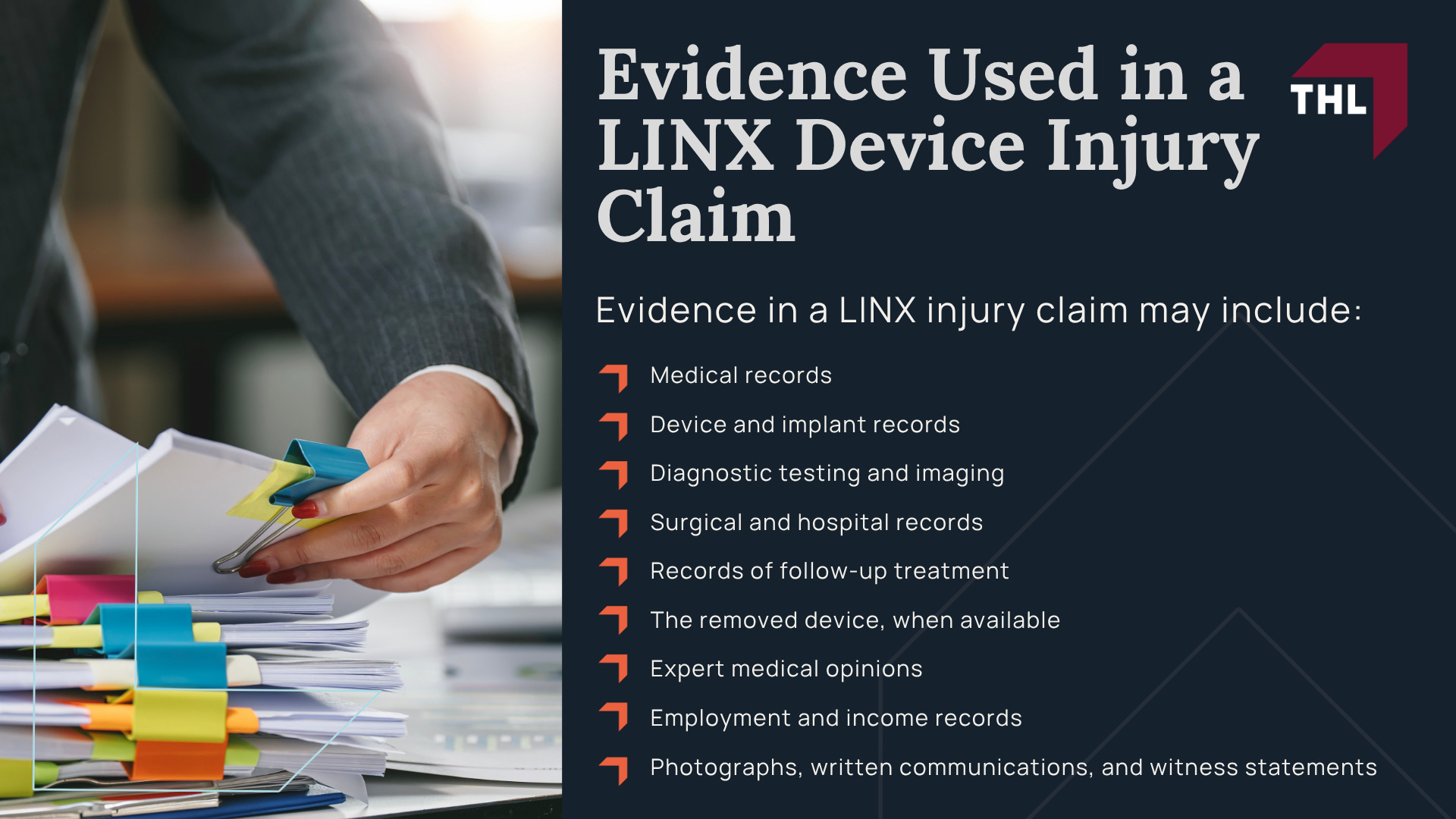
Evidence in a LINX injury claim may include:
Damages in a defective medical device lawsuit represent the financial and personal losses attributed to the injury.
Attorneys calculate damages by reviewing treatment records, expenses, income history, and evidence showing how the complications affected the patient’s health and daily life.
Future losses may require medical or financial opinions concerning ongoing care and reduced ability to work.
The amount available depends on the evidence, applicable state law, and the facts of the individual claim.
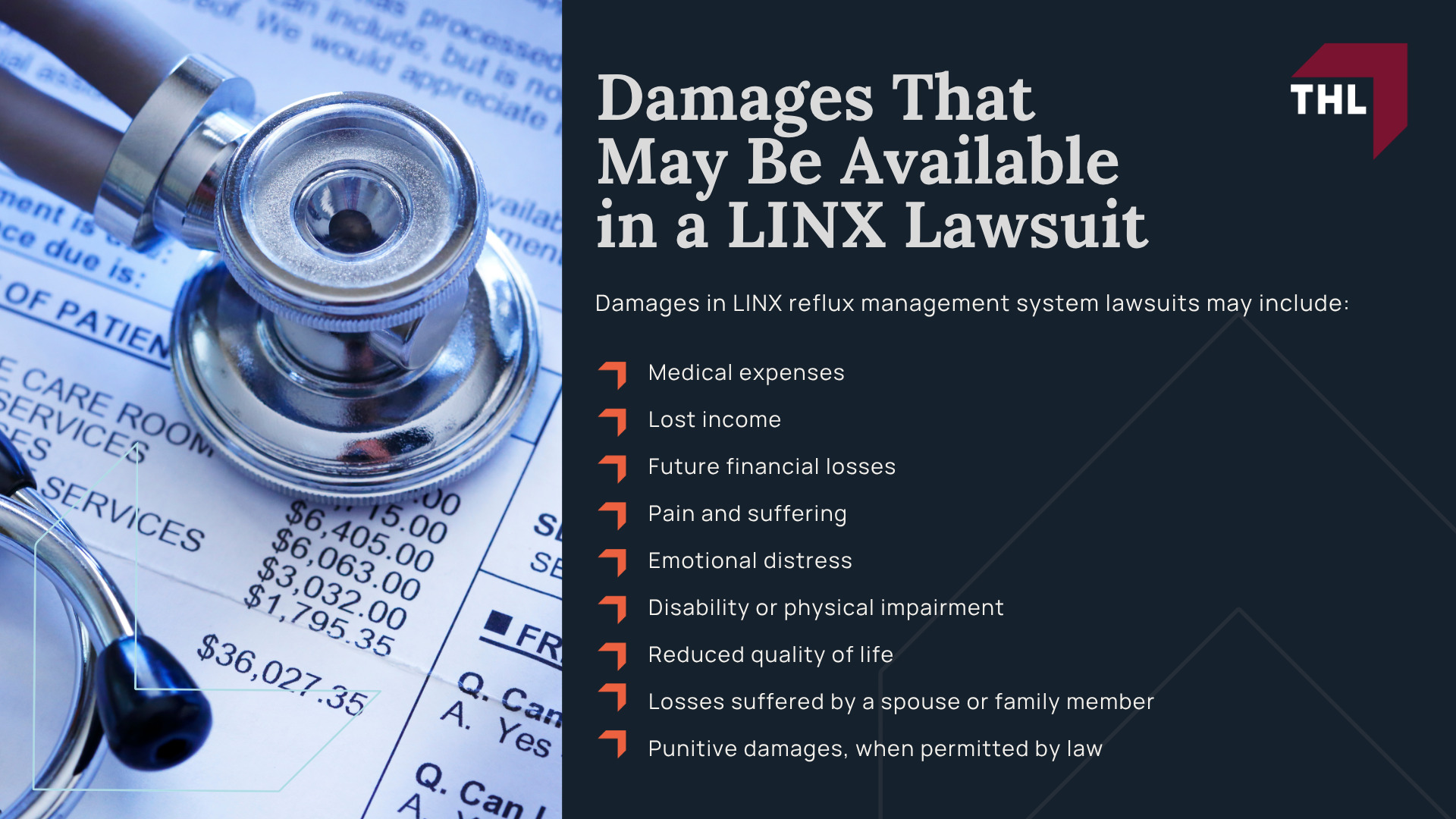
Damages in LINX reflux management system lawsuits may include:
Patients who experienced device separation, migration, erosion, recurrent GERD, difficulty swallowing, or complications requiring removal surgery may have grounds to investigate a product liability claim.
The strength of a case depends on the implanted device, the medical evidence, the nature of the failure, and the connection between the implant and the patient’s injuries.
Filing deadlines vary by state and may begin before a patient fully understands the cause of the complications.
TorHoerman Law is investigating LINX device lawsuit claims involving recalled implants, alleged manufacturing defects, and serious injuries.
Our legal team can review medical records, implant information, and treatment history to determine whether a claim may be available.
Contact TorHoerman Law for a free consultation to discuss your LINX reflux implant and the legal options that may apply.


