Abbott spinal cord stimulator lawsuits allege that certain implanted pain-management systems malfunctioned, failed to provide pain relief, or caused new injuries after implantation.
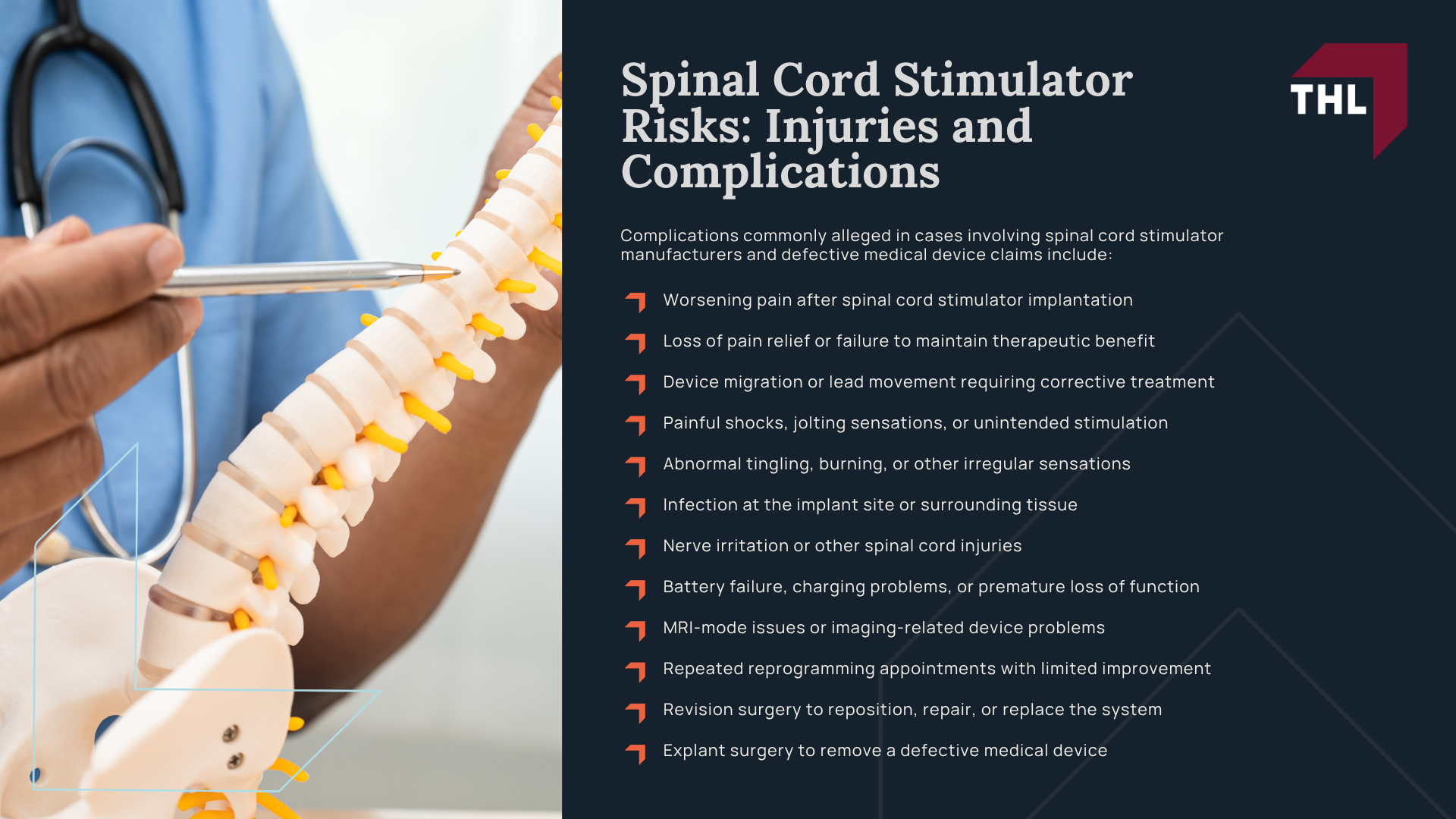
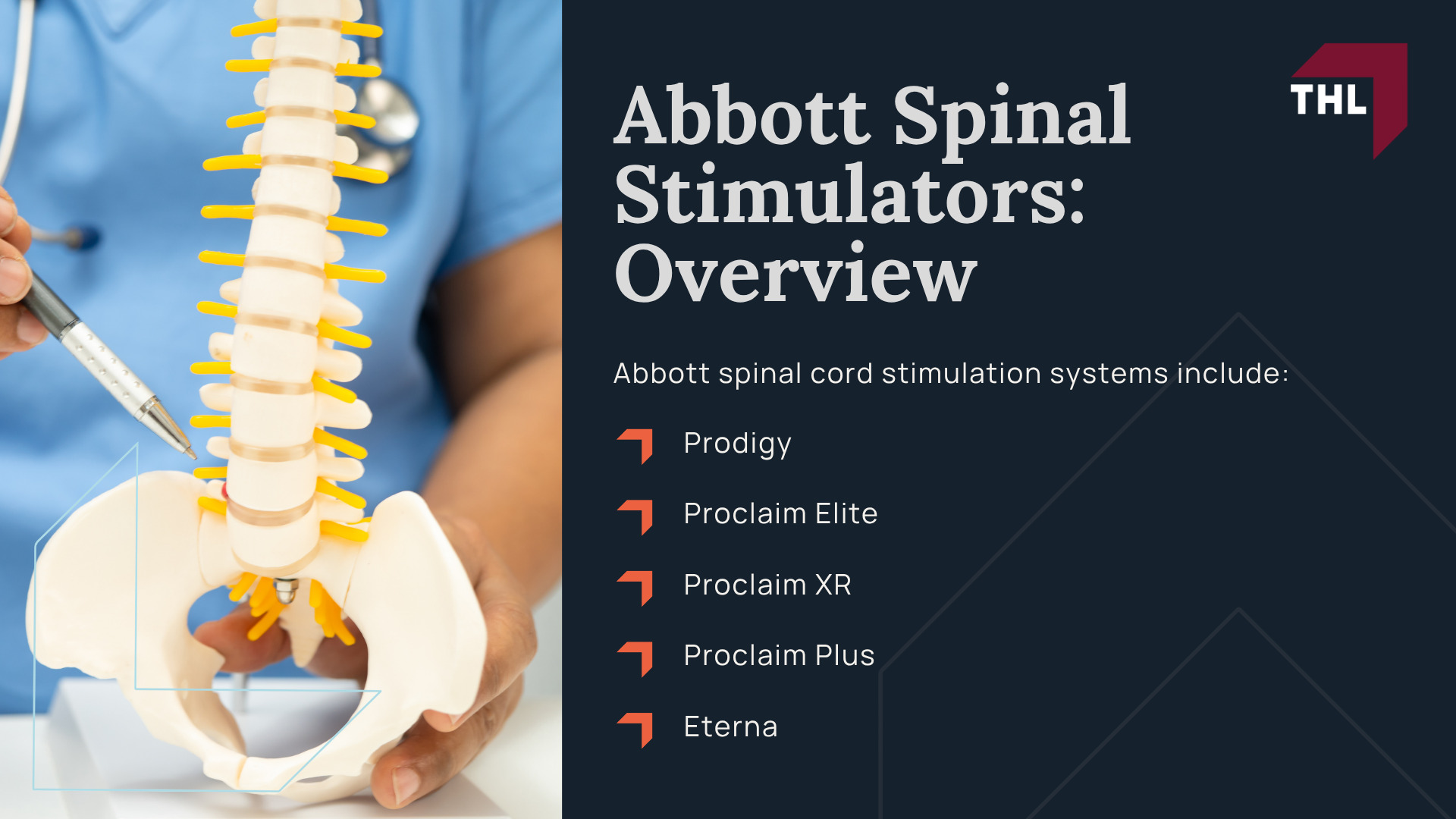
Current spinal cord stimulator claims involve Abbott systems such as Proclaim XR, Proclaim Plus, and Eterna. Plaintiffs allege problems including lead migration, loss of stimulation, painful electrical shocks, communication failures, battery issues, and other abnormal device behavior.
Some lawsuits allege that design or manufacturing defects caused an Abbott device to perform differently from the temporary system used during the trial period.
A patient may experience meaningful relief during the trial but later develop severe pain, loss of therapeutic benefit, or worsening chronic pain after receiving the permanent implant.
When reprogramming does not correct the problem, patients may require revision procedures, replacement of individual components, or complete device removal.
Some plaintiffs allege that complications from a defective device resulted in multiple surgeries, extended recovery, infection, or permanent physical limitations.
Other claims involve alleged neurological injuries.
Lead movement, unintended stimulation, or complications during device use may allegedly cause nerve damage, weakness, numbness, burning sensations, or pain that radiates beyond the original treatment area.
Plaintiffs also allege that Abbott introduced modified spinal cord stimulation systems without adequate testing or sufficient warnings about the risk of device failure.
Some complaints question whether the company properly evaluated design, software, battery, programming, and hardware changes before the devices reached patients.
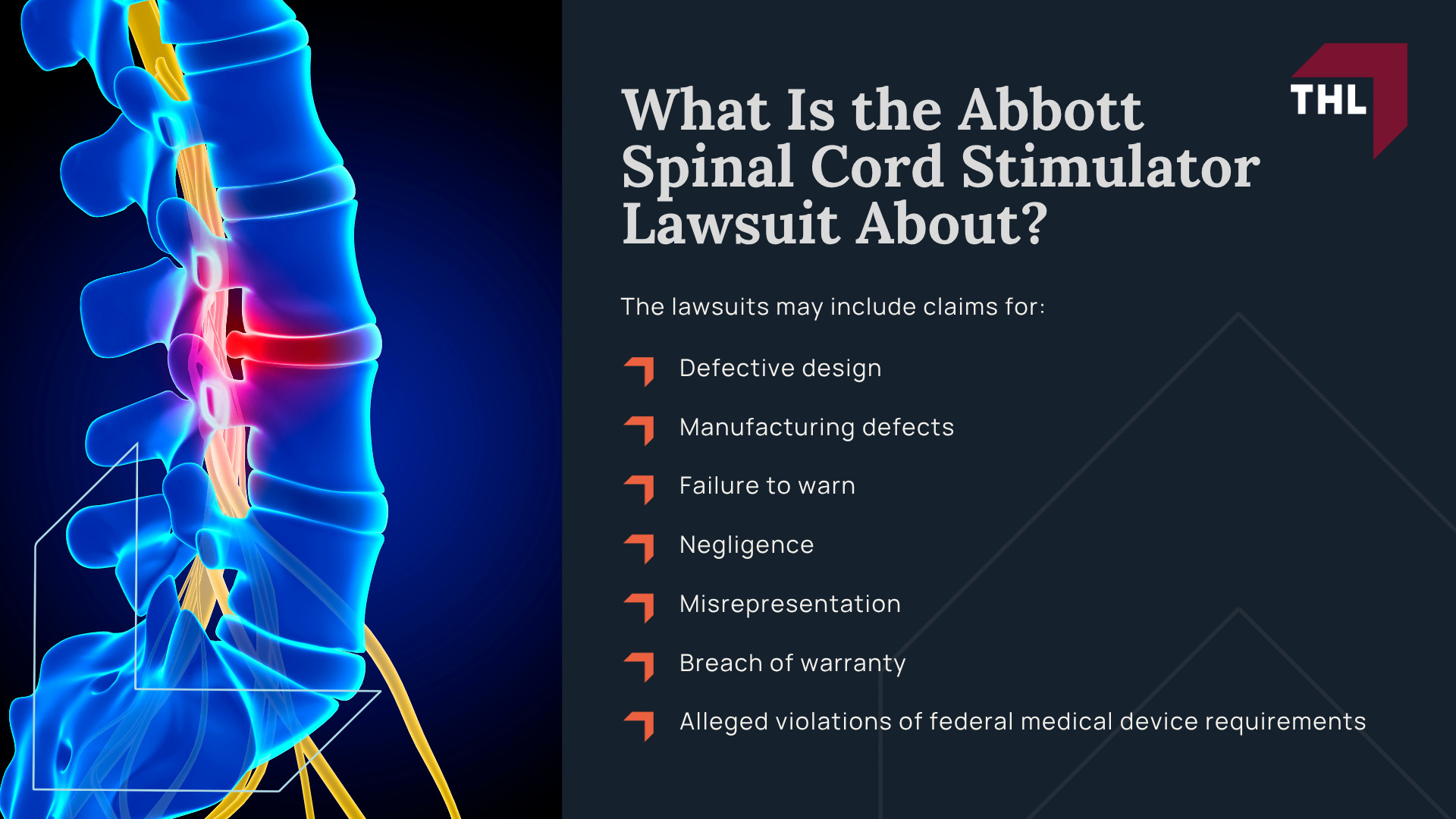
The lawsuits may include claims for:
- Defective design
- Manufacturing defects
- Failure to warn
- Negligence
- Misrepresentation
- Breach of warranty
- Alleged violations of federal medical device requirements
Abbott may dispute these allegations and argue that a patient’s symptoms resulted from the underlying pain condition, the implantation procedure, or another medical cause.
The Abbott litigation is part of broader scrutiny involving the medical device industry and the development, approval, marketing, and monitoring of implanted spinal cord stimulators.
Similar product liability theories appear in other lawsuits against companies like Boston Scientific, Medtronic, and Nevro, although each manufacturer’s devices and regulatory history involve separate factual questions.
Spinal cord stimulator lawsuits are generally pursued as defective medical device claims rather than traditional medical malpractice cases.
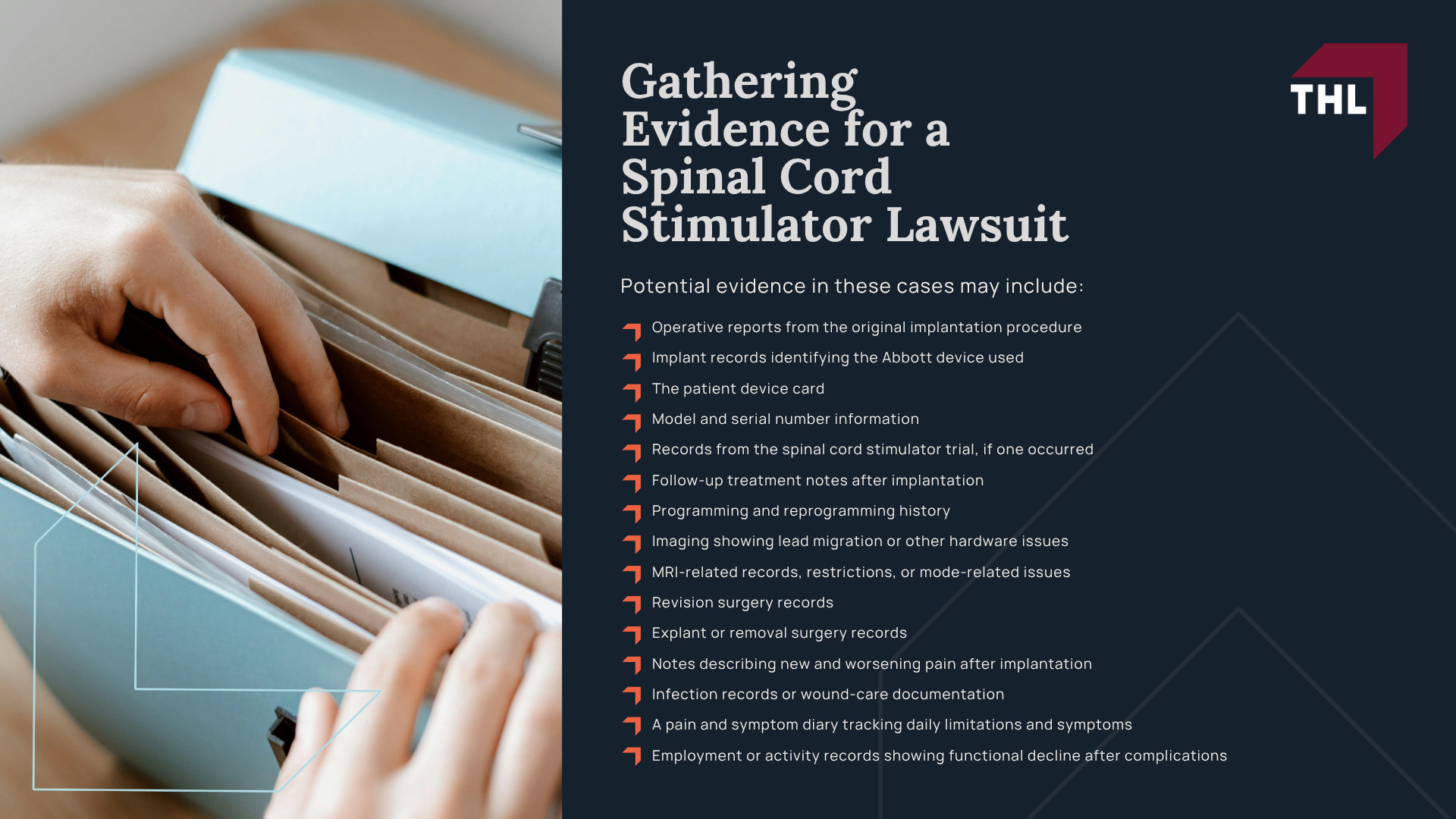
The strength of an Abbott spinal cord stimulator lawsuit depends on the exact system implanted, the timing and severity of the complications, records of reprogramming or hardware failure, and whether medical evidence connects the device to the patient’s injuries.
TorHoerman Law is reviewing claims involving Abbott spinal cord stimulator devices for patients who experienced complications after spinal cord stimulator implantation.
If you or a loved one experienced complications following spinal cord stimulator surgery, you may be eligible to pursue compensation through an Abbott Spinal Cord Stimulator Lawsuit.
Contact TorHoerman Law for a free consultation.
Use the chatbot on this page for a free case review and to get in touch with our spinal cord stimulator lawyers.
Abbott Spinal Cord Stimulator Lawsuit Status
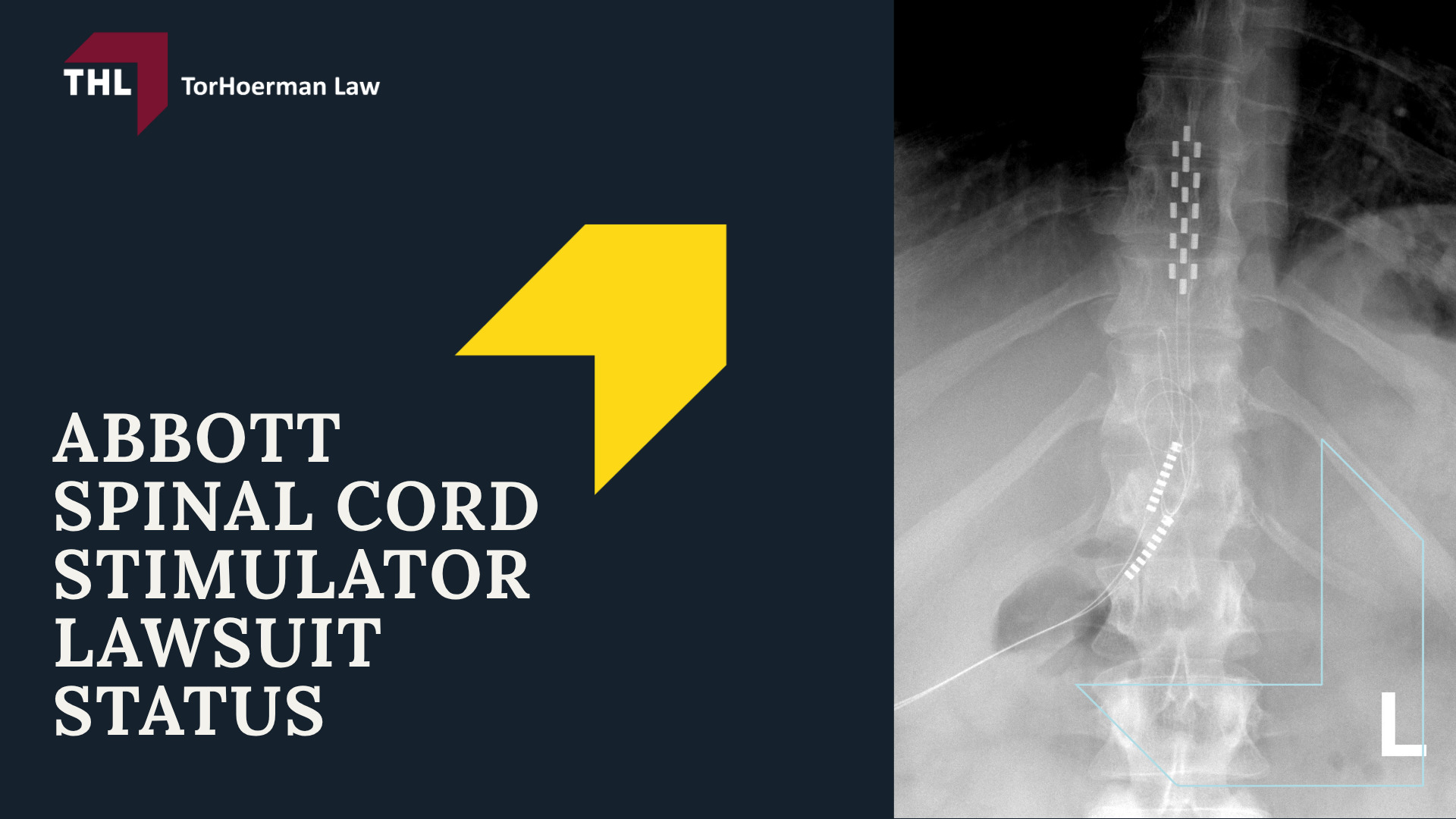
On June 22, 2026, plaintiffs filed a separate motion seeking to centralize federal Abbott spinal cord stimulator lawsuits in MDL 3194.
The request remains pending, meaning Abbott claims continue to proceed individually unless the JPML orders coordinated pretrial proceedings.
An Abbott MDL would not be a class action.
Each plaintiff would retain an individual lawsuit based on the Abbott device implanted, the complications experienced, and the resulting damages.