(888) 508-6752

Spinal Cord Stimulator Settlement Amounts [2026 Estimates & Projections]

4.9
Google
•
677 reviews

Potential Compensation in Spinal Cord Stimulator Lawsuits: Overview

Estimated spinal cord stimulator settlement amounts may range from approximately $50,000 to $500,000 or more, depending on the injury, required treatment, and available evidence.

No single settlement range applies equally across all claims because spinal cord stimulators are made by several medical device manufacturers, and each brand, model, alleged defect, warning history, and litigation posture may affect case value.

A spinal stimulator lawsuit involving serious injuries such as nerve damage, electrical burns, infection, or multiple revision surgeries may have a higher compensation outlook than a claim involving temporary symptoms or limited treatment.

The strength of the connection between the specific device failure and the patient’s injuries will also influence potential compensation.

These figures are projections rather than guaranteed outcomes, and an individual claim may fall below or above the estimated range.

TorHoerman Law is reviewing claims from individuals who were injured by defective spinal cord stimulators.

Spinal Cord Stimulator Settlement Amounts; Spinal Cord Stimulator Lawsuit Overview; Spinal Cord Stimulator Lawsuit Overview (2); What Are Spinal Cord Stimulator Lawsuits Based On; Spinal Cord Stimulator Complications and Injuries; What Companies Are Named in Spinal Cord Stimulator Lawsuits; Do You Qualify for a Spinal Cord Stimulator Lawsuit; Evidence in Spinal Cord Stimulator Lawsuits; Potential Compensation in Spinal Cord Stimulator Cases; TorHoerman Law_ Reviewing Spinal Cord Stimulator Claims

Injured by a Defective Spinal Cord Stimulator Device? Contact TorHoerman Law Today

Spinal cord stimulation systems are implanted to provide pain relief when treatments such as medication, injections, or physical therapy have not adequately controlled chronic pain.

The devices use leads and an implanted pulse generator to deliver consistent electrical impulses intended to interrupt pain signals before they reach the brain.

Spinal cord stimulator lawsuits involve several medical device manufacturers, including Boston Scientific, Abbott, Medtronic, and Nevro, and the alleged defects differ by company, device model, and system design.

Current medical device litigation includes claims involving lead migration, electrical malfunction, battery or charging problems, inadequate warnings, and other alleged failures that may require revision surgeries or complete device removal.

Reported complications include infection, painful stimulation, worsening pain, nerve damage, burns, weakness, and other severe injuries that can affect mobility, employment, and daily life.

Potential compensation may vary substantially because a case involving temporary symptoms or one corrective procedure is different from a claim involving permanent neurological damage, multiple revision surgeries, or lasting disability.

Settlement estimates must also account for whether the evidence connects the injury to a specific device defect rather than the patient’s underlying pain condition or the implantation procedure alone.

The ranges discussed on this page are projections based on injury severity, medical treatment, long-term harm, and available evidence, not guaranteed outcomes or established settlement schedules.

If you or a loved one have suffered serious complications or injuries after using a spinal cord stimulator device, you may be eligible to file a spinal cord stimulator lawsuit.

Contact TorHoerman law today for a free consultation.

You can also use the chat feature on this page to find out if you qualify to file a spinal cord stimulator lawsuit.

Spinal Cord Stimulator Settlement Amounts: Projections & Estimates

Spinal cord stimulation devices are used to treat chronic pain by sending electrical impulses intended to interrupt pain signals before they reach the brain.

When these systems fail, spinal cord stimulator injuries can range from temporary complications to permanent harm requiring revision surgery, device removal, or ongoing medical treatment.

Because the litigation is still developing, there is no established national average or fixed settlement value that applies to every claim.

Spinal cord stimulator lawsuits also involve several manufacturers, device models, alleged defects, and regulatory histories, all of which may influence the potential value of an individual case.

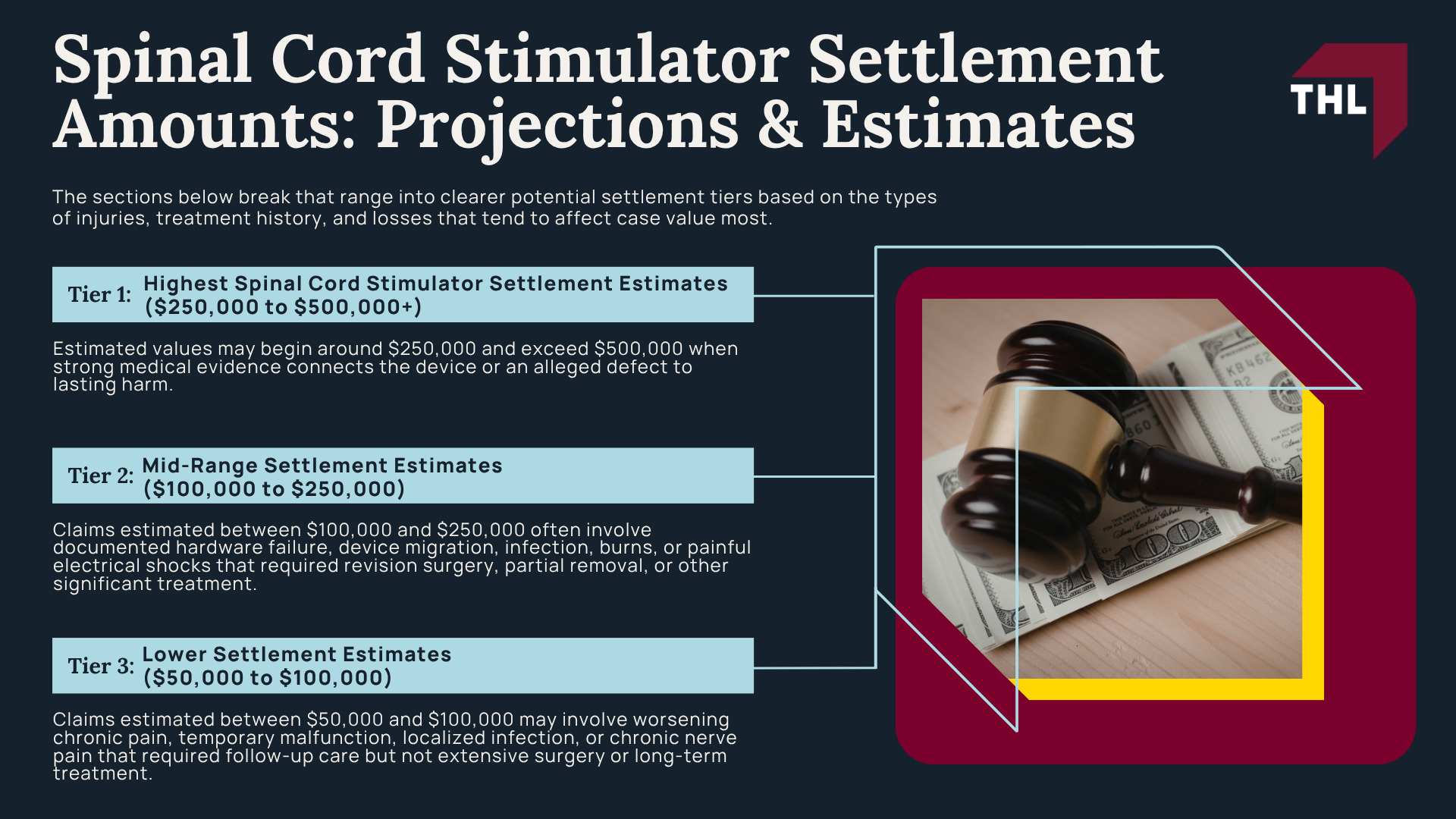
Current projections place many claims within a broad working range of approximately $50,000 to $500,000 or more, depending on the severity of the injury, the number of corrective procedures, the extent of any lasting impairment, and the strength of the evidence connecting the harm to the device.

Lower-value claims may involve more limited complications or shorter treatment periods, while higher-value cases often involve multiple surgeries, permanent nerve damage, loss of function, or stronger proof of a device-related injury.

The following tiers are illustrative estimates rather than guaranteed outcomes, and actual compensation may fall below or above the stated ranges.
Spinal Cord Stimulator Lawsuit Overview

Tier 1: Highest Spinal Cord Stimulator Settlement Estimates ($250,000 to $500,000+)

The highest projected settlement tier may include claims involving permanent neurological impairment, catastrophic complications, or multiple corrective surgeries after spinal cord stimulator implantation.

Estimated values may begin around $250,000 and exceed $500,000 when strong medical evidence connects the device or an alleged defect to lasting harm.

Claims involving spinal cord injuries, paralysis, permanent weakness, or spinal cord compression within the spinal canal may have a higher compensation outlook because they can affect mobility, sensation, organ function, employment, and lifelong independence.

Other significant factors may include severe pain that does not resolve, repeated revision surgeries, extended hospitalization, permanent disability, and substantial future medical or personal-care needs.

Catastrophic cases may fall above the stated range, while compensation is never guaranteed and depends on the manufacturer, device model, alleged failure, applicable law, and strength of the evidence.

Complications and injuries that may be associated with Tier 1 claims include:

  • Permanent neurological deficits, including loss of motor function or sensation
  • Direct spinal cord injury or spinal cord compression
  • Paraplegia, quadriplegia, or major lower-extremity weakness
  • Cauda equina syndrome or permanent nerve-root damage
  • Loss of bowel or bladder control
  • Permanent incontinence or sexual dysfunction caused by neurological injury
  • Severe pain that becomes worse after implantation and does not resolve
  • Repeated revision surgeries or complete device removal
  • Serious infection requiring hospitalization, IV antibiotics, or explant surgery
  • Sepsis or other life-threatening complications caused by infection
  • Internal burns, tissue necrosis, or lasting damage tied to overheating or electrical malfunction
  • Loss of mobility requiring a wheelchair, walker, or continuing assistance
  • Permanent inability to work or perform ordinary daily activities
  • Wrongful death

Tier 2: Mid-Range Settlement Estimates ($100,000 to $250,000)

Mid-range settlement projections may apply to patients who developed substantial complications after spinal cord stimulator implantation but did not suffer paralysis, catastrophic spinal cord injury, or comparable permanent neurological loss.

Claims estimated between $100,000 and $250,000 often involve documented hardware failure, device migration, infection, burns, or painful electrical shocks that required revision surgery, partial removal, or other significant treatment.

The compensation outlook may increase when medical records show persistent nerve pain, reduced mobility, lost income, extended recovery, or continuing symptoms that interfere with work and daily activities.

Cases within this tier generally require stronger evidence than a claim based only on limited pain relief, including proof that the device malfunctioned or contributed to a new injury.

Because spinal cord stimulator litigation involves several manufacturers, device models, and alleged defects, the stated range is a projection rather than an established average or guaranteed result.

Complications and injuries that may be associated with Tier 2 claims include:

  • Painful electrical shocks or repeated episodes of abnormal stimulation
  • Device migration or lead migration requiring revision surgery
  • Lead fracture, disconnection, or other documented hardware failure
  • Persistent nerve pain or worsening neuropathic symptoms
  • Partial weakness, numbness, or reduced range of motion
  • Battery failure requiring replacement of the pulse generator
  • Repeated charging, communication, or programming failures
  • Burns or localized tissue damage without catastrophic permanent injury
  • Infection requiring hospitalization, antibiotics, revision, or partial device removal
  • A single explant or substantial revision procedure
  • Significant scarring or prolonged recovery following corrective surgery
  • Lost wages or reduced ability to perform normal job duties
  • Continuing pain and functional limitations after the device is revised or removed

Tier 3: Lower Settlement Estimates ($50,000 to $100,000)

Lower settlement projections may apply to patients who experienced a documented device-related complication but did not sustain permanent neurological damage, major disability, or other catastrophic harm.

Claims estimated between $50,000 and $100,000 may involve worsening chronic pain, temporary malfunction, localized infection, or chronic nerve pain that required follow-up care but not extensive surgery or long-term treatment.

The compensation outlook may be stronger when medical records document a specific malfunction, measurable injury, added medical expenses, or time away from work.

Failure to achieve the intended pain relief does not, by itself, establish that a spinal cord stimulator was defective or caused a compensable injury.

Because spinal cord stimulator risks, treatment histories, manufacturers, and device models vary, the stated range is an illustrative projection rather than an established average or guaranteed result.

Complications and injuries that may be associated with Tier 3 claims include:

  • Worsening chronic pain after implantation
  • Continued or unresolved chronic nerve pain
  • Temporary painful stimulation or intermittent electrical sensations
  • Localized chest, back, or implant-site discomfort
  • Temporary device malfunction or programming problems
  • Minor lead movement requiring monitoring or limited treatment
  • Localized infection treated without lasting complications
  • Short-term burns, irritation, or tissue inflammation
  • One limited corrective procedure without permanent impairment
  • Temporary work restrictions or lost wages
  • Additional medical visits, imaging, or reprogramming
  • Short-term functional limitations that later improve

Spinal Cord Stimulator Lawsuit Overview

Spinal cord stimulator lawsuits allege that implanted devices intended to help patients manage chronic pain instead caused electrical shocks, burns, worsening pain, lead migration, nerve damage, infection, and complications requiring revision or removal surgery.

Claims have been filed against Boston Scientific, Abbott, Medtronic, and Nevro, but the lawsuits do not involve one uniform device or alleged defect.

Modern spinal cord stimulators differ by manufacturer, model, lead design, battery system, software, stimulation method, warnings, and regulatory history.

Plaintiffs allege that certain devices contained design or manufacturing defects, failed to perform as represented, or entered the market without adequate warnings about hardware failure, abnormal stimulation, battery problems, migration, and the potential need for additional surgery.

Regulatory allegations also focus on manufacturers’ use of the FDA’s premarket approval supplement process to introduce changes after an original device received approval.

An Associated Press investigation published in 2018 found that the FDA had approved six new spinal cord stimulator devices since 1984 while authorizing 835 supplemental changes to those systems through the middle of 2018.

The same investigation reported that the FDA had received more than 80,000 injury reports involving spinal cord stimulators since 2008.

Adverse-event reports can identify possible safety problems, but they do not independently prove that a device caused an injury or that the manufacturer is legally responsible.
Spinal Cord Stimulator Lawsuit Overview; Spinal Cord Stimulator Lawsuit Overview (2)

In June 2026, the U.S. Judicial Panel on Multidistrict Litigation established MDL No. 3181 in the Central District of California for federal lawsuits involving Boston Scientific spinal cord stimulators.

The Panel declined to create one industrywide MDL because competing manufacturers use different products and the cases involve manufacturer-specific evidence, regulatory records, and alleged defects.

Plaintiffs subsequently filed separate motions seeking proposed MDL No. 3194 for Abbott cases on June 22, 2026, and proposed MDL No. 3195 for Nevro cases on June 26, 2026.

As of writing, neither request has been granted, and Medtronic spinal cord stimulator lawsuits remain outside a manufacturer-specific federal MDL.

The outcome of an individual lawsuit will depend on the specific manufacturer and device model, the alleged defect or warning failure, the patient’s injuries, and the evidence connecting the implanted system to the claimed harm.

What Are Spinal Cord Stimulator Lawsuits Based On?

Spinal cord stimulator lawsuits generally allege that a defective device, inadequate warning, or other wrongful conduct caused injuries following spinal cord stimulator surgery.

Many claims involve a permanent spinal cord stimulator that allegedly migrated, malfunctioned, delivered painful stimulation, developed battery or charging problems, or required revision or removal surgery.

Plaintiffs may argue that manufacturers failed to adequately test device changes, maintain proper quality controls, investigate reported failures, or warn physicians and patients about known complications.

Some complaints also cite the extensive use of supplemental FDA approvals within the medical device industry, alleging that materially changed systems reached patients without sufficient testing or review.

Cases involving negligent implantation, poor lead placement, infection control failures, or improper follow-up care may also include medical malpractice claims against a surgeon or healthcare provider rather than, or in addition to, product liability claims against the manufacturer.
Spinal Cord Stimulator Lawsuit Overview; Spinal Cord Stimulator Lawsuit Overview (2); What Are Spinal Cord Stimulator Lawsuits Based On

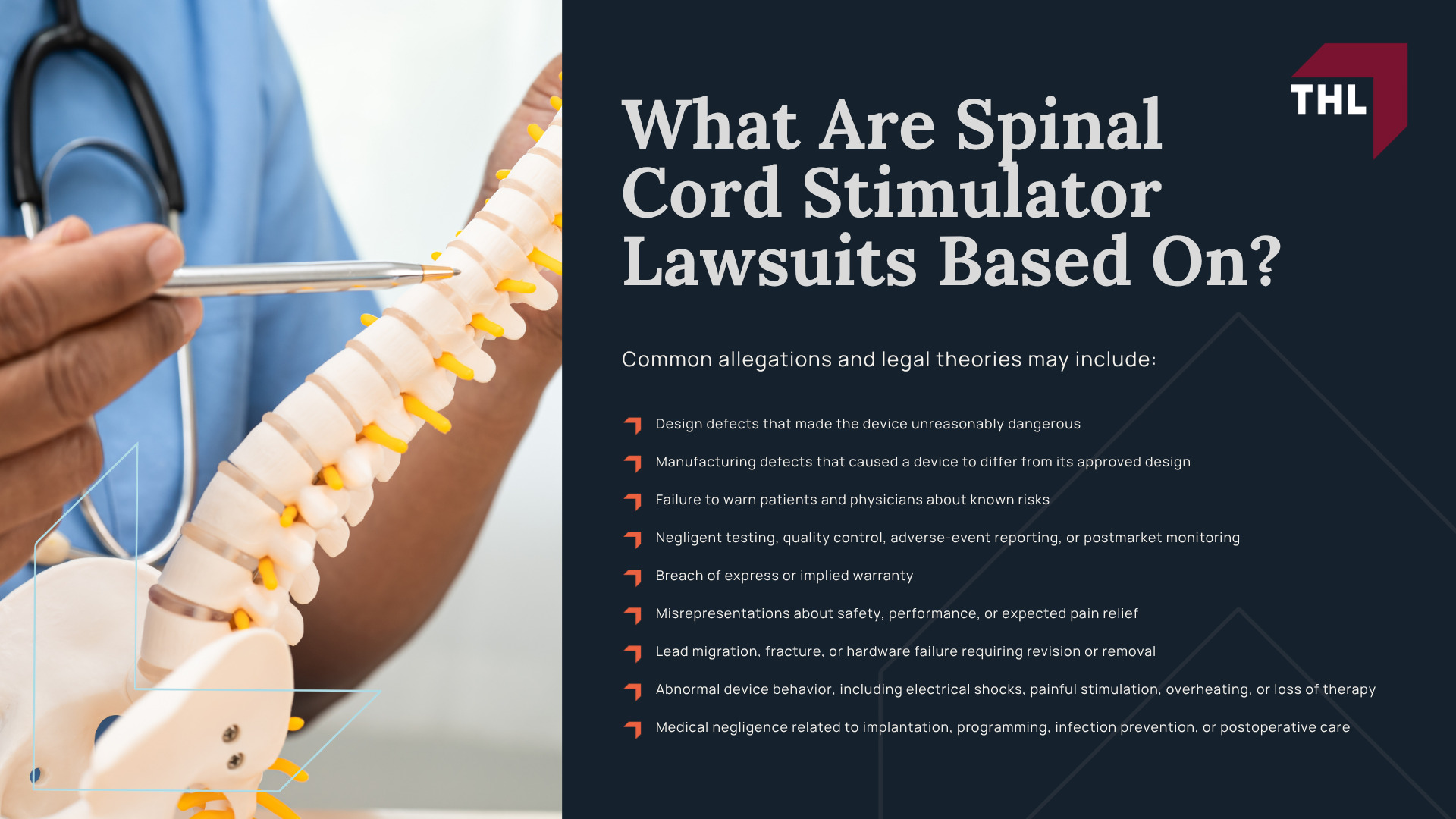
Common allegations and legal theories may include:

  • Design defects that made the device unreasonably dangerous
  • Manufacturing defects that caused a device to differ from its approved design
  • Failure to warn patients and physicians about known risks
  • Negligent testing, quality control, adverse-event reporting, or postmarket monitoring
  • Breach of express or implied warranty
  • Misrepresentations about safety, performance, or expected pain relief
  • Lead migration, fracture, or hardware failure requiring revision or removal
  • Abnormal device behavior, including electrical shocks, painful stimulation, overheating, or loss of therapy
  • Medical negligence related to implantation, programming, infection prevention, or postoperative care

Spinal Cord Stimulator Complications and Injuries

Spinal cord stimulators may be recommended for patients with chronic intractable pain that has not responded adequately to medication, injections, physical therapy, or other treatment.

During implantation, electrical leads are generally placed in the epidural space near the spinal cord and connected to a pulse generator implanted beneath the skin.

The system is intended to provide significant pain relief by delivering electrical stimulation that alters how pain signals are transmitted to the brain.

A patient who has a spinal cord stimulator installed may experience complications related to the implantation procedure, the implanted hardware, device programming, infection, or the long-term performance of the system.

Lead migration is one of the most frequently reported hardware complications and may cause reduced pain relief, stimulation in the wrong area, or the need for revision or device removal.

Reported complication rates vary considerably among studies because they involve different devices, patient populations, follow-up periods, and definitions of an adverse event.

Other hardware problems may include lead fracture, battery failure, charging problems, communication errors, overheating, and abnormal electrical stimulation.

FDA adverse-event reports include allegations involving painful shocks, burns, loss of therapy, disability, and replacement or explant procedures, although an individual report does not establish that the device caused the injury.

Procedure-related complications may include infection, bleeding, spinal fluid leakage, nerve injury, poor wound healing, or improper lead placement.

Serious complications may require hospitalization, antibiotics, revision surgery, replacement of part of the system, or complete explantation.

That hardware failure rate matters because one study found that about one in four patients required invasive surgical reintervention within three years to address stimulator-related problems.
Spinal Cord Stimulator Lawsuit Overview; Spinal Cord Stimulator Lawsuit Overview (2); What Are Spinal Cord Stimulator Lawsuits Based On; Spinal Cord Stimulator Complications and Injuries

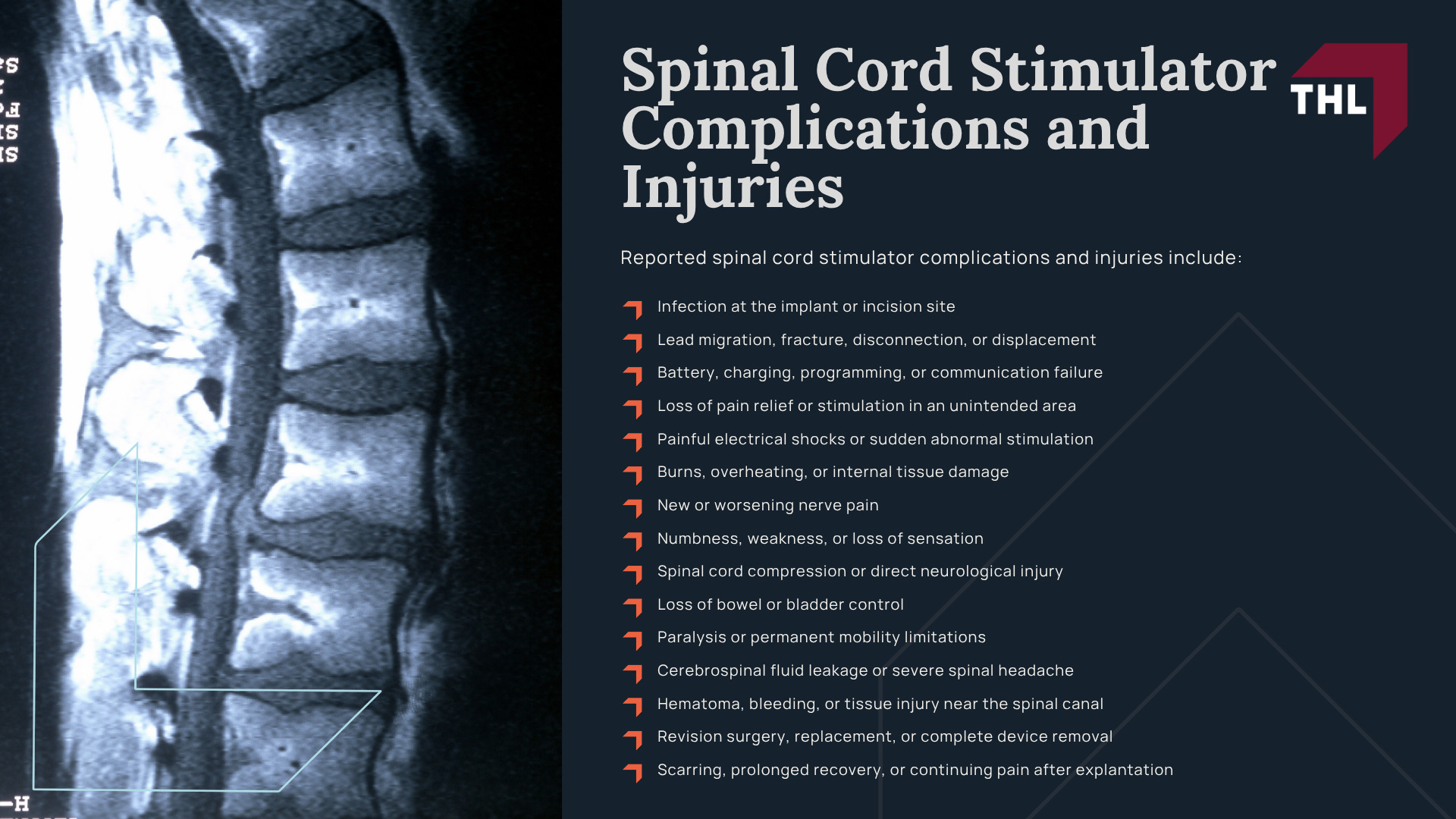
Reported spinal cord stimulator complications and injuries include:

  • Infection at the implant or incision site
  • Lead migration, fracture, disconnection, or displacement
  • Battery, charging, programming, or communication failure
  • Loss of pain relief or stimulation in an unintended area
  • Painful electrical shocks or sudden abnormal stimulation
  • Burns, overheating, or internal tissue damage
  • New or worsening nerve pain
  • Numbness, weakness, or loss of sensation
  • Spinal cord compression or direct neurological injury
  • Loss of bowel or bladder control
  • Paralysis or permanent mobility limitations
  • Cerebrospinal fluid leakage or severe spinal headache
  • Hematoma, bleeding, or tissue injury near the spinal canal
  • Revision surgery, replacement, or complete device removal
  • Scarring, prolonged recovery, or continuing pain after explantation

The presence of a complication does not automatically establish that the spinal cord stimulator was defective or that a manufacturer is legally responsible.

A strong defective medical device lawsuit may include imaging showing lead migration, device data documenting a malfunction, operative findings confirming hardware failure, or medical records connecting a new injury to the implanted system.

The seriousness and permanence of the injury, the number of corrective procedures, and the effect on mobility, employment, and daily life may influence potential compensation.

The manufacturer, device model, alleged defect, and strength of the medical and technical evidence must also be evaluated separately in each claim.

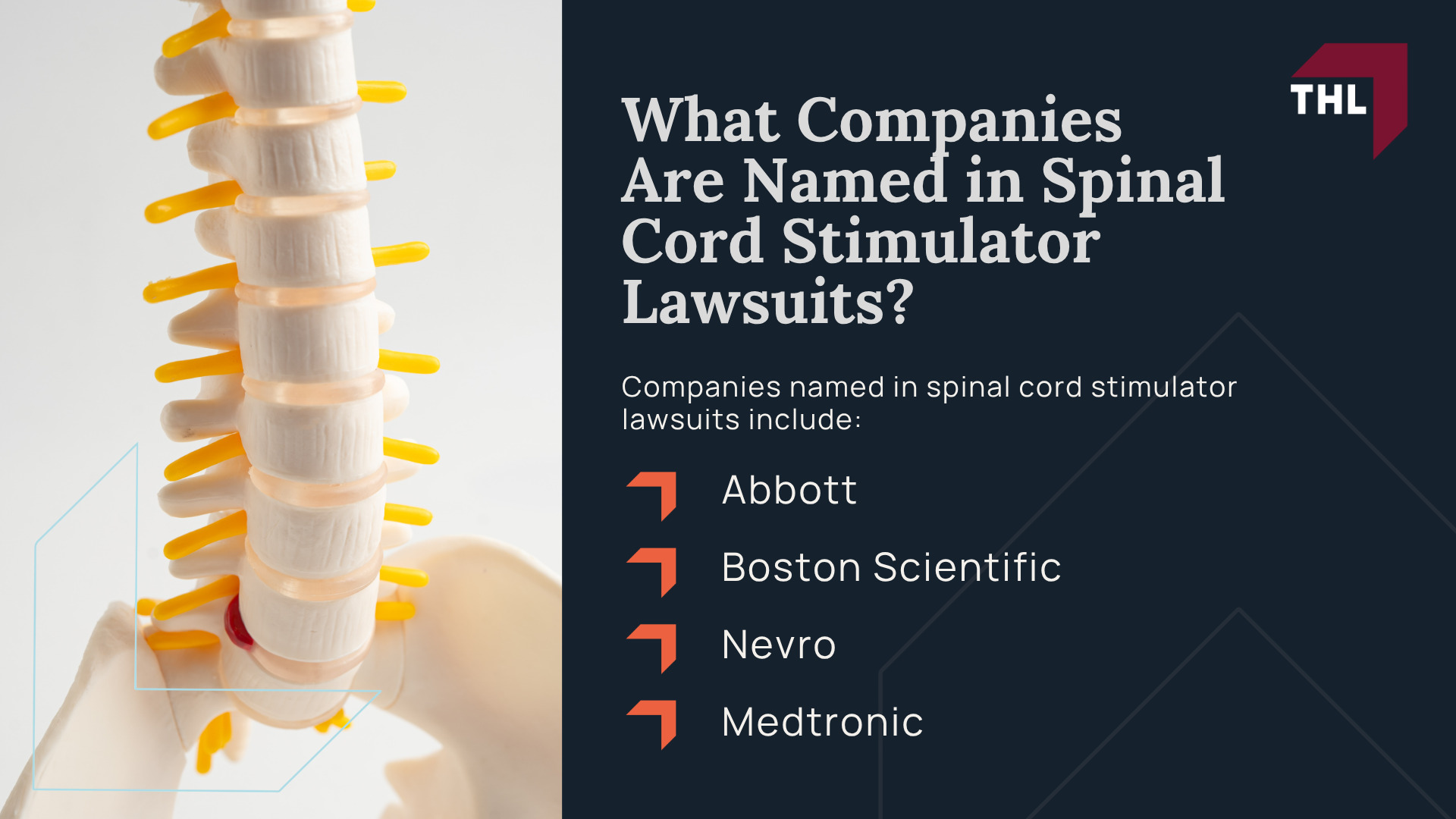
What Companies Are Named in Spinal Cord Stimulator Lawsuits?

Spinal cord stimulator lawsuits have been filed against several major spinal cord stimulator manufacturers accused of selling devices without adequate warnings about known risks.

These claims often allege that patients were not properly warned about lead migration, device malfunction, and other complications that later required revision, removal, or repositioning surgery.

Some complaints also describe electrical shocks, painful sensations, and other serious problems after implantation, with plaintiffs alleging that manufacturers failed to respond appropriately to those risks.

The companies most often named in this litigation are the largest manufacturers in the spinal cord stimulator market.
Spinal Cord Stimulator Lawsuit Overview; Spinal Cord Stimulator Lawsuit Overview (2); What Are Spinal Cord Stimulator Lawsuits Based On; Spinal Cord Stimulator Complications and Injuries; What Companies Are Named in Spinal Cord Stimulator Lawsuits

Companies named in spinal cord stimulator lawsuits include:

Do You Qualify for a Spinal Cord Stimulator Lawsuit?

You may qualify for a spinal cord stimulator lawsuit if you received an implanted device and later experienced burns, infection, electrical shocks, lead migration, worsening pain, neurological symptoms, or complications requiring revision or removal surgery.

A viable claim generally requires more than an unsuccessful treatment outcome.

The evidence must support that a device defect, inadequate warning, manufacturing problem, or other legally actionable failure contributed to a documented injury.

Attorneys will review the manufacturer and model, when symptoms began, whether the device malfunctioned, and whether reprogramming, replacement, revision, or explantation became necessary.

Cases may be stronger when imaging shows lead movement, device records identify a malfunction, operative findings confirm hardware failure, or physicians connect new symptoms to the implanted system.
Spinal Cord Stimulator Lawsuit Overview; Spinal Cord Stimulator Lawsuit Overview (2); What Are Spinal Cord Stimulator Lawsuits Based On; Spinal Cord Stimulator Complications and Injuries; What Companies Are Named in Spinal Cord Stimulator Lawsuits; Do You Qualify for a Spinal Cord Stimulator Lawsuit

Medical records must also distinguish the claimed injury from the chronic pain or neurological condition the spinal cord stimulator was originally intended to treat.

Relevant evidence may include implant cards, operative reports, device interrogation data, programming records, imaging, hospital records, and documentation of later procedures.

Qualification also depends on the applicable statute of limitations, which varies by state and may begin when the patient discovered or reasonably should have discovered the connection between the device and the injury.

Each claim requires an individual review of the device, alleged failure, medical evidence, damages, and filing deadline.

Evidence in Spinal Cord Stimulator Lawsuits

Strong spinal cord stimulator cases are built on clear medical documentation showing that a patient received a spinal cord stimulator implanted and later experienced complications tied to the device.

Evidence is used to connect the injury to the device itself, rather than to the underlying condition being treated, which is often a central issue in these claims.

Records showing device malfunction, revision surgery, or worsening symptoms after implantation can play a key role in establishing liability and damages.

Spinal cord stimulator lawyers typically review both clinical records and device-specific data to determine whether the facts support a defective medical device claim.
Spinal Cord Stimulator Lawsuit Overview; Spinal Cord Stimulator Lawsuit Overview (2); What Are Spinal Cord Stimulator Lawsuits Based On; Spinal Cord Stimulator Complications and Injuries; What Companies Are Named in Spinal Cord Stimulator Lawsuits; Do You Qualify for a Spinal Cord Stimulator Lawsuit; Evidence in Spinal Cord Stimulator Lawsuits

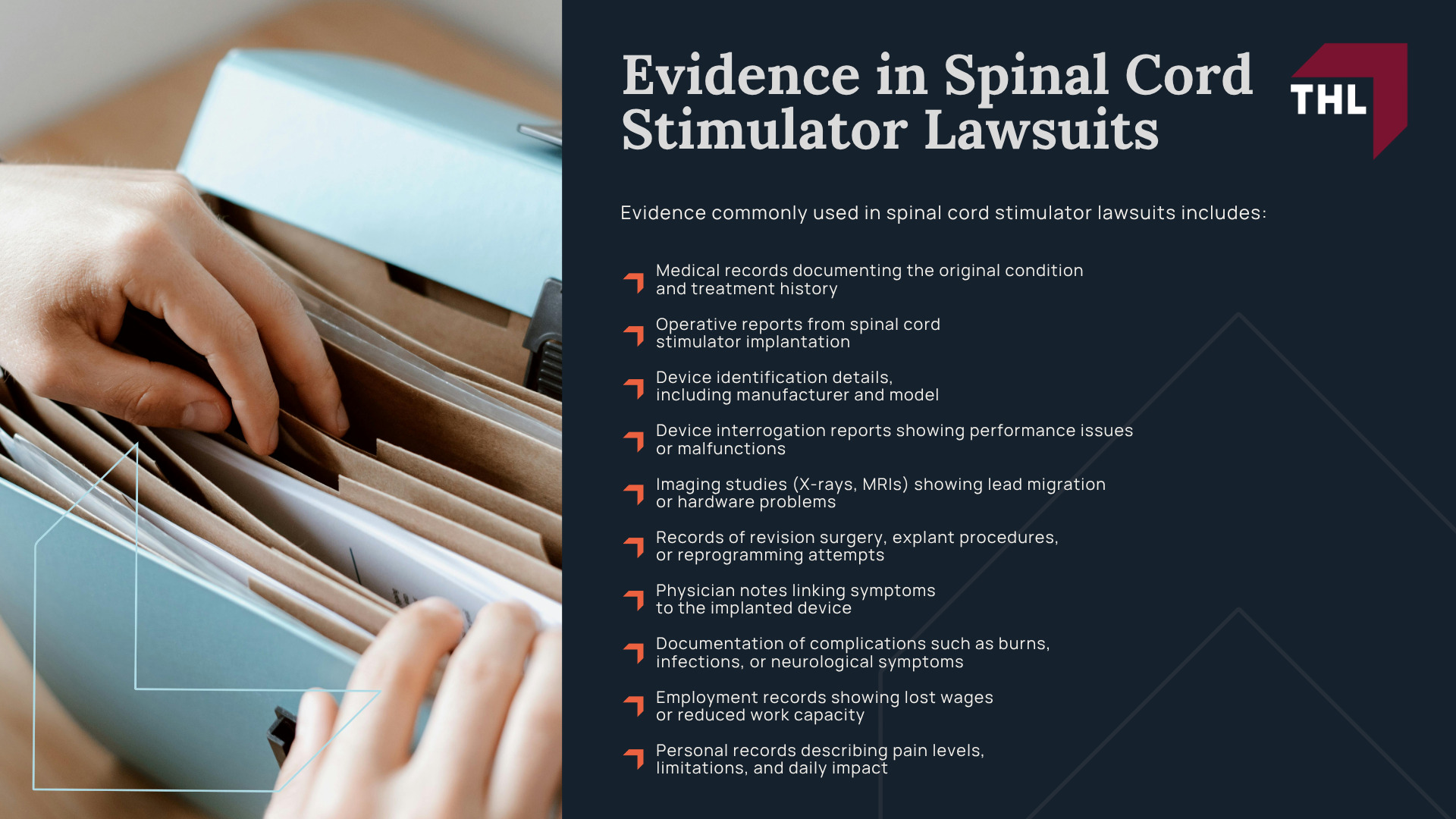
Evidence commonly used in spinal cord stimulator lawsuits includes:

  • Medical records documenting the original condition and treatment history
  • Operative reports from spinal cord stimulator implantation
  • Device identification details, including manufacturer and model
  • Device interrogation reports showing performance issues or malfunctions
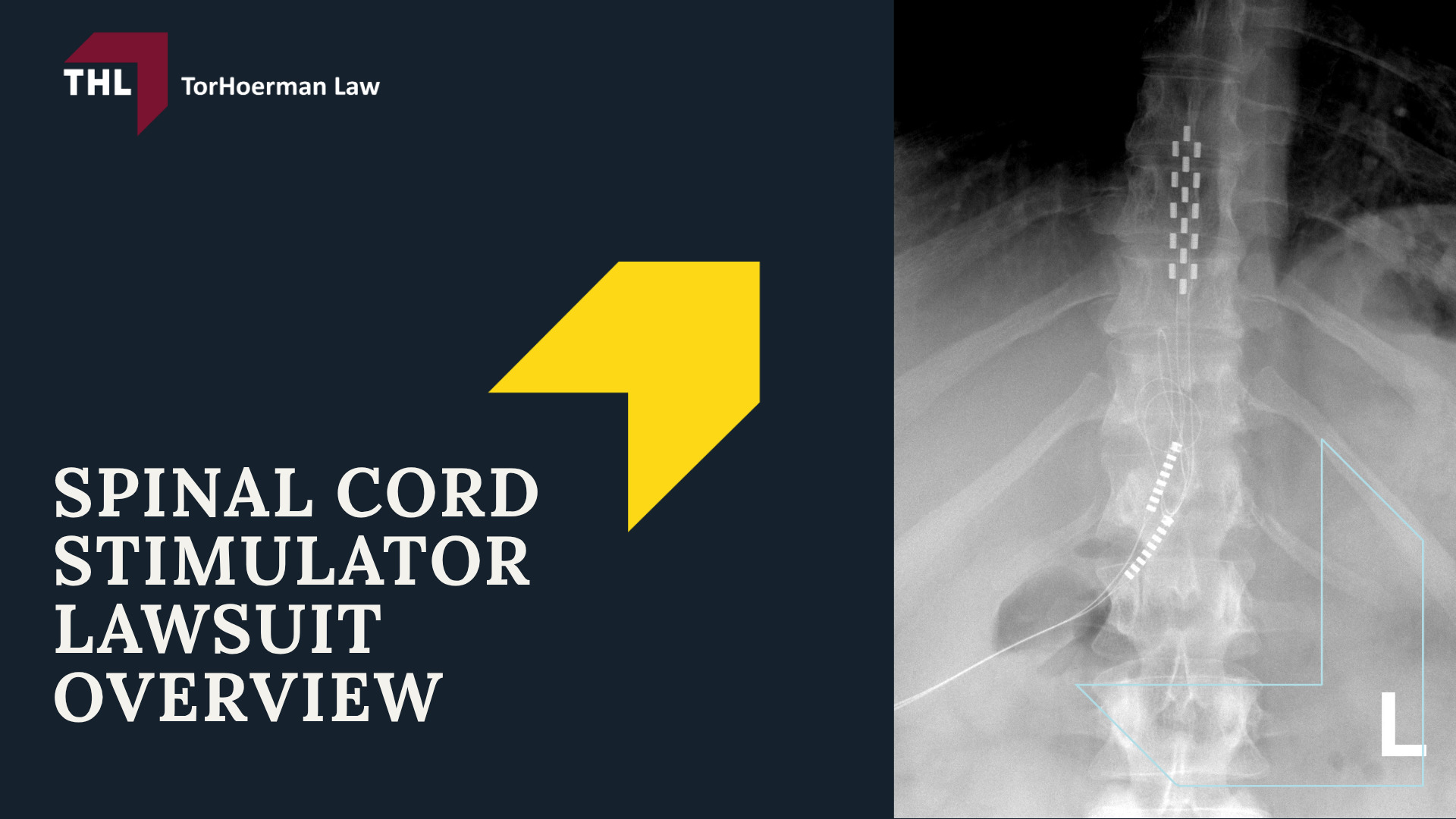
  • Imaging studies (X-rays, MRIs) showing lead migration or hardware problems
  • Records of revision surgery, explant procedures, or reprogramming attempts
  • Physician notes linking symptoms to the implanted device
  • Documentation of complications such as burns, infections, or neurological symptoms
  • Employment records showing lost wages or reduced work capacity
  • Personal records describing pain levels, limitations, and daily impact

Potential Compensation in Spinal Cord Stimulator Cases

In a legal claim, damages refer to the financial compensation sought for the harm caused by a defective medical device or related treatment.

After a spinal cord stimulator operation involving medical devices implanted in the body, lawyers assess damages by reviewing medical records, surgical history, and the long-term impact of the injury on the patient’s daily life.

This process includes evaluating both economic losses, such as medical costs and lost income, and non-economic harm, such as pain, functional limitations, and reduced quality of life.

Attorneys use documentation, expert opinions, and treatment history to calculate a value that reflects the full scope of the injury and its future consequences.

The goal is to present a claim that accounts for both the immediate and ongoing effects of complications tied to spinal cord stimulator use.
Spinal Cord Stimulator Lawsuit Overview; Spinal Cord Stimulator Lawsuit Overview (2); What Are Spinal Cord Stimulator Lawsuits Based On; Spinal Cord Stimulator Complications and Injuries; What Companies Are Named in Spinal Cord Stimulator Lawsuits; Do You Qualify for a Spinal Cord Stimulator Lawsuit; Evidence in Spinal Cord Stimulator Lawsuits;  Potential Compensation in Spinal Cord Stimulator Cases

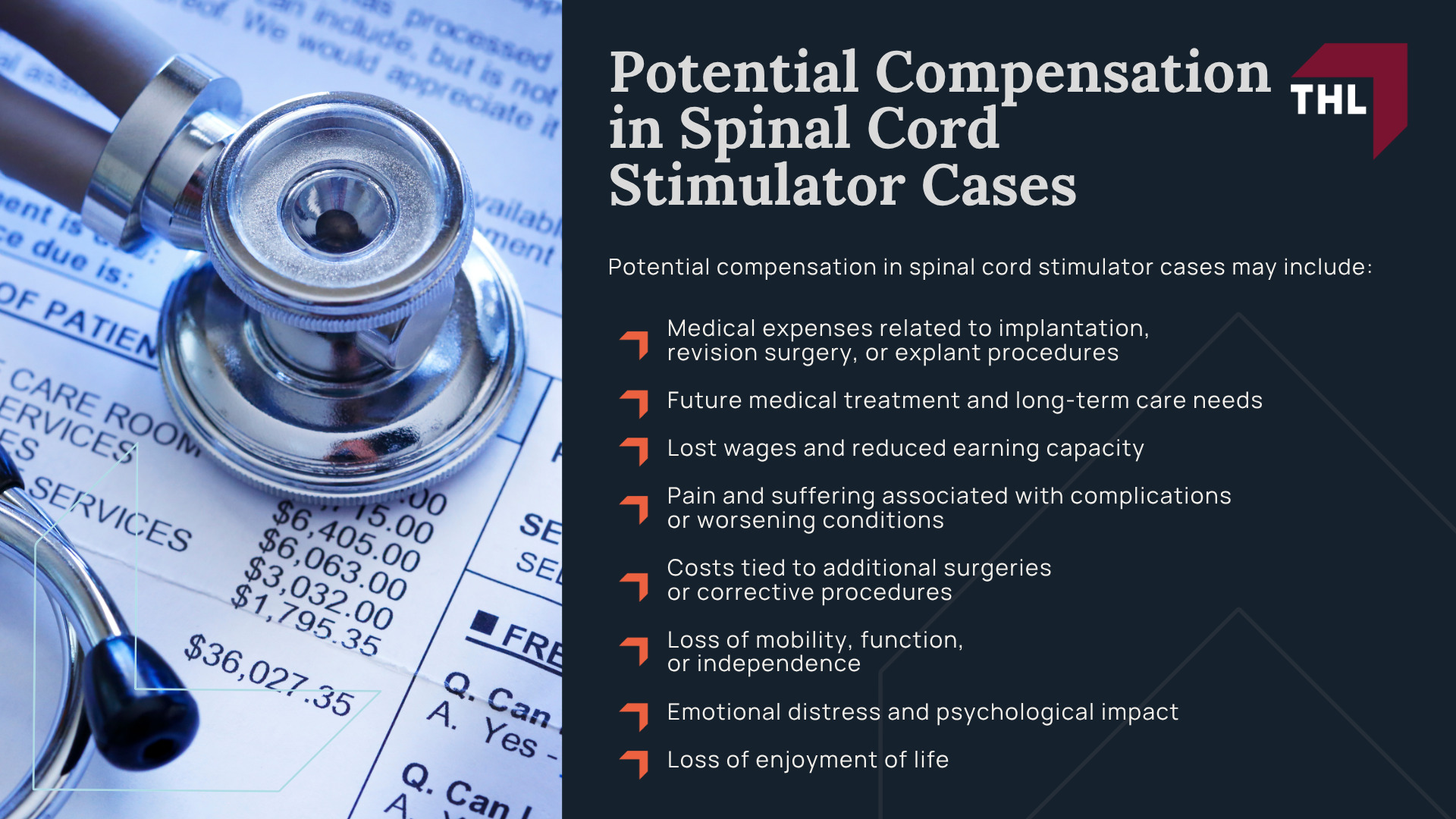
Potential compensation in spinal cord stimulator cases may include:

  • Medical expenses related to implantation, revision surgery, or explant procedures
  • Future medical treatment and long-term care needs
  • Lost wages and reduced earning capacity
  • Pain and suffering associated with complications or worsening conditions
  • Costs tied to additional surgeries or corrective procedures
  • Loss of mobility, function, or independence
  • Emotional distress and psychological impact
  • Loss of enjoyment of life

TorHoerman Law: Reviewing Spinal Cord Stimulator Claims

TorHoerman Law is reviewing claims from patients who suffered complications after receiving spinal cord stimulators manufactured by Boston Scientific, Abbott, Medtronic, Nevro, and other companies.

Potential claims may involve electrical shocks, burns, infection, lead migration, hardware failure, worsening pain, nerve damage, or revision and removal surgery.

Our attorneys examine the manufacturer and model, implant records, programming history, imaging, operative findings, and medical evidence connecting the device to the patient’s injuries.

Because spinal cord stimulator lawsuits involve different products and alleged defects, every claim requires an individual evaluation of liability, damages, and the applicable filing deadline.
Spinal Cord Stimulator Lawsuit Overview; Spinal Cord Stimulator Lawsuit Overview (2); What Are Spinal Cord Stimulator Lawsuits Based On; Spinal Cord Stimulator Complications and Injuries; What Companies Are Named in Spinal Cord Stimulator Lawsuits; Do You Qualify for a Spinal Cord Stimulator Lawsuit; Evidence in Spinal Cord Stimulator Lawsuits;  Potential Compensation in Spinal Cord Stimulator Cases; TorHoerman Law_ Reviewing Spinal Cord Stimulator Claims

Contact TorHoerman Law for a free consultation if you suffered serious injuries after receiving a spinal cord stimulator.

Use the chat feature on this page to find out if you may qualify to file a claim.

Frequently Asked Questions

Published by:
Share
Picture of Tor Hoerman
Tor Hoerman

Tor Hoerman has represented injured individuals for more than 30 years, with experience spanning individual personal injury cases and nationwide mass tort litigation. His work includes car accidents, catastrophic injuries, product liability claims, and other serious injury cases. Tor has served in court-appointed leadership roles in national litigation and tried cases involving major corporate defendants.

TorHoerman Law’s legal content is researched and written by our editorial team and attorneys for legal accuracy, clarity, and relevance. We rely on statutes, court records, government publications, medical research, and other authoritative sources when applicable. This page provides general legal information and does not constitute legal advice.

TorHoerman Law reviews its legal content for factual accuracy, current information, and relevant legal context before publication and as material developments occur. This article is provided for general informational purposes and does not constitute legal advice. For guidance about a specific case, contact TorHoerman Law.

Additional Spinal Cord Stimulator Lawsuit resources on our website:
All
FAQs
Injuries & Conditions
Legal Help
Other Resources
Settlements & Compensation
News

You can learn more about this topic by visiting any of our Spinal Cord Stimulator Lawsuit pages listed below:

Abbott Spinal Cord Stimulator Lawsuit
Boston Scientific Spinal Cord Stimulator Lawsuit
Can Spinal Cord Stimulators Cause Paralysis?
Is There a Spinal Cord Stimulator Class Action Lawsuit?
Medtronic Spinal Cord Stimulator Lawsuit
Nevro Spinal Cord Stimulator Lawsuit
Spinal Cord Stimulator Attorney: Lawsuits, Injuries, and Legal Claims
Spinal Cord Stimulator Lawsuit
Spinal Cord Stimulator Overstimulation Symptoms
Spinal Cord Stimulator Removal Complications
Spinal Cord Stimulator Risks, Injuries, and Complications
Who Qualifies for a Spinal Stimulator Lawsuit?
Accepting Clients
·
mdl 3181
Spinal Cord Stimulator Lawsuit Facts
Defendants
  • Boston Scientific Corporation / Boston Scientific Neuromodulation Corporation
  • Abbott Laboratories / St. Jude Medical
  • Nevro Corp. / Globus Medical, Inc.
  • Medtronic, Inc.
Injuries named in lawsuit
  • Permanent nerve damage
  • Painful electrical shocks or burns
  • Worsening or severe chronic pain
  • Lead migration or lead fracture
  • Neurological deficits
  • Autonomic dysfunction
  • Infection
  • Need for revision or device removal surgery
    You may qualify to file a claim if...
    • You received a permanent spinal cord stimulator manufactured by Boston Scientific, Abbott, Nevro, Medtronic, or another manufacturer.
    • After implantation, you developed serious complications.
    • The complications required revision surgery, device removal, repeated reprogramming, hospitalization, or other significant medical treatment.
    Have you or a loved one been injured?

    A serious injury can change your life.

    Speak with an experienced personal injury lawyer about your rights, your case, and the legal options available to you.
    Google
    •
    677 reviews
    4.9
    ★★★★★
    Recovered damages
    $4 Billion+

    Table of Contents

    Guides & Resources
    About TorHoerman Law

    TorHoerman Law represents people whose lives have been disrupted by serious injuries, unsafe products, and negligence. Our attorneys handle individual personal injury cases as well as national mass tort lawsuits involving major corporations.

    Founded in 2009, our legal team brings more than 100 years of combined experience handling serious injury and complex civil litigation.

    Do you believe you’re entitled to compensation?

    Use our Instant Case Evaluator to find out in as little as 60 seconds!

    $495 Million
    Baby Formula NEC Lawsuit

    In this case, we obtained a verdict of $495 Million for our client’s child who was diagnosed with Necrotizing Enterocolitis after consuming baby formula manufactured by Abbott Laboratories.

    $20 Million
    Toxic Tort Injury

    In this case, we were able to successfully recover $20 Million for our client after they suffered a Toxic Tort Injury due to chemical exposure.

    $103.8 Million
    COX-2 Inhibitors Injury

    In this case, we were able to successfully recover $103.8 Million for our client after they suffered a COX-2 Inhibitors Injury.

    $4 Million
    Traumatic Brain Injury

    In this case, we were able to successfully recover $4 Million for our client after they suffered a Traumatic Brain Injury while at daycare.

    $2.8 Million
    Defective Heart Device

    In this case, we were able to successfully recover $2.8 Million for our client after they suffered an injury due to a Defective Heart Device.

    Other Spinal Cord Stimulator Lawsuit Resources

    All
    FAQs
    Injuries & Conditions
    Legal Help
    Other Resources
    Settlements & Compensation
    News