The U.S. Judicial Panel on Multidistrict Litigation created the Dupixent MDL on June 4, 2026, after determining that federal lawsuits involving Dupixent and cutaneous T-cell lymphoma shared common factual questions.
The proceeding is formally titled In re: Dupixent (Dupilumab) Products Liability Litigation, MDL No. 3180, and is pending in the U.S. District Court for the District of New Jersey.
The cases have been assigned to U.S. District Judge Zahid N. Quraishi for coordinated pretrial proceedings.
When the transfer order was entered, the litigation included 15 filed actions and seven potential tag-along cases spread across 12 federal districts.
Many plaintiffs were patients receiving dupilumab therapy for severe atopic dermatitis, while others included asthma patients and people treated for additional inflammatory conditions.
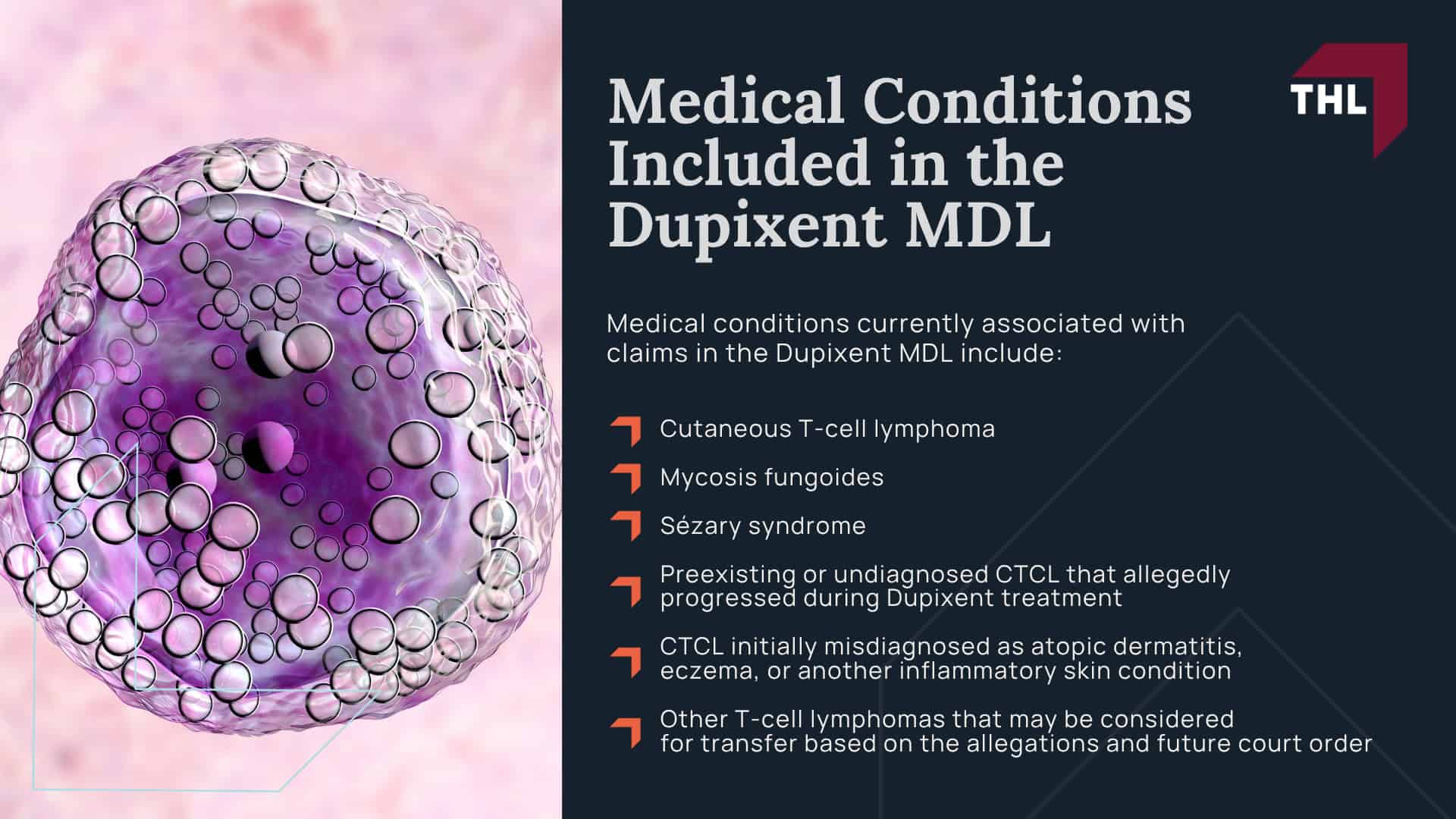
The lawsuits allege that some users developed CTCL after starting Dupixent, while others had preexisting or undiagnosed lymphoma that progressed during treatment.
The litigation will examine CTCL compared to atopic dermatitis, including whether overlapping skin symptoms caused lymphoma to be mistaken for eczema before patients received a biopsy or specialist evaluation.
The court will also address evidence concerning lymphoma risk and potential mechanism, the manufacturers’ knowledge of reported cases, and the warnings provided to doctors and patients.

The allegations raised across the centralized lawsuits include:
- Dupixent caused or contributed to the development of cutaneous T-cell lymphoma in certain users.
- Dupixent accelerated the progression of preexisting or undiagnosed CTCL.
- Early CTCL symptoms were misidentified as eczema or severe atopic dermatitis before patients began treatment.
- Sanofi, Regeneron, and Genzyme knew or should have known about reports linking dupilumab use to CTCL.
- The manufacturers failed to provide adequate warnings about the alleged lymphoma risk.
- Dupixent’s effects on IL-4 and IL-13 signaling may create a biological pathway that promotes or unmasks malignant T-cell activity.
- Doctors and patients were not given sufficient information to evaluate persistent, worsening, or atypical skin symptoms during treatment.
- Delayed biopsies and lymphoma diagnoses allowed some patients’ disease to progress before appropriate cancer treatment began.
- The manufacturers continued to market Dupixent without adding warnings that plaintiffs claim were supported by medical literature and adverse event reports.
Centralization allows Judge Quraishi to oversee shared discovery concerning Dupixent’s development, safety monitoring, reported CTCL cases, corporate communications, and warning decisions.
The MDL does not establish that Dupixent causes lymphoma or resolve whether any individual plaintiff is entitled to compensation.
Each claimant must still present evidence connecting Dupixent use to the diagnosis, progression, and resulting damages alleged in the individual lawsuit.
What is Multidistrict Litigation (MDL)?
Multidistrict litigation, or MDL, is a federal court process used to coordinate lawsuits that involve common factual questions.
The U.S. Judicial Panel on Multidistrict Litigation may transfer those cases to one federal judge for shared pretrial proceedings.
The assigned court can oversee document production, depositions, expert discovery, motions, and other issues that would otherwise be repeated across multiple districts.
Each plaintiff keeps an individual lawsuit based on their own medical history, alleged injuries, and damages.

Cases that do not settle or resolve during the coordinated proceedings may later return to their original federal courts for trial.
MDL proceedings are frequently used in pharmaceutical and medical product litigation involving common evidence about product design, safety warnings, corporate conduct, and scientific causation.
Is there a Dupixent Class Action Lawsuit?
There is no Dupixent class action lawsuit, but federal Dupixent claims have been consolidated in multidistrict litigation known as MDL No. 3180.
A class action allows one or more representatives to pursue claims on behalf of a larger group, while an MDL coordinates separate lawsuits that share common factual and legal issues.
Each person in the Dupixent MDL keeps an individual claim and must establish their own treatment history, CTCL diagnosis, causation, damages, and eligibility for compensation.
The federal court can address shared discovery, expert testimony, corporate records, and warning allegations without deciding every plaintiff’s case at once.
Lawsuits that do not settle or resolve during the MDL may later return to their original federal courts for individual trials.