Dupixent cancer lawsuits allege lymphoma linked to the drug, particularly cutaneous T cell lymphoma (CTCL) and other rare cancers of T cells, after Dupixent patients received the medication for presumed atopic dermatitis, asthma, or related conditions.
Observational data cited in these claims include TriNetX-based cohorts and JAAD analyses suggesting Dupixent users faced a higher risk of developing CTCL compared with similar patients who were not treated with dupilumab.
These lawsuits also point to the FDA’s FAERS review and safety signal naming CTCL as a potential concern after a growing number of lymphoma diagnoses in patients treated with Dupixent.
Medical case reports and systematic reviews describe CTCL, mycosis fungoides, Sézary syndrome, peripheral T-cell lymphoma, and NK cell lymphomas emerging during or after Dupixent therapy, often in people with long-standing inflammatory skin disease.
Because Dupixent acts on cytokine pathways that regulate white blood cells involved in type 2 inflammation, plaintiffs argue that the drug may alter the course of occult lymphoid disease or worsen hidden lymphomas mistaken for severe eczema.
They further contend that atypical or worsening CTCL symptoms were sometimes attributed to “refractory dermatitis,” contributing to delayed diagnosis and more serious health complications.

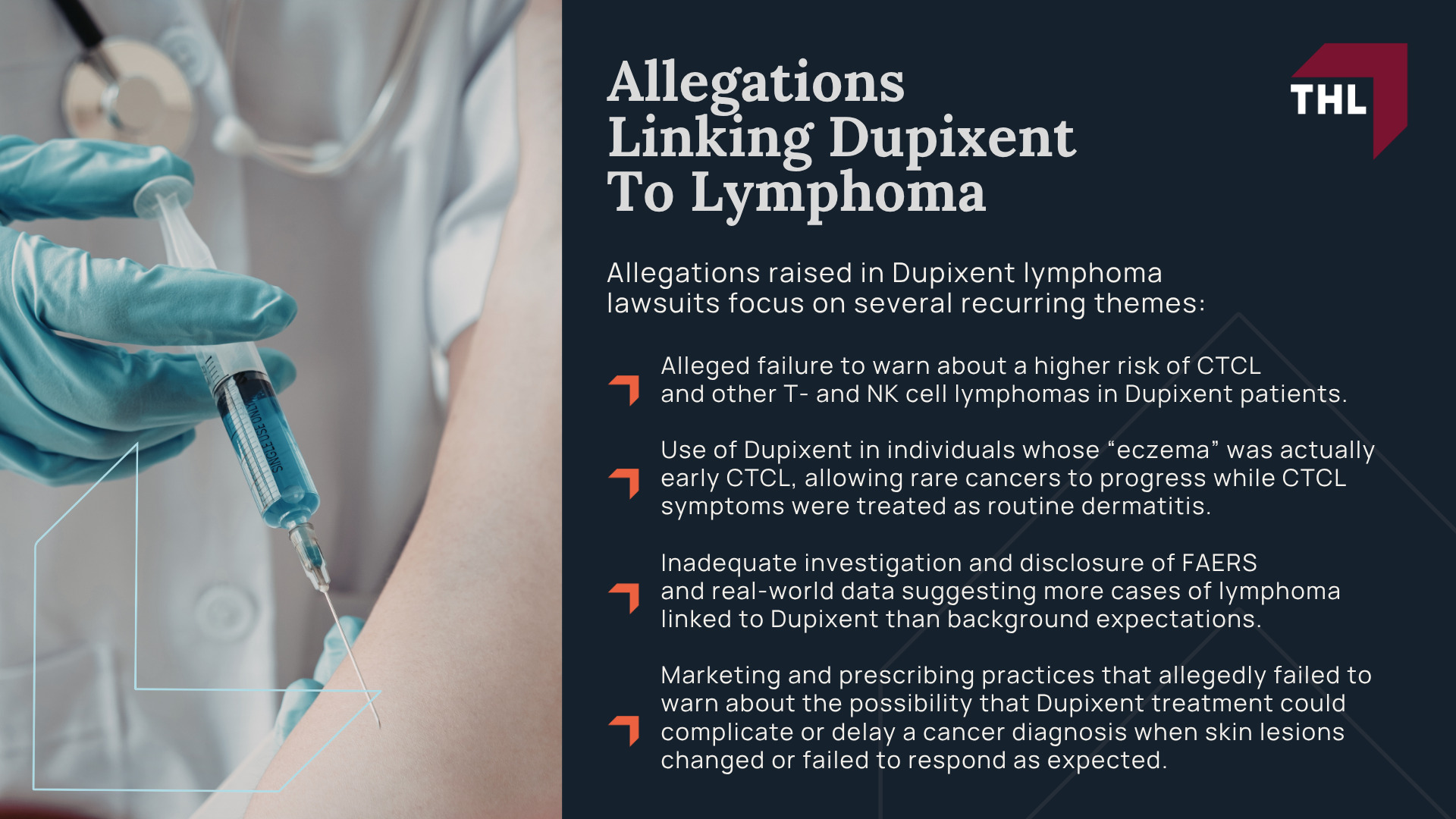
Allegations raised in Dupixent lymphoma lawsuits focus on several recurring themes:
- Alleged failure to warn about a higher risk of CTCL and other T- and NK cell lymphomas in Dupixent patients.
- Use of Dupixent in individuals whose “eczema” was actually early CTCL, allowing rare cancers to progress while CTCL symptoms were treated as routine dermatitis.
- Inadequate investigation and disclosure of FAERS and real-world data suggesting more cases of lymphoma linked to Dupixent than background expectations.
- Marketing and prescribing practices that allegedly failed to warn about the possibility that Dupixent treatment could complicate or delay a cancer diagnosis when skin lesions changed or failed to respond as expected.
Researchers and regulators have not reached consensus on whether dupilumab directly increases lymphoma risk, and several reviews stress that causation has not been established despite the accumulating reports.
Some studies suggest that atopic dermatitis itself carries an elevated lymphoma baseline and that dupilumab may primarily unmask underlying disease rather than initiate it.
As the data evolve, the scientific debate focuses on how often CTCL and related rare cancers are detected after dupilumab exposure and what role, if any, the drug plays in their development and progression.
Within that unsettled landscape, Dupixent lawsuits frame these scientific questions around individual injury, arguing that patients treated with the drug were not adequately informed of potential cancer diagnosis risks and the possibility of delayed diagnosis.
Medical And Scientific Evidence Under Review
Multiple lines of medical and pharmacovigilance evidence are being examined to understand whether Dupixent is associated with an increased risk of lymphoma, particularly cutaneous T-cell lymphoma (CTCL) and related rare cancers.
Researchers have evaluated case reports, registry data, adverse event reporting systems, and observational cohort studies involving Dupixent patients with later lymphoma diagnoses.
These sources do not establish definitive causation, but they form the backbone of allegations that Dupixent may contribute to, or unmask, certain lymphoid malignancies in a subset of patients.
Key studies and safety reviews being evaluated in connection with alleged Dupixent-related lymphoma include:
- FDA FAERS “Potential Safety Signal” for CTCL – The FDA’s October–December 2024 FAERS report lists “Dupixent (dupilumab) – Cutaneous T-cell lymphoma” as a potential signal of serious risk, indicating that regulators are evaluating whether post-marketing reports warrant label or regulatory changes.
- VigiBase / JAAD pharmacovigilance analysis – A global adverse-event database study published in Journal of the American Academy of Dermatology found no overall increased cancer signal for dupilumab except for CTCL, which appeared disproportionately reported compared with other cancers.
- Retrospective atopic dermatitis cohort studies – Retrospective cohorts using real-world data have reported higher odds of CTCL in dupilumab-treated atopic dermatitis patients compared to non-dupilumab comparators, raising concerns about potential increased risk or unmasking of misdiagnosed early CTCL.
- Case reports and series of T-cell and NK-cell lymphomas – Published case reports describe patients developing CTCL, mycosis fungoides, Sézary syndrome, and other T-cell and NK-cell lymphomas during or after Dupixent therapy, often after years of presumed severe eczema, suggesting a possible relationship that warrants further study.
About Cutaneous T-Cell Lymphoma (CTCL)
Cutaneous T-cell lymphoma, or CTCL, is a rare type of non-Hodgkin lymphoma that begins in T-lymphocytes and first shows up in the skin rather than in lymph nodes or other organs.
The two most common forms are mycosis fungoides and Sézary syndrome, and CTCL often develops slowly at first, which is one reason it can be difficult to recognize early.
Early CTCL may look like ordinary eczema, dermatitis, or psoriasis, with red, scaly, itchy patches or plaques that can linger for years before the diagnosis becomes clear.
As the disease progresses, some patients develop thicker plaques, nodules, tumors, erythroderma, swollen lymph nodes, or cancerous T-cells in the blood, especially in Sézary syndrome.
Diagnosis usually requires a combination of skin biopsies, physical examination, blood testing, and, in many cases, imaging or repeat biopsies because early pathology can be nonspecific.
Major cancer resources note that CTCL can range from indolent, skin-limited disease to aggressive illness that spreads to lymph nodes, blood, liver, spleen, or other organs.
Treatment depends on stage and may include skin-directed therapy, radiation, systemic drugs, immunotherapy, targeted therapy, or chemotherapy.
Key facts about CTCL include:
- It is the most common type of primary cutaneous lymphoma, meaning it starts in the skin.
- Mycosis fungoides is the most common CTCL subtype, and Sézary syndrome is a more aggressive leukemic form involving the skin and blood.
- Common symptoms include itching, red patches, plaques, papules, nodules, tumors, or widespread rash, and some patients also develop enlarged lymph nodes.
- CTCL is often staged using findings from the skin, lymph nodes, blood, and internal organs, not just the appearance of the rash.
- Because early CTCL can resemble benign inflammatory skin disease, diagnosis may require multiple biopsies over time.
- Some cases are slow-growing, but others can become more aggressive and spread beyond the skin.
- Standard treatment may involve topical therapies, phototherapy, radiation, systemic therapy, immunotherapy, or targeted therapy, depending on disease extent.