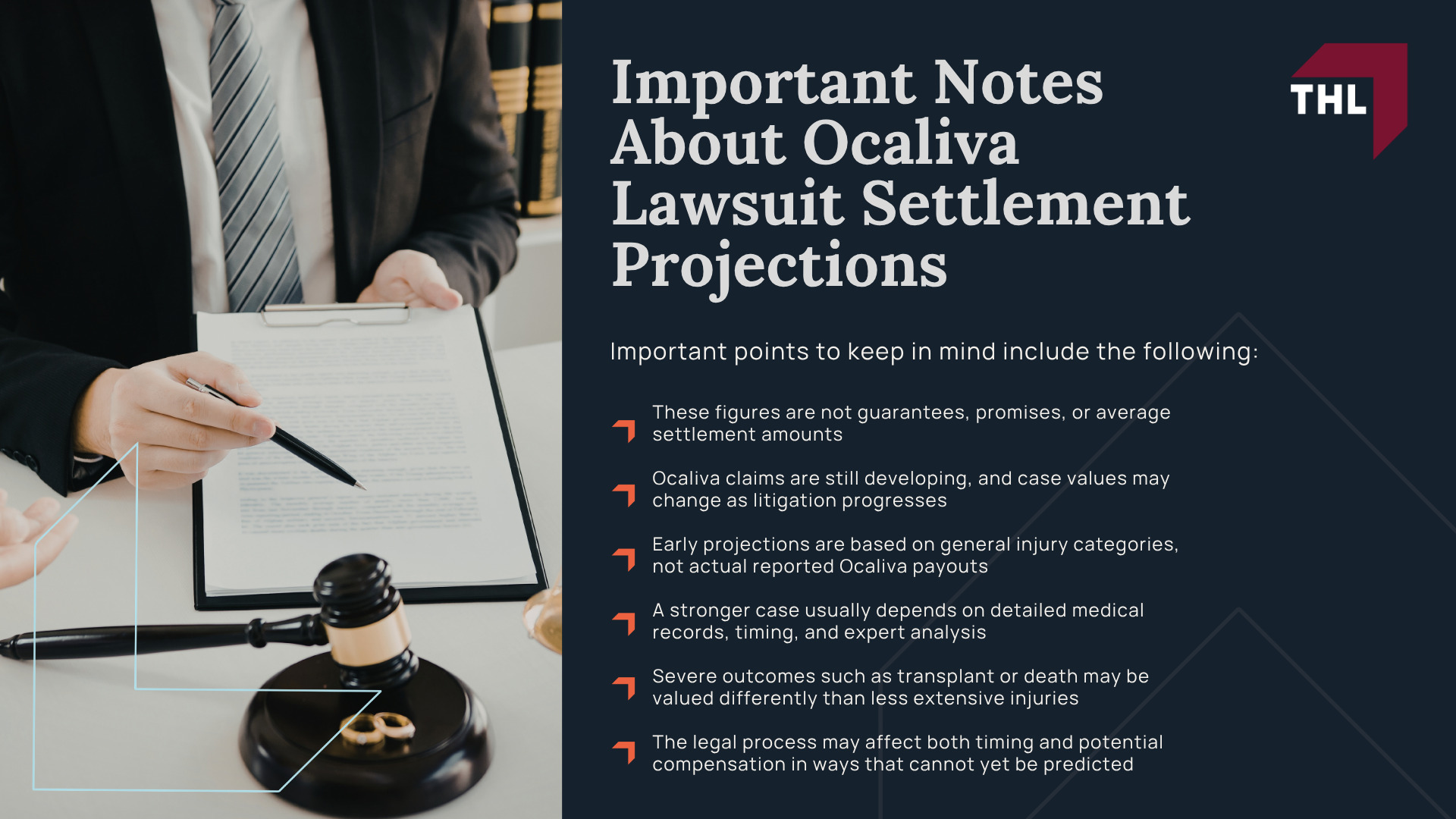
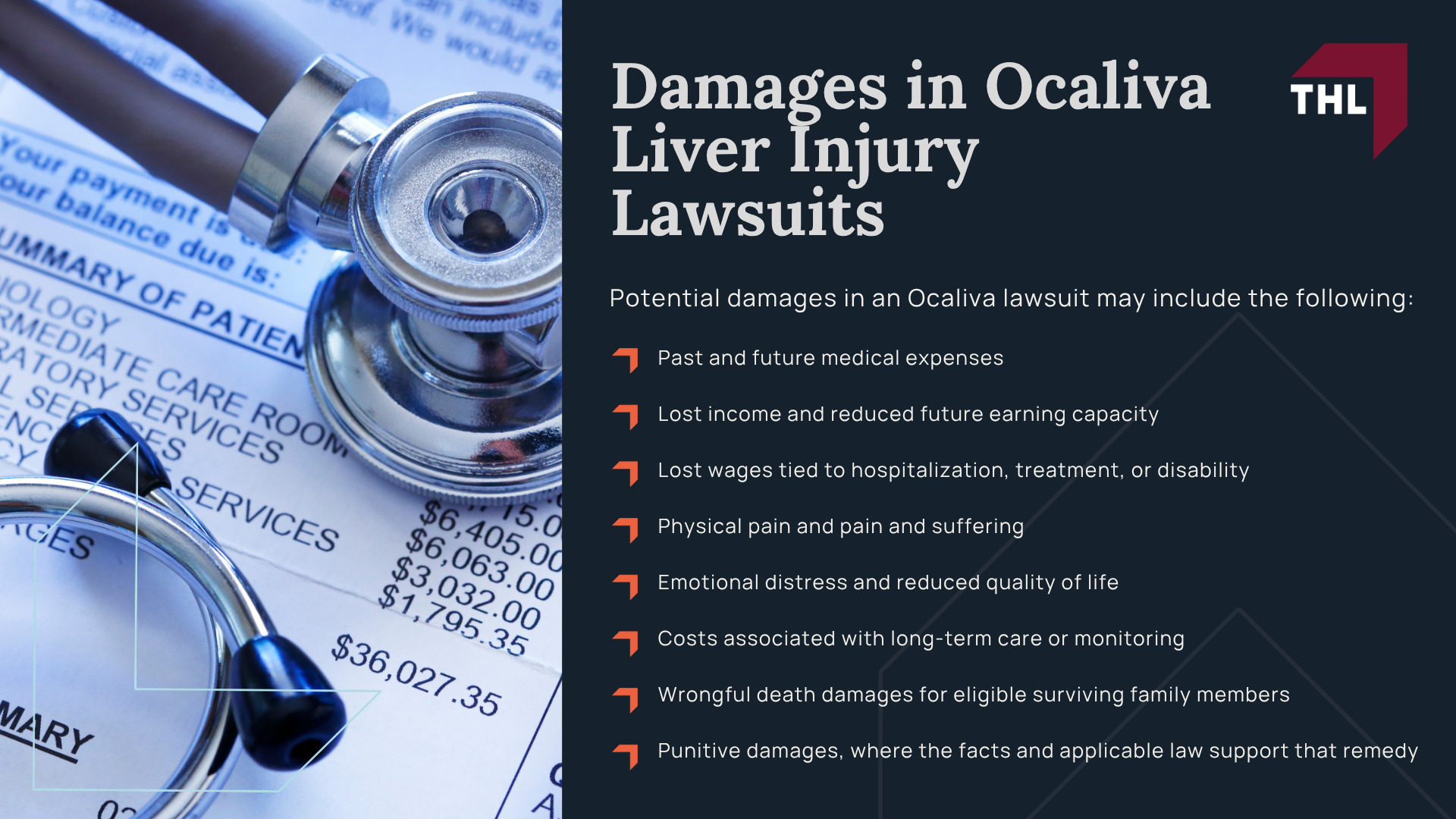
At this stage, the estimated Ocaliva lawsuit settlement range remains broad, with early projections falling around $75,000 to $250,000+ depending on the facts of the case.
That range is not based on any reported Ocaliva payouts, but on the types of injuries now being examined and the way severe pharmaceutical injury claims are often valued in early litigation.
Cases involving serious liver damage, repeated hospitalization, or documented liver decline may be viewed very differently from claims involving more limited complications.
Potential value may also depend on whether the evidence suggests the drug contributed to accelerating liver disease progression beyond what physicians would have otherwise expected.
The highest-value claims may involve catastrophic outcomes, including transplant-related injuries and fatal liver failure.
The sections below break that range down further by injury severity, medical proof, and the long-term impact on the person or family bringing the claim.
Projected Range for Moderate Liver Injury Claims
Some projected Ocaliva claims may fall into a lower settlement tier when the reported injury involves impaired liver function without transplant, liver failure, or another catastrophic outcome.
In this context, the estimated range may begin around $50,000 to $100,000, though no public Ocaliva settlements have been reported and any figure remains an early projection only.
These cases may involve less serious liver complications that still required medical attention, medication changes, or follow-up care after concerns about Ocaliva’s risks emerged.
Even in moderate claims, case value may depend heavily on whether medical experts can connect the person’s decline to the drug rather than the expected course of disease in PBC patients.
This category does not mean the injury was minor, only that the long-term damage, financial losses, and overall medical burden may be more limited than in higher-value claims.
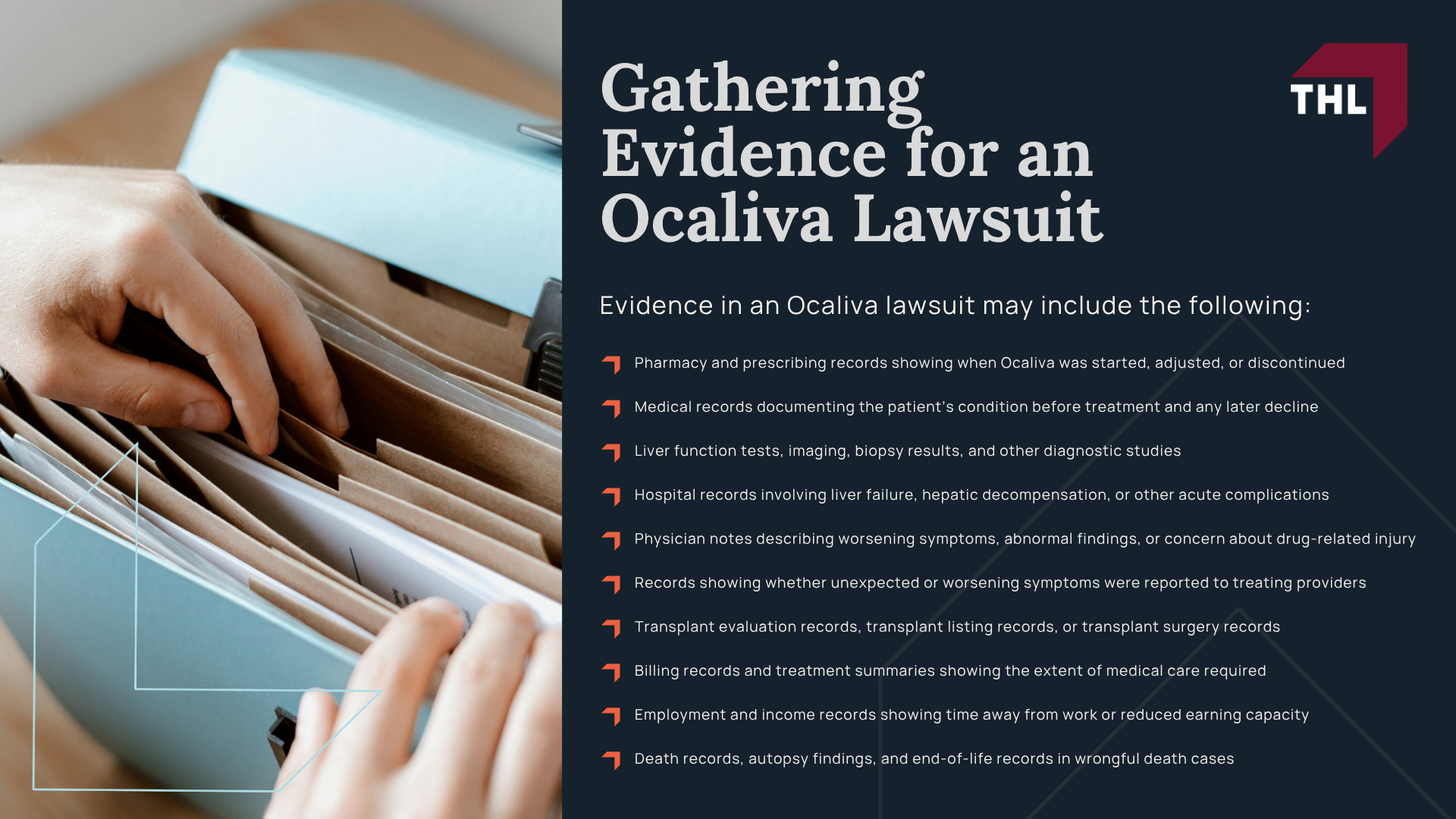
Medical records and expert review may focus on factors such as the following:
- Documented impaired liver function after Ocaliva use
- Less serious liver complications that did not lead to transplant or death
- Medication discontinuation, monitoring, or short-term treatment changes
- Medical records showing a change from baseline liver status
- Expert review addressing whether Ocaliva’s risks contributed to the injury in PBC patients
Projected Range for Severe Liver Injury Claims
Some projected Ocaliva claims may fall into a higher tier when the evidence points to significant liver injury rather than a more limited change in liver function.
In this category, an estimated range of $100,000 to $200,000 may apply in early projections, though no public Ocaliva settlements have been reported and these figures remain speculative.
These cases may involve a rapid decline in liver health, more substantial treatment needs, and a stronger argument that the drug contributed to worsening complications beyond the expected course of disease.
The value of these claims may increase when the records show more serious disruption affecting the liver and bile ducts, particularly in cases involving life-threatening liver complications.
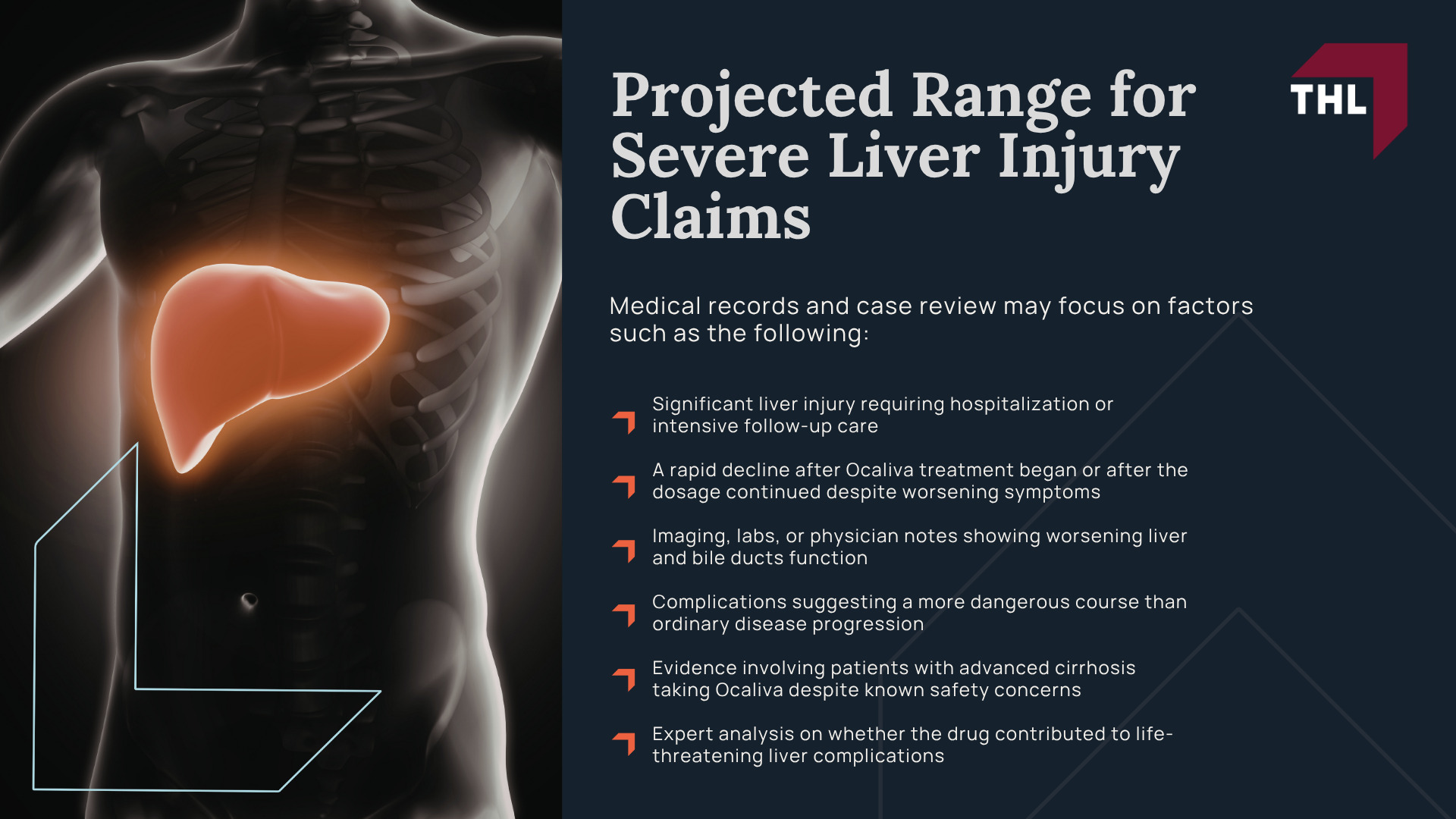
Medical records and case review may focus on factors such as the following:
- Significant liver injury requiring hospitalization or intensive follow-up care
- A rapid decline after Ocaliva treatment began or after the dosage continued despite worsening symptoms
- Imaging, labs, or physician notes showing worsening liver and bile ducts function
- Complications suggesting a more dangerous course than ordinary disease progression
- Evidence involving patients with advanced cirrhosis taking Ocaliva despite known safety concerns
- Expert analysis on whether the drug contributed to life-threatening liver complications
This projected range still depends on medical proof, causation evidence, and the person’s long-term outcome.
Claims involving transplant, permanent disability, or death would likely be evaluated in a higher category.
Projected Range for Liver Transplant Claims
Claims involving Ocaliva users who required a liver transplant may fall into one of the highest projected settlement tiers because transplantation reflects a profound and life-altering medical outcome.
In this category, an early estimated range of $150,000 to $200,000+ may apply, though no public Ocaliva settlements have been reported and any figure remains a preliminary projection only.
These cases often involve acute liver failure, severe hospitalization, and long-term medical consequences that extend far beyond the initial injury.
Potential value may also rise where the records suggest worsening liver injury after treatment began, especially when the person’s condition progressed toward permanent organ damage.
In some cases, the central dispute may be whether the transplant became necessary because of the expected course of advanced liver disease or because Ocaliva contributed to an additional and avoidable decline.
That question will likely depend on detailed medical records, treating physicians, and expert review of how the injury developed over time.
Projected Range for Wrongful Death Claims
Wrongful death claims may represent the highest projected tier in this litigation because they involve the loss of a person who was prescribed Ocaliva and later allegedly developed liver injury that proved fatal.
In this category, early projections may begin at $200,000+, though no public Ocaliva settlements or verdicts have been reported and any estimate remains speculative.
These cases may involve allegations that the drug contributed to fatal liver failure, transplant-related complications, or another irreversible decline that ended in death.
The projected value of these claims may depend on the available medical evidence, the age and circumstances of the person who died, and the financial and personal losses suffered by surviving family members.
Some of the most complex cases may include liver transplant death claims, where the medical timeline involves both severe intervention and an alleged fatal outcome.
Case review in wrongful death claims may focus on factors such as the following:
- Whether the person was prescribed Ocaliva before the fatal decline
- Medical records showing the person developed liver injury after treatment began
- Evidence of hospitalization, liver failure, or transplant-related complications before death
- The extent of economic losses and support previously provided to family members
- Testimony from treating physicians and experts about causation
- Whether surviving relatives may seek compensation through a wrongful death lawsuit
These cases are often fact-intensive and may require careful review of the full treatment history, including liver function testing, hospital records, and end-of-life care.
They may also involve legal questions about who has the right to bring the claim and what categories of damages may be available under the applicable state law.
Because of that, wrongful death projections should be presented cautiously and tied to the specific facts of the case rather than any assumed average payout.