The herbicide paraquat has become the focus of large-scale mass tort litigation involving plaintiffs who allege that long-term paraquat exposure contributed to Parkinson’s disease after years of agricultural use.
Paraquat is still sold in the United States as a restricted-use product, and EPA describes it as one of the country’s most widely used herbicides, noting that paraquat kills plants on contact and may be handled only by trained certified applicators.
Thousands of filed lawsuits have been centralized in the Paraquat multidistrict litigation (MDL) in the Southern District of Illinois.
The paraquat MDL generally alleges that repeated occupational exposure to the product, including direct handling, contaminated equipment contact, and in some cases pesticide drift, created serious neurological risks that were not adequately addressed in product warnings.
EPA has separately acknowledged worker exposure concerns and identified potential bystander risks from spray drift at the edge of treated fields.
The MDL has not moved in a straight line, because the court dismissed early trial-selection cases in April 2024 after excluding a key plaintiffs’ expert, then later selected replacement cases and set new case-specific discovery tracks.
In 2025, the court stayed those deadlines while lead counsel worked on settlement terms, later vacated the October 14, 2025 trial date, and stated that a global settlement had been agreed to in principle.
That procedural history matters because the Paraquat case is still active, but it is now shaped as much by settlement negotiations and docket management as by a simple march toward paraquat bellwether trials.
For people considering legal action, the basic issue is whether their diagnosis and exposure history fit the claims being advanced in this litigation, while the larger purpose of these cases is securing compensation for the medical, financial, and personal losses tied to an alleged paraquat-related Parkinson’s diagnosis.
Who Qualifies for the Paraquat Parkinson’s Lawsuit?
People who may qualify to file a paraquat claim are generally those who developed Parkinson’s disease after repeated contact with paraquat.
As we’ve established, paraquat is a highly toxic herbicide that is restricted to certified applicators because of its acute dangers.
The litigation focuses on people whose exposure occurred through occupational or environmental contact with paraquat products over months or years.
Parkinson’s disease is a progressive neurological disorder that affects movement, coordination, and other functions of the nervous system, and it is the primary injury alleged in these cases.
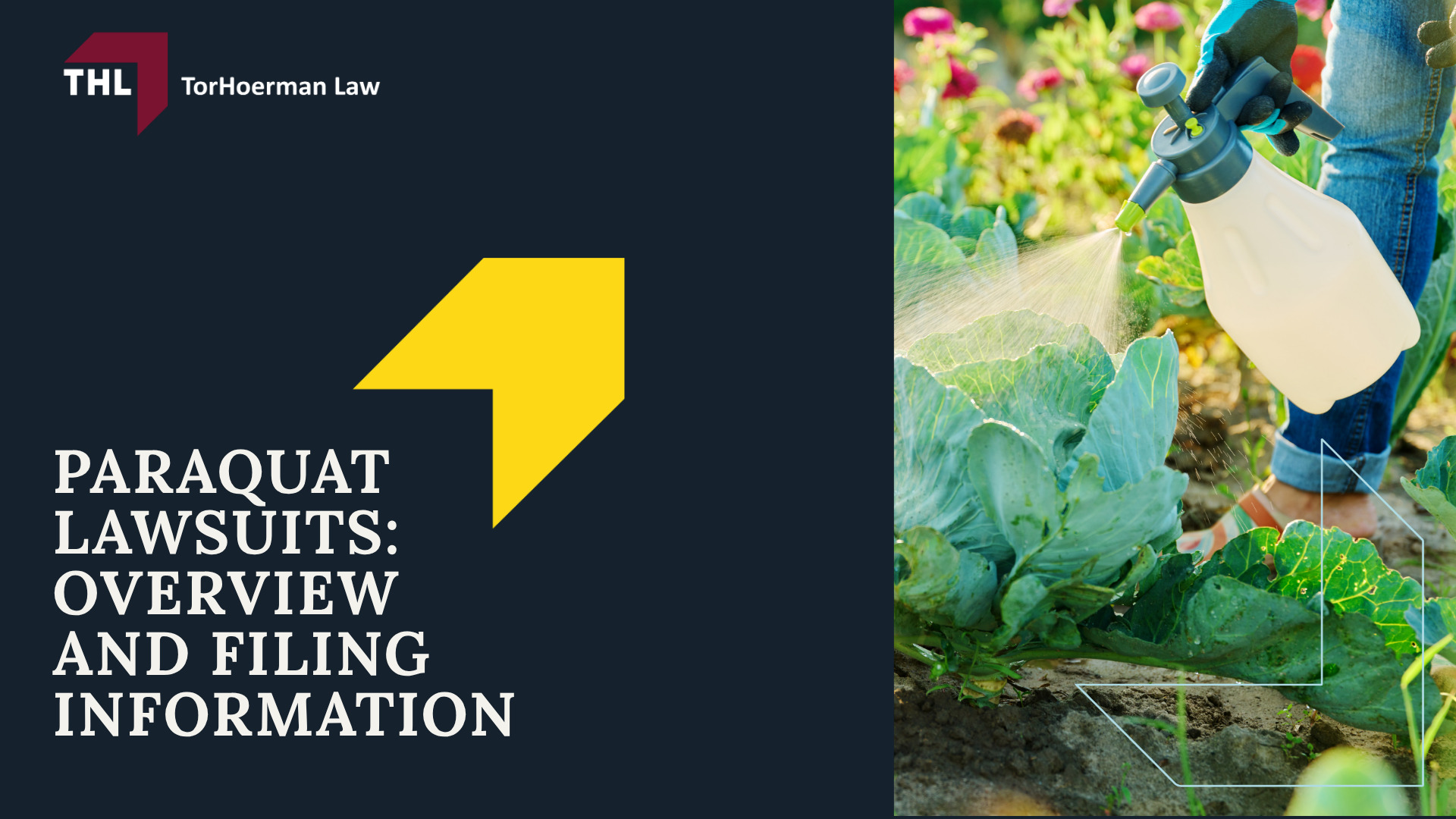
Many claimants worked in agriculture or landscaping and sprayed paraquat, mixed it for application, or handled contaminated equipment and containers.
These cases are now part of ongoing multidistrict litigation, where thousands of filed lawsuits have been consolidated in federal court to address shared factual and legal issues.
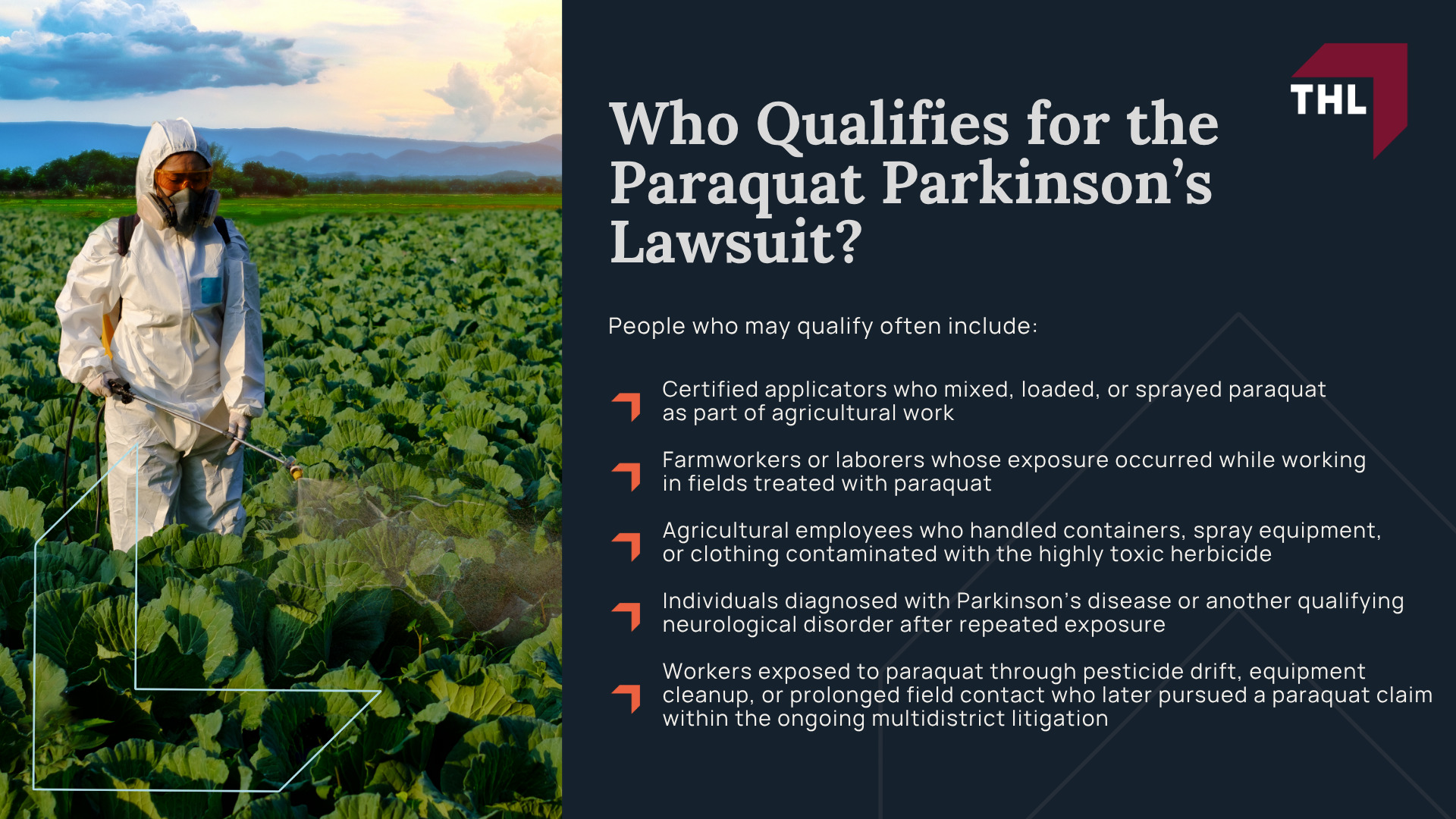
People who may qualify often include:
- Certified applicators who mixed, loaded, or sprayed paraquat as part of agricultural work
- Farmworkers or laborers whose exposure occurred while working in fields treated with paraquat
- Agricultural employees who handled containers, spray equipment, or clothing contaminated with the highly toxic herbicide
- Individuals diagnosed with Parkinson’s disease or another qualifying neurological disorder after repeated exposure
- Workers exposed to paraquat through pesticide drift, equipment cleanup, or prolonged field contact who later pursued a paraquat claim within the ongoing multidistrict litigation
What Companies are Named as Defendants in the Paraquat MDL?
The Paraquat MDL was formed to coordinate federal cases alleging that exposure to paraquat contributed to Parkinson’s disease, and the core defendants identified in the federal litigation have consistently included Syngenta entities and Chevron.
The court’s orders describe Syngenta Crop Protection LLC and Syngenta AG as the companies that currently manufacture and distribute paraquat for use in the United States, while Chevron U.S.A. Inc. is described as a former manufacturer and distributor.
The transfer record also shows that some tag-along actions have named additional defendants in particular cases, so the defendant list can vary somewhat from one filed complaint to another within the broader MDL.
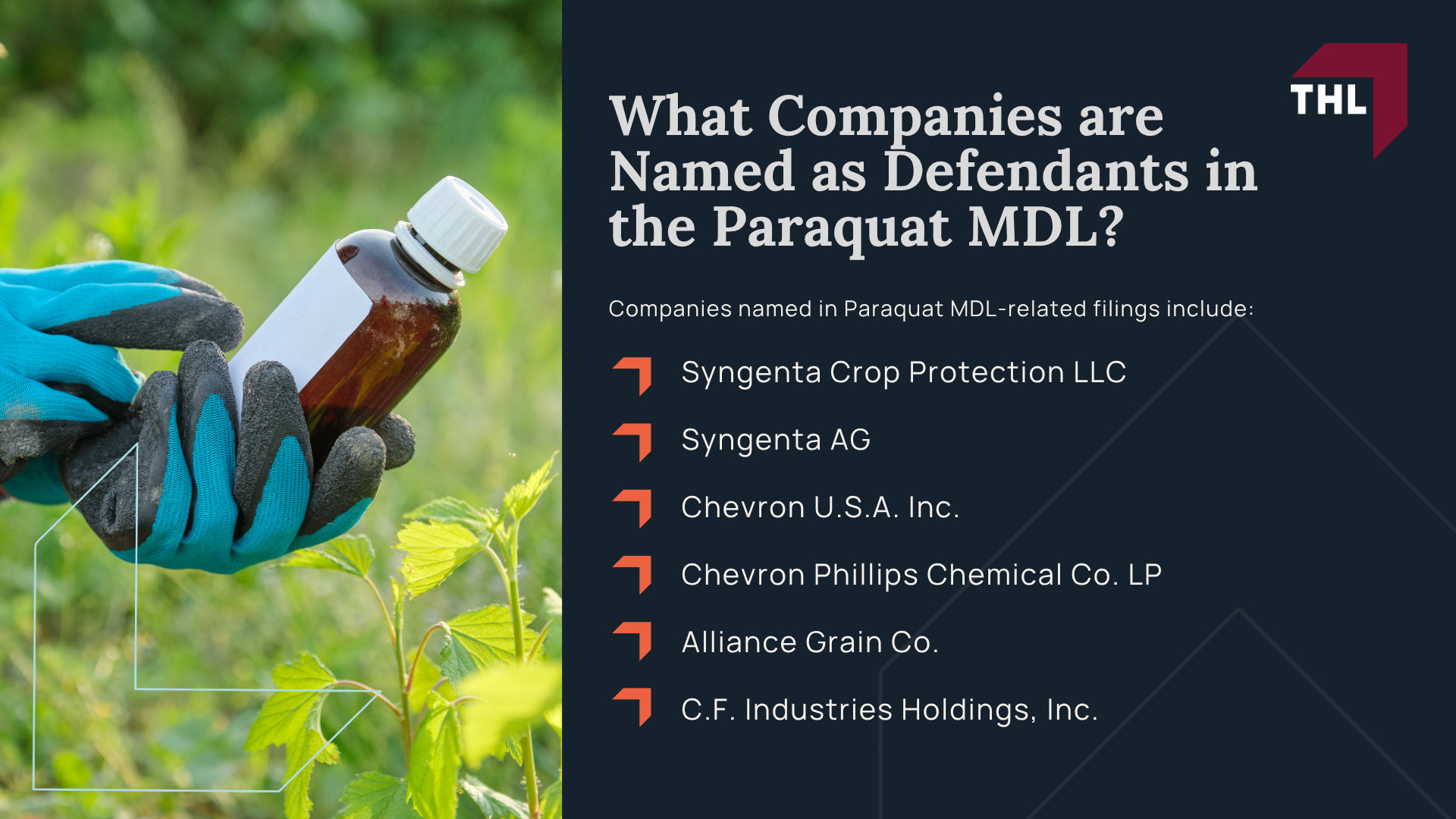
Companies named in Paraquat MDL-related filings include:
- Syngenta Crop Protection LLC
- Syngenta AG
- Chevron U.S.A. Inc.
- Chevron Phillips Chemical Co. LP in some transferred actions
- Alliance Grain Co. in some transferred actions
- C.F. Industries Holdings, Inc. in some transferred actions
How Do I Sign Up with a Paraquat Lawsuit Attorney?
Signing up with a Paraquat lawsuit attorney typically begins with a case evaluation to determine whether your diagnosis and exposure history may qualify for a claim.
TorHoerman Law offers free, no-obligation consultations to individuals who believe they may have developed Parkinson’s disease after exposure to paraquat.
You can also use the chat feature on this page to find out if you qualify for the paraquat lawsuit through a short questionnaire.
During this consultation, the legal team reviews details such as work history, how the exposure occurred, and when symptoms or diagnosis began.

If the case meets the basic criteria for the litigation, the attorney can explain the process for filing a Paraquat claim and participating in the ongoing proceedings.
TorHoerman Law handles Paraquat cases on a contingency fee basis, which means victims do not pay for legal representation unless compensation is recovered in their case.
What Health Conditions are Linked to Paraquat Exposure?
Paraquat lawsuits largely focus on Parkinson’s disease, but scientific research has also examined other medical complications linked to exposure to this chemical.
Paraquat is known to affect multiple organs and body systems, and medical literature has discussed several potential health risks associated with poisoning or long-term contact.
In acute cases, paraquat poisoning can cause widespread organ damage because the chemical produces toxic oxidative stress throughout the body.
Researchers have also studied the impact of paraquat on the central nervous system, which may help explain why the herbicide is frequently discussed in connection with Parkinson’s disease and related neurological conditions.
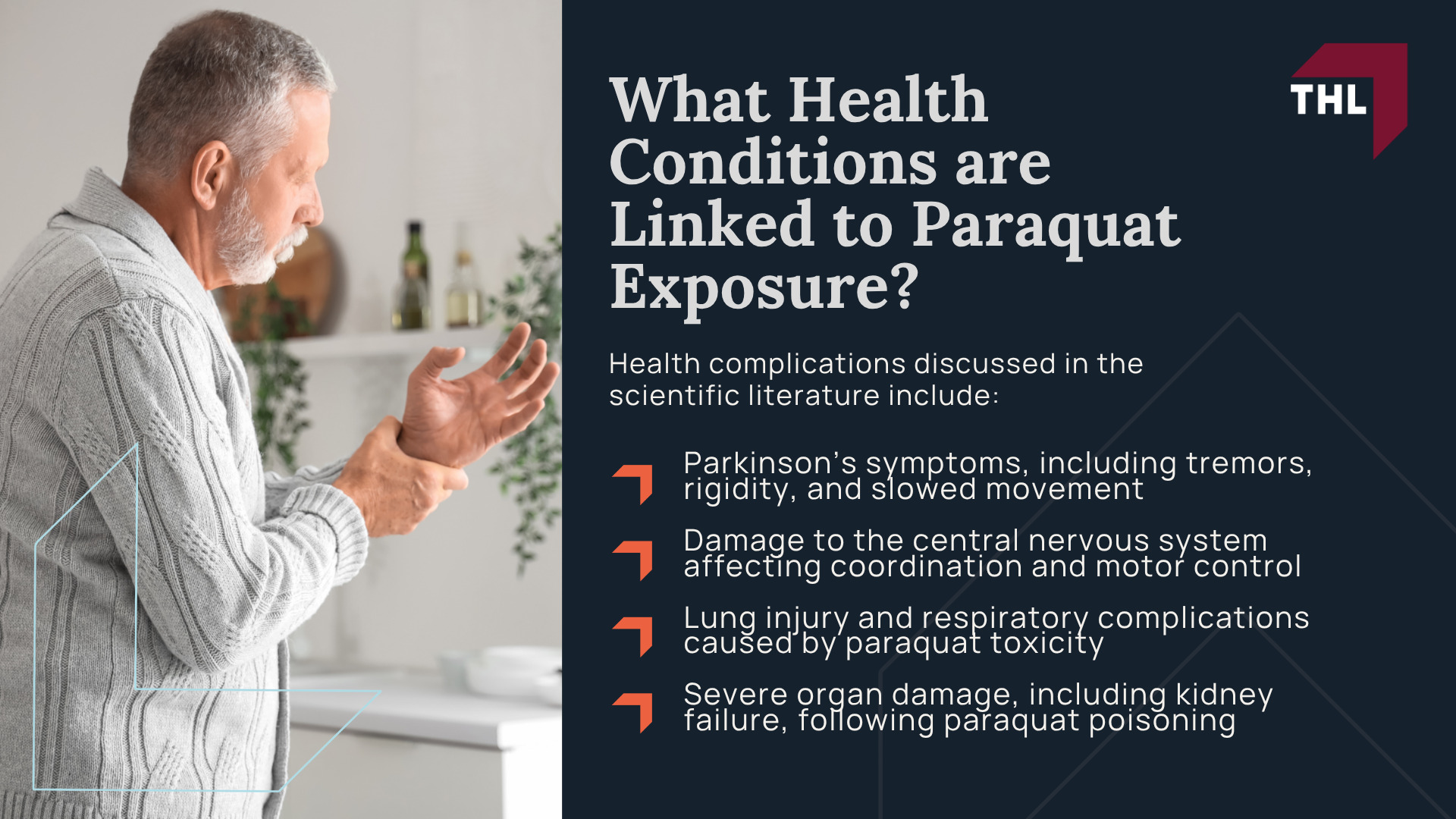
Health complications discussed in the scientific literature include:
- Parkinson’s symptoms, including tremors, rigidity, and slowed movement
- Damage to the central nervous system affecting coordination and motor control
- Lung injury and respiratory complications caused by paraquat toxicity
- Severe organ damage, including kidney failure, following paraquat poisoning
TorHoerman Law currently accepts Paraquat cases involving a diagnosis of Parkinson’s disease.