Chicago
Case Types We Handle
Personal Injuries
Car Accidents
Truck Accidents
Motorcycle Accidents
Bicycle Accidents
Construction Accidents
Nursing Home Abuse
Wrongful Death
Slip and Fall Accidents
Daycare Injury & Abuse
Edwardsville
Case Types We Handle
Personal Injuries
Car Accidents
Truck Accidents
Motorcycle Accidents
Bicycle Accidents
Nursing Home Abuse
Wrongful Death
Slip and Fall Accidents
Daycare Injury & Abuse
Premises Liability
St. Louis
Case Types We Handle
Personal Injuries
Car Accidents
Truck Accidents
Motorcycle Accidents
Bicycle Accidents
Construction Accidents
Nursing Home Abuse
Wrongful Death
Slip and Fall Accidents
Daycare Injury & Abuse
Dangerous Drugs
Defective Products
Chemical Exposure

Nitrous Oxide Brain Damage Lawsuit

4.9
Google
•
677 reviews

Inhaling Nitrous Oxide Linked to Brain and Nerve Damage: Legal Investigation

Nitrous oxide misuse has been linked to hypoxia, spinal cord damage, peripheral neuropathy, cognitive impairment, and other neurological injuries that can persist long after exposure ends.

Although nitrous oxide is used in medical settings and food preparation, inhaling nitrous oxide from whipped cream chargers, flavored canisters, tanks, or “whippets” can cause serious harm when the brain and body are deprived of oxygen.

Nitrous oxide misuse has been linked to brain damage, hypoxia, loss of consciousness, nerve damage, spinal cord injury, psychiatric symptoms, and other neurological complications.

Injured users are now investigating whether manufacturers, distributors, smoke shops, gas stations, online sellers, and other companies failed to warn about the dangers of nitrous oxide products sold for foreseeable recreational use.

If you suffered brain damage or another serious neurological injury after inhaling nitrous oxide, contact TorHoerman Law today for a free consultation.

Nitrous Oxide Brain Damage Lawsuit; What is the Nitrous Oxide Brain Damage Lawsuit; Nitrous Oxide Products Linked to Brain Damage Claims; Why People Are Filing Nitrous Oxide Brain Damage Lawsuits; Allegations Against Nitrous Oxide Companies; Can Nitrous Oxide Cause Brain Damage; Symptoms of Nitrous Oxide Brain Damage; Can Nitrous Oxide Cause Brain Damage (2); Nitrous Oxide and Spinal Cord Injury; How Nitrous Oxide Products Can Cause Neurological Injuries; Nitrous Oxide Products and Companies Named in Lawsuits; Nitrous Oxide Products and Companies Named in Lawsuits; Evidence Needed in a Nitrous Oxide Brain Damage Lawsuit; Medical Records That May Support a Brain Damage Claim; Compensation in a Nitrous Oxide Brain Damage Claim; Who Can Be Held Liable for Nitrous Oxide Brain Damage (2); Contact TorHoerman Law About a Nitrous Oxide Brain Damage Lawsuit

Have You Suffered Brain or Nervous System Damage After Recreational Nitrous Oxide Use? Contact Us

A nitrous oxide brain damage lawsuit may help injured users seek accountability after developing neurological injuries linked to recreational nitrous oxide use.

Nitrous oxide, commonly known as laughing gas, is used in medical settings and as a whipping agent for food products, but it can become dangerous when inhaled from whipped cream chargers, flavored canisters, tanks, or “whippets.”

Recreational inhalation may deprive the brain and body of oxygen, causing hypoxia, loss of consciousness, cognitive problems, nerve damage, spinal cord injury, psychiatric symptoms, or other serious neurological complications.

Some injured users are now investigating whether manufacturers, distributors, smoke shops, gas stations, online sellers, or other companies failed to provide adequate warnings about these risks.

Lawsuits may allege that certain nitrous oxide products were sold in ways that made misuse foreseeable, especially when large flavored canisters were marketed or distributed through retail channels associated with recreational use.

Brain damage claims may involve memory problems, confusion, difficulty concentrating, weakness, numbness, loss of coordination, impaired mobility, hallucinations, anxiety, or long-term neurological decline after repeated nitrous oxide misuse.

These claims require careful investigation into the product used, where it was purchased, what warnings were provided, and how nitrous oxide contributed to the injury.

If you suffered brain damage, nerve damage, spinal cord injury, or other neurological harm after using nitrous oxide, contact TorHoerman Law today for a free consultation.

You can also use the chatbot on this page to see if you qualify instantly.

What is the Nitrous Oxide Brain Damage Lawsuit?

A nitrous oxide brain damage lawsuit may be filed by people who suffered brain damage, spinal cord damage, nerve damage, or other neurological health problems after recreational nitrous oxide use.

Nitrous oxide, commonly known as laughing gas, has legitimate uses in medicine, dentistry, and food preparation.

In medical settings, nitrous oxide gas may be used for pain relief or sedation under supervision from medical professionals.

The legal concern involves inhaling nitrous oxide from consumer products not intended for recreational inhalation.

Nitrous oxide canisters, whipped cream chargers, flavored tanks, or “whippets” can be purchased online, at smoke shops, gas stations, and vape shops.

What is the Nitrous Oxide Brain Damage Lawsuit

The FDA has warned consumers not to misuse or inhale nitrous oxide products because inhalation may cause serious health problems, including spinal cord or brain damage, prolonged neurological effects, and death.

A nitrous oxide lawsuit may allege that manufacturers, distributors, retailers, or online sellers failed to warn consumers about the health risks of recreational nitrous oxide misuse.

These claims may involve brain injury, cognitive impairment, nerve damage, blood clots, psychiatric symptoms, addiction, or long-term effects from repeated nitrous oxide abuse.

Nitrous Oxide Products Linked to Brain Damage Claims

Nitrous oxide brain damage claims may involve products sold for food preparation but allegedly used as an inhalant drug.

Nitrous oxide canisters are commonly intended to be used as a food-processing propellant for whipped cream or other food use, but the FDA has warned that inhaling these products can cause a range of serious health effects.

What is the Nitrous Oxide Brain Damage Lawsuit; Nitrous Oxide Products Linked to Brain Damage Claims

Products linked to nitrous oxide brain damage claims may include:

  • whipped cream chargers
  • flavored nitrous oxide canisters
  • large nitrous oxide tanks
  • whippets
  • Galaxy Gas and similar flavored products
  • nitrous oxide products sold online
  • products sold through smoke shops, vape shops, gas stations, convenience stores, or websites

Large canisters and flavored products may raise specific concerns because they can allow users to inhale large amounts of nitrous oxide gas repeatedly.

Lawsuits may argue that product size, flavoring, packaging, and retail placement made recreational use foreseeable, especially among young people.

Why People Are Filing Nitrous Oxide Brain Damage Lawsuits

People are filing nitrous oxide brain damage lawsuits because recreational nitrous oxide misuse has been linked to severe consequences affecting the brain, spinal cord, and nervous system.

Public health officials have warned that frequent or long-term nitrous oxide use can lead to severe neurological damage and negative psychiatric effects, including weakness, numbness, tingling, memory impairment, delusions, depression, and mood changes.

A lawsuit may allege that companies sold nitrous oxide products in ways that encouraged recreational use while failing to warn about serious health risks.

What is the Nitrous Oxide Brain Damage Lawsuit; Nitrous Oxide Products Linked to Brain Damage Claims; Why People Are Filing Nitrous Oxide Brain Damage Lawsuits

These claims may focus on flavored nitrous oxide products, colorful packaging, retail placement in smoke shops or gas stations, online sales, and lack of adequate warnings about brain damage, nerve damage, spinal cord injury, addiction, and death.

Lawsuits focus on whether companies knew their products were being inhaled recreationally and whether additional warnings or sales restrictions could have reduced the risk of injury.

Allegations Against Nitrous Oxide Companies

Nitrous oxide brain damage lawsuits may allege that manufacturers, distributors, retailers, or sellers failed to protect consumers from foreseeable misuse.

These cases may involve companies that made, labeled, promoted, distributed, or sold nitrous oxide products through channels where recreational misuse was likely.

What is the Nitrous Oxide Brain Damage Lawsuit; Nitrous Oxide Products Linked to Brain Damage Claims; Why People Are Filing Nitrous Oxide Brain Damage Lawsuits; Allegations Against Nitrous Oxide Companies

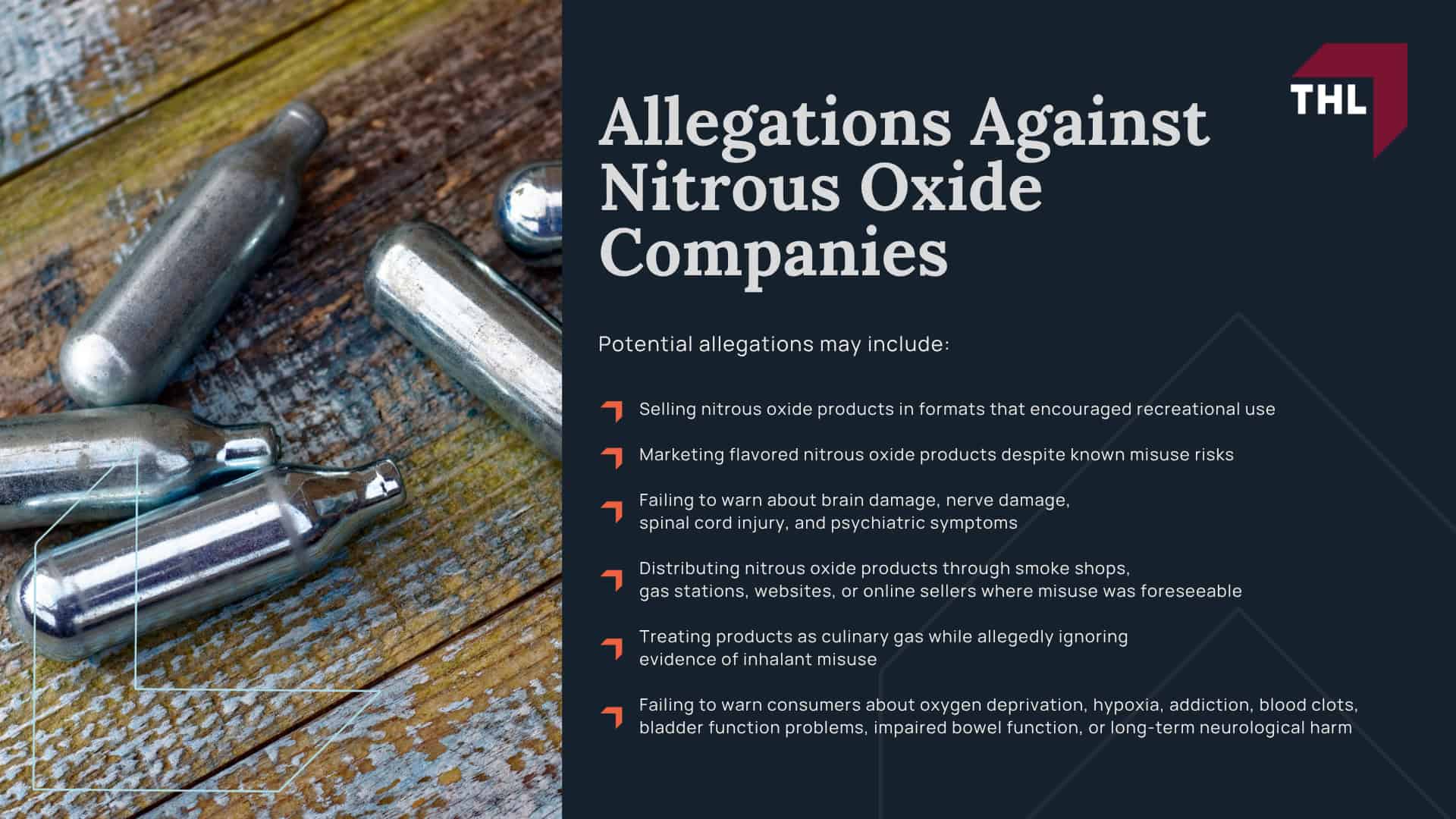
Potential allegations may include:

  • selling nitrous oxide products in formats that encouraged recreational use
  • marketing flavored nitrous oxide products despite known misuse risks
  • failing to warn about brain damage, nerve damage, spinal cord injury, and psychiatric symptoms
  • distributing nitrous oxide products through smoke shops, gas stations, websites, or online sellers where misuse was foreseeable
  • treating products as culinary gas while allegedly ignoring evidence of inhalant misuse
  • failing to warn consumers about oxygen deprivation, hypoxia, addiction, blood clots, bladder function problems, impaired bowel function, or long-term neurological harm

Public reporting has also identified litigation involving allegations that companies marketed flavored nitrous oxide canisters in ways that encouraged recreational inhalation while failing to warn about risks such as nerve damage, paralysis, and brain injury.

Can Nitrous Oxide Cause Brain Damage?

Nitrous oxide can cause brain damage or neurological injury through more than one mechanism.

Acute harm may occur when inhaling nitrous oxide prevents the body and brain from receiving enough oxygen.

When the brain is deprived of oxygen, a person may experience hypoxia, loss of consciousness, seizures, cognitive impairment, permanent brain injury, or death.

Repeated nitrous oxide misuse can also affect the nervous system by interfering with vitamin B12, an essential vitamin needed for nerve function.

What is the Nitrous Oxide Brain Damage Lawsuit; Nitrous Oxide Products Linked to Brain Damage Claims; Why People Are Filing Nitrous Oxide Brain Damage Lawsuits; Allegations Against Nitrous Oxide Companies; Can Nitrous Oxide Cause Brain Damage

A systematic review found that the chronic toxicity of nitrous oxide is mainly tied to its ability to oxidize vitamin B12, making it dysfunctional as a cofactor in metabolic pathways.

That mechanism plays a major role in neurological disorders among nitrous oxide users.

The FDA has also warned that some individuals who regularly inhale nitrous oxide can experience prolonged neurological effects, including spinal cord or brain damage, even after stopping use.

Brain Damage From Oxygen Deprivation and Hypoxia

Nitrous oxide can cause brain damage when it interferes with oxygen delivery.

If a person inhales nitrous oxide gas directly from a tank, charger, balloon, mask, bag, or canister, the gas can displace oxygen.

Without enough oxygen, brain cells can become injured, and severe hypoxia may lead to permanent harm or death.

Symptoms of oxygen-related brain injury may include confusion, dizziness, loss of consciousness, memory problems, seizures, impaired coordination, and cognitive impairment.

These symptoms require immediate medical attention because hypoxia can progress quickly.

Neurological Damage From Vitamin B12 Inactivation

Repeated nitrous oxide abuse can interfere with vitamin B12 function, even when ordinary blood testing does not show a simple deficiency.

Vitamin B12 is an essential vitamin that helps protect the nervous system.

When nitrous oxide inactivates vitamin B12, the body may develop functional B12 deficiency, which can damage nerves, the spinal cord, and other parts of the nervous system.

This type of injury may cause numbness, tingling, limb weakness, trouble walking, loss of balance, neuropathy, myelopathy, cognitive impairment, mood disturbances, and psychiatric symptoms.

A review of nitrous oxide and low vitamin B12 notes that blood test levels may not reflect functional B12 status in patients where vitamin B12 has been inactivated by chronic nitrous oxide use.

These injuries may have long-term effects.

Some patients improve with treatment, including vitamin B12 therapy and stopping nitrous oxide use, but others may suffer permanent or disabling neurological harm.

Symptoms of Nitrous Oxide Brain Damage

Symptoms of nitrous oxide brain damage or neurological injury may appear suddenly after heavy inhalation or gradually after repeated recreational nitrous oxide misuse.

Some symptoms involve the brain, while others involve the spinal cord, peripheral nerves, or the broader nervous system.

What is the Nitrous Oxide Brain Damage Lawsuit; Nitrous Oxide Products Linked to Brain Damage Claims; Why People Are Filing Nitrous Oxide Brain Damage Lawsuits; Allegations Against Nitrous Oxide Companies; Can Nitrous Oxide Cause Brain Damage; Symptoms of Nitrous Oxide Brain Damage

Potential symptoms may include:

  • confusion
  • memory loss
  • brain fog
  • cognitive impairment
  • difficulty concentrating
  • dizziness
  • loss of consciousness
  • anxiety
  • hallucinations
  • mood disturbances
  • numbness or tingling
  • limb weakness
  • trouble walking
  • poor coordination
  • tremors
  • loss of balance
  • bladder function problems
  • impaired bowel function
  • paralysis-like symptoms

Public health officials have identified long-term nitrous oxide misuse symptoms that include weakness, numbness or tingling, loss of sensation in the arms or legs, memory impairment, delusions, depression, and mood changes.

When to Seek Medical Care for Nitrous Oxide Symptoms

Anyone who develops neurological symptoms after nitrous oxide use should seek medical attention.

Symptoms such as confusion, weakness, numbness, trouble walking, loss of consciousness, hallucinations, bladder function problems, impaired bowel function, or severe anxiety may indicate serious brain, spinal cord, or nerve injury.

People should also seek medical care if they are concerned about frequent or long-term nitrous oxide use, addiction, substance abuse, or difficulty stopping.

The FDA advises consumers to contact health care providers if they recently used nitrous oxide products and are concerned about their health.

Treatment may require emergency care, neurology evaluation, vitamin B12 testing, MRI imaging, rehabilitation, addiction treatment, mental health services, or substance use support.

Prompt treatment may help reduce harm, support recovery, and prevent relapse.

Nitrous Oxide and Nerve Damage

Nitrous oxide misuse has been linked to nerve damage, peripheral neuropathy, and myeloneuropathy.

These injuries may affect the arms, legs, hands, feet, balance, mobility, and daily function.

Some people describe the harm as brain damage, but medical professionals may diagnose a broader neurological condition involving the spinal cord and peripheral nerves.

What is the Nitrous Oxide Brain Damage Lawsuit; Nitrous Oxide Products Linked to Brain Damage Claims; Why People Are Filing Nitrous Oxide Brain Damage Lawsuits; Allegations Against Nitrous Oxide Companies; Can Nitrous Oxide Cause Brain Damage; Symptoms of Nitrous Oxide Brain Damage; Can Nitrous Oxide Cause Brain Damage (2)

A person with nitrous oxide-related nerve damage may experience numbness, tingling, burning pain, weakness, poor coordination, trouble walking, or loss of motor control.

These symptoms can become disabling, especially if the person continues inhaling nitrous oxide or delays medical care.

The CDC has reported that repeated recreational nitrous oxide misuse can cause severe neurological, cardiovascular, and psychiatric signs and symptoms.

In Michigan, nitrous oxide-related poison center exposures, emergency department visits, and EMS responses increased sharply from 2019 to 2023.

Peripheral Neuropathy After Nitrous Oxide Misuse

Peripheral neuropathy occurs when nerves outside the brain and spinal cord are damaged.

After nitrous oxide misuse, patients may develop numbness, tingling, burning pain, limb weakness, loss of sensation, or difficulty walking.

Some patients may need neurology care, physical therapy, occupational therapy, rehabilitation, mobility devices, or long-term treatment.

Peripheral neuropathy may be connected to nitrous oxide’s effect on vitamin B12.

When vitamin B12 is functionally inactivated, the nervous system may not work properly, and nerves may begin to malfunction or deteriorate.

People with progressive weakness, loss of balance, or trouble walking should seek medical attention quickly.

Delayed treatment may increase the risk of long-term or permanent symptoms.

Nitrous Oxide and Spinal Cord Injury

Nitrous oxide misuse has been linked to spinal cord injury, including subacute combined degeneration.

This condition can damage parts of the spinal cord that help control movement, balance, coordination, and sensation.

What is the Nitrous Oxide Brain Damage Lawsuit; Nitrous Oxide Products Linked to Brain Damage Claims; Why People Are Filing Nitrous Oxide Brain Damage Lawsuits; Allegations Against Nitrous Oxide Companies; Can Nitrous Oxide Cause Brain Damage; Symptoms of Nitrous Oxide Brain Damage; Can Nitrous Oxide Cause Brain Damage (2); Nitrous Oxide and Spinal Cord Injury

In some cases, patients may first notice numbness, tingling, or weakness before developing trouble walking or more serious mobility problems.

Subacute Combined Degeneration and Myelopathy

Subacute combined degeneration is a serious neurological condition involving damage to the spinal cord.

Nitrous oxide-related vitamin B12 dysfunction may cause this injury by damaging the protective covering around nerve pathways.

Patients may develop weakness, gait instability, sensory loss, poor coordination, trouble walking, and paralysis-like symptoms.

Myelopathy refers to dysfunction of the spinal cord.

In nitrous oxide cases, myelopathy may appear with neuropathy, cognitive symptoms, mood disturbances, or other neurological health problems.

A published case report described a 28-year-old man with recreational nitrous oxide abuse who developed numbness and unstable gait, with MRI findings consistent with subacute combined degeneration.

The report described improvement after high-dose vitamin B12 treatment but warned that clinicians should be vigilant as cases increase.

How Nitrous Oxide Products Can Cause Neurological Injuries

Nitrous oxide products can cause neurological injuries when the gas is inhaled directly from chargers, tanks, balloons, masks, bags, or flavored canisters.

Acute injury may occur when nitrous oxide reduces oxygen delivery to the brain.

Repeated use may also lead to vitamin B12 dysfunction, nerve damage, spinal cord injury, mood disturbances, and cognitive impairment.

What is the Nitrous Oxide Brain Damage Lawsuit; Nitrous Oxide Products Linked to Brain Damage Claims; Why People Are Filing Nitrous Oxide Brain Damage Lawsuits; Allegations Against Nitrous Oxide Companies; Can Nitrous Oxide Cause Brain Damage; Symptoms of Nitrous Oxide Brain Damage; Can Nitrous Oxide Cause Brain Damage (2); Nitrous Oxide and Spinal Cord Injury; How Nitrous Oxide Products Can Cause Neurological Injuries

The short-lived nitrous oxide effects may encourage repeated inhalation.

A person may continue inhaling large amounts because the high fades quickly.

This pattern can increase the risk of hypoxia, addiction, neurological injury, and other serious health problems.

Large Canisters, Flavored Products, and Repeated Use

Large nitrous oxide canisters and flavored products may increase the risk of repeated use because they can contain more gas than small whipped cream chargers and may be easier to use repeatedly.

Colorful, flavored canisters sold at gas stations, vape shops, and online, are intended for culinary use but are misused for euphoric effects.

Lawsuits argue that large canisters, flavoring, packaging, and smoke shop or gas station sales made recreational use foreseeable.

Plaintiffs also argue that companies failed to provide health warnings that matched the true danger of nitrous oxide abuse.

Nitrous Oxide Products and Companies Named in Lawsuits

Nitrous oxide lawsuits have named manufacturers, brand owners, distributors, smoke shops, online sellers, and related businesses.

These lawsuits may allege that companies sold or marketed nitrous oxide products in ways that encouraged recreational inhalation while failing to adequately warn about health risks.

Galaxy Gas has become one of the most visible names in this litigation.

Public reporting has also described litigation involving online sales and allegations that sellers allowed large purchases of nitrous oxide canisters under the appearance of culinary use.

What is the Nitrous Oxide Brain Damage Lawsuit; Nitrous Oxide Products Linked to Brain Damage Claims; Why People Are Filing Nitrous Oxide Brain Damage Lawsuits; Allegations Against Nitrous Oxide Companies; Can Nitrous Oxide Cause Brain Damage; Symptoms of Nitrous Oxide Brain Damage; Can Nitrous Oxide Cause Brain Damage (2); Nitrous Oxide and Spinal Cord Injury; How Nitrous Oxide Products Can Cause Neurological Injuries; Nitrous Oxide Products and Companies Named in Lawsuits

One recent report described a lawsuit alleging Amazon sold large quantities of nitrous oxide canisters and named Galaxy Gas, Happy Supply, and Xuzhou Basic Industry among defendants.

These are allegations.

Defendants may deny liability, and each case depends on the facts, product evidence, warnings, medical records, and state law.

Galaxy Gas and Similar Nitrous Oxide Products

Galaxy Gas and similar nitrous oxide products have received public attention because lawsuits and public reporting have connected flavored nitrous oxide products to recreational inhalation injuries.

Plaintiffs may claim that these products were sold or marketed in ways that made misuse foreseeable, especially when sold online, in smoke shops, or through retail channels associated with substance use.

A Galaxy Gas-related lawsuit may involve claims of brain damage, nerve damage, spinal cord injury, addiction, psychiatric symptoms, blood clots, or death.

Public litigation updates have described allegations that flavored nitrous oxide canisters were marketed in ways that encouraged recreational inhalation while failing to warn about nerve damage, paralysis, and brain injury.

Galaxy Gas and other defendants may deny that their products caused a plaintiff’s injuries or that their warnings were inadequate.

Who Can Be Held Liable for Nitrous Oxide Brain Damage?

Liability for nitrous oxide brain damage depends on the product involved, where it was purchased, what warnings were provided, and the law in the state where the case is filed.

A nitrous oxide brain damage lawsuit may name multiple defendants if several companies played a role in designing, distributing, selling, or promoting the product.

What is the Nitrous Oxide Brain Damage Lawsuit; Nitrous Oxide Products Linked to Brain Damage Claims; Why People Are Filing Nitrous Oxide Brain Damage Lawsuits; Allegations Against Nitrous Oxide Companies; Can Nitrous Oxide Cause Brain Damage; Symptoms of Nitrous Oxide Brain Damage; Can Nitrous Oxide Cause Brain Damage (2); Nitrous Oxide and Spinal Cord Injury; How Nitrous Oxide Products Can Cause Neurological Injuries; Nitrous Oxide Products and Companies Named in Lawsuits; Nitrous Oxide Products and Companies Named in Lawsuits

Potential defendants may include:

  • nitrous oxide manufacturers
  • brand owners
  • distributors and wholesalers
  • smoke shops
  • vape shops
  • gas stations
  • convenience stores
  • online sellers
  • websites or marketplaces involved in sales or promotion

A claim may focus on whether the defendant knew or should have known that the product was being inhaled recreationally and failed to provide adequate warnings or limit foreseeable misuse.

Claims may also consider whether the company had reason to know that young adults, young people, or people with substance use concerns were using the product as a recreational drug.

Failure to Warn About Brain and Nerve Damage

Failure to warn is likely to be a central issue in many nitrous oxide brain damage lawsuits.

Plaintiffs may allege that companies failed to provide adequate warnings about brain damage, hypoxia, nerve damage, spinal cord injury, addiction, psychiatric symptoms, blood clots, and other serious health risks.

A warning may be challenged if it does not clearly explain the severe consequences of inhaling nitrous oxide.

A label that only says “do not inhale” may be alleged to be inadequate if the product was sold in a context where recreational misuse was foreseeable.

The FDA has specifically warned consumers not to misuse or inhale nitrous oxide products and has stated that inhalation can result in serious adverse health effects, including death.

Evidence Needed in a Nitrous Oxide Brain Damage Lawsuit

Evidence is critical in a nitrous oxide brain damage lawsuit because symptoms may develop over time, products may be discarded, and defendants may dispute causation.

Injured users should preserve anything that may connect their injury to a specific nitrous oxide product, seller, or company.

What is the Nitrous Oxide Brain Damage Lawsuit; Nitrous Oxide Products Linked to Brain Damage Claims; Why People Are Filing Nitrous Oxide Brain Damage Lawsuits; Allegations Against Nitrous Oxide Companies; Can Nitrous Oxide Cause Brain Damage; Symptoms of Nitrous Oxide Brain Damage; Can Nitrous Oxide Cause Brain Damage (2); Nitrous Oxide and Spinal Cord Injury; How Nitrous Oxide Products Can Cause Neurological Injuries; Nitrous Oxide Products and Companies Named in Lawsuits; Nitrous Oxide Products and Companies Named in Lawsuits; Evidence Needed in a Nitrous Oxide Brain Damage Lawsuit

Important evidence may include:

  • nitrous oxide canisters, tanks, chargers, or packaging
  • Galaxy Gas or other product labels
  • whipped cream chargers or cream charger boxes
  • receipts from smoke shops, local smoke shops, gas stations, or online sellers
  • credit card or bank records
  • online order confirmations
  • product photos or videos
  • text messages or social media posts showing use
  • emergency department records
  • hospital records
  • neurology records
  • MRI results
  • EMG or nerve conduction studies
  • vitamin B12, methylmalonic acid, or homocysteine lab results
  • rehabilitation records
  • disability records
  • witness statements

People should also preserve evidence of substance use treatment, addiction treatment, or mental health services if those records help explain nitrous oxide misuse, recovery efforts, or efforts to prevent relapse.

Medical Records That May Support a Brain Damage Claim

Medical records may be essential to proving a nitrous oxide brain damage claim.

Relevant records may document cognitive impairment, hypoxia, neurological decline, neuropathy, myelopathy, spinal cord damage, psychiatric symptoms, mood disturbances, addiction, or functional limitations.

Useful records may include emergency medical records, neurology evaluations, MRI results, EMG or nerve conduction testing, lab results, rehabilitation records, disability records, mental health treatment records, and substance abuse or addiction treatment records.

What is the Nitrous Oxide Brain Damage Lawsuit; Nitrous Oxide Products Linked to Brain Damage Claims; Why People Are Filing Nitrous Oxide Brain Damage Lawsuits; Allegations Against Nitrous Oxide Companies; Can Nitrous Oxide Cause Brain Damage; Symptoms of Nitrous Oxide Brain Damage; Can Nitrous Oxide Cause Brain Damage (2); Nitrous Oxide and Spinal Cord Injury; How Nitrous Oxide Products Can Cause Neurological Injuries; Nitrous Oxide Products and Companies Named in Lawsuits; Nitrous Oxide Products and Companies Named in Lawsuits; Evidence Needed in a Nitrous Oxide Brain Damage Lawsuit; Medical Records That May Support a Brain Damage Claim

Lab testing may include vitamin B12, methylmalonic acid, and homocysteine, because nitrous oxide may cause functional B12 deficiency even when ordinary B12 levels are not clearly low.

A legal team can use medical records to evaluate whether nitrous oxide misuse caused or contributed to the injury and whether a company’s warnings or sales practices may be legally relevant.

Compensation in a Nitrous Oxide Brain Damage Claim

Compensation in a nitrous oxide brain damage claim depends on state law, injury severity, medical proof, available evidence, and the conduct of the defendants.

No result can be guaranteed, but a lawsuit may seek damages for the physical, financial, and emotional harm caused by neurological injury.

What is the Nitrous Oxide Brain Damage Lawsuit; Nitrous Oxide Products Linked to Brain Damage Claims; Why People Are Filing Nitrous Oxide Brain Damage Lawsuits; Allegations Against Nitrous Oxide Companies; Can Nitrous Oxide Cause Brain Damage; Symptoms of Nitrous Oxide Brain Damage; Can Nitrous Oxide Cause Brain Damage (2); Nitrous Oxide and Spinal Cord Injury; How Nitrous Oxide Products Can Cause Neurological Injuries; Nitrous Oxide Products and Companies Named in Lawsuits; Nitrous Oxide Products and Companies Named in Lawsuits; Evidence Needed in a Nitrous Oxide Brain Damage Lawsuit; Medical Records That May Support a Brain Damage Claim; Compensation in a Nitrous Oxide Brain Damage Claim

Potential damages may include:

  • emergency medical care
  • hospitalization
  • neurology treatment
  • diagnostic testing
  • physical therapy
  • occupational therapy
  • rehabilitation
  • mobility devices
  • lost wages
  • reduced earning capacity
  • pain and suffering
  • emotional distress
  • long-term disability
  • future medical care
  • loss of quality of life

Severe nitrous oxide injuries may affect mobility, memory, mood, employment, independence, and daily function.

Some patients may require long-term neurological care, rehabilitation, mobility support, addiction treatment, or mental health services.

Do You Qualify for a Nitrous Oxide Brain Damage Lawsuit?

You may qualify for a nitrous oxide brain damage lawsuit if you suffered brain damage, nerve damage, spinal cord injury, neuropathy, myelopathy, cognitive impairment, or serious neurological symptoms after recreational nitrous oxide use.

Your case may be stronger if you can identify the nitrous oxide product used, where it was purchased, what warnings were provided, and what medical professionals diagnosed.

What is the Nitrous Oxide Brain Damage Lawsuit; Nitrous Oxide Products Linked to Brain Damage Claims; Why People Are Filing Nitrous Oxide Brain Damage Lawsuits; Allegations Against Nitrous Oxide Companies; Can Nitrous Oxide Cause Brain Damage; Symptoms of Nitrous Oxide Brain Damage; Can Nitrous Oxide Cause Brain Damage (2); Nitrous Oxide and Spinal Cord Injury; How Nitrous Oxide Products Can Cause Neurological Injuries; Nitrous Oxide Products and Companies Named in Lawsuits; Nitrous Oxide Products and Companies Named in Lawsuits; Evidence Needed in a Nitrous Oxide Brain Damage Lawsuit; Medical Records That May Support a Brain Damage Claim; Compensation in a Nitrous Oxide Brain Damage Claim; Who Can Be Held Liable for Nitrous Oxide Brain Damage (2)

Potential qualifying facts may include:

  • you inhaled nitrous oxide from whippets, whipped cream chargers, tanks, or flavored canisters
  • the product was purchased from a smoke shop, vape shop, gas station, online seller, or website
  • the product involved Galaxy Gas or another flavored nitrous oxide product
  • you developed brain damage, nerve damage, spinal cord injury, or neurological symptoms
  • you needed emergency care, hospitalization, neurology care, rehabilitation, addiction treatment, or mental health services
  • medical testing showed vitamin B12 dysfunction, spinal cord changes, neuropathy, hypoxia, or related injury
  • you have product packaging, receipts, photos, videos, online orders, or witness accounts

Cases may still need review even if another drug or alcohol was involved, the product container is missing, or symptoms developed over time.

Contact TorHoerman Law About a Nitrous Oxide Brain Damage Lawsuit

TorHoerman Law is investigating nitrous oxide brain damage lawsuits involving neurological injuries linked to recreational use of flavored canisters, large tanks, whipped cream chargers, whippets, and similar products.

These claims may involve brain damage, nerve damage, spinal cord injury, cognitive impairment, psychiatric symptoms, addiction, blood clots, or other serious health problems after inhaling nitrous oxide.

If you believe nitrous oxide misuse caused your injuries, preserve any product evidence, packaging, receipts, purchase records, photos, videos, and medical records.

These materials may help identify the companies involved and support your claim.

What is the Nitrous Oxide Brain Damage Lawsuit; Nitrous Oxide Products Linked to Brain Damage Claims; Why People Are Filing Nitrous Oxide Brain Damage Lawsuits; Allegations Against Nitrous Oxide Companies; Can Nitrous Oxide Cause Brain Damage; Symptoms of Nitrous Oxide Brain Damage; Can Nitrous Oxide Cause Brain Damage (2); Nitrous Oxide and Spinal Cord Injury; How Nitrous Oxide Products Can Cause Neurological Injuries; Nitrous Oxide Products and Companies Named in Lawsuits; Nitrous Oxide Products and Companies Named in Lawsuits; Evidence Needed in a Nitrous Oxide Brain Damage Lawsuit; Medical Records That May Support a Brain Damage Claim; Compensation in a Nitrous Oxide Brain Damage Claim; Who Can Be Held Liable for Nitrous Oxide Brain Damage (2); Contact TorHoerman Law About a Nitrous Oxide Brain Damage Lawsuit

If you suffered brain damage, nerve damage, spinal cord injury, or other neurological harm after inhaling nitrous oxide, contact TorHoerman Law today for a free consultation.

You can also use the chatbot on this page to see if you qualify instantly.

Frequently Asked Questions

Published by:
Share
Picture of Tor Hoerman
Tor Hoerman

Tor Hoerman has represented injured individuals for more than 30 years, with experience spanning individual personal injury cases and nationwide mass tort litigation. His work includes car accidents, catastrophic injuries, product liability claims, and other serious injury cases. Tor has served in court-appointed leadership roles in national litigation and tried cases involving major corporate defendants.

TorHoerman Law’s legal content is researched and written by our editorial team and attorneys for legal accuracy, clarity, and relevance. We rely on statutes, court records, government publications, medical research, and other authoritative sources when applicable. This page provides general legal information and does not constitute legal advice.

TorHoerman Law reviews its legal content for factual accuracy, current information, and relevant legal context before publication and as material developments occur. This article is provided for general informational purposes and does not constitute legal advice. For guidance about a specific case, contact TorHoerman Law.

Additional Nitrous Oxide Lawsuit resources on our website:
All
FAQs
Injuries & Conditions
Legal Help
Other Resources
Settlements & Compensation
News

You can learn more about this topic by visiting any of our Nitrous Oxide Lawsuit pages listed below:

Baking Bad Nitrous Oxide Lawsuit
Cloud9ine Nitrous Oxide Lawsuit
Cosmic Gas Nitrous Oxide Lawsuit
Galaxy Gas Lawsuit
Nitrous Oxide Explosion Lawsuit
Nitrous Oxide Lawsuit
Nitrous Oxide Paralysis Lawsuit
Nitrous Oxide Peripheral Neuropathy Lawsuit
Nitrous Oxide Spinal Cord Injury Lawsuit
Nitrous Oxide Wrongful Death Lawsuit
Accepting Clients
Nitrous Oxide Lawsuit Facts
Defendants
  • Galaxy Gas
  • Whip-It! / United Brands
  • Miami Magic
  • Monster Gas
  • Baking Bad
  • Cosmic Gas
  • Other manufacturers, distributors, and sellers
    Injuries named in lawsuit
    • Spinal cord damage
    • Peripheral neuropathy and nerve damage
    • Paralysis or impaired mobility
    • Brain injury and cognitive impairment
    • Blood clots, DVT, and pulmonary embolism
    • Hypoxia or oxygen deprivation
    • Psychiatric and neurological complications
    • Frostbite or airway injuries
    • Wrongful death
      You may qualify to file a claim if...
      • You or a loved one used a recreational nitrous oxide product such as Galaxy Gas, Whip-It!, Baking Bad, Cosmic Gas, Miami Magic, Monster Gas, or another flavored nitrous oxide product.
      • You developed a serious neurological, spinal cord, brain, blood-clot, hypoxia-related, or other significant injury after using nitrous oxide.
      • The injury required hospitalization, neurological treatment, rehabilitation, treatment for a blood clot or pulmonary embolism, or other significant medical care, or your loved one died after nitrous oxide use.
      Have you or a loved one been injured?

      A serious injury can change your life.

      Speak with an experienced personal injury lawyer about your rights, your case, and the legal options available to you.
      Google
      •
      677 reviews
      4.9
      ★★★★★
      Recovered damages
      $4 Billion+

      Table of Contents

      Guides & Resources
      About TorHoerman Law

      TorHoerman Law represents people whose lives have been disrupted by serious injuries, unsafe products, and negligence. Our attorneys handle individual personal injury cases as well as national mass tort lawsuits involving major corporations.

      Founded in 2009, our legal team brings more than 100 years of combined experience handling serious injury and complex civil litigation.

      Do you believe you’re entitled to compensation?

      Use our Instant Case Evaluator to find out in as little as 60 seconds!

      $495 Million
      Baby Formula NEC Lawsuit

      In this case, we obtained a verdict of $495 Million for our client’s child who was diagnosed with Necrotizing Enterocolitis after consuming baby formula manufactured by Abbott Laboratories.

      $20 Million
      Toxic Tort Injury

      In this case, we were able to successfully recover $20 Million for our client after they suffered a Toxic Tort Injury due to chemical exposure.

      $103.8 Million
      COX-2 Inhibitors Injury

      In this case, we were able to successfully recover $103.8 Million for our client after they suffered a COX-2 Inhibitors Injury.

      $4 Million
      Traumatic Brain Injury

      In this case, we were able to successfully recover $4 Million for our client after they suffered a Traumatic Brain Injury while at daycare.

      $2.8 Million
      Defective Heart Device

      In this case, we were able to successfully recover $2.8 Million for our client after they suffered an injury due to a Defective Heart Device.

      Other Nitrous Oxide Lawsuit Resources

      All
      FAQs
      Injuries & Conditions
      Legal Help
      Other Resources
      Settlements & Compensation
      News