Active Litigation
Nitrous Oxide Lawsuit Facts
TorHoerman Law is actively accepting claims for the Nitrous Oxide Lawsuit.


Baking Bad is a brand of nitrous oxide products that sells cream chargers, flavored canisters, and large-capacity cylinders marketed for culinary applications such as whipped cream preparation.
Nitrous oxide is a colorless, odorless gas with legitimate medical uses for pain relief and anesthesia, as well as recognized food-service uses as a whipping agent.
In recent years, however, nitrous oxide use among youth has increased substantially, and brands such as Baking Bad have become part of a broader public health and legal discussion surrounding recreational inhalation.
Unlike traditional 8-gram cream chargers intended for limited culinary use, Baking Bad has promoted larger-volume nitrous oxide canisters capable of dispensing significantly more gas per container.
Plaintiffs in recent nitrous oxide lawsuits allege that these oversized tanks were designed or marketed in ways that facilitated repeated recreational inhalation rather than ordinary food preparation, although the allegations remain contested.
Baking Bad has also promoted its products on social media platforms and uses branding and imagery inspired by the television series Breaking Bad, distinguishing the company from many traditional culinary supply manufacturers.

Baking Bad products have been sold through online retailers, smoke shops, vape stores, and other retail outlets alongside similar nitrous oxide brands.
The Baking Bad nitrous oxide lawsuit investigation examines whether the company’s product design, branding, marketing, sales practices, warnings, and distribution contributed to foreseeable recreational misuse and the serious injuries that allegedly followed.
Baking Bad nitrous oxide products are being investigated as part of broader litigation involving flavored nitrous oxide brands that plaintiffs allege were marketed or sold in ways that made recreational inhalation foreseeable.
The lawsuits generally focus on manufacturers, distributors, retailers, and online sellers that allegedly promoted or distributed large flavored nitrous oxide canisters as culinary products while failing to adequately warn consumers about the serious health risks associated with inhalation.
Plaintiffs further allege that manufacturers exploited regulatory loopholes by marketing recreationally used nitrous oxide products as whipped cream supplies despite widespread reports of misuse and severe injuries.
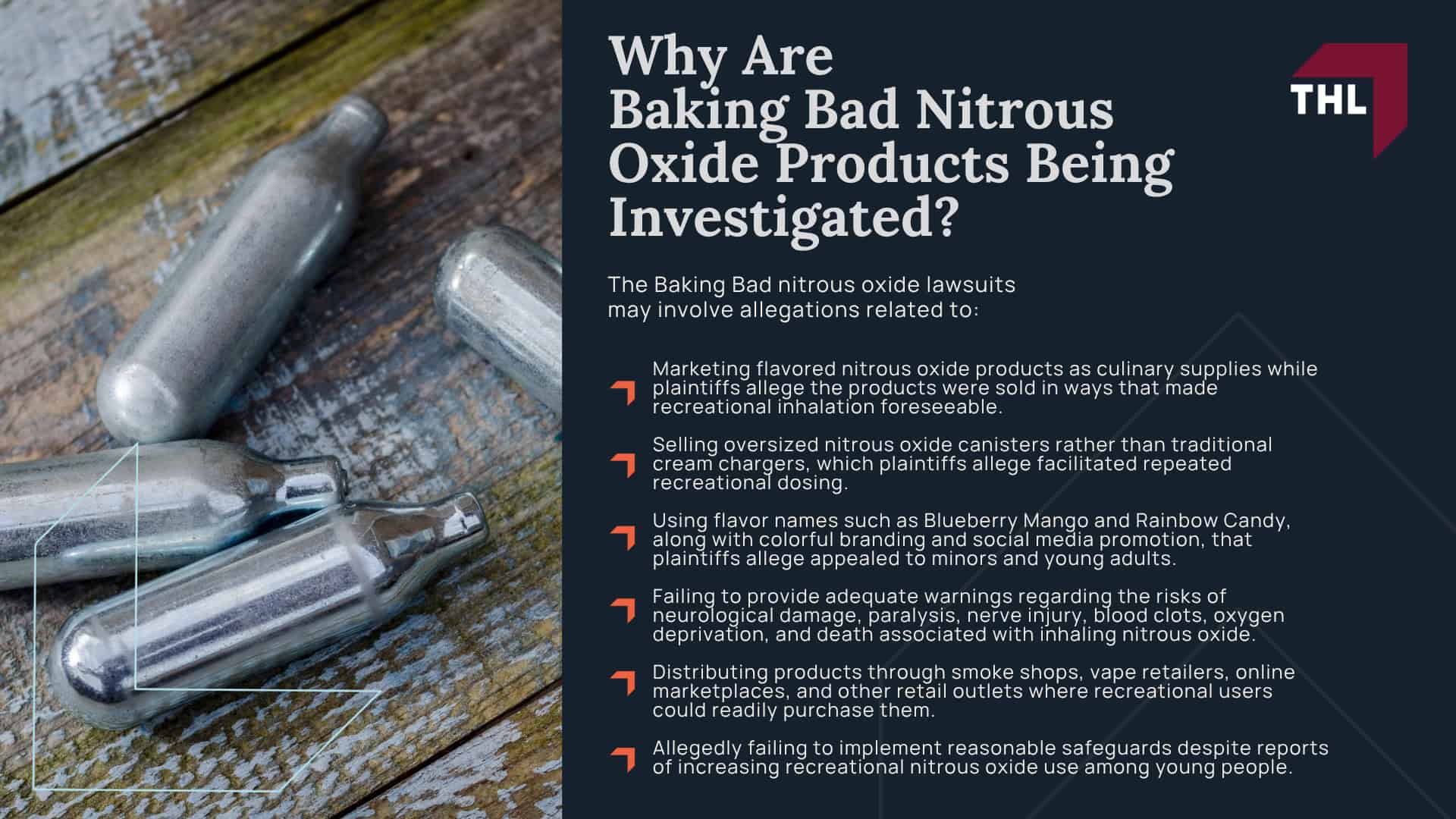
The Baking Bad nitrous oxide lawsuits may involve allegations related to:
The investigation also reflects increasing regulatory scrutiny of recreational nitrous oxide products.
The FDA has warned consumers not to inhale nitrous oxide products sold under several brand names, including Baking Bad, and more than 30 states have introduced or considered legislation addressing nitrous oxide sales and misuse.
Every case remains fact-specific, and liability depends on the product involved, the manner in which it was marketed or sold, the circumstances of its use, and the medical evidence linking the alleged injuries to nitrous oxide exposure.
Nitrous oxide misuse can affect nearly every major organ system, with the nervous system among the most vulnerable.
Although some people experience only a brief feeling of euphoria after inhaling the gas, repeated exposure can produce serious and sometimes permanent medical complications.
Inhaling nitrous oxide can lead to vitamin B12 deficiency by inactivating the vitamin, disrupting normal nerve function and increasing the risk of neurological injury.
As tolerance develops, some users require progressively larger amounts of nitrous oxide to achieve the same effects, increasing both the frequency of use and the risk of serious complications.
Medical literature also recognizes that nitrous oxide may become psychologically addictive for some individuals, and withdrawal can include symptoms such as irritability, cravings, anxiety, and difficulty concentrating after stopping use.
Public health experts have reported that over 13 million Americans have misused nitrous oxide at least once, and deaths associated with recreational nitrous oxide misuse have increased in recent years, prompting greater regulatory and legal scrutiny.
The severity of the health effects depends on factors such as the amount inhaled, how frequently the gas is used, whether oxygen deprivation occurs, and how quickly medical treatment begins.

Possible nitrous oxide side effects and injuries may include:
Some patients may develop symptoms gradually.
Others may experience severe adverse events suddenly, including blackouts, falls, crashes, oxygen deprivation, or cardiac complications.
Anyone who is concerned about symptoms after nitrous oxide use should seek medical care.
Treatment may involve stopping nitrous oxide use, vitamin B12 evaluation, neurological testing, imaging, physical therapy, substance use treatment, and follow-up care to prevent relapse.
Neurological damage is one of the most serious health risks linked to nitrous oxide abuse.
Repeated use of nitrous oxide can interfere with the body’s ability to use vitamin B12, even when a person has normal or elevated B12 levels on a standard blood test.
Vitamin B12 is essential for nerve function and spinal cord health.
When nitrous oxide disrupts B12 activity, it may lead to nerve damage, spinal cord damage, and spinal cord degeneration.
Some patients develop a condition involving the spinal cord and peripheral nerves that can cause weakness, numbness, and difficulty walking.

Symptoms of nitrous oxide-related neurological injury may include:
These injuries can become severe if nitrous oxide use continues.
In some cases, patients may need hospitalization, neurological treatment, rehabilitation, assistive devices, or long-term medical care.
A growing number of nitrous oxide injury claims involve paralysis, trouble walking, loss of coordination, and other mobility problems.
These symptoms may develop when nitrous oxide misuse damages the spinal cord, nerves, or pathways that control movement and balance.
Some people report weakness or numbness before their condition worsens.
Others may suddenly struggle to stand, walk, climb stairs, or control their legs.
In severe cases, patients may need a wheelchair, walker, cane, braces, or inpatient rehabilitation.
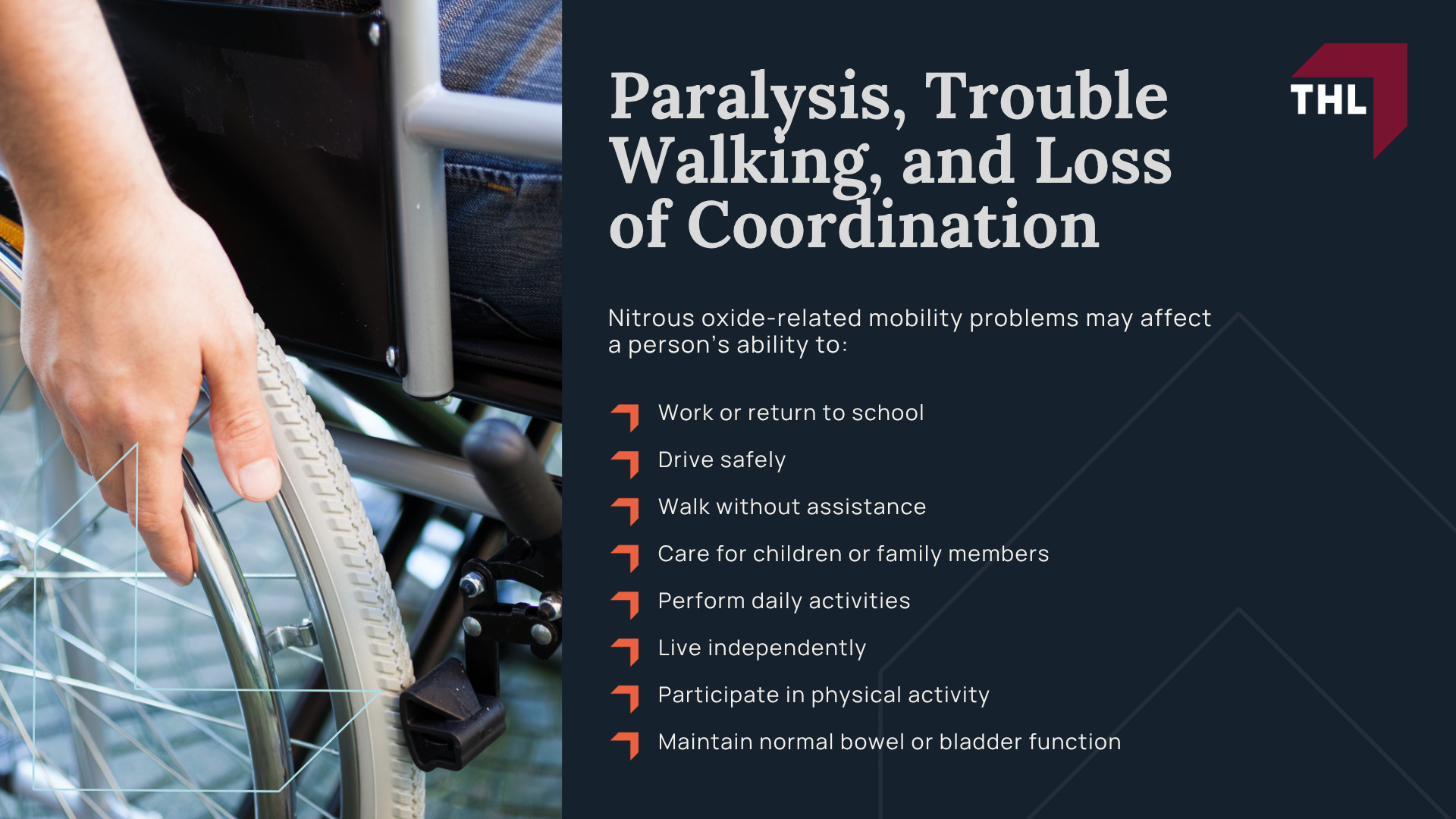
Nitrous oxide-related mobility problems may affect a person’s ability to:
Nitrous oxide misuse may affect the brain and mental health.
Acute inhalation can reduce oxygen delivery and impair brain function.
Repeated recreational nitrous oxide use may also contribute to cognitive problems, mood disturbances, and psychiatric symptoms.

Potential symptoms may include:
These symptoms can be especially concerning for young people, who may be exposed to nitrous oxide products through social media, peer use, smoke shops, or online sales.
Nitrous oxide is sometimes used with alcohol or other drugs, which may increase the risk of accidents, impaired judgment, overdose-like events, or delayed medical treatment.
The Substance Abuse and Mental Health Services Administration provides resources related to substance use, treatment access, and mental health services.
People struggling with nitrous oxide addiction, inhalant use, alcohol use, or other substance use concerns may need medical and behavioral health support to stop use and prevent relapse.
Blood clots and cardiovascular complications are another area of concern in nitrous oxide injury cases.
Nitrous oxide misuse has been associated in medical literature with elevated homocysteine levels and possible thrombotic events, including deep vein thrombosis and pulmonary embolism.
A pulmonary embolism occurs when a blood clot travels to the lungs.
This can be life-threatening.
Symptoms may include chest pain, shortness of breath, rapid heart rate, dizziness, coughing blood, fainting, or sudden collapse.

Nitrous oxide-related cardiovascular concerns may include:
Nitrous oxide can cause immediate physical harm when inhaled or released improperly.
The gas may be extremely cold when discharged from nitrous oxide canisters, chargers, or tanks.
Direct contact with the gas or metal components may cause cold burns or frostbite to the lips, mouth, throat, hands, or airway.
Nitrous oxide can also displace oxygen.
When someone inhales nitrous oxide gas from a balloon, canister, dispenser, bag, or mask, the body may not receive enough oxygen.
Oxygen deprivation can cause loss of consciousness, falls, crashes, brain damage, or death.

Severe adverse events linked to nitrous oxide misuse may include:
The FDA has warned consumers not to inhale or recreationally use nitrous oxide products in any flavor or size, including canisters, tanks, and chargers.
The FDA has stated that inhaling these products can cause serious adverse health effects, including death.
The warning applies broadly to nitrous oxide products that may be sold as culinary items.
These products may be marketed for whipped cream or food preparation but misused as a recreational drug.

The FDA has identified serious risks associated with nitrous oxide inhalation, including:
The FDA warning is important to the Baking Bad Nitrous Oxide Lawsuit because it supports the public health concern that nitrous oxide products can cause severe adverse events when inhaled.
The warning also reinforces why manufacturers, distributors, retailers, and online sellers may face scrutiny over product warnings, marketing, and sales practices.
Baking Bad distinguishes itself from traditional culinary nitrous oxide suppliers by offering flavored cream chargers and oversized nitrous oxide cylinders in colorful packaging that prominently references the television series Breaking Bad.
Publicly available marketing materials have featured flavors such as Blueberry Mango, Rainbow Candy, Strawberry, and Watermelon Lemon, while the company has promoted its products through social media platforms and online retailers.
Baking Bad products have also been sold through smoke shops, vape stores, online marketplaces, and other retail outlets alongside similar flavored nitrous oxide brands.
Recent lawsuits allege that Baking Bad and other companies sold flavored, large-volume nitrous oxide products in ways that made recreational inhalation foreseeable despite marketing the products as culinary supplies.
Plaintiffs contend that oversized cylinders, candy-inspired flavors, colorful branding, and broad retail availability blurred the distinction between legitimate food-service products and recreational inhalants.
The complaints further allege that manufacturers, distributors, retailers, and online sellers failed to provide adequate warnings about the risks of inhaling nitrous oxide, including vitamin B12 deficiency, neurological injury, paralysis, blood clots, psychiatric complications, and death.

Those allegations remain contested, and the defendants deny liability.
The marketing and distribution of Baking Bad products are now part of a broader investigation into flavored nitrous oxide brands identified by the FDA.
Federal regulators have warned consumers not to inhale Baking Bad or similar nitrous oxide products sold in any size canister, tank, or charger, citing reports of serious injuries and deaths associated with recreational use.
Investigators examining Baking Bad lawsuits may evaluate the company’s product design, flavor offerings, packaging, advertising, retail distribution, warning labels, and sales practices when determining whether recreational misuse was reasonably foreseeable.
Liability in a Baking Bad nitrous oxide lawsuit depends on the facts of each case, including how the product was manufactured, marketed, distributed, sold, and ultimately used.
Recent lawsuits involving Baking Bad and other flavored nitrous oxide brands name multiple companies throughout the distribution chain rather than focusing on a single defendant.
Depending on the circumstances, claims may involve manufacturers, brand owners, importers, distributors, wholesalers, retailers, online marketplaces, or other businesses that allegedly played a role in bringing the product to consumers.
Plaintiffs generally allege that certain companies failed to provide adequate warnings about the dangers of recreational nitrous oxide inhalation, marketed or sold flavored nitrous oxide products in ways that made misuse foreseeable, or violated state product liability and consumer protection laws.

Some complaints also allege that manufacturers and sellers continued distributing large flavored canisters marketed as culinary products despite increasing reports of neurological injuries, paralysis, blood clots, psychiatric complications, and death associated with recreational inhalation.
Those allegations remain disputed, and the defendants deny liability.
Not every company involved in the distribution chain will be legally responsible in every case.
Determining liability requires a careful review of the product involved, where it was purchased, the warnings that accompanied it, the role each company played in the chain of distribution, and the medical evidence connecting the injuries to nitrous oxide exposure.
Evidence is critical in a nitrous oxide Lawsuit.
Product identification, medical causation, purchase history, and proof of injury may all affect whether a claim can move forward.

Useful evidence may include:
Do not throw away product containers, packaging, receipts, or digital purchase records.
These materials may help identify the product, seller, distributor, and timeline of use.
Compensation in a nitrous oxide lawsuit depends on the injury, medical evidence, liability facts, state law, and the long-term impact on the injured person’s life.
No lawyer can guarantee a settlement or case value at the beginning of a claim.
A lawsuit may seek compensation for damages sustained.

Damages include:
Severe injuries such as spinal cord damage, brain damage, paralysis, pulmonary embolism, and death may require extensive documentation.
TorHoerman Law can review the facts and determine whether a Baking Bad nitrous oxide lawsuit may be available.
A nitrous oxide wrongful death lawsuit may be available when a person dies after inhaling nitrous oxide and the evidence supports a legal claim against one or more responsible parties.
Although many people associate nitrous oxide with a brief recreational high, inhaling the gas can result in life-threatening medical emergencies, particularly when large amounts are inhaled repeatedly or when oxygen deprivation occurs.
Public health agencies and medical literature have linked recreational nitrous oxide misuse to fatal complications involving asphyxiation, severe neurological injury, blood clots, and other medical emergencies.
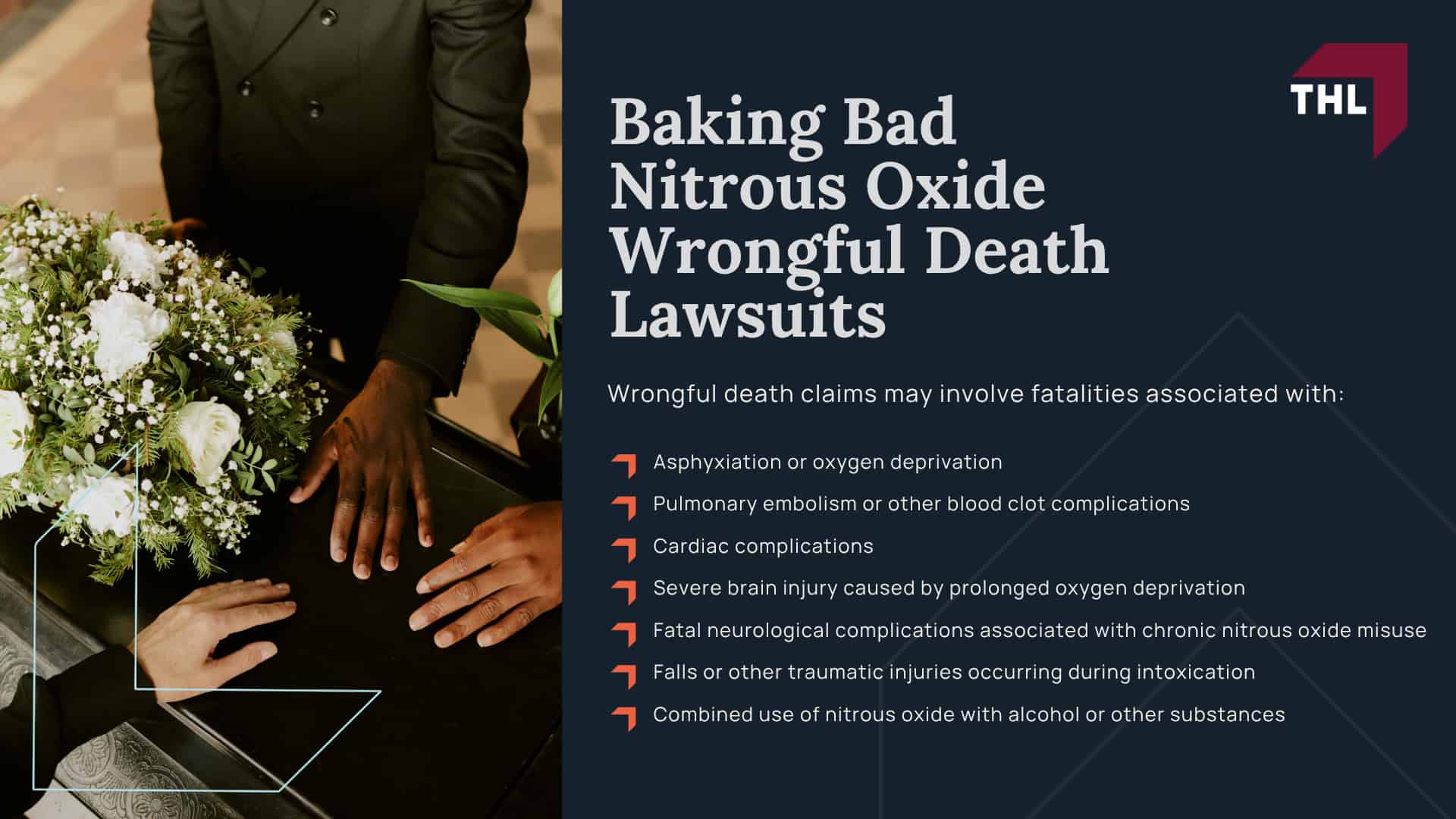
Wrongful death claims may involve fatalities associated with:
These cases often require a detailed investigation into both the medical cause of death and the product involved.
Evidence may include purchase records, medical records, EMS reports, autopsy findings, toxicology results, product packaging, witness statements, and other documentation connecting the decedent’s nitrous oxide use to the fatal injuries.
The individuals entitled to file a wrongful death lawsuit depend on the law of the state where the claim is brought, and every case must be evaluated on its own facts.
A lawsuit must connect the nitrous oxide product, the sale or marketing conduct, the person’s use of nitrous oxide, and the fatal injury or death.
The deadline for filing a Baking Bad nitrous oxide lawsuit depends on the statute of limitations in the state where the claim is brought.
Because neurological injuries associated with nitrous oxide exposure may develop gradually or worsen over time, determining when the filing period begins can sometimes require a careful review of the medical records and the facts surrounding the injury.
Personal injury and wrongful death claims are often governed by different filing deadlines, and additional rules may apply in certain situations.

The filing deadline may depend on:
Anyone who believes nitrous oxide products contributed to a serious injury or death should speak with a lawyer as soon as possible.
Acting promptly can help preserve important evidence, including the product, purchase records, medical records, neurological evaluations, diagnostic imaging, witness information, and other documentation that may become more difficult to obtain over time.
TorHoerman Law is investigating potential nitrous oxide lawsuits involving serious injuries and wrongful deaths allegedly linked to the recreational inhalation of flavored nitrous oxide products.
Our legal team is reviewing claims involving neurological injuries, spinal cord damage, paralysis, blood clots, brain injuries, frostbite, oxygen deprivation, psychiatric complications, and other severe health consequences associated with nitrous oxide exposure.
We can evaluate the product involved, review your medical records, investigate how the product was marketed and sold, and determine whether manufacturers, distributors, retailers, online marketplaces, or other companies may be legally responsible under applicable law.

If you or a loved one suffered serious injuries after using a recreational nitrous oxide product, contact TorHoerman Law today for a free consultation.
You can also use the chat feature on this page to find out whether you may qualify for a nitrous oxide lawsuit.


