Active Litigation
Nitrous Oxide Lawsuit Facts
TorHoerman Law is actively accepting claims for the Nitrous Oxide Lawsuit.


Cosmic Gas is a company that sells nitrous oxide for culinary applications, primarily through large-capacity flavored cylinders and traditional cream charger products.
Nitrous oxide, often called laughing gas, is a colorless, odorless gas that has legitimate medical and culinary uses, including whipped cream preparation, beverage infusions, foams, and other food-service applications.
Unlike many older brands that primarily sold small disposable cream chargers, Cosmic Gas has become known for marketing larger 670-gram and 1350-gram cylinders designed to dispense substantially more nitrous oxide from a single container.
The company also offers numerous flavored products, including varieties such as Blue Razz, Strawberry Mango, Vanilla Cake, Watermelon Candy, and Cookies & Cream, alongside unflavored options marketed for culinary use.
Cosmic Gas products are sold directly through the company’s website and through online retailers, smoke shops, vape stores, and other retail outlets across the United States.

As flavored, high-capacity nitrous oxide products have become more widely available, regulators and public health officials have increased scrutiny of brands such as Cosmic Gas because of reports that the products have been purchased for recreational inhalation rather than their intended culinary purpose.
The FDA has identified Cosmic Gas among the nitrous oxide brands consumers should not inhale recreationally after receiving reports of serious injuries and deaths associated with nitrous oxide misuse.
Cosmic Gas products are part of a broader investigation involving flavored nitrous oxide brands that plaintiffs allege were marketed or sold in ways that made recreational inhalation foreseeable.
Although nitrous oxide has legitimate culinary and medical uses, lawsuits allege that some manufacturers, distributors, retailers, and online sellers failed to adequately warn consumers about the serious health risks associated with inhaling the gas recreationally.
Plaintiffs further allege that certain flavored nitrous oxide products were marketed in ways that appealed to younger consumers despite increasing reports of neurological injuries, paralysis, brain damage, blood clots, and deaths associated with recreational nitrous oxide misuse.
Public health officials have also expressed concern that social media content and online marketing have normalized recreational nitrous oxide use among teenagers and young adults, contributing to increased regulatory scrutiny of the industry.
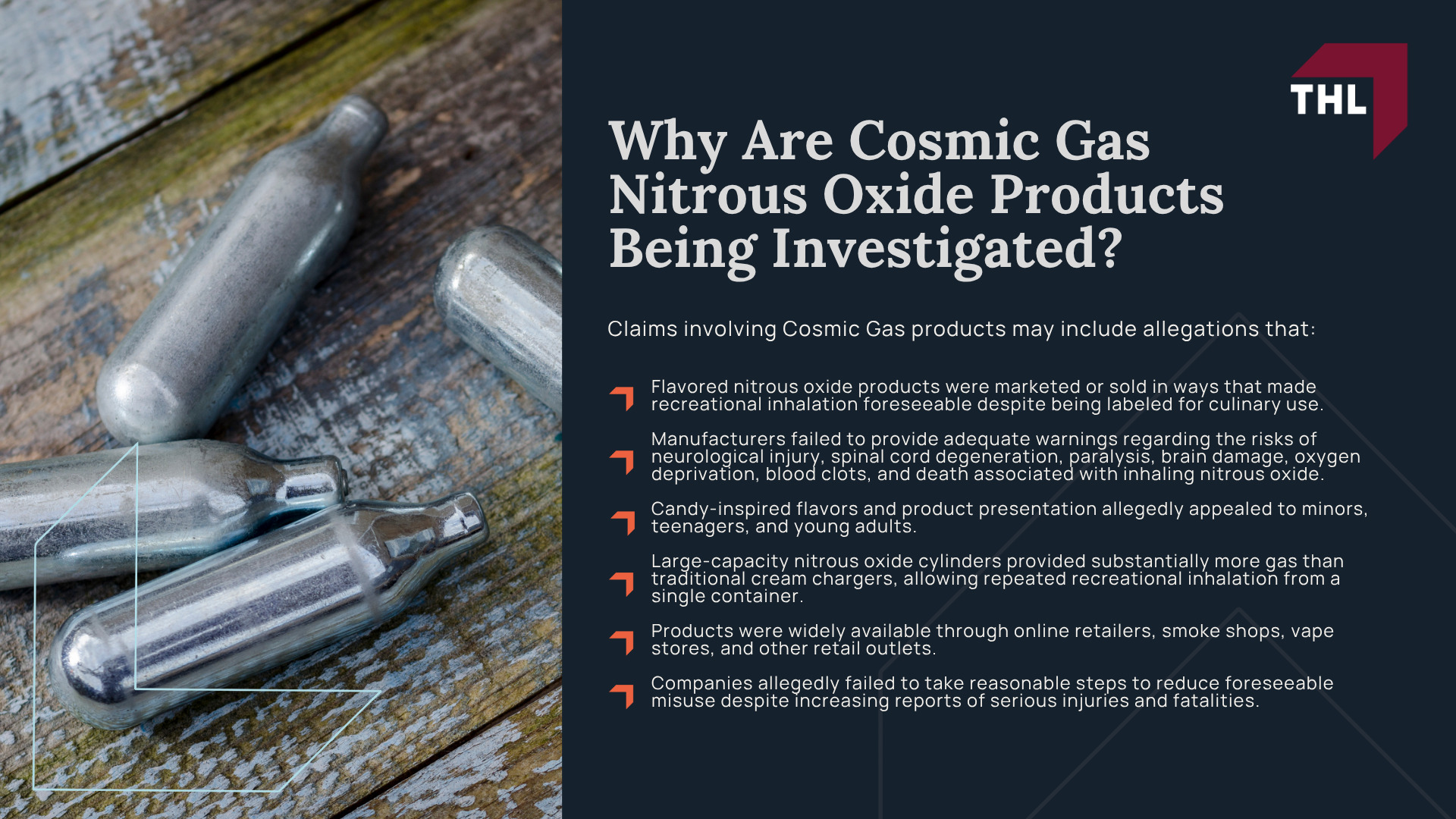
laims involving Cosmic Gas products may include allegations that:
Federal regulators and state lawmakers have increased their scrutiny of recreational nitrous oxide products as reports of severe injuries and deaths have continued to rise.
Depending on the facts of a particular case and the applicable state law, legal claims may extend beyond manufacturers to distributors, retailers, and other companies involved in bringing the products to market.
All allegations remain disputed, and liability must be determined based on the specific facts of each case.
Recreational nitrous oxide misuse can affect nearly every major organ system, with the nervous system among the most vulnerable.
Although some people experience only a brief feeling of euphoria after inhaling nitrous oxide, repeated exposure can lead to serious and sometimes permanent medical complications.
Nitrous oxide can inactivate vitamin B12, disrupting normal nerve function and increasing the risk of neurological injury, spinal cord degeneration, numbness, weakness, trouble walking, and paralysis.
As tolerance develops, some users inhale progressively larger amounts of nitrous oxide to achieve the same effects, increasing both the frequency of use and the likelihood of severe health complications.
Prompt medical treatment may reverse some neurological injuries, particularly when vitamin B12 deficiency is identified early and nitrous oxide use stops.
Some patients, however, experience permanent neurological damage and may require lifelong vitamin B12 replacement, rehabilitation, and ongoing neurological care.
The severity of nitrous oxide-related injuries depends on factors such as the amount inhaled, how often the gas was used, whether oxygen deprivation occurred, and how quickly treatment began.
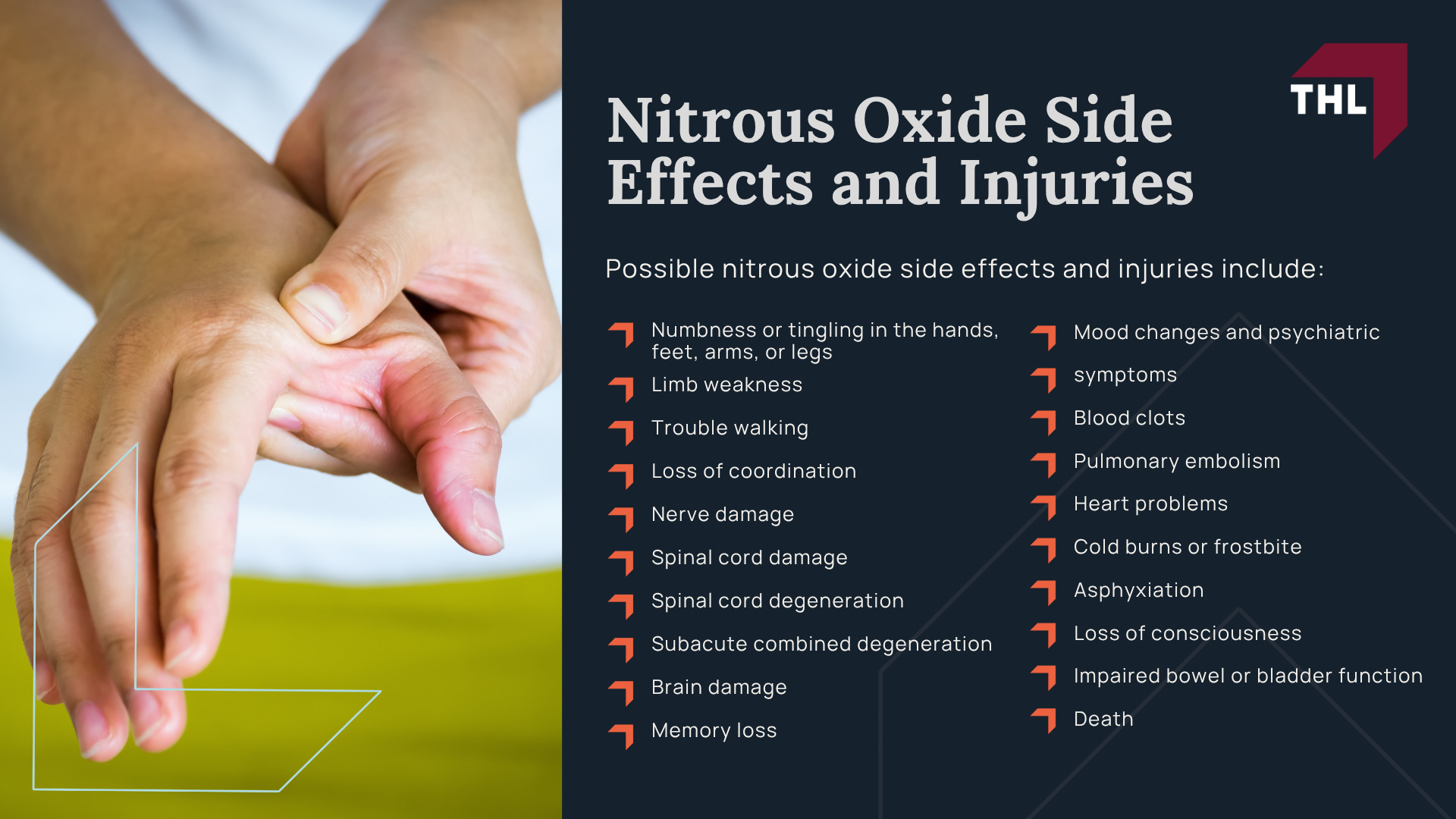
Possible nitrous oxide side effects and injuries include:
Some people develop symptoms gradually after repeated nitrous oxide exposure, while others experience sudden medical emergencies involving oxygen deprivation, blackouts, falls, vehicle crashes, or cardiovascular complications.
Anyone experiencing neurological symptoms or other serious health problems after inhaling nitrous oxide should seek prompt medical evaluation.
Treatment may include discontinuing nitrous oxide use, vitamin B12 testing and replacement, neurological examinations, diagnostic imaging, physical rehabilitation, substance use treatment, and long-term follow-up care to monitor recovery and reduce the risk of additional complications.
Neurological damage is one of the most serious health risks linked to nitrous oxide abuse.
Repeated use of nitrous oxide can interfere with vitamin B12 activity, which is necessary for healthy nerve function, spinal cord function, and normal nervous system activity.
When nitrous oxide disrupts vitamin B12, it may lead to nerve damage, spinal cord damage, spinal cord degeneration, or prolonged neurological effects.
Some patients may develop subacute combined degeneration, a serious spinal cord condition associated with functional vitamin B12 deficiency.
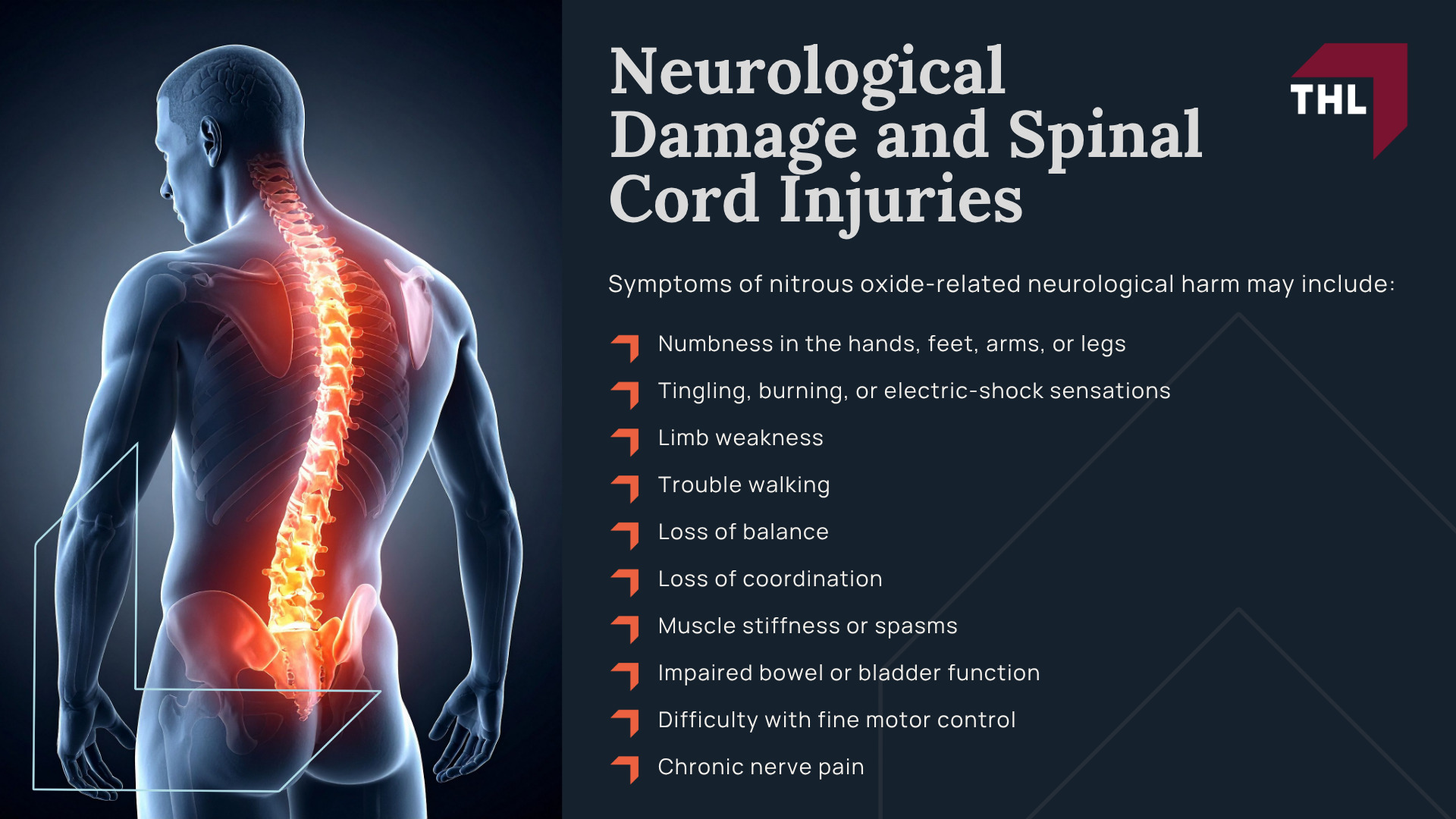
Symptoms of nitrous oxide-related neurological harm may include:
These injuries may become worse if nitrous oxide use continues.
Some patients require hospitalization, neurology care, rehabilitation, mobility aids, long-term treatment, and support for nitrous oxide addiction or substance use concerns.
Paralysis, trouble walking, and loss of coordination are among the most serious neurological complications associated with chronic nitrous oxide misuse.
These symptoms can develop when prolonged nitrous oxide exposure inactivates vitamin B12, damaging the spinal cord and peripheral nerves responsible for movement, balance, and sensation.
Early symptoms may begin with numbness, tingling, or weakness in the legs before progressing to difficulty walking, frequent falls, poor coordination, or loss of muscle control.
Without prompt medical evaluation and treatment, neurological damage may become permanent, leaving some patients with lasting mobility impairments or paralysis.
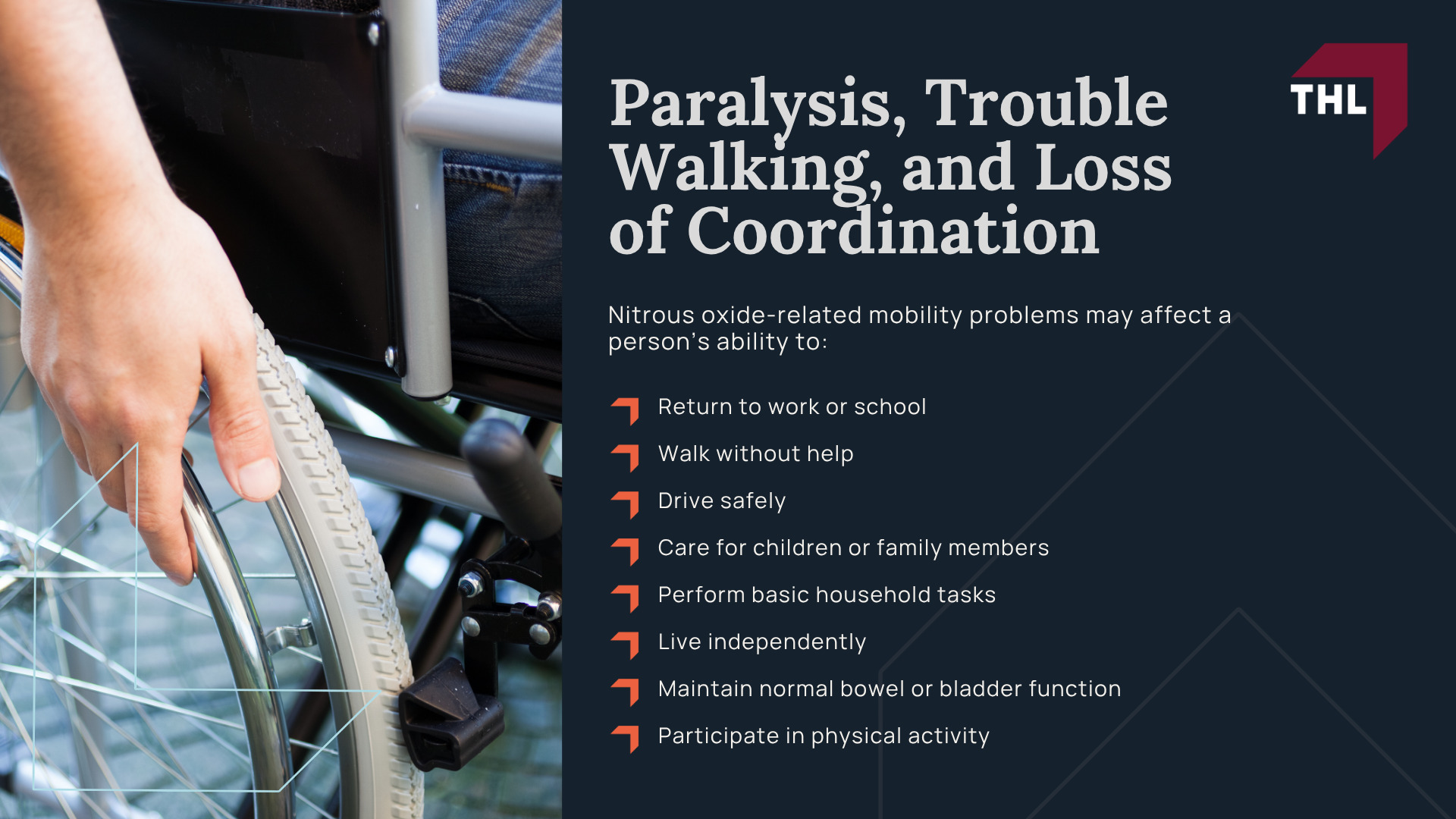
Nitrous oxide-related mobility problems may affect a person’s ability to:
Nitrous oxide misuse may affect the brain, mood, and mental health. Acute recreational inhalation can reduce oxygen exposure and impair brain function.
Repeated nitrous oxide abuse may also contribute to memory loss, cognitive impairment, mood disturbances, psychiatric symptoms, and other serious health problems.

Potential brain and psychiatric symptoms may include:
These symptoms may be especially concerning for young people and young adults who encounter nitrous oxide products through social media, peer use, smoke shops, gas stations, convenience stores, vape shops, or products sold online.
Nitrous oxide may also be used with alcohol, other drugs, or other substances, which can increase the risk of accidents, overdose-like events, delayed treatment, and emergency medical care.
People struggling with recreational nitrous oxide misuse, nitrous oxide addiction, inhalant use, or substance use may need medical and behavioral health treatment.
A treatment plan may include stopping nitrous oxide use, mental health support, substance use counseling, and relapse prevention.
Blood clots and cardiovascular complications are another concern in nitrous oxide lawsuits.
Nitrous oxide abuse has been associated in medical literature with vitamin B12 disruption and elevated homocysteine, which may contribute to clotting risk in some patients.
A pulmonary embolism occurs when a blood clot travels to the lungs.
This can be life-threatening and may require emergency care.
Symptoms may include chest pain, shortness of breath, rapid heartbeat, dizziness, fainting, coughing blood, or sudden collapse.

Nitrous oxide-related cardiovascular concerns may include:
Nitrous oxide can cause immediate harm when it is inhaled or released improperly.
The gas may be extremely cold when discharged from nitrous oxide canisters, tanks, or chargers.
Direct contact with the gas or metal components may cause cold burns or frostbite to the lips, mouth, throat, hands, or airway.
Nitrous oxide can also displace oxygen.
When someone inhales nitrous oxide gas from a balloon, canister, dispenser, bag, or mask, the body may not receive enough oxygen.
Oxygen deprivation can lead to loss of consciousness, falls, crashes, brain damage, asphyxiation, or death.

Severe events linked to recreational nitrous oxide misuse may include:
Families may have a wrongful death claim if a loved one died after inhaling Cosmic Gas nitrous oxide products and the evidence supports legal action against one or more responsible parties.
The U.S. Food and Drug Administration (FDA) has warned consumers not to inhale nitrous oxide products marketed for culinary use after receiving reports of serious injuries and deaths associated with recreational inhalation.
Although nitrous oxide has legitimate medical and food-service applications, the FDA emphasizes that products sold for whipped cream preparation and other culinary purposes should never be inhaled recreationally.
The agency has identified several flavored nitrous oxide brands in its public safety communications, reflecting broader concerns about recreational misuse rather than any single manufacturer.
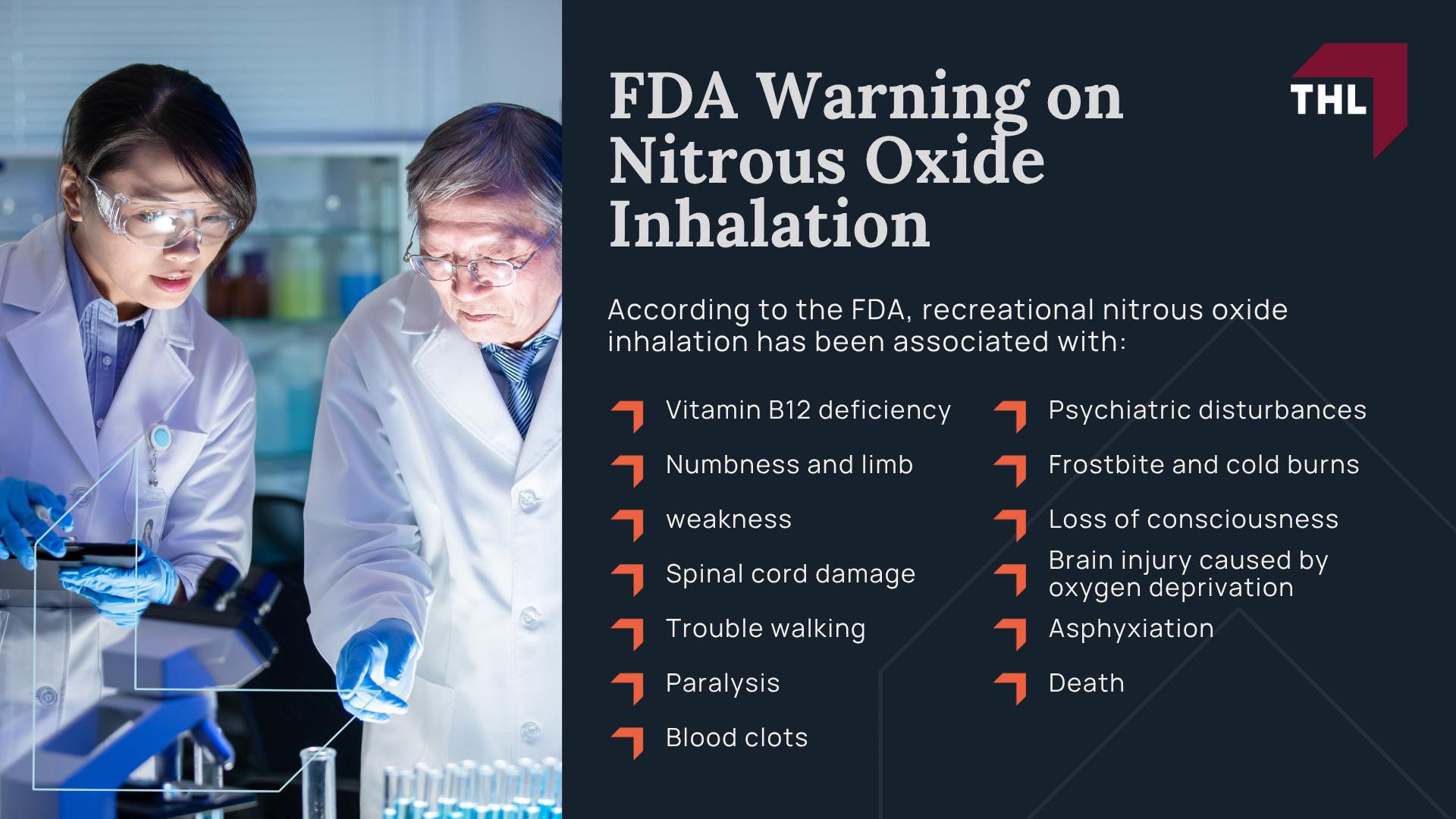
According to the FDA, inhaling nitrous oxide may lead to:
The FDA warning highlights the potentially life-threatening consequences of recreational nitrous oxide use and reinforces the importance of appropriate warning labels, safe product marketing, and consumer education.
Claims involving nitrous oxide products may examine whether manufacturers, distributors, retailers, or other companies adequately warned consumers about the risks of inhalation or marketed products in ways that made recreational misuse foreseeable.
Those allegations remain disputed, and liability depends on the facts of each individual case.
Cosmic Gas markets nitrous oxide products for culinary applications, offering traditional cream chargers alongside large-capacity cylinders in a variety of dessert- and candy-inspired flavors.
Public product listings promote flavored options such as Blue Razz, Vanilla Cake, Watermelon Candy, Strawberry Milk, and Cookies & Cream, while advertising the products for whipped cream preparation, beverage infusions, foams, and other food-service uses.
The company also sells larger nitrous oxide cylinders that contain substantially more gas than traditional cream chargers and distributes its products through its website and other retail channels.
Product labeling and website disclaimers state that the products are intended for culinary use and warn consumers not to inhale the gas recreationally.
Claims involving Cosmic Gas products allege that manufacturers, distributors, retailers, and other companies marketed or sold flavored nitrous oxide products in ways that made recreational inhalation foreseeable despite labeling them for culinary purposes.
Plaintiffs further allege that large-capacity cylinders, flavored varieties, widespread online availability, and sales through smoke shops, vape stores, and other retail outlets increased access to recreational nitrous oxide products.
Similar allegations have been raised against multiple flavored nitrous oxide brands as lawsuits examine whether companies provided adequate warnings about the risks of neurological injury, spinal cord damage, paralysis, brain injury, oxygen deprivation, blood clots, and death associated with inhaling nitrous oxide. Those allegations remain disputed, and the defendants deny liability.
The FDA has identified Cosmic Gas among several nitrous oxide brands that consumers should not inhale recreationally after receiving reports of serious injuries and deaths associated with nitrous oxide misuse.
Public health officials have also raised concerns about the increasing availability of flavored, high-capacity nitrous oxide products and the role of social media in normalizing recreational inhalation among young people, prompting additional regulatory scrutiny and proposed legislation in multiple states.
Liability in a nitrous oxide lawsuit depends on the specific facts of each case, including how the product was manufactured, marketed, distributed, sold, and ultimately used.
Recent lawsuits involving flavored nitrous oxide products name companies throughout the chain of distribution rather than focusing solely on a single manufacturer.
Depending on the available evidence and the applicable state law, legal claims may examine whether one or more companies contributed to the injuries by manufacturing, marketing, distributing, or selling the product.

Potential liability may involve allegations that a company:
Not every company involved in the chain of distribution will be legally responsible in every case.
Determining liability requires a careful review of the product involved, where it was purchased, the warnings provided, how it was marketed, each company’s role in bringing the product to market, and the medical evidence connecting the injuries to nitrous oxide exposure.
Every lawsuit must be evaluated individually based on its own facts and the applicable state law.
Evidence is critical in a nitrous oxide lawsuit.
Product identification, proof of purchase, medical causation, and proof of injury may all affect whether a claim can move forward.
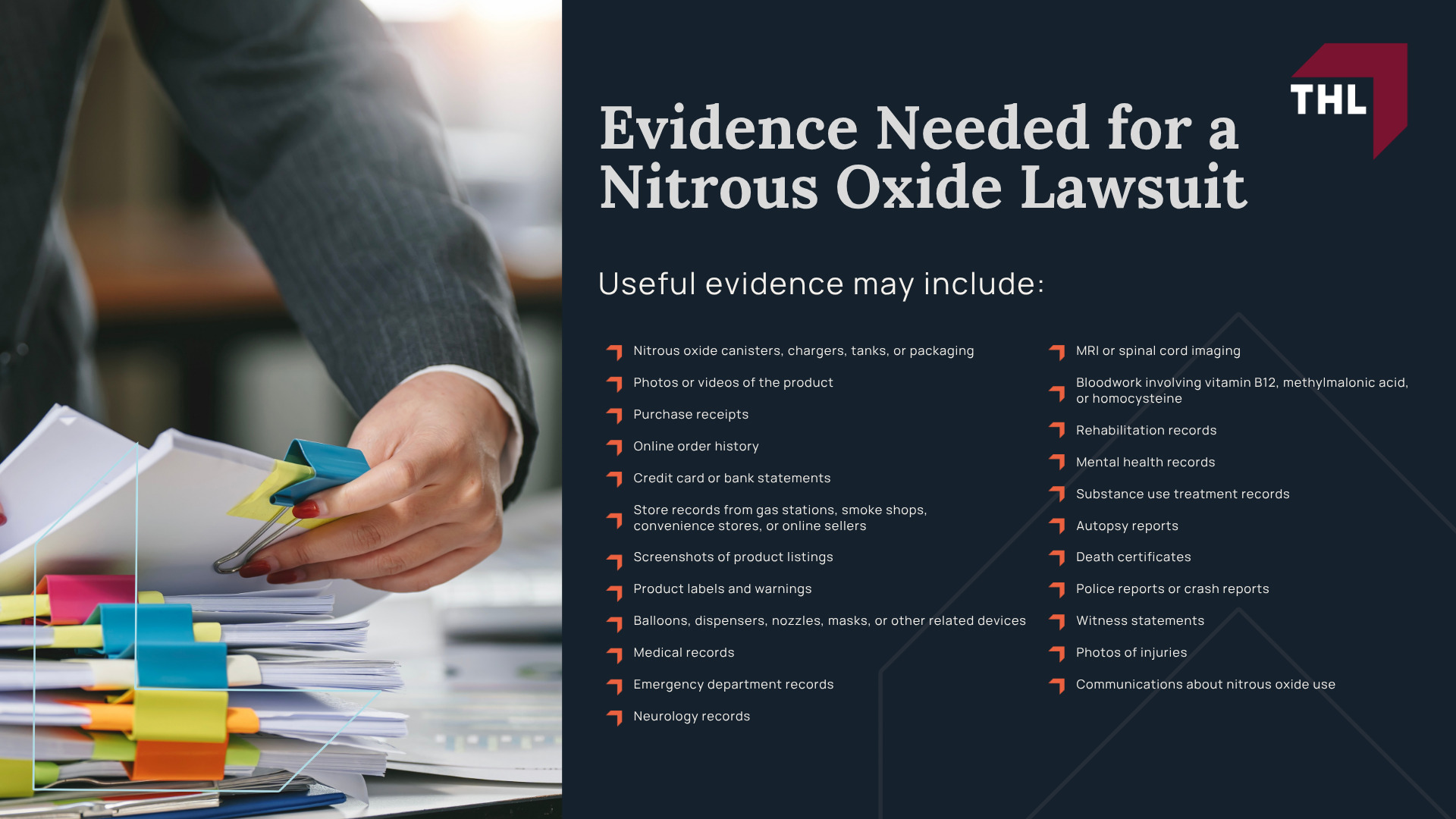
Useful evidence may include:
Do not throw away product containers, packaging, receipts, or digital purchase records.
These materials may help provide proof of the product, seller, distributor, warnings, and timeline of use.
Compensation in a nitrous oxide lawsuit depends on the injury, medical evidence, liability facts, state law, and long-term impact on the injured person’s life.
No attorney can guarantee a settlement amount or case value before reviewing the evidence.
A lawsuit may seek compensation for damages sustained.
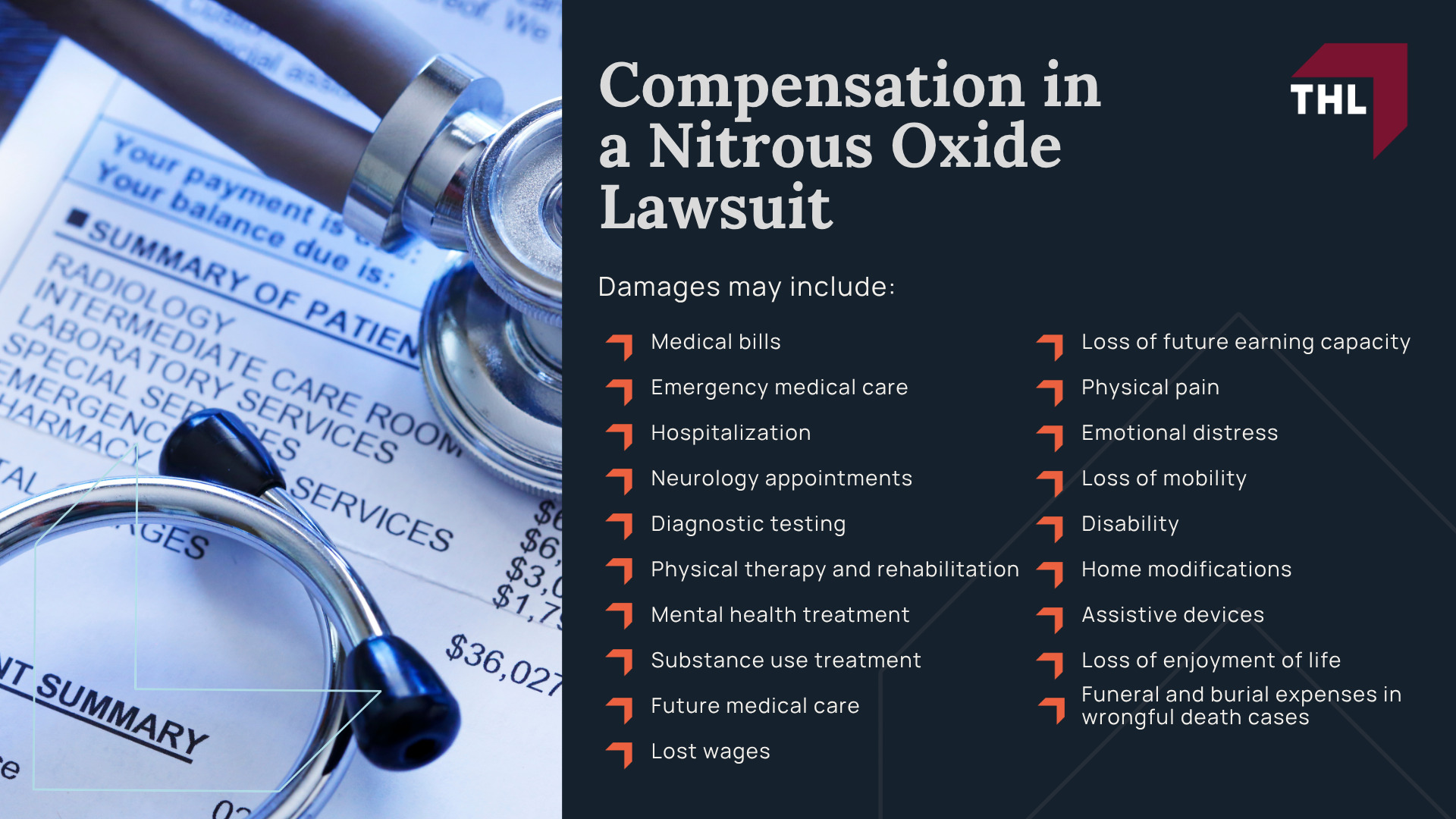
Damages may include:
Serious injuries such as spinal cord damage, spinal cord degeneration, brain damage, partial paralysis, pulmonary embolism, and death may require extensive documentation.
TorHoerman Law can review the facts and determine whether a Cosmic Gas Nitrous Oxide Lawsuit may be available.
A wrongful death lawsuit may be available when recreational nitrous oxide use results in a fatal injury and the available evidence supports a legal claim against one or more responsible parties.
Although many people associate nitrous oxide with a brief recreational high, inhaling the gas can lead to life-threatening medical emergencies, particularly when large amounts are inhaled repeatedly or oxygen deprivation occurs.
Public health agencies and the FDA have linked recreational nitrous oxide misuse to fatal complications involving asphyxiation, severe neurological injury, blood clots, cardiac events, and traumatic injuries sustained while impaired.
Every wrongful death case requires a careful review of the medical evidence, the product involved, and the circumstances surrounding the person’s exposure to nitrous oxide.
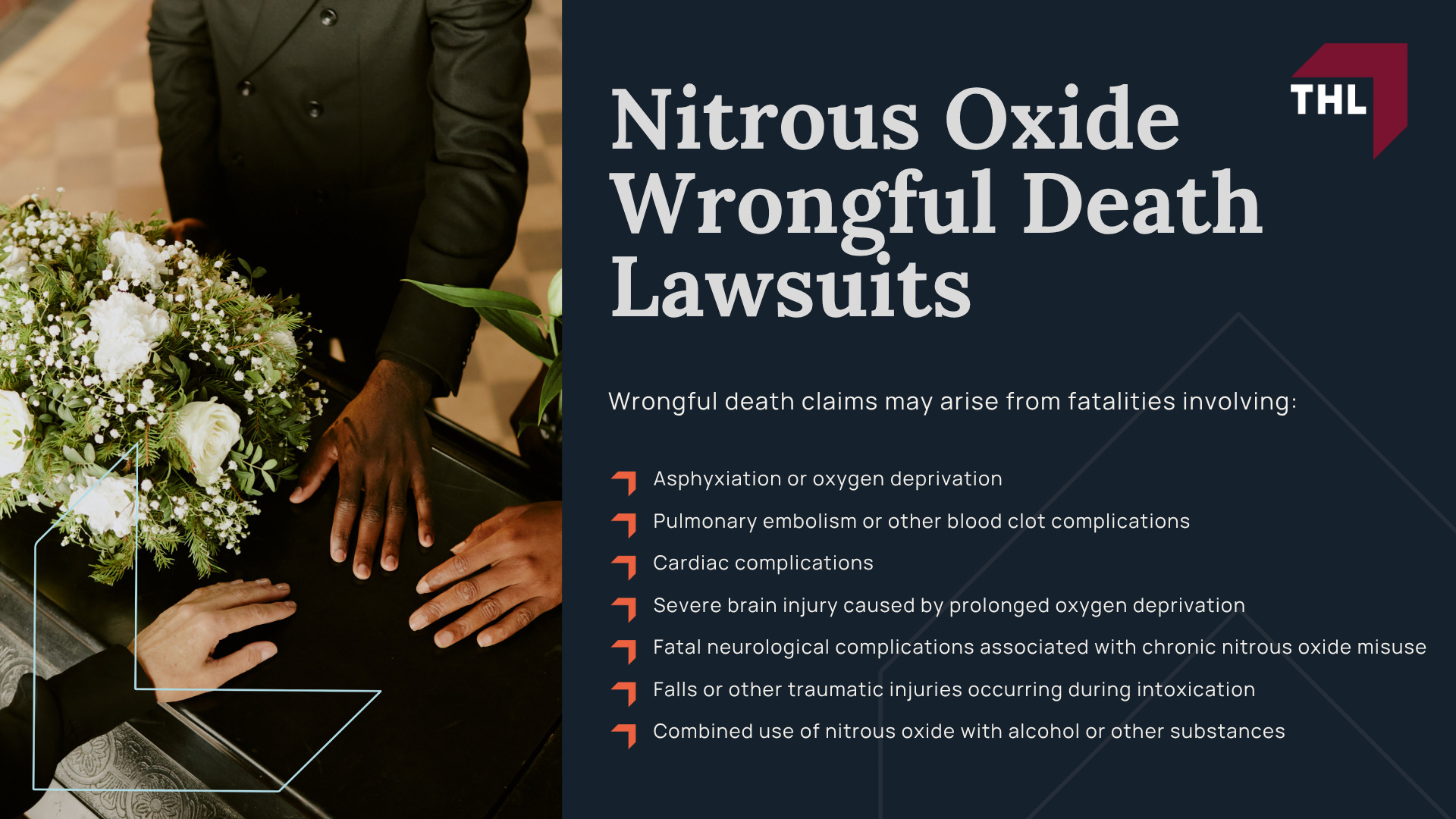
Wrongful death claims may arise from fatalities involving:
A successful wrongful death lawsuit typically requires evidence connecting the person’s death to recreational nitrous oxide exposure and the conduct of one or more companies involved in manufacturing, marketing, distributing, or selling the product.
Helpful evidence may include medical records, emergency medical services reports, autopsy findings, toxicology results, purchase records, product packaging, witness statements, and other documentation.
The individuals who may bring a wrongful death claim and the damages that may be recovered depend on the law of the state where the lawsuit is filed.
Every case must be evaluated individually based on its own facts and the applicable state law.
TorHoerman Law is investigating nitrous oxide lawsuits involving serious injuries and wrongful deaths allegedly linked to the recreational inhalation of flavored nitrous oxide products.
Our legal team is reviewing claims involving neurological injuries, spinal cord damage, paralysis, brain injuries, blood clots, pulmonary embolism, frostbite, oxygen deprivation, psychiatric complications, and other severe health consequences associated with nitrous oxide exposure.
We evaluate the product involved, review medical records and diagnostic testing, examine how the product was marketed and sold, and determine whether manufacturers, distributors, retailers, online marketplaces, or other companies may be legally responsible under applicable law.
If you or a loved one suffered serious injuries after using a flavored nitrous oxide product, you may have legal options.
Contact TorHoerman Law today for a free consultation.
You can also use the chat feature on this page to find out if you qualify for a Cosmic Gas nitrous oxide lawsuit.


