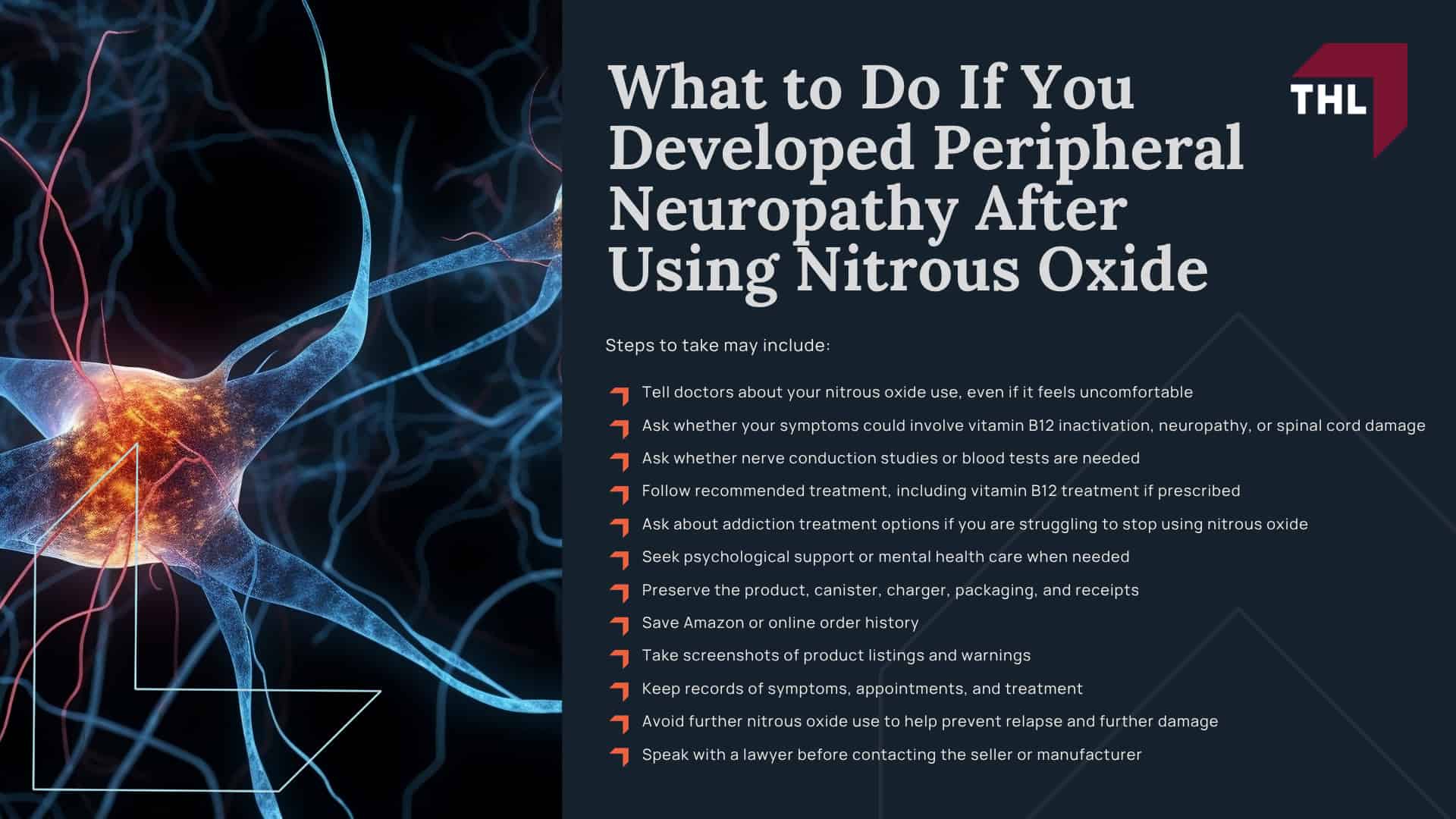
The nitrous oxide peripheral neuropathy lawsuit focuses on claims by people who developed peripheral neuropathy, peripheral nerve damage, nerve pain, weakness, numbness, difficulty walking, or other neurological damage after recreational nitrous oxide use.
Nitrous oxide, commonly known as laughing gas, is an odorless gas with accepted uses in medicine, dentistry, pain relief, emergency medicine, anesthesia, and food preparation.
It is also used in whipped cream products.
Those controlled uses are different from inhaling nitrous oxide gas from canisters, chargers, tanks, or balloons for recreational effects.

Lawsuits may allege that certain nitrous oxide products were sold in ways that made misuse foreseeable, especially when flavored canisters, metal tanks, and whipped cream chargers were sold through smoke shops, gas stations, online retailers, and other channels associated with recreational drug use.
A nitrous oxide peripheral neuropathy claim may investigate whether manufacturers, distributors, retailers, and online sellers failed to warn that nitrous oxide use can damage the peripheral nerves, spinal cord, nerve fibers, nerve cells, and broader nervous system.
Why Is Nitrous Oxide Linked to Peripheral Neuropathy?
Nitrous oxide is linked to peripheral neuropathy because nitrous oxide abuse can interfere with vitamin B12 activity, oxygen supply, and nerve function.
Vitamin B12 plays a critical role in maintaining healthy nerve cells and nerve fibers.
When nitrous oxide affects vitamin B12, the peripheral nervous system may be injured.
Peripheral neuropathy affects the nerves outside the brain and spinal cord.
In nitrous oxide cases, the hands, feet, arms, and legs are commonly affected.
Many users first notice numbness or tingling before symptoms progress to weakness, pain, balance problems, difficulty walking, or loss of mobility.

Nitrous oxide-related neuropathy may involve:
- Peripheral nerve damage
- Damage to the peripheral nervous system
- Numbness in the hands, feet, arms, or legs
- Tingling or burning nerve pain
- Weakness
- Difficulty walking
- Loss of balance
- Sensorimotor neuropathy
- Subacute combined degeneration
- Spinal cord involvement
- Bladder symptoms in severe cases
- Permanent damage
Recreational users may face increased risk when they inhale large amounts, use nitrous oxide repeatedly, develop chronic nitrous oxide use, or continue use after neurological symptoms begin.
Nitrous Oxide and Vitamin B12 Inactivation
Vitamin B12 is essential for healthy nerve function.
Nitrous oxide can inactivate vitamin B12, which may interfere with the body’s ability to protect the nervous system.
This process can lead to nitrous oxide peripheral neuropathy, subacute combined degeneration, spinal cord damage, and other neurological complications.
A person may develop serious symptoms even when basic blood tests do not show a simple vitamin B12 deficiency.
Medical professionals may need to evaluate additional evidence, including methylmalonic acid, homocysteine levels, blood counts, and other factors.
Recent studies and clinical reports have described patients with nitrous oxide-related neurological damage even when early testing did not fully explain the severity of symptoms.

Testing and evaluation may include:
- Vitamin B12 blood tests
- Blood counts
- Methylmalonic acid testing
- Homocysteine testing
- Neurological exams
- Nerve conduction studies
- Spinal imaging when spinal cord injury is suspected
- Review of nitrous oxide exposure
- Review of substance use history
Early identification is important.
Some patients improve with treatment, but others suffer permanent nerve damage, permanent disability, or long-term symptoms.
Peripheral Nerve Damage and Neurological Symptoms
Peripheral nerve damage occurs when the nerves outside the brain and spinal cord are injured.
Nitrous oxide misuse may damage the peripheral nerves by disrupting vitamin B12 activity and affecting the body’s ability to maintain nerve fibers.
Neurological symptoms may begin subtly.
A person may feel tingling in the feet, numbness in the hands, or weakness in the legs.
The symptoms may worsen and affect walking, balance, fine motor control, and daily activities.

Symptoms may include:
- Numbness
- Tingling
- Burning pain
- Weakness
- Muscle cramps
- Loss of balance
- Difficulty walking
- Nerve pain in the hands or feet
- Reduced coordination
- Falls
- Fatigue
- Bladder symptoms in severe cases
- Anxiety or other mental health symptoms when nitrous oxide addiction or substance use is involved
Healthcare providers may not immediately connect these symptoms to nitrous oxide unless the patient reports nitrous oxide use.
Patients should tell doctors and medical professionals about recreational nitrous oxide exposure, even if the subject feels uncomfortable.
Sensorimotor Neuropathy, Weakness, and Loss of Mobility
Sensorimotor neuropathy affects both sensation and movement.
In nitrous oxide peripheral neuropathy cases, patients may lose normal feeling in the hands, feet, arms, or legs while also developing weakness, poor coordination, or difficulty walking.
The legs are commonly affected because peripheral nerves in the lower body are needed for standing, balance, and movement.
Some patients also develop symptoms in the hands, making it difficult to write, button clothing, use a phone, or perform ordinary daily tasks.

Sensorimotor neuropathy may cause:
- Numbness in the feet or hands
- Tingling or burning pain
- Weakness in the legs or arms
- Difficulty walking
- Loss of balance
- Trouble standing
- Reduced grip strength
- Impaired coordination
- Falls
- Loss of mobility
- Permanent disability in severe cases
A nitrous oxide peripheral neuropathy lawsuit may examine whether companies warned users that nitrous oxide abuse could lead to sensorimotor neuropathy, peripheral nerve damage, neurological complications, and permanent damage.