Active Litigation
Nitrous Oxide Lawsuit Facts
TorHoerman Law is actively accepting claims for the Nitrous Oxide Lawsuit.


A nitrous oxide wrongful death lawsuit may be filed by families who lost a loved one after recreational nitrous oxide use, including use of flavored tanks, whipped cream chargers, large canisters, or “whippets” sold online, at local smoke shops, smoke shops, vape shops, convenience stores, or gas stations.
Nitrous oxide, commonly called laughing gas, has legitimate uses as an anesthetic in medicine and dentistry and as a food-processing whipping agent for whipped cream.
The legal concern is recreational misuse, including inhaling nitrous oxide from consumer products not intended for inhalation.
The FDA has warned consumers not to inhale or recreationally use nitrous oxide products in any flavor, size, tank, canister, or charger because inhalation can cause serious adverse health effects, including death.
The FDA also notes that these products may be sold online, in smoke and vape shops, in gas stations, and through other retailers.

Families may be investigating lawsuits involving deaths linked to:
These cases are product-liability and wrongful-death claims.
Lawsuits generally allege that certain companies failed to provide health warnings, failed to give adequate health warnings, or sold products in ways that made recreational inhalation foreseeable.
Families are filing lawsuits because nitrous oxide is no longer being misused only through small cream chargers.
Public health warnings and lawsuits now focus on large, colorful, flavored canisters sold as culinary products but allegedly used as a party drug.
Products such as Galaxy Gas and similar flavored nitrous products have received public attention because they are sold in formats and flavors that plaintiffs may argue appeal to young adults and young people.
The FDA has warned that inhaling nitrous oxide can cause serious adverse effects, including brain damage, spinal cord damage, and death.
FDA safety communications also state that some people who regularly inhale nitrous oxide can experience prolonged neurological effects even after stopping use.
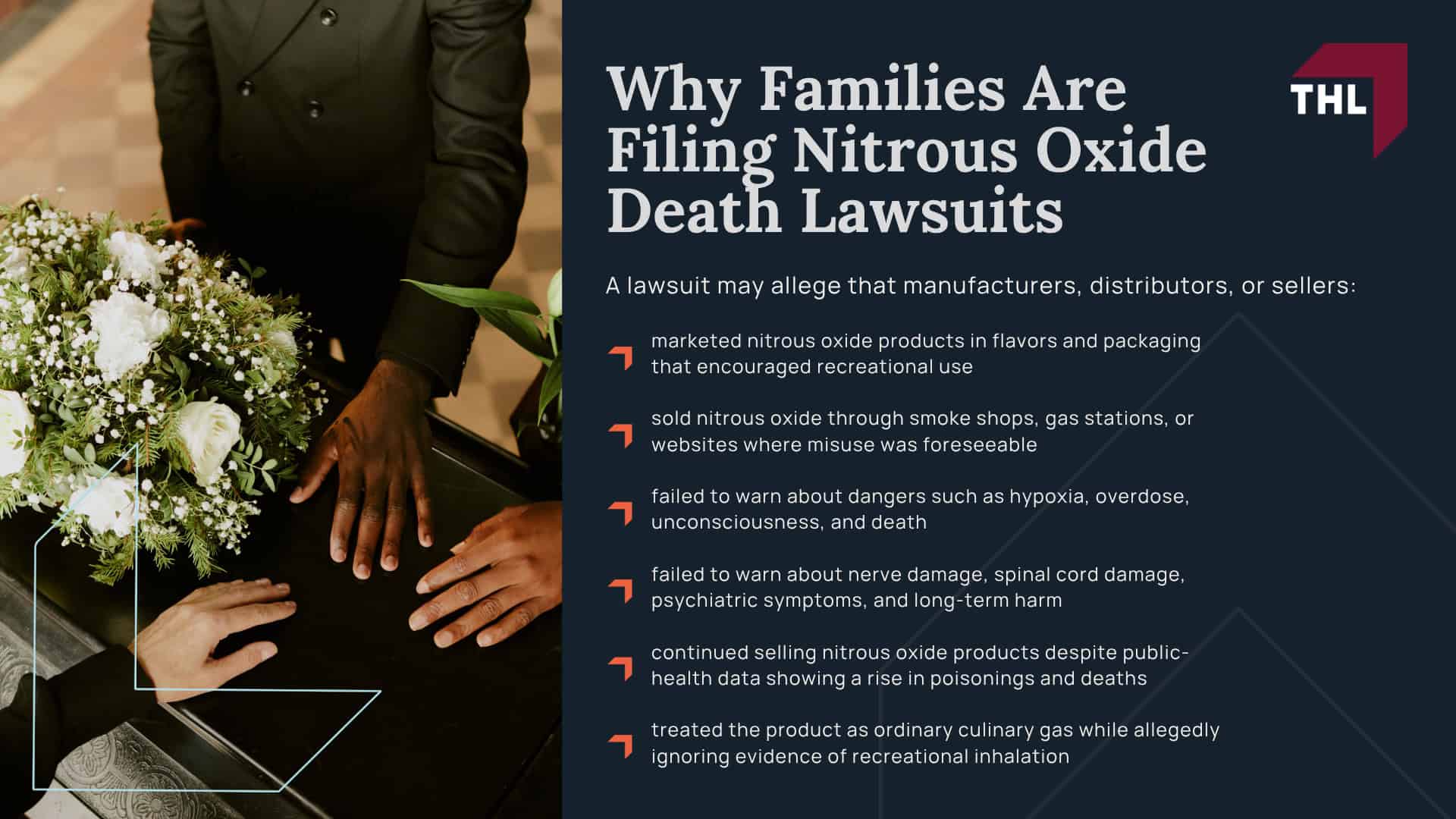
A lawsuit may allege that manufacturers, distributors, or sellers:
Defendants may deny liability.
The central issue is whether a company’s conduct helped lead to a fatal injury that could have been prevented with safer marketing, stronger warnings, better distribution controls, or removal of dangerous products from recreational retail channels.
Yes.
Nitrous oxide can cause death when it is inhaled recreationally.
The immediate danger is that nitrous oxide can displace oxygen in the lungs and body.
When the brain and body do not receive enough oxygen, a person may experience hypoxia, loss of consciousness, respiratory failure, cardiac complications, or fatal collapse.
A new study published in JAMA Network Open by R. Andrew Yockey and Rachel Hoopsick examined national mortality data from the Centers for Disease Control and Prevention database.
The researchers found 1,240 deaths attributed to nitrous oxide poisoning among people ages 15 to 74 in the United States from 2010 through 2023.

Annual deaths increased from 23 in 2010 to 156 in 2023.
This data is important because it shows that fatal nitrous oxide poisonings are not isolated events.
Nitrous oxide poisonings rose over the study period, and the authors concluded that national surveillance and public-health attention are needed.
Nitrous oxide products can lead to fatal injuries when they are inhaled directly from tanks, chargers, balloons, bags, masks, or other devices.
A person may not realize they are being deprived of oxygen because nitrous oxide can cause brief euphoria, dizziness, lightheadedness, and impaired judgment.
Large canisters and flavored nitrous products may increase risk because they can allow repeated inhalation and heavier exposure compared with small whipped cream chargers.
Lawsuits may argue that product size, flavoring, packaging, and retail placement made recreational misuse foreseeable.
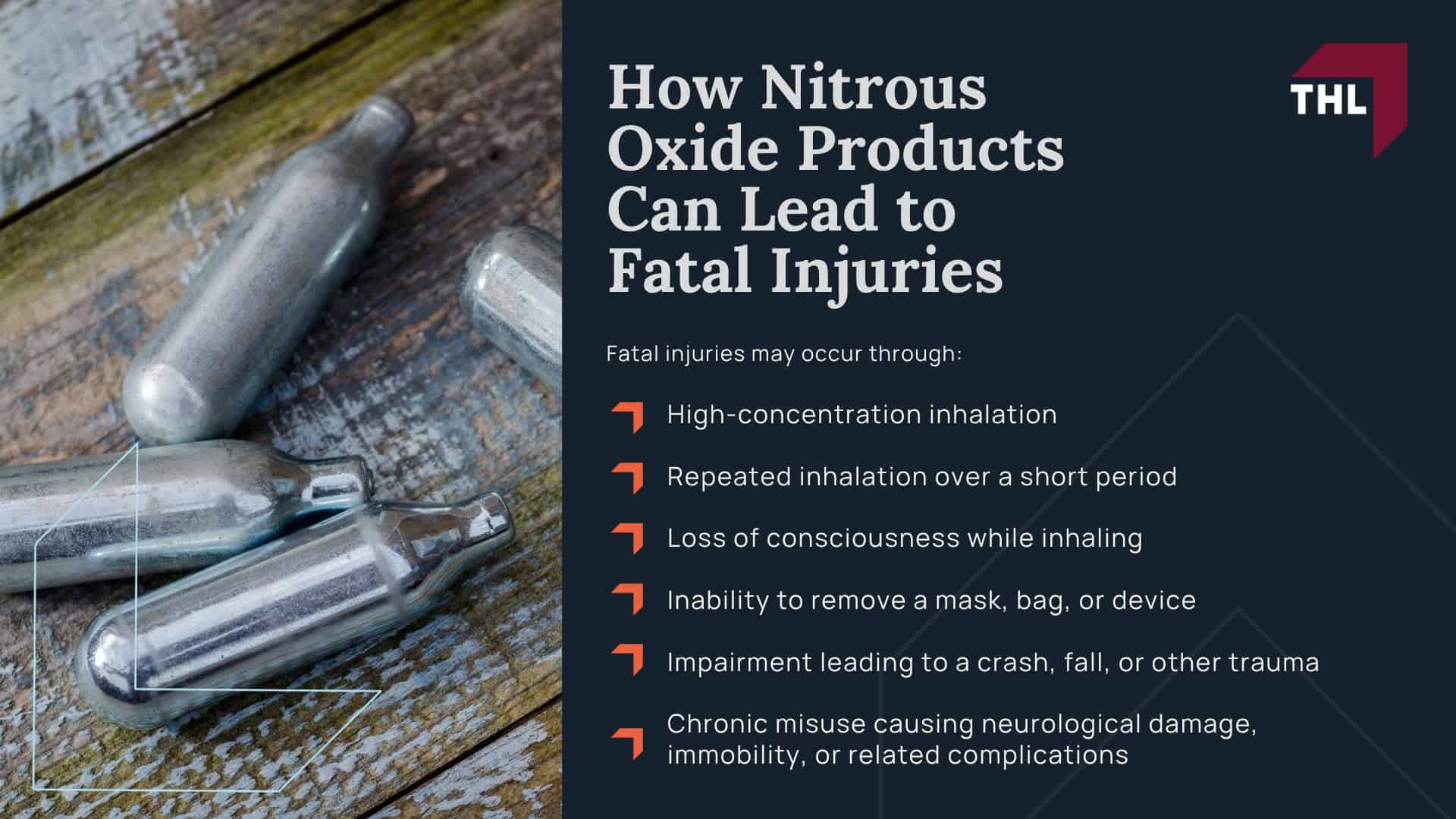
Fatal injuries may occur through:
Repeated nitrous oxide misuse has also been linked in research to vitamin B12 dysfunction, spinal cord injury, nerve damage, psychiatric symptoms, anxiety, hallucinations, and other serious health problems.
These injuries may be relevant when a death follows a period of escalating or compulsive use.
Current nitrous oxide lawsuits have named manufacturers, brand owners, distributors, smoke shops, and related businesses.
One major wrongful death case is Dial v. Fuego Smoke & Vape, LLC et al., a product-liability case connected to the death of Margaret Caldwell.
The Dial lawsuit names multiple defendants, including smoke-shop defendants, Galaxy Gas, Pluto Brands, United Brands, Monster Gas, Baking Bad Group, and others.
The lawsuit alleges that nitrous oxide products were sold or marketed in ways that made recreational inhalation foreseeable.
Galaxy Gas has become one of the most visible names in this litigation because lawsuits and public reporting have connected the brand to flavored nitrous oxide products allegedly misused for inhalation.
These are allegations, and defendants may deny liability.
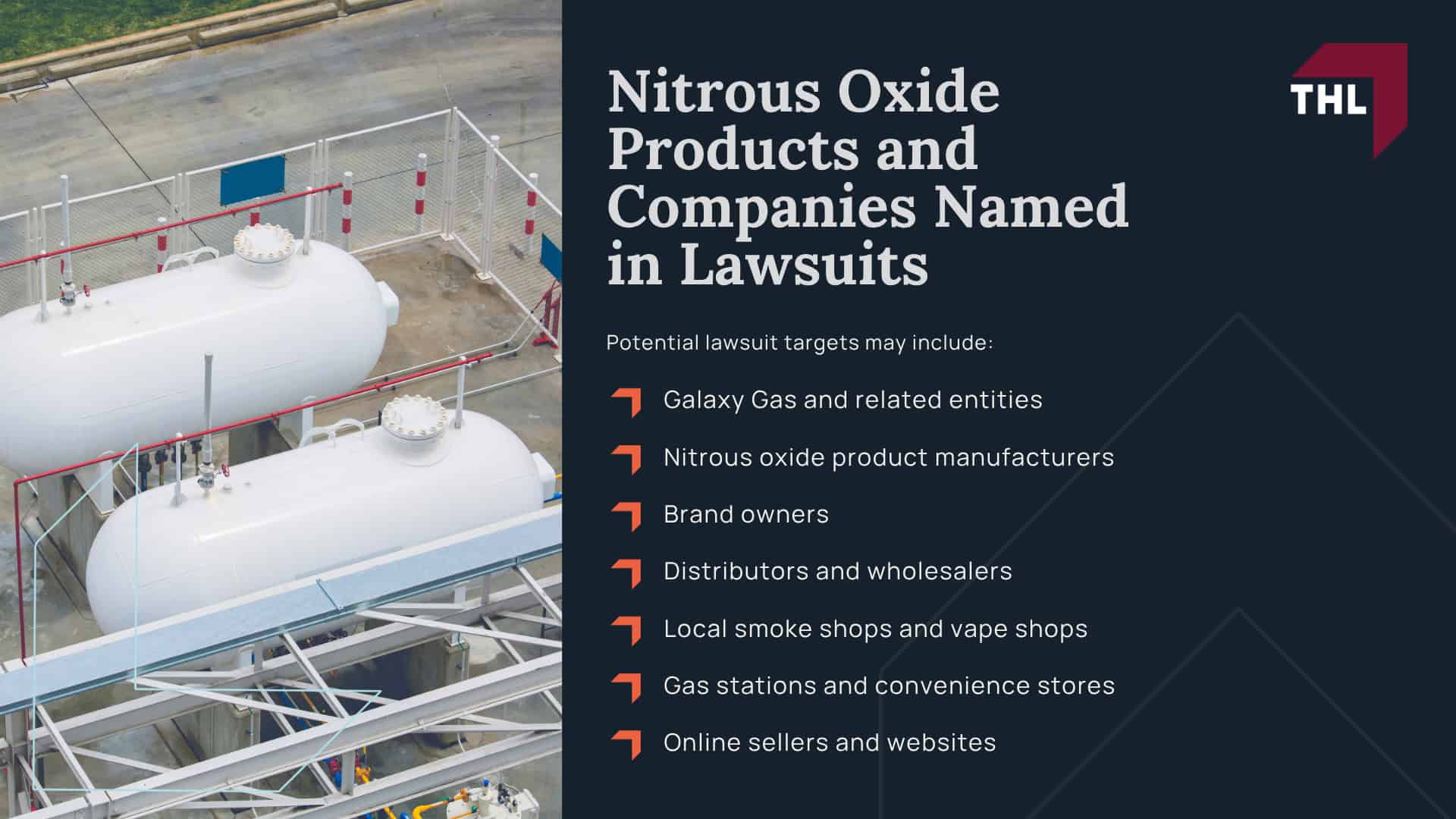
Potential lawsuit targets may include:
Liability depends on the product involved, where it was purchased, what warnings were provided, and the law in the state where the case is filed.
A nitrous oxide wrongful death lawsuit may name several categories of defendants.
Manufacturers and brand owners may be sued if they allegedly designed, packaged, labeled, marketed, or profited from nitrous oxide products used for recreational inhalation.
Distributors may face claims if they supplied products to retail channels where misuse was foreseeable.

Retail sellers may also be named when they allegedly sold nitrous oxide directly to the person who died.
This may include smoke shops, vape shops, gas stations, convenience stores, or online sellers.
Claims may focus on repeat sales, bulk sales, lack of warnings, or evidence that the seller understood the product was being used recreationally.
Evidence is critical in nitrous oxide death cases because product evidence can disappear quickly, and toxicology may not always provide a complete picture.
Families should preserve anything that may connect the death to a specific nitrous oxide product, seller, or company.

Important evidence may include:
Pattern-of-use evidence may also matter.
This can include empty canisters, repeated purchases, videos of inhalation, messages about whippets or nitrous use, or records showing symptoms before death, such as anxiety, hallucinations, weakness, numbness, nerve damage, or other neurological problems.
Compensation in a nitrous oxide wrongful death claim depends on state law, the facts of the death, the available evidence, and the relationship between the surviving family members and the person who died.

Potential damages may include:
Punitive damages may be considered if evidence shows that a defendant acted with reckless disregard for known dangers.
These damages are not available in every case and should not be assumed.
The person who can file a nitrous oxide wrongful death lawsuit depends on state law.
In many states, the lawsuit must be filed by the personal representative of the estate for the benefit of eligible surviving family members.
In other states, certain relatives may be able to file directly.

Eligible parties may include:
Families should speak with an attorney quickly because wrongful death rules are strict.
A family may have a valid claim but lose the right to file if the statute of limitations expires.
The statute of limitations for a nitrous oxide wrongful death lawsuit depends on the state law that applies to the case.
Because these claims may involve both wrongful death and product liability issues, the filing deadline may depend on several facts, including where the death occurred, where the product was purchased, where the family lives, where the defendants are located, and whether an estate has been opened.
In many wrongful death cases, the filing deadline is measured from the date of death.
In some product liability cases, courts may also consider when the injury was discovered, when the product’s role became known, or when the responsible parties could reasonably be identified.
These rules vary by state, and families should not assume that the longest possible deadline applies.
Families should speak with a lawyer as soon as possible because important evidence can disappear quickly.
Nitrous oxide canisters, chargers, packaging, receipts, online order records, smoke shop surveillance footage, social media posts, phone messages, toxicology records, autopsy reports, and witness statements may be critical to proving the claim.

Families should act quickly because:
A legal team can review the state-specific deadline, identify who may file, preserve evidence, and determine whether the facts support claims against nitrous oxide manufacturers, distributors, retailers, smoke shops, gas stations, online sellers, or other responsible parties.
A family may qualify for a nitrous oxide wrongful death lawsuit if a loved one died after recreational nitrous oxide use and there is evidence connecting the death to a product, seller, or company that may be legally responsible.

Potential qualifying facts may include:
Cases may still need review even if the cause of death is unclear, another substance was involved, or the product container is no longer available.
TorHoerman Law is investigating wrongful death lawsuits involving deaths linked to recreational nitrous oxide products, including flavored canisters, tanks, whipped cream chargers, and whippets sold online or through retail stores.
A nitrous oxide death case may involve complex medical and legal issues, including product identification, toxicology, hypoxia, public health warnings, substance use history, and the role of manufacturers, distributors, retailers, smoke shops, gas stations, or online sellers.
Families should preserve all product evidence, purchase records, medical records, and witness information before contacting a lawyer.

If your loved one died after inhaling nitrous oxide, our legal team can review the facts, identify possible defendants, and determine whether your family may have a claim.
Contact TorHoerman Law today.
Or use the chatbot on this page to see if you qualify.


