Chicago
Case Types We Handle
Personal Injuries
Car Accidents
Truck Accidents
Motorcycle Accidents
Bicycle Accidents
Construction Accidents
Nursing Home Abuse
Wrongful Death
Slip and Fall Accidents
Daycare Injury & Abuse
Edwardsville
Case Types We Handle
Personal Injuries
Car Accidents
Truck Accidents
Motorcycle Accidents
Bicycle Accidents
Nursing Home Abuse
Wrongful Death
Slip and Fall Accidents
Daycare Injury & Abuse
Premises Liability
St. Louis
Case Types We Handle
Personal Injuries
Car Accidents
Truck Accidents
Motorcycle Accidents
Bicycle Accidents
Construction Accidents
Nursing Home Abuse
Wrongful Death
Slip and Fall Accidents
Daycare Injury & Abuse
Dangerous Drugs
Defective Products
Chemical Exposure

Hernia Mesh Lawsuit | 2026 Update, Settlements, Eligibility

4.9
Google
•
677 reviews

Key Takeaways

  • Hernia Mesh Lawsuits are filed against multiple companies, including C.R. Bard, Ethicon (a subsidiary of Johnson & Johnson), Covidien, and Atrium Medical Corporation.
  • Thousands of lawsuits have been consolidated into separate multidistrict litigations (MDLs) according to the brand of surgical mesh products used.
  • The Bard Hernia Mesh MDL is the largest Hernia Mesh Lawsuit, with over 20,000 individual claims pending.

Do You Qualify for a Hernia Mesh Lawsuit? Contact Us Today

A hernia mesh lawsuit may be available to patients who developed serious complications after receiving a surgical mesh implant during hernia repair surgery.

This page explains who may qualify, the injuries reported in current cases, the manufacturers and products involved, and the evidence needed to support a claim.

Patients who required revision surgery, mesh removal, or treatment for bowel obstruction, chronic pain, migration, infection, or hernia recurrence may have grounds to investigate whether the implant contributed to their injuries.

TorHoerman Law is currently reviewing qualifying claims involving Covidien hernia mesh products.

Hernia Mesh Lawsuit; Hernia Mesh Lawsuit Update; Hernia Mesh Lawsuits; Hernia Mesh Lawyers; Hernia Mesh Injuries; Hernia Mesh Complications; Who Qualifies for a Hernia Mesh Lawsuit; Current Covidien Hernia Mesh Lawsuit Criteria; Hernia Mesh Complications and Signs of Mesh Failure; Hernia Mesh Manufacturers and Products Named in Lawsuits; Hernia Mesh Settlements, Verdicts, and Compensation; Do You Qualify to File a Hernia Mesh Lawsuit; Evidence for a Hernia Mesh Claim; Potential Hernia Mesh Compensation; TorHoerman Law_ Contact Our Hernia Mesh Lawyers

An Overview of Hernia Mesh Lawsuits

Hernia mesh is commonly used during hernia surgery to reinforce weakened tissue in the abdominal wall and reduce the risk of recurrence.

Some patients later develop chronic pain, infection, bowel obstruction, mesh migration, mesh shrinkage, or other severe complications that require additional treatment.

A hernia mesh injury may occur when the implant moves, contracts, erodes into nearby tissue, or triggers an inflammatory response.

In more serious cases, patients may require revision surgery, partial or complete mesh removal, or bowel repair.

Lawsuits involving a defective hernia mesh implant generally allege that manufacturers sold medical devices with unsafe designs or failed to provide adequate warnings about known risks.

These claims have been filed against several manufacturers, including Covidien, Bard, Ethicon, and Atrium.

The strength of a claim often depends on the specific product, the nature of the injury, the findings recorded during revision surgery, and the medical evidence connecting the complication to the mesh.

Operative reports and implant records can identify the manufacturer and provide critical evidence about what occurred during the original procedure and any later corrective surgery.

TorHoerman Law is currently reviewing qualifying claims involving Covidien hernia mesh products implanted after 2010 when the patient underwent revision surgery and has a documented mesh-related injury.

If you or a loved one suffered serious complications after receiving a hernia mesh implant, you may be eligible to file a hernia mesh lawsuit and seek financial compensation.

Contact a hernia mesh attorney from TorHoerman Law for a free consultation.

You can also use the chat feature on this page to find out if you’re eligible to file a hernia mesh lawsuit.

Hernia Mesh Lawsuit Updates Timeline

September 22nd, 2026: What Comes Next in Hernia Mesh Litigation

Hernia mesh litigation has reached a pivotal moment.

An $88 million verdict was handed down against Medtronic last month in the first bellwether trial over its Covidien-brand mesh product.

The case involved a plaintiff who required emergency surgery after his bowel became attached to the implanted mesh.

That trial was one of nearly 2,500 cases alleging Covidien hernia mesh caused serious complications following hernia repair procedures.

A second bellwether trial is scheduled for January, and its outcome could shape the direction of the entire litigation.

Bellwether trials serve a specific function in mass litigation.

Rather than preparing thousands of individual cases for trial, courts select a small sample to proceed first. The results are treated as a signal for how similar cases might resolve.

A pattern of heavy losses at trial often pushes manufacturers to negotiate a broader settlement rather than continue litigating case by case.

The $88 million result was substantial on its own. If Medtronic faces another significant verdict in January, pressure toward settlement talks could intensify.

This would not be the first time a major hernia mesh manufacturer has resolved claims this way.

Ethicon settled a large share of lawsuits involving its Physiomesh product as case volume grew. Becton, Dickinson and Company, which owns Bard, announced in 2024 that it had reached an agreement covering the vast majority of tens of thousands of hernia mesh claims tied to its products.

Covidien’s litigation is now among the last major hernia mesh cases still being actively contested at trial, rather than moving toward resolution.

September 11th, 2026: Judge Sets Next Covidien Hernia Mesh Lawsuit for Trial in January 2027

A federal judge has scheduled the next Covidien hernia mesh bellwether trial for January 11, 2027.

The announcement follows the first bellwether trial, which ended in early August with an $88 million verdict against the medical device manufacturer.

Covidien faces nearly 2,500 product liability lawsuits nationwide over its hernia mesh implants, including the Symbotex, Parietex and ProGrip lines.

The complaints allege the mesh’s protective collagen coating degrades too quickly, exposing the underlying polyester before healing completes.

Plaintiffs claim this causes the mesh to adhere to internal organs, leading to bowel obstructions, infections, recurring hernias and revision surgery.

The lawsuits also allege Covidien and parent company Medtronic knew of these risks but failed to warn patients or correct the design.

All federal Covidien hernia mesh cases are consolidated before U.S. District Judge Patti B. Saris in the District of Massachusetts.

The upcoming trial will involve claims from a Mississippi plaintiff who received a Symbotex implant during a 2017 hernia repair and underwent additional surgery in 2020 to remove the mesh after developing small bowel adhesions.

Judge Saris has ordered a pretrial memorandum by December 1, with a final pretrial conference set for December 10.

A third bellwether trial, involving a Covidien ProGrip product, is tentatively scheduled for March 2027.

If the parties cannot reach a settlement following the bellwether trials, the judge may begin remanding individual claims back to their original federal courts for separate trial dates.

August 19th, 2026: Covidien Mesh Lawyers to Meet With MDL Judge Following $88 Million Verdict

The federal judge overseeing Covidien hernia mesh litigation has called a status conference for August 19.

The meeting follows the $88 million verdict awarded in the first bellwether trial earlier this month. Covidien and parent company Medtronic face more than 2,400 pending hernia mesh lawsuits.

Plaintiffs allege the company’s Symbotex, Parietex, and ProGrip mesh products are defectively designed and prone to failure.

The verdict isn’t binding on other cases in the MDL.

Still, it’s seen as a significant early win that could shape settlement talks going forward.

No additional bellwether trials have been scheduled yet. If the parties can’t reach a broader resolution, the judge could begin sending cases back to their original courts for individual trials.

The case adds to a separate, larger wave of Bard hernia mesh litigation. Bard faces more than 25,000 similar claims in its own MDL.

Bard reached a settlement in October 2025, though new cases continue to be filed as complications surface in more patients over time.

August 6th, 2026: Medtronic Ordered to Pay $88 Million in First Covidien Hernia Mesh Bellwether Verdict

A federal jury in Boston ordered Medtronic to pay $88 million in the first bellwether trial out of more than 10,350 pending Covidien hernia mesh cases nationwide.

Jurors found Covidien liable for failing to warn about risks tied to its Symbotex hernia mesh and for concealing product information.

The award included $77 million to the plaintiff and $11 million to his wife for loss of consortium.

The plaintiff alleged the mesh’s protective coating dissolved in about seven days, far sooner than intended, causing it to adhere to his bowel and require additional surgeries.

Medtronic said it plans to challenge the verdict in post-trial motions and on appeal.

The verdict is expected to shape settlement talks across the remaining cases as more bellwether trials proceed.

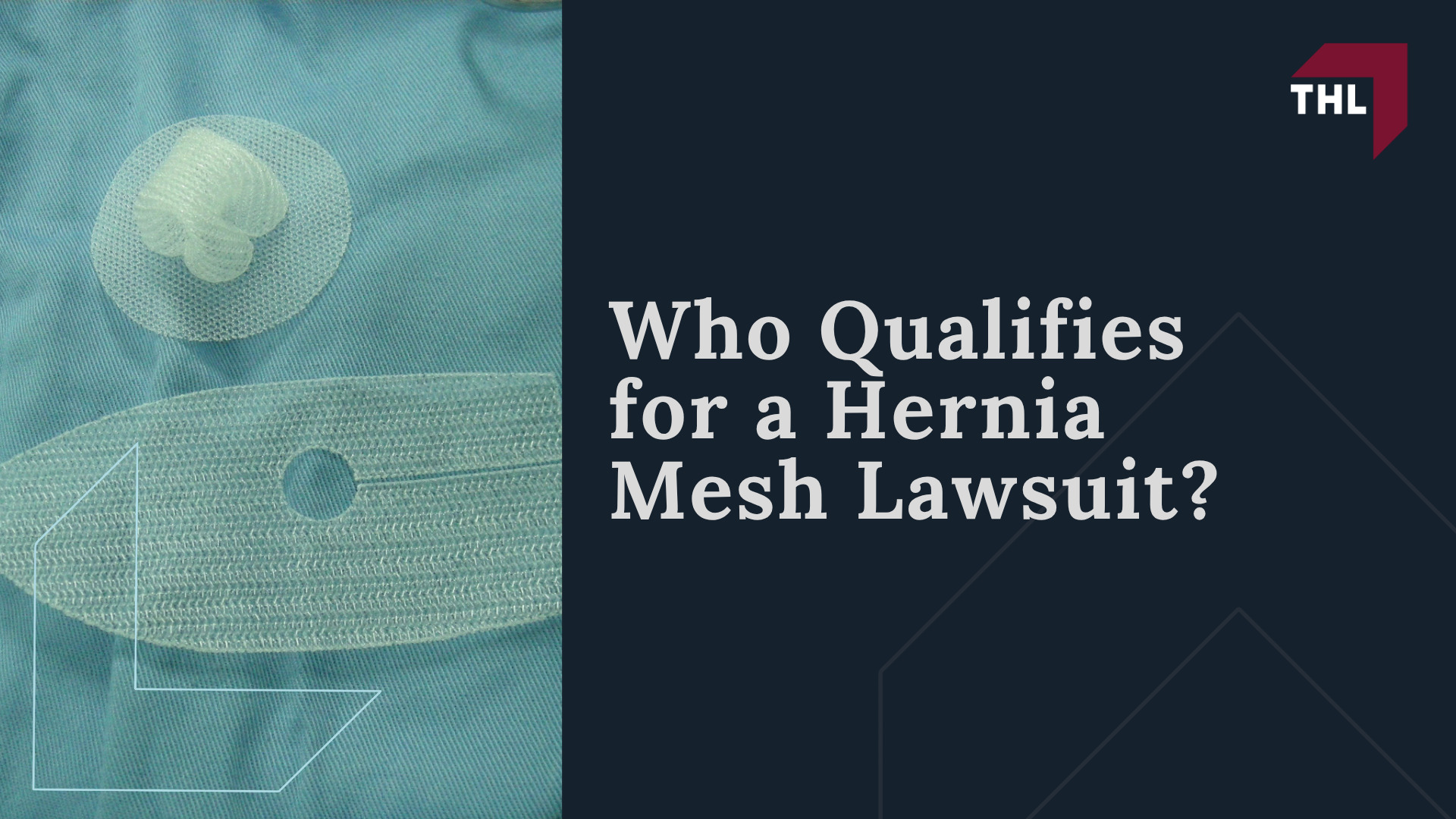
Who Qualifies for a Hernia Mesh Lawsuit?

Patients may qualify for a lawsuit when complications after hernia mesh surgery are documented in medical records and can be connected to the implanted device.

Relevant injuries may include bowel obstruction, infection, chronic pain, mesh migration, recurrent hernia, or complications requiring revision surgery. Eligibility also depends on the manufacturer, implant date, treatment history, and applicable filing deadline.

Hernia mesh lawsuits have been filed against Bard, Covidien, Ethicon, and Atrium Medical Corp.

The Bard hernia mesh MDL coordinated thousands of claims before BD reached a 2024 settlement agreement structured to resolve the vast majority of its existing federal and Rhode Island hernia litigation.
Who Qualifies for a Hernia Mesh Lawsuit

The Covidien hernia mesh MDL remains active, while earlier cases involved Ethicon Physiomesh and Atrium C-QUR products.

Pending hernia mesh lawsuits generally allege that a faulty hernia mesh caused serious injuries or that manufacturers failed to provide adequate warnings.

A claim is typically stronger when operative reports, revision findings, and other medical records document the product and resulting injury.

TorHoerman Law is currently reviewing qualifying Covidien hernia mesh cases.

Current Covidien Hernia Mesh Lawsuit Criteria

TorHoerman Law is currently reviewing claims from patients who suffered documented injuries after receiving certain Covidien hernia mesh products.
Who Qualifies for a Hernia Mesh Lawsuit; Current Covidien Hernia Mesh Lawsuit Criteria

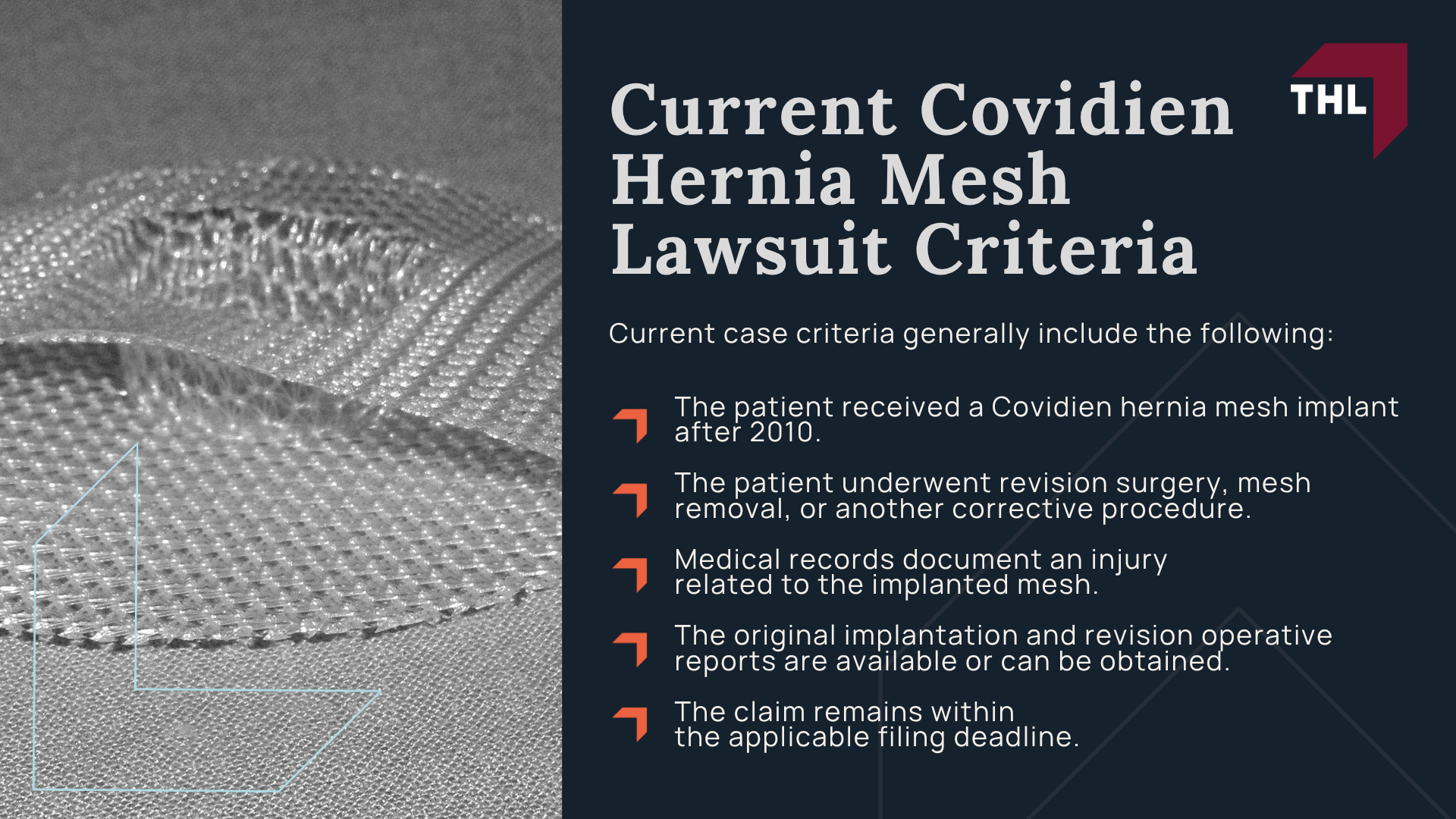
Current case criteria generally include the following:

  • The patient received a Covidien hernia mesh implant after 2010.
  • The patient underwent revision surgery, mesh removal, or another corrective procedure.
  • Medical records document an injury related to the implanted mesh.
  • The original implantation and revision operative reports are available or can be obtained.
  • The claim remains within the applicable filing deadline.

Qualifying injuries may include bowel obstruction, adhesions, infection, recurrent hernia, chronic pain, mesh migration, or internal tissue damage.

Revision records may also document that the hernia mesh failed, contracted, degraded, or adhered to nearby organs.

These findings can help attorneys evaluate claims involving allegedly defective mesh implants.

The Covidien hernia mesh MDL coordinates similar lawsuits in federal court through shared discovery, pretrial motions, and case-management procedures.

As of August 3, 2026, 2,449 lawsuits were pending in the federal proceeding.

The first Covidien bellwether trial began in July 2026 and concluded on August 4, 2026, when a Massachusetts federal jury awarded $88 million to a patient and his wife.

The lawsuit alleged that Symbotex mesh adhered to the patient’s bowel, caused an obstruction, and required extensive revision surgery.

Covidien disputed that the product caused his injuries and stated that it plans to challenge the verdict.

Bellwether trials test representative claims and provide both sides with information about how juries may evaluate common evidence.

Their outcomes can affect settlement discussions and litigation strategy, but one verdict does not determine the value or outcome of another Covidien hernia mesh lawsuit.

How to Identify Your Hernia Mesh Product

The original operative report usually identifies the manufacturer, product name, model number, and lot number of the implanted mesh.

Patients may also find this information on an implant card, product sticker, hospital implant log, surgeon’s records, or revision surgery report.

These records can show whether the repair involved synthetic mesh or biologic mesh and whether the product has been named in litigation involving defective hernia mesh devices.

A hernia mesh attorney can request missing records and confirm the specific device used during surgery.
Hernia Mesh Complications and Signs of Mesh Failure

Surgical mesh reinforces weakened tissue and can reduce the risk of recurrence after abdominal wall hernia repair.

Complications may develop when the surrounding tissue responds poorly to the implant, bacteria colonize the mesh, fixation points fail, or the device changes position or shape.

Medical literature identifies shrinkage, detachment, and migration as mechanical forms of mesh failure that can compromise the repair.

Adhesions may bind the mesh to the bowel or other abdominal structures, increasing the risk of obstruction, erosion, or fistula formation.

Persistent abdominal pain, fever, digestive problems, swelling, or a recurrent bulge should be evaluated by a physician, although these symptoms do not establish that the mesh was defective.

Who Qualifies for a Hernia Mesh Lawsuit; Current Covidien Hernia Mesh Lawsuit Criteria; Hernia Mesh Complications and Signs of Mesh Failure

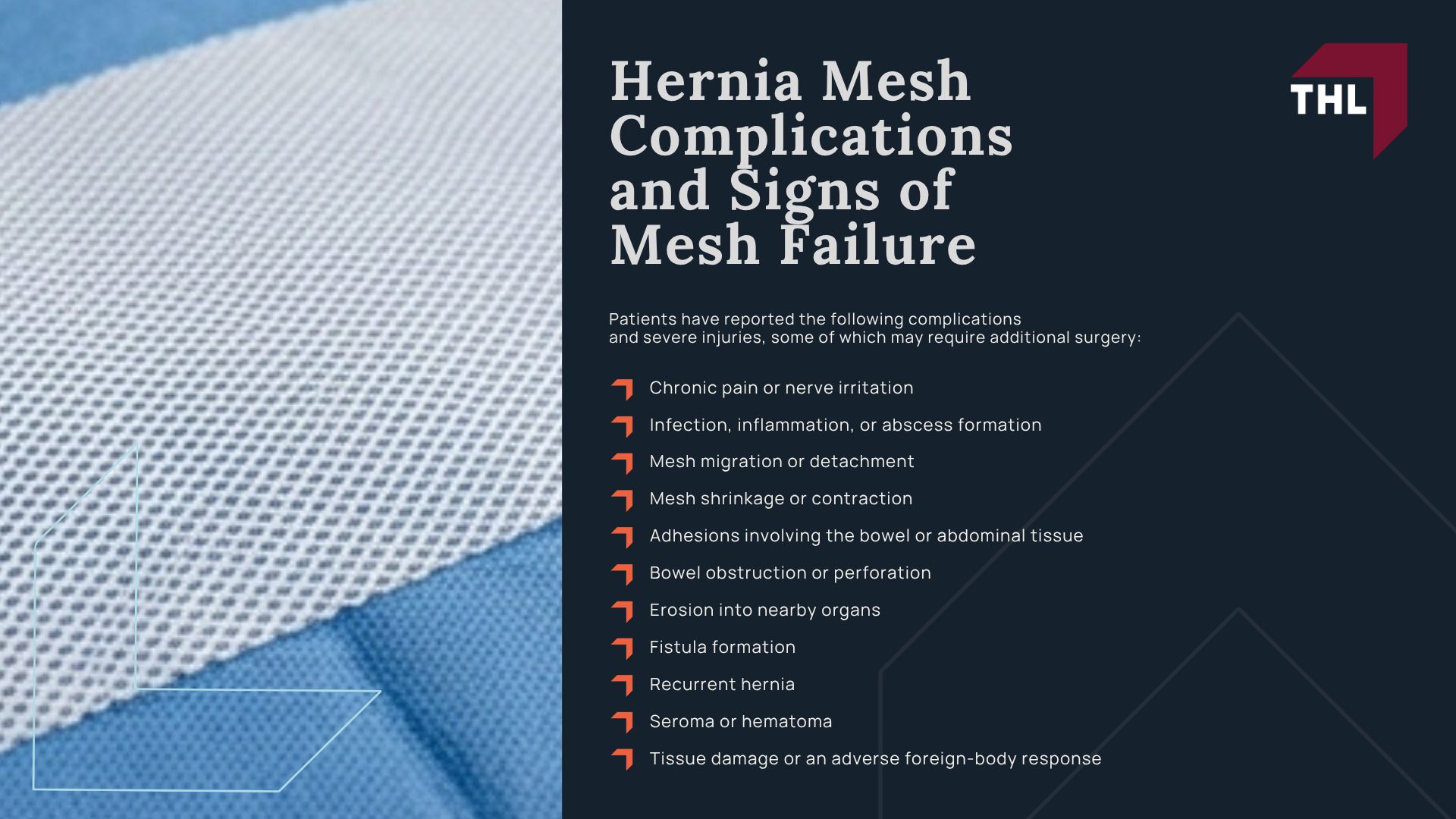
Patients have reported the following complications and severe injuries, some of which may require additional surgery:

  • Chronic pain or nerve irritation
  • Infection, inflammation, or abscess formation
  • Mesh migration or detachment
  • Mesh shrinkage or contraction
  • Adhesions involving the bowel or abdominal tissue
  • Bowel obstruction or perforation
  • Erosion into nearby organs
  • Fistula formation
  • Recurrent hernia
  • Seroma or hematoma
  • Tissue damage or an adverse foreign-body response

Some complications develop shortly after surgery, while chronic pain, migration, erosion, and recurrent hernia may become apparent months or years later.

Physicians may use a physical examination, imaging studies, laboratory testing, and operative findings to determine the source of the patient’s symptoms.

Medical experts may use these records to distinguish a possible product failure from complications caused by the surgical procedure, the patient’s underlying condition, or other clinical factors.

Revision Surgery and Hernia Mesh Removal

Hernia revision surgery may be necessary when mesh infection, migration, erosion, bowel involvement, recurrent hernia, or persistent pain cannot be managed through less invasive treatment.

The surgeon may remove part or all of the implant, release adhesions, repair damaged tissue, treat an infection, or reconstruct the weakened abdominal wall.

Mesh removal is not appropriate for every patient, and the recommended procedure depends on the mesh location, the surrounding scar tissue, the cause of the symptoms, and the risk of further injury.

Reoperative surgery can be more difficult because the implant may be incorporated into tissue or attached to nerves, blood vessels, the bowel, or other organs.

Patients should discuss persistent pain, fever, drainage, digestive symptoms, or a recurrent bulge with a qualified surgeon.

Imaging, laboratory testing, and prior operative records may help determine whether the mesh contributed to the complication and whether removal is medically appropriate.

The revision operative report can also document infection, adhesions, migration, degradation, or organ damage that may support a hernia mesh injury claim.

Hernia Mesh Manufacturers and Products Named in Lawsuits

Lawsuits have been filed against several hernia mesh companies after patients alleged that implanted products caused chronic pain, infection, adhesions, bowel injuries, migration, or recurrent hernias.

The claims generally assert defective design, manufacturing defects, inadequate warnings, or a combination of these theories.

Because manufacturers used different materials, coatings, barriers, and fixation systems, the cases have been organized by company and product family rather than treated as one unified lawsuit.

Federal multidistrict litigation has allowed courts to coordinate discovery, expert evidence, and pretrial motions while preserving each plaintiff’s individual claim.

Who Qualifies for a Hernia Mesh Lawsuit; Current Covidien Hernia Mesh Lawsuit Criteria; Hernia Mesh Complications and Signs of Mesh Failure; Hernia Mesh Manufacturers and Products Named in Lawsuits

The manufacturers and product families named in major hernia mesh proceedings include the following:

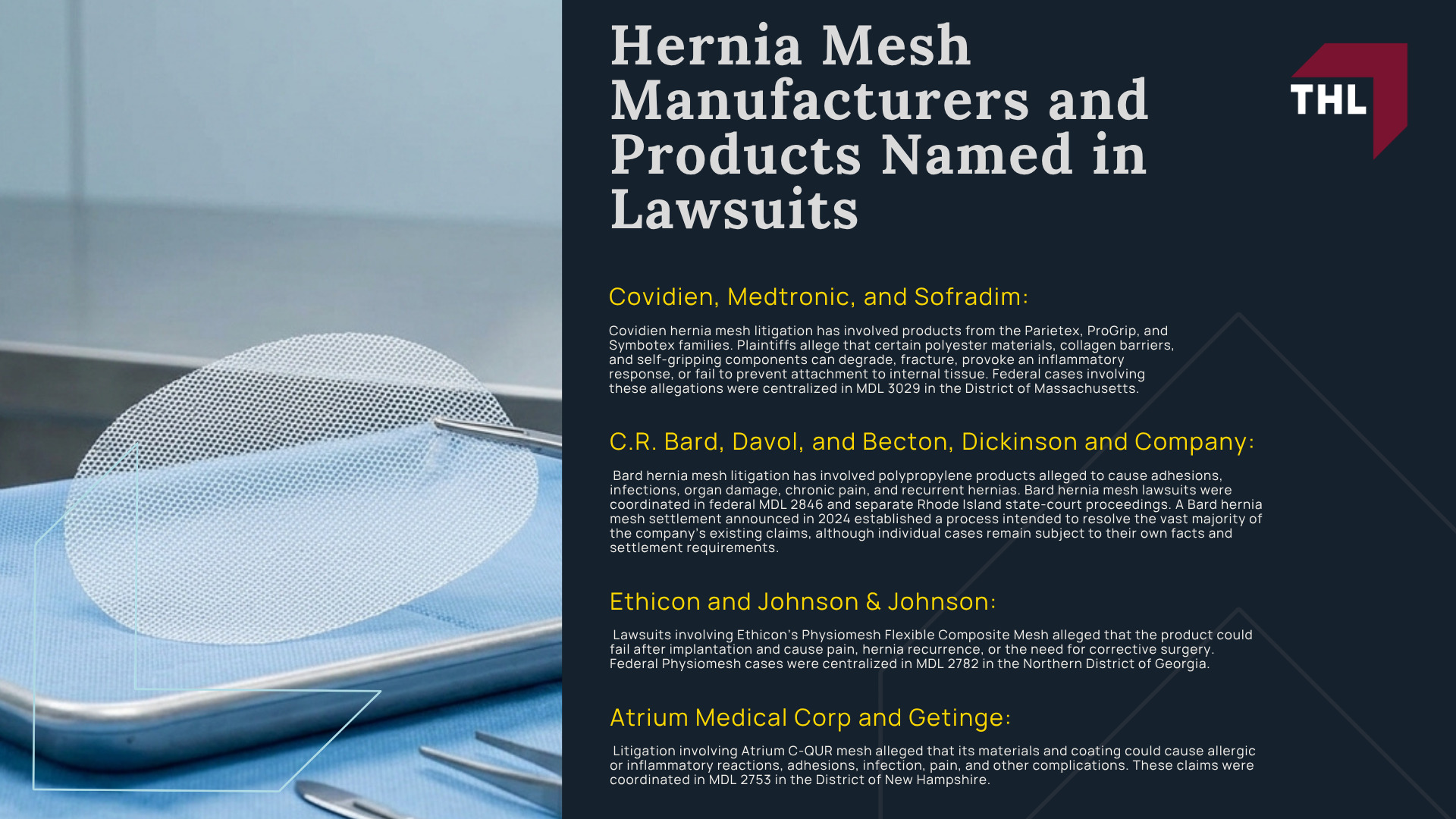
  • Covidien, Medtronic, and Sofradim: Covidien hernia mesh litigation has involved products from the Parietex, ProGrip, and Symbotex families. Plaintiffs allege that certain polyester materials, collagen barriers, and self-gripping components can degrade, fracture, provoke an inflammatory response, or fail to prevent attachment to internal tissue. Federal cases involving these allegations were centralized in MDL 3029 in the District of Massachusetts.
  • C.R. Bard, Davol, and Becton, Dickinson and Company: Bard hernia mesh litigation has involved polypropylene products alleged to cause adhesions, infections, organ damage, chronic pain, and recurrent hernias. Bard hernia mesh lawsuits were coordinated in federal MDL 2846 and separate Rhode Island state-court proceedings. A Bard hernia mesh settlement announced in 2024 established a process intended to resolve the vast majority of the company’s existing claims, although individual cases remain subject to their own facts and settlement requirements.
  • Ethicon and Johnson & Johnson: Lawsuits involving Ethicon’s Physiomesh Flexible Composite Mesh alleged that the product could fail after implantation and cause pain, hernia recurrence, or the need for corrective surgery. Federal Physiomesh cases were centralized in MDL 2782 in the Northern District of Georgia.
  • Atrium Medical Corp and Getinge: Litigation involving Atrium C-QUR mesh alleged that its materials and coating could cause allergic or inflammatory reactions, adhesions, infection, pain, and other complications. These claims were coordinated in MDL 2753 in the District of New Hampshire.

Hernia Mesh Settlements, Verdicts, and Compensation

Hernia mesh cases may conclude through an individual settlement, a coordinated settlement program, a jury verdict, or dismissal.

A hernia mesh bellwether trial selects an individual claim for trial after coordinated discovery, allowing the parties to evaluate how a jury responds to recurring evidence and legal arguments.

A hernia mesh test trial does not determine the outcome of other lawsuits, but the result may affect litigation strategy and settlement negotiations.

The first Covidien bellwether trial began in July 2026 and concluded on August 4, 2026.

A federal jury awarded Larry and Tammy Patterson $88 million after finding that Covidien failed to provide an adequate warning about the Symbotex mesh implanted during his hernia repair.

The jury did not award punitive damages or find that Covidien committed fraud, and Medtronic stated that it would challenge the hernia mesh verdict through post-trial motions and an appeal.

Becton, Dickinson and Company announced a separate agreement in October 2024 to resolve the vast majority of existing litigation involving Bard and Davol hernia mesh products.

The agreement covers cases in the federal Bard multidistrict litigation and Rhode Island state-court proceedings, but its financial terms remain confidential.

BD made no admission of liability and continues to contest claims excluded from the settlement.

Who Qualifies for a Hernia Mesh Lawsuit; Current Covidien Hernia Mesh Lawsuit Criteria; Hernia Mesh Complications and Signs of Mesh Failure; Hernia Mesh Manufacturers and Products Named in Lawsuits; Hernia Mesh Settlements, Verdicts, and Compensation

Published hernia mesh verdicts should not be treated as average settlement amounts or reliable forecasts of compensation.

Each claim depends on the implanted product, the medical evidence connecting the mesh to the injury, the need for revision surgery, the extent of permanent harm, and the law governing the case.

Compensation may address medical expenses, lost income, pain, physical impairment, and other documented losses, but no verdict or settlement from another lawsuit can establish what an individual plaintiff will recover.

What is the Average Hernia Mesh Settlement Amount?

Lawyers estimate that hernia mesh lawsuit settlement amounts may range from $50,000 to $100,000 or more.

This estimate is not based on a public settlement schedule and does not predict the value of an individual claim.

Major hernia mesh settlement terms are often confidential, and compensation may fall below or exceed this range.

Case value depends on the implanted product, the severity of the injury, revision surgery, bowel or organ damage, medical expenses, lost income, permanent impairment, and the evidence connecting the mesh to the patient’s condition.

Claims involving multiple corrective procedures, bowel resection, permanent disability, or substantial future medical care may receive greater compensation than cases involving limited treatment or temporary symptoms.

Do You Qualify to File a Hernia Mesh Lawsuit?

A hernia mesh claim requires a detailed review of the implanted product, medical history, complications, and corrective treatment.

Experienced hernia mesh lawyers can obtain operative reports, identify the manufacturer, and examine whether revision findings support a connection between the device and the injury.

This review may include records documenting mesh migration, infection, bowel damage, chronic pain, recurrent hernia, or surgical removal.

Attorneys also determine which court should hear the claim and whether the applicable filing deadline has passed.

Filing cases against medical device manufacturers may require coordinated discovery, expert testimony, and evidence specific to the product involved.

Who Qualifies for a Hernia Mesh Lawsuit; Current Covidien Hernia Mesh Lawsuit Criteria; Hernia Mesh Complications and Signs of Mesh Failure; Hernia Mesh Manufacturers and Products Named in Lawsuits; Hernia Mesh Settlements, Verdicts, and Compensation; Do You Qualify to File a Hernia Mesh Lawsuit

A lawyer can document medical expenses, lost income, physical impairment, and other losses that may affect compensation.

TorHoerman Law offers free consultations to patients and families seeking a review of a potential hernia mesh claim.

Reach out today to find out if you qualify for a hernia mesh lawsuit.

Evidence for a Hernia Mesh Claim

Evidence helps connect the implanted mesh to the patient’s injuries and later medical treatment.

Records can identify the manufacturer, show when symptoms began, and document whether additional surgery was required.

Strong evidence also helps distinguish a possible device failure from complications caused by another medical condition or the original procedure.

Who Qualifies for a Hernia Mesh Lawsuit; Current Covidien Hernia Mesh Lawsuit Criteria; Hernia Mesh Complications and Signs of Mesh Failure; Hernia Mesh Manufacturers and Products Named in Lawsuits; Hernia Mesh Settlements, Verdicts, and Compensation; Do You Qualify to File a Hernia Mesh Lawsuit; Evidence for a Hernia Mesh Claim

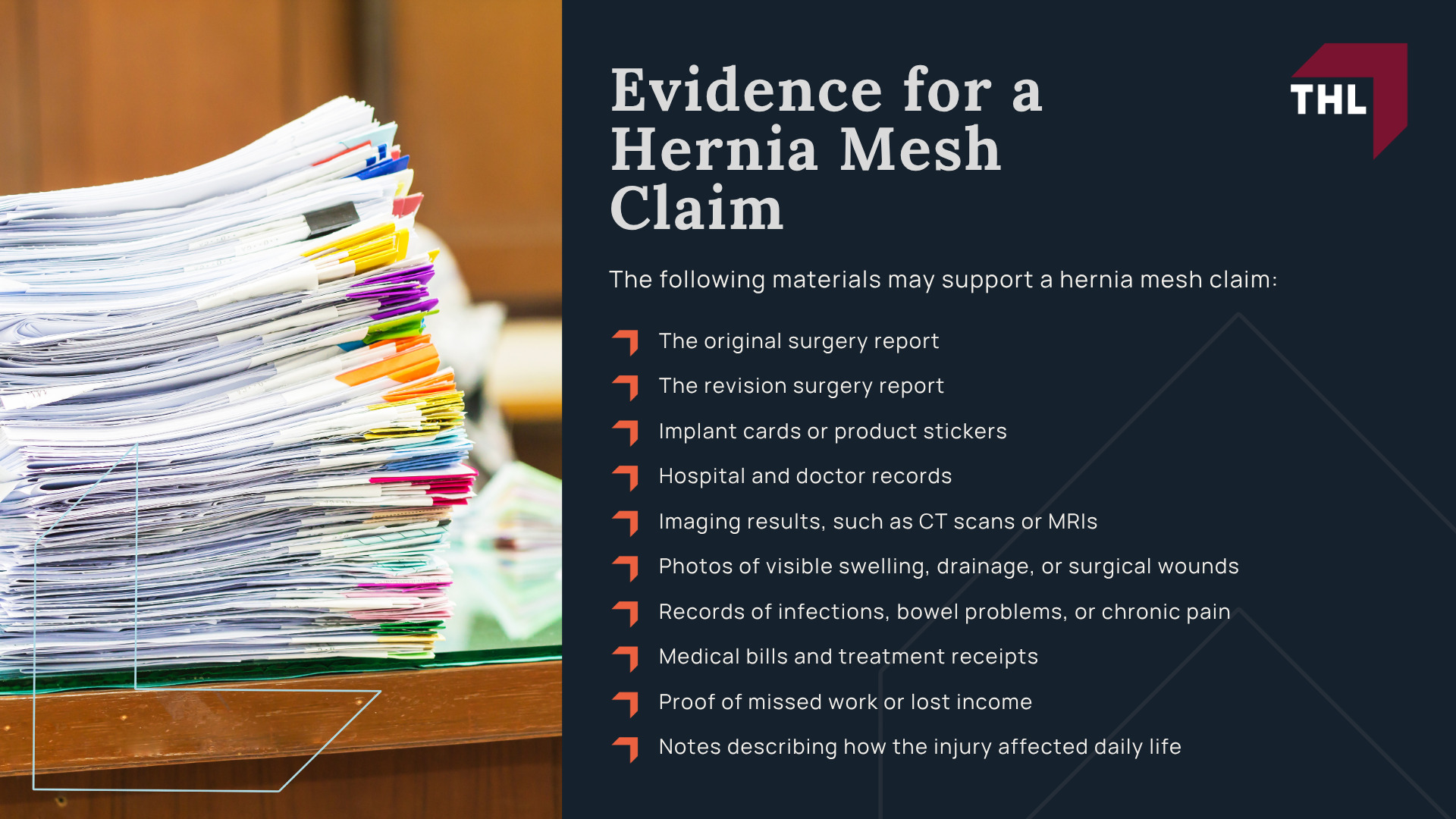
The following materials may support a hernia mesh claim:

  • The original surgery report
  • The revision surgery report
  • Implant cards or product stickers
  • Hospital and doctor records
  • Imaging results, such as CT scans or MRIs
  • Photos of visible swelling, drainage, or surgical wounds
  • Records of infections, bowel problems, or chronic pain
  • Medical bills and treatment receipts
  • Proof of missed work or lost income
  • Notes describing how the injury affected daily life

Potential Hernia Mesh Compensation

Damages in defective medical device lawsuits represent the financial and personal losses caused by an injury.

Lawyers review medical records, employment documents, treatment costs, and the long-term effects of the condition to calculate the value of a claim.

They also consider whether the patient required revision surgery, suffered permanent impairment, or faces future medical care.

Who Qualifies for a Hernia Mesh Lawsuit; Current Covidien Hernia Mesh Lawsuit Criteria; Hernia Mesh Complications and Signs of Mesh Failure; Hernia Mesh Manufacturers and Products Named in Lawsuits; Hernia Mesh Settlements, Verdicts, and Compensation; Do You Qualify to File a Hernia Mesh Lawsuit; Evidence for a Hernia Mesh Claim; Potential Hernia Mesh Compensation

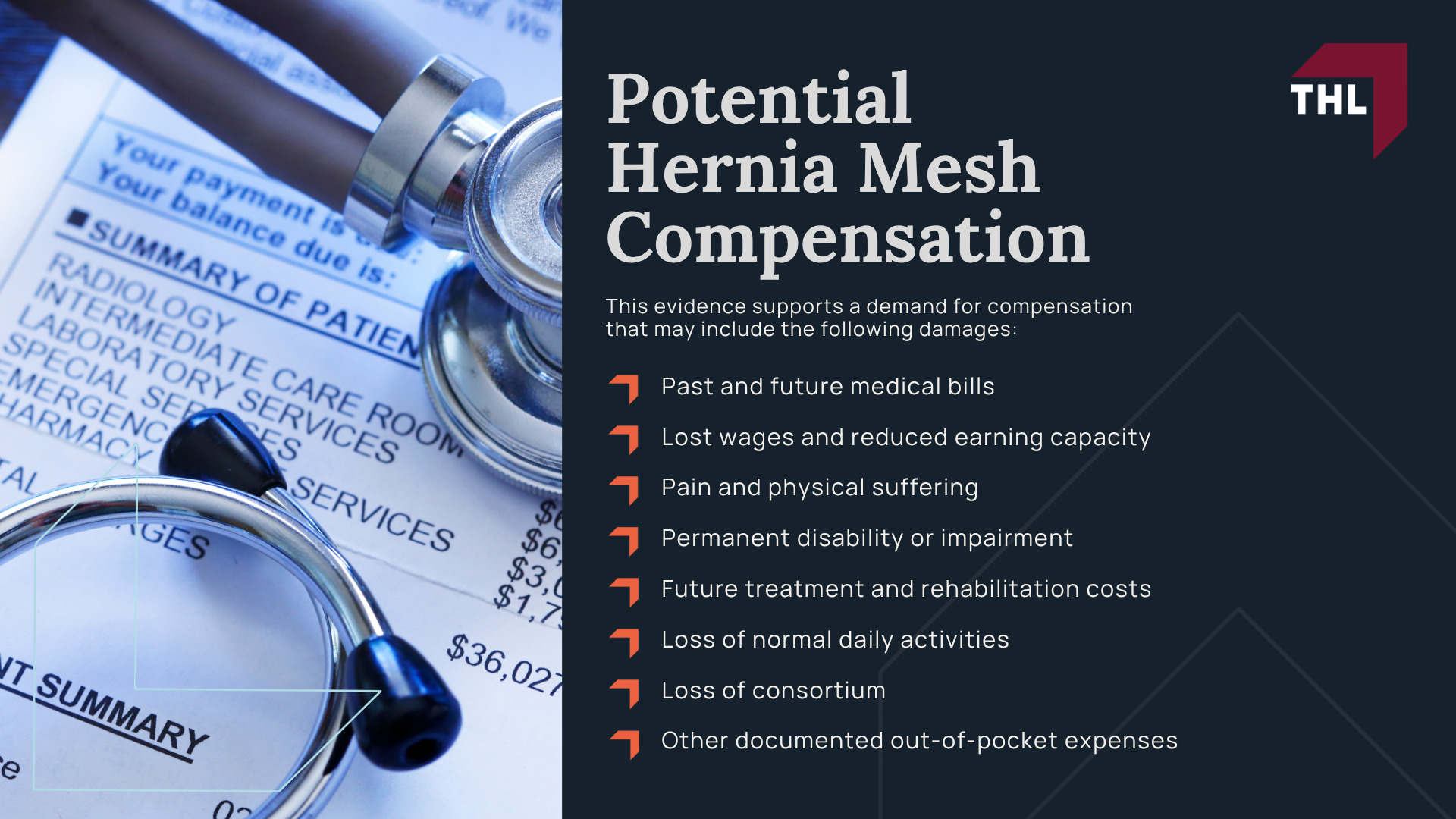
This evidence supports a demand for compensation that may include the following damages:

  • Past and future medical bills
  • Lost wages and reduced earning capacity
  • Pain and physical suffering
  • Permanent disability or impairment
  • Future treatment and rehabilitation costs
  • Loss of normal daily activities
  • Loss of consortium
  • Other documented out-of-pocket expenses

Hernia Mesh Lawsuit Filing Deadlines

The deadline to file a hernia mesh lawsuit depends on the statute of limitations in the state where the claim is brought.

Some states apply a discovery rule that may begin the filing period when the patient knew or reasonably should have known that the mesh may have caused the injury.

Implant dates, symptom onset, revision surgery, and product identification can all affect the deadline.

Contact a lawyer for a free case evaluation to determine eligibility and whether time remains to file a claim.

TorHoerman Law: Contact Our Hernia Mesh Lawyers

TorHoerman Law represents patients who suffered serious complications after receiving allegedly defective hernia mesh products.

Our hernia mesh lawsuit lawyers review implant records, revision reports, medical treatment, and the full history of each injury.

THL is currently evaluating qualifying Covidien claims involving revision surgery and documented mesh-related harm.

Our legal team also tracks hernia mesh updates that may affect pending cases, filing strategy, and settlement discussions.

Who Qualifies for a Hernia Mesh Lawsuit; Current Covidien Hernia Mesh Lawsuit Criteria; Hernia Mesh Complications and Signs of Mesh Failure; Hernia Mesh Manufacturers and Products Named in Lawsuits; Hernia Mesh Settlements, Verdicts, and Compensation; Do You Qualify to File a Hernia Mesh Lawsuit; Evidence for a Hernia Mesh Claim; Potential Hernia Mesh Compensation; TorHoerman Law_ Contact Our Hernia Mesh Lawyers

There are no upfront legal fees, and clients pay nothing unless compensation is recovered.

Contact TorHoerman Law today for a free, confidential case review.

Frequently Asked Questions

Published by:
Share
Picture of Tor Hoerman
Tor Hoerman

Tor Hoerman has represented injured individuals for more than 30 years, with experience spanning individual personal injury cases and nationwide mass tort litigation. His work includes car accidents, catastrophic injuries, product liability claims, and other serious injury cases. Tor has served in court-appointed leadership roles in national litigation and tried cases involving major corporate defendants.

TorHoerman Law’s legal content is researched and written by our editorial team and attorneys for legal accuracy, clarity, and relevance. We rely on statutes, court records, government publications, medical research, and other authoritative sources when applicable. This page provides general legal information and does not constitute legal advice.

TorHoerman Law reviews its legal content for factual accuracy, current information, and relevant legal context before publication and as material developments occur. This article is provided for general informational purposes and does not constitute legal advice. For guidance about a specific case, contact TorHoerman Law.

Additional Hernia Mesh Lawsuit resources on our website:
All
FAQs
Injuries & Conditions
Legal Help
Other Resources
Settlements & Compensation
News

You can learn more about this topic by visiting any of our Hernia Mesh Lawsuit pages listed below:

Common Hernia Mesh Complications
FAQ: Do I Qualify for a Hernia Mesh Lawsuit?
FAQ: Is There a Hernia Mesh Class Action Lawsuit?
Hernia Mesh Lawsuit Settlement Amounts
Accepting Clients
Hernia Mesh Lawsuit Facts
Defendants
  • Covidien / Medtronic
  • C.R. Bard / Becton Dickinson
  • Ethicon / Johnson & Johnson
  • Atrium Medical Corporation
Injuries named in lawsuit
  • Bowel obstruction and adhesions
  • Chronic abdominal or groin pain
  • Hernia recurrence
  • Mesh migration
  • Mesh shrinkage or contraction
  • Infection
  • Internal tissue or organ damage
  • Need for revision or mesh removal surgery
    You may qualify to file a claim if...
    • You received a Covidien hernia mesh implant after 2010.
    • You developed a documented mesh-related complication such as bowel obstruction, adhesions, infection, chronic pain, recurrent hernia, mesh migration, or internal tissue damage.
    • You underwent revision surgery, mesh removal, or another corrective procedure because of the complication.
    Have you or a loved one been injured?

    A serious injury can change your life.

    Speak with an experienced personal injury lawyer about your rights, your case, and the legal options available to you.
    Google
    •
    677 reviews
    4.9
    ★★★★★
    Recovered damages
    $4 Billion+

    Table of Contents

    Guides & Resources
    About TorHoerman Law

    TorHoerman Law represents people whose lives have been disrupted by serious injuries, unsafe products, and negligence. Our attorneys handle individual personal injury cases as well as national mass tort lawsuits involving major corporations.

    Founded in 2009, our legal team brings more than 100 years of combined experience handling serious injury and complex civil litigation.

    Do you believe you’re entitled to compensation?

    Use our Instant Case Evaluator to find out in as little as 60 seconds!

    $495 Million
    Baby Formula NEC Lawsuit

    In this case, we obtained a verdict of $495 Million for our client’s child who was diagnosed with Necrotizing Enterocolitis after consuming baby formula manufactured by Abbott Laboratories.

    $20 Million
    Toxic Tort Injury

    In this case, we were able to successfully recover $20 Million for our client after they suffered a Toxic Tort Injury due to chemical exposure.

    $103.8 Million
    COX-2 Inhibitors Injury

    In this case, we were able to successfully recover $103.8 Million for our client after they suffered a COX-2 Inhibitors Injury.

    $4 Million
    Traumatic Brain Injury

    In this case, we were able to successfully recover $4 Million for our client after they suffered a Traumatic Brain Injury while at daycare.

    $2.8 Million
    Defective Heart Device

    In this case, we were able to successfully recover $2.8 Million for our client after they suffered an injury due to a Defective Heart Device.

    Other Hernia Mesh Lawsuit Resources

    All
    FAQs
    Injuries & Conditions
    Legal Help
    Other Resources
    Settlements & Compensation
    News