Complications after hernia repair vary considerably according to the type and location of the hernia, surgical technique, mesh placement, patient health, and length of follow-up.
Reported complication rates therefore cannot be reduced to one percentage that applies to every patient or procedure.
Historical studies of conventional inguinal hernia repair have reported recurrence in approximately 10% of patients, although modern recurrence rates differ by repair method and clinical setting.
A large study of older U.S. adults undergoing ventral, incisional, or umbilical hernia repair found that approximately one in six underwent another operation for recurrence within 10 years.
Problems can develop from the surgical procedure itself, impaired healing, infection, fixation failure, changes in the implanted material, or the interaction between the mesh and surrounding tissue.
Some complications appear during the initial recovery period, while recurrence and other mesh-related problems can become apparent months or years after surgery.
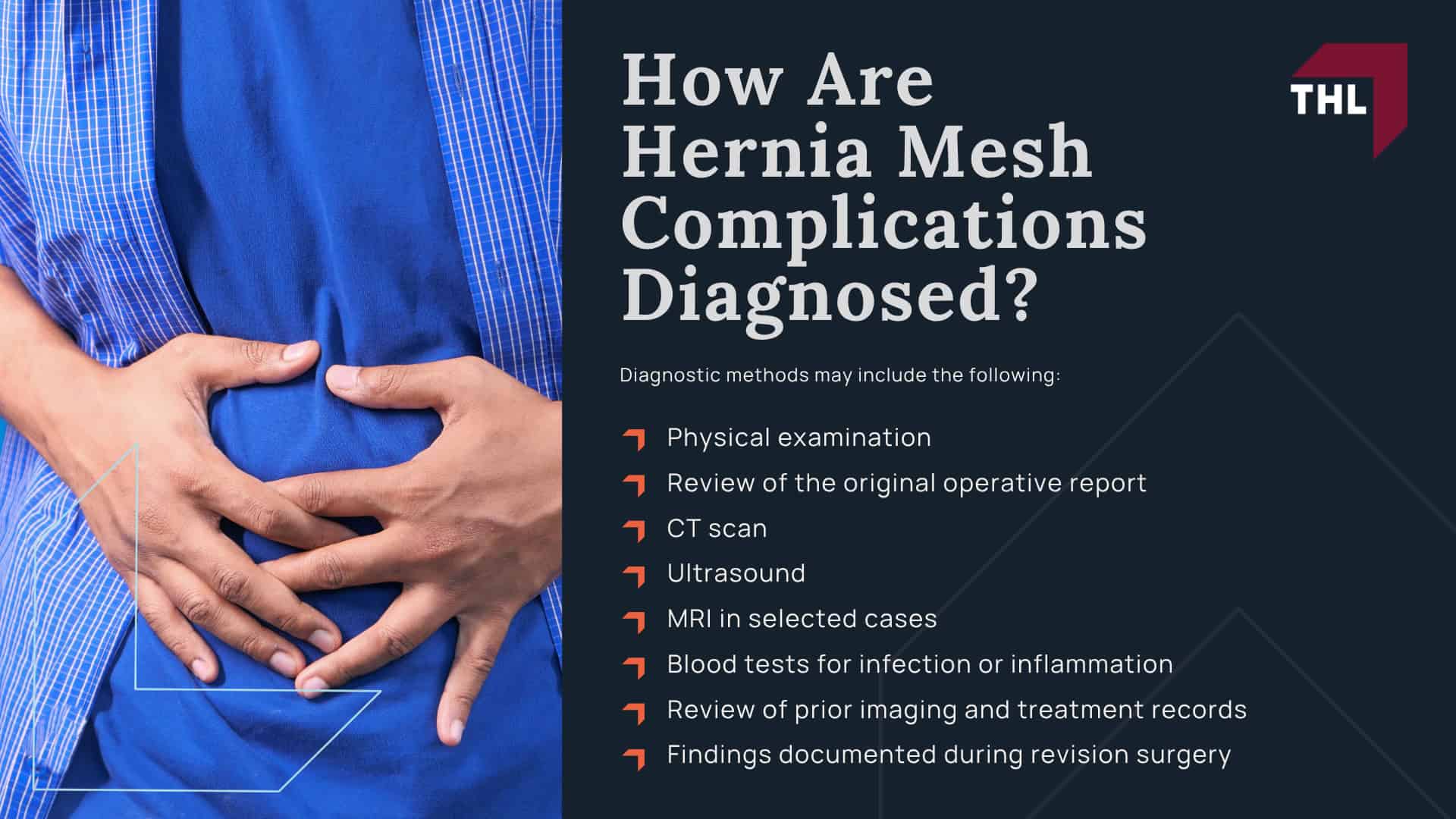
Imaging studies, including CT scans, may help physicians evaluate the repaired area and identify recurrence or other postoperative abnormalities when symptoms develop.
Severe mesh complications may require additional treatment or revision surgery to repair the affected tissue, address the underlying problem, or remove some or all of the implanted mesh.

Chronic Pain
Chronic pain after hernia mesh surgery is generally defined as pain that persists for more than three months after the procedure.
It may develop from nerve irritation, scar tissue, inflammation, fixation of the mesh, recurrent hernia, or changes involving the implanted material.
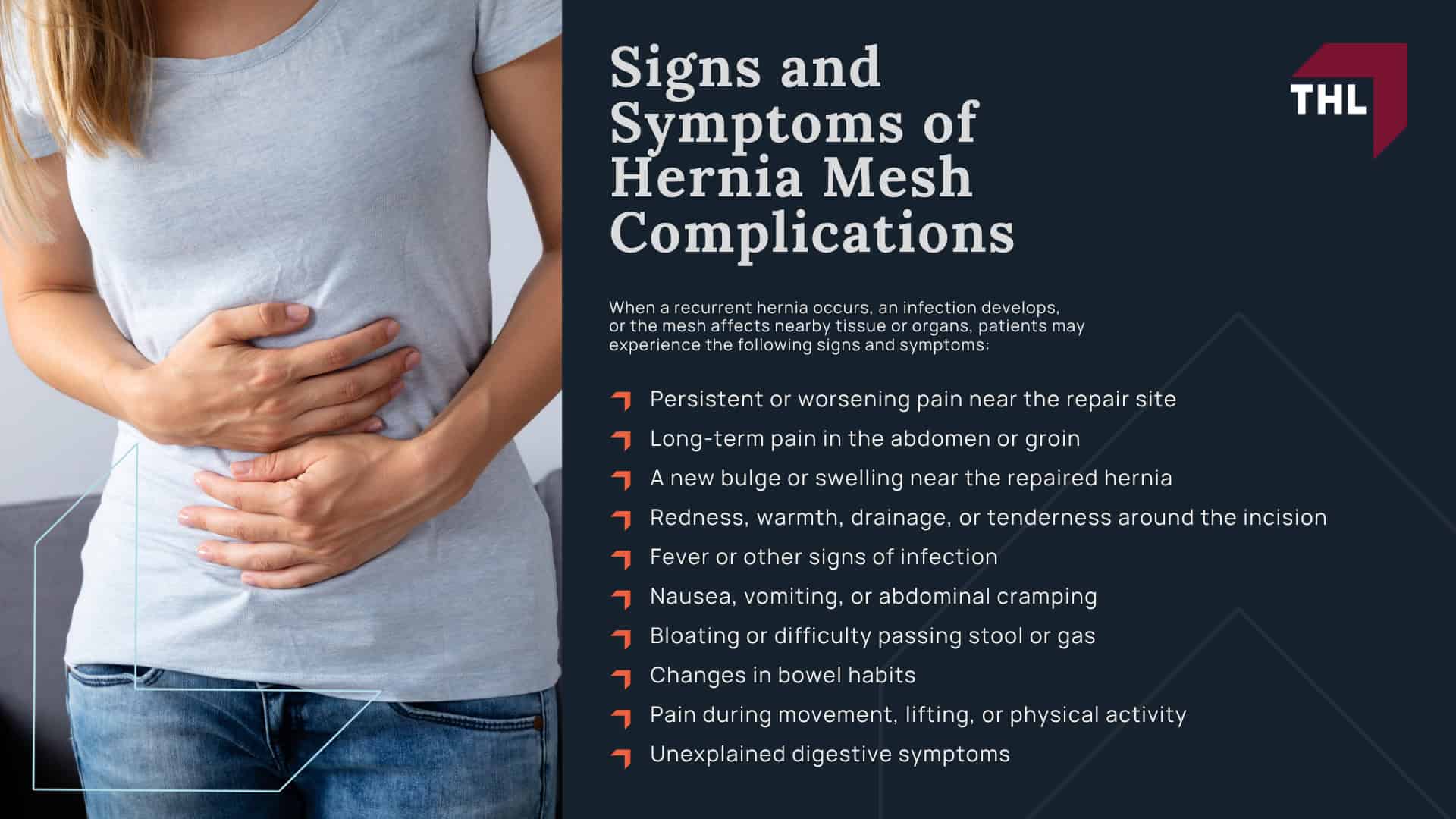
Persistent pain around the surgical site, groin, or abdomen may warrant further evaluation, particularly when it develops after the initial healing period or progressively worsens.
Pain associated with mesh complications may be triggered by movement, pressure, exercise, or changes in position as surrounding tissue interacts with the implant.
Persistent pain does not by itself establish mesh failure, but imaging, physical examination, and operative records may help determine whether the mesh or another condition affecting the body is responsible.
Severe abdominal cramping accompanied by vomiting, swelling, or difficulty passing stool or gas may indicate a bowel obstruction and requires prompt medical evaluation.
Infection and Inflammatory Reactions
Infection after hernia surgery can develop when bacteria enter the surgical site and colonize synthetic mesh material.
Because mesh can become incorporated into surrounding tissue, deeper infections may be more difficult to treat than superficial wound infections and can persist around the implant.
Redness, warmth, swelling, drainage, fever, or increasing pain near the incision may signal infection and should be evaluated by a physician.
Inflammatory reactions can also occur as the body responds to implanted material, although a true allergic reaction is less common and requires medical evaluation.
Serious complications may develop if infection or inflammation extends into deeper tissues or affects nearby abdominal organs, including the intestine.
Signs and treatment considerations may include the following:
- Redness or swelling around the incision
- Warmth, drainage, or increasing tenderness at the surgical site
- Fever or other signs of infection
- Persistent inflammation or pain around the mesh
- Antibiotic treatment for some minor or superficial infections
- Drainage or additional procedures for deeper infections
- Partial or complete mesh removal when a chronic infection cannot be controlled
Hernia Recurrence and Mesh Failure
A hernia recurrence occurs when tissue again protrudes through the repaired area after surgery.
Mesh reinforcement generally lowers recurrence risk compared with non-mesh repair, but it does not eliminate the possibility that a hernia will return.
Recurrence can result from weakened surrounding tissue, infection, inadequate mesh overlap or fixation, changes in the implanted material, or mechanical stress on the abdominal wall.
Long-term recurrence rates vary substantially by hernia type, surgical technique, patient characteristics, and length of follow-up, so a single percentage does not apply to all repairs.
Signs or findings that may indicate hernia recurrence or mesh failure include the following:
- A new or returning bulge near the original hernia site
- Pain or pressure that increases with lifting, coughing, or physical activity
- Persistent swelling around the repaired area
- Changes in the position or shape of the implanted mesh
- Mesh detachment, contraction, or migration
- Infection involving the mesh or surrounding tissue
- A recurrent defect identified during physical examination or imaging
- The need for revision surgery to repair the recurrent hernia
A new bulge near the mesh site is one of the more recognizable signs of recurrence, but imaging or surgical evaluation may be needed to determine whether the repair has failed.
Recurrence can occur years after the original procedure and does not necessarily mean that the mesh itself was defective.
Adhesions and Bowel Obstruction
Adhesions are bands of scar tissue that can form after abdominal surgery and bind tissues or organs together.
After mesh repair, adhesions may also involve the implanted mesh and nearby abdominal structures.
These bands of scar tissue may restrict normal movement of the intestine or pull abdominal structures out of their usual position.
In some cases, adhesions can contribute to a bowel obstruction by narrowing or kinking part of the intestine.
Symptoms may include severe abdominal pain, cramping, vomiting, bloating, and difficulty passing stool or gas.
A bowel obstruction can become a medical emergency and may require imaging, hospitalization, or surgery depending on its severity.
Mesh Migration, Erosion, and Perforation
Mesh migration occurs when the implant moves from its intended position after hernia repair, while erosion involves the mesh gradually wearing into surrounding tissue or organs.
Perforation occurs when a hole develops in the bowel or another nearby organ and has been reported in cases involving mesh erosion or migration.
These problems may develop gradually and can cause abdominal pain, infection, bleeding, digestive symptoms, or bowel obstruction.
Imaging and surgical evaluation may be necessary to determine whether the mesh has shifted, eroded into tissue, or damaged an internal organ.
Signs and complications may include the following:
- Persistent or worsening abdominal pain
- Nausea, vomiting, or changes in bowel habits
- Blood in the stool
- Recurrent infection or inflammation
- Bowel obstruction
- Mesh found outside its intended position
- Erosion into the intestine or another organ
- Bowel or organ perforation
- The need for revision surgery or mesh removal
Mesh Shrinkage and Contraction
Mesh shrinkage or contraction can occur as scar tissue forms around the implant and the surrounding tissue remodels during healing.
As the mesh changes shape or surface area, tension may increase across the repaired area and nearby tissue.
In some patients, contraction can contribute to persistent pain, stiffness, recurrence, or changes in the position of the implant.
The clinical significance depends on the amount of contraction, mesh design, placement, and the condition of the surrounding abdominal wall.
Imaging or revision surgery may be needed to determine whether mesh contraction is contributing to ongoing symptoms.
Seroma and Hematoma
Seromas and hematomas can develop at the surgical site after hernia repair, including procedures performed with surgical mesh.
A seroma is a collection of clear fluid that forms beneath the skin or around the repaired area, while a hematoma is a collection of blood caused by bleeding into the surrounding tissue.
An FDA literature review of barrier-coated and hybrid hernia mesh studies reported seroma rates ranging from 0% to 52.5%, reflecting substantial differences among products, procedures, patient populations, and study methods.
More recent studies generally report narrower ranges and recognize seroma as one of the more common early complications after hernia repair.
Small seromas and hematomas may resolve as the body gradually absorbs the accumulated fluid, while larger or persistent collections may require drainage or additional treatment.
Increasing swelling, pain, redness, drainage, or fever should be evaluated because these symptoms may indicate infection or another postoperative complication.