Blue Wave used to be a pool chemical company when it was founded over 10 years ago.
The company eventually grew and expanded its business to provide quality pool and leisure products.
Over the years, the company became known for its full-sized above-ground pools, in-home table games, and saunas.

One of the company’s most popular above-ground pool product lines is the Blue Wave Active Frame.
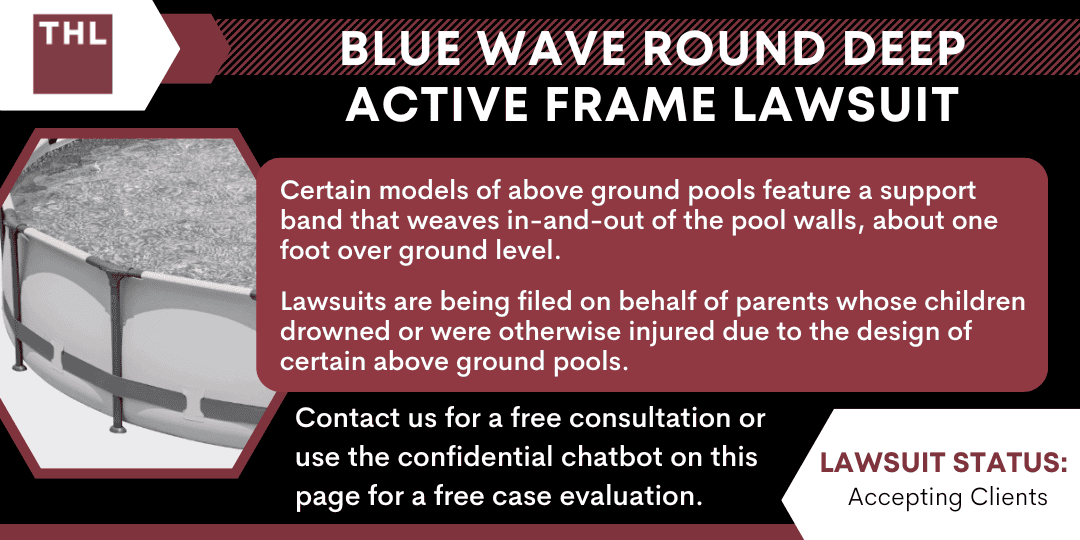
Despite all its features and popularity, the Blue Wave Round Deep Active Frame contains a design flaw that can lead to children having unsupervised access to the pool.
The Design Defect in Many Above-Ground Pools: Support Bands
The design flaw Blue Wave is facing is a shared one among many above-ground pool manufacturers.
The design of these pools leaves room for improvement regarding safety features, especially for the safety of small children.
The main issue is the nylon or rubber support band surrounding the pool.
These bands are intended to support the pool’s walls and its support frames.
However, numerous complaints from parents have surfaced.
Children can potentially use the support band to climb up onto the side of the pool, and some even attempt to jump or dive into the pool from this unstable position.
This negligent design has resulted in multiple accidents and injuries, causing parents to file lawsuits against manufacturers.
Above-Ground Pool Safety and Drowning Facts
According to the Pool & Hot Tub Alliance, there are 10.7 million pools in the U.S.A.
Over 10.4 million of these pools are in residential areas, and only around 309,000 are available to the public.
Over 59% of these residential pools are in-ground pools, and 41% are above-ground.
Many homeowners prefer in-ground pools for their longevity and variety in pool depth, but above-ground models offer more practicality.
Above-ground pools are more cost-effective and easier to maintain, making them a popular choice for families looking to have their own backyard pool.
Despite the beauty of residential pools, they are the location for over 87% of fatal drownings among five-year-old children.
According to the Centers for Disease Control and Prevention (CDC), drowning is the second leading cause of unintentional death among children.
Risks and Injuries Associated With an Above-Ground Backyard Pool
Drowning poses life-threatening and permanently debilitating threats to small children.
According to the CDC, the country reports around 4,000 fatal drowning incidents every year, which averages to 11 cases per day.
Here are some of the risks and potential injuries associated with above-ground backyard pools:
- Fracture or Broken Bones: Broken bones are one of the most common injuries associated with above-ground pool accidents. Children often slip or jump into the pool, landing on hard surfaces like concrete or metal supports.
- Permanent or Long-Term Brain Damage: Brain damage is one of the deadliest consequences of pool accidents and drowning. Lack of oxygen can cause permanent or long-term brain damage, leading to disabilities like paralysis, loss of memory, and speech impairment.
- Asphyxiation: Oxygen deprivation, also known as asphyxiation, can occur in a matter of seconds if a child is submerged in the water for too long. This lack of oxygen can lead to brain damage, collapsed lungs, or even death.
- Traumatic Head Injuries: Traumatic head injuries can occur due to diving accidents in shallow pools or the child’s head hitting the pool’s sides. These injuries can be fatal, leading to permanent disabilities or death.
- Slip and Fall Accidents: Slip and fall accidents are common in pool areas due to wet surfaces or unstable footholds. These accidents can lead to fractures, concussions, and other injuries.
- Unintentional Death: Drowning is the second leading cause of accidental death among children, as mentioned earlier. In many drowning cases, parents or caregivers weren’t aware that their child had access to the pool.