Listeria outbreaks, though preventable, continue to happen due to complex vulnerabilities in the food production and distribution chain.
In the United States, food safety regulations are designed to protect public health by setting strict standards for food handling, processing, and distribution.
The Food and Drug Administration (FDA) and the U.S. Department of Agriculture (USDA) enforce these regulations, requiring companies to maintain sanitation practices, regular inspections, and control measures to detect and eliminate harmful bacteria.
However, even with these measures in place, lapses in compliance, oversight, and facility maintenance have allowed Listeria outbreaks to occur.
While the FDA and USDA mandate specific protocols to prevent contamination, the ultimate responsibility for food safety lies with the companies that produce and distribute food products.
They are required to comply with regulations that include regular cleaning and sanitizing of equipment, employee training on handling practices, and comprehensive testing for pathogens.
Unfortunately, some companies either fail to meet these standards consistently or lack effective monitoring systems, leading to contamination risks.
The complexity of the food supply chain, which often involves multiple suppliers, processors, and distributors, can make it challenging to trace and control contamination sources.

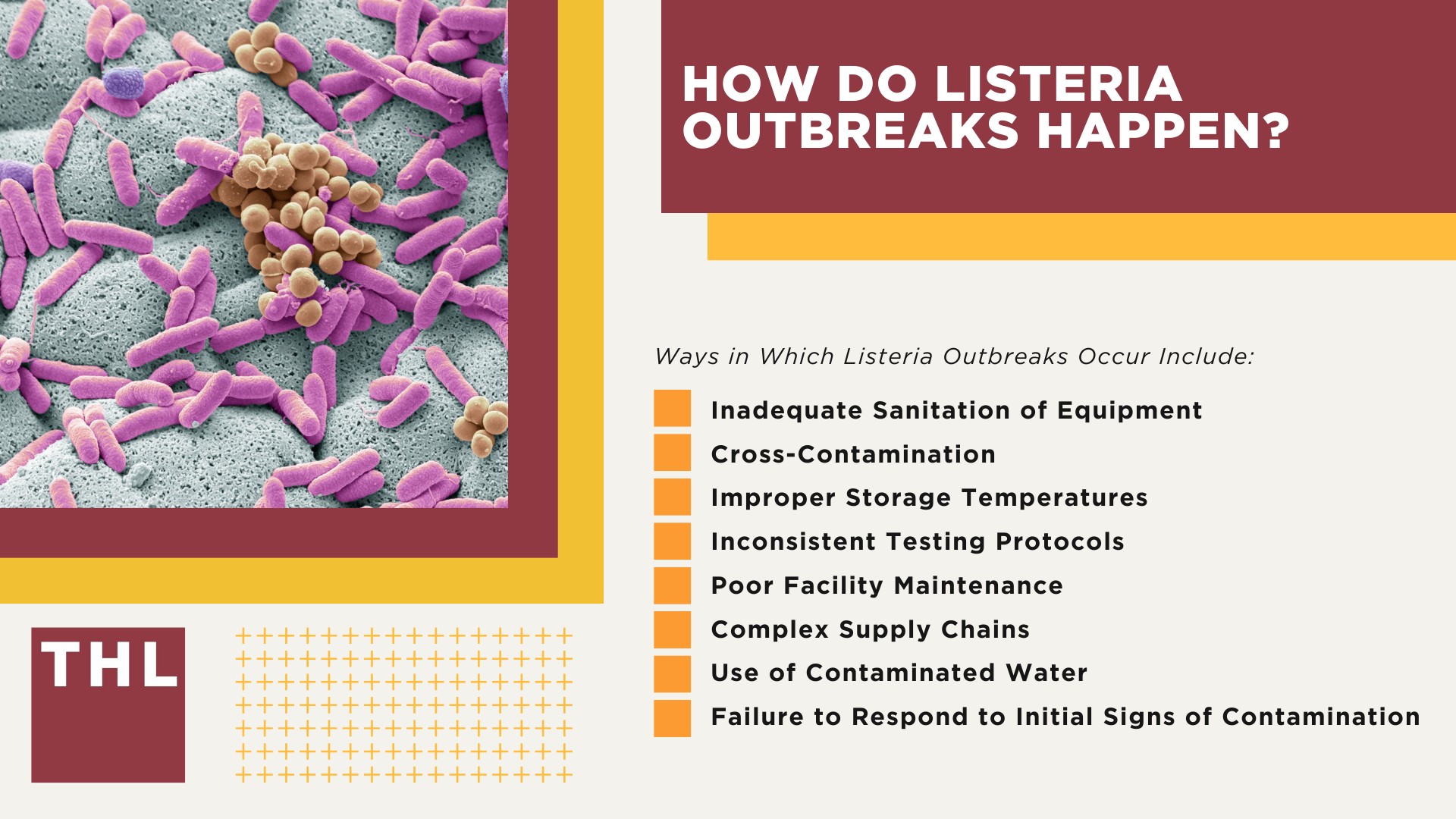
Ways in Which Listeria Outbreaks Occur Include:
- Inadequate Sanitation of Equipment: Listeria bacteria can thrive in food processing environments if equipment or food preparation surfaces are not cleaned and sanitized properly, leading to contamination of food products that come in contact with unsanitary surfaces.
- Cross-Contamination: Contaminated raw meat, ingredients, or materials can introduce Listeria to processing areas. If facilities do not separate high-risk foods or maintain strict protocols, bacteria can easily spread to otherwise clean products.
- Improper Storage Temperatures: Listeria can survive and even grow in cold environments, unlike many other bacteria. If refrigeration units fail to maintain appropriate temperatures or are not checked regularly, Listeria can multiply, contaminating products before they reach consumers.
- Inconsistent Testing Protocols: Some companies may not adhere to rigorous testing schedules for pathogens, or they might fail to use comprehensive testing methods, allowing Listeria to go undetected in products that eventually reach store shelves.
- Poor Facility Maintenance: Listeria bacteria can survive in drains, pipes, and other difficult-to-clean areas within a facility. Regular facility maintenance and deep cleaning are necessary to eliminate these bacteria, but they can be overlooked due to cost-cutting measures or lack of oversight.
- Complex Supply Chains: The involvement of multiple suppliers and distributors in a single product’s journey increases the chances of contamination, as any one point along the supply chain can introduce Listeria into the production process.
- Use of Contaminated Water: Water used for cleaning or as an ingredient in production can be a contamination source if it isn’t regularly tested and treated, potentially spreading Listeria throughout the food processing environment.
- Failure to Respond to Initial Signs of Contamination: Some companies fail to take swift action when early signs of Listeria contamination are detected, allowing bacteria to spread further before corrective actions are implemented.
By recognizing and addressing these vulnerabilities, companies can minimize the risks of Listeria outbreaks and work toward higher standards of consumer safety.
Yet, as recent outbreaks show, significant challenges remain in ensuring that every step of the food supply chain aligns with the rigorous safety measures needed to prevent such life-threatening contamination.
For consumers, it is important to avoid high-risk foods, such as unpasteurized dairy products, deli meats, and certain ready-to-eat food items, especially if you are in a vulnerable group such as pregnant women, older adults, or those with a weakened immune system, as these foods are more prone to Listeria contamination and can lead to severe health complications.
Governmental Actions Taken for Listeria Outbreaks
Certain governmental policies and regulatory practices have contributed to the visibility and frequency of Listeria recalls, particularly through stricter testing and reporting requirements.
These include:
- Food Safety Modernization Act (FSMA): Passed in 2011, the FSMA granted the FDA more authority to enforce preventive measures rather than reactive ones. Under FSMA, food companies are required to implement hazard analysis and preventive controls, which include pathogen testing and documentation, leading to more frequent detection and recalls for contaminants like Listeria.
- Zero Tolerance Policy for Listeria in Ready-to-Eat Foods: The FDA has a strict zero-tolerance policy for Listeria monocytogenes in ready-to-eat foods, meaning even low levels can trigger recalls. This policy is aimed at protecting vulnerable populations but leads to recalls whenever Listeria is detected, even if contamination is minimal.
- Public Health and Consumer Reporting Programs: Programs like the FDA’s Foodborne Outbreak Response and Improvement Program (FORI) and public databases like the USDA’s Food Safety and Inspection Service (FSIS) encourage reporting and transparency. These programs allow faster identification of outbreaks and quicker recalls, bringing attention to Listeria issues that might have previously gone unnoticed.
- Collaborative Surveillance Systems: Government initiatives such as PulseNet, a CDC-led network for foodborne disease surveillance, have improved outbreak tracking and source identification. These systems match contamination strains across cases and trace them back to common food sources, enabling the detection of Listeria outbreaks and recalls.
- Mandatory Recall Authority: FSMA gives the FDA the authority to mandate recalls when companies don’t voluntarily comply, which was previously challenging. This power has strengthened food safety enforcement, resulting in faster recalls in cases where contamination is found.
- Expanded International Import Regulations: As more foods are imported, the FDA has increased inspections of imported foods for compliance with U.S. safety standards, resulting in recalls when foreign manufacturers’ products test positive for Listeria.
Recent Lapses in Government Oversight for Listeria Outbreaks
Recent reports highlight concerning lapses in government oversight that may have contributed to several deadly Listeria outbreaks.
The U.S. Department of Agriculture (USDA), responsible for overseeing meat and poultry safety, has faced scrutiny for insufficient testing protocols and delayed responses to contamination risks.
In a recent investigation, it was revealed that the USDA failed to implement effective Listeria testing on certain high-risk food items, which included popular deli meats and hot dogs, both of which are common sources of Listeria contamination.
The USDA’s testing protocols have come under fire for not being stringent or frequent enough to detect Listeria early in the production chain.
For instance, while the USDA has conducted periodic testing, reports indicate that routine inspections often miss critical contamination points, particularly in processing facilities where Listeria can thrive.
This oversight gap has allowed contaminated products to reach consumers, resulting in severe illnesses and deaths that might have been preventable with more rigorous testing practices.
Additionally, there have been delays in recalling contaminated products, leaving consumers exposed to harmful bacteria for extended periods.
These lapses reveal a need for stronger regulatory policies and enhanced testing frequency, especially for foods prone to Listeria growth.
Consumer advocates are calling for the USDA to adopt more comprehensive measures, including better inspection protocols and quicker response times to potential contamination events.