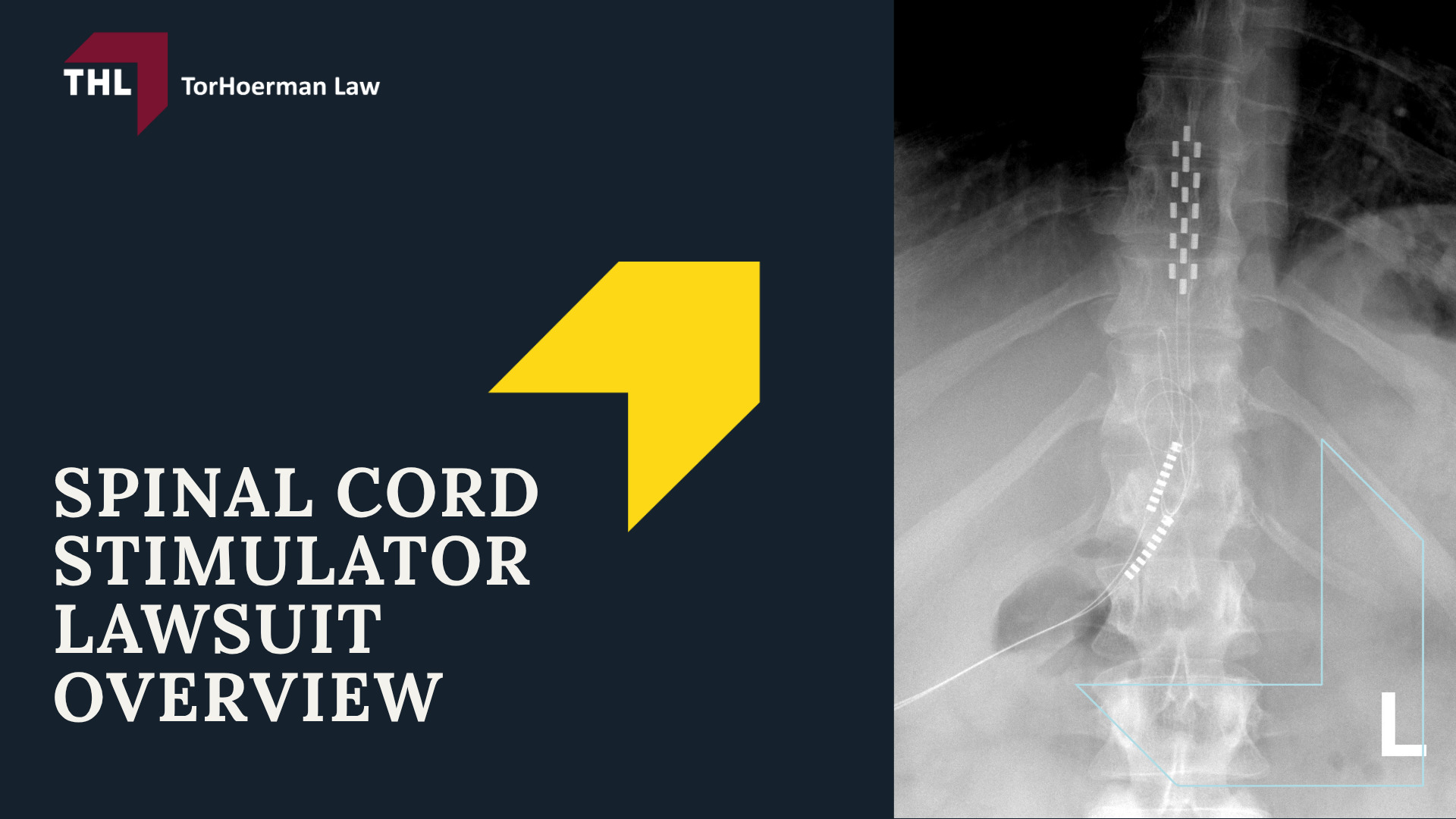
Spinal cord stimulator systems are implanted medical devices used to manage chronic pain when medications, physical therapy, and other treatments have not provided adequate relief.
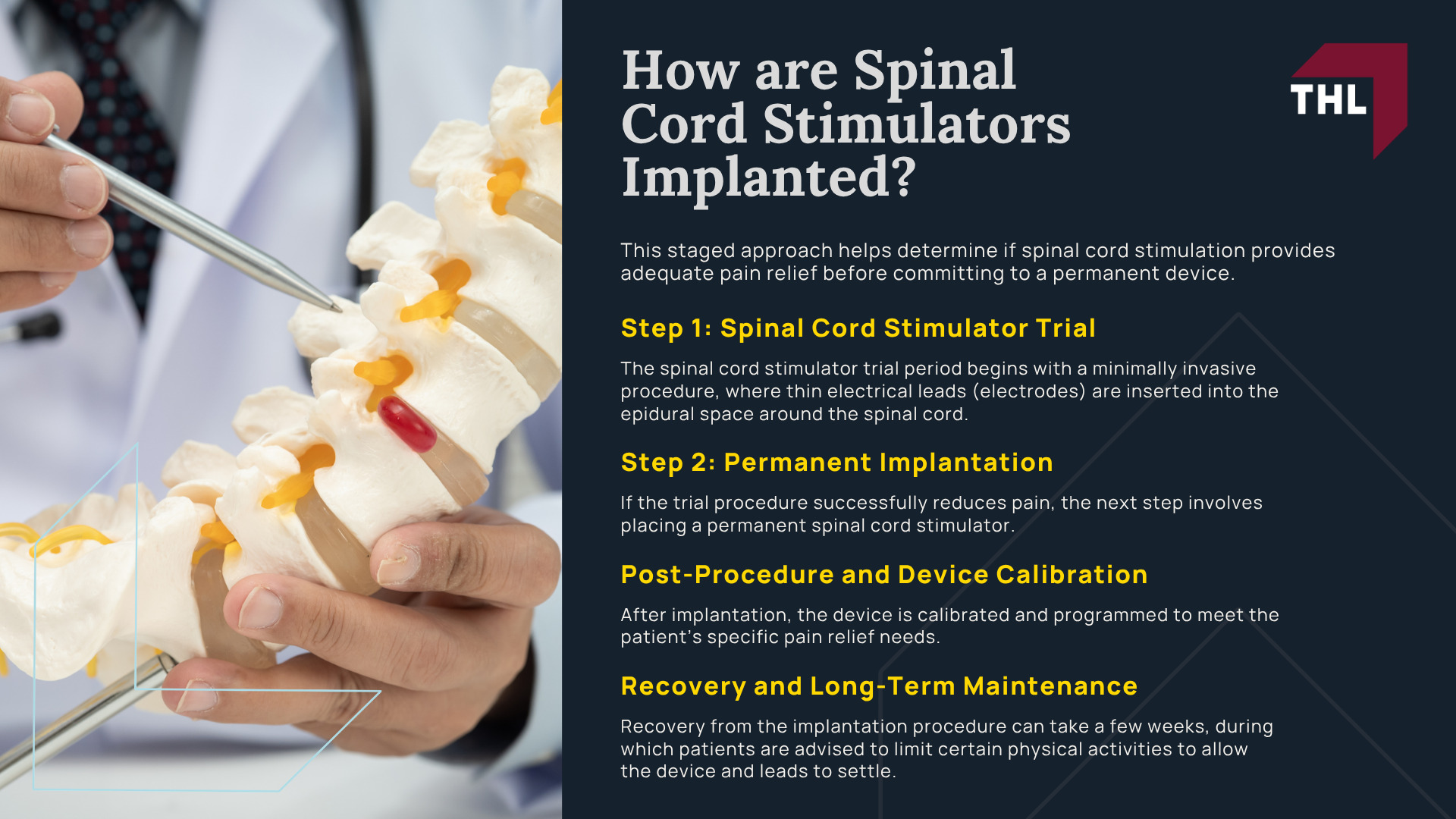
The system generally consists of electrical leads placed in the epidural space near the spinal cord and a pulse generator implanted beneath the skin.
The pulse generator sends electrical impulses through the leads to alter how pain signals are transmitted and perceived.
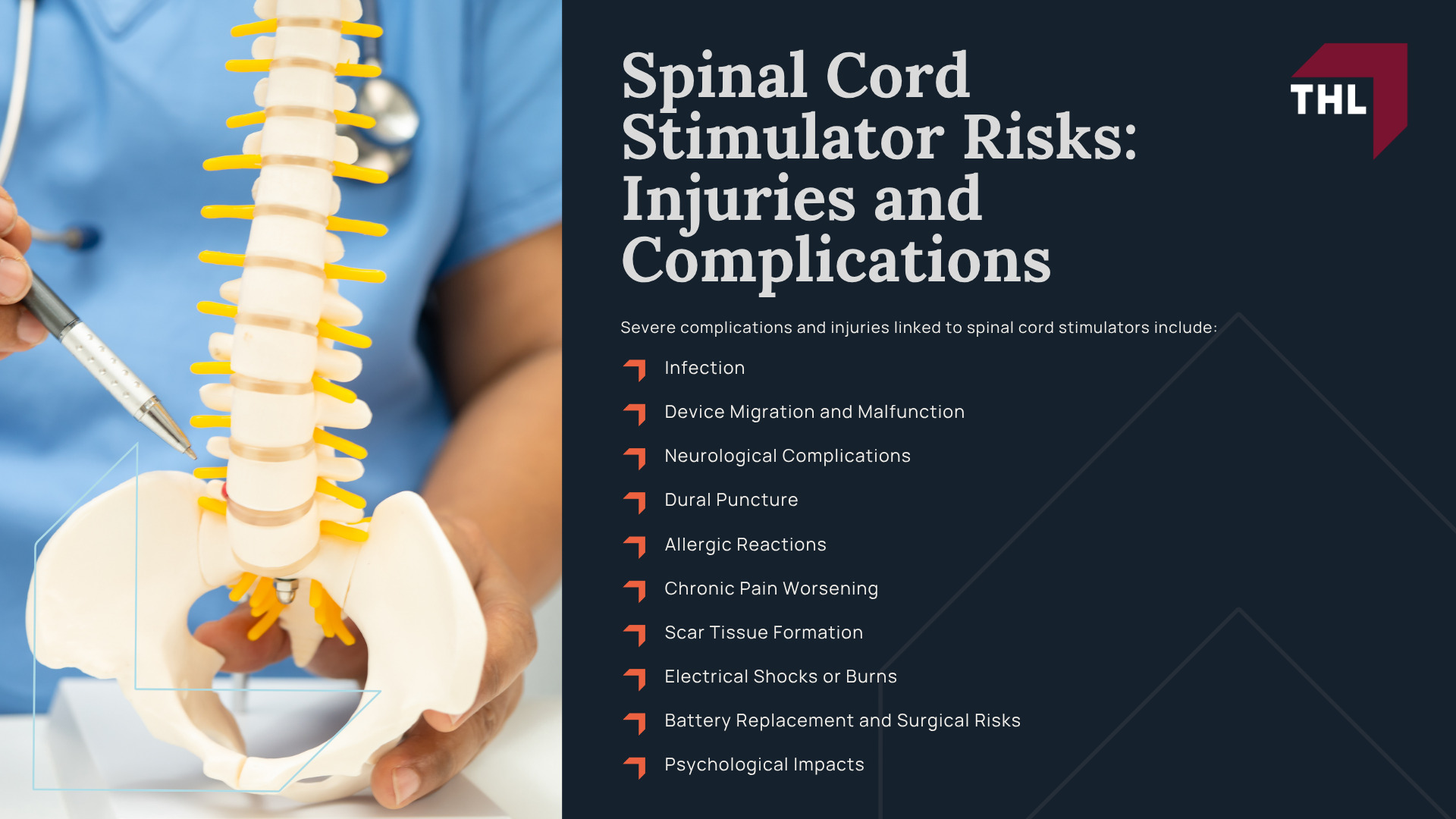
Spinal cord stimulation can provide relief for some patients, but the treatment also carries significant risks. Reported complications include infection, lead migration, painful electrical shocks, burns, loss of pain relief, neurological injury, and the need for revision surgery or device removal.
A 2020 Public Citizen analysis of the FDA’s MAUDE database identified 179,917 adverse event reports involving fully implanted spinal cord stimulators from 2004 through 2019, including 118,272 reports categorized as injuries.
Adverse event reports do not establish that a device caused an injury, and the database may include more than one report concerning the same event.
Spinal cord stimulator lawsuits allege that certain systems were defectively designed or manufactured, modified without adequate testing, or marketed without sufficient warnings about the risk of device failure and serious injury.
Some complaints also allege that manufacturers failed to satisfy federal reporting, warning, or regulatory requirements.
Federal spinal cord stimulator litigation is proceeding along manufacturer-specific tracks rather than through one industrywide case.
The U.S. Judicial Panel on Multidistrict Litigation centralized federal Boston Scientific lawsuits in MDL 3181 but declined to combine competing manufacturers because their devices, regulatory histories, company records, and alleged defects involve different factual questions.
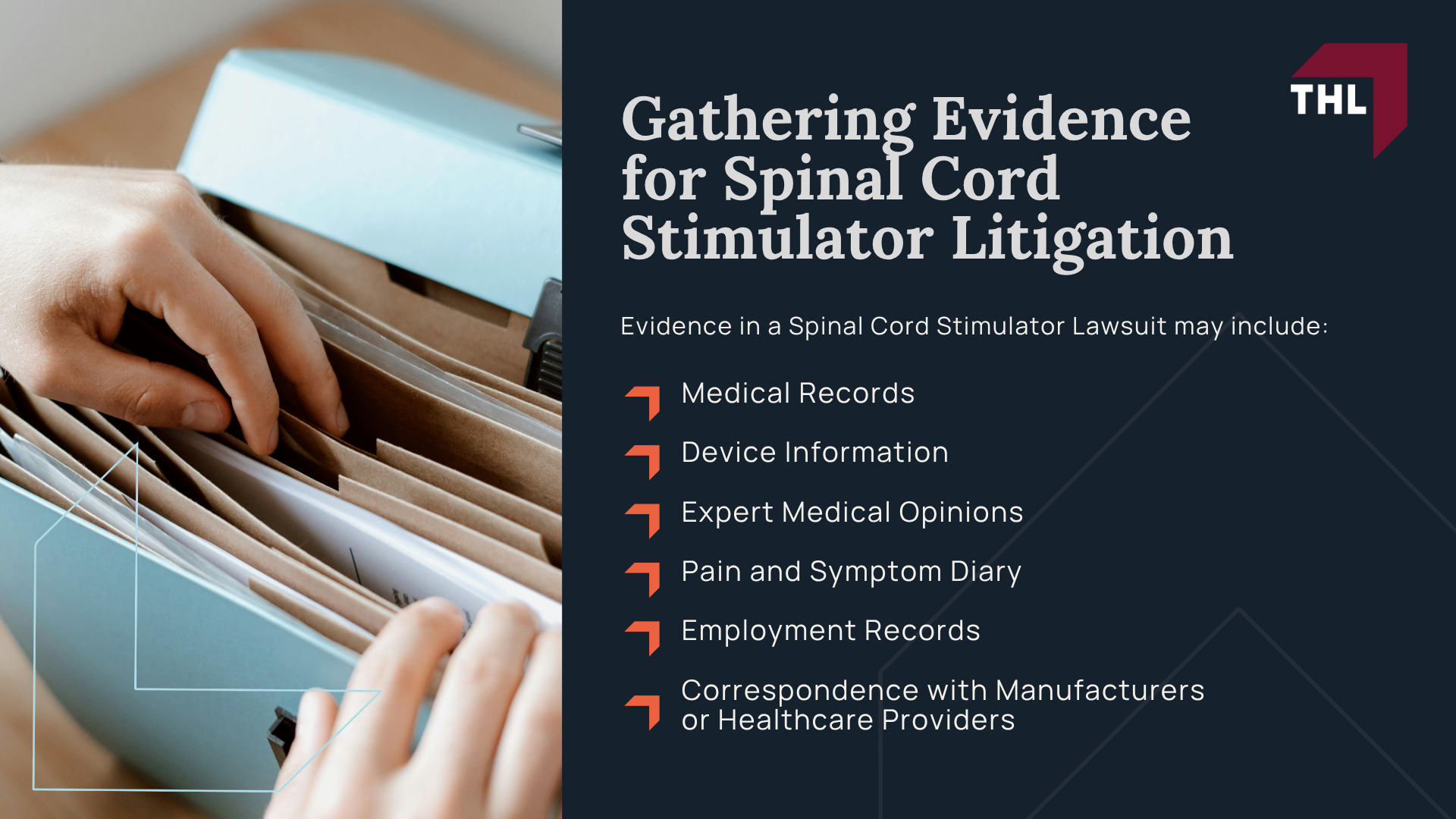
A patient may be able to file a spinal cord stimulator lawsuit when medical records, device information, and other evidence connect a defective device or inadequate warning to a serious injury.
Claims being investigated involve revision surgery, device removal, repeated reprogramming, loss of effective therapy, infection, neurological deficits, and permanent physical impairment.
Individuals who experienced serious complications, or families with evidence that a spinal cord stimulator contributed to a patient’s death, may have grounds to pursue compensation based on the device involved, the resulting injuries, and the applicable filing deadline.
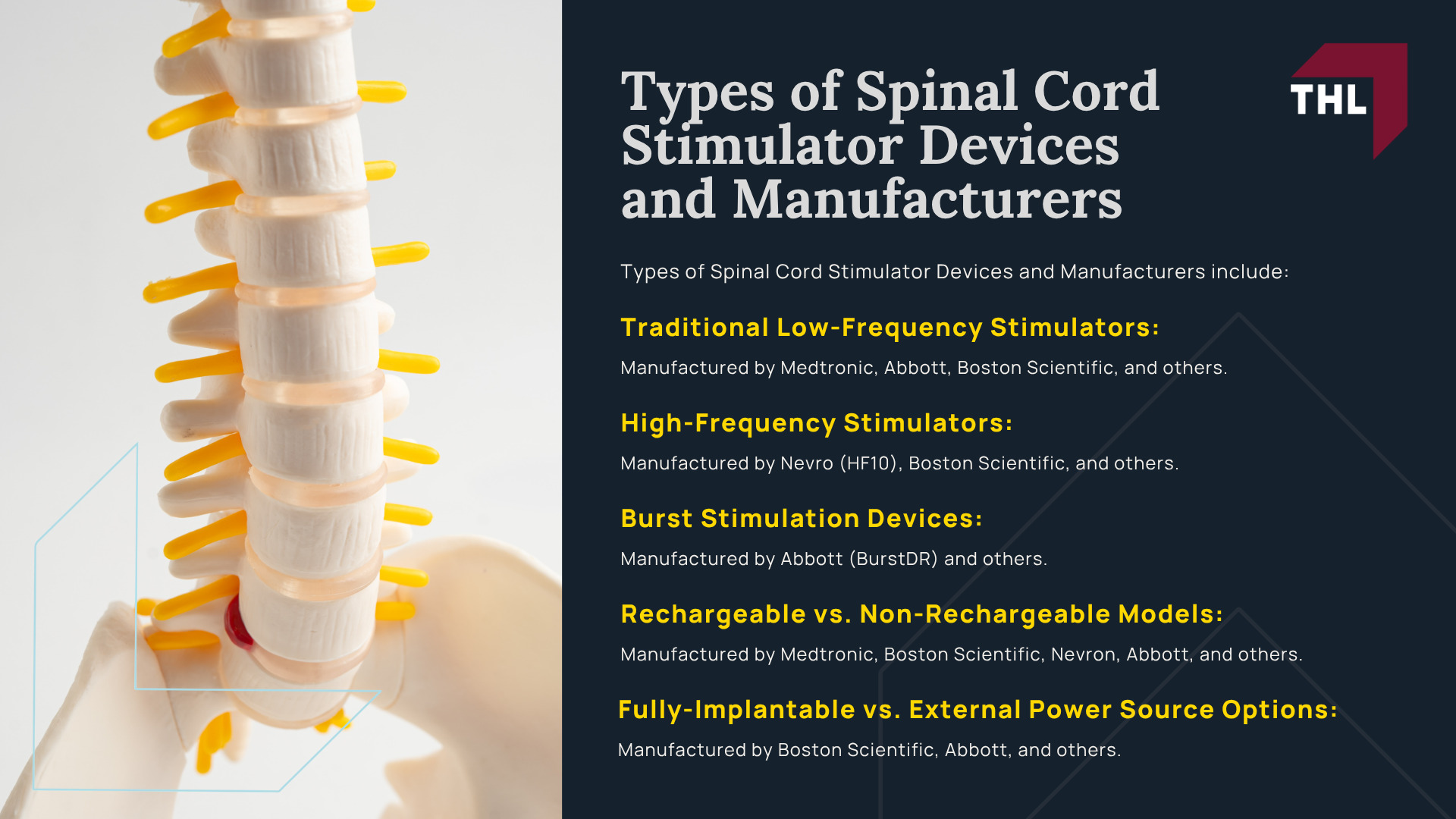
TorHoerman Law is investigating claims involving spinal cord stimulator systems manufactured by Boston Scientific, Abbott, Medtronic, Nevro, and other medical device companies.
Current Spinal Cord Stimulator Lawsuit Status
Spinal cord stimulator lawsuits have not been combined into one industrywide class action or multidistrict litigation involving every manufacturer.
Federal Boston Scientific spinal cord stimulator lawsuits have been centralized in a manufacturer-specific multidistrict litigation, known as MDL 3181, for coordinated pretrial proceedings.
The U.S. Judicial Panel on Multidistrict Litigation declined to place claims involving competing manufacturers in the same MDL because each company’s devices, regulatory history, internal records, and alleged defects involve different factual questions.
Claims involving other manufacturers are proceeding on separate tracks:
- Boston Scientific: Federal product liability lawsuits are being coordinated in MDL 3181 in the U.S. District Court for the Central District of California.
- Abbott: Plaintiffs have pursued a separate manufacturer-specific centralization process for lawsuits involving Abbott spinal cord stimulator systems.
- Nevro: Lawsuits involving Nevro spinal cord stimulators have also been the subject of a separate request for coordinated federal proceedings.
- Medtronic: Medtronic spinal cord stimulator claims remain separate from the Boston Scientific MDL and may proceed based on the court, device, and allegations involved in each case.
An MDL is not a class action.
Each person who files a spinal cord stimulator lawsuit maintains an individual claim based on the device implanted, the complications experienced, the medical treatment required, and the resulting damages.
The dated lawsuit updates on this page provide information about new filings, court orders, centralization decisions, and other developments affecting spinal cord stimulator litigation.
What Do Spinal Cord Stimulator Lawsuits Allege?
Spinal cord stimulator lawsuits allege that certain devices were defectively designed, manufactured, tested, or marketed and caused serious injuries after implantation.
Some complaints allege mechanical or electrical failures, including lead migration, lead fractures, battery problems, loss of stimulation, painful shocks, burning sensations, and other abnormal device behavior.
Plaintiffs claim that these complications required repeated reprogramming, revision surgery, device removal, or additional medical treatment.
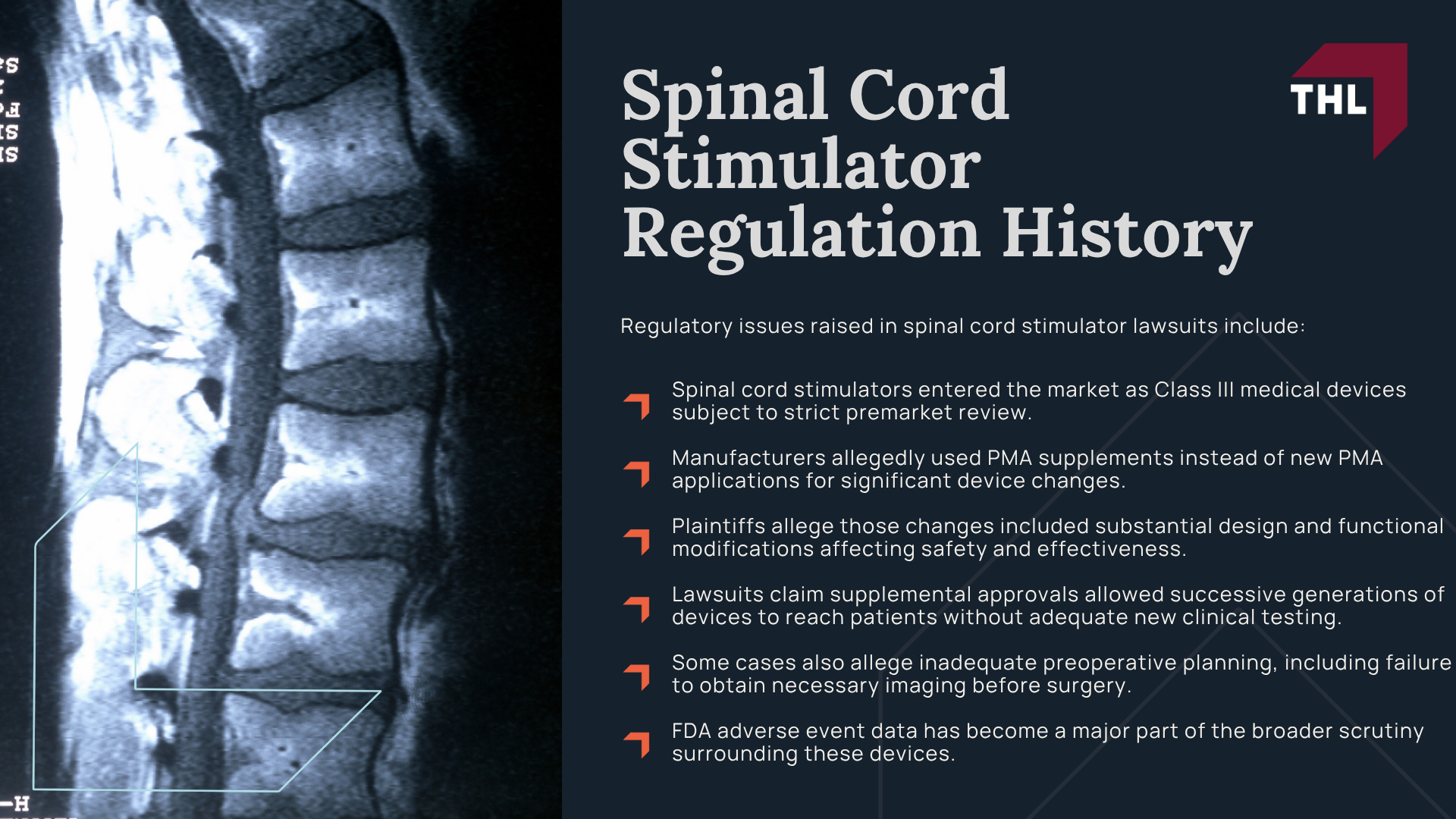
The lawsuits also raise allegations involving the federal approval and monitoring of spinal cord stimulator systems.
Plaintiffs claim that some manufacturers introduced materially modified devices through supplements to earlier premarket approvals without conducting sufficient new clinical testing or providing complete information about the devices’ risks.
The manufacturers dispute these allegations and may argue that the claims are barred or limited by federal preemption.
Certain Boston Scientific complaints also allege that company sales representatives participated in implantation procedures, advised medical personnel on lead positioning and stimulation testing, recommended device settings, and adjusted or directed the adjustment of device parameters.
Plaintiffs contend that some of this conduct crossed into medical decision-making that should have been performed by licensed healthcare providers.
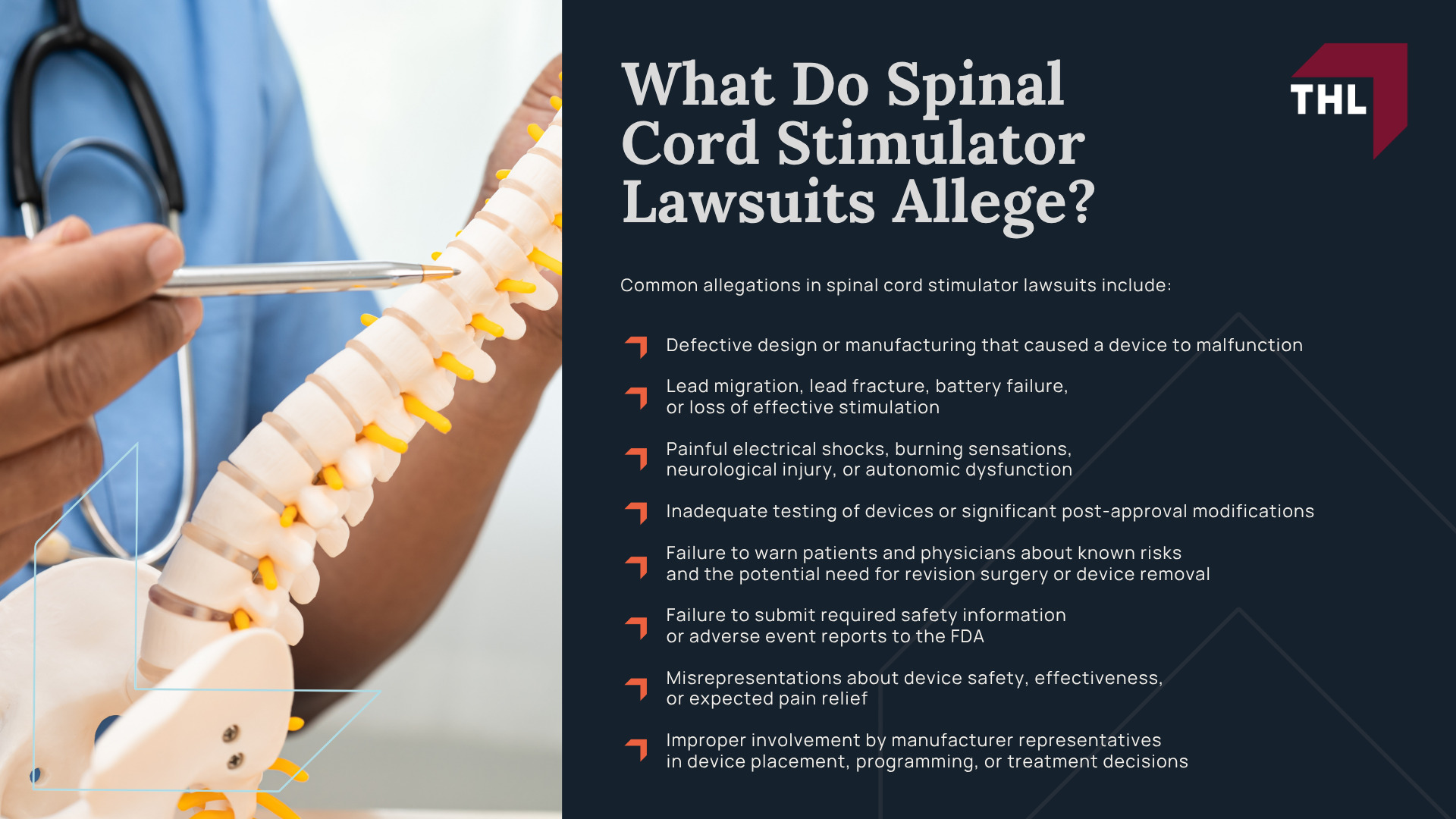
Common allegations in spinal cord stimulator lawsuits include:
- Defective design or manufacturing that caused a device to malfunction
- Lead migration, lead fracture, battery failure, or loss of effective stimulation
- Painful electrical shocks, burning sensations, neurological injury, or autonomic dysfunction
- Inadequate testing of devices or significant post-approval modifications
- Failure to warn patients and physicians about known risks and the potential need for revision surgery or device removal
- Failure to submit required safety information or adverse event reports to the FDA
- Misrepresentations about device safety, effectiveness, or expected pain relief
- Improper involvement by manufacturer representatives in device placement, programming, or treatment decisions
What is the Average Spinal Stimulator Lawsuit Settlement Amount?
There is currently no established average spinal stimulator lawsuit settlement amount because the product liability claims against spinal cord stimulator manufacturers have not produced a global settlement, bellwether verdict, or sufficient number of reported individual resolutions.
Based on the injuries alleged, the treatment required, and outcomes in comparable medical device cases, current estimates place the potential value of many spinal cord stimulator lawsuits within a broad range of approximately $50,000 to $500,000 or more.
Claims involving limited complications or a single corrective procedure may fall near the lower end of the estimated range.
Cases involving device removal, multiple revision surgeries, permanent neurological damage, loss of mobility, bowel or bladder dysfunction, or extensive future medical care may have a higher potential value.
Past spinal cord stimulator cases have resulted in settlements and verdicts, but many of those resolutions involved medical malpractice allegations against physicians or healthcare providers for errors during implantation, monitoring, or follow-up care.
They were not product liability resolutions establishing the value of claims against Boston Scientific, Abbott, Medtronic, Nevro, or another device manufacturer.
For example, a study of spinal cord stimulator verdicts and settlements involving medical malpractice reported compensation ranging from approximately $301,000 to $4.5 million, while a separate New Jersey malpractice case settled for $1.25 million after the patient allegedly developed incontinence and partial paralysis following implantation.
Those results provide context for the potential consequences of severe spinal cord stimulator injuries, but they are not direct predictors of outcomes in the current manufacturer litigation.
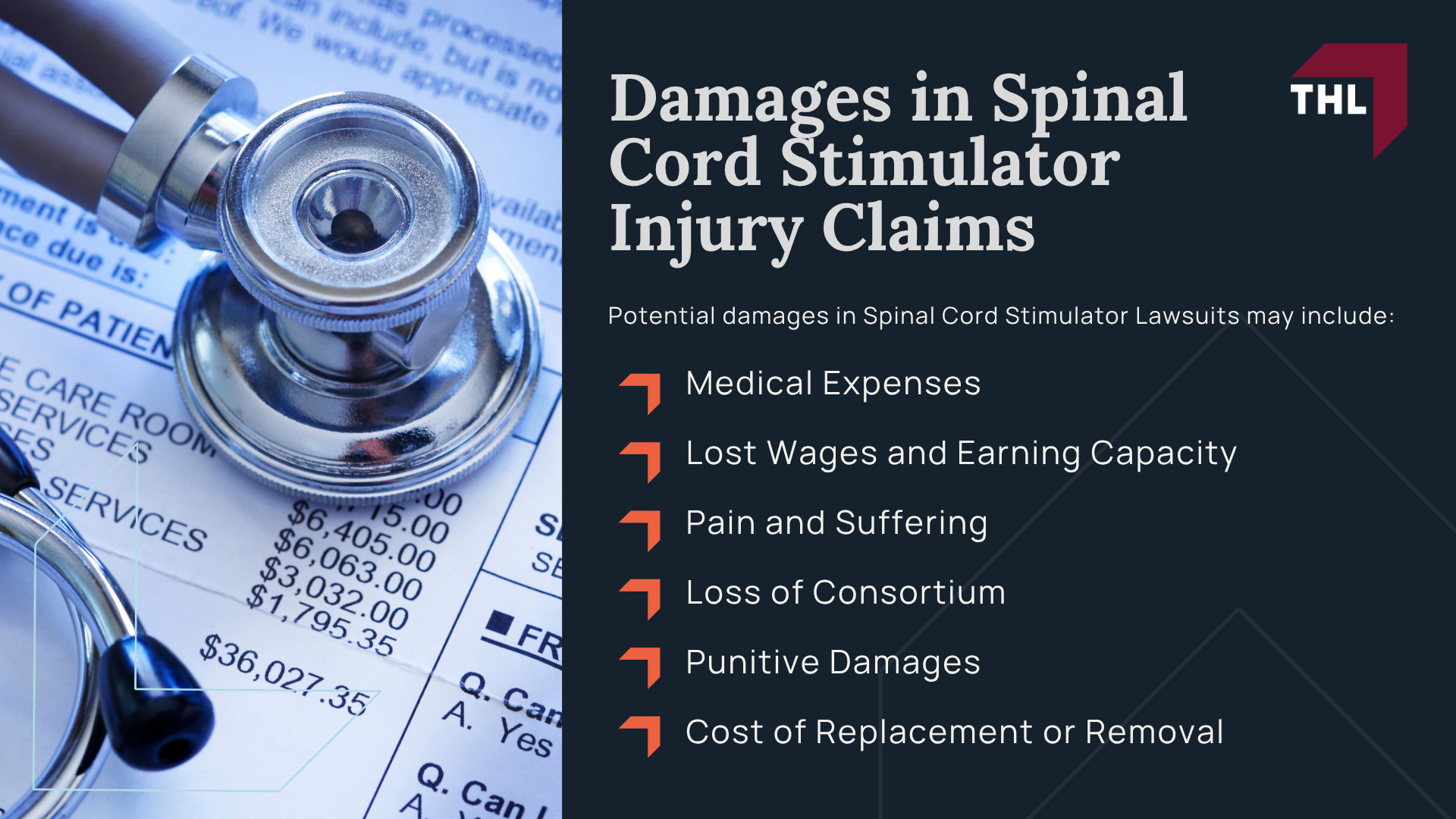
The value of an individual claim will depend on the specific device, evidence of a defect, the connection between the device and the injury, the number of corrective procedures, permanent impairment, lost income, and the effect of the complications on the patient’s daily life.
Settlement estimates are not guarantees of compensation in spinal stimulator lawsuits.
Each claim must be evaluated based on its own medical evidence, legal issues, and damages.