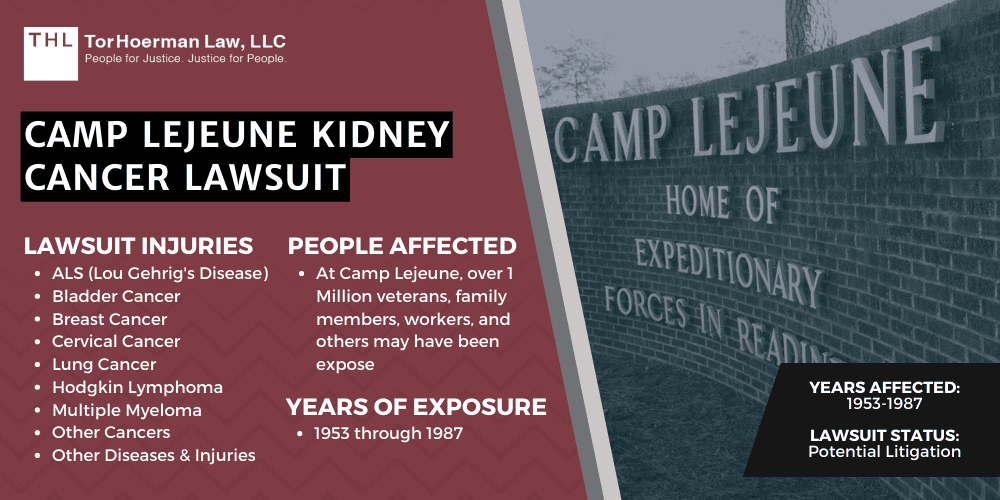
Kidney Cancer has been identified by professionals who’ve studied the contaminated water and medical records of those stationed at Camp Lejeune as a particularly common diagnosis.
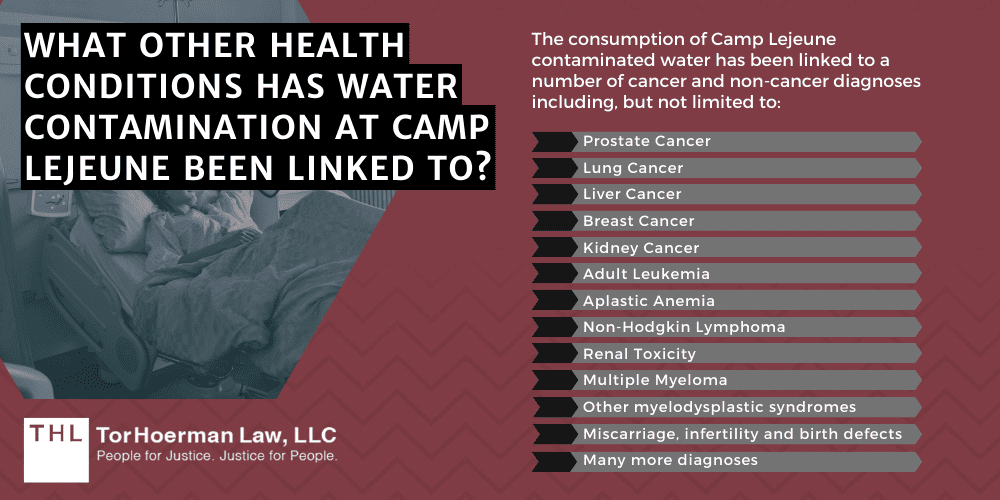
Kidney cancer, kidney disease, and other renal disorders were common, tragic adverse health outcomes of people exposed to contaminated drinking water at Camp Lejeune.
About Kidney Cancer
Kidney cancer is a type of cancer that begins in the kidneys, two bean-shaped organs, each about the size of a fist, located behind abdominal organs on either side of the spine.
The American Cancer Society estimates that each year, roughly 79,000 kidney cancer cases will be diagnosed, and almost 14,000 people will die from the disease.
Kidney cancer cases develop in various types, the most common being renal cell carcinoma, with around 85% of diagnoses. Other, rarer types of kidney cancer cases can also develop. Wilms’ Tumor is a type of kidney cancer that child patients are most commonly diagnosed with.
Kidney cancer symptoms can include the following:
- Anemia: the most common symptom in people diagnosed with kidney cancer, largely due to blood being lost through the urine.
- Blood in the urine (hematuria): another common symptom of kidney cancer.
- Back or spinal pain
- Swelling or lumps in the kidney area
- Unintended weight loss
There are many other potential, less obvious symptoms of kidney cancer.
Contact a medical professional as soon as possible if you’re experiencing any possible kidney cancer symptoms.
Kidney Cancer and its Causes
Kidney cancer cases may be onset by a number of environmental, genealogical, or health-related causes.
Previous public health studies and other scientific research has found the following risk factors for kidney cancer:
- Smoking: smokers experience increased rates of kidney cancer diagnosis.
- Exposure to Contaminated Drinking Water: Volatile Organic Compounds (VOCs) present in drinking water can increase a person’s risk of developing kidney cancer.
- Obesity: people who are overweight experience higher rates of kidney cancer diagnosis.
- High Blood Pressure: Kidney cancer diagnoses are experienced in higher rates by people with high blood pressure.
- Family Member History with Kidney Cancer: some people have hereditary dispositions that make them more prone to developing kidney cancer.
- Long-term Dialysis Treatment: Dialysis cleans patients’ blood and is used when kidneys aren’t properly functioning. Research has shown that kidney cancer risk may increase from 10% to 80% after dialysis.
- Tuberous Sclerosis Complex: this disease causes seizures and intellectual disability, along with often forming tumors in a number of organs, including the kidneys.
- Von Hippel Lindau Disease (VHL): VHL is an inherited disorder that puts people at a higher risk for developing kidney cancer.
- Other Cancer Treatments: People receiving treatments for other cancers may be at an increased risk for kidney cancer, especially women receiving radiation therapy on reproductive organs.
The Agency for Toxic Substances and Disease Registry (ATSDR) has identified the water at Camp Lejeune as putting those exposed at an increased risk of kidney cancer and chronic kidney disease.
Research on the relation of trichloroethylene exposure and kidney cancer include:
- Epidemiology: Occupational Trichloroethylene Exposure and Kidney Cancer
- AntiCancer Research: Trichloroethylene Is Associated with Kidney Cancer Mortality: A Population-based Analysis
- Toxicological Sciences: Trichloroethylene: Mechanisms of Renal Toxicity and Renal Cancer and Relevance to Risk Assessment
- Environmental Research and Public Health: Kidney Cancer Risk Associated with Historic Groundwater Trichloroethylene Contamination