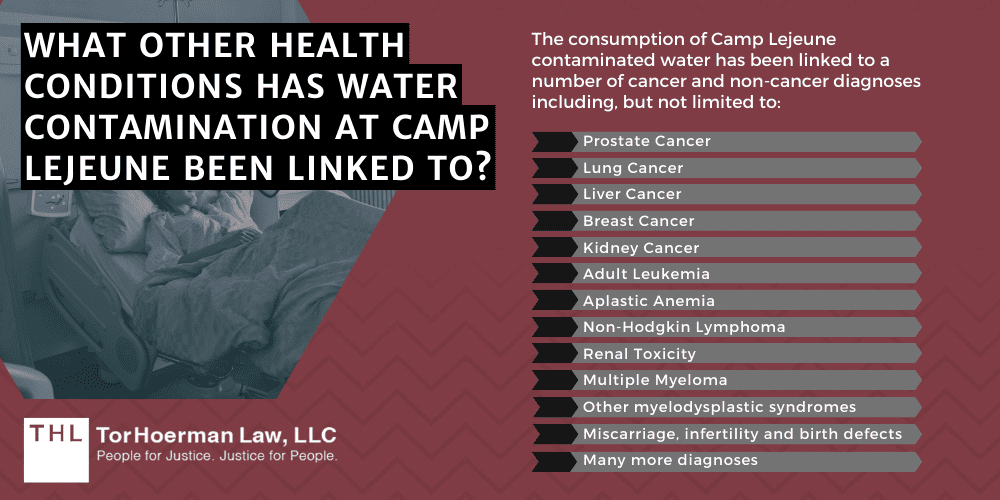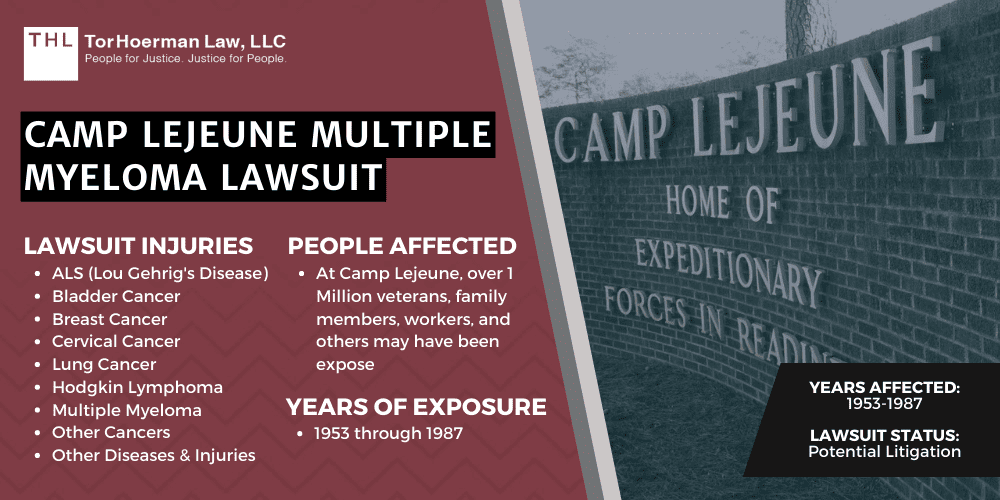
An increased risk of Multiple Myeloma has been identified by professionals who’ve studied the contaminated water at Camp Lejeune and veteran medical records as a particularly common diagnosis.
About Multiple Myeloma
Multiple Myeloma is a cancer of plasma cells, a type of white blood cell, causing them to grow at abnormally high rates and leading to a number of complications.
Plasma cells originate in the bone marrow, and when growing at uncontrollable rates with Multiple Myeloma, they crowd out healthy blood cells and produce abnormal proteins that can cause dangerous health problems.
The American Cancer Society estimates that in 2022:
- About 34,470 new cases will be diagnosed (19,100 in men and 15,370 in women).
- About 12,640 deaths are expected to occur (7,090 in men and 5,550 in women).
Multiple Myeloma and its causes
Multiple Myeloma diagnosis can be linked to a number of different factors, both environmental factors and non-environmental, genetic factors.
Risk Factors for Multiple Myeloma include, but are not limited to:
- Age: The average age for developing Multiple Myeloma is 70 years-old.
- Race: Multiple Myeloma occurs at twice the rate in black people as it does in white people.
- Chemical Exposure: Exposure to radiation and water contamination increases the likelihood of being diagnosed with certain cancers, including Multiple Myeloma.
- Personal Health and Genealogical History: People with certain health conditions have a higher likelihood of being diagnosed with Multiple Myeloma. These health conditions include people with a history of solitary plasmacytoma of the bone or an M protein in the blood.
In terms of chemical exposure as it relates to Multiple Myeloma, the water contamination at Camp Lejeune is no exception.
The Agency for Toxic Substances and Disease Registry (ATSDR) notes that exposure to trichloroethylene (TCE) and benzene have been associated with Multiple Myeloma diagnoses.
Research and public health studies on the relation between TCE and Benzene exposure and Multiple Myeloma include:
- Occupational Environmental Medicine: The Relationship between Multiple Myeloma and Occupational Exposure to Six Chlorinated Solvents
- Blood (1994): Benzene and Multiple Myeloma: Appraisal of the Scientific Evidence
- Environmental Health Perspectives: Does benzene cause multiple myeloma? An analysis of the published case-control literature.
- Annals of Occupational and Environmental Medicine: A brief review of relationship between occupational benzene exposure and hematopoietic cancer
- Journal of Clinical Medicine: Occupational Exposure and Multiple Myeloma Risk: An Updated Review of Meta-Analyses
Multiple Myeloma Symptoms and Complications
Multiple Myeloma is a serious health condition. Symptoms, complication, and subsequent treatment options may vary from person to person.
The symptoms of Multiple Myeloma include the following:
- Bone pain, especially in the spine or chest
- Nausea
- Constipation
- Loss of appetite
- Mental fogginess or confusion
- Fatigue
- Frequent infections
- Weight loss
- Weakness or numbness in your legs
- Excessive thirst
There can be serious complications associated with Multiple Myeloma:
- Frequent infections as the immune system is compromised and is not as able to fight infection
- Bone problems such as thinning, breaking and fracturing as the bone marrow is impacted
- Kidney problems or kidney failure
- Low red blood cell count (also known as anemia)