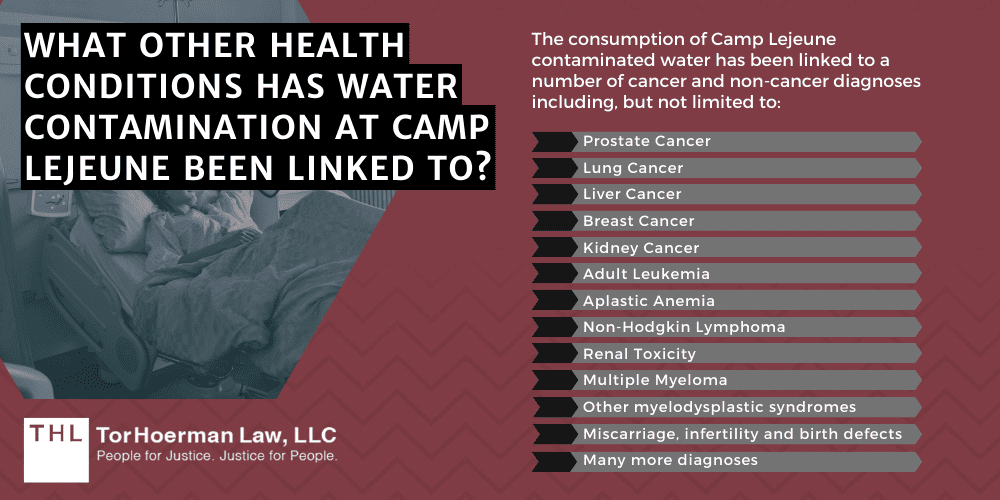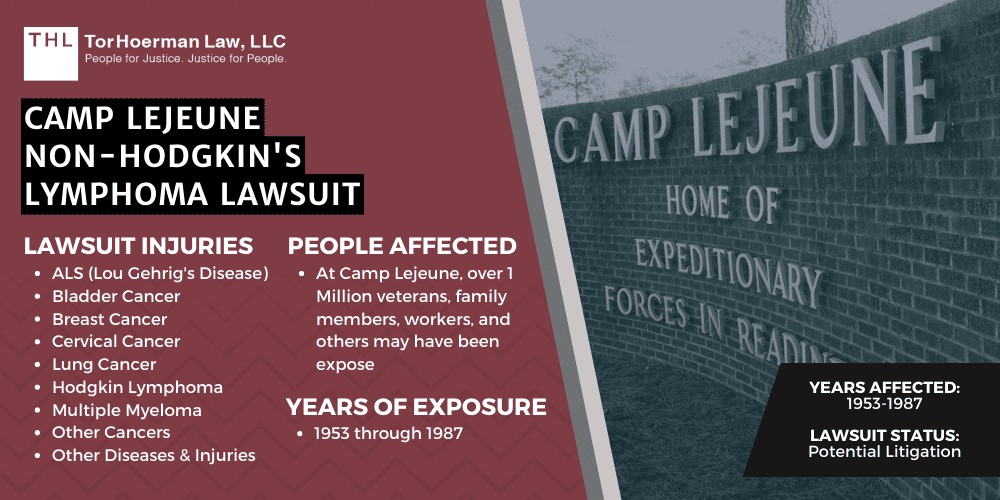
An increased risk of Non-Hodgkin’s Lymphoma has been identified by professionals who’ve studied the contaminated water at Camp Lejeune and veteran medical records as a particularly common diagnosis.
About Non Hodgkin’s Lymphoma
Non Hodgkin’s Lymphoma is a type of cancer that begins in the lymph nodes/lymphatic system, causing white blood cells to grow abnormally and triggering tumors to grow throughout the body.
Non Hodgkin’s Lymphoma can develop due to a number of different causes, including inherited/genetic or environmental/non-inherited and exposure-related risk factors.
In the case of Camp Lejeune water contamination, exposure to certain industrial chemicals or toxic chemicals has been found to potentially cause Non-Hodgkin’s Lymphoma.
The American Cancer Society estimates that in 2022:
- Over 80,000 cases of Non Hodgkin’s Lymphoma will be diagnosed.
- About 20,000 people will die from Non Hodgkin’s Lymphoma
Non Hodgkin’s Lymphoma and its causes
Non-Hodgkin Lymphoma diagnosis can be linked to a number of different factors, both environmental factors and non-environmental, genetic factors.
According to the Mayo Clinic, environmental Non-Hodgkin Lymphoma causes include, but are not limited to:
- Medications that suppress the immune system
- Certain viral and bacterial infections
- Chemical Exposure: Chemicals such as those present in Roundup, as well as other chemical contaminants in water supplies may increase the risk for developing non Hodgkin’s Lymphoma.
- Older age
The water contamination at Camp Lejeune is no exception to the chemical exposure risk for non-Hodgkin’s Lymphoma.
The Agency for Toxic Substances and Disease Registry (ATSDR) has sufficient scientific and medical evidence which shows that exposure to Perchloroethylene (PCE), Trichloroethylene (TCE) and Benzene at Camp Lejeune may have caused Non-Hodgkin’s Lymphoma.
Research on the relation between PCE, TCE and Benzene exposure and Non-Hodgkin’s Lymphoma include:
- Occupational and Environmental Medicine: Occupational exposure to trichloroethylene and risk of non-Hodgkin lymphoma and its major subtypes: a pooled InterLymph analysis
- Global Epidemiology: Systematic review of perchloroethylene and non-Hodgkin’s lymphoma
- Environmental Research: A systematic review and meta-analysis of occupational exposures and risk of follicular lymphoma
- Planetary Health: Benzene exposure and non-Hodgkin lymphoma: a systematic review and meta-analysis of human studies
- American Association for Cancer Research: Benzene exposure and risk of non-Hodgkin lymphoma
- Mayo Clinic: A case-control study of occupational exposure to trichloroethylene and non-hodgkin lymphoma
Non-Hodgkin Lymphoma Symptoms and Complications
Non Hodgkin Lymphoma, albeit a common cancer diagnosis, can have serious complications if not treated as soon as the warning signs appear.
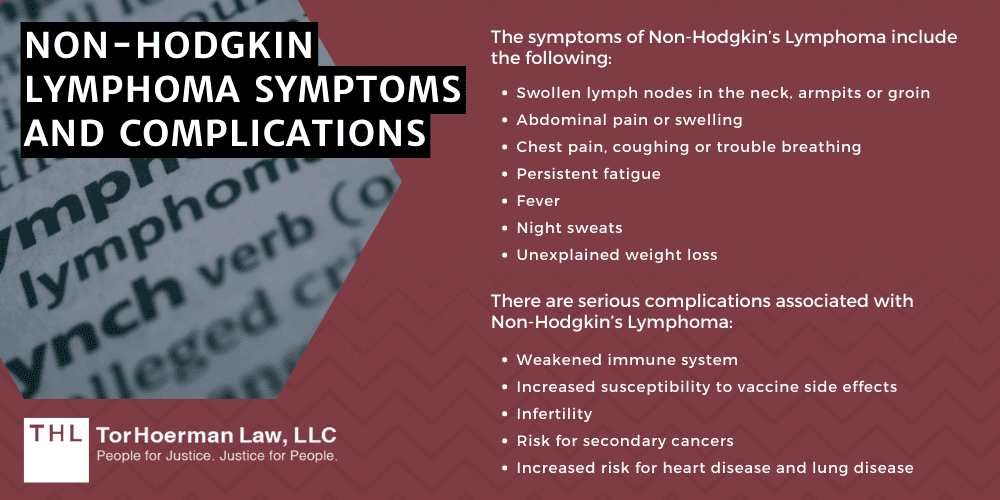
The symptoms of Non-Hodgkin’s Lymphoma include the following:
- Swollen lymph nodes in the neck, armpits or groin
- Abdominal pain or swelling
- Chest pain, coughing or trouble breathing
- Persistent fatigue
- Fever
- Night sweats
- Unexplained weight loss
There are serious complications associated with Non-Hodgkin’s Lymphoma:
- Weakened immune system
- Increased susceptibility to vaccine side effects
- Infertility
- Risk for secondary cancers
- Increased risk for heart disease and lung disease