No Longer Accepting Claims
Camp Lejeune Water Contamination Lawsuit Facts
TorHoerman Law is no longer accepting claims for the Camp Lejeune Water Contamination Lawsuit.
Intake Closed

No Longer Accepting Claims
TorHoerman Law is no longer accepting claims for the Camp Lejeune Water Contamination Lawsuit.
Intake Closed
On this page, we’ll discuss an overview of the Camp Lejeune Renal Disease Lawsuit, other health conditions linked to the water contamination at Camp Lejeune, who qualifies to file a Camp Lejeune Lawsuit, and much more.
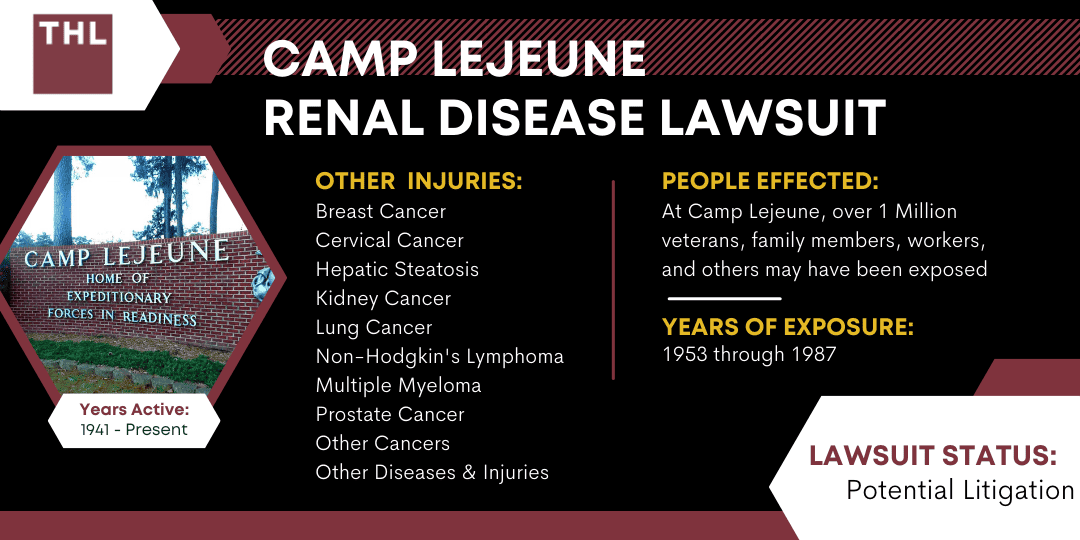
Between 1953 and 1987, toxic substances contaminated wells, treatment plants, and other sources of drinking water at United States Marine Corps Base Camp Lejeune and the nearby Marine Corps Air Station New River.
Military members, family members, and civilian workers exposed to these dangerous chemicals have been diagnosed with often fatal medical conditions, including several types of cancer and other diseases.
Exposure at Camp Lejeune has been linked to end-stage renal disease.
If you’re considering filing a Camp Lejeune renal disease lawsuit, you likely have some questions.
Below, our attorneys look at the studies conducted on the water contamination at Camp Lejeune and the evidence linking these substances to renal disease and other conditions.
If you or a family member were at Camp Lejeune between 1953 and 1987 and have developed renal disease, you may be eligible to file a Camp Lejeune Justice Act claim or seek compensation through a Camp Lejeune Lawsuit.
Contact TorHoerman Law for a free case evaluation.
You can also use the chatbot on this page to see if you qualify to file a Camp Lejeune lawsuit instantly.
Our Camp Lejeune lawyers are committed to helping people exposed to contaminated water at Camp Lejeune seek justice and compensation for what they’ve been through.
Reach out to our law firm with any questions you may have about the Camp Lejeune Justice Act, administrative claims process, and more.
We’re here to help you.
Various hazardous chemicals contaminated the drinking water at Camp Lejeune.
These chemicals originated from various hazardous waste sites and underground storage tanks in and out of the Marine Corps base, seeping into the base’s water treatment plants.
Investigations by the Environmental Protection Agency (EPA) and the Agency for Toxic Substances and Disease Registry (ATSDR) established the presence of many solvents and VOCs from waste disposal sites.
The water contamination led to countless Camp Lejeune victims developing illnesses, including renal disease.
The volatile organic compounds (VOCs) that caused Camp Lejeune’s water contamination have been linked to diseases affecting the kidneys.
During this time, the National Research Council (NRC) reviewed various literature highlighting the correlation between kidney failure and nephrotoxicity due to VOCs.
According to the NRC’s findings, there is a strong relationship between kidney failure and exposure to certain VOCs, particularly trichloroethylene (TCE) and tetrachloroethylene (PCE).
The NRC’s findings resulted in recommendations to the Department of Veterans Affairs (VA) to offer affected Camp Lejeune veterans VA health care benefits if they’ve developed renal disease.
The NRC’s report was limited to the water contamination at Camp Lejeune.
However, other studies have also linked VOCs to kidney diseases.
A year after the NRC report, a study found that VOCs can predispose individuals to kidney dysfunction.
According to the study, even acute exposure was enough to cause kidney problems.
These findings were echoed by a study done in 2020.
The study evaluated various environmental chemicals that have been known to cause kidney failure. Based on the study’s findings, VOCs were major contributors to the development of kidney dysfunction symptoms.
The Centers for Disease Control and Prevention (CDC) also acknowledges certain VOCs as known carcinogens.
According to the CDC, one of the VOCs known to cause kidney damage is tetrachloroethylene, a toxic solvent found in Camp Lejeune’s contaminated drinking water.
More literature establishes the risks posed by VOC exposure to kidney health.

If you have developed renal disease and were exposed to the contaminated water at Camp Lejeune, you may be eligible to join the Camp Lejeune lawsuits.
Contact us at TorHoerman Law for a free consultation.
You can also use the chatbot on this page to find out if you qualify for the Camp Lejeune litigation instantly.
Renal disease — also known as kidney disease or nephropathy — is a complex illness that targets the kidneys.
The kidneys are vital organs for the excretion of excess waste from the blood.
These bean-shaped organs — located just below the ribcage — are also essential for the regulation of the body’s electrolytes and fluid balance.
Any damage or dysfunction to the kidneys can have catastrophic consequences.

Damage leads to an inability of the kidneys to filter out waste and regulate the body’s fluid balance.
These complications can progress and cause fatigue, high blood pressure, heart rhythm changes, and edema (swelling) that can affect a person’s breathing.
Many factors can cause kidney disease.
Some of the most well-known causes of kidney disease are diabetes, hypertension, and autoimmune conditions like systemic lupus erythematosus (SLE).

However, another risk factor for the development of renal disease is chemical exposure.
Based on several studies, toxic substances like heavy metals and VOCs are common causes of renal disease.
Due to the kidneys’ roles in maintaining fluid and electrolyte balance, renal disease complications can affect multiple systems of the body.

If renal disease goes unmanaged, the following complications are possible:
The consumption of Camp Lejeune contaminated water has been linked to many cancer and non-cancer diagnoses.

Camp Lejeune-linked health conditions include, but are not limited to:
Service members, their families, civilian workers, and countless others were diagnosed with deadly health conditions, and for years they could not secure the benefits they desperately needed.
The Camp Lejeune water contamination lawsuit encompasses various legal actions taken by individuals who were at Camp Lejeune between 1953 and 1987.
Individuals have filed lawsuits after developing adverse health effects due to the Marine Corps base’s contaminated drinking water.
Some of the earliest lawsuits were filed more than a decade ago.
However, it was after the signing of the Camp Lejeune Justice Act in 2022 that the litigation Camp Lejeune victims were able to seek justice in a more organized framework.
Since the passing of the Camp Lejeune Justice Act, thousands of Camp Lejeune veterans — including former active-duty personnel and their family members — have filed administrative claims for compensation.
If administrative claims are not verified and compensated by the Navy’s Tort Claims Unit, Camp Lejeune victims may be eligible to file a Camp Lejeune Lawsuit in the US District Court for the Eastern District of North Carolina.
If administrative claims or lawsuits are successful, affected parties and family members will be entitled to compensation for the illnesses they’ve developed.
Water contamination at Camp Lejeune was primarily caused by chemicals from leaking underground storage tanks on the base over several decades.
There were multiple sources of contamination, including the Hadnot Point Treatment Plant and the Tarawa Terrace Treatment Plant.

These water treatment plants were sources of drinking water at Camp Lejeune.
The presence of various chemicals in these plants led to the contaminated drinking water at the Marine Corps base.
The EPA and the CDC’s ATSDR identified several hazardous chemicals in Camp Lejeune’s contaminated drinking water.
Among these chemicals were volatile organic compounds (VOCs) which various agencies have identified as toxic and cancer-causing.

Volatile organic compounds (VOCs) found in the water at Camp Lejeune include:
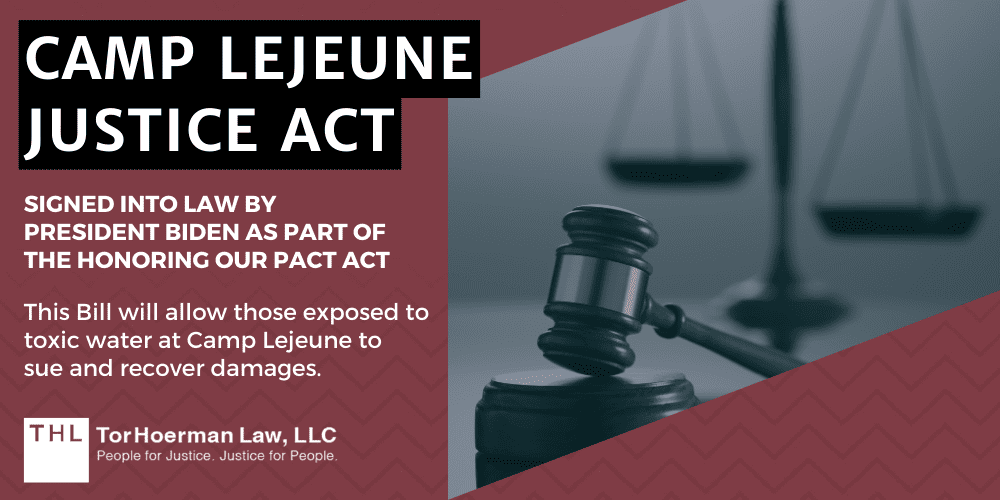
The Camp Lejeune Justice Act is a recent law enacted by President Joe Biden and Congress.
This recently signed legislation provides assistance to individuals who suffered illnesses due to drinking contaminated water at Camp Lejeune Marine Corps Base in North Carolina between 1953 and 1987.
The law allows those affected to seek compensation for their ailments.
To be eligible, individuals need to demonstrate they were exposed to the contaminated water for at least 30 days between the years 1953 and 1987.
Camp Lejeune veterans are not the only people empowered by the Camp Lejeune Justice Act.
Family members who spent a total of 30 days or more at the base during this period can also make claims.
To protect victims, the law also restricts the government from using certain defenses to avoid lawsuits from individuals who fell ill because of the polluted water.
In short, the Camp Lejeune Justice Act aims to help affected people get compensation for their health issues.
People who spent at least 30 days or more at Marine Corps Base Camp Lejeune between the years 1953 and 1987 may be eligible to file a claim for compensation.
The Navy’s Tort Claims Unit has 6 months to adjudicate this claim for compensation.
If a claim is not adjudicated within 6 months, Camp Lejeune victims have the right to file a Camp Lejeune Lawsuit.

If you or a loved one lived or worked at Camp Lejeune for 30 days or more between 1953 and 1987, contact TorHoerman Law’s Camp Lejeune lawyers.
Use the chatbot on this page for a free and instant Camp Lejeune case evaluation.
Your Camp Lejeune lawyers will help you complete steps necessary to filing claims and getting compensated, including the steps of gathering evidence and assessing damages.
Gathering sufficient evidence can make all the difference in your claim.
It’s essential that you gather and retain any documents showing your military service or residence at Camp Lejeune between 1953 and 1987.
These records will establish your exposure to the contaminated water at Camp Lejeune.

Other evidence that may be useful in your Camp Lejeune claims include:
Damages refer to the total amount of losses, economic and non-economic, incurred as a result of consuming contaminated water at Camp Lejeune.
Your attorney will help you assess and calculate the total costs associated with exposure to contaminated water at Camp Lejeune and the subsequent impact on your life.

Potential damages in a Camp Lejeune Lawsuit may include:
Our attorneys are here to help you recover compensation for exposure to contaminated water at Camp Lejeune, accounting for how your health conditions have impacted your finances and quality of life.
You are not alone, and help is just one consultation away.
If you’ve been exposed to Camp Lejeune’s contaminated water supply and developed renal disease, know that you may be eligible for a claim.
Contact us at TorHoerman Law for a free consultation.
You can also use the chatbot on this page to find out if you qualify for the Camp Lejeune water contamination lawsuits instantly.
Our Camp Lejeune lawyers work on a contingency fee basis, which means that we DO NOT charge for legal representation unless compensation is won in your case.
The EPA and ATSDR identified four specific volatile organic compounds (VOCs) in the water at Camp Lejeune:
Besides these VOCs, the EPA and ATSDR also found more than 70 toxic substances in Camp Lejeune’s water.
The following signs and symptoms may indicate that you have renal disease:
The settlement amount for each individual case will differ based upon the injuries suffered, conditions diagnosed, time spent at the base, and more.
Lawsuit settlements would also contain damages incurred, which can include medical bills, lost income, pain and suffering, emotional damages, and more. Depending on injuries suffered, conditions diagnosed, and evidence available, individual settlement amounts for exposure to contaminated water at Camp Lejeune could be significant.
Camp Lejeune water contamination settlement amounts could be between $10,000 and $500,000 depending on the strength of your case.
These estimates for Camp Lejeune settlement amounts are only estimations based on the Congressional Budget Office (CBO) budget for Camp Lejeune claims. These estimates are not a guarantee by any means of certain compensation for Camp Lejeune settlements.
Visit this page for more updates on settlement amounts for Camp Lejeune lawsuits as the information becomes more widely available.
If you or a loved one were exposed to contaminated water at Camp Lejeune between 1953 and 1987, you may be eligible to file a Camp Lejeune claim.
Contact qualified law firms for a free consultation to find out if you qualify to file a Camp Lejeune claim.
TorHoerman Law offers free, no-obligation case consultations for Camp Lejeune victims.
You can also use the chatbot on this page to find out if you qualify for the Camp Lejeune Lawsuit.
Before the passing of the Camp Lejeune Justice Act, there was the Camp Lejeune Families Act of 2012.
The Camp Lejeune Families Act enables veterans and their families to approach the Department of Veterans Affairs (VA) for health care benefits. To recover benefits, victims had to apply via the Camp Lejeune administrative claims process.
Unfortunately, many victims were denied benefits. In response to this, the Camp Lejeune Justice Act was signed into law.
The law provides affected veterans and families with a chance to pursue Camp Lejeune settlements and VA health care benefits via civil litigation.

Tor Hoerman has represented injured individuals for more than 30 years, with experience spanning individual personal injury cases and nationwide mass tort litigation. His work includes car accidents, catastrophic injuries, product liability claims, and other serious injury cases. Tor has served in court-appointed leadership roles in national litigation and tried cases involving major corporate defendants.
TorHoerman Law’s legal content is researched and written by our editorial team and attorneys for legal accuracy, clarity, and relevance. We rely on statutes, court records, government publications, medical research, and other authoritative sources when applicable. This page provides general legal information and does not constitute legal advice.
TorHoerman Law reviews its legal content for factual accuracy, current information, and relevant legal context before publication and as material developments occur. This article is provided for general informational purposes and does not constitute legal advice. For guidance about a specific case, contact TorHoerman Law.
You can learn more about this topic by visiting any of our Camp Lejeune Water Contamination Lawsuit pages listed below:
A serious injury can change your life.

TorHoerman Law represents people whose lives have been disrupted by serious injuries, unsafe products, and negligence. Our attorneys handle individual personal injury cases as well as national mass tort lawsuits involving major corporations.
Founded in 2009, our legal team brings more than 100 years of combined experience handling serious injury and complex civil litigation.
Do you believe you’re entitled to compensation?
Use our Instant Case Evaluator to find out in as little as 60 seconds!

In this case, we obtained a verdict of $495 Million for our client’s child who was diagnosed with Necrotizing Enterocolitis after consuming baby formula manufactured by Abbott Laboratories.

In this case, we were able to successfully recover $20 Million for our client after they suffered a Toxic Tort Injury due to chemical exposure.

In this case, we were able to successfully recover $103.8 Million for our client after they suffered a COX-2 Inhibitors Injury.

In this case, we were able to successfully recover $4 Million for our client after they suffered a Traumatic Brain Injury while at daycare.

In this case, we were able to successfully recover $2.8 Million for our client after they suffered an injury due to a Defective Heart Device.
A serious injury can change your life.