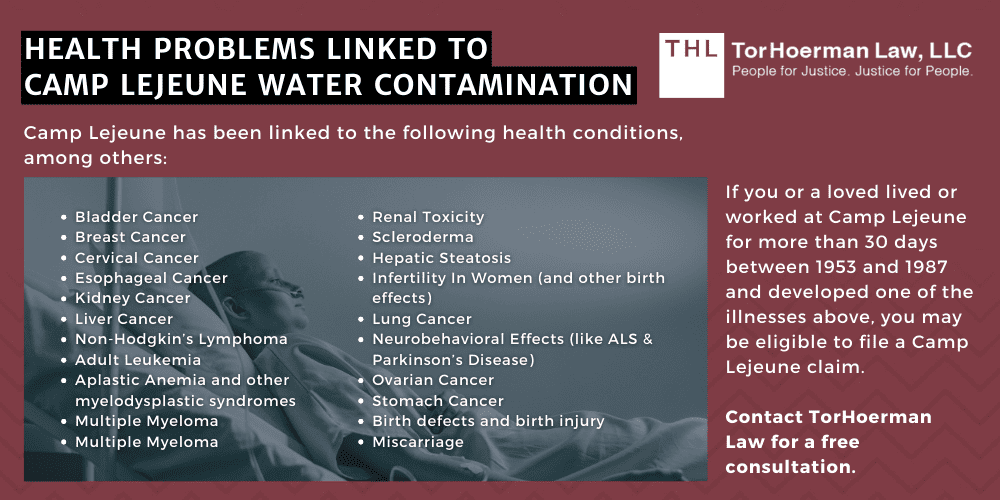
Specific volatile organic compounds found in the drinking water at Camp Lejeune have been directly linked to the onset of certain neurological disorders and the risk for birth defects.
The 2009 National Research Council (NRC) report titled “Review of VA Clinical Guidance for the Health Conditions Identified by the Camp Lejeune Legislation” contained a section on the characterization of neurobehavioral effects suffered by Camp Lejeune victims.
Within this section, the NRC mentions that:
“…most human studies indicate effects on visuomotor and motor function, fatigue, headache, and deficits in concentration, primarily resulting from acute exposures to solvents,”
The report expands on these health effects, indicating a relation to symptoms of epilepsy:
“Acute inhalation and oral exposure to PCE can induce symptoms of CNS depression (dizziness and drowsiness), electroencephalograpic changes, and neurobehavioral changes such as alterations in flash-evoked visual potentials, deficits in vigilance, and deficits in eye–hand coordination.”
Epilepsy and related neurological conditions can have an extremely detrimental impact on a person’s quality of life.
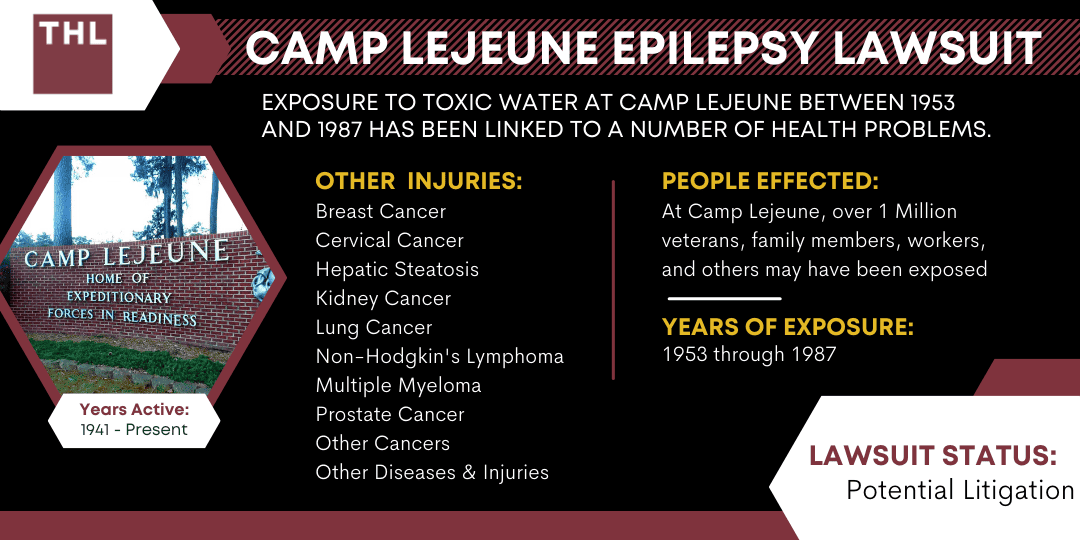
Our law firm is currently filing Camp Lejeune Lawsuits and claims for individuals diagnosed with epilepsy and other neurological disorders after being exposed at Camp Lejeune.
Contact us for more information and a free case evaluation.
Our Camp Lejeune attorneys understand the various health risks associated with exposure to the contaminated drinking water, and we are here to represent you through this process.
About Epilepsy
Epilepsy, a neurological disorder, is characterized by its hallmark symptom: Recurrent, unprovoked seizures.
Epileptic seizures are brought about by abnormal electrical activity in the brain, can vary widely in intensity and effect.
While the root causes of epilepsy are diverse, ranging from genetics to brain injuries, emerging evidence underscores the potential for environmental factors to play a significant role in its development.
Published scientific evidence also points to a potential correlation between epilepsy and exposure to the contaminated water source at Camp Lejeune.
Exposure to Contaminated Water and the Onset of Epilepsy
Exposure to contaminated drinking water may be linked to the onset of epilepsy and other related neurological conditions.
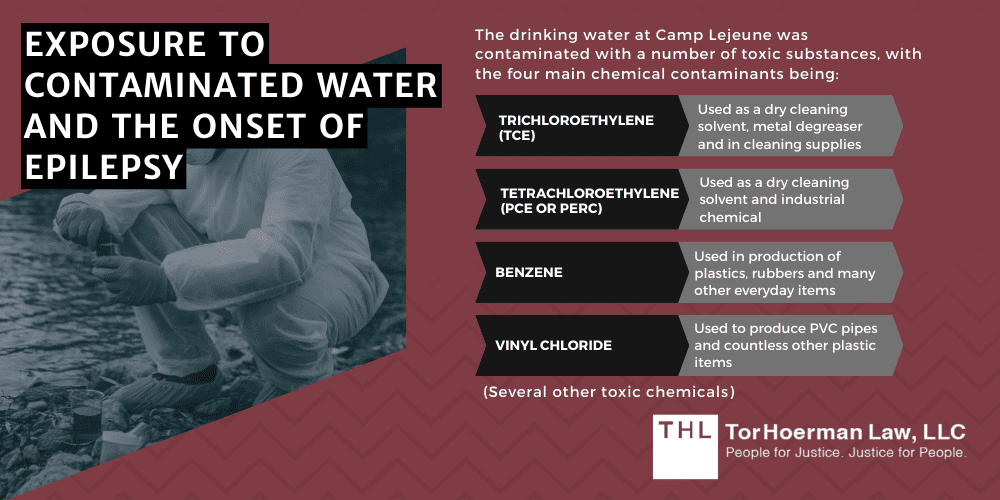
The drinking water at Camp Lejeune was contaminated with a number of toxic substances, with the four main chemical contaminants being:
- Trichloroethylene (TCE)
- Tetrachloroethylene (PCE)
- Vinyl chloride
- Benzene
The hazardous chemicals that contaminated drinking water at Camp Lejeune have been categorized as known human carcinogens and have been linked to a number of other health conditions.
Exposure to toxic chemical solvents can damage the brain and its neural pathways.
Some solvents have neurotoxic properties that disrupt the normal functioning of brain cells.
This disruption can lead to an increased risk of seizures in individuals who were previously not predisposed to them.
Prolonged or high-level exposure to these solvents may increase the likelihood of developing epilepsy.
Exposure to TCE and PCE and their links to epileptic seizures have been highlighted in research studies:
- Journal of Environmental Health: Long-term health effects of early life exposure to tetrachloroethylene (PCE)-contaminated drinking water: a retrospective cohort study
- Journal of Industrial Health: Myoclonic encephalopathy after exposure to trichloroethylene
- Journal of Food and Chemical Toxicology: Occupational exposure to organic solvents and long-term nervous system damage detectable by brain imaging, neurophysiology or histopathology
- French Neurological Review: Trichloroethylene intoxication presenting with temporal seizures
- Medical Case Reports: Myoclonic seizure prior to diagnosis of chronic toxic encephalopathy
Epilepsy Complications
The repercussions of epilepsy extend far beyond the seizures themselves.
The unpredictability of these episodes can result in injuries, fractures, and head trauma, further exacerbating the health challenges that those who are affected face.
Additionally, the emotional toll of living with epilepsy can’t be understated.
Anxiety, depression, and social isolation often become unwelcome companions, reducing the quality of life for individuals grappling with this condition.